• Skip to primary navigation
  • Skip to main content
  • Skip to primary sidebar

Earth Wise

A look at our changing environment.

  • Home
  • About Earth Wise
  • Where to Listen
  • All Articles
  • Show Search
Hide Search
You are here: Home / Archives for reverse osmosis

reverse osmosis

Wasting less wastewater

July 17, 2025 By EarthWise Leave a Comment

Developing technologies to waste less wastewater

Ultra-pure water is essential for multiple industries, for example semiconductors, batteries, and pharmaceuticals, as well as food and beverage companies.  Such water is produced by various processes including desalination plants that use reverse osmosis.  The byproduct of the processing is industrial brine:  salty wastewater.

The brine produced by desalination is generally dumped into the ocean if the desalination plant is located at the seashore, but if the plant is inland, such as in places like Arizona, that isn’t an option.

Nestle runs a water desalinating plant near Phoenix that generates more than 50,000 gallons of brine every day.  Concentrated brines must be carefully managed and disposed of. 

Researchers at Arizona State University are developing a mobile, closed-loop water recovery demonstration system that aims to recover 50%-90% of previously unusable water from industrial brine and reduce the remainder to solid salt. 

The team’s approach involves pretreating Nestle’s brine to remove larger particles.  It then goes through a reverse osmosis process that results in a stream of high-quality water and a salty concentrate.  The salty concentrate goes through a special membrane that recovers even more pure water.  The highly concentrated brine is then dried and crystalized into a solid salt product.  Atmospheric water harvesters capture any remaining water vapor during the drying process.

In places like Arizona where freshwater is a scarce commodity, finding sustainable ways to separate water from salt is both a scientific challenge and an economic necessity.

**********

Web Links

Squeezing every last drop out of wastewater

Photo courtesy of the Global Center for Water Technology.

Earth Wise is a production of WAMC Northeast Public Radio

A new way to help purify water

February 27, 2025 By EarthWise Leave a Comment

Engineers at the University of Michigan and Rice University have developed a new technology for removing boron from seawater, an important step in turning seawater into safe drinking water.

Boron is a natural component of seawater that remains a toxic contaminant in drinking water after conventional filters remove salts from seawater.  The boron levels in seawater are about twice as high as the World Health Organization’s most lenient limits for safe drinking water and 5 to 12 times higher than what many agricultural plants can tolerate.

Boron passes through the reverse osmosis membranes used in desalination plants in the form of boric acid.  To remove it, the desalination plants normally add a base to the treated water that causes the boric acid to become negatively charged.  An additional membrane then removes the charged boron, and an acid is then added to neutralize the water.  All of this is expensive and complicated.

The new technology uses electrodes that remove boron by trapping it inside pores studded with oxygen-containing structures that bind with boron but let other ions pass through.  Capturing boron with electrodes enables treatment plants to avoid the need for a second stage of reverse osmosis.

Global desalination capacity reached 95 million cubic meters a day in 2019.  The new membranes could save nearly $7 billion a year.  Such savings could make seawater a more accessible source of drinking water for a thirsty world.  Freshwater supplies are expected to meet only 40% of the world’s demand by 2030.

**********

Web Links

New water purification technology helps turn seawater into drinking water without tons of chemicals

Photo, posted August 21, 2018, courtesy of Alachua County via Flickr.

Earth Wise is a production of WAMC Northeast Public Radio

Wastewater As A Freshwater Source | Earth Wise

September 27, 2021 By EarthWise Leave a Comment

Water covers three-quarters of our planet, but freshwater – the water we drink, bathe in, and irrigate crops with – comprises only 3% of the world’s water and much of that is frozen in glaciers or otherwise unavailable.  Nearly 3 billion people suffer from water scarcity for at least some of the year.

Natural freshwater sources – lakes, rivers, and groundwater – are under stress from the effects of climate change and from the increasing demands of city populations.  The wastewater treatment plants in large cities represent a significant potential water source provided that sustainable and economical technologies to produce it can be developed.

Researchers at Lehigh University in Pennsylvania have patented an innovative ion exchange desalination process that is a legitimate candidate to transform wastewater into usable water.

Existing large-scale desalination systems make use of semipermeable reverse osmosis membranes that require an energy source to run the system.  The Lehigh process, which they call HIX-Desal, harnesses the unique chemistry of carbon dioxide to take the place of the energy used in reverse osmosis systems. 

Tests of the new system show that the salinity of treated wastewater can be reduced by more than 60% by the HIX-Desal process without requiring any reverse osmosis.  At an Allentown, Pennsylvania water treatment plant where the system was tested, the researchers estimated that using the system could save about a million kWh per day in electricity usage, enough energy to power 94 homes for a year.

With this system, waste carbon dioxide from landfills or turbine exhaust can be used to desalinate municipal wastewater.  It could be the basis of a circular economy.

**********

Web Links

Desalination tech uses CO2 to tap into municipal wastewater as alternative freshwater source

Photo, posted November 28, 2020, courtesy of Richard Ricciardi via Flickr.

Earth Wise is a production of WAMC Northeast Public Radio.

A Better Solar Evaporator | Earth Wise

May 21, 2021 By EarthWise Leave a Comment

Technology breakthrough to help reduce water stress

Water security is a serious global problem.  Nearly 1.5 billion people – including almost half a billion children – live in areas of high or extremely high water vulnerability.  Less than 3% of the world’s water is fresh and demand for it is rising with increasing population growth, urbanization, and growing water needs from a range of sectors.

Researchers at the University of South Australia have developed a promising new technique that could help reduce or eliminate water stress for millions of people.  The technique uses highly efficient solar evaporation to obtain fresh water from seawater, brackish water, or even contaminated water.   According to the researchers, their technique can deliver enough daily fresh drinking water for a family of four from just one square meter of source water.

Solar evaporation has been the focus of a great deal of effort in recent years, but it has generally been found to be too inefficient to be practically useful.  The new technique overcomes those inefficiencies and can deliver fresh water at a fraction of the cost of existing technologies like reverse osmosis.

The system utilizes a highly efficient photothermal structure that sits on the surface of a water source and converts sunlight to heat, focusing energy precisely on the surface to rapidly evaporate the uppermost portion of the liquid.  The technique prevents any loss of solar energy and even draws additional energy from the bulk water and surrounding environment.

The system is built entirely from simple, everyday materials that are low cost, sustainable, and easily obtainable.

The technology has the potential to provide a long-term clean water solution to people who can’t afford other systems, and these are the places where such solutions are most needed.

**********

Web Links

Sunlight to solve the world’s clean water crisis

Photo, posted November 13, 2016, courtesy of Steve Austin via Flickr.

Earth Wise is a production of WAMC Northeast Public Radio.

Understanding How To Enhance Desalination | Earth Wise

February 16, 2021 By EarthWise Leave a Comment

How to improve desalination

Desalination is the process of removing mineral components – notably salt – from saline water, generally seawater.  Over 16,000 desalination plants operate across 177 countries, generating 25 billion gallons of fresh water each year.  Currently, desalination accounts for about 1% of the world’s drinking water.

The leading process for desalination in terms of installed capacity as well as new installations is reverse osmosis that makes use of a thin-film composite membrane based on ultra-thin polyamide.

Despite the fact that these membranes are widely used for desalination, they are actually rather poorly understood.  It has not been known exactly how water moves through them.  As a result, much of the progress made on the technology over the decades has been essentially based on guesswork.

A team of researchers at the University of Texas, Austin has used advanced microscopy techniques to solve some of the mysteries of reverse osmosis membranes.  By mapping membranes at very high resolution – less than half the diameter of a DNA strand – they gained a much better understanding of what makes a membrane better at reverse osmosis.

They found that desalination membranes are inconsistent in mass distribution and density and that these inconsistencies can impair membrane performance.  It turns out that inconsistencies and dead zones in membranes play a bigger role than membrane thickness.  By making the membranes more uniform in density at the nanoscale, they were able to increase desalination efficiency 30 to 40 percent, therefore cleaning more water with less energy and at lower cost.

Producing fresh water is not just essential for public health, it is also crucial for use in agriculture and energy production.

**********

Web Links

Nanoscale control of internal inhomogeneity enhances water transport in desalination membranes

Photo, posted February 13, 2017, courtesy of Jacob Vanderheyden via Flickr.

Earth Wise is a production of WAMC Northeast Public Radio.

Plastic Bottles

November 19, 2018 By EarthWise Leave a Comment

https://earthwiseradio.org/wp-content/uploads/2018/10/11-19-18-Plastic-Bottles.mp3

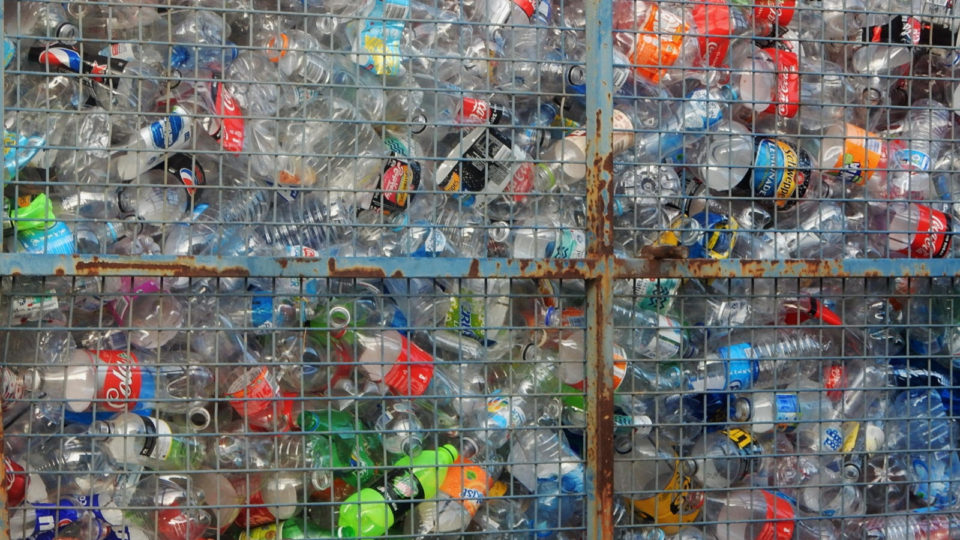
Plastic straws have become outcasts these days and for good reasons.  But they are not the only bad actors in the world of plastic products.  Single-use plastic water bottles are another example of a real trouble maker.

[Read more…] about Plastic Bottles

A Water Superpower

September 23, 2016 By WAMC WEB

https://earthwiseradio.org/wp-content/uploads/2016/09/EW-09-23-16-Water-Superpower.mp3

In 2008, Israel was on the verge of catastrophe.  A decade-long drought in the Fertile Crescent of the Middle East was scorching the area.  Israel’s largest source of fresh water, the Sea of Galilee, had dropped to within inches of the so-called black line at which point irreversible salt infiltration would flood the lake and ruin it forever.

[Read more…] about A Water Superpower

Solar Powered Water Purification

November 17, 2015 By WAMC WEB

https://earthwiseradio.org/wp-content/uploads/2015/11/EW-11-17-15-Solar-Powered-Water-Purification.mp3

Solar energy has made a difference in the lives of refugees from natural disasters and political unrest as well as people in remote corners of the world who don’t have access to modern technology.  There are various solar-powered lamps, chargers, and cookers that have been provided to countless thousands of people around the world.

[Read more…] about Solar Powered Water Purification

Primary Sidebar

Recent Episodes

  • An uninsurable future
  • Clean energy and jobs
  • Insect declines in remote regions
  • Fossil fuel producing nations ignoring climate goals
  • Trouble for clownfishes

WAMC Northeast Public Radio

WAMC/Northeast Public Radio is a regional public radio network serving parts of seven northeastern states (more...)

Copyright © 2026 ·