• Skip to primary navigation
  • Skip to main content
  • Skip to primary sidebar

Earth Wise

A look at our changing environment.

  • Home
  • About Earth Wise
  • Where to Listen
  • All Articles
  • Show Search
Hide Search
You are here: Home / Archives for reduction

reduction

A green battery from industrial waste

February 11, 2025 By EarthWise Leave a Comment

Flow batteries are rechargeable batteries in which liquid electrolytes flow through one or more chemical cells from one or more tanks.  The electrolytes are redox pairs, that is, chemical compounds that can reversibly undergo reduction and oxidation reactions.  The most common redox electrolytes include elements like vanadium, chromium, iron, zinc, and bromine.  Flow batteries can provide large amounts of both electrical power and stored energy based on the size of the electrolyte tanks.  As a result, they can be scaled up far more readily than other battery technologies. 

Flow batteries are safe, stable, long-lasting, and their electrolytes can easily be refilled.  They have significant potential for use in utility-scale storage for renewable energy systems.

Researchers at Northwestern University have developed a redox flow battery based on an organic industrial-scale waste product.  The material – triphenylphosphine oxide or TPPO – is produced in the thousands of tons each year.  It is byproduct of producing a variety of substances including some vitamins, pharmaceuticals, agrochemicals, and other bulk chemicals.  For the most part, TPPO is of little use and must be carefully discarded.

The current market for redox flow batteries is very small but is expected to grow over time as the need for utility-scale energy storage continues to expand.  A battery technology based on a waste material that is already produced in high volume and that must otherwise be disposed of with caution would have significant advantages.

**********

Web Links

Green battery discovery turns trash into treasure

Photo, posted January 12, 2015, courtesy of California Energy Commission via Flickr.

Earth Wise is a production of WAMC Northeast Public Radio

Saving the Great Salt Lake

January 27, 2025 By EarthWise Leave a Comment

For many years, scientists have warned that the Great Salt Lake in Utah is headed toward a catastrophic decline.  While the size of the Great Salt Lake fluctuates naturally with seasonal and long-term weather patterns, the lake has been experiencing significant and steady declines for decades.  In fact, the Great Salt Lake has lost more than 15 billion cubic yards of water over the past three decades, and it’s getting shallower at the rate of four inches a year. 

This reduction is primarily due to excessive water diversions from rivers and streams that feed into the lake for agricultural, industrial, and municipal use. These diversions, combined with prolonged drought and rising temperatures due to climate change, have significantly reduced the lake’s water level. 

According to a new study led by researchers from Oregon State University, 62% of the river water bound for the Great Salt Lake is diverted for human use, with agricultural activities responsible for nearly three-quarters of that percentage.  The analysis, which was recently published in the journal Environmental Challenges, found that reducing irrigation is necessary to save the lake. 

In order to stabilize and begin refilling the lake, the research team proposes cutting human water consumption in the Great Salt Lake’s watershed by 35%.  The researchers emphasize that farmers and ranchers facing income losses from using less water would require taxpayer-funded compensation.

The Great Salt Lake is a biodiversity hotspot, sustaining more than 10 million migratory birds.  The lake also directly supports 9,000 jobs and fuels $2.5 billion in economic activity annually. 

**********

Web Links

Reducing irrigation for livestock feed crops is needed to save Great Salt Lake, study argues

Photo, posted January 14, 2024, courtesy of Olaf Zerbock via Flickr.

Earth Wise is a production of WAMC Northeast Public Radio

Reducing farm nutrient pollution

December 11, 2024 By EarthWise Leave a Comment

Researchers developing new method to reduce nutrient pollution from farms

When farmers add nutrients to their fields in excess of their crops’ ability to utilize them, these excess nutrients can enter the surrounding environments and create environmental problems.  The primary culprits are nitrogen and phosphorous.  These fertilizer components emerge from fields and enter local waterways in surface runoff.

Researchers at the University of Illinois Urbana-Champaign have developed a form of designer biochar that can provide phosphorous in a time-released fashion and reduce the amount that escapes into the environment.

The researchers used sawdust and lime sludge, which are byproducts from milling and water treatment plants, respectively.  They mixed the two ingredients and formed pellets which were then slow-burned in low-oxygen conditions to create phosphorous-laden designer biochar.  Once the pellets bind all the phosphorous they can hold, they can be spread onto fields where the nutrient is slowly released over time.

They tested the pellets in working field conditions.  The pellets are used to remove phosphorous from drainage water and then can be reused in the field to provide the nutrient to the plants.   

The results were very encouraging.  The biochar proved to be a very effective way to provide phosphorous to crops and then reduce how much phosphorous enters the environment.  The cost of producing the biochar pellets was less than half that of alternative substances for phosphorous removal. 

There is currently no regulation that requires farmers to remove phosphorous from drainage water but there are a growing number of conservation-minded farmers who want to reduce nitrogen and phosphorous losses from their fields.  The idea that the recyclable pellets can both provide and control phosphorous is an attractive one.

**********

Web Links

Scientists tackle farm nutrient pollution with sustainable, affordable designer biochar pellets

Photo, posted July 16, 2016, courtesy of Rick Obst via Flickr.

Earth Wise is a production of WAMC Northeast Public Radio
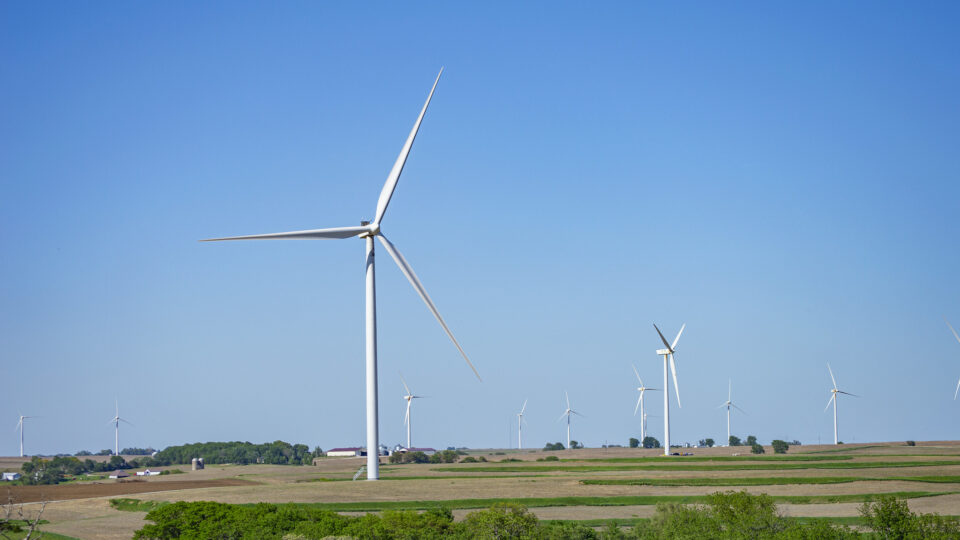
Making wind turbines safer for birds

September 18, 2024 By EarthWise Leave a Comment

Making wind turbines safer for birds

There are people who oppose the installation of wind turbines for a variety of reasons. It is true that wind turbines can be dangerous to birds.  Estimates are that about 250,000 birds are killed flying into wind turbines each year in the U.S.  

However, this data needs to be looked at in comparison to bird deaths from flying into electrical lines (25 million), vehicles (214 million), and building glass (at least 600 million). And even these figures pale in comparison to the more than 2 billion birds killed by domestic cats each year.

Despite these facts, it would still be great if fewer birds died from flying into wind turbines.  Researchers at Oregon State University are part of a team looking at reducing bird collision risks from wind turbines by painting a single blade of the turbine black.

Recent research in Norway found that painting a single turbine blade black reduced the number of bird collisions by nearly 72%.  Why should this work?  The hypothesis is that the black-painted blades disrupt the visual uniformity of the airspace around the turbines and makes them more noticeable to birds, which prompts avoidance behavior.

The Norwegian data is based on a relatively small sample size and the Oregon State researchers as well as others in Spain, Sweden, and South Africa are working on more rigorous and comprehensive studies.

The hope is that this rather simple strategy could make windfarms safer for birds.  Unfortunately, this approach is not likely to be very effective with bats, which rely more on auditory cues rather than visual cues.

**********

Web Links

Scientists studying impact of painting wind turbine blade black to reduce bird collisions

Photo, posted May 21, 2024, courtesy of Roy Harryman via Flickr.

Earth Wise is a production of WAMC Northeast Public Radio

Strawberries and climate change

August 12, 2024 By EarthWise Leave a Comment

The changing climate threatens the future of strawberries

The demand for strawberries continues to climb around the world.  According to data from World Population Review, China remains the global leader in strawberry production, a spot it’s held since 1994.  Last year, China produced 3.3 million tons of strawberries, followed by the United States at 1.05 million tons, Egypt at 597,000 tons, and Mexico at 557,000 tons.

While strawberries are grown coast to coast in the U.S., California and Florida are the top two strawberry-producing states due to their favorable climate conditions.  In fact, California produces more than 90% of the domestic strawberry crop.  But Florida plays a key role in domestic strawberry production as well by growing the majority of the winter crop. 

A new study by researchers from the University of Waterloo in Canada has examined the effect of climate change on California’s strawberry crop.  According to the research team, strawberries could be fewer and more expensive because of the higher temperatures caused by climate change.  The report, which was recently published in the journal Sustainability, found that a 3° Fahrenheit rise in temperature could reduce strawberry yields by up to 40%.

According to the researchers, the impact of climate change on strawberry production could be mitigated by implementing certain sustainable farming practices.  These include optimizing irrigation to ensure adequate water supply during heat waves and using shading plants and shade structures to mitigate heat stress.

Understanding how rising temperatures affect crop yields should encourage farmers and governments to develop sustainable agriculture responses to global warming.

**********

Web Links

Influence of Regional Temperature Anomalies on Strawberry Yield: A Study Using Multivariate Copula Analysis

Strawberry Production by Country 2024

Researchers predict fewer, pricier strawberries as temperatures warm

Photo, posted June 3, 2007, courtesy of David Slack via Flickr.

Earth Wise is a production of WAMC Northeast Public Radio

Threats to the Amazon Rainforest

August 1, 2024 By EarthWise Leave a Comment

Brazil has made great progress in reducing deforestation in its Amazon Rainforest.  In 2023, the rate of deforestation in Brazil dropped by 50% over the previous year. This was the result of the efforts by conservation-minded President Luiz da Silva, who replaced Jair Bolsonaro, a big proponent of deforestation.  Da Silva’s government has cracked down on land clearing by farmers and ranchers.

In the first quarter of this year, deforestation decreased by 40% over the previous year’s quarter.   Deforestation levels are the lowest they’ve been in six years, although the amount of forest cleared in the period was still nearly 200 square miles.

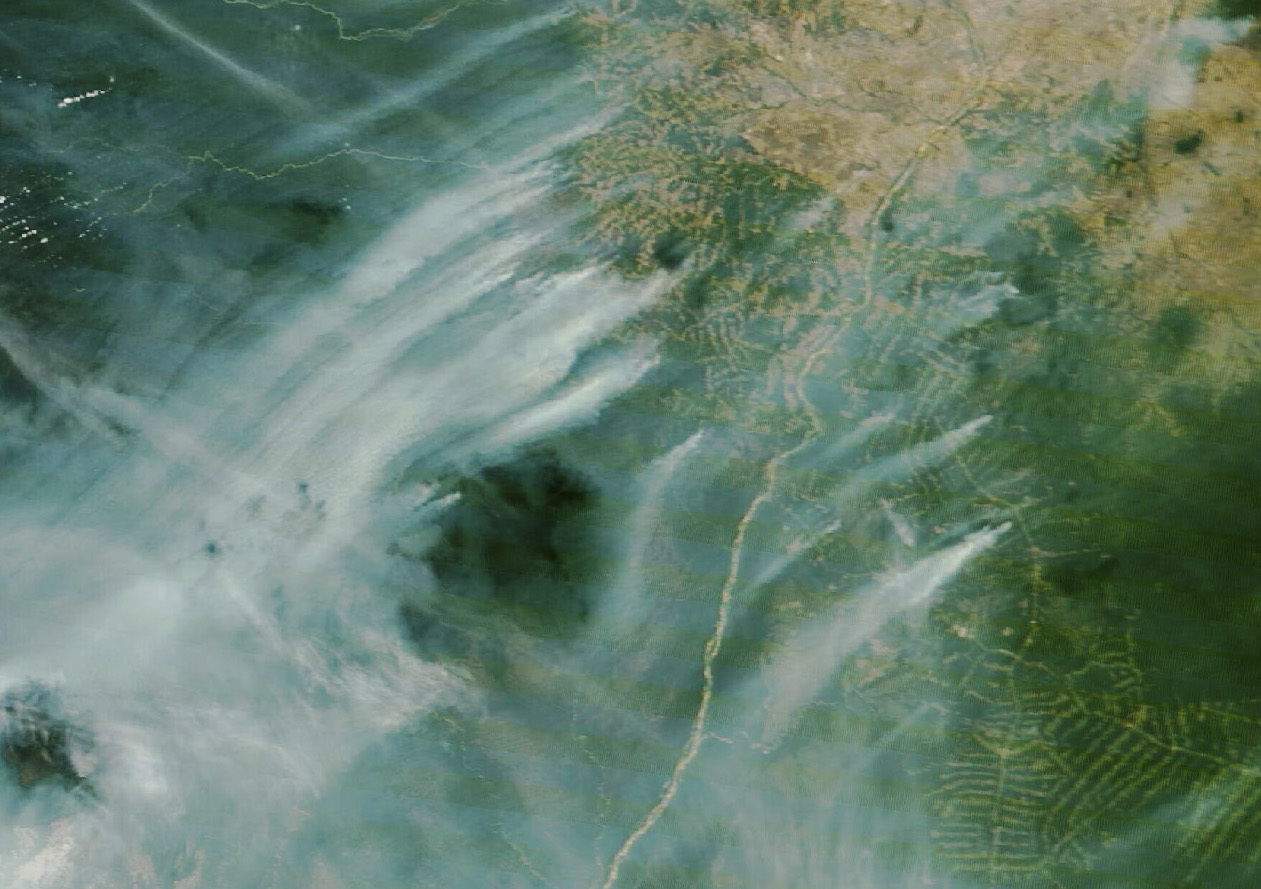
Unfortunately, the Amazon Rainforest is facing another growing threat:  climate change.  Because of pervasive drought and increasing temperatures, the number of wildfires in the region have hit a 20-year high.

According to satellite data from the national space agency, from January through June, Brazil recorded 13,489 wildfires in the Amazon.  That is 61% more fires than during the same period last year.  And the wildfire season has yet to reach its peak, which usually is in August or September.

Many of these fires begin in pastures or recently cleared rainforest, but then spread into the surrounding rainforest areas.  Many are huge fires.  Hundreds of square miles of rainforest have been consumed by fire, comparable in size to the areas deforested by farmers and ranchers.

Going forward, worsening wildfires could reverse the gains being made by the government’s deforestation policies.  This could not only threaten forest protection, but also weaken public support for the government’s commitment to protecting the region.

**********

Web Links

Brazil Is Seeing a Record Number of Wildfires This Year

Photo, posted January 26, 2018, courtesy of Chris Parker via Flickr.

Earth Wise is a production of WAMC Northeast Public Radio

Plastic food packaging

May 9, 2024 By EarthWise Leave a Comment

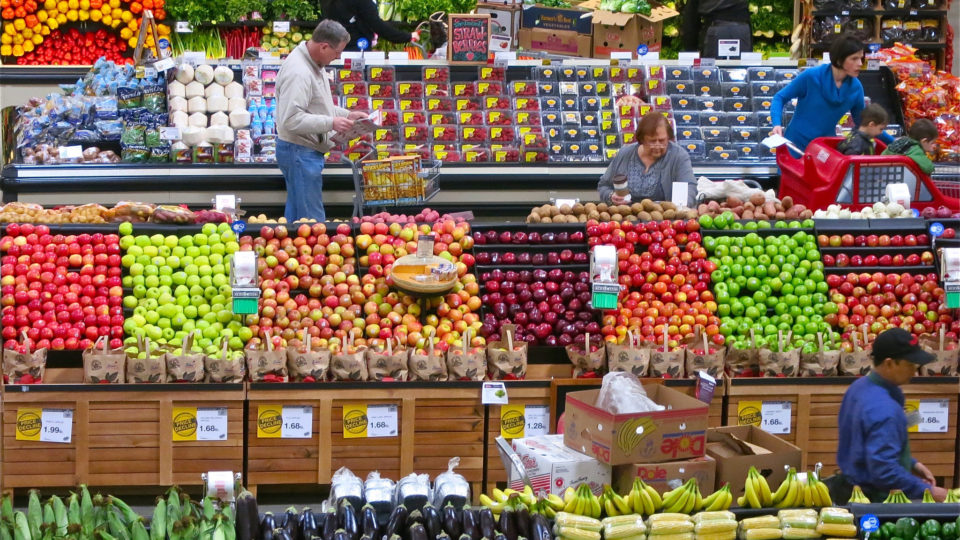
Reducing the use of plastic is an important environmental goal.  Plastic is made from fossil fuels and plastic pollutes the land and the oceans.  It is estimated that 40% of plastic waste comes from packaging.  Plastic packaging is extremely common in the supermarket and there is a growing desire to reduce its use.  But it isn’t that easy.

Plastic packaging works well to slow the decay of vegetables and fruit.  Its use results in less produce being tossed into the garbage, where it creates almost 60% of landfill methane emissions.  In fact, food is the most common material in landfills.  The average American family of four spends $1,500 a year on food that ends up uneaten and nearly half of all household food waste is fruits and vegetables.

Products like bagged salads, berries in plastic clamshells, and plastic sealed potatoes and cucumbers are popular with shoppers because they stay fresh longer.  They are popular with grocers because the items don’t have to be weighed.  But all these things result in plastic waste.  It is a tradeoff that is difficult to make between food quality and safety vs. the environmental harm caused by plastic.

There are a variety of alternatives to plastic packaging of food that are being explored.  They range from biodegradable, organic coatings that can take the place of plastic films, to cardboard and paper produce packaging. 

But practically, there is yet no affordable and biodegradable plastic alternative that keeps fruits and vegetables safe and fresh.  Solving the food packaging problem is not easy.

**********

Web Links

So Much Produce Comes in Plastic. Is There a Better Way?

Photo, posted July 1, 2007, courtesy of Brian via Flickr.

Earth Wise is a production of WAMC Northeast Public Radio
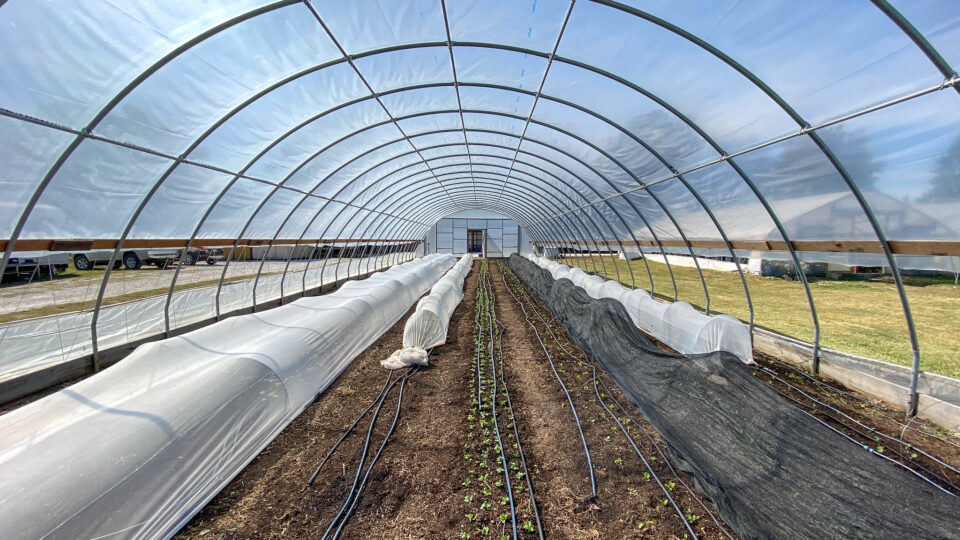
Plastics and agriculture 

November 14, 2023 By EarthWise Leave a Comment

Once celebrated as a symbol of modern innovation, plastic is now both a blessing and a curse of our time.  Since the 1950s, more than nine billion tons of plastic have been produced, and 50% of that has been during the past 15 years.  Plastic is ubiquitous in every sector, and agriculture is no different.

Modern agriculture is responsible for almost a third of global greenhouse gas emissions and is a major drain on the planet’s resources.  Modern agriculture is also inextricably linked to plastic. In fact, more than 13 million tons of plastic are used in agriculture every year.  It’s nearly impossible to imagine modern agriculture without plastics. 

But according to a new study led by researchers from Rutgers University, plastic use in agriculture must be reduced in order to mitigate pollution, and prevent toxic chemicals from leaching into the soil and adversely affecting human health. 

In the study, which was recently published in Nature Communications Earth & Environment, the researchers found that it is essential to adopt a strategic approach to mitigate plastic pollution in agriculture, including responsible usage, reduction, efficient collection, reuse, and the implementation of innovative recycling methods. 

According to the researchers, when these sustainable approaches aren’t possible, biodegradable and nontoxic bioplastics should be used.  The research team insists that environmentally benign additives should be mandated in order to reduce plastic toxicity. 

Plastic pollution is a problem that needs to be addressed in every sector. 

**********

Web Links

Plastic Use in Agriculture Must be Reduced, According to New Research

How can the use of plastics in agriculture become more sustainable?

Photo, posted November 12, 2022, courtesy of Kevin Dooley via Flickr.

Earth Wise is a production of WAMC Northeast Public Radio
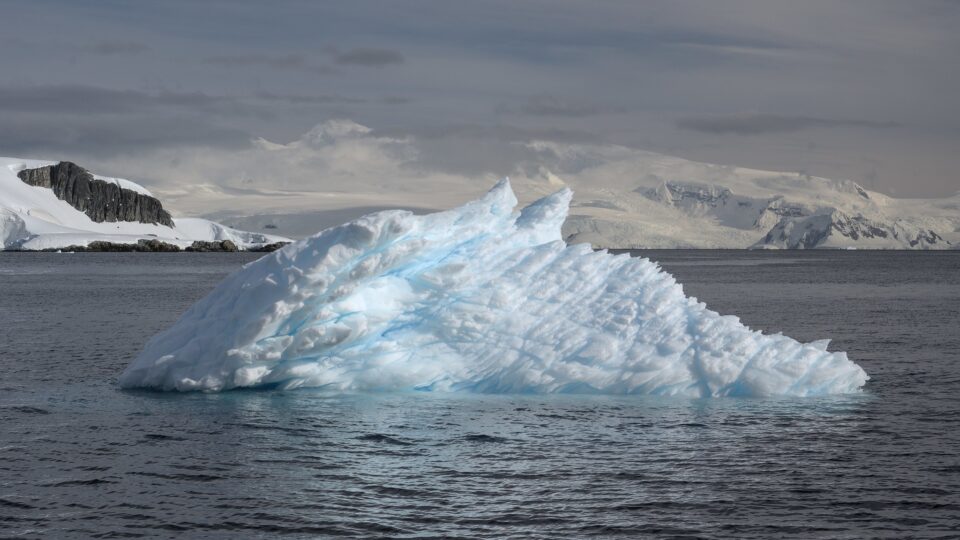
Missing Antarctic Sea Ice | Earth Wise

August 30, 2023 By EarthWise Leave a Comment

It is summer here in the United States, but it is winter in Antarctica.  Antarctic sea ice is water that forms and melts entirely in the ocean and it has a pattern of growth and reduction that has been monitored by satellites for the past 44 years.  The area of sea ice that surrounds the continent of Antarctica is known as the sea ice ‘extent’ and it had been quite stable for much of those years.

In 2016, the sea ice extent began to decline.  Since then, there have been several record summer lows with both the summers of 2021/22 and 2022/23 setting new minimum records.

This August, the deviation from all previous records intensified.  This winter’s sea ice extent is over 900,000 square miles below the long-term average, an area about the size of Greenland or, for example, Texas and Alaska combined.

Climate models have long predicted that Antarctic sea ice would reduce as a result of global warming but the current change to sea-ice extent is so dramatic that it is difficult to explain.  Sea ice extent is affected by multiple factors including the El Niño Southern Oscillation, the strength of the southern hemisphere jet stream, and regional low-pressure systems.  The warming climate is certainly the overall force that is changing Antarctic sea ice extent over time.

Antarctic sea ice extent is important because it covers a vast area of the dark Southern Sea with a bright white surface that reflects the sun’s energy back into space, helping to reduce temperatures at the pole and protecting glaciers and polar ice sheets. 

**********

Web Links

The mystery of the missing Antarctic sea ice

Photo, posted November 7, 2016, courtesy of Rob Oo via Flickr.

Earth Wise is a production of WAMC Northeast Public Radio

A Smart Window | Earth Wise

March 31, 2022 By EarthWise Leave a Comment

New smart window technology to reduce energy consumption

Researchers at Oxford University have developed a new adaptable smart window technology that has the potential of reducing the energy usage of the average home by a third.

The technology uses a spectrally tunable low-emissivity coating that can control the amount of heat that comes into a room without affecting the quality of the light that enters.

The thermal energy from the sun’s infrared rays is absorbed by the glass and then is re-emitted as heat.  That heat can either be used to warm the room using transparent electrical heaters embedded in the glass or can be reflected away to cool the room.  The windows can change according to seasonal needs.

The researchers built a prototype using a material called an active chalcogenide-based phase change material.  When it is cold, the infrared rays from the sunlight are harvested and used to heat the building.  When it is warm, the new glass can switch state to reflect the heat and reduce the need for air conditioning.  The active phase change material is adjustable so that the amount of heat absorbed or reflected can be tuned for precise temperature control.  There is essentially no effect on visible light passing through the window.  Current low-emissivity glass for windows can reduce heat transfer, but its properties cannot be altered according to seasonal needs.

The researchers estimate that using windows fitted with the new prototype glass – including the energy required to control the film – would save 20 to 34% in energy usage annually compared to double-glazed windows found in many modern homes.

A spinout company from Oxford called Bodle Technologies is collaborating with two existing industrial partners to develop the technology further.

**********

Web Links

New adaptable smart window coating could help heat or cool a home and save energy

Photo, posted April 26, 2008, courtesy of Lima Andruska via Flickr.

Earth Wise is a production of WAMC Northeast Public Radio.

Climate-Related Disasters | Earth Wise

January 27, 2022 By EarthWise Leave a Comment

Preparing communities for climate-related disasters

In early December, a series of tornadoes struck multiple states, killing nearly 100 people and producing widespread damage in whole communities.  These storms were at least the 19th weather or climate disaster that caused more than $1 billion in damage during 2021.  The year suffered from droughts, wildfires, severe cold snaps, hurricanes, and other severe weather incidents.

The Wharton Risk Management and Decision Processes Center at the University of Pennsylvania has been studying how communities can prepare for and bounce back from such disasters.

A key issue is that the location and timing of disasters continues to shift.  Homeowners along the Gulf and Atlantic coasts know that they need to prepare for and deal with hurricanes.  People who live in places like Oklahoma and Kansas are aware that tornadoes are a frequent threat.  But in recent years, strong storms are happening in areas where historically they haven’t.

Places need to start implementing changes to their infrastructure now in order to have an impact on risk reduction.

Presidential disaster declarations are just one part of recovery from disasters.  Other issues to grapple with are the role of government support and how it isn’t just the financial costs of disaster recovery but all the impact on human and other resources that are often not covered by governmental funds.  There is also the issue that low- and moderate-income households are disproportionately harmed and locked out of financial resources for recovery.

The Wharton study points out that innovative approaches will be needed to effectively prepare communities and individuals for disasters to come. 

**********

Web Links

Preparing, and paying for, climate change-induced disasters

Photo, posted December 12, 2021, courtesy of State Farm via Flickr.

Earth Wise is a production of WAMC Northeast Public Radio.

Reducing Emissions From Shipping And Aviation | Earth Wise

November 19, 2021 By EarthWise Leave a Comment

The global marine shipping and aviation industries are each responsible for about 3% of greenhouse gas emissions.  These are relatively small numbers, but as other industries decarbonize, the contributions from shipping and aviation will loom larger and larger.

In October, both of these industries made commitments to reach net zero emissions by 2050.  How can they do it?  We don’t really have the details of the technologies to be used, and neither do these industries.  But there are ideas being considered.

For both ships and planes, the solution for short-distance trips can be electrification.  Electric planes are in the works for short distances.  Battery-powered container ships are also under development.  But the electrification of longer international and intercontinental routes for both industries is very difficult.  The size and weight of batteries needed for long hauls are major challenges to overcome.

The low-carbon solution slowly being deployed in aviation is sustainable aviation fuel made from renewable sources. Longer term, green hydrogen fuel for planes may be a solution.  For shipping, hydrogen may play an even larger role.  As in the other potential uses for hydrogen, the essential requirement is to be able to produce hydrogen in a way that does not emit greenhouse gases.

There are multiple ways to move towards the decarbonization of both aviation and shipping.  Which will turn out to be the most practical and successful is not yet known.  What is essential is for both industries to follow through on their commitments to research, develop, and deploy zero-carbon solutions.  They appear to have embraced the vision for the future.  Now comes the hard work of achieving that vision.

**********

Web Links

Shipping & Aviation Plan To Go Net Zero. How?

Photo, posted August 8, 2014, courtesy of Tomas Del Coro via Flickr.

Earth Wise is a production of WAMC Northeast Public Radio.

Cutting The Cost Of Energy Storage | Earth Wise

September 9, 2021 By EarthWise Leave a Comment

Energy storage is the solution to the problem of intermittency with renewables

The cost of both solar and wind power continues to drop making the two renewable energy sources the cheapest way to make electricity in more and more places.  Given the virtually inexhaustible supply of both wind and sun power, these clean electricity sources can in principle meet all our energy needs.  The hang up is that both of them are intermittent sources – the wind doesn’t blow all the time and the sun doesn’t shine all the time.

The solution to the intermittency problem is energy storage.  If energy produced by wind and sun can be stored so it can be made available for use at any time, then the goal of having 100% clean energy can be realized.

Energy storage technology has continued to improve over time and to get cheaper.  The Department of Energy recently announced a new initiative aimed at accelerating both of these trends.

The new program – called Long Duration Storage Shot –  has the goal of reducing the cost of grid-scale, long-duration energy storage by 90% within this decade.

Long-duration energy storage is defined as systems that can store energy for more than ten hours at a time.  Such systems can support a low-cost, reliable, carbon-free electric grid that can supply power even when energy generation is unavailable or lower than demand.  With long-duration storage, solar-generated power can be used at night.

The program will consider multiple types of storage technologies – electrochemical (that is: batteries), mechanical, thermal, chemical carriers, and various combinations thereof.  Any technology that has the potential to meet the necessary duration and cost targets for long-term grid storage are fair game for the program.

**********

Web Links

DOE announces goal to cut costs of long-duration energy storage by 90%

Photo, posted October 16, 2017, courtesy of UC Davis College of Engineering via Flickr.

Earth Wise is a production of WAMC Northeast Public Radio.

Shutting Down Pollution | Earth Wise

April 8, 2020 By EarthWise Leave a Comment

coronavirus temporarily reduces air pollution

With much of the country shut down as the coronavirus forces people to stay at home, there has naturally been a drastic reduction of traffic on roads and highways.   And with that decrease, there has been a dramatic reduction in pollution as well.

A satellite that detects emissions in the atmosphere linked to cars and trucks has observed huge declines in pollution in major metropolitan areas such as Los Angeles, Seattle, New York, Chicago, and Atlanta.

Los Angeles is infamous for its rush-hour traffic but that has pretty much ceased to exist. Similar changes can be seen in the San Francisco Bay Area, where nearly 7 million residents have been ordered to shelter in place.  New York City is less dependent on car travel than in other metro areas, but the shutdown of office buildings, schools, and restaurants has nonetheless resulted in a substantial reduction of traffic on the streets of the city.

While this sudden decline in air pollution over U.S. cities has some near-term health benefits, those benefits are likely to be fairly minor in the big picture.  When the coronavirus outbreak subsides and people are allowed to leave their homes and go back to their normal lives, air pollution will most certainly rebound to previous levels.  In any event, studies have shown that long-term exposure to air pollution has a larger impact on public health than any transient events.

Having much cleaner air for a while is certainly a good thing, but this shutdown is not a sustainable way to reduce air pollution and the long-term effects of the coronavirus crisis will certainly not be positive.

**********

Web Links

Traffic and Pollution Plummet as U.S. Cities Shut Down for Coronavirus

Photo, posted March 15, 2020, courtesy of Tom Collins via Flickr.

Earth Wise is a production of WAMC Northeast Public Radio.

Pesticides In The Great Barrier Reef

November 7, 2019 By EarthWise Leave a Comment

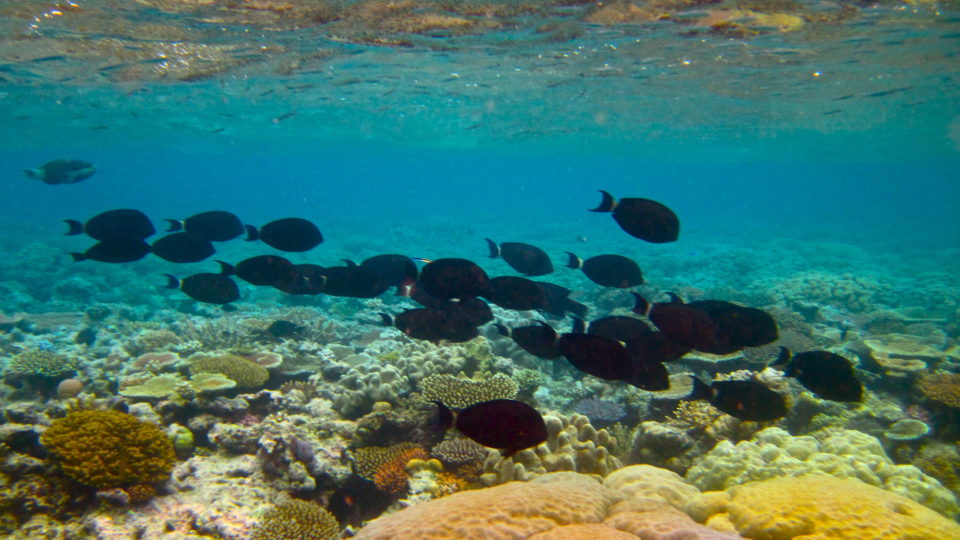
Australia’s Great Barrier Reef is one of the greatest natural wonders in the world and it has been under siege by warming waters and ocean acidification.  Widespread coral bleaching has damaged or destroyed large portions of the 1,400-mile long coral reef system.  But the effects of climate change are not the only threat to the reef.  Pesticides found in waterways that flow into the Great Barrier Reef are another serious problem.

According to a new study by the University of Queensland, the combined toxicity of 22 of the most common pesticides that flow into the Reef are not meeting pollution reduction targets.

Different pesticides affect different organisms.  Herbicides affect organisms that photosynthesize such as seagrass, corals, mangroves, and algae.  Insecticides affect insect larvae in freshwater, and crustaceans such as crabs, prawns, and lobsters.  Previous assessments have only examined individual pesticides and only for limited times.  The new study has utilized a methodology that estimates the combined toxicity of multiple pesticides found in the waterways that discharge into the Reef and does it for the entire wet season.

The research revealed that the pesticide reduction target set in the Australian Government’s Reef 2050 Water Quality Improvement Plan is not being met.  Only one natural resource management region – the Cape York region – was found to be meeting its target.

By having estimates of the risk posed by pesticides in the various regions and individual waterways, governments, farmers, and conservationists can see which areas pose the greatest risk and where to maximize efforts.  Stakeholders have to come together to reduce pesticide concentrations through better management practices and by using less toxic pesticides.

**********

Web Links

High pesticide concentrations continue to enter Great Barrier Reef

Photo, posted July 29, 2010, courtesy of Kyle Taylor via Flickr.

Earth Wise is a production of WAMC Northeast Public Radio.

Keeping Lights On For Turtles

August 8, 2019 By EarthWise Leave a Comment

Gillnets are one of the most common types of fishing gear and are used extensively in most places where people fish for food.  They operate by suspending a wall of netting in the water column.

Unfortunately, they are not selective in the species they catch.  Sea turtles are one of the most common bycatch species that become entangled in these nets.  When turtles are caught in gillnets, they can drown and die.  Marine mammals, seabirds, and sharks are also frequently caught in gillnets.

Recently, researchers have been experimenting with illuminating the nets with LED lights to see if increasing net visibility reduces sea turtle bycatch.

Studies in Mexico show green sea turtle bycatch is reduced between 40-60% with no changes in target catch.  Studies in Peru show green sea turtle bycatch is reduced between 65-80% with no changes in target catch.  Studies in Indonesia show green olive ridley, and hawksbill sea turtle bycatch is reduced by 60% with increases in target catch and catch value.

Recent research shows that net illumination also reduces bycatch of other protected species such as seabirds, sharks and rays, as well as dolphins and porpoises.

The use of illuminated gillnets could prove beneficial to both sea turtles and fisherman by reducing the bycatch that can damage fishing gear. 

Studies are now underway off the coast of North Carolina, where state gillnet fisheries are carefully managed to reduce turtle bycatch.  Initial studies show that net illumination does not change target catch rates and may even decrease the bycatch of unwanted fish species.  When it comes to protecting sea turtles, it looks like a good idea to keep the lights on.

**********

Web Links

Illuminated Nets Could Provide A Brighter Future For Sea Turtles

Photo, posted June 2, 2016, courtesy of NOAA via Flickr.

Earth Wise is a production of WAMC Northeast Public Radio.

Supermarkets And Zero-Waste

May 6, 2019 By EarthWise Leave a Comment

There are about 38,000 supermarkets in the United States alone and they are responsible for vast quantities of waste in the form of single-use plastic bags, plastic containers that store food products, and food waste as well.  Globally, over 80% of poll respondents feel strongly that companies should help improve the environment.  Responding to this message, markets are starting to make changes.

In a number of places, there are now markets that are package-free.  The Nada grocery store in Vancouver and Precycle in Brooklyn are examples of zero waste grocery stores.  Websites like Litterless provide online help for customers trying to find packaging-free grocery stores.

Markets are not only changing their packaging, they are using artificial intelligence to develop more sustainable production processes and seeking other ways to reduce waste.

On average, Americans throw away over 300 plastic bags a year, but an increasing number of grocery retailers are making commitments to more sustainable, plastic-free options.  It isn’t just small stores either.  Grocery giant Kroger plans to eliminate plastic bags in its stores by 2025.  When that happens, it means that 6 billion plastic bags will no longer be distributed.  Big Y stores will fully transition to reusable bags by next year.  More and more cities and states are banning or imposing fees on plastic bags. 

An interesting statistic shows that the age group of Americans that is leading the adoption of reusable grocery bags is not millennials but in fact is people over 50.  With multiple generations now indicating that they want shopping to be more sustainable, it is likely that supermarkets will strive to help make that happen.

**********

Web Links

Why More Supermarkets Are Committing to Zero-Waste

Photo, posted March 4, 2013, courtesy of Dean Hochman via Flickr.

Earth Wise is a production of WAMC Northeast Public Radio.

How Much CO2 Can The Oceans Hold?

May 2, 2019 By EarthWise Leave a Comment

The carbon dioxide that enters the atmosphere doesn’t necessarily stay there.  As part of the natural carbon cycle, much of it goes into plants, soil and, very significantly, the ocean.  In fact, the world’s oceans are a sink for human-generated carbon dioxide without which the extent of global climate change would be far worse.

Oceans takes up CO2 in two steps: first the CO2 dissolves in the surface water.  Then, the ocean’s overturning circulation distributes it.  Currents and mixing processes transport the dissolved CO2 from the surface deep into the ocean’s interior, where it accumulates over time.

A long-standing priority for climate researchers is to determine how much of the CO2 we produce is being absorbed by the oceans and, ultimately, how much can they hold?

An international team of scientists has recently provided some answers.  As reported in Science, the researchers have determined that the oceans have taken up from the atmosphere as much as 37 billion tons of human-made carbon between 1994 and 2007.  This figure corresponds to nearly a third of all the anthropogenic CO2 emitted during that time.

Furthermore, they found that the percentage of CO2 taken up by the oceans has remained relatively stable compared to the preceding 200 years even as the absolute quantity has increased.  So, evidently, the oceans’ capacity for carbon dioxide has not yet been saturated.

That’s the good news.  The bad news is that putting all that CO2 into the oceans has a steep price:  the dissolved CO2 acidifies the water.  The consequences for a wide range of marine life including coral reefs are serious and getting worse.  We need to drastically reduce carbon emissions.

**********

Web Links

Ocean sink for human-made carbon dioxide measured

Photo, posted November 5, 2018, courtesy of Flickr.

Earth Wise is a production of WAMC Northeast Public Radio.

Reducing Food Waste

October 9, 2018 By EarthWise Leave a Comment

https://earthwiseradio.org/wp-content/uploads/2018/09/EW-10-09-18-Reducing-Food-Waste.mp3

Food waste is a huge problem.  About a third of all food produced globally goes to waste, and the numbers are even worse in the US.  If food waste was a country, it would be the world’s third largest emitter of greenhouse gases.  Worse yet, all of this takes place in a world where 850 million people are chronically undernourished.

[Read more…] about Reducing Food Waste

Bursting The Carbon Bubble

July 25, 2018 By EarthWise Leave a Comment

https://earthwiseradio.org/wp-content/uploads/2018/06/EW-07-25-18-Bursting-the-Carbon-Bubble.mp3

One way or another, the fossil fuel industry seems to be destined to shrink away.  A combination of technological advances and climate policies are going to drastically reduce the global demand for fossil fuels over the course of time.   New research shows that the demise of the fossil fuel industry will have profound consequences.

[Read more…] about Bursting The Carbon Bubble

  • Page 1
  • Page 2
  • Go to Next Page »

Primary Sidebar

Recent Episodes

  • An uninsurable future
  • Clean energy and jobs
  • Insect declines in remote regions
  • Fossil fuel producing nations ignoring climate goals
  • Trouble for clownfishes

WAMC Northeast Public Radio
WAMC/Northeast Public Radio is a regional public radio network serving parts of seven northeastern states (more...)

Copyright © 2026 ·