• Skip to primary navigation
  • Skip to main content
  • Skip to primary sidebar

Earth Wise

A look at our changing environment.

  • Home
  • About Earth Wise
  • Where to Listen
  • All Articles
  • Show Search
Hide Search
You are here: Home / Archives for portland

portland

Deconstructing buildings

July 24, 2025 By EarthWise Leave a Comment

Deconstructing buildings to reduce waste

An estimated 30 million tons of wood waste from construction and demolition in the U.S. ends up in landfills each year.  A growing number of cities have launched initiatives to reuse the wood instead.  It is a strategy to reduce carbon emissions, cut waste, and shift towards a circular economy.

For a long time, salvaged wood was a niche pursuit by people who valued the fine grain and enduring quality of older wood.  Reclaimed old-growth lumber offers character and strength.  These people pursued construction that uses wood with a story – timber recovered from historic structures, collapsing barns, and other demolished buildings.

Now, there are multiple companies in the business of salvaging wood from buildings.  Cities and businesses are embracing the use of reclaimed materials.   Ordinances in cities like Portland, Oregon, Boulder, Colorado, and San Antonio, Texas require older buildings to be taken apart for repurposing their materials.  Palo Alto, California has banned demolition completely. 

Portland was the first U.S. city to require old residential homes to be deconstructed.  After a decade, contractors have deconstructed more than 650 homes in the city, salvaging 2,000 tons of reusable wood.

Using reclaimed wood in local buildings stores carbon and reduces emissions by avoiding the need to cut new trees, process materials, and ship them long distances.

Deconstructing buildings is not a widely available skill.  Contractors have to be trained on how to dismantle buildings piece by piece.  But there is now a national registry of deconstruction trainers and a network of practitioners.

**********

Web Links

Deconstructing Buildings: The Quest for New Life for Old Wood

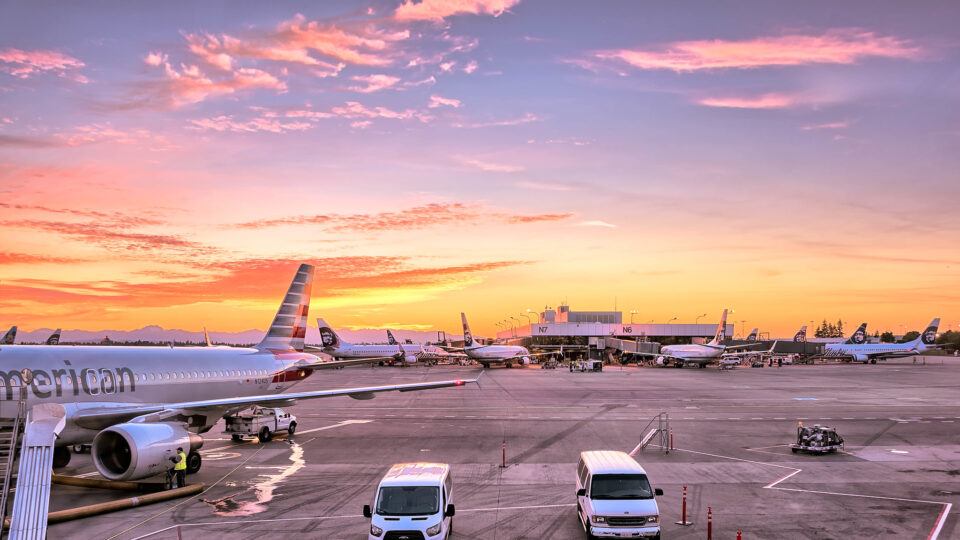
Photo, posted May 16, 2018, courtesy of Alexandre Prevot via Flickr.

Earth Wise is a production of WAMC Northeast Public Radio
Soaring Heat And Inner-City Neighborhoods | Earth Wise

August 31, 2021 By EarthWise Leave a Comment

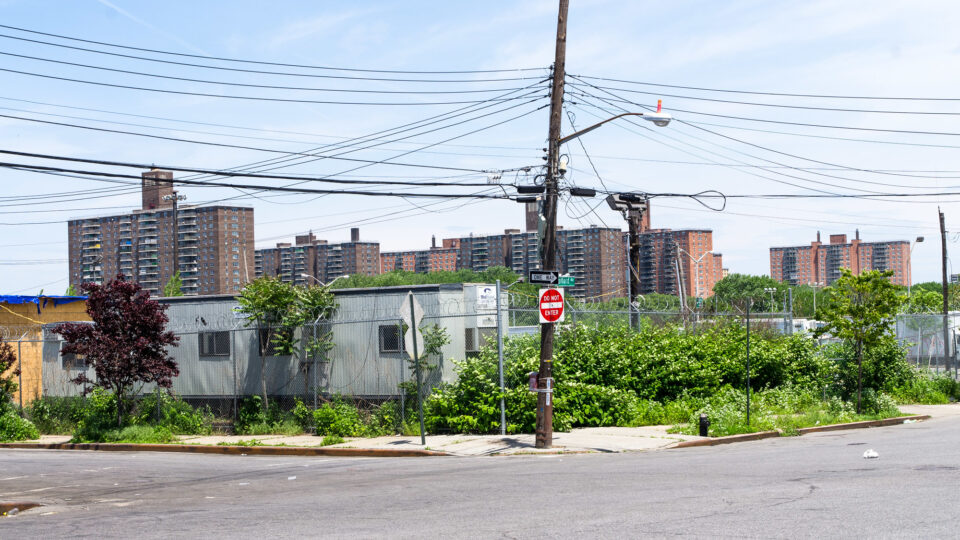
Inner cities especially vulnerable to climate change

The record-breaking heatwaves this summer have exposed the special vulnerability inner cities have to the effects of summer heat.  Climate change has exacerbated and supercharged heatwaves, as was seen in Seattle and Portland in late June.

Urban cores can be 10 degrees or more warmer than the surrounding countryside.  The urban heat island effect is a result of how cities are built, with so much pavement, so many buildings, and not enough trees.  On top of this, decades of disinvestment in neighborhoods where people of color live have left them especially vulnerable to heat as their homes are not able to cope with it.

In New York City, some residents of Hunts Point in the Bronx keep lists of neighbors they check on to help keep the most vulnerable alive during heat waves.  The city has subsidized 74,000 air conditioners for low-income, elderly residents, and is spending millions to plant trees.  In Phoenix, the hottest big city in the country, officials are working to develop new models for cooler public housing and cooling for streets and pedestrian corridors.

A study, published in 2020, looked at the linkage between higher heat island temperatures and past practices of redlining, where home loans and insurance were unavailable to people in neighborhoods of color.  In 94 of 108 communities studied, the formerly redlined neighborhoods had higher surface temperatures.

Cities are confronted with two heat problems:  emergencies that require immediate action to save lives, and long-term issues related to combating soaring temperatures in heat islands strengthened by global warming. In many cases, cities are not prepared for either problem.  Dealing with and adapting to heat is essential to the long-term viability and quality of life in our cities.

**********

Web Links

A Triple Whammy Has Left Many Inner-City Neighborhoods Highly Vulnerable to Soaring Temperatures

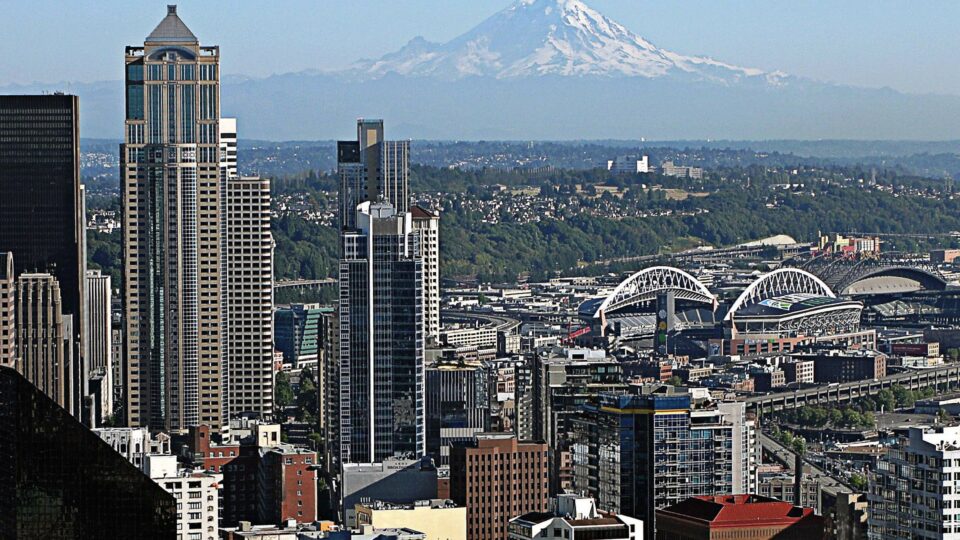
Photo, posted May 27, 2014, courtesy of Dan DeLuca via Flickr.

Earth Wise is a production of WAMC Northeast Public Radio.

The Pacific Northwest Heatwave | Earth Wise

August 18, 2021 By EarthWise Leave a Comment

Analyzing the Pacific Northwest Heatwave

The late-June heatwave in the Pacific Northwest shattered temperature records in dozens of locations.  Cities like Portland and Seattle saw historic high temperatures and one town in British Columbia saw temperatures hotter than ever recorded in Las Vegas.

An international team of weather and climate experts analyzed this extreme weather event and came to a preliminary conclusion that it was a 1-in-1000-year event in today’s climate.  “Today’s climate” means the already warmer conditions that the world is experiencing as a result of the changing climate.

If that analysis is accurate, then such an extreme temperature event would have been at least 150 times rarer in the era before global warming.  In other words, they concluded that it would have been a 1-in-150,000-year event, which means that it would have been virtually impossible in pre-industrial times.

Given that they estimated that the extreme temperatures were a 1-in-1000-year event at this point, it would follow that such events are not about to become commonplace any time soon.  On the face of it, that is somewhat comforting to hear.

However, all of this assumes that global warming will not radically change the statistical distribution of global temperatures.  If that assumption fails to hold, then all bets are off.  Perhaps temperatures like those experienced in the Pacific Northwest might be a 1-in-50-year event, for example, but we just don’t realize it yet.  Follow-up studies will be looking for evidence of significant changes in the distribution of weather events.  For now, a 1-in-1000-year event means there is only a 0.1% chance of occurring in a given year.  That’s good news for the residents of that region.

**********

Web Links

Preliminary analysis concludes Pacific Northwest heat wave was a 1,000-year event…hopefully

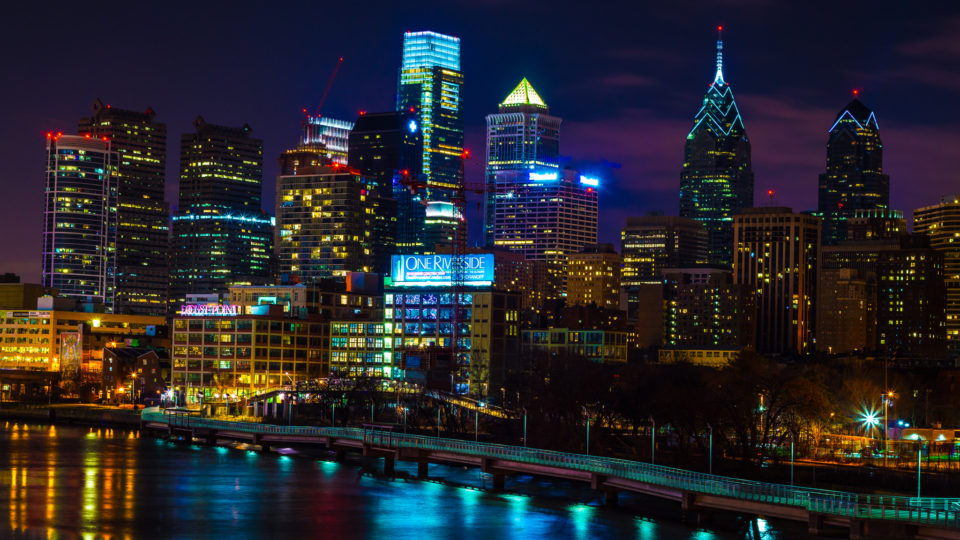
Photo, posted June 4, 2016, courtesy of Jody Claborn via Flickr.

Earth Wise is a production of WAMC Northeast Public Radio.

The Hottest June | Earth Wise

July 29, 2021 By EarthWise Leave a Comment

Climate change continues to fuel the heat records

A series of heatwaves from coast to coast caused June 2021 to be the hottest June on record in the U.S. The average June temperature across the contiguous U.S. was 72.6 degrees Fahrenheit, making it the hottest June in 127 years of record keeping and breaking the previous record set in 2016 by nearly a full degree. Eight states had their hottest June on record and six others marked their second hottest June.

One of the most extreme heatwaves in modern history impacted the Pacific Northwest of the U.S. and western Canada late in the month.  Temperature records were not merely broken in the region; they were smashed over an incredibly hot four-day period from June 26th through June 29th when all-time records over 100 degrees were set at dozens of locations.

Portland, Oregon’s average high temperature over this period was 112 degrees, breaking the previous 3-day record by an amazing 6 degrees.  The high on June 28th was 116 degrees, an all-time record for the city.  Seattle set back-to-back all-time heat records of 104 on June 27th and then 108 on June 28th.  In the previous 126 years, Seattle had only hit 100 degrees three times.  It reached that mark 3 days in a row in June.

Crossing the border, the town of Lytton, British Columbia reached a temperature of 121 degrees on June 29th, the third day in a row in which the town registered a new all-time high temperature ever measured in Canada.  To put this in perspective, this temperature is hotter than has ever been recorded in Las Vegas.

June was a hot month indeed.

**********

Web Links

June 2021 was the hottest June on record for U.S.

Astounding heat obliterates all-time records across the Pacific Northwest and Western Canada in June 2021

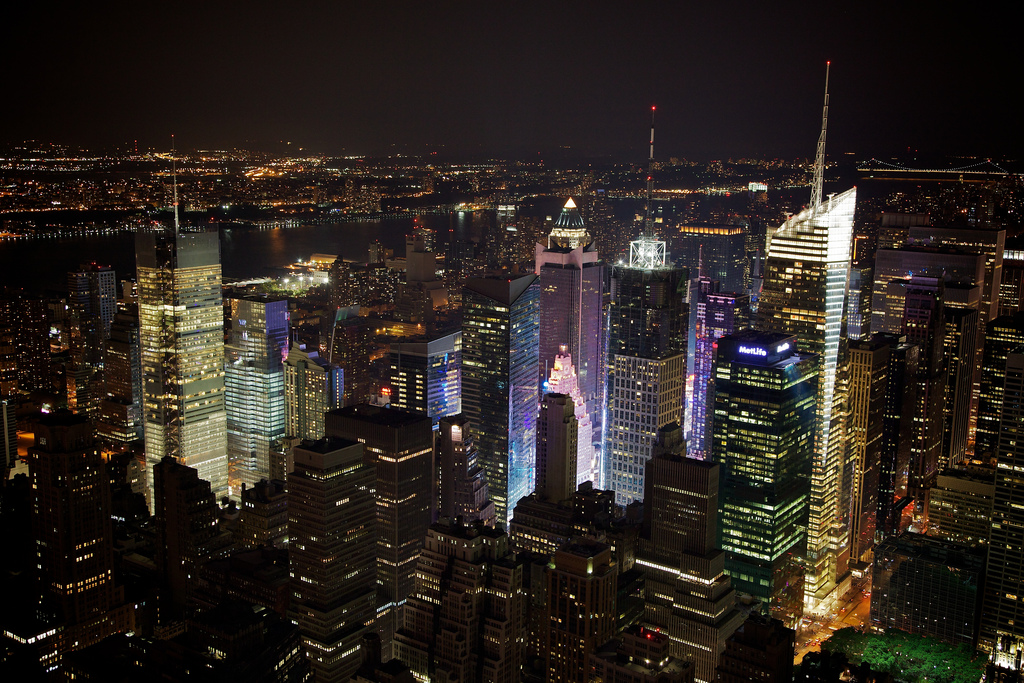
Photo, posted July 7, 2021, courtesy of Poyson / GPA Photo Archive via Flickr.

Earth Wise is a production of WAMC Northeast Public Radio.

Examining Sea Level Rise

January 17, 2019 By EarthWise Leave a Comment

It’s no secret that sea levels along the East Coast of the United States are rising.  But what’s less known is that the water isn’t rising at the same rate everywhere.  As the climate continues to change, some cities may remain dry while others struggle to keep water out. 

During the 20th century, sea levels rose about 18 inches near Cape Hatteras in North Carolina and along the Chesapeake Bay in Virginia.  During that same time period, New York City and Miami experienced a 12 inch sea level rise, while the waters near Portland, Maine only rose 6 inches.  According to a study recently published in the journal Nature, there’s an explanation for this. 

The variation is a result of a phenomenon called “post-glacial rebound.”  During the last ice age, huge sheets of ice once covered land areas in the Northern Hemisphere, including parts of the Northeast U.S.  The weight of the ice weighted down the land like a boulder on a trampoline.  At the same time, peripheral lands such as the U.S. mid-Atlantic coast rose up.  As the ice melted, the previously weighted-down regions rebounded while the peripheral lands began to sink.  While these ice sheets disappeared some 7,000 years ago, this see-sawing of post-glacial rebound continues to this day. 

Researchers combined data from GPS satellites, tide gauges, and fossils in sediment with complex geophysical models to produce this comprehensive view of sea level change since 1900.  While post-glacial rebound accounts for most of the sea level variation along the East Coast, researchers noted that when that factor is stripped away, “sea level trends increased steadily from Maine all the way down to Florida.”

**********

Web Links

Why is sea level rising faster in some places along the US East Coast than others?

Photo, posted August 24, 2014, courtesy of Bill Dickinson via Flickr.

Earth Wise is a production of WAMC Northeast Public Radio.

Green Solutions To Storm Water Runoff

July 5, 2018 By EarthWise Leave a Comment

https://earthwiseradio.org/wp-content/uploads/2018/07/EW-07-05-18-Green-Storm-Water-Solutions.mp3

Philadelphia, America’s fifth largest city, has struggled with storm water runoff problems since the days of Benjamin Franklin.  The city’s numerous streams that run into the Schuylkill and Delaware Rivers were eventually covered with brick arches or cemented into underground sewers.  The network of underground-to-riverfront outfalls through increasingly-larger pipes is pretty much how all U.S. cities have been coping with storm water for over 200 years.

[Read more…] about Green Solutions To Storm Water Runoff

American Cities Fighting Climate Change

April 24, 2017 By EarthWise

https://earthwiseradio.org/wp-content/uploads/2017/04/EW-04-24-17-American-Cities-and-Climate-Change.mp3

The federal government now appears to be headed down the path of not honoring America’s commitments to tackle global warming, but many of the country’s cities and states as well as its corporations have no intention of breaking our promises to the world.

[Read more…] about American Cities Fighting Climate Change

Primary Sidebar

Recent Episodes

  • An uninsurable future
  • Clean energy and jobs
  • Insect declines in remote regions
  • Fossil fuel producing nations ignoring climate goals
  • Trouble for clownfishes

WAMC Northeast Public Radio

WAMC/Northeast Public Radio is a regional public radio network serving parts of seven northeastern states (more...)

Copyright © 2026 ·