• Skip to primary navigation
  • Skip to main content
  • Skip to primary sidebar

Earth Wise

A look at our changing environment.

  • Home
  • About Earth Wise
  • Where to Listen
  • All Articles
  • Show Search
Hide Search
You are here: Home / Archives for poachers

poachers

Finding Homes For Rhinos | Earth Wise

October 6, 2023 By EarthWise Leave a Comment

White rhino conservation

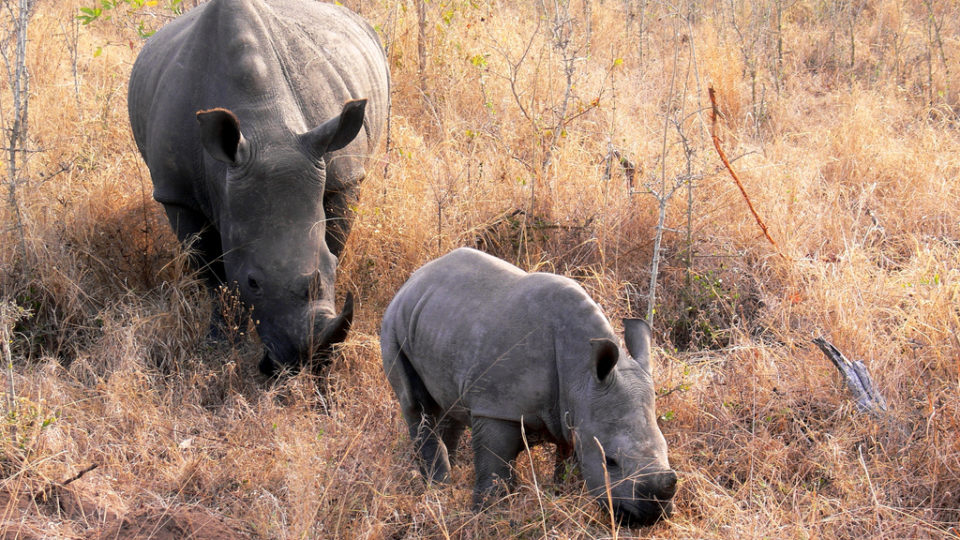
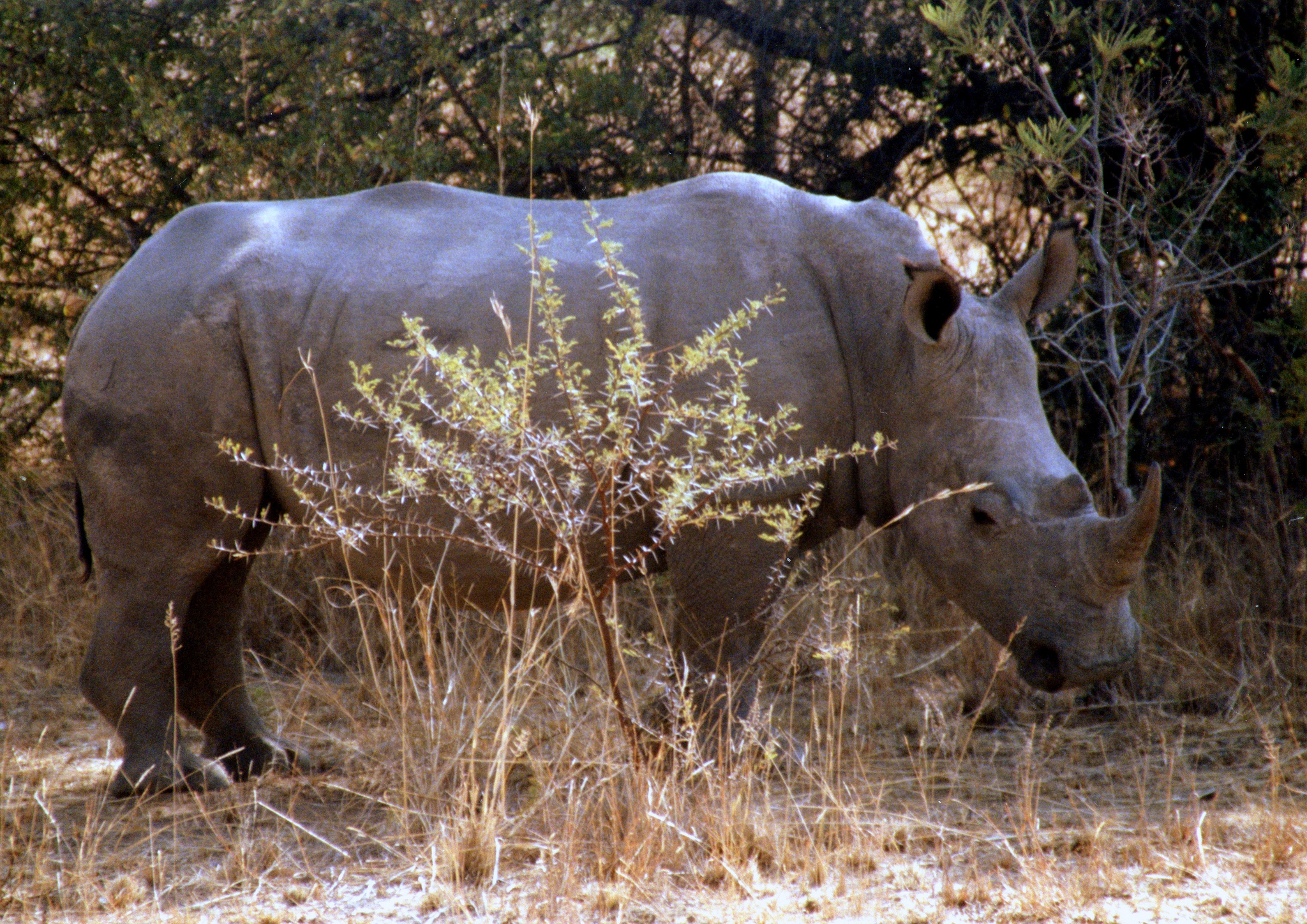
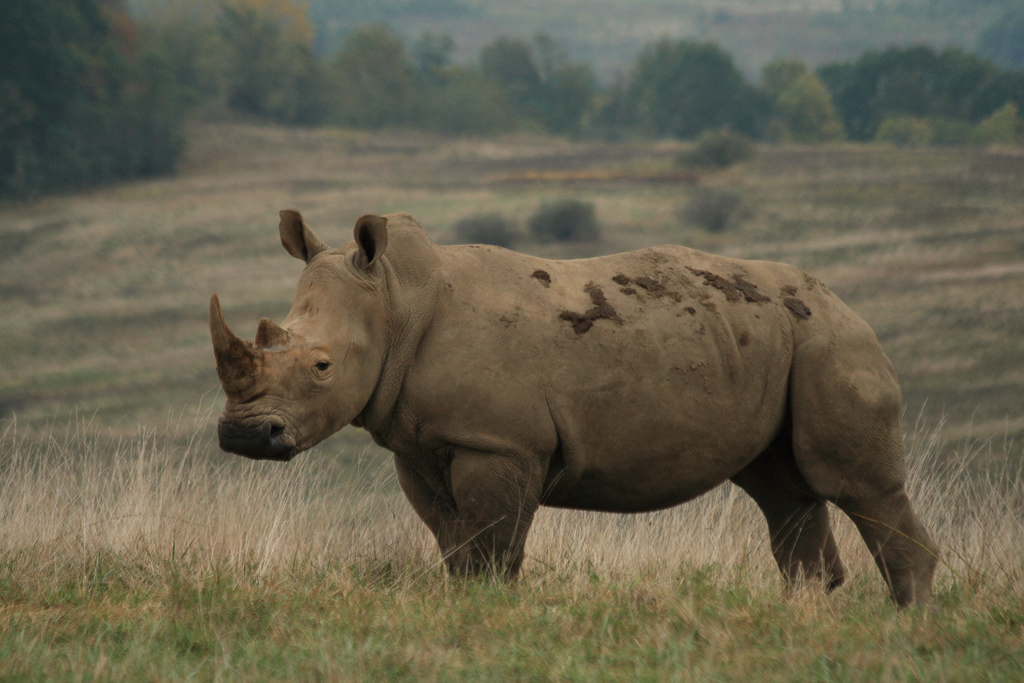
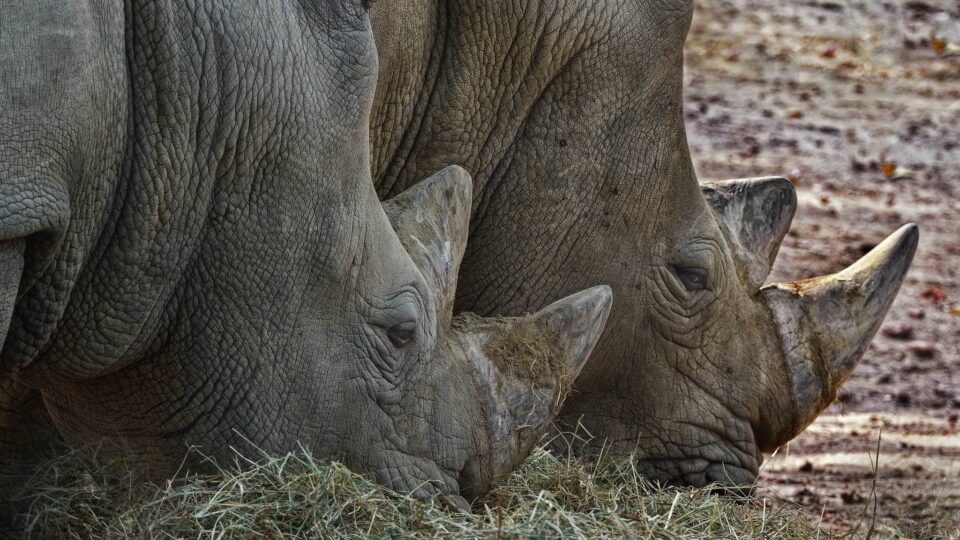
Northern White Rhinos are virtually extinct; only two female individuals survive in Kenya.  Southern White Rhinos also nearly vanished early in the 20th century, mostly because of excessive hunting.   A surviving group of fewer than 100 animals was identified in South Africa, and ongoing conservation efforts led to the existing population of southern white rhinos, which now numbers more than 16,000.

Among the most successful conservation efforts took place at a 30-square-mile farm, Platinum Rhino, that was set up in 2009 about 100 miles southwest of Johannesburg.  The owner of the farm did a great job of maintaining genetic diversity of the herd and protecting it from poachers.  Eventually, it was costing $175,000 a month just for security against illegal hunters seeking rhino horns.

Faced with unsustainable expenses, the farm put the herd of 2,000 rhinos up for auction in April with a starting price of $10 million.  No bidders came forward. 

Fortunately, in September, the conservation group African Parks announced that it had reached a deal to take over the herd.  African Parks partners with 12 countries in Africa to manage 77,000 square miles of protected areas.

The plan is to start moving the rhinos into a series of new sites in the wild starting next year.  Moving the 5,000-pound animals to new locations will be complicated and expensive, costing anywhere from $1,500 to move a single rhino by land within South Africa to $50,000 for far afield air transport.  African Parks is now raising funds to relocate the animals.

**********

Web Links

Now Available: 2,000 Rhinos, Free to Good Homes With Plenty of Space

Photo, posted September 4, 2023, courtesy of Eric Huybrechts via Flickr.

Earth Wise is a production of WAMC Northeast Public Radio
Too Many Bison | Earth Wise

September 21, 2023 By EarthWise Leave a Comment

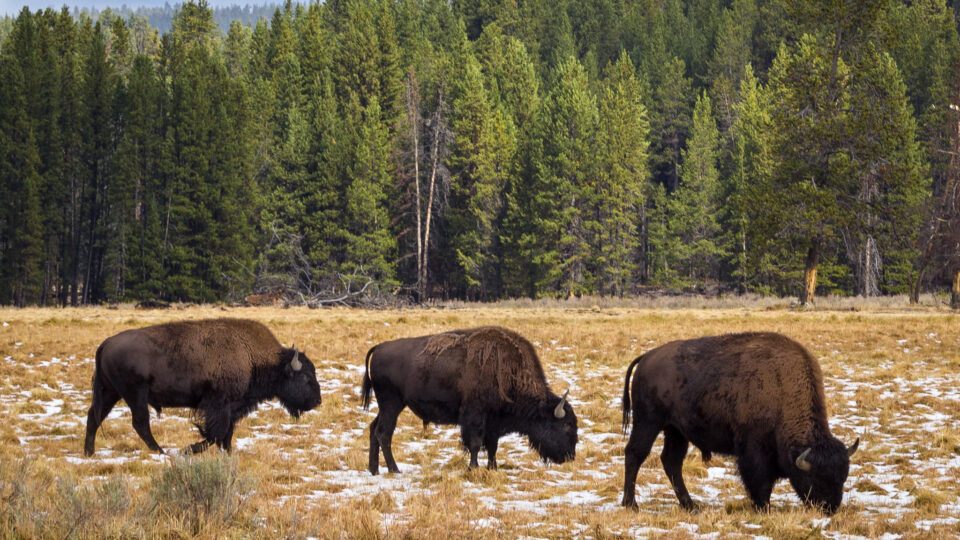
In the northern part of Yellowstone National Park, an historically large bison herd is hampering the comeback of quaking aspen trees, whose numbers were greatly diminished by decades of over-browsing by elk.  Restoring the balance of ecosystems at Yellowstone is proving to be a complicated matter.

Long ago, the bison population in the Great Plains was as much as 30 million.  The population sharply decreased in the 1800s.  By the 1830s, there were no bison east of the Mississippi River.  Fifty years later, the Plains bison was nearly extinct.  Several small herds lived near Yellowstone Park when it was established in 1872, but poachers killed off nearly of them by the turn of the century.  Protective measures were taken and by 1925, Yellowstone’s Lamar Valley herd had grown to more than 750.  After that, occasional culling took place for over 40 years. 

When gray wolves and cougars were removed from the park, elk populations boomed, and the elk gradually decimated the growth of quaking aspen, cottonwood, willow, and berry-producing shrubs.  Both elk and bison were regularly culled until 1968 when public and congressional outcry intervened.

The return of wolves and cougars to the park made some progress in restoring ecosystem balance, particularly with respect to the elk population which has dropped from 20,000 to 5,000.  But bison numbers have grown to over 4,000 over past 20 years and the damage once caused by elk is now continuing from bison.

Park administrators are faced with complex management decisions about how to best preserve the ecosystems at Yellowstone National Park.

**********

Web Links

Bison in northern Yellowstone proving to be too much of a good thing

Photo, posted October 6, 2016, courtesy of Christian Collins via Flickr.

Earth Wise is a production of WAMC Northeast Public Radio

Snakes Near A Plane | Earth Wise

September 15, 2021 By EarthWise Leave a Comment

San Francisco International Airport is the seventh-busiest airport in the United States.  In a typical year, approximately 55 million people pass through SFO on their way to destinations throughout North America and beyond.

At some point during their journey to or from the terminals at SFO, each one of those people will pass by a seemingly unremarkable 180-acre parcel of land.  Surrounded by highways and train tracks, the soggy and overgrown vacant lot isn’t just home to rows of power lines.  It’s also home to the world’s largest population of the beautiful and highly endangered San Francisco garter snake.   

According to a recent study conducted by the U.S. Geological Survey, there are approximately 1,300 San Francisco garter snakes at SFO’s West of Bayshore property – the greatest concentration of these snakes ever recorded.

Conservationists have long known that the San Francisco garter snake was in trouble.  In fact, it landed on the U.S. Fish and Wildlife Service’s very first endangered species list, which was published in 1967.  Over the years, agricultural, commercial, and urban development have destroyed much of its wetland habitat, as well as much of its primary food source, the California red-legged frog.  The snakes have also been a popular target for poachers and collectors.

Since 2008, SFO has been working with the USFWS on a recovery strategy for the species.  Together, they’ve made enhancements to the West of Bayshore habitat, including building rainfed ponds and deepening existing wetlands.  They have also added fences to protect habitat and prevent illegal collection.

But low population counts at other locations means the recovery for the San Francisco garter snake is far from over. 

************

Web Links

Combining genetic and demographic monitoring better informs conservation of an endangered urban snake

A San Francisco Airport Site Is Crawling With Snakes—And That’s a Good Thing

Photo, posted April 16, 2011, courtesy of Brian Gratwicke via Flickr.

Earth Wise is a production of WAMC Northeast Public Radio.

An Environmental Victory In Cameroon | Earth Wise

September 23, 2020 By EarthWise Leave a Comment

Preserving biodiversity in Cameroon

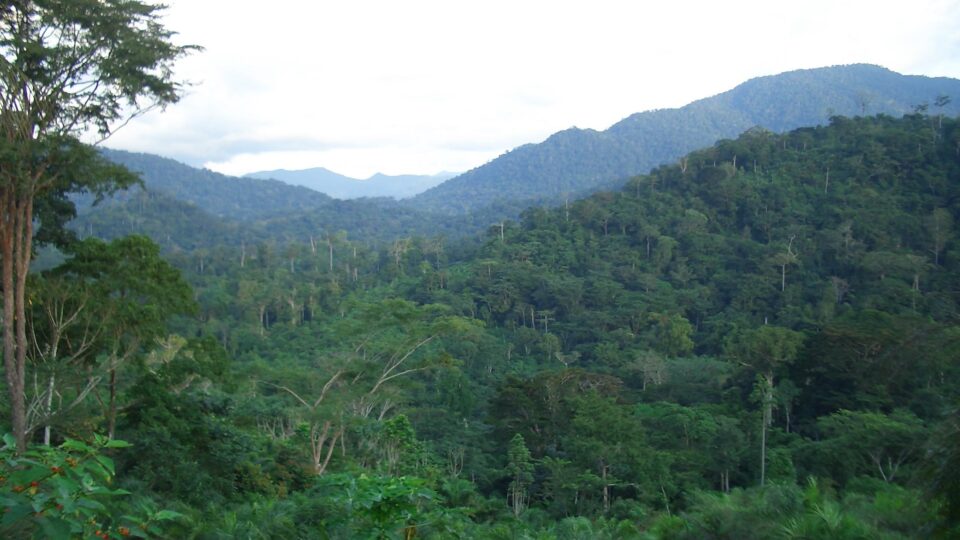
The Ebo Forest in Cameroon is one of the last intact forests in central Africa and is a biodiversity hotspot, home to hundreds of rare plants and animal species, including tool-using Nigeria-Cameroon chimpanzees, western gorillas, forest elephants, red colobus monkeys, and giant goliath frogs.  The 600 square miles of mountain slopes and river valleys are covered by thick tree canopies that shelter a fascinating array of species.

This past July, Cameroon Prime Minister Joseph Dion Ngute signed a decree that turned half of the Ebo Forest into a so-called forest management unit, meaning that the government could begin to sell logging concessions.

However, on August 11, Ngute, at the direction of President Paul Biya, withdrew the decree, suspending any logging plans.  President Biya also ordered a delay to reclassify an additional 160,000 acres of the Ebo, which might have opened up even more forest for logging.

Apart from its rich biodiversity, the Ebo Forest is culturally and societally important for the Banen Indigenous people, who consider it to be their sacred ancestral home.  The Banen were ousted from the forest in the 1960s but took up settlements just a few miles from its borders.  They still rely on the forest for food and medicines.  Meanwhile, the proximity of the forest to big cities makes it an easy target for bushmeat poachers.

Both conservation groups and indigenous leaders welcomed the withdrawal of the decree but remain concerned about the future of the Ebo Forest.  Conservation groups hope that the international community will seize the opportunity to work with the government of Cameroon to make the Ebo Forest a permanent showcase for long-term conservation in harmony with very challenged communities.

**********

Web Links

Cameroon Cancels Plan to Log Half of the Ebo Forest, a Key Biodiversity Hotspot in Central Africa

Photo, posted September 17, 2005, courtesy of Salva le Foreste via Flickr.

Earth Wise is a production of WAMC Northeast Public Radio.

Trading Rhino Horn And Tiger Bone

November 21, 2018 By EarthWise Leave a Comment

https://earthwiseradio.org/wp-content/uploads/2018/11/EW-11-21-18-Trading-Rhino-Horn-and-Tiger-Bone.mp3

Historically, rhino horn and tiger bone were used in traditional Chinese medicine to treat various illnesses, despite the lack of any evidence of their effectiveness.  In fact, rhino horn is simply keratin, a protein that is found in human fingernails and hair.  Rhino horn is used to treat everything from cancer to gout in traditional Chinese medicine.  Similarly, a paste made from crushed tiger bone is thought to treat a variety of ailments, including rheumatism and back pain.

[Read more…] about Trading Rhino Horn And Tiger Bone

Tiger Poaching

February 14, 2017 By EarthWise

https://earthwiseradio.org/wp-content/uploads/2017/02/EW-02-14-17-Tiger-Poaching-on-the-Rise.mp3

Last year, tiger poaching in India jumped to its highest levels in 15 years.   The spike was the result of killings by gangs of poachers, tigers being snared by locals trying to trap other animals for food, and by cutbacks in anti-poaching efforts because of budget cuts.

[Read more…] about Tiger Poaching

Dehorning Rhinos

September 30, 2016 By WAMC WEB

https://earthwiseradio.org/wp-content/uploads/2016/09/EW-09-30-16-Dehorning-Rhinos.mp3

At the beginning of the 20th century, there were about 500,000 rhinos across Africa and Asia.  By 1970, the number was down to 70,000.  Today, there are less than 30,000 rhinos in the wild.  The number of black rhinos dropped to as low as 2,300 in 1993.  Aggressive conservation efforts have brought their numbers up to over 5,000 today.

[Read more…] about Dehorning Rhinos

Duping Poachers

March 31, 2016 By WAMC WEB

https://earthwiseradio.org/wp-content/uploads/2016/03/EW-03-31-16-Duping-Poachers.mp3

According to the Humane Society of the United States, hunters legally kill tens of millions of animals every year.  But hunters also illegally kill just as many animals – if not more – often either on closed lands or out of season.  Few perpetrators of this deadly crime against wildlife are ever caught or punished.

[Read more…] about Duping Poachers

Drones And Wildlife Preservation

March 14, 2016 By WAMC WEB

https://earthwiseradio.org/wp-content/uploads/2016/03/EW-03-14-16-Drones-and-Wildlife-Preservation.mp3

We hear more and more about drones these days.   There is plenty of controversy about their use in warfare.   Drones are also used to snoop on construction projects.   Drones are spotted at the beach being used as high-tech toys.   And drones are becoming a powerful tool in wildlife protection.

[Read more…] about Drones And Wildlife Preservation

Primary Sidebar

Recent Episodes

  • An uninsurable future
  • Clean energy and jobs
  • Insect declines in remote regions
  • Fossil fuel producing nations ignoring climate goals
  • Trouble for clownfishes

WAMC Northeast Public Radio

WAMC/Northeast Public Radio is a regional public radio network serving parts of seven northeastern states (more...)

Copyright © 2026 ·