• Skip to primary navigation
  • Skip to main content
  • Skip to primary sidebar

Earth Wise

A look at our changing environment.

  • Home
  • About Earth Wise
  • Where to Listen
  • All Articles
  • Show Search
Hide Search
You are here: Home / Archives for NREL

NREL

New York And Green Hydrogen | Earth Wise

August 23, 2021 By EarthWise Leave a Comment

Green hydrogen to be a part of New York's decarbonization strategy

In July, outgoing New York Governor Andrew Cuomo announced plans for the state to explore the potential role of green hydrogen as part of New York’s decarbonization strategy.

Green hydrogen is hydrogen produced using renewable energy, such as wind, solar, and hydro power.  While hydrogen itself is a carbon-free fuel, most of the hydrogen produced today is made with a process called natural gas reforming which has byproducts of carbon monoxide and carbon dioxide.  As a result, the environmental benefits of using hydrogen are largely lost.  Hydrogen is the most plentiful element in the universe but extracting it for use as a fuel is not easy.

Green hydrogen is obtained by splitting water molecules into their constituent hydrogen and oxygen parts.  In principle, oxygen is the only byproduct of the process.  The main drawback of electrolysis, as this process is called, is that it is energy intensive as well as being expensive.  But if that energy comes from renewable sources, then it is a clean process.

New York’s announcement is that the state will collaborate with the National Renewable Energy Laboratory and join two hydrogen-focused organizations to inform state decision-making, as well as make $12.5 million in funding available for long duration energy storage techniques and demonstration projects that may include green hydrogen.

Green hydrogen has the potential to decarbonize many of the more challenging sectors of the economy.  Hydrogen is a storable, transportable fuel that can replace fossil fuels in many applications.  Many experts believe that the so-called hydrogen economy could be the future of the world’s energy systems.  For that to happen, green hydrogen will need to be plentiful, sustainable, and inexpensive.

**********

Web Links

New York announces initiatives to explore green hydrogen for decarbonization

Photo, posted October 26, 2019, courtesy of Pierre Blache via Flickr.

Earth Wise is a production of WAMC Northeast Public Radio.

Recyclable Wind Turbines | Earth Wise

January 1, 2021 By EarthWise Leave a Comment

Making wind turbine blades recyclable

The blades of modern wind turbines can be longer than the wing of a Boeing 747. Their useful lifetime is perhaps 20 years and after that, they can’t just be hauled away.  They end up being cut up with special industrial saws to create pieces small enough to be strapped to a tractor-trailer.  Then, they end up in landfills.  There are thousands of blades being removed each year and those numbers are growing.

Wind turbine blades are currently manufactured using thermoset resin, which cannot be recycled.  It is also energy-intensive and manpower-intensive to produce.

Researchers at the National Renewable Energy Laboratory in partnership with Arkema Inc of Pennsylvania have demonstrated the feasibility of using thermoplastic resin instead to make wind turbine blades.  That material can be recycled and can also enable longer, lighter-weight, and lower-cost blades.  Using thermoplastic could also allow manufacturers to build blades on site, alleviating the problems of transporting ever larger turbine blades.

Current blades are made primarily of composite materials like fiberglass infused with thermoset resin.  The manufacturing process requires additional heat to cure the resin, which adds cost and time.  Thermoplastic resin cures at room temperature and requires less labor.  With regard to recycling, thermoplastic resin, when heated above a certain temperature, melts into its original liquid resin and can be reused. 

NREL has demonstrated the feasibility of the thermoplastic resin system by manufacturing nearly identical blades using both the standard materials and the thermoplastics.  NREL has also developed a technoeconomic model to evaluate the cost benefits of using thermoplastic resin.

**********

Web Links

News Release: NREL Advanced Manufacturing Research Moves Wind Turbine Blades Toward Recyclability

Photo, posted June 28, 2008, courtesy of Patrick Finnegan via Flickr.

Earth Wise is a production of WAMC Northeast Public Radio.

Hydropower And Floating Solar | Earth Wise

October 30, 2020 By EarthWise Leave a Comment

Combining hydropower and solar power

According to a new analysis by the National Renewable Energy Laboratory, hybrid systems of floating solar panels and hydroelectric plants have the potential to produce a significant portion of the world’s electricity.

According to their estimates, adding floating solar panels to bodies of water that host hydropower stations could produce up to 7.6 terawatts of power a year from the solar systems, resulting in about 10,600 terawatt-hours of energy.  The total global electricity consumption in 2018 was 22,300 terawatt-hours.  So, the potential in terms of the global appetite for electricity is very large.

This estimate is certainly optimistic.  It does not take into account economic feasibility or specific market demand.  What it does represent is an estimate of the technical and performance potential of floating photovoltaics at hydroelectric facilities.

Floating solar is just starting to be used in the U.S., but it has already caught on overseas where space for ground-mounted systems is at a greater premium. 

According to the NREL study, nearly 400,000 freshwater hydropower reservoirs across the globe could host floating PV sites that could be used in conjunction with the existing hydroelectric plants.  One important advantage of this approach is that the hybrid system would reduce transmission costs by linking to a common substation.  In addition, the two technologies could balance each other, with solar power taking up the slack in dry seasons and hydropower working well in rainy seasons.  In some places, pumped storage hydropower could be used to store excess solar generation.

There is great potential in hybrid floating solar/hydroelectric power.

**********

Web Links

Untapped potential exists for blending hydropower, floating solar panels

Photo, posted April 12, 2009, courtesy of Alexis Nyal via Flickr.

Earth Wise is a production of WAMC Northeast Public Radio.
A New Record For Solar Hydrogen Production

May 29, 2017 By EarthWise

https://earthwiseradio.org/wp-content/uploads/2017/05/EW-05-29-17-A-New-Record-for-Solar-Hydrogen-Production.mp3

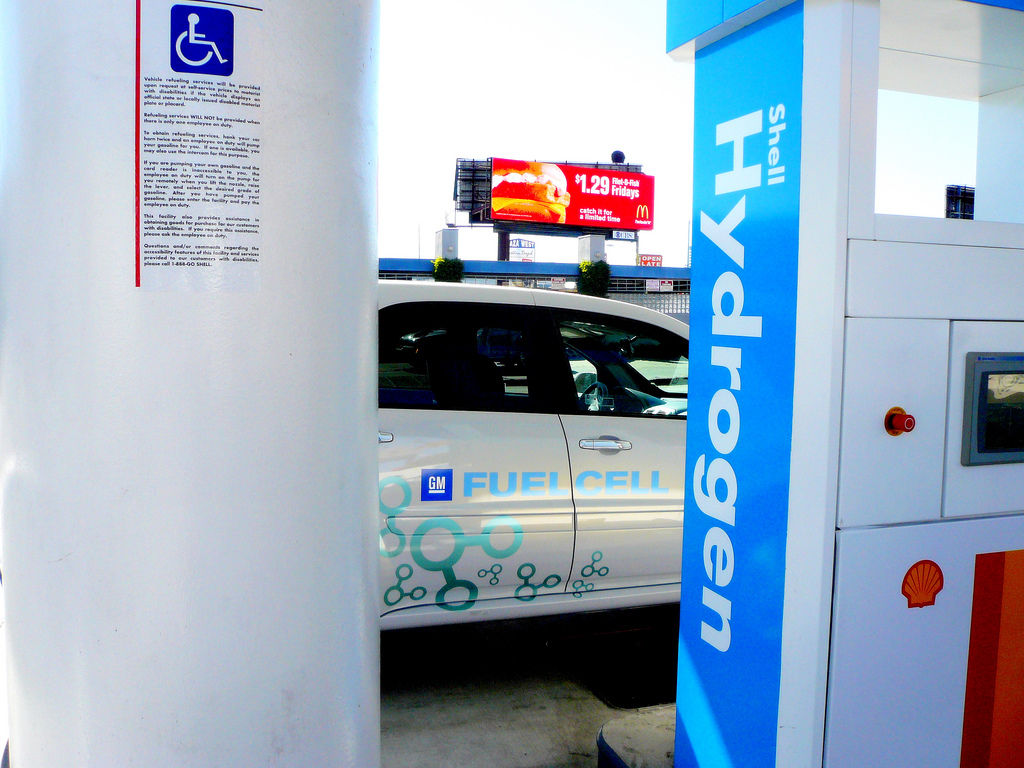
Renewable energy may be under attack by the federal government these days, but one federal agency is making great progress on using the sun’s energy to split hydrogen from water.   The National Renewable Energy Laboratory, located in Golden, Colorado, recently highlighted two initiatives aimed at the production of renewable hydrogen.

[Read more…] about A New Record For Solar Hydrogen Production

Solar Rooftops Looking Better Than Ever

May 26, 2016 By WAMC WEB

https://earthwiseradio.org/wp-content/uploads/2016/05/EW-05-26-16-Solar-Rooftops.mp3

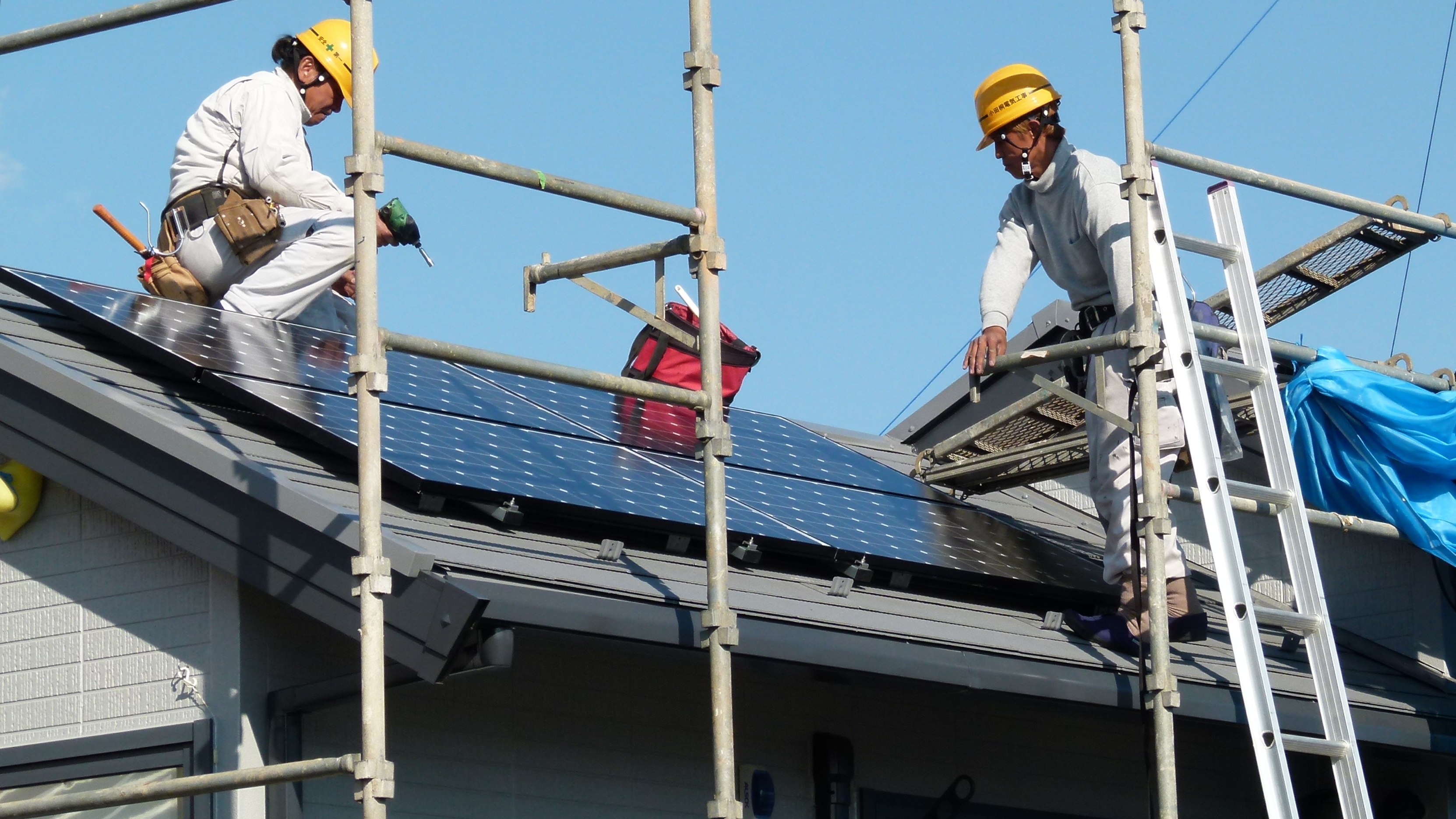
The price for installing solar panels continues to get lower and lower as volumes increase and technology improves.  There are also more ways than ever to get solar installed with leases and other creative financial arrangements.

[Read more…] about Solar Rooftops Looking Better Than Ever

Primary Sidebar

Recent Episodes

  • An uninsurable future
  • Clean energy and jobs
  • Insect declines in remote regions
  • Fossil fuel producing nations ignoring climate goals
  • Trouble for clownfishes

WAMC Northeast Public Radio

WAMC/Northeast Public Radio is a regional public radio network serving parts of seven northeastern states (more...)

Copyright © 2026 ·