
• Skip to primary navigation
  • Skip to main content
  • Skip to primary sidebar

Earth Wise

A look at our changing environment.

  • Home
  • About Earth Wise
  • Where to Listen
  • All Articles
  • Show Search
Hide Search
You are here: Home / Archives for nets

nets

Birds Bees And Coffee | Earth Wise

May 3, 2022 By EarthWise Leave a Comment

Biodiversity adds value to agriculture

A new study by the University of Vermont in collaboration with researchers from three Latin American countries looked at the effects of birds and bees on coffee crops.  They found that coffee beans are bigger and more plentiful when birds and bees team up to protect and pollinate coffee plants.

The real-world study manipulated coffee plants across 30 farms by excluding birds and bees with a combination of large nets and small lace bags.  They looked at four scenarios:  bird activity alone (pest control), bee activity alone (pollination), no bird and bee activity at all, and a natural environment where birds and bees were free to pollinate and eat insects that otherwise damage coffee plants.

The study looked at fruit set, fruit weight, and fruit uniformity – important factors that determine the quality and price of the coffee crop.  The results were that the combined positive effects of birds and bees were greater than their individual effects.   Without birds and bees, the average coffee yield on the farms declined nearly 25%.  That is important information for the $26 billion coffee industry.

A surprising result of the study is that many birds providing pest control to coffee plants in Costa Rica had migrated thousands of miles from Canada and the U.S.

Previous studies looked at the benefits of natural factors separately and then added them up.  But the new study demonstrates that nature is an interacting system with both synergies and trade-offs.  Past assessments of individual ecological services may have underestimated the benefits biodiversity provides to agriculture and human wellbeing.  Ecosystems services are more valuable together than separately.

**********

Web Links

The Secret to Better Coffee? The Birds and the Bees

Photo, posted March 2, 2012, courtesy of Caroline Gluck/Oxfam via Flickr.

Earth Wise is a production of WAMC Northeast Public Radio.
Lighted Nets Protect Marine Wildlife | Earth Wise

March 16, 2022 By EarthWise Leave a Comment

Adding light to marine nets to protect wildlife

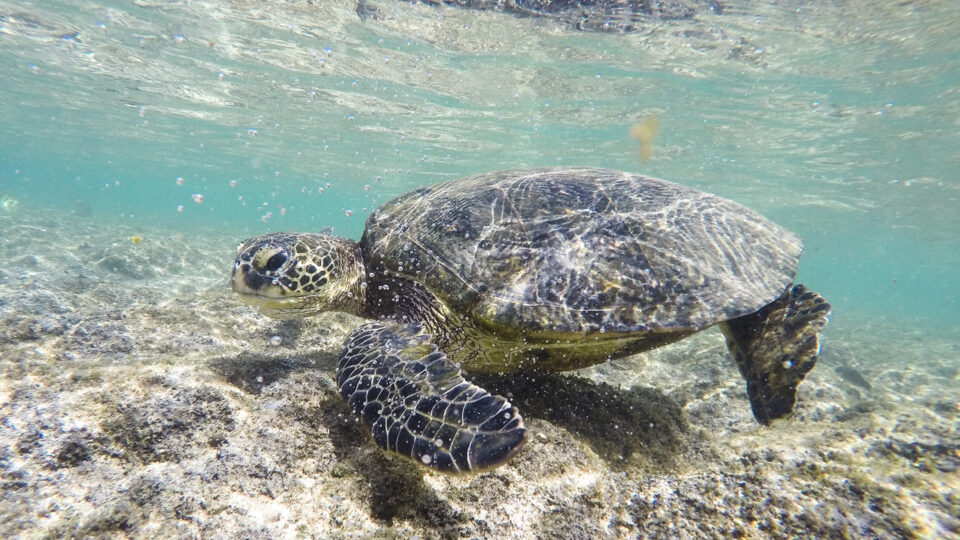
Gillnets are walls or curtains of netting that hang in the water to trap fish.  They are one of the most extensively used fishing gear in coastal regions throughout the world’s oceans.  While they are very effective at catching targeted fish species, they are not discriminating.  As a result, they carry significant risk of bycatch – the accidental capture of unwanted species as well as other interactions with various marine animals.

Researchers from The Wildlife Conservation Society, NOAA Fisheries, Arizona State University, and the National Fisheries and Aquaculture Institute of Mexico have recently published a study showing that using lighted gillnets reduced overall bycatch by 63%, including a 95% reduction in sharks, skates, and rays, and an 81% reduction in Humboldt squid. 

Gillnets often catch endangered, threatened, and protected species such as sharks, sea turtles, marine mammals, and seabirds, as well as unwanted species and non-marketable juvenile target fish species.  The bycatch animals are often dead or injured and are generally dumped overboard.

Illuminating gillnets with LED lights has emerged over the past decade as an effective tool to reduce bycatch of endangered sea turtles.  The new study is the first detailed examination of the effectiveness of illumination for other vulnerable species.

Gillnets are ubiquitous because they are inexpensive and catch everything that passes them.  Global populations of sharks, skates, and rays have declined as a result of bycatch and illegal fishing. The results of this study are encouraging because they provide a practical solution for increasing the selectivity of gillnets and avoiding bycatch. 

**********

Web Links

Lighted Nets Dramatically Reduce Bycatch of Sharks and Other Wildlife While Making Fishing More Efficient

Photo, posted September 19, 2015, courtesy of Jim Bahn via Flickr.

Earth Wise is a production of WAMC Northeast Public Radio.
The Hunt For Marine Plastic | Earth Wise

December 21, 2021 By EarthWise Leave a Comment

How to detect and track floating plastic in the oceans

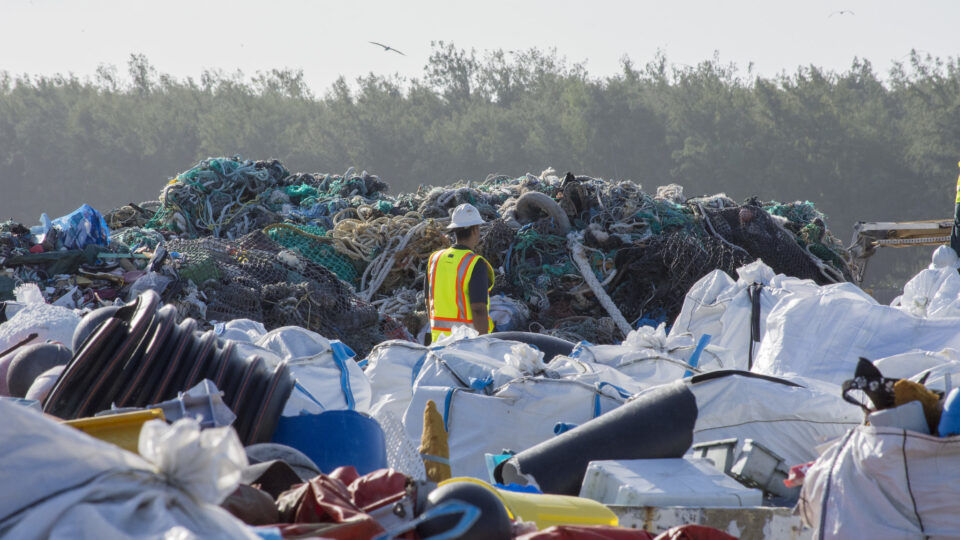
Estimates are that about 10 million tons of plastic enter the ocean every year.  This is equivalent to a truckload of plastic being dumped into the sea every minute and the stuff is not easy to keep track of.  Some of it ends up in the  infamous ocean garbage patches.  But overall, researchers only know what happens to about 1% of it.

The European Space Agency has decided to find out whether it might be possible to detect and track floating plastic in the oceans using satellite monitoring.  Researchers have a variety of ideas about how best to do this and now the agency is testing some of those ideas.

The ESA maintains something called the Atlantic Basin Facility which is a 7000 square-foot tank equipped to simulate various types of waves and tidal currents.  It is the largest facility of its kind in the world.

Researchers place plastic in the basin consisting of typical items found at sea, such as bags, bottles, marine nets and ropes, plastic cutlery, and Styrofoam balls.  The plastic used in the study included material previously recovered from the sea through ocean cleanup campaigns.  Multiple research groups from European universities used specialized instrumentation to monitor the basin from above.  Techniques included radar remote sensing, something called GNSS reflectometry, and specialized optical instrumentation.

Initial results look promising in that under some circumstances teams received useable signals.  It will take further analysis to determine the ultimate utility of space-based monitoring of plastic entering the ocean.  Marine litter is a large and growing problem.  Figuring out where it all is and where it is going is a necessary part of any solution.

**********

Web Links

Hunting for marine plastic

Photo, posted March 24, 2017, courtesy of Holly Richards/USFWS via Flickr.

Earth Wise is a production of WAMC Northeast Public Radio.
Right Whales And The Warming Atlantic | Earth Wise

October 25, 2021 By EarthWise Leave a Comment

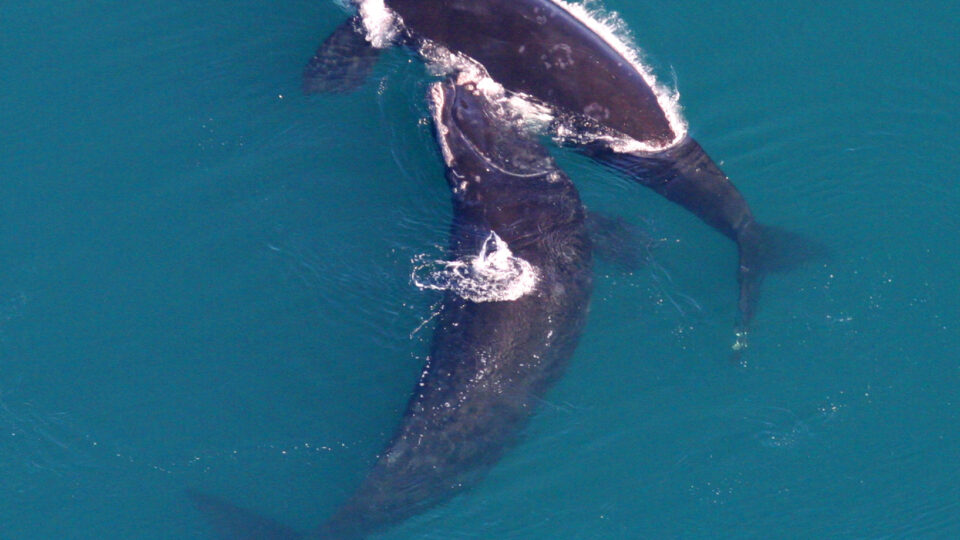
The warming of the Atlantic Ocean has driven the critically endangered North Atlantic right whale population from its traditional and protected habitat.  This has exposed the whales to more lethal ship collisions, increased entanglements with commercial fishing gear, and greatly reduced calving rates.

Since 2010, the calving rate has declined, and the right whale population has dropped by an estimated 26%.  Ten years ago, there were about 500 North Atlantic right whales; now there are an estimated 356.

These are some of the best studied whales in the oceans; scientists basically recognize each individual whale and when they are the victims of ship collisions or fishing entanglements, it is easy to identify which animal was killed.

Because of the warming climate, the Atlantic Meridian Overturning Circulation – an important system of surface and deep currents – has slowed down, causing the Gulf Stream to move north.  This has injected warmer and saltier water into the Gulf of Maine.  The warming Gulf of Maine has reduced the abundance of copepods, tiny crustations that are the favorite snack of right whales.   This has reduced whale calving rates and forced the whales to move north to the cooler waters of the Gulf of St. Lawrence.

For the past 6 years, more and more right whales have been observed feeding in the Gulf of St. Lawrence, where there were no protections in place to prevent ship strikes and fishing gear entanglement.  In 2017 alone, 17 right whale deaths were confirmed.

According to a recent report from Cornell University and the University of South Carolina, unless its management is improved, right whale populations will decline and potentially become extinct in the coming decades.

**********

Web Links

Warming Atlantic forces whales into new habitats, danger

Photo, posted December 8, 2016, courtesy of Sea to Shore Alliance/NOAA via Flickr.

Earth Wise is a production of WAMC Northeast Public Radio.

The Dangers Of Negative Emissions Technologies | Earth Wise

September 28, 2020 By EarthWise Leave a Comment

The dangers of negative emissions technologies

Reducing carbon emissions is not easy and there are plenty of people who don’t even want to try for various reasons, generally related to their perceived economic interests and convenience.  As a result, there is a great deal of interest in so-called negative emissions technologies or NETs.   These are methods for removing carbon dioxide from the atmosphere.  Even the UN Intergovernmental Panel on Climate Change assumes that NETs will play a role in mitigating the effects of climate change and meeting international goals.

The most widely studied approaches to negative emissions technology are bioenergy with carbon capture and storage – which entails growing crops for fuel, and then capturing and burying the CO2 produced from burning the fuel; planting more forests; and direct air capture, which involves actually pulling CO2 out of the air and storing it – probably underground. 

A new study published in Nature Climate Change points out that none of these technologies has even been tried at the demonstration scale, much less at the massive levels required to make a dent in current CO2 emissions. 

Their analysis of the biofuel and reforestation strategies show that each would take up vast land and water resources already needed for agriculture and nature.  Air capture uses less water than the other two approaches, but still uses quite a bit and even more energy, which if supplied by fossil fuels, would offset the benefits of carbon capture.

Negative emissions technologies may well play an important role in combating climate change, but it is essential that we understand what the consequences will be from implementing them.  We need to know the pitfalls that could arise.  It would be a major mistake to simply count on NETs to be some kind of silver bullet.

**********

Web Links

Remove CO2 from the air? Don’t bet on it before examining costs, researchers say

Photo, posted January 11, 2008, courtesy of Al Pavangkanan via Flickr.

Earth Wise is a production of WAMC Northeast Public Radio.
Boutique Hotels For Birds | Earth Wise

April 28, 2020 By EarthWise Leave a Comment

building boutique hotels for threatened birds

The changing Arctic climate has had a drastic effect on its seabirds.  In fact, seabirds worldwide are in crisis, with global populations plummeting nearly 70% over the past 70 years as a result of climate change, over-fishing, habitat loss, and other human impacts on their environment.

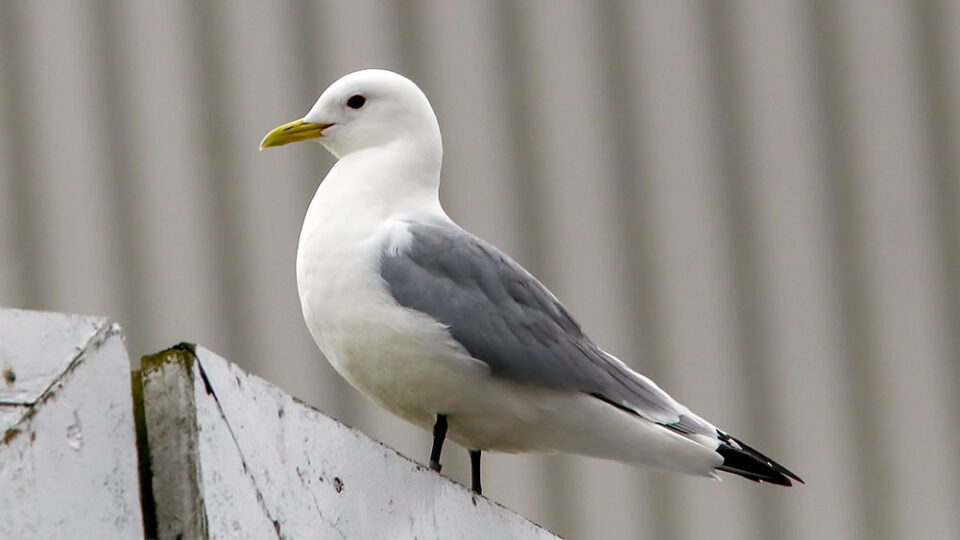
Above the Arctic circle in Norway, seabird behavior has changed dramatically.  Black-legged kittiwakes – which are the most seafaring member of the gull family – used to nest in cliffs over the ocean and seldom ventured inland.  But in recent years, that has changed.  Because of a warming ocean, increased storminess and other changes that are decimating chick populations in their normal habitat, the birds have been setting up housekeeping in places like shopping centers and office buildings in Tromsø and other towns along Norway’s north coast.

Tromsø, Hammerfest and other towns at the very north end of Norway have become very popular with tourists seeking the Northern Lights and wanting to see glaciers before they disappear.  The booming tourism has been put on hold for the moment as it has elsewhere, but when it returns, the regions growing hotels and shopping areas are facing a problem.

The birds taking up residence on these buildings are unpleasant neighbors.  They are especially noisy during the breeding season and people are having to put up nets or spikes on buildings to discourage the kittiwakes from settling there.

Local ecologists are now building boutique hotels just for kittiwakes. Using abandoned buildings on piers, they are adding ledges for nesting, materials for nest-building, and electronic speakers that croon kittiwake songs.  The hope is that the birds will stay in their own hotels and leave the other ones for the human tourists.

**********

Web Links

Norwegians are building boutique hotels for threatened Arctic birds

Photo, posted April 14, 2018, courtesy of Charlie Jackson via Flickr.

Earth Wise is a production of WAMC Northeast Public Radio.
Is Sustainable Seafood Really Sustainable?

December 5, 2017 By EarthWise Leave a Comment

https://earthwiseradio.org/wp-content/uploads/2017/12/EW-12-05-17-Is-Sustainable-Seafood-Sustainable.mp3

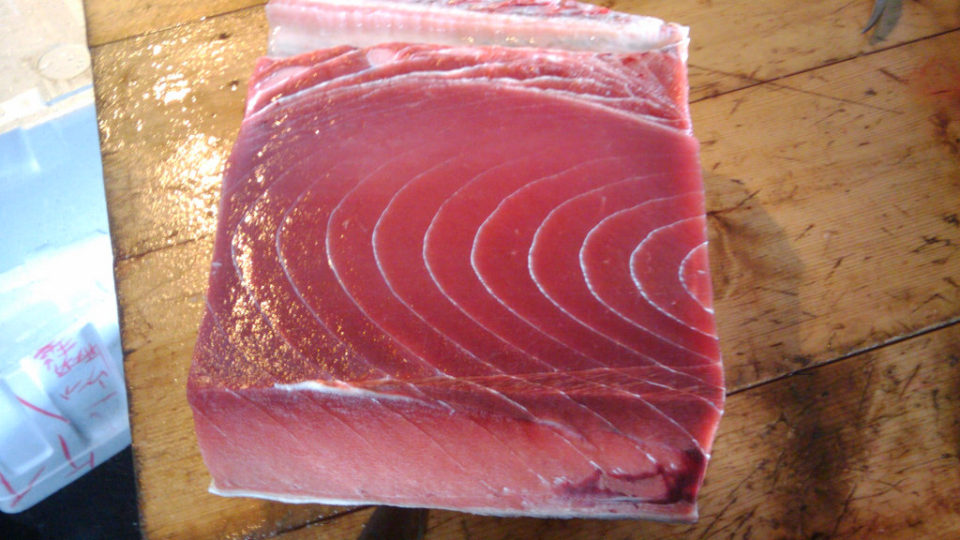
Tuna is perhaps the most popular seafood.   We eat it out of a can, we splurge on high-end sushi, and we prepare it in many other ways.   Some species of tuna are over-fished and some fishing methods are unsustainable.   As concerned consumers, we would like to know what sort of tuna we are eating.

[Read more…] about Is Sustainable Seafood Really Sustainable?

Primary Sidebar

Recent Episodes

  • An uninsurable future
  • Clean energy and jobs
  • Insect declines in remote regions
  • Fossil fuel producing nations ignoring climate goals
  • Trouble for clownfishes

WAMC Northeast Public Radio

WAMC/Northeast Public Radio is a regional public radio network serving parts of seven northeastern states (more...)

Copyright © 2026 ·