• Skip to primary navigation
  • Skip to main content
  • Skip to primary sidebar

Earth Wise

A look at our changing environment.

  • Home
  • About Earth Wise
  • Where to Listen
  • All Articles
  • Show Search
Hide Search
You are here: Home / Archives for lawns

lawns

Residential Gardens And Pollinators | Earth Wise

April 2, 2021 By EarthWise Leave a Comment

Residential gardens play an important role for pollinators

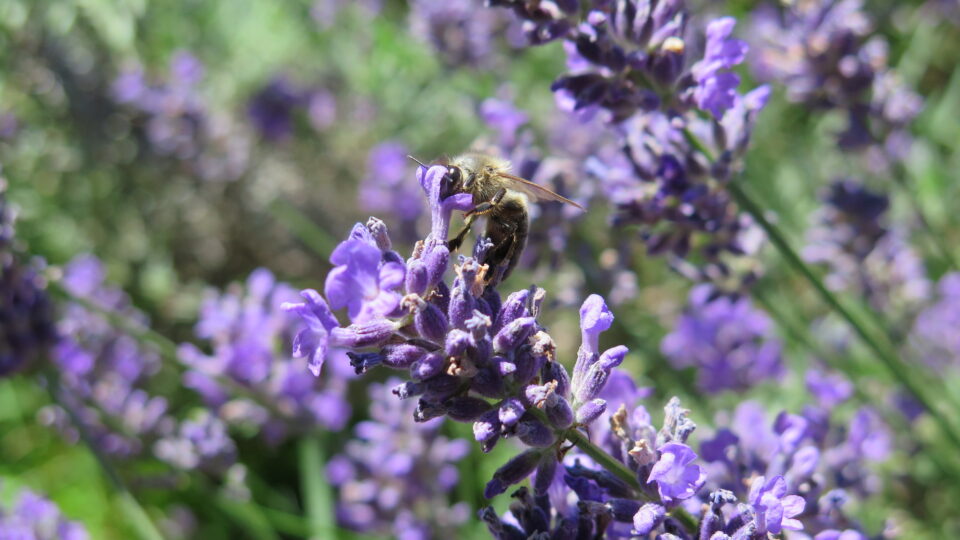
A new study led by the University of Bristol in the UK measured for the first time how much nectar is produced in urban areas to gauge the role of residential gardens in providing nutrients for pollinators.  They discovered that home gardens accounted for the vast majority of the crucial nutrients for pollinators; in fact, some 85% on average.

The study found that gardens generated a daily average of about a teaspoon of the unique sugar-rich liquid found in flowers which pollinators drink for energy.  A teaspoon sounds like very little, but it is enough to feed thousands of bees.

The research examined nectar production in four major UK towns and cities and measured nectar production in nearly 200 species of plants.  The results were that the nectar supply in urban landscapes is more diverse than in farmland and nature reserves.   In addition, gardens are critical because they produce the most nectar per unit area of land and actually cover the largest area of land in the cities studied.  In those cities, nearly a third of the land comprised domestic gardens, which is six times the area of parks and 40 times the area of small green allotments.

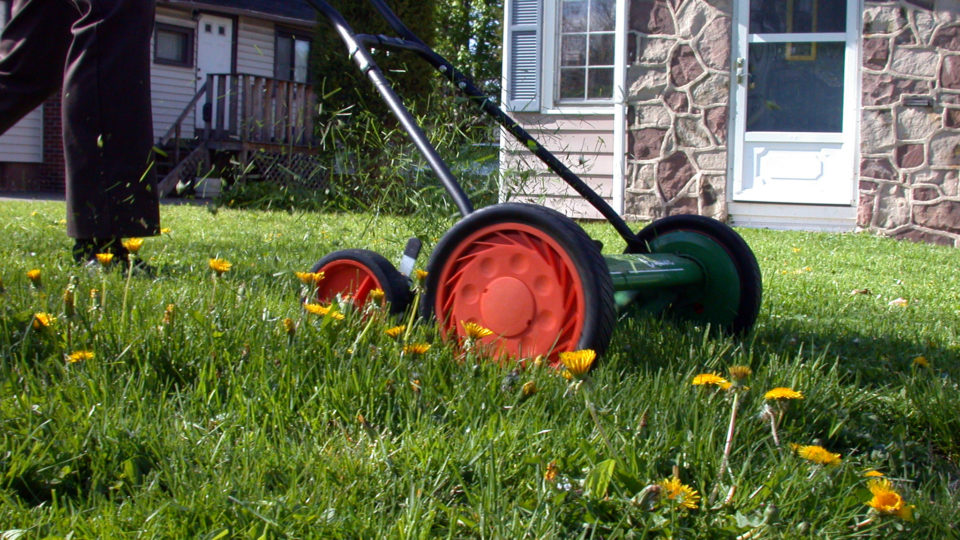
The upshot of the research is that home gardeners have a huge role to play in pollinator conservation.  Without domestic gardens, there would be far less food for pollinators that include bees, wasps, butterflies, moths, flies, and beetles.  Thus, it is important for home gardeners to keep planting nectar-rich flowers, mow lawns less often to let dandelions, clovers, and daisies flourish, avoid harmful pesticides, and avoid covering gardens in paving, decking, or artificial turf.

**********

Web Links

Pioneering research reveals gardens are secret powerhouse for pollinators

Photo, posted June 23, 2018, courtesy of Wolfferl via Flickr.

Earth Wise is a production of WAMC Northeast Public Radio.
More Trouble For Monarchs | Earth Wise

April 14, 2020 By EarthWise Leave a Comment

the decline of monarch butterflies

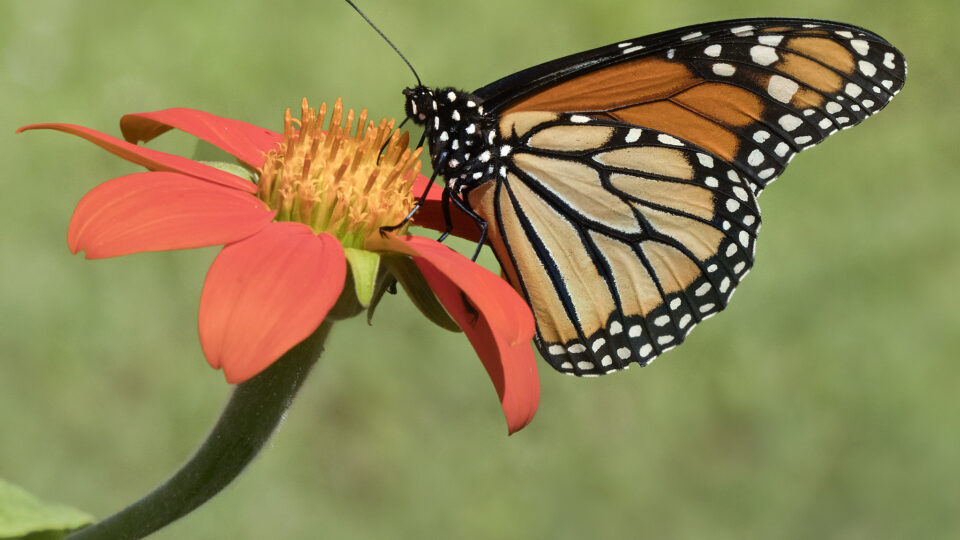
Monarch butterflies have been in trouble for quite a while and now it seems like their prospects are worse than ever.  Multiple surveys of butterfly populations are reporting plummeting numbers.

Western monarch butterflies spend their winters on the central California coast.  Months later, they breed in California’s Central Valley and as far north and east as Idaho.  But in recent years, it has become harder and harder to find them in their breeding sites.

The Western monarch population was in the millions in the 1980s.  In 2017, an annual survey found 200,000 butterflies.  In 2018 and 2019, only about 30,000 butterflies were tallied.  The loss of Western butterflies in general has come about from a variety of factors, including development, climate change, farming practices and the widespread use of pesticides by farmers and on home and business lawns.

Scientists use the area of land that migrating Monarchs occupy in Mexico to gauge populations.  This year, they covered about 7 acres, down from 15 acres in 2019.

Meanwhile, there are also far fewer Eastern monarch butterflies on the opposite side of the country.  According to a new population survey, the Eastern monarch has passed the extinction threshold.  Its population in 2020 dropped 53% from its already low 2019 numbers.  Scientists were expecting lower numbers this year, but they were staggered by their findings.

Butterfly populations are quite variable, so it is possible that the drastic declines this year are not necessarily irreversible, but the news is not good.   Researchers and environmental advocates continue to point out that mitigating the climate crisis, reducing pesticide use and planting pollinator gardens could help the butterflies to recover.

**********

Web Links

Monarch Butterfly Populations Are Plummeting

Photo, posted September 7, 2017, courtesy of C. Watts via Flickr.

Earth Wise is a production of WAMC Northeast Public Radio.
Cities And Monarch Butterflies

August 13, 2019 By EarthWise Leave a Comment

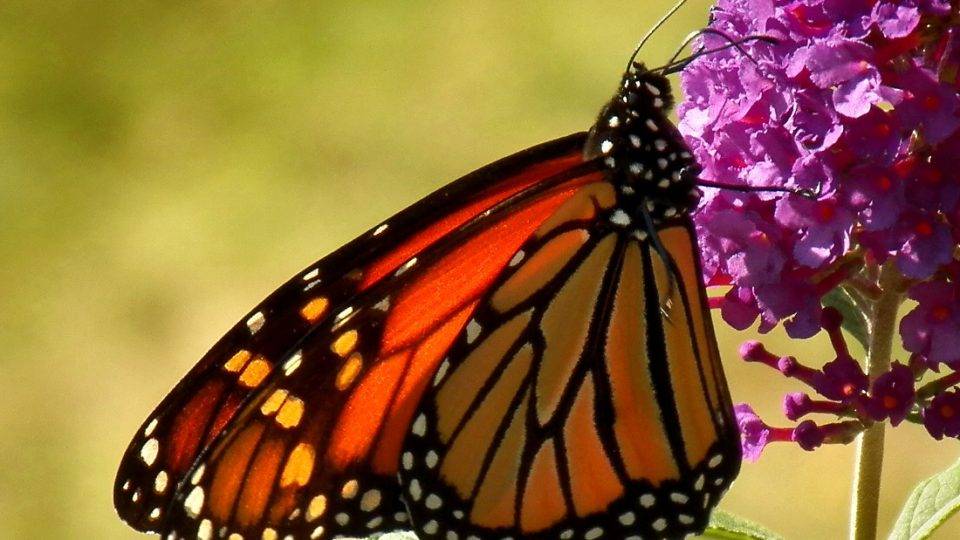
Monarchs are some of the most well-known butterflies in the U.S.   It is well-known that populations of the iconic orange-and-black butterflies have been in a steep decline for the last 20 years.  In fact, the Monarch population has declined by 80% over that period.

Milkweed, the only plant that Monarchs can lay their eggs on, continues to disappear across the United States and with it, the butterflies can disappear too.

Two new studies published in the journal Frontiers of Ecology and Evolution show that one of the most important things that can be done to save the Monarchs is to plant milkweed in cities.

We tend to think of cities as being the enemy of nature.  But metropolitan areas actually matter for wildlife conservation and that is especially true for pollinators like butterflies that can actually survive with very small patches of habitat.

The new study estimates the amount of habitat in cities that is available to Monarchs and other pollinators and how much more can potentially be added.  It looked at cities from the Monarch’s point of view by identifying the best places and most effective ways to engage land owners to transform low-quality green space – such as lawns – into high-quality homes for butterflies and other wildlife.

Just because urban dwellers can plant milkweed doesn’t always mean that they will.  There has to be a public perception that milkweed and other native flowers are acceptable and beautiful elements in home landscaping.  It will require some shifting of societal norms of what is desirable in neighborhood gardens in order for cities to be able to do their part in protecting butterflies and other species struggling in the modern world.

**********

Web Links

Cities are Key to Saving Monarch Butterflies

Photo, posted August 31, 2012, courtesy of Chris via Flickr.

Earth Wise is a production of WAMC Northeast Public Radio.
Your Children’s Yellowstone

January 25, 2019 By EarthWise Leave a Comment

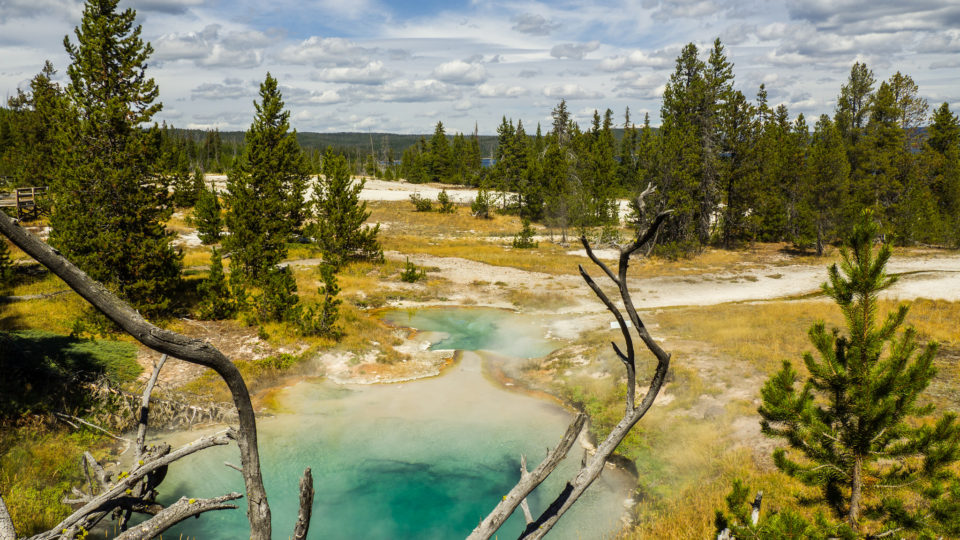
Yellowstone National Park was the first national park in the US and according to some sources, the first in the world.  It is the home of charismatic megafauna and stunning geysers that attract over four million visitors a year.  It is the only place in the United States where bison and wolves can be seen in great numbers.  And it is changing.

Over the next few decades of climate change, Yellowstone will quite likely see increased fire, less forest, expanding grasslands, shallower, warmer waterways, and more invasive plants.  All these things will alter how and how many animals move through the landscape.   Ecosystems are always changing, but climate change is transforming habitats so quickly that many plants and animals may not be able to make the transition at all.

Since 1948, the average annual temperature in the Greater Yellowstone ecosystem has gone up by 2 degrees Fahrenheit.  On balance, winter is 10 days shorter and less cold.  The Northern Rockies snowpack has fallen to its lowest level in eight centuries. Summers in the park are warmer, drier, and increasingly prone to fire.

Non-nutritious invasive plants like cheatgrass and desert madwort have replaced nutritious native plants.  When plants like these take over, they suck moisture out of the ground early so that bison and elk cannot be sustained throughout the summer.

The behavior of elk and other animals is already changing, with many staying outside the park to nibble lawns and alfalfa fields.  In turn, wolves go where the elk go.   Forests and waterways are changing as well.

The rapid changes going on at Yellowstone mean that the park that our children and grandchildren will visit in the future is likely to be a very different one from the Yellowstone we remember.

**********

Web Links

In Yellowstone National Park, warming has brought rapid changes.

Photo, posted September 7, 2016, courtesy of Mike Yang via Flickr.  

Earth Wise is a production of WAMC Northeast Public Radio.
Cleaning Up Storm Water

October 4, 2018 By EarthWise Leave a Comment

https://earthwiseradio.org/wp-content/uploads/2018/09/EW-10-04-18-Cleaning-Up-Storm-Water.mp3

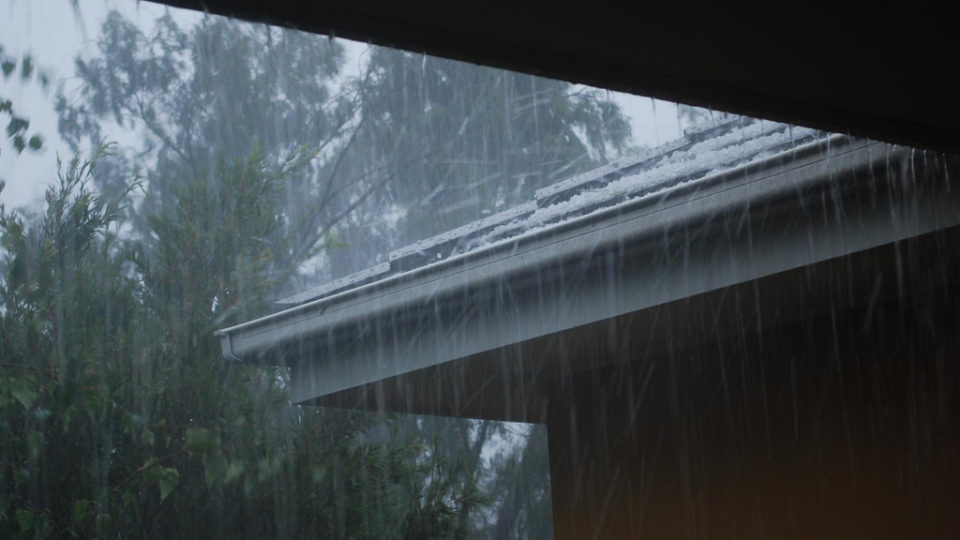
Storm water reclamation is an important activity for cities with limited water resources, such as those in Southern California.   Many places have small-scale reclamation efforts using rain gardens and bioswales.  Collecting storm water on a large scale faces a number of problems.

[Read more…] about Cleaning Up Storm Water

Lawnmower Pollution

October 25, 2017 By EarthWise Leave a Comment

https://earthwiseradio.org/wp-content/uploads/2017/10/EW-10-25-17-Lawnmower-Pollution.mp3

Over 50 million Americans mow their lawns each week, which uses 800 million gallons of gas per year and produces tons of air pollutants.  Garden equipment engines were completely unregulated with respect to emissions until the late 1990s and still emit high levels of carbon monoxide, volatile organic compounds, and nitrogen oxides.  In fact, gas mowers and their relatives like leaf blowers and edgers produce 5% of the air pollution in this country.

[Read more…] about Lawnmower Pollution

Leave Leaves Alone

October 16, 2015 By EarthWise

Close-up of several brown autumn leaves with dried surface, fallen on the ground above other such leaves.

https://earthwiseradio.org/wp-content/uploads/2015/09/EW-10-16-15-Leave-Leaves-Alone.mp3

In natural ecosystems, there is little waste. Nutrients taken up by plants are returned to the soil when plants die and decompose. Food eaten by animals is excreted; at the end of their lives, animals are also returned to the soil. Ecologists call this nutrient loop a biogeochemical cycle.

[Read more…] about Leave Leaves Alone

Primary Sidebar

Recent Episodes

  • An uninsurable future
  • Clean energy and jobs
  • Insect declines in remote regions
  • Fossil fuel producing nations ignoring climate goals
  • Trouble for clownfishes

WAMC Northeast Public Radio

WAMC/Northeast Public Radio is a regional public radio network serving parts of seven northeastern states (more...)

Copyright © 2026 ·