• Skip to primary navigation
  • Skip to main content
  • Skip to primary sidebar

Earth Wise

A look at our changing environment.

  • Home
  • About Earth Wise
  • Where to Listen
  • All Articles
  • Show Search
Hide Search
You are here: Home / Archives for labels

labels

Fighting honey fraud

May 12, 2025 By EarthWise Leave a Comment

Using artificial intelligence to fight honey fraud

Honey fraud is a significant issue for the food industry.  What is honey fraud?  Typically, it involves mislabeling where honey was produced or what types of flowers the bees collected nectar from.  Honey made from a single type of flower is often more expensive because of the unique flavor it provides or from potential health benefits.  Sometimes even cheap alternatives like sugar syrups are labelled as honey.  It turns out that honey is one of the most fraud-prone commodities in global trade, with fraud estimated to occur in up to 10% of the honey traded internationally.  Honey from some countries, such as China and India, has had 30% or more of samples found to be fraudulent.

Researchers at McGill University in Montreal have developed an AI-powered method to verify the origin of honey thereby ensuring that what is on the label corresponds to what is in the jar.

The McGill method can determine what kind of flowers the bees visited to produce a particular sample of honey.  Previous honey authentication involved pollen analysis, which is ineffective for honey that was processed or filtered.  The new method uses high-resolution mass spectrometry which captures a unique chemical “fingerprint” from the honey.  Machine learning algorithms read the fingerprint to identify the honey’s origin.

The researchers tested their methodology on a variety of honey samples which they then compared with honey from known botanical sources.  Using previous methods for honey authentication can take days.  The McGill method takes only minutes and works regardless of how the honey was processed.

According to the researchers, people deserve to know that the honey they buy is what it claims to be, and honest honey producers deserve protection from fraudulent competitors.

**********

Web Links

Fighting honey fraud with AI technology

Photo, posted May 6, 2012, courtesy of Emma Jane via Flickr.

Earth Wise is a production of WAMC Northeast Public Radio
Food Waste And The Environment | Earth Wise

November 25, 2022 By EarthWise Leave a Comment

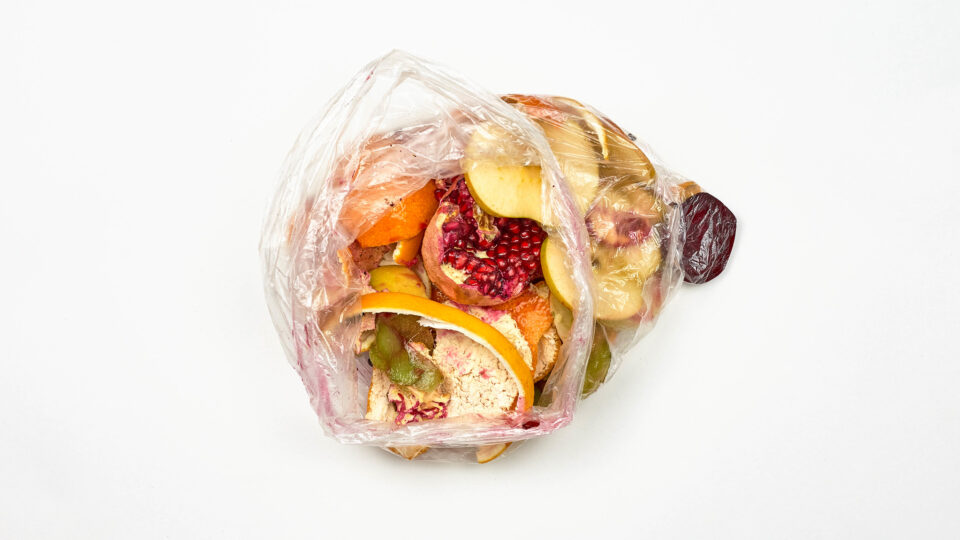
It is tragic that 31% of the world’s food production goes uneaten.  About 14% isn’t distributed after it is harvested.  Another 17% ends up wasted in retail or by consumers.  Worldwide, the amount of food that is wasted is enough to feed more than a billion people while at least 828 million people continue to be affected by hunger.  To make matters worse, food waste accounts for 8 to 10% of global greenhouse gas emissions, which is at least double that of aviation.  Food waste, rotting away in landfills, produces methane gas, a major source of global warming.

Around the world, there are efforts being launched to try to improve the situation.  California now has a law that requires grocery stores to donate edible food that would otherwise be disposed of or they face fines.  The state’s cities and counties are required to reduce the amount of organic waste going into landfills by 75% by 2025 and compost it instead.

In London, grocers no longer put date labels on fruits and vegetables because the labels were leading people to trash perfectly good food.  France now requires supermarkets and large caterers to donate food that is still safe to eat.

South Korea has little space for landfills.  So, the country has been campaigning against throwing away food for 20 years.  Nearly all organic waste in the country is turned into animal feed, compost, or biogas.  Koreans even have to pay for throwing out food waste.  There are now trash bins equipped with electronic sensors that weigh food waste.

All of these things can help.  There is no single magic bullet for reducing food waste, but it is essential to do for so many reasons.

**********

Web Links

Inside the Global Effort to Keep Perfectly Good Food Out of the Dump

Photo, posted November 30, 2020, courtesy of Marco Verch via Flickr.

Earth Wise is a production of WAMC Northeast Public Radio

We’re Still Eating The Wrong Things

August 23, 2019 By EarthWise 1 Comment

A new study published in the Journal of the Academy of Nutrition and Dietetics has found that despite efforts to increase public awareness of health issues related to diet, the amount of processed meat consumed by Americans has remained unchanged in the past 18 years.  Furthermore, our intake of fish and shellfish has not increased.  One quarter of US adults are still eating more unprocessed read meat than the recommended level, and less than 15% meet the current guidelines for fish and shellfish consumption.

About the only positive note is that Americans are eating less beef and more chicken than they did 18 years ago and, in fact, for the first time, the consumption of poultry exceeds that of unprocessed red meat.

Accumulating evidence has linked excessive consumption of processed meat to increased risk of obesity, diabetes, cardiovascular diseases, and some cancers.  The study’s authors speculate that public awareness of these linkages is not widespread enough to affect change and, in any case, factors other than health – social, cultural, and economic – have greater influence over Americans’ food choices.  The top five consumed processed meats are luncheon meat, sausage, hot dogs, ham, and bacon.

The low consumption of fish and shellfish among U.S. adults could be due to high retail prices, lack of awareness of the health benefits, and concerns about mercury contamination in certain types of fish.

Future research is needed to identify barriers to reducing processed meat consumption and increased seafood consumption.  Policies such as nutrition quality standards, excise taxes, health warning labels, and other interventions need to be explored.

**********

Web Links

Americans still eat too much processed meat and too little fish

Photo, posted January 28, 2014, courtesy of Flickr.

Earth Wise is a production of WAMC Northeast Public Radio.

New Nutrition Labels

February 26, 2019 By EarthWise 1 Comment

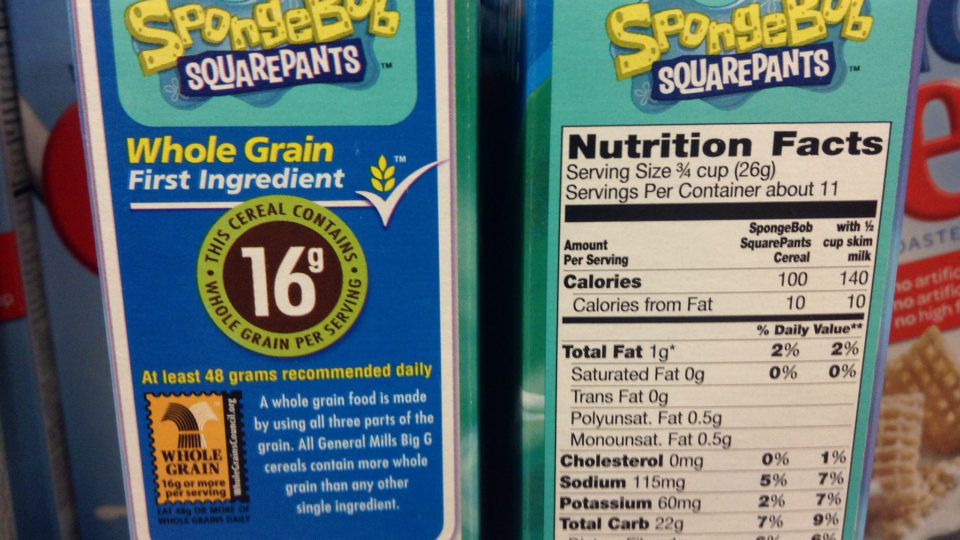
Food and beverage packaging in this country has included a Nutrition Facts panel for nearly 25 years.  Over 700,000 products have the labels which provide consumers with information like serving sizes, calories per serving, ingredients, and nutritional content.

Surveys indicate that 77 percent of all U.S. adults claim to use the labels at least some of the time.  Whether the labels are actually useful is somewhat debatable.  A couple of years ago, the FDA released a proposal to update the labels to make them more useful and to reflect more recent nutritional research.  The new labels are finally going to be implemented and food manufacturers with annual sales exceeding $10 million have until January of 2020 to update their packaging with the new labels.

One of the biggest changes is that the “serving size” section of the label will be changed to more accurately reflect the actual portions consumed by the typical American.  For example, a 20-ounce soft drink will now be labeled as a single serving because most people will drink the whole bottle in one sitting.

The new labels will no long list the amounts of Vitamin A and C, because recent research shows most Americans are not deficient in these nutrients.  Instead, the amount of Vitamin D and potassium will be listed, two nutrients lacking in many diets.  New labels will also show amounts of “added sugars”, defined as caloric sweeteners with no nutritional value. The new labels will also display the calories per serving in much large type making that piece of information far more noticeable.

There is surely more to be done to make food labeling more transparent and useful for consumers, but the new changes at least seem to be in the right direction.

**********

Web Links

Nutrition Labels Get a Makeover: Will It Make a Difference?

Photo, posted September 9, 2014, courtesy of Mike Mozart via Flickr.

Earth Wise is a production of WAMC Northeast Public Radio.

Reducing Food Waste

October 9, 2018 By EarthWise Leave a Comment

https://earthwiseradio.org/wp-content/uploads/2018/09/EW-10-09-18-Reducing-Food-Waste.mp3

Food waste is a huge problem.  About a third of all food produced globally goes to waste, and the numbers are even worse in the US.  If food waste was a country, it would be the world’s third largest emitter of greenhouse gases.  Worse yet, all of this takes place in a world where 850 million people are chronically undernourished.

[Read more…] about Reducing Food Waste

Labeling Genetically Engineered Foods

August 7, 2018 By EarthWise Leave a Comment

https://earthwiseradio.org/wp-content/uploads/2018/08/EW-08-07-18-Labeling-GE-Foods.mp3

There has been a great deal of debate over mandating labels for genetically engineered foods.  On the pro side, people argue that they have a right to know whether what they are eating contains GMO – or as they are also called GE — ingredients.  On the con side, people argue that the aversion toward GE is unfounded and that labeling foods will simply drive away consumers undeservedly.

[Read more…] about Labeling Genetically Engineered Foods

More Fake Fish News

November 20, 2017 By EarthWise Leave a Comment

https://earthwiseradio.org/wp-content/uploads/2017/10/EW-11-20-17-More-Fake-Fish-News.mp3

There has been quite a bit of news in recent years about the mislabeling of fish sold in markets and restaurants.  One study a few years ago concluded that 1/3 of fish sold is not what it is labeled to be. Much of the practice is economic fraud:  substituting cheaper, easier-to-find fish for rarer, more valuable types.  For example, the study found that fish sold as red snapper was almost always not what it claimed to be.  But cheating paying customers is not the only problem associated with the misidentification of fish.

[Read more…] about More Fake Fish News

Use-By Labels And Food Waste

December 20, 2016 By EarthWise

https://earthwiseradio.org/wp-content/uploads/2016/12/EW-12-20-16-Use-by-Labels.mp3

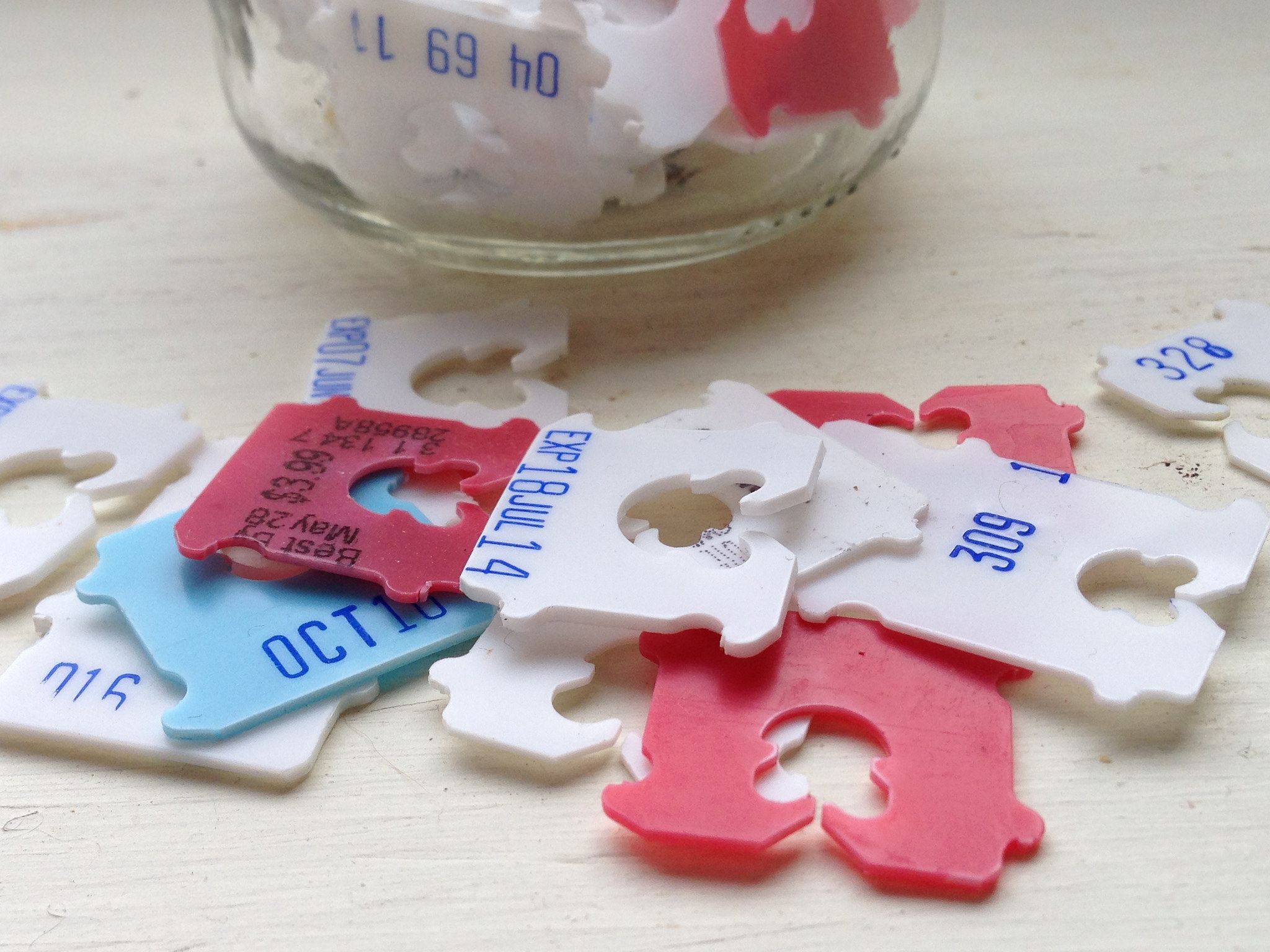
By some estimates, Americans waste as much as 40% of food that is produced.   None of the reasons are anything to be proud of, but one of the most frustrating is the confusing array of food date labels that are supposed to tell us whether the food we purchased should be eaten.

[Read more…] about Use-By Labels And Food Waste

Primary Sidebar

Recent Episodes

  • An uninsurable future
  • Clean energy and jobs
  • Insect declines in remote regions
  • Fossil fuel producing nations ignoring climate goals
  • Trouble for clownfishes

WAMC Northeast Public Radio

WAMC/Northeast Public Radio is a regional public radio network serving parts of seven northeastern states (more...)

Copyright © 2026 ·