• Skip to primary navigation
  • Skip to main content
  • Skip to primary sidebar

Earth Wise

A look at our changing environment.

  • Home
  • About Earth Wise
  • Where to Listen
  • All Articles
  • Show Search
Hide Search
You are here: Home / Archives for killed

killed

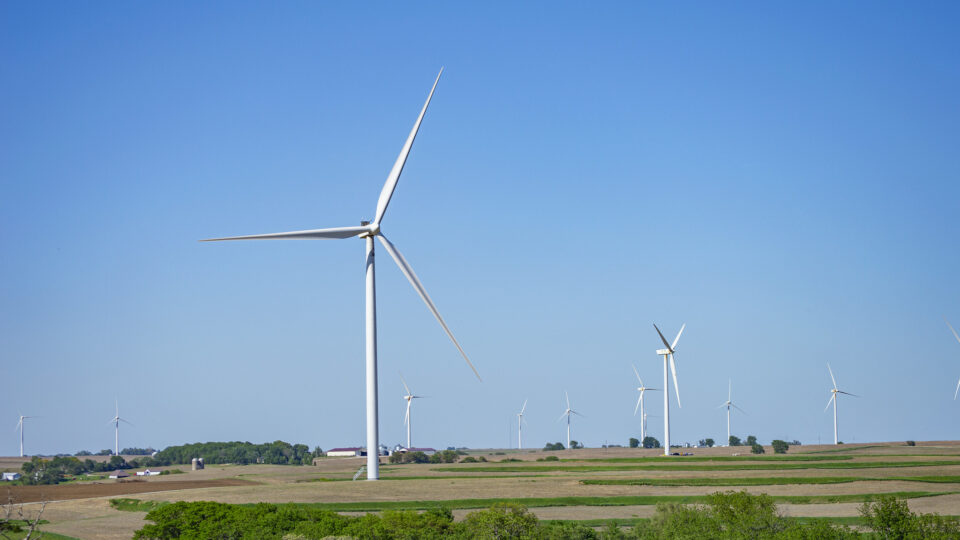
Making wind turbines safer for birds

September 18, 2024 By EarthWise Leave a Comment

Making wind turbines safer for birds

There are people who oppose the installation of wind turbines for a variety of reasons. It is true that wind turbines can be dangerous to birds.  Estimates are that about 250,000 birds are killed flying into wind turbines each year in the U.S.  

However, this data needs to be looked at in comparison to bird deaths from flying into electrical lines (25 million), vehicles (214 million), and building glass (at least 600 million). And even these figures pale in comparison to the more than 2 billion birds killed by domestic cats each year.

Despite these facts, it would still be great if fewer birds died from flying into wind turbines.  Researchers at Oregon State University are part of a team looking at reducing bird collision risks from wind turbines by painting a single blade of the turbine black.

Recent research in Norway found that painting a single turbine blade black reduced the number of bird collisions by nearly 72%.  Why should this work?  The hypothesis is that the black-painted blades disrupt the visual uniformity of the airspace around the turbines and makes them more noticeable to birds, which prompts avoidance behavior.

The Norwegian data is based on a relatively small sample size and the Oregon State researchers as well as others in Spain, Sweden, and South Africa are working on more rigorous and comprehensive studies.

The hope is that this rather simple strategy could make windfarms safer for birds.  Unfortunately, this approach is not likely to be very effective with bats, which rely more on auditory cues rather than visual cues.

**********

Web Links

Scientists studying impact of painting wind turbine blade black to reduce bird collisions

Photo, posted May 21, 2024, courtesy of Roy Harryman via Flickr.

Earth Wise is a production of WAMC Northeast Public Radio
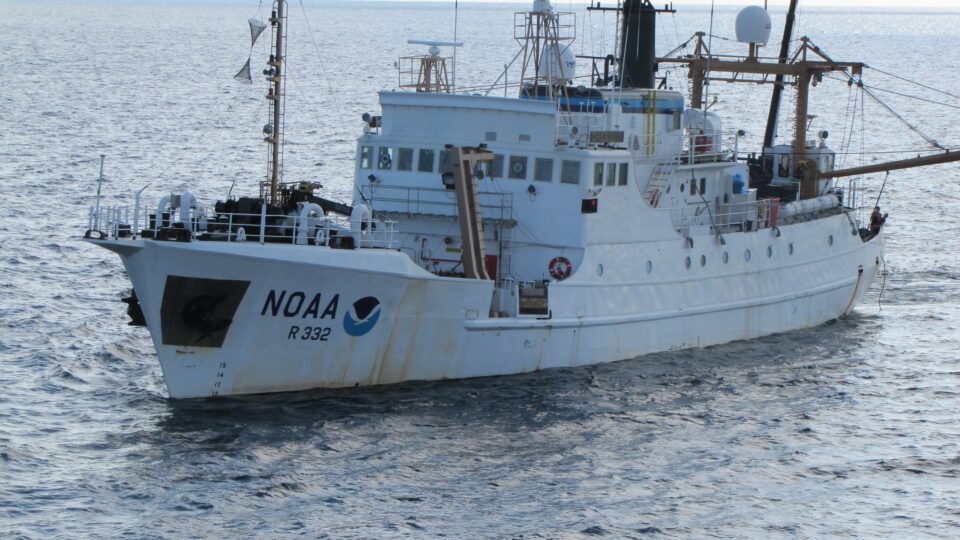
A Below-Average Dead Zone In The Gulf of Mexico | Earth Wise

July 20, 2023 By EarthWise Leave a Comment

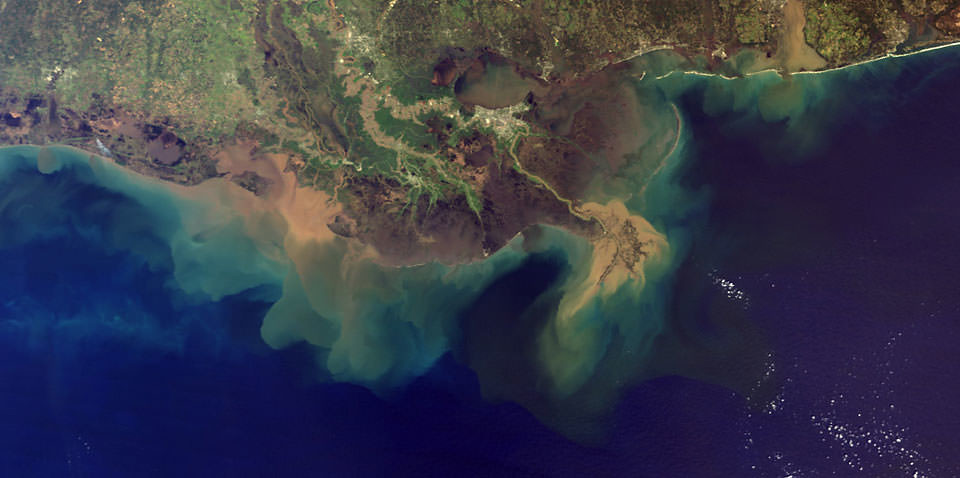
The Gulf of Mexico dead zone, or hypoxic area, is an area of low oxygen content that can kill fish and other marine life.  It occurs every summer and is mostly a result of excess nutrient pollution from human activities in cities and farms throughout the Mississippi River watershed.  The nutrients carried by the river into the gulf stimulate an overgrowth of algae, which eventually die and decompose, which depletes oxygen in the water as the algae sink to the bottom.

The resultant low oxygen levels near the bottom of the gulf cannot support most marine life.  Fish and shrimp often leave the area seeking better places to be.  Animals that can’t swim away – like mussels and crabs – can be stressed by the low oxygen level or even killed.

The National Oceanic and Atmospheric Administration produces a dead zone forecast each year based on a suite of models developed by NOAA and partners at multiple universities. 

The latest forecast, completed in May, found that the discharge of nutrients in the rivers was about one-third below the long-term average between 1980 and 2022.  Nitrate loads were down 42% and phosphorous levels down 5%.

Based on these measurements, the scientists forecast a summer dead zone that will cover an estimated 4,155 square miles, which is 22% lower than the 36-year average of 5,364 square miles.  Ongoing efforts by the Interagency Mississippi River and Gulf of Mexico Hypoxia Task Force to reduce nutrient levels seem to be paying off.

**********

Web Links

NOAA forecasts below-average summer ‘dead zone’ in Gulf of Mexico

Photo, posted September 6, 2013, courtesy of NOAA Photo Library via Flickr.

Earth Wise is a production of WAMC Northeast Public Radio
The Gulf Of Mexico Dead Zone | Earth Wise

July 19, 2021 By EarthWise Leave a Comment

Forecasting the 2021 dead zone in the Gulf of Mexico

Every summer, a so-called dead zone forms in the Gulf of Mexico.  It is primarily caused by excess nutrient pollution from human activities in urban and agricultural areas throughout the Mississippi River watershed. 

When these excess nutrients reach the Gulf, they stimulate excess growth of algae, which eventually die and decompose, depleting oxygen as they sink to the bottom.  These low oxygen levels near the Gulf bottom cannot support most marine life.  Animals that are sufficiently mobile – such as fish, shrimp, and crabs – generally swim out of the area.  Those that can’t move away are stressed or killed by the low oxygen.

A team of scientists funded by the National Oceanic and Atmospheric Administration issues an annual forecast for the dead zone based upon a suite of models that incorporate river flow and nutrient data. 

The 2021 forecasted area is somewhat smaller than, but close to, the five-year measured average for the dead zone, which is 5,400 square miles, roughly the size of the state of Connecticut.   Each year, these forecasts are reported as comparisons to long-term averages, but the problem is that the long-term average is unacceptable.

The Interagency Mississippi River and Gulf of Mexico Hypoxia Task Force has set a goal of reducing the size of the dead zone to a five-year average of 1,900 square miles – about a third of the current average.

Large reductions in nutrient loads have been called for in federal and state action plans for nearly 20 years, but clearly these reductions have not yet been sufficient. The Interagency Task Force continues to provide information for managing nutrient loads in the Mississippi River Basin. 

**********

Web Links

Average-sized ‘dead zone’ forecast for Gulf of Mexico

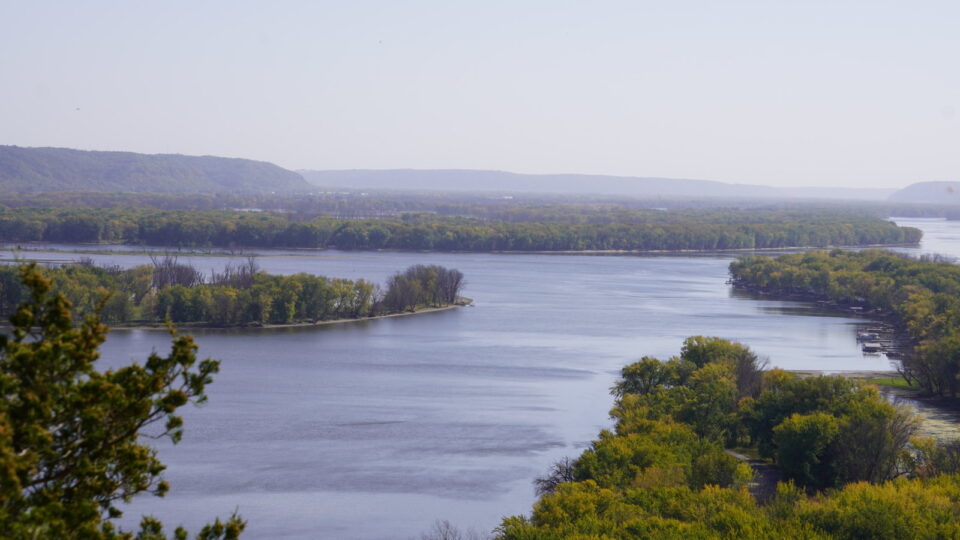
Photo, posted October 6, 2020, courtesy of Christine Warner via Flickr.

Earth Wise is a production of WAMC Northeast Public Radio.

The Dead Zone In The Gulf Of Mexico | Earth Wise

July 6, 2020 By EarthWise Leave a Comment

the gulf of mexico dead zone

The Gulf of Mexico has an area of low to no oxygen in the water that can kill fish and other marine life.  It is an annual event that is primarily caused by excess nutrient pollution from human activities in urban and agricultural areas throughout the Mississippi River watershed.   When these excess nutrients reach the Gulf, they stimulate the overgrowth of algae, which eventually die and decompose, depleting the oxygen in the water as the algae sink to the bottom.

These low oxygen levels near the bottom of the Gulf cannot support most marine life.  Some species – among them many fish, shrimp, and crabs – swim out of the area, but animals that can’t swim or move away are stressed or killed by the low oxygen.  The dead zone in the Gulf occurs every summer.

A recent forecast for this summer’s dead zone predicts that the area of low or no oxygen will be approximate 6,700 square miles, which is roughly the size of Connecticut and Delaware combined.  This is about 1,100 square miles smaller than last year’s dead zone and much less than the record of 8,776 square miles set in 2017.  But it is still larger than the long-term average size of 5,387 square miles.

Making comparisons to the long-term average ignores the fact that the long-term average itself is unacceptable.  The dead zone not only hurts marine life, but it also harms commercial and recreational fisheries and the communities they support.  The actions that have been taken so far to reduce pollution in the Mississippi watershed are clearly not sufficient to drastically reduce the dead zone in the Gulf.

**********

Web Links

Large ‘dead zone’ expected for Gulf of Mexico

Photo, posted October 17, 2017, courtesy of NOAA’s National Ocean Service via Flickr.

Earth Wise is a production of WAMC Northeast Public Radio.

An Elephant Repellant

August 30, 2018 By EarthWise Leave a Comment

https://earthwiseradio.org/wp-content/uploads/2018/08/EW-08-30-18-An-Elephant-Repellant.mp3

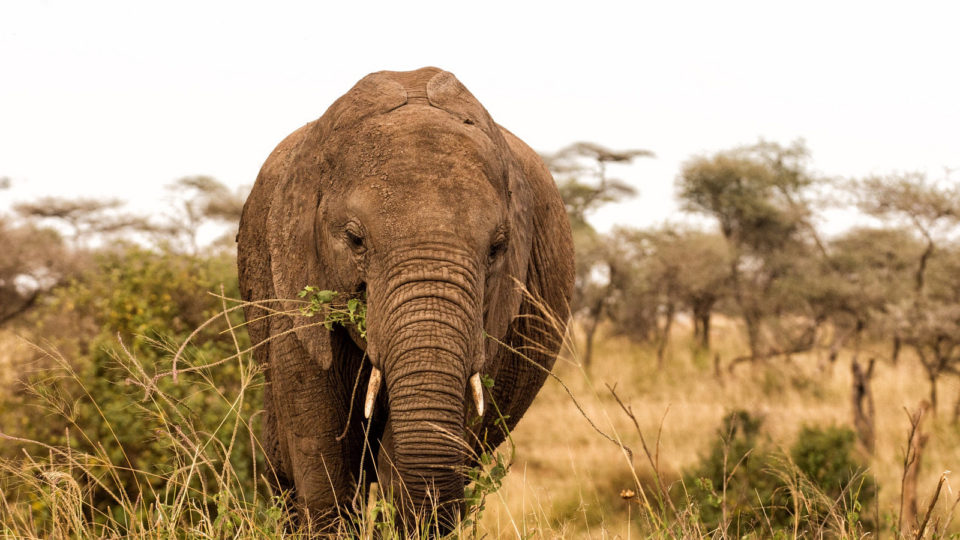
Growing human populations in Africa and Asia have created ever larger areas where elephants conflict with humans by trampling crops or causing other damage.  These conflicts have occasionally been tragic when people were trampled to death and there are serious consequences when crops are destroyed.  The individual elephants responsible for such destruction are often killed.

[Read more…] about An Elephant Repellant

Are Big Cats In Big Trouble?

January 16, 2018 By EarthWise Leave a Comment

https://earthwiseradio.org/wp-content/uploads/2017/12/EW-01-16-18-Big-Cats-in-Big-Trouble.mp3

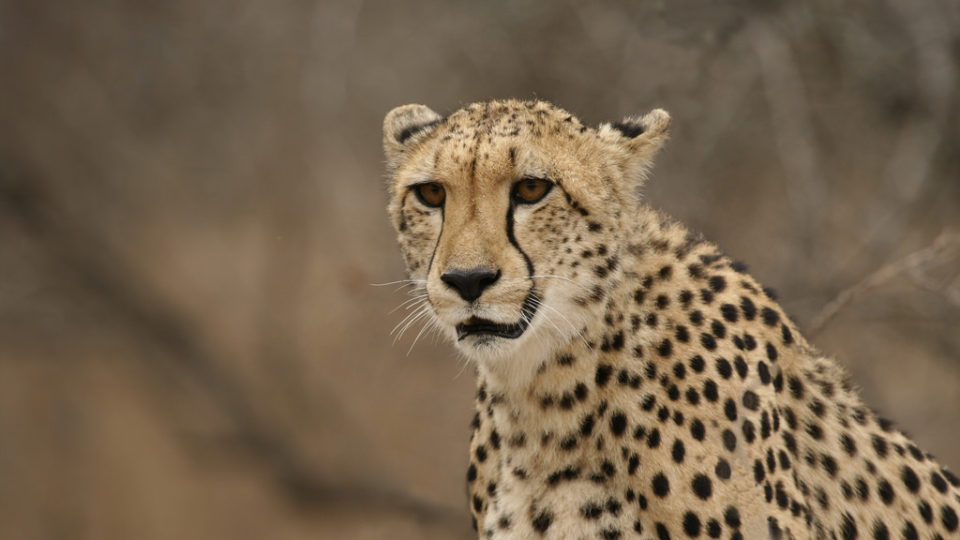
According to researchers with the National Geographic Society’s Big Cats Initiative, cheetahs are much closer to extinction than previously thought. The research team has released a study, which was recently published in the journal PeerJ, that updates the cheetah population numbers in southern Africa, the largest of its remaining habitat.

[Read more…] about Are Big Cats In Big Trouble?

Save The Turtles

June 26, 2017 By EarthWise

https://earthwiseradio.org/wp-content/uploads/2017/06/EW-06-26-17-Save-the-Turtles.mp3

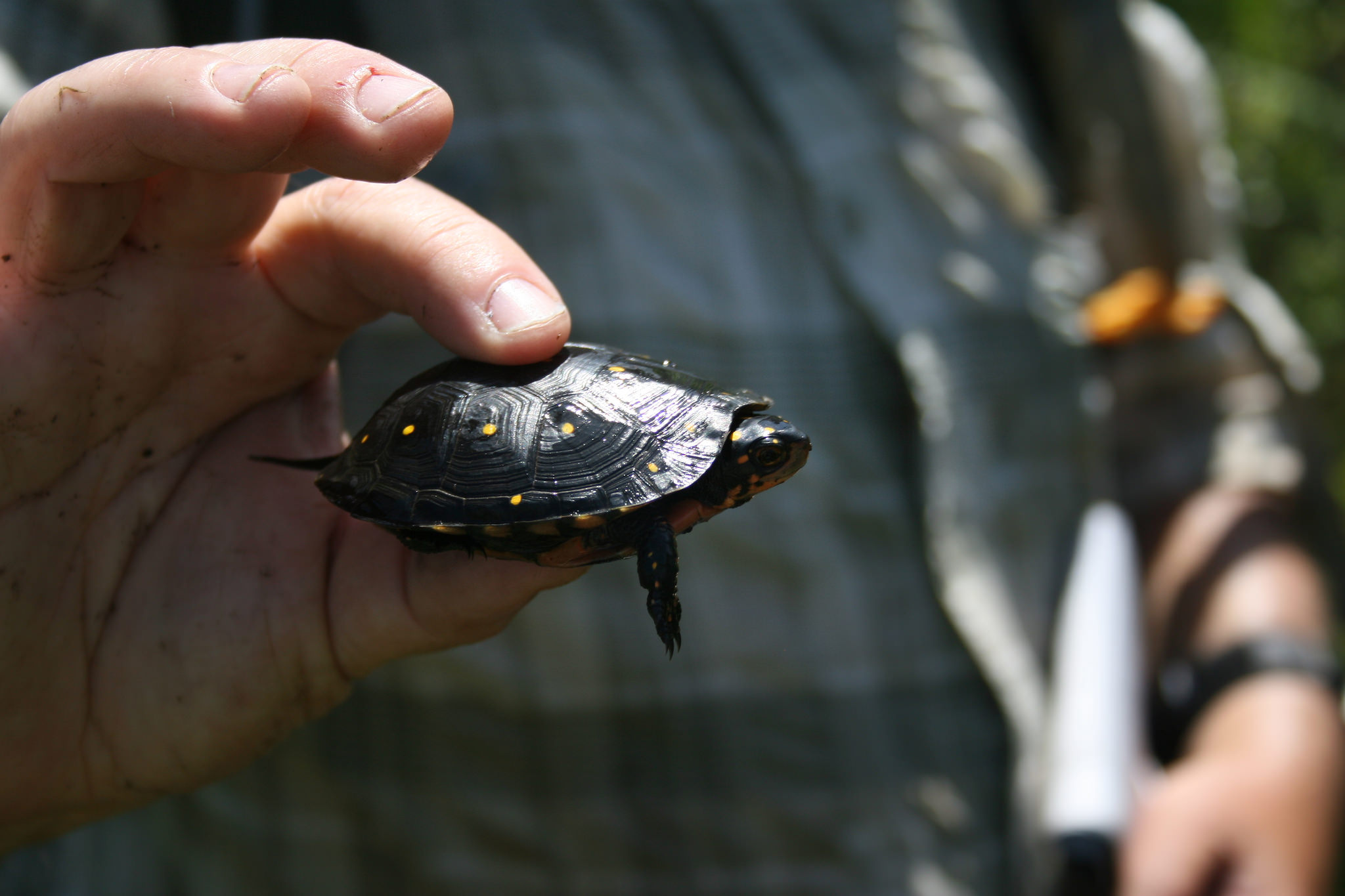
New York is home to 11 native species of land turtles.  Many of the species can’t breed until age 10 and then they lay just one small clutch of eggs each year by digging in a suitable patch of sandy soil.  As a result, breeding females are at a premium for the welfare of the species.  Overall, turtles are on decline in the Empire State.

[Read more…] about Save The Turtles

Primary Sidebar

Recent Episodes

  • An uninsurable future
  • Clean energy and jobs
  • Insect declines in remote regions
  • Fossil fuel producing nations ignoring climate goals
  • Trouble for clownfishes

WAMC Northeast Public Radio

WAMC/Northeast Public Radio is a regional public radio network serving parts of seven northeastern states (more...)

Copyright © 2026 ·