• Skip to primary navigation
  • Skip to main content
  • Skip to primary sidebar

Earth Wise

A look at our changing environment.

  • Home
  • About Earth Wise
  • Where to Listen
  • All Articles
  • Show Search
Hide Search
You are here: Home / Archives for imports

imports

A Huge American Lithium Discovery | Earth Wise

October 12, 2023 By EarthWise Leave a Comment

A huge discovery of lithium in the United States

Human history has often been described in terms of a succession of metal ages:  the copper age, the bronze age, and the iron age.  In many ways, we have now entered the lithium age.  The light metal goes into the batteries that power smartphones, electric vehicles, and massive storage banks for the power grid.  Lithium has become a critical strategic resource.

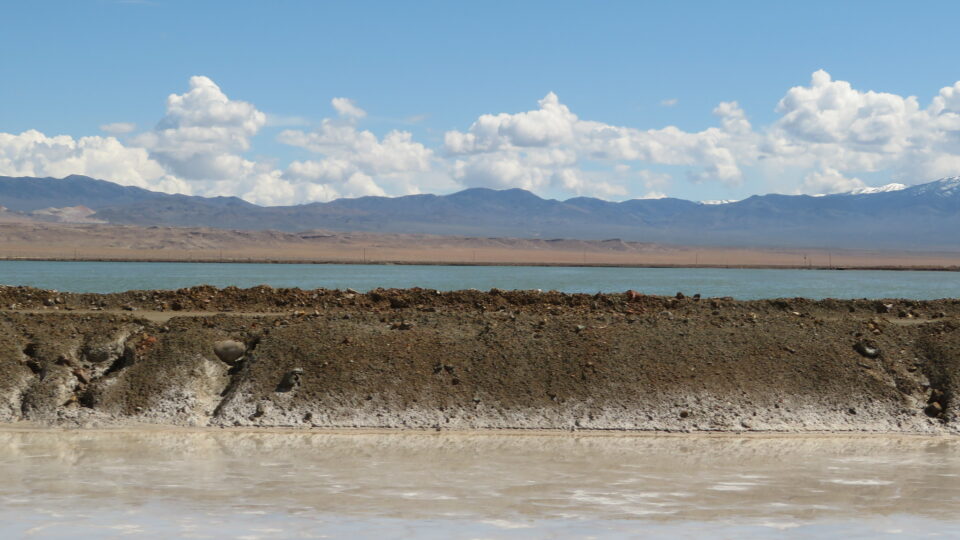
As it stands now, the U.S. gets most of its lithium from imports from Australia and South America.  Major lithium sources are not commonplace; in 2022 there were only 45 lithium mines in the world.  Many of the known deposits are not in North America but in Chile, Bolivia, Argentina, China, and Australia.  The current largest known lithium deposits lie beneath the salt flats of Bolivia.

Lithium Americas Corporation, a company dedicated to advancing lithium projects to the stage of production, funded research over the past decade that has identified vast deposits of lithium-rich clay in a dormant volcanic crater along the Nevada-Oregon border.  The McDermitt Caldera is estimated to hold between 20 and 40 million tons of lithium, which would make it the largest deposit in the world.

There are many questions still to answer.  It is not clear how easy it will be to extract lithium from the clay, in particular how expensive or carbon-intensive it will be.  There are also political complexities since the area where the lithium deposit was found is considered to be unceded ancestral land for both the Paiute and Shoshone tribes.

Apart from a dearth of domestic sources of lithium, the US also lags well behind China in lithium processing capabilities.  The country has catching up to do in the new lithium age.

**********

Web Links

America Just Hit the Lithium Jackpot

Photo, posted April 19, 2020, courtesy of Ken Lund via Flickr.

Earth Wise is a production of WAMC Northeast Public Radio
Decreasing Forest Area Per Capita | Earth Wise

September 7, 2022 By EarthWise Leave a Comment

Over the past 60 years, global forest area has decreased by 315,000 square miles, an area about twice the size of California. Combined with global population growth over that period, this has resulted in more than a 60% decline in global forest area per capita.

The continuous loss as well as degradation of forest affects the integrity of forest ecosystems and reduces their ability to generate and provide essential services and sustain biodiversity.  It impacts the lives of at least 1.6 billion people worldwide – primarily in developing countries – who depend upon forests in multiple ways.

According to the new study published in the journal Environmental Research Letters, forest losses have been occurring primarily in lower-income countries in the tropics while forest gains have occurred in higher-income countries in the mid-latitudes or extratropics. 

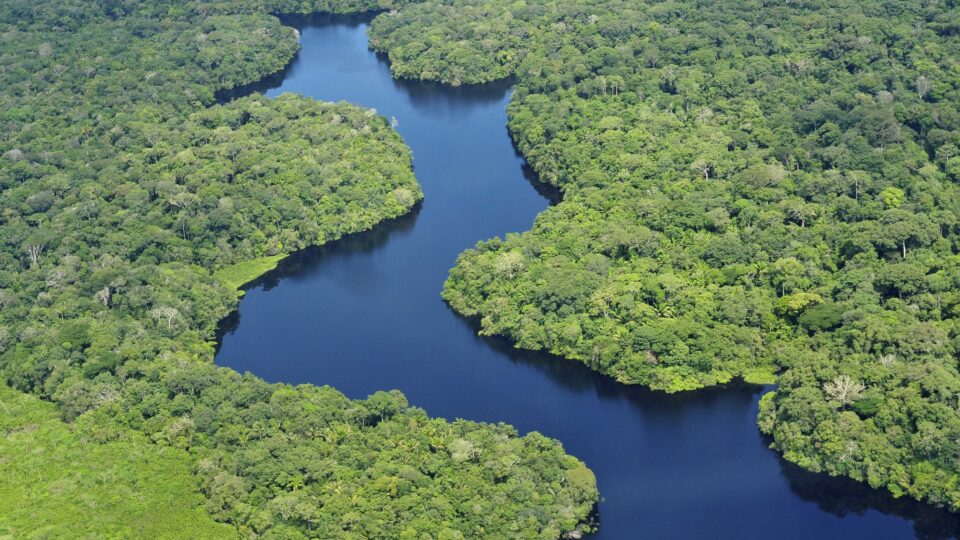
More than half of the world’s forest losses were in Brazil, home to the Amazon rainforest.  In the past 60 years, that country has had a net loss of 170,000 square miles of forest.  While most high-income countries had net forest gains, Canada actually had a net loss of about 11,000 square miles of forest.

Economic growth has a stronger association with net forest gain than with net forest loss.  Therefore, the study highlights the need to strengthen the support given to lower income countries, especially in the tropics, to help improve their capacity to minimize or curtail their forest losses.  To help address this ongoing displacement of forest losses to lower income countries, higher-income nations need to reduce their dependence on imported tropic forest products.

**********

Web Links

New study finds global forest area per capita has decreased by over 60%

Photo, posted April 19, 2011, courtesy of ©2011CIAT/NeilPalmer via Flickr.

Earth Wise is a production of WAMC Northeast Public Radio.

Weaning Off Fossil Fuels | Earth Wise            

June 2, 2022 By EarthWise Leave a Comment

How to break free of our dependence on fossil fuel

We recently talked about California producing 97% of its electricity from renewables on one sunny afternoon in April.  On May 8th, the state produced enough renewable electricity to meet 103% of consumer demand.  These sorts of records are likely to be increasingly commonplace in the spring when the weather is still fairly mild.

But even while renewables were producing more electricity than California needed, natural gas power plants in the state were still running.

Turning off the gas power plants is not possible.  The reason is that as the sun sets and solar farms stop producing power, California has to quickly replace the power with electricity from other sources.  Natural gas plants are massive industrial facilities that cannot be turned on and off rapidly.  Some take as many as 4 to 8 hours to switch on.  Operators back them down as far as they can go, but even when there is plenty of solar power during the day, natural gas plants are still running.

The state is rapidly building huge battery storage projects as an alternative to gas plants, but so far, they are still only a small fraction of what is needed.   Wind power is another part of the solution along with hydropower.  California imports some power from other states as well and, in fact, also exports power when there is excess.  But keeping the energy system balanced and stable is an ongoing challenge.

California is building huge amounts of solar, huge amounts of wind, and huge amounts of energy storage, which should get the state to at least 90% of the way to a clean grid.  It’s the last 5-10% that is much harder to accomplish before natural gas is no longer part of the energy system.

**********

Web Links

California just ran on 100% renewable energy, but fossil fuels aren’t fading away yet

Photo, posted January 10, 2014, courtesy of F.G. via Flickr.

Earth Wise is a production of WAMC Northeast Public Radio.

Peak Natural Gas Generation | Earth Wise

May 17, 2022 By EarthWise Leave a Comment

Peak natural gas generation is in the past

According to a new report from the Institute for Energy Economics and Finance (the IEEFA), the U.S. most likely hit its peak usage of natural gas to generate electricity in 2020.  Growth in wind and solar power are beginning to erode the use of natural gas.

At the moment, natural gas prices are unusually high as a result of supply chain issues and the war in Ukraine.  The U.S. is shipping record amounts of gas to Europe in order to help allies to wean off of Russian gas imports.  As a result, U.S. natural gas prices are at their highest level in more than 13 years.  Heating bills in the Northeast have been exceptionally high this past winter.

These high gas prices have also thrown a temporary lifeline to coal, which has seen a recent surge.  Despite this, coal in the U.S. is continuing its long-term decline.  Several of the largest power companies – including the Tennessee Valley Authority, Duke Energy, and Georgia Power – are planning to phase out coal entirely by 2035 and shift to renewable power.

The surging prices in fossil fuels – at the gas pump and in the home – along with multiple disruptions in energy security, are supercharging the already rapid pace of growth in solar, wind, and battery energy storage projects.

Wind, solar, and hydropower currently account for about 20% of U.S. power generation.  According to the IEEFA, these renewable sources could provide more than a third of our power by 2027.  Including both renewables and nuclear power plants, the U.S. could generate more than half of its electricity from carbon-free sources by that year, which represents a massive transition from just five years ago.

**********

Web Links

U.S. May Have Hit Peak Natural Gas Power Generation, Report Says

Photo, posted July 11, 2017, courtesy of John Ciccarelli / BLM via Flickr.

Earth Wise is a production of WAMC Northeast Public Radio.

The Costs Of Mislabeled Seafood | Earth Wise

January 27, 2021 By EarthWise Leave a Comment

Mislabeled seafood has huge hidden costs

Seafood is the world’s most highly traded food commodity and reports of seafood mislabeling have become increasingly common over time.  A new study by Arizona State University looked at the environmental effects of mislabeled seafood.

What is mislabeled seafood?  Sometimes the snapper you were served was really Pacific Ocean Perch.  Maybe grouper was really whitefin weakfish.  Many times white leg shrimp are actually giant tiger prawns.

Approximately 190,000 to 250,000 tons of mislabeled seafood are sold in the U.S. each year, or 3.4 to 4.3% of consumed seafood.  Previous studies focused on the economic aspects of getting cheaper fish when paying for more expensive fish.  The new research looks at the environmental costs associated with mislabeled seafood.

Substituted seafood is 28% more likely to be imported from other countries, which may have weaker environmental laws than the U.S.  In the United States, fishery management is pretty good.  There is strong monitoring and enforcement to support limits on fishing.  Metrics like fish abundance, fishing mortality, bycatch, and discards are all monitored.  In many other places, this is not the case.

To really evaluate the overall effects of seafood mislabeling, one has to take into account both the rates of substitution and the levels of consumption. 

Consuming fish from a well-managed fishery should not have a negative impact in terms of the population now or in the future.  But even inadvertently consuming fish from poorly managed fisheries in not sustainable.  It is good to get your seafood from a trusted source.

**********

Web Links

ASU Study Looks At The Environmental Effects Of Purchasing, Consuming Mislabeled Fish

Photo, posted August 1, 2014, courtesy of Ralph Daily via Flickr.

Earth Wise is a production of WAMC Northeast Public Radio.

Destroying Forever Chemicals | Earth Wise

August 11, 2020 By EarthWise Leave a Comment

PFAS, short for poly and perfluoroalkyl substances, have been used in commercial products since the 1940s.  There are more than 4,000 different chemicals in the class.   Some of the most commonly used PFAS chemicals, like PFOS and PFOA, have long half-lives, which has earned them the moniker “forever chemicals.” 

These dangerous chemicals have not been manufactured in the U.S. since the early 2000s, but they can still be found in various imported goods.  PFAS chemicals have been linked to cancer, birth defects, thyroid disease, and liver damage.  These forever chemicals linger in the environment and scientists have found them in the blood of virtually all Americans.

Researchers at Rice University have recently discovered an efficient catalyst for destroying PFAS forever chemicals.  Unexpectedly, the catalyst was actually in the control group in a study they were performing.

The study, published in the journal Environmental Science and Technology Letters, found that boron nitride, acting as a light-activated catalyst, destroyed PFOA at a faster clip than any previously reported photocatalyst.

The catalyst, boron nitride powder, is a commercially available synthetic mineral that is widely used in makeup, skincare products, thermal pastes for cooling computer chips, and various other industrial products.  The discovery began with dozens of failed experiments on a variety of more promising PFAS catalysts.  But along the way, they found that the boron nitride control material repeatedly yielded positive results.

The research has already attracted the attention of industrial partners seeking to develop off-grid water treatment systems that both protect human lives and support sustainable economic development.

**********

Web Links

Boron nitride destroys PFAS ‘forever’ chemicals PFOA, GenX

Photo, posted April 9, 2009, courtesy of Rex Roof via Flickr.

Earth Wise is a production of WAMC Northeast Public Radio.

More Fake Fish News

November 20, 2017 By EarthWise Leave a Comment

https://earthwiseradio.org/wp-content/uploads/2017/10/EW-11-20-17-More-Fake-Fish-News.mp3

There has been quite a bit of news in recent years about the mislabeling of fish sold in markets and restaurants.  One study a few years ago concluded that 1/3 of fish sold is not what it is labeled to be. Much of the practice is economic fraud:  substituting cheaper, easier-to-find fish for rarer, more valuable types.  For example, the study found that fish sold as red snapper was almost always not what it claimed to be.  But cheating paying customers is not the only problem associated with the misidentification of fish.

[Read more…] about More Fake Fish News

Is Coal Coming Back?

January 23, 2017 By EarthWise

https://earthwiseradio.org/wp-content/uploads/2017/01/EW-01-23-17-Is-Coal-Coming-Back.mp3

The new administration has promised to revitalize the coal industry in the U.S.   A major part of this plan is to eliminate various regulations that hamper that industry.  But the truth is that coal has lost ground for far more important reasons than regulation.

[Read more…] about Is Coal Coming Back?

Outsourcing Our Emissions

October 9, 2015 By EarthWise

OLYMPUS DIGITAL CAMERA

https://earthwiseradio.org/wp-content/uploads/2015/10/EW-10-09-15-Outsourcing-Our-Emissions.mp3

The average American is responsible for one of the largest carbon footprints in the world. Some 37% of our carbon emissions is associated with electricity generation; 33% stems from transportation – largely personal automobiles. The remaining 30% is attributed to industry, residential use, and agriculture.

[Read more…] about Outsourcing Our Emissions

Primary Sidebar

Recent Episodes

  • An uninsurable future
  • Clean energy and jobs
  • Insect declines in remote regions
  • Fossil fuel producing nations ignoring climate goals
  • Trouble for clownfishes

WAMC Northeast Public Radio

WAMC/Northeast Public Radio is a regional public radio network serving parts of seven northeastern states (more...)

Copyright © 2026 ·