• Skip to primary navigation
  • Skip to main content
  • Skip to primary sidebar

Earth Wise

A look at our changing environment.

  • Home
  • About Earth Wise
  • Where to Listen
  • All Articles
  • Show Search
Hide Search
You are here: Home / Archives for filtration

filtration

Drought And Desalination | Earth Wise

October 11, 2021 By EarthWise Leave a Comment

Improving water desalination to combat droughts

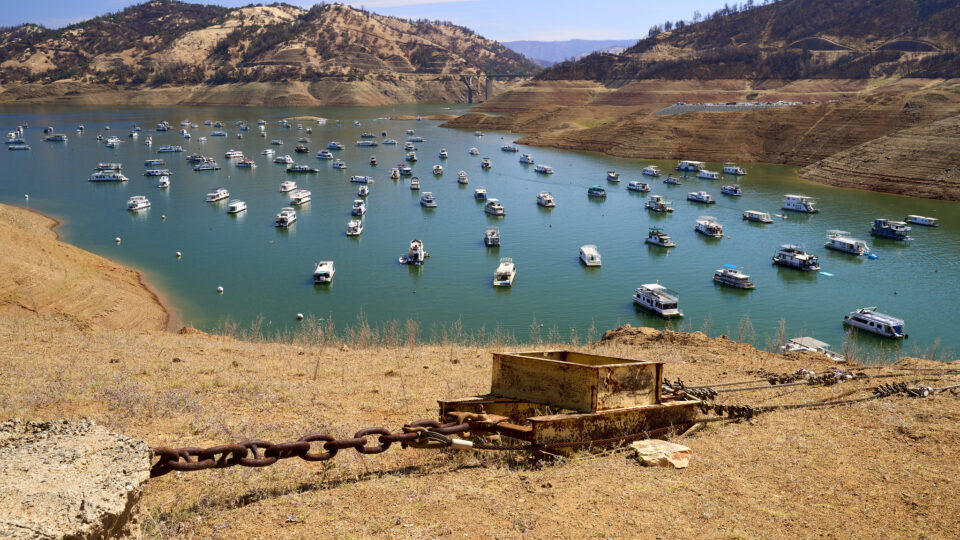
The Western US is currently experiencing what might be the worst drought in over 1,000 years.   The region has seen many droughts in the past, but the changing climate is making dry years drier and wet years wetter.   Diminishing snow-packs mean that rivers, streams, reservoirs, and soil are not replenished enough in the spring and summer.

Meanwhile, the Southwest has seen a growth rate over the past 60 years that is twice that of the rest of the country.  More and more people are moving to areas expected to get even drier in the years to come.  There have been unprecedented water allocation cuts from the Colorado River – which provides water to seven states – and there have been shutdowns of hydroelectric power plants.

Only three percent of the planet’s water is fresh water and much of that is not available for our use.  Over 120 countries have turned to desalination for at least some of their drinking water.  In the US, the largest plant is in Carlsbad, California and a huge new plant is likely to be built in Huntington Beach, California.

Desalination has its drawbacks.  It is expensive, consumes large amounts of energy, and has detrimental environmental impacts.  Most of the world’s desal plants now use membrane filtration technology but there are still many that use the thermal distillation method.

There are efforts around the world aimed at improving desalination.  A giant project in Saudi Arabia is based on solar heating of sea water.  The U.S. Army and the University of Rochester are working on a different solar-based system.  European companies are developing a floating seawater desalination plant powered by wind energy. 

Droughts seem to be here to stay.  Finding better ways to get fresh water is essential.

**********

Web Links

A 1,000 Year Drought is Hitting the West. Could Desalination Be a Solution?

Photo, posted May 31, 2021, courtesy of Frank Schulenburg via Flickr.

Earth Wise is a production of WAMC Northeast Public Radio.
Nanotech Water Purification | Earth Wise

July 14, 2020 By EarthWise Leave a Comment

Ultrathin nanosheets separate ions from water

We have occasionally talked about metal-organic frameworks, which are organic-inorganic hybrid crystalline structures that have a microscopic cage-like structure.  MOFs have been under development for a diverse set of applications including gas storage and separation, liquid purification, energy storage, catalysis, and sensing.

For the first time, an international research team, led by researchers from Monash University in Australia, has created an ultrathin porous membrane based on MOF technology that can completely separate potentially harmful ions, such as lead and mercury, from water.

This innovation could enhance water desalination and transform even the dirtiest water into something potable for millions of people around the world.  The new membrane performed steadily in tests for more than 750 hours using only limited energy.

The technology uses water-stable monolayer aluminum-based MOFs just a millionth of a millimeter in thickness.  These are essentially two-dimensional structures.  The ultrathin membrane is permeable to water – it achieves maximum porosity – but rejects nearly 100 percent of ions.  It has been a daunting challenge to fabricate ultra-thin MOFs for water-based processing.  Most previous membranes were too thick and unstable in water. 

Most existing ion separation membrane technologies are based on polymers and have the limitation that they have limited selectivity.  They don’t reject all unwanted ions.

The new membrane technology has great potential based on its precise and fast ion separation and could be ideal for a variety of filtration applications such as gas separation and separation of organic solvents such as paint.  Such membranes might also be used to remove harmful carcinogens from the atmosphere.

**********

Web Links

Ultrathin nanosheets separate ions from water

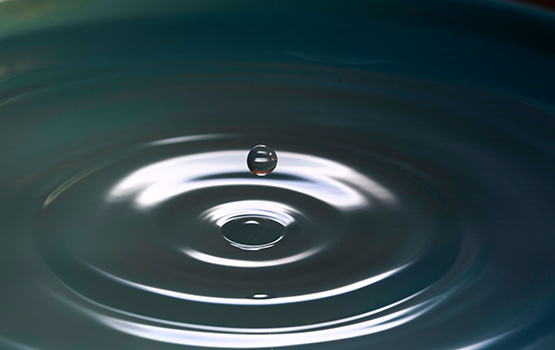
Photo courtesy of Monash University.

Earth Wise is a production of WAMC Northeast Public Radio.

Turning Seawater Into Drinking Water

May 10, 2017 By EarthWise

https://earthwiseradio.org/wp-content/uploads/2017/04/EW-05-10-17-Seawater-into-Drinking-Water.mp3

Graphene is often called the wonder material.   First isolated by scientists in 2004, it is a form of carbon that is just one atom thick, extremely light, two hundred times stronger than steel, highly flexible, and an excellent conductor of heat and electricity.   Scientists are finding numerous applications for it.

[Read more…] about Turning Seawater Into Drinking Water

Bottled Water

September 8, 2016 By WAMC WEB

https://earthwiseradio.org/wp-content/uploads/2016/09/EW-09-08-16-Bottled-Water.mp3

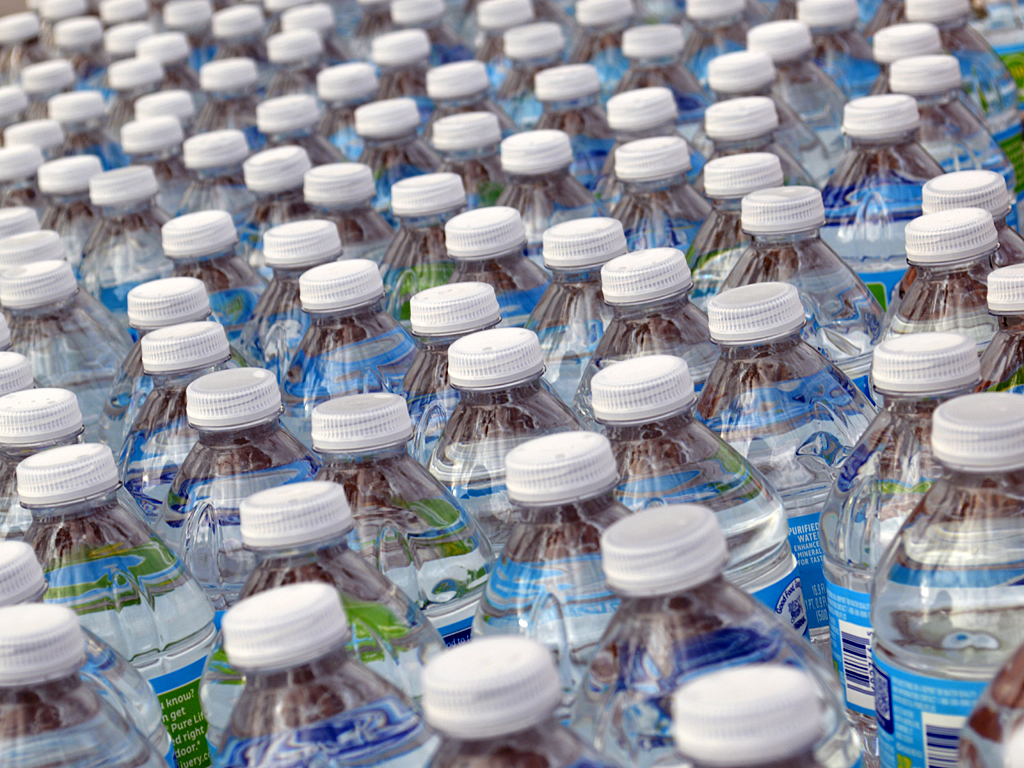
This year, Americans will consume more bottled water than soda for the first time.  The average American will buy 27.4 gallons of bottled water, over a gallon more than soda drinks.

[Read more…] about Bottled Water

Primary Sidebar

Recent Episodes

  • An uninsurable future
  • Clean energy and jobs
  • Insect declines in remote regions
  • Fossil fuel producing nations ignoring climate goals
  • Trouble for clownfishes

WAMC Northeast Public Radio

WAMC/Northeast Public Radio is a regional public radio network serving parts of seven northeastern states (more...)

Copyright © 2026 ·