• Skip to primary navigation
  • Skip to main content
  • Skip to primary sidebar

Earth Wise

A look at our changing environment.

  • Home
  • About Earth Wise
  • Where to Listen
  • All Articles
  • Show Search
Hide Search
You are here: Home / Archives for events

events

Toxic algae and West Coast marine life

June 5, 2025 By EarthWise Leave a Comment

Over the first several months of this year, hundreds of sea lions, dolphins, and seabirds have fallen ill or died after eating sardines or anchovies that had been feeding on an algal bloom along the California coast since winter.  The biotoxin in the algae accumulates in the feeder fish.

Two cases of whales dying from the biotoxin have been confirmed by two nonprofit organizations tasked with testing dead mammals.  These were a humpback that washed ashore in Huntington Beach in January and a minke whale found dead in Long Beach in April.

This is the fourth year a row that California has experienced major algal blooms.  Warmer waters are causing blooms to be bigger and more damaging than they have been before.  They enter into new areas and contaminate the food web for longer.  The warmer waters accelerate algae growth that is further fueled by nutrients that rise to the surface from deeper colder waters driven by winds that blow parallel to the coast.  This year’s algae event started earlier than usual and is lasting longer than normal.

More than a dozen animal rescue and rehabilitation groups that form NOAA’s West Coast Marine Mammal Stranding Network are providing resources to try to respond to the situation.  At the Marine Mammal Care Center in Los Angeles, more than 80 sea lions and seals were being treated for domoic acid poisoning, the result of ingesting algae neurotoxin.  Since February, it has cared for more than 300 poisoned animals.

Marine mammals are sentinel species for humans who also consume seafood.  The West Coast ocean ecosystem is currently filled with toxins.

**********

Web Links

California Toxic Algal Bloom Blamed for Months-long Marine Life Poisoning

Photo, posted March 26, 2025, courtesy of Marnee Jill via Flickr.

Earth Wise is a production of WAMC Northeast Public Radio
Sharks and rays in a warming world

March 5, 2025 By EarthWise Leave a Comment

Could sharks and rays thrive in a warming world?

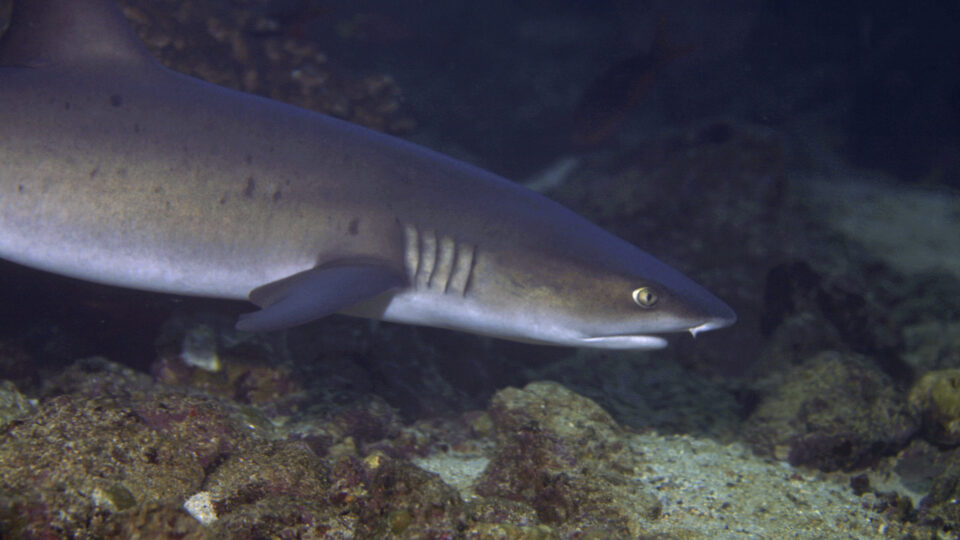
Sharks and rays belong to a group of cartilaginous fish called elasmobranchs, which have been swimming in the world’s oceans for 450 million years. The resilient species have survived five mass extinction events, and are older than dinosaurs, trees, and Mount Everest. 

But despite their resilience, many species of sharks and rays today are threatened by human activities, including overfishing, habitat loss, and climate change.  In fact, according to a new study led by researchers from the University of Vienna in Austria, more than one third of the shark and ray species known today are severely under threat. 

The study, which was recently published in the journal Biology, found that higher carbon dioxide levels were having a negative effect on sharks and rays, ranging from impacts on the animals’ senses to changes in the skeleton during embryonic development.  An examination of fossil records found that higher CO2 levels had contributed to the extinction of individual shark and ray species in the past. 

But the study also found that global warming could be creating opportunities for sharks and rays.  Rising sea levels and higher temperatures have historically expanded shallow coastal habitats and warm waters, supporting species biodiversity.

But according to the research team, the rapid environmental changes, combined with the impacts from human activities, outpace the ability of sharks and rays to adapt, making it unlikely that they will benefit from global warming.

Protecting sharks and rays is crucial not only for their survival but also for maintaining entire ocean ecosystems. Without top predators, these ecosystems could collapse, impacting both marine life and the people and industries that depend on it.

**********

Web Links

Sharks and rays benefit from global warming – but not from CO2 in the Oceans

Myths About Sharks and Rays

Photo, posted November 27, 2007, courtesy of Laszlo Ilyes via Flickr.

Earth Wise is a production of WAMC Northeast Public Radio
When is a heat wave just a heat wave?

December 18, 2024 By EarthWise Leave a Comment

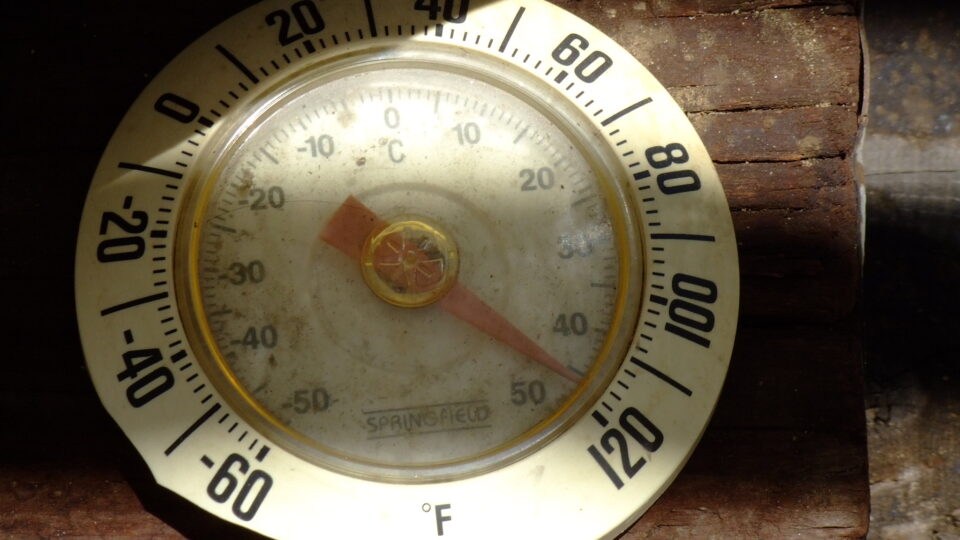
When is a heat wave just a heat wave, and when is it climate change?

There are lots of extreme weather events of all kinds these days.  But there have always been extreme weather events.  Climate change results in more extreme weather but not all extreme weather should be attributed to climate change.  So, how do we know if an extreme weather event is a result of the changing climate?  Communities that are affected by extreme weather events need to know whether they are likely to see more such events in the future, or if they are anomalies like a “500-year storm” or such.

Researchers at North Carolina State University, the National Oceanic and Atmospheric Administration, the University of Colorado, Boulder, and Princeton University developed a routine process for evaluating extreme weather events.

The test case was an extreme heat wave that affected Texas and Louisiana in 2023.  This notable heat wave lasted almost the entire summer. The scientists used a two-step process to determine whether the heat wave was an anomaly or part of a new pattern.  They took historical data from the past 100 years to see how unusual 2023 was.  Then they compared that data with both past and present predictive computer models.  Comparing the predictive models can indicate whether climate change was a factor in the event.

In this case, a similar drought would not have been as hot 50 years earlier, which indicates that the heat wave is related to climate change and that even more intense heat waves are likely to occur in the future.

This sort of information is important for communities to prepare for future events.

**********

Web Links

When is a Heat Wave Just a Heat Wave, and When is it Climate Change?

Photo, posted July 22, 2006, courtesy of Saturnism via Flickr.

Earth Wise is a production of WAMC Northeast Public Radio

October was another hot month

December 3, 2024 By EarthWise Leave a Comment

October was another hot month, a continuation of the warming trend

In a year filled with unusually warm months, October 2024 ranked as the second-warmest October in the 175 years of the National Oceanic and Atmospheric Administration’s records.  It was just 0.09 degrees Fahrenheit cooler than the previous global record set just last year.

In our part of the world, North America had its warmest October on record.

Year-to-date, the global surface temperature has been 2.3 degrees Fahrenheit above the 20th century average, which is the warmest such period on record.  This record warmth was observed in Africa, Europe, North America, Oceania, and South America.  With only a little of the year to go, predictions are that there is a greater than 99% chance that 2024 will rank as the world’s warmest year on record.

Other aspects of the warming climate were also in full evidence in October.  Global sea ice coverage was the smallest in the 46 years that it has been tracked, about 1.25 million square miles below the 1991-2020 average.  Ice extent in the Arctic was the fourth lowest on record and ice extent in the Antarctic was the second lowest on record.

Global ocean surface temperature was the second warmest for October and is the warmest ever for the period January to October.

The Atlantic basin saw five tropical cyclones during October, including the deadly and destructive Hurricane Milton that made landfall just south of Tampa Bay. 

The monthly climate postings by NOAA continue to report record-breaking temperatures and significant climate anomalies and events.  This pattern is not likely to do anything but continue in the future.

**********

Web Links

Planet saw its 2nd-warmest October in 175-year record

Photo, posted August 21, 2018, courtesy of Fabio Achilli via Flickr.

Earth Wise is a production of WAMC Northeast Public Radio

Weather extremes for most people

October 7, 2024 By EarthWise Leave a Comment

Weather extremes are becoming common for many people

Scientists from the CICERO Center for International Climate Research in Norway along with researchers at the University of Reading in the UK have analyzed how global warming can combine with normal variations in the weather to produce decades-long periods of very rapid changes involving both extreme temperatures and extreme amounts of rainfall.

Many parts of the world have already been experiencing record temperatures and extreme rainfall events.  Previously, most analyses of the changing climate have focused on the global mean and not on the impact of extreme weather on specific countries.

The study made use of large climate model simulations to show that if global emissions continue on the path they have been on, large parts of the tropics and subtropics – which are home to 70% of the world’s population – are expected to experience strong rates of change in temperature and precipitation extremes over the next 20 years.  But even if there is strong emissions mitigation – meaning that emissions are reduced enough to reach the goals of the Paris Climate Agreement – the expectation is that 20% of the world’s population will face extreme weather risks. 

These extreme events currently account for a disproportionate share of the realized impacts of climate change.  Heatwaves cause heat stress and excess mortality of both people and livestock.  Extreme precipitation leads to flooding, damage to settlements, infrastructure, crops, and ecosystems, as well as to reduced water quality. 

Society will be increasingly vulnerable to these extreme events, especially when multiple hazards occur at the same time.

**********

Web Links

Extreme weather to strengthen rapidly over next two decades

Photo, posted May 20, 2024, courtesy of Dale Cruse via Flickr.

Earth Wise is a production of WAMC Northeast Public Radio
Global coral bleaching

May 22, 2024 By EarthWise Leave a Comment

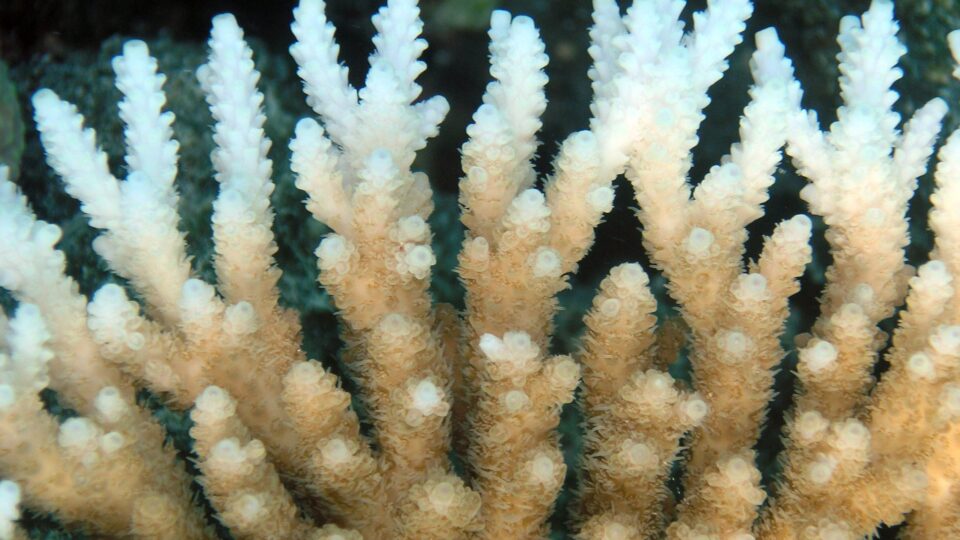
The world’s coral reefs are in the midst of a global bleaching event being driven by extraordinarily high ocean temperatures.  This is the fourth such global event on record and is predicted to be the largest one ever.  Coral bleaching occurs when corals are stressed by heat and eject the symbiotic algae within them that they need to survive.  Bleached corals can recover if water temperatures cool soon enough.  Otherwise, they die.

Each of the three previous coral bleaching events has been worse than the last.  The first, in 1998, affected 20% of the world’s reefs.  The second, in 2010, affected 35%.  The third, from 2014 to 2017, affected 56% of reefs.

The current bleaching event was confirmed by satellite observations early in April and was already seen to be affecting more than half of the world’s coral areas across the Pacific, Indian, and Atlantic Oceans.  The ongoing event is expected to be the worst bleaching ever experienced by Australia’s Great Barrier Reef.  A small saving grace is that the current bleaching event is not expected to be of extremely long duration because the El Niño in the Pacific has abated.

Coral bleaching events are becoming more severe and frequent due to increased marine heat waves driven by climate change.  Last year was particularly difficult for corals as global sea temperatures reached record high levels for several months.

Widespread coral bleaching impacts economies, livelihoods, food security, and more.  Coral reefs provide ecosystem services essential to marine life and human populations as well.  Global action will be needed for coral interventions and restorations.

**********

Web Links

Satellites watch as 4th global coral bleaching event unfolds

Photo, posted March 23, 2012, courtesy of Oregon State University via Flickr.

Earth Wise is a production of WAMC Northeast Public Radio

New York is raising its shoreline

January 18, 2024 By EarthWise Leave a Comment

Superstorm Sandy in 2012 flooded 17% of New York City and caused $19 billion in damage.  In its aftermath, plans emerged to create floodwalls, raised elevations, high-capacity drainage, and other infrastructure to protect the city from future Sandy-like events.

Like all large infrastructure projects in densely populated places, the remaking of New York’s shoreline has only moved along in fits and starts.  But there has been significant progress.

The East Side Coastal Resiliency (ESCR) project is the largest urban resiliency project currently underway in the United States.  The first piece of it – the Asser Levy renovation – was completed in 2022.  Over the next three years, the $1.8 billion ESCR will reshape two-and-a-half miles of Lower Manhattan’s shoreline.  The ESCR is just one part of a much larger $2.7 billion initiative called the BIG U, which is a series of contiguous flood resilience projects that will create 5.5 miles of new park space specifically designed to protect over 60,000 residents and billions of dollars in real estate against sea level rise and storm surges. 

In a time of rising seas and increasingly powerful storms, flood-prone coastal U.S. cities – including Boston, Norfolk, Charleston, Miami, and San Francisco – are moving toward embracing the long-held Dutch concept of “living with water”, which emphasizes infrastructure that can both repel and absorb water while also providing recreational and open space.

**********

Web Links

After a Decade of Planning, New York City Is Raising Its Shoreline

Photo, posted November 1, 2012, courtesy of Rachel via Flickr.

Earth Wise is a production of WAMC Northeast Public Radio

Cryopreserving Corals | Earth Wise

October 3, 2023 By EarthWise Leave a Comment

Cryopreserving corals

Recent climate models estimate that if the effects of climate change are not mitigated soon enough, 95% of the world’s corals could die by the mid 2030s.  Given the current rate of greenhouse gas emissions, this is an increasingly likely outcome.  Coral reefs are estimated to have a $10 trillion economic value apart from their essential role in marine ecosystems.

Researchers at the University of Hawaii at Manoa have demonstrated a successful technique for cryopreserving entire coral fragments; in other words, preserving coral using cold temperatures and successfully reviving them.

Existing coral cryopreservation techniques rely on freezing sperm and larvae, which can only be collected during spawning events, which occur only a few days each year for coral species.  This makes it logistically very challenging for researchers and conservationists.

The Hawaiian researchers focused on a process called isochoric vitrification, which is a method of freezing with liquid nitrogen that prevents the formation of ice crystals.  They tested the technique with thumbnail-sized fragments of coral, freezing them in small aluminum chambers which restrict the growth of ice crystals that would otherwise damage delicate polyp tissues.  Once the chambers were warmed, the fragments were transferred to seawater and allowed to recover.  They found that the revived corals behaved the same as those that were never cooled.

The process holds great promise to conserve the biodiversity and genetic diversity of coral.  If the process can be scaled up, it may be possible to preserve as many species of coral as possible by 2030, when it may no longer be viable for them to survive in the warming and acidifying oceans.

**********

Web Links

Cryopreservation breakthrough could save coral reefs

Photo, posted June 2, 2023, courtesy of USFWS – Pacific Region via Flickr.

Earth Wise is a production of WAMC Northeast Public Radio

Arctic Warming And Weather At Mid-Latitudes | Earth Wise

May 18, 2023 By EarthWise Leave a Comment

Arctic warming and how it impacts weather

Some of the most striking images of climate change are those of melting glaciers in the Arctic and polar bears stranded on shrinking sea ice. The Arctic has been warming at a rate twice as fast as the global average.  In recent years, there has been growing recognition of the Arctic’s role in driving extreme weather events in other parts of the world.

Winters in the midlatitude regions have seen more extreme weather events.  The past winter saw record-breaking cold temperatures and snowfall in Japan, China, and Korea.   Many parts of Eurasia and North America experienced severe cold snaps, with heavy snowfall and prolonged periods of subzero temperature.  On the other hand, Europe saw its second warmest winter on record with record high temperatures in many places, much drier than normal conditions, and the closure of many ski resorts.

A study published in the journal Climate and Atmospheric Science by scientists from South Korea and the U.S. looked at various climate projection models as well as historic climate data to assess what is likely to happen to weather in the mid-latitudes as the Arctic continues to warm.  Warmer Arctic Sea temperatures usually result in lower winter temperatures in East Asia and North America as ocean currents and the jet streams are altered.

The study shows that Arctic warming-triggered cold waves in the mid-latitudes are likely to persist in a warmer future, but that such events will become more difficult to predict.  The study highlights the importance of continued efforts to better understand the interactions between Arctic warming and the climate of the midlatitudes.   There need to be better ways to predict the extreme weather events that are likely to come.

**********

Web Links

Gwangju Institute of Science and Technology Researchers Correlate Arctic Warming to Extreme Winter Weather in Midlatitude and Its Future

Photo, posted August 31, 2006, courtesy of Hillebrand / USFWS via Flickr.

Earth Wise is a production of WAMC Northeast Public Radio

The Cost Of Heat Waves | Earth Wise

December 7, 2022 By EarthWise Leave a Comment

Heat waves are defined as periods of abnormally hot weather generally lasting more than two days. To be considered a heat wave, the recorded temperatures must be substantially above the historical averages for a given area. According to climate scientists, anthropogenic climate change is likely causing heat waves to increase in both frequency and intensity.  

According to a new study by researchers from Dartmouth University, climate change-driven severe heat waves have cost the world economy trillions of dollars since the early 1990s. 

In the study, which was recently published in the journal Science Advances, researchers combined in-depth economic data for regions worldwide with the average temperature for the hottest five-day period —a commonly used measurement of heat intensity—for each region in each year.  The research team found that between 1992 and 2013, heat waves statistically coincided with variations in economic growth and that an estimated $16 trillion was lost to the effects of high temperatures on human health, productivity and agricultural output.

The results of the study underscore issues of climate justice and inequality.  According to researchers, the economic costs of extreme heat have been and will be disproportionately borne by the world’s poorest nations.  While economic losses due to extreme heat events averaged 1.5% of GDP per capita for the world’s wealthiest regions, the researchers found that low-income regions suffered a loss of 6.7% of GDP per capita.  Most of these low-income nations have contributed the least to climate change. 

According to the research team, immediate action is needed now to protect vulnerable people during the hottest days of the year.

**********

Web Links

Heat Waves Have Cost World Economy Trillions of Dollars

Photo, posted July 23, 2021, courtesy of Martin Fisch (marfis75) via Flickr.

Earth Wise is a production of WAMC Northeast Public Radio
Coping With Climate Change | Earth Wise

October 11, 2022 By EarthWise Leave a Comment

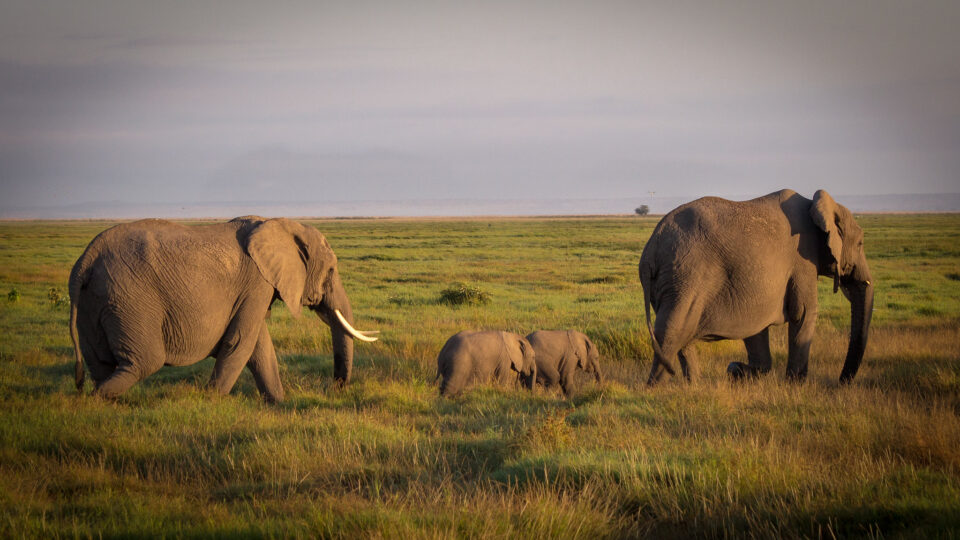
Animals will cope with climate change differently

Extreme weather events including prolonged drought and heavy rainfall are becoming more common and more severe as global temperatures rise.  As the climate continues to change in the coming decades, how will animals respond? 

Researchers from the University of Southern Denmark have examined how different mammals react to climate change. They analyzed data on population fluctuations from 157 mammal species around the world.  They compared these fluctuations with weather and climate data from the same time period.  The research team had 10 or more years of data for each species studied. 

The researchers found that mammals that live for a long time and/or produce less offspring –  like llamas, elephants, bears, and bison – are more climate resilient than small mammals with short lives — like mice, possums, lemmings, and rare marsupials. 

For example, large, long-lived mammals can invest their energy into one offspring, or simply wait for better times if conditions become challenging.  On the other hand, small, short-lived mammals like rodents have more extreme population changes in the short term. In the event of a prolonged drought, large portions of their food base may rapidly disappear, and they are left to starve because they have limited fat reserves.

However, the research team notes that the ability of a species to withstand climate change must not be the only factor when assessing a species’ vulnerability.  In fact, in many cases, habitat destruction, poaching, pollution, and invasive species pose a larger threat to animal species than climate change. 

While the study only examined 157 species, the findings enable researchers to also predict how animals they know less about will react to climate change.

********** 

Web Links

Which animals can best withstand climate change?

Photo, posted July 8, 2018, courtesy of Ray via Flickr.

Earth Wise is a production of WAMC Northeast Public Radio
Antarctic Heatwave | Earth Wise

May 13, 2022 By EarthWise Leave a Comment

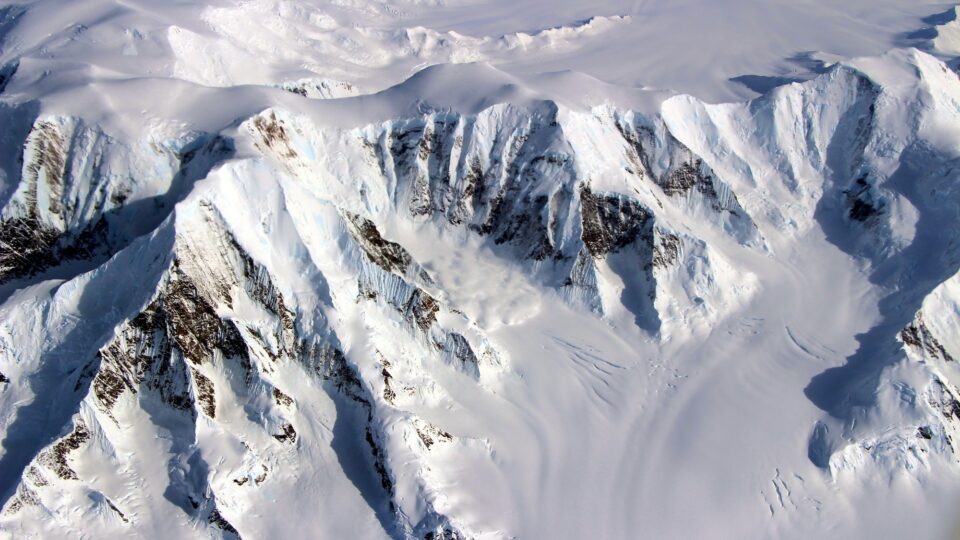
The Concordia Research station atop Dome C on the Antarctic Plateau is generally considered to be the coldest place on earth.  In mid-March, the normal high temperature for the day is around -56 degrees Fahrenheit.  But on March 18, the high for the day was 11.3 degrees, nearly 70 degrees warmer than normal.

The World Meteorological Organization doesn’t formally track the metric of largest temperature excess above normal, but if it did, this would probably have set a world record.  Consider a place like Washington, DC.  Its normal high temperature on March 18 is 61 degrees.   Imagine if it got up to 131 degrees! 

The 11-degree reading at the Concordia Research Station was not only the record for the month of March.  It was actually the record for any month.

The Russian Vostok research station, which is another candidate for being the coldest place on earth based on its average high temperature, also saw some record high temperatures.  Vostok reported a high temperature of zero degrees Fahrenheit, which is 63 degrees above its average for the date.  It broke the station’s previous record by almost 27 degrees.

This record warming was the result of a unique combination of meteorological events that included a moist inflow of an atmospheric river as well as a rare infusion of hot air into the Antarctic plateau.  The arrival of the moisture in the atmospheric river trapped the hot air, allowing temperatures to shoot up.

The extreme warmth in Antarctica raises concerns about the long-term effects on the ice there.  A single short heatwave is not going to have a major effect, but if such events become more common, it could be real problem.

**********

Web Links

Extraordinary Antarctica heatwave, 70 degrees above normal, would likely set a world record

Photo, posted October 15, 2016, courtesy of NASA Goddard Space Flight Center via Flickr.

Earth Wise is a production of WAMC Northeast Public Radio.

The Pacific Northwest Heatwave | Earth Wise

August 18, 2021 By EarthWise Leave a Comment

Analyzing the Pacific Northwest Heatwave

The late-June heatwave in the Pacific Northwest shattered temperature records in dozens of locations.  Cities like Portland and Seattle saw historic high temperatures and one town in British Columbia saw temperatures hotter than ever recorded in Las Vegas.

An international team of weather and climate experts analyzed this extreme weather event and came to a preliminary conclusion that it was a 1-in-1000-year event in today’s climate.  “Today’s climate” means the already warmer conditions that the world is experiencing as a result of the changing climate.

If that analysis is accurate, then such an extreme temperature event would have been at least 150 times rarer in the era before global warming.  In other words, they concluded that it would have been a 1-in-150,000-year event, which means that it would have been virtually impossible in pre-industrial times.

Given that they estimated that the extreme temperatures were a 1-in-1000-year event at this point, it would follow that such events are not about to become commonplace any time soon.  On the face of it, that is somewhat comforting to hear.

However, all of this assumes that global warming will not radically change the statistical distribution of global temperatures.  If that assumption fails to hold, then all bets are off.  Perhaps temperatures like those experienced in the Pacific Northwest might be a 1-in-50-year event, for example, but we just don’t realize it yet.  Follow-up studies will be looking for evidence of significant changes in the distribution of weather events.  For now, a 1-in-1000-year event means there is only a 0.1% chance of occurring in a given year.  That’s good news for the residents of that region.

**********

Web Links

Preliminary analysis concludes Pacific Northwest heat wave was a 1,000-year event…hopefully

Photo, posted June 4, 2016, courtesy of Jody Claborn via Flickr.

Earth Wise is a production of WAMC Northeast Public Radio.

The Great American Eclipse

August 18, 2017 By EarthWise

https://earthwiseradio.org/wp-content/uploads/2017/08/EW-08-18-17-The-Great-American-Eclipse.mp3

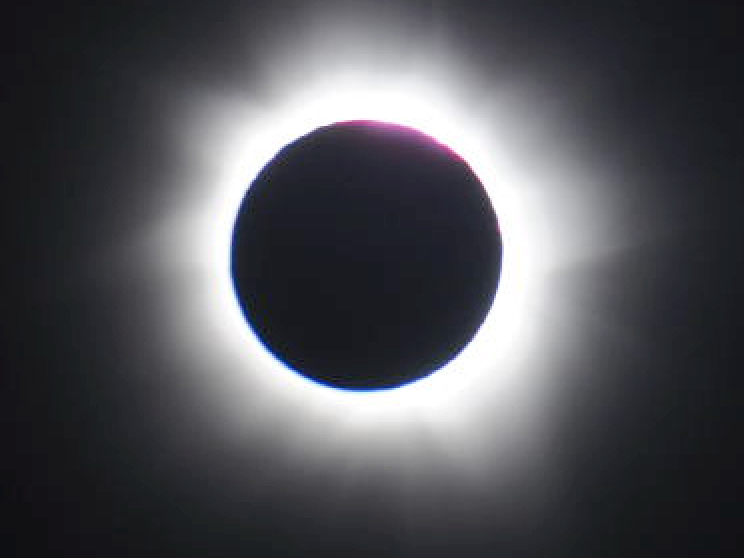
On Monday, August 21, there will be a total solar eclipse visible in a band across the entire contiguous United States.  The last time that happened was in June of 1918.  In fact, the last time a total solar eclipse was visible anywhere at all in the continental U.S. was in 1979.  So, this is a big deal for American eclipse watchers and millions of us will be heading for some part of the 65-mile-wide band of totality that wends its way from Oregon to South Carolina.

[Read more…] about The Great American Eclipse

Climate Change And Heat Waves

February 3, 2017 By EarthWise

https://earthwiseradio.org/wp-content/uploads/2017/01/EW-02-03-17-Climate-Change-and-Heat-Waves.mp3

2016 was the hottest year on record and saw many extreme weather events.   How much of what happened resulted from climate change has yet to be assessed.  However, the analysis of 2015 – which was the hottest year on record up until last year – has been presented in a special publication by the American Meteorological Society.

[Read more…] about Climate Change And Heat Waves

Primary Sidebar

Recent Episodes

  • An uninsurable future
  • Clean energy and jobs
  • Insect declines in remote regions
  • Fossil fuel producing nations ignoring climate goals
  • Trouble for clownfishes

WAMC Northeast Public Radio

WAMC/Northeast Public Radio is a regional public radio network serving parts of seven northeastern states (more...)

Copyright © 2026 ·