• Skip to primary navigation
  • Skip to main content
  • Skip to primary sidebar

Earth Wise

A look at our changing environment.

  • Home
  • About Earth Wise
  • Where to Listen
  • All Articles
  • Show Search
Hide Search
You are here: Home / Archives for devices

devices

Grid reliability and grid-edge resources

April 2, 2025 By EarthWise Leave a Comment

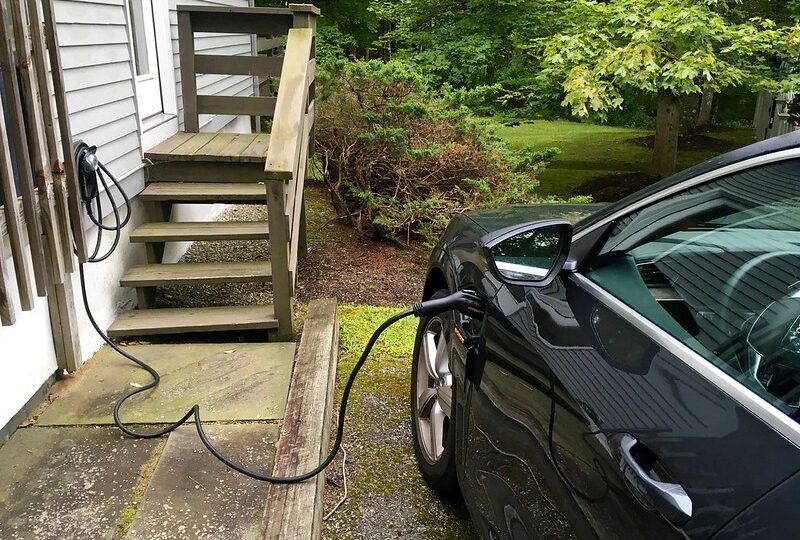
A new study by MIT researchers looked at the potential for grid-edge resources to enhance the ability of the electric grid to respond to unforeseen power outages.  Grid-edge resources are devices found close to consumers rather than located near central power plants, substations, or transmission lines.  These include residential solar panels, storage batteries, electric vehicles, heat pumps, smart thermostats and smart water heaters.

These grid-edge devices can independently generate, store, or tune their consumption of power and increasingly, they are online internet-of-things devices.  The MIT study outlined a blueprint for how such devices could reinforce the power grid through a local electricity market.  Owners of grid-edge devices could subscribe to such a market and essentially loan out their device as part of a microgrid or local network as on-call energy resources.

Electric vehicles could provide power rather than consuming it when necessary.  Storage batteries could do the same.  Devices like smart dishwashers and thermostats would reduce their power demands when necessary.

In the event that the main power grid is compromised, an algorithm would determine which grid-edge devices were available and trustworthy and would either use them to pump power into the grid or reduce the power they are drawing from it in order to help mitigate the power failure. 

The MIT researchers illustrated this grid resilience strategy through a number of grid attack scenarios including failures from cyber-attacks and natural disasters.   Their analysis showed that various networks of grid-edge devices are capable of defeating various types of grid failures.

**********

Web Links

Rooftop panels, EV chargers, and smart thermostats could chip in to boost power grid resilience

Photo, posted October 10, 2019, courtesy of Noya Fields via Flickr.

Earth Wise is a production of WAMC Northeast Public Radio
AI’s Environmental Footprint

March 13, 2024 By EarthWise Leave a Comment

AI is leaving a massive environmental footprint

Artificial intelligence is everywhere these days.  Some say it is the biggest development since the discovery of fire.  There is a lot of hype regarding AI, and it will be a while before the hype is sorted out from the reality.  But one thing that is certain is that AI is resource-intensive and has a large environmental footprint.

AI use directly produces carbon emissions from its consumption of non-renewable electricity and is also responsible for the consumption of billions of gallons of fresh water.

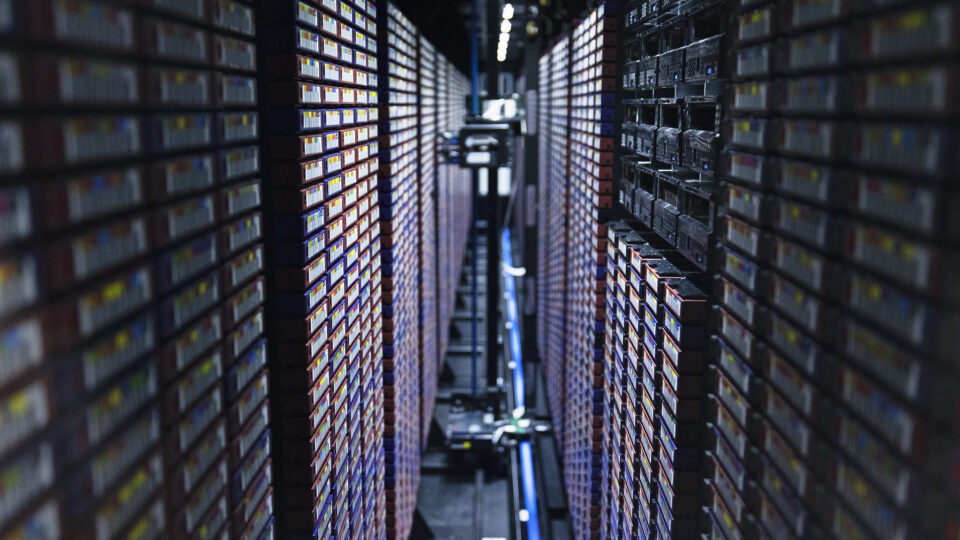
Various forms of AI run on many types of devices, but the kind of AI we hear about the most – such as ChatGPT – requires specialized computer equipment that runs in large cloud data centers.  There are roughly 10,000 such centers worldwide and more are under construction.  Estimates are that electricity consumption from data centers will double between 2022 and 2026 to a total of 1,000 terawatts, roughly as much electricity as all of Japan uses.

These estimates include all data center activities, not just AI.  Most operators of data centers don’t reveal what percentage of their energy use comes from AI.  One exception is Google, which says machine learning accounts for about 15% of its data center energy use.

Data centers also consume a great deal of water to cool delicate electronics.  In 2022, Google’s data centers consumed about 5 billion gallons of fresh water.

AI has the potential to improve the efficiency of systems, improve climate models, and perhaps help develop new ways to help reduce humanity’s environmental footprint.  But at the moment, it represents an increasing burden on the environment that cannot just be ignored.

**********

Web Links

As Use of A.I. Soars, So Does the Energy and Water It Requires

Photo, posted January 23, 2023, courtesy of Aileen Devlin / Jefferson Lab via Flickr.

Earth Wise is a production of WAMC Northeast Public Radio
Sustainable hydrogen from methane

February 14, 2024 By EarthWise Leave a Comment

Creating sustainable hydrogen from methane

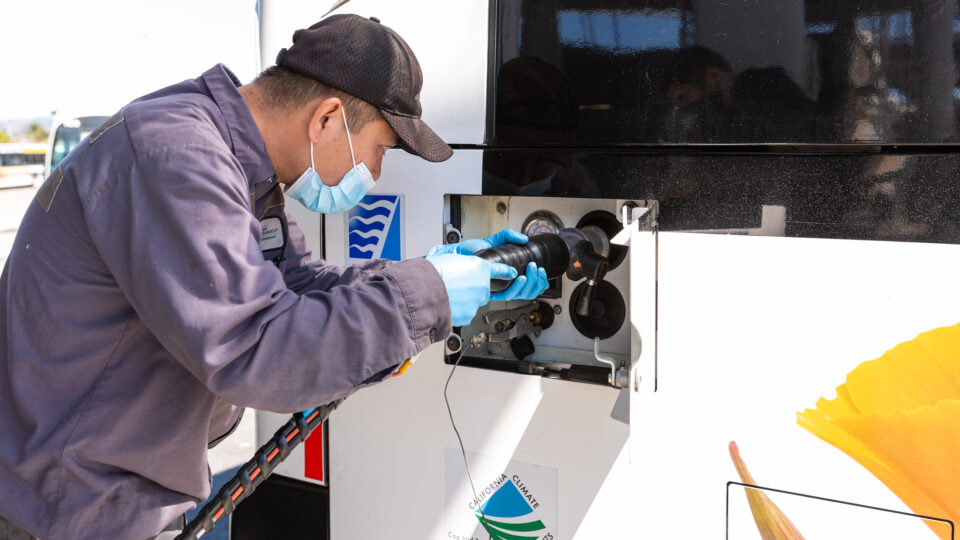
Hydrogen could serve as a viable alternative to fossil fuels that can be used directly as a fuel or can be used to generate electricity to power cars and other devices. However, large-scale production of hydrogen currently relies on fossil fuels and creates carbon emissions in the process.

So-called green hydrogen involves using electricity to split water into its component elements to produce it.  If the electricity is generated without emissions, then the hydrogen is truly green.

Another way to get hydrogen is by breaking down hydrocarbons like methane, which itself is a very powerful greenhouse gas.  This so-called blue hydrogen could be environmentally friendly if an appropriate method for producing it can be developed.

Existing techniques for converting methane into hydrogen involve the use of metal catalysts – often nickel – that are energy-intensive to mine and manufacture, and can negatively affect the environment.  Research at the University of Surrey in the UK has shown promising results for the use of nitrogen-doped nanocarbons as metal-free catalysts for the direct conversion of methane into hydrogen.  One of the biggest problems with using metal catalysts for hydrogen production is that they get poisoned by carbon.  The carbon that comes out of the methane ends up stopping the catalyst from continuing to do its chemical job.  It turns out that the doped nanocarbon approach to hydrogen catalysis appears to be resistant to this problem.

The development of sustainable hydrogen production methods, including efficient and sustainable electrolysis of water as well as catalysis of hydrocarbons like methane, is crucial to realizing the potential of hydrogen fuel as a clean energy source.

**********

Web Links

‘Game-changing’ findings for sustainable hydrogen production

Photo, posted April 30, 2021, courtesy of California Energy Commission via Flickr.

Earth Wise is a production of WAMC Northeast Public Radio

Grid-Scale Gravity Energy Storage | Earth Wise

September 19, 2023 By EarthWise Leave a Comment

As wind and solar energy play a growing part in our energy system, the need for grid-scale energy storage is growing as well.  An historic form of energy storage and still the largest in installed capacity is pumped hydro storage, which makes use of the potential energy contained in having water sitting at a higher elevation where it can be released downward to operate turbine generators.  This is an effective system but is limited to places where geography cooperates.

For the past five years, a company called Energy Vault has been developing a system that uses the same principle to generate electricity but instead of pumping water to a higher elevation, it uses mechanical devices to lift heavy objects such as concrete blocks to an appropriate height.  Lowering the blocks back to the ground drives generators.

To date, Energy Vault has only built demonstration systems with a fraction of the storage capacity needed for grid-scale operation. Their EV1 Tower in Switzerland was successfully grid interconnected in 2020 and demonstrated round-trip efficiency (the fraction of the energy stored that was produced by the generators) above 75%.  Their improved EVx system is expected to do better than 80%.

This year the company, along with partners Atlas Renewable and China TIanying, is now in the first phases of commissioning a grid-scale system located outside of Shanghai, China.  The 25-MW system is built adjacent to a wind farm and a national grid interconnection site

This is the first grid-scale gravity energy storage system and is expected to be fully online in the fourth quarter of this year.  A second, similar system is now under contract to be built elsewhere in China.

**********

Web Links

First grid-scale gravity energy storage system undergoes commencement in China

Photo courtesy of Energy Vault.

Earth Wise is a production of WAMC Northeast Public Radio
Solar-Powered Desalination | Earth Wise

September 6, 2022 By EarthWise Leave a Comment

Desalinating water using solar power

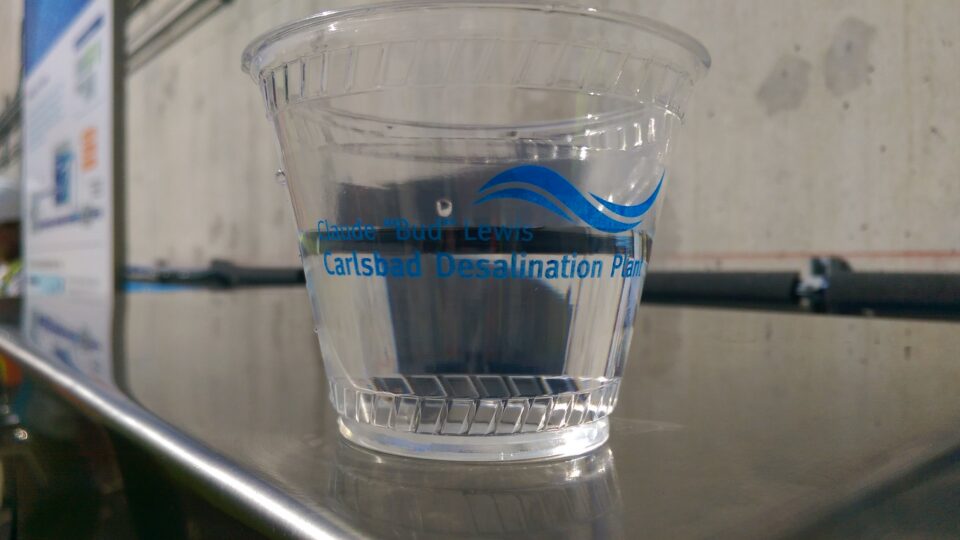
About two-thirds of humanity is affected by water shortages.  In the developing world, many areas with water shortages also lack dependable sources of electricity.  Given this situation, there is widespread research on using solar heat to desalinate seawater.  To date, many approaches to this face problems with fouling of equipment with salt buildup.  Tackling this issue has proven to add complexity and expense to solar desalination techniques.

A team of researchers from MIT and China has recently developed a solution to the problem of salt accumulation that is more efficient than previous methods and is less expensive as well.

Previous attempts at solar desalination have relied on some sort of wick to draw saline water through the device.  These wicks are vulnerable to salt accumulation and are difficult to clean.  The MIT-Chinese team has developed a wick-free system instead.  It is a layered system with dark material at the top to absorb the sun’s heat, and then a thin layer of water that sits above a perforated layer of plastic material.  That layer sits atop a deep reservoir of salty water such as a tank or pond.  The researchers determined the optimal size for the holes in the perforated plastic.

The 2.5 millimeter holes are large enough to allow for convective circulation between the warmer upper layer of water above the perforated layer and the colder reservoir below.  That circulation naturally draws the salt from the thin layer above down into the much larger body of water below.

The system utilizes low-cost, easy to use materials.  The next step is to scale up the devices into a size that has practical applications.  According to the team, just a one-square-meter system could provide a family’s daily needs for drinking water.

**********

Web Links

Solar-powered system offers a route to inexpensive desalination

Photo, posted February 13, 2017, courtesy of Jacob Vanderheyden via Flickr.

Earth Wise is a production of WAMC Northeast Public Radio.

A New “Wonder Material” | Earth Wise

February 11, 2022 By EarthWise Leave a Comment

A new wonder material

Graphene is a form of carbon made of single-atom-thick layers. It has many remarkable properties and researchers around the world continue to investigate its use in multiple applications.

In 2019, a new material composed of single-atom-thick layers was produced for the first time.  It is phosphorene nanoribbons or PNRs, which are ribbon-like strands of two-dimensional phosphorous.  These materials are tiny ribbons that can be a single atomic layer thick and less than 100 atoms wide but millions of atoms long.  They are comparable in aspect ratio to the cables that span the Golden Gate Bridge.   Theoretical studies have predicted how PNR properties could benefit all sorts of devices, including batteries, biomedical sensors, thermoelectric devices, nanoelectronics, and quantum computers. 

As an example, nanoribbons have great potential to create faster-charging batteries because they can hold more ions than can be stored in conventional battery materials.

Recently, for the first time, a team of researchers led by Imperial College London and University College London researchers has used PNRs to significantly improve the efficiency of a device.  The device is a new kind of solar cell, and it represents the first demonstration that this new wonder material might actually live up to its hype.

The researchers incorporated PNRs into solar cells made from perovskites.  The resultant devices had an efficiency above 21%, which is comparable to traditional silicon solar cells.  Apart from the measured results, the team was able to experimentally verify the mechanism by which the PNRs enhanced the improved efficiency.

Further studies using PNRs in devices will allow researchers to discover more mechanisms for how they can improve performance.

**********

Web Links

‘Wonder material’ phosphorene nanoribbons live up to hype in first demonstration

Photo, posted October 6, 2010, courtesy of Alexander AlUS / CORE-Materials via Flickr.

Earth Wise is a production of WAMC Northeast Public Radio.

Metals In Western Water Supplies | Earth Wise

October 29, 2021 By EarthWise Leave a Comment

Acid rock drainage are contaminating western water supplies

A new study published by the University of Colorado Boulder looked at the problem of rivers being contaminated by acid rock drainage.  Rocks that include sulfide-based minerals, such as pyrite, oxidize when exposed to air and water.  The resulting chemical reaction produces sulfuric acid which, when present in water, dissolves metals like lead, cadmium, and zinc.  The recent study found that rare earth elements are also leached out of rock by this process.

Rock drainage occurs naturally throughout the western United States, but historic mines that disturbed large amounts of rocks and soil have dramatically increased this process and have led to growing downstream water pollution.  Upwards of forty percent of the headwaters of major rivers in the West are contaminated by some form of acid mine or rock drainage.

The warming climate has brought longer summers and less snow in winters.  Longer, lower stream flows make it easier for metals to leach into watersheds and concentrate the metals that would otherwise be diluted by snowmelt.

Rare earth elements are essential components of many high-tech devices such as computers, hard drives, and cell phones.  There is not a long history of studying the hazards they might represent when they enter the environment.

The study looked at the Snake River watershed in Colorado and found that increasing amounts of rare earth elements are entering Colorado water supplies.  Concentrations of rare earth elements are not ordinarily monitored and there are no water quality standards set for them.

According to the researchers, once rare earth elements get into water, they tend to stay there.  Traditional treatment processes don’t remove them.  It is a growing problem that needs to be addressed.

**********

Web Links

Rare earth elements and old mines spell trouble for Western water supplies

Photo, posted October 27, 2007, courtesy of Dion Gillard via Flickr.

Earth Wise is a production of WAMC Northeast Public Radio.

Sea Turtles And The Sargasso Sea | Earth Wise

June 15, 2021 By EarthWise Leave a Comment

Understanding the migratory patterns of sea turtles

The lifecycle of sea turtles includes a longstanding mystery, often called the “lost years”.  Turtles hatching from nests along Florida’s Atlantic coast head into the ocean and are generally not seen again for several years before they return in their adolescence. Very little is known about where they spend this time in the open ocean.

Researchers at the University of Central Florida have learned that green turtles as well as loggerhead turtles – both iconic species in conservation efforts – may be spending their youth in the legendary Sargasso Sea.  The Sargasso Sea is located off the east coast of the U.S. in the North Atlantic Ocean.  It has frequently been featured in popular culture, such as in the novel Twenty Thousand Leagues Under the Sea, as a place where ships could be trapped in thick mats of floating, brown Sargassum seaweed for which the sea is named.

The researchers tracked the baby turtles by attaching advanced, solar-powered tracking devices, about an inch long, to their shells.  They used a special adhesive that held the devices to the turtle shells but would allow the devices to fall off after a few months causing no harm to the turtles or inhibiting shell growth or behavior.

It was previously thought that baby turtles would passively drift in sea currents and simply ride those currents until their later juvenile years.  The new research shows that the turtles actively orient to go into the Sargasso Sea.

Studies of where turtles go as they develop are fundamental to sound sea turtle conservation.  If we don’t know where turtles are and what parts of the ocean are important to them, we are doing conservation blindfolded.

**********

Web Links

Legendary Sargasso Sea May be Sea Turtles’ Destination during Mysterious ‘Lost Years’

Photo, posted October 23, 2016, courtesy of Kris-Mikael Krister via Flickr.

Earth Wise is a production of WAMC Northeast Public Radio.

Red Hot Chili Solar Panels | Earth Wise

April 9, 2021 By EarthWise Leave a Comment

Advances in solar panel technology

The majority of solar panels in use today are made from either single-crystal or polycrystalline silicon, the same stuff used to make the ubiquitous chips in computers, cell phones, and countless other devices.  In addition, a growing fraction of solar panels utilize thin-film technology, which offers cost and flexibility advantages.

Monocrystal silicon still provides the highest efficiency and longest lifespan in commercially available panels, but the lower costs and some other features of thin-film solar panels are growing that market over time.

More recently, perovskite solar cell technology has been a source of great interest in the research community.  Perovskites are a class of minerals with a specific crystalline structure that already have uses in various applications.  As a solar cell material, perovskites offer the potential for converting more sunlight to electricity, being manufactured far more cheaply using no exotic or expensive materials, being more defect-tolerant, as well as a having number of other advantages.  They also have the potential for having very high efficiency. 

Recently, a group of researchers in China and Sweden published results of studies demonstrating that the addition of a novel ingredient has increased the efficiency of perovskite solar cells to nearly 22%, which is better than most commercial silicon solar cells.  The ingredient is capsaicin, the chemical that gives chili peppers their spicy sting.  Adding capsaicin expands the grains that make up the active material of the solar cell, allowing the more effective transport of electricity. 

Why did the researchers think of adding the active ingredient of hot peppers to a solar cell in the first place?  So far, they aren’t saying.

**********

Web Links

Solar panels capture more sunlight with capsaicin – the chemical that makes chili peppers spicy

Photo, posted August 16, 2019, courtesy of Pedro via Flickr.

Earth Wise is a production of WAMC Northeast Public Radio.

Fitness Trackers For Lobsters | Earth Wise

October 20, 2020 By EarthWise Leave a Comment

improving the lobster supply chain

The lobster industry is somewhat unique, at least in this country, in that it involves an animal food that is kept alive until it has reached the destination where it will be consumed or used.  As a result, the industry has to deal with a problem they call “shrink”, which is the mortality lobsters experience as they change hands from capture to kitchen.

Maine’s lobster industry has reached out to the University of Maine Lobster Institute along with collaborators at other institutions to help quantify and mitigate stress points in the lobster supply chain that reduce survival and profitability.

A 2-year project was funded by the National Oceanic and Atmospheric Administration to create miniature sensory devices – crustacean heart and activity trackers (called C-HATs).  These are essentially Fitbits for lobsters.  The noninvasive devices strapped on a lobster monitor its heart rate and movement as it passes from trap to on-board live tank to live storage crate to truck to wholesaler to retailer or processor.

A separate sensor-equipped device called the MockLobster travels along with the lobsters to log environmental conditions experienced, including temperature, light and dissolved oxygen levels.

The hope is to be able to get a good handle on the conditions lobsters experience from trap to market and learn where problems are likely to arise.  The researchers are also working to develop economical, standardized protocols to monitor water quality and the heath of lobsters during their movement through the supply chain.

The goal is to produce big improvements in the bottom lines of everyone along the supply chain along with big improvements in the health of the lobsters destined for market.

**********

Web Links

Fitness trackers, environmental sensors prototyped to improve survival in the lobster supply chain 

Photo, posted August 29, 2015, courtesy of Adam Grimes via Flickr.

Earth Wise is a production of WAMC Northeast Public Radio.

Carbon In The Ocean | Earth Wise

October 13, 2020 By EarthWise Leave a Comment

carbon uptake by the ocean

New research from the University of Exeter in the UK reveals that the world’s oceans soak up more carbon than previously believed.  Previous estimates of the movement of carbon between the atmosphere and the oceans did not account for the temperature differences between the water’s surface and a few meters below.

The new model includes this factor and finds that there is a significantly higher flux of carbon into the oceans.

The study calculated carbon dioxide fluxes from 1992 to 2018 and found that at certain times and locations there was up to twice as much CO2 contained in the ocean as determined from previous models.

The temperature differences between the surface of the ocean and the water at a depth of a few meters is important because the amount of carbon dioxide that can be absorbed in water depends very strongly on the temperature of the water.   Anyone with a home soda maker knows this well as the devices always work much better with refrigerated water than room temperature water.

The difference in ocean carbon dioxide uptake measured from satellite data and calculated in the new modeling amounts to about 10% of global fossil fuel emissions, so it is a very significant revision.  The revised estimate for carbon dioxide uptake actually agrees much better with an independent method for calculating the amount of carbon dioxide in the oceans.  Those measurements came from a global ocean survey performed by research ships over decades.

Now that two so-called big data estimates of the ocean sink for CO2 agree pretty well, there is greater confidence that we understand this important aspect of the planet’s carbon cycle.

**********

Web Links

Ocean carbon uptake widely underestimated

Photo, posted December 30, 2012, courtesy of Jerome Decq via Flickr.

Earth Wise is a production of WAMC Northeast Public Radio.

A Camera For Insects | Earth Wise

August 26, 2020 By EarthWise Leave a Comment

Developing tiny cameras for insects

Electronic devices get smaller and smaller all the time.  We are used to carrying around phones in our pockets that incorporate a whole host of sophisticated devices. But we can still be amazed by miniaturization.  Recently, scientists at the University of Washington announced the development of a tiny, wireless camera small enough to be worn by insects.  The work was published in the journal Science Robotics.

The device weighs only 250 milligrams, which is less than one hundredth of an ounce.  The camera streams high-resolution video to a smartphone at up to 5 frames per second, which allows scientists to record video of what insects see in real time.

The device has a mechanical arm that allows the camera to pivot 60 degrees, which can allow it to create panoramic shots.  It is controlled by a smartphone app and can be operated up to 120 meters away from the insect.

The new camera system enables scientists to better understand insect behavior and explore novel environments.  Having a first-person view from the back of a beetle while it is walking around allows researchers to explore how it responds to different stimuli that it sees in its environment.

Of more general interest, the technology can be used to help develop the next generation of small robots.  Insects can traverse rocky environments, which is really challenging for small robots to do.  The device will allow engineers to study how insects can move around in such environments.  It will also be useful for observing and collecting samples from hard-to-navigate spaces.

It is remarkable how sophisticated technology keeps getting smaller and smaller.

*********

Web Links

Scientists Develop Tiny Camera Backpack for Insects

Photo courtesy of Mark Stone/University of Washington.

Earth Wise is a production of WAMC Northeast Public Radio.

Recycling And Olympic Medals

March 23, 2017 By EarthWise

https://earthwiseradio.org/wp-content/uploads/2017/03/EW-03-23-17-Recycling-and-Olympic-Medals.mp3

Organizers of the Tokyo 2020 Olympic Games announced in February that all the Olympic medals for the games will be made from recycled materials.  The strategic roadmap for the games, laid out in the document “Olympic Agenda 2020”, specifically calls for the inclusion of sustainability in every aspect of the games.

[Read more…] about Recycling And Olympic Medals

Using Less Energy

December 19, 2016 By EarthWise

https://earthwiseradio.org/wp-content/uploads/2016/12/EW-12-19-16-Using-Less-Energy.mp3

Americans comprise less than 5% of the world’s population, but we use almost 20% of its energy.  This is a problem from many perspectives and it is one that we are at least trying to solve.

[Read more…] about Using Less Energy

Primary Sidebar

Recent Episodes

  • An uninsurable future
  • Clean energy and jobs
  • Insect declines in remote regions
  • Fossil fuel producing nations ignoring climate goals
  • Trouble for clownfishes

WAMC Northeast Public Radio

WAMC/Northeast Public Radio is a regional public radio network serving parts of seven northeastern states (more...)

Copyright © 2025 ·