• Skip to primary navigation
  • Skip to main content
  • Skip to primary sidebar

Earth Wise

A look at our changing environment.

  • Home
  • About Earth Wise
  • Where to Listen
  • All Articles
  • Show Search
Hide Search
You are here: Home / Archives for deserts

deserts

A giant solar plus storage facility

August 23, 2024 By EarthWise Leave a Comment

A massive solar and battery storage project is now operational

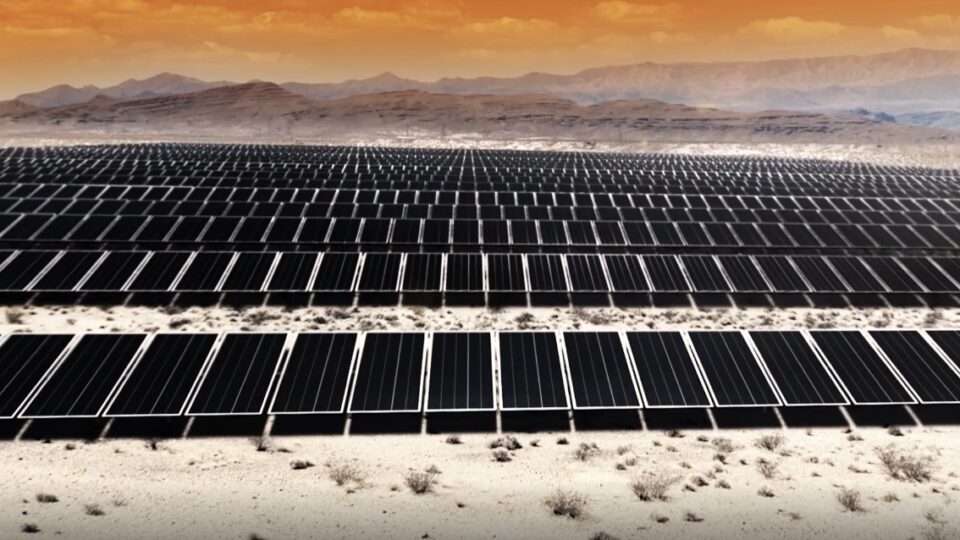
One of the country’s largest co-located solar and battery energy storage projects is now fully operational.  The Gemini Solar+Storage project is located in Clark County, Nevada, about 30 minutes outside of Las Vegas.

The project’s 1.8 million solar panels can generate up to 690 megawatts of electricity, which is enough to supply about 10% of Nevada’s peak demand.  The facility is co-located with 380 megawatts of 4-hour battery storage, which is enough to supply Nevadans with 1,400 MWh of power after sundown.

The project makes use of a unique storage configuration that allows the storage system to be charged directly from the solar panels, resulting in increased efficiency and maximizing the capture and storage of solar energy.

The project has minimized the environmental impacts to the nearly 5,000-acre site.  Primergy, the project developer, took measures to leave vegetation in place, installed solar panels to follow the ground’s natural contours, and reduced the overall footprint by more than 20% through careful design.  The project created 1,300 union and prevailing wage jobs and contributed $483 million to Nevada’s economy.

Solar facilities are increasingly co-located with battery storage plants.  There is a huge project in Kern County California that includes 1.9 million solar panels capable of generating 875 megawatts of solar power and storing 3,287 megawatt-hours of energy.  The deserts of the southwest are prime locations for such facilities.

**********

Web Links

The house always wins: Massive Gemini solar + storage outside of Las Vegas reaches commercial operations

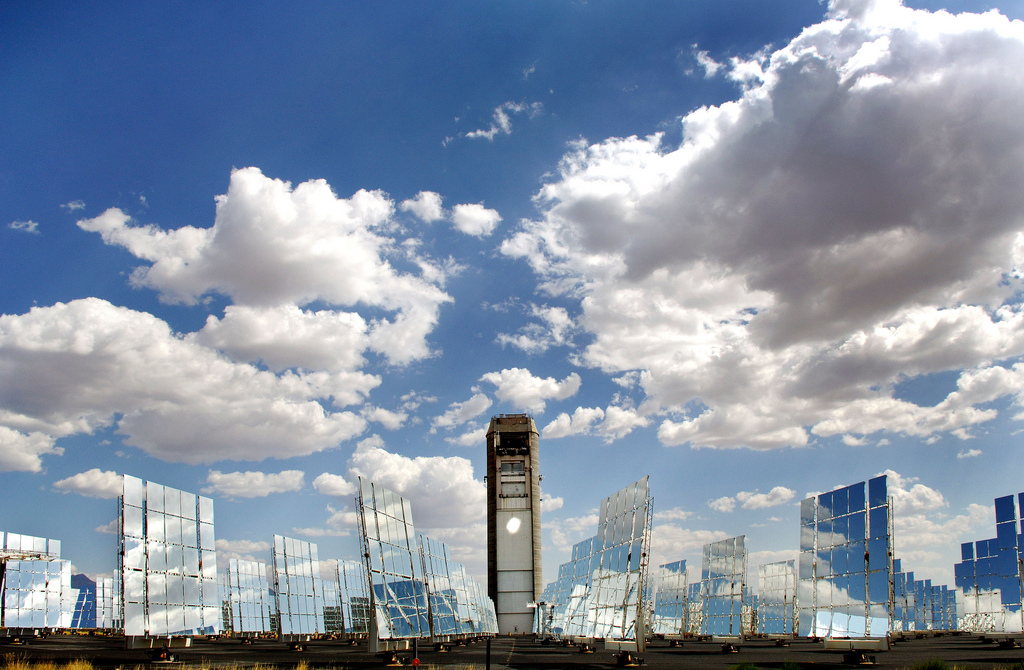
Photo courtesy of Quinbrook Infrastructure Partners.

Earth Wise is a production of WAMC Northeast Public Radio
Oases and desertification

May 21, 2024 By EarthWise Leave a Comment

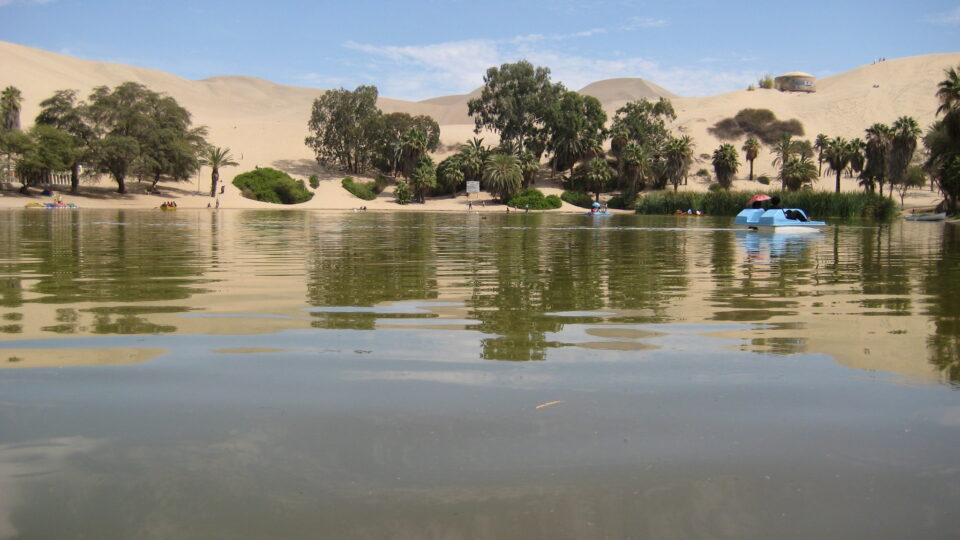
Oases are important sources of water for people, plants, and animals in the world’s desert areas.  In fact, oases sustain 10% of the world’s population despite taking up only about 1.5% of land area.  They form when groundwater flows and settles into low-lying areas or when surface meltwater flows down from nearby mountains and pools.

New research from the Chinese Academy of Sciences has found that oases added 85,000 square miles of new area from 1995 to 2020, mostly from artificial expansion projects, but over the same period lost 52,000 square miles from desertification and water scarcity.  The net gain of 33,000 square miles is not considered to be sustainable given that it was mostly due to artificial causes.  The oasis expansion projects were in Asia but losses due to desertification were also mostly in Asia.

Today, oases are found in 37 countries.  Increases in oases mostly come from people intentionally converting desert land into oases using runoff water and groundwater pumping, creating grasslands and croplands. This mostly has taken place in China.

Human over-exploitation of dwindling groundwater can limit the sustainability of oases as can the long-term loss of glaciers.

The study highlighted ways to sustain healthy oases, including suggestions for improving water resource management, promoting sustainable land use and management, and encouraging water conservation and efficient water use.  As the climate continues to change, these efforts will be increasingly important for a significant portion of the world’s population.

**********

Web Links

World’s Oases Threatened By Desertification, Even As Humans Expand Them

Photo, posted August 3, 2008, courtesy of Paul Williams via Flickr.

Earth Wise is a production of WAMC Northeast Public Radio
Harvesting Water From The Air | Earth Wise

August 11, 2023 By EarthWise Leave a Comment

Researchers developing method to harvest water from air

Engineers at MIT have created a superabsorbent material that can soak up significant amounts of moisture from the air, even in desert-like conditions.

The material is a transparent, rubbery substance made from hydrogel, which is a naturally absorbent material that is already widely used in disposable diapers.  The MIT researchers enhanced the absorbency of hydrogel by infusing it with lithium chloride, which is a type of salt that is a powerful desiccant.

They found that they could infuse hydrogel with more salt than was possible in previous studies.  Earlier studies soaked hydrogels in salty water and waited 24 to 48 hours for the salt to infuse into the gels.  Not much salt ended up in the gels and the material’s ability to absorb water vapor didn’t change much.  In contrast, the MIT researchers let the hydrogels soak up the salt for 30 days and found that far more salt was absorbed into the gel.  The result was that the salt-laden gel could then absorb and retain unprecedented amounts of moisture, even under very dry conditions.

Under very dry conditions of 30% relative humidity, the gels captured 1.79 grams of water per gram of material.  Deserts at night have those levels of relative humidity, so the material is capable of generating water in the desert.

The new material can be made quickly and at large scale.  It could be used as a passive water harvester, particularly in desert and drought-prone regions.  It could continuously absorb water vapor from the air which could then be condensed into drinking water.  The material could also be used in air conditioners as an energy-saving, dehumidifying element.

**********

Web Links

This salty gel could harvest water from desert air

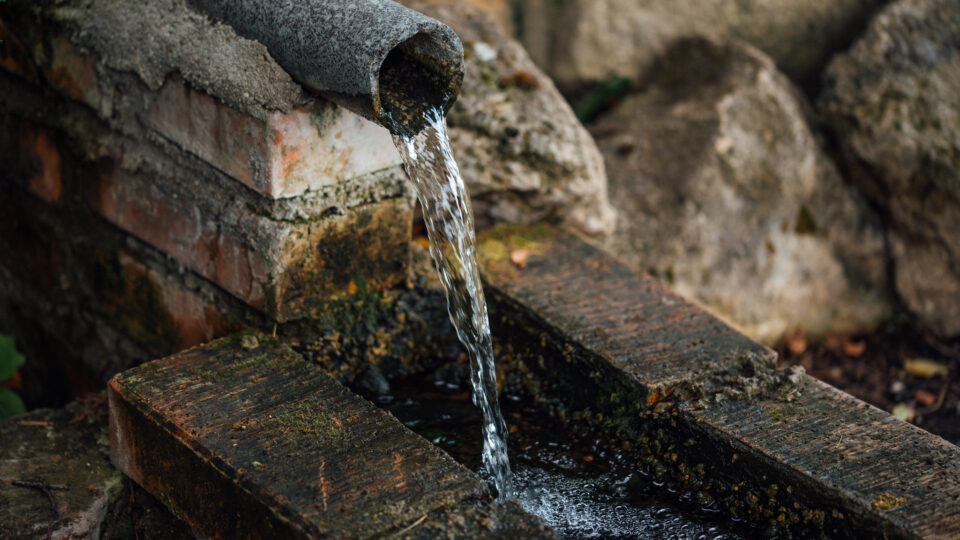
Photo, posted July 26, 2021, courtesy of Ivan Radic via Flickr.

Earth Wise is a production of WAMC Northeast Public Radio
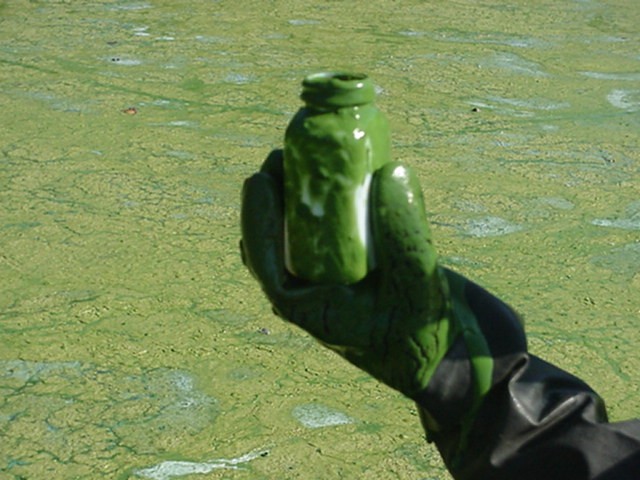
Onshore Algae Farms | Earth Wise

November 9, 2022 By EarthWise Leave a Comment

According to some estimates, food production will need to increase by 50% by 2050 in order to feed a projected global population of 10 billion people.  How can this be achieved?  

One solution, according to researchers at Cornell University, could be to grow nutritious and protein-dense microalgae in seawater-fed onshore aquaculture systems.

According to the research, which was recently published in the journal Oceanography, growing algae onshore could close a projected gap in society’s future nutritional demands while also improving environmental sustainability.  

Climate change, environmental degradation, limited arable land, and lack of freshwater will all constrain the amount of food that can be grown in the coming decades.  Wild fish stocks are already heavily exploited, and there are limits to how much finfish, shellfish, and seaweed aquaculture can be produced in the coastal ocean. 

As a result, the researchers argue for expanding algae production in onshore aquaculture facilities.  The research team’s models found that the best locations for onshore algae farming facilities are along the coasts of the Global South, including desert environments. 

Algae can grow as much as ten times faster than traditional crops.  Algae can also be produced in a manner that is more efficient than agriculture in its use of nutrients.  In addition to its high protein content, algae also provides nutrients lacking in vegetarian diets, such as essential amino acids, minerals, and omega-3 fatty acids.

Algae could become the breadbasket of the Global South.

**********

Web Links

Onshore algae farms could feed the world sustainably

Photo, posted June 17, 2011, courtesy of NOAA Great Lakes Environmental Research Laboratory via Flickr.

Earth Wise is a production of WAMC Northeast Public Radio

Lithium Mining And Andes Ecosystems | Earth Wise

October 28, 2022 By EarthWise Leave a Comment

The global demand for lithium could be an ecological disaster

A remote region in the high Andes straddling the borders between Argentina, Bolivia, and Chile has become known as the Lithium Triangle.   The area has become the focus of a global rush for lithium to make batteries for electric cars.  The global demand for lithium is expected to quadruple by 2030 to 2.6 million tons a year.

According to the U.S. Geological Survey, more than half of the world’s lithium reserves are dissolved in ancient underground water within the Lithium Triangle.  The cheapest way to extract the lithium is to pump the underground water to the surface and evaporate it in the sun to concentrate the lithium carbonate contained in it.

Every ton of lithium carbonate extracted using this cheap, low-tech method dissipates into the air about half a million gallons of water that is vital to the arid high Andes.  The process lowers water tables and has the potential to dry up lakes, wetlands, springs, and rivers.  Hydrologists and conservationists say the lithium rush in Argentina is likely to turn the region’s delicate ecosystems to deserts.

The global drive for green vehicles to fight climate change has the potential to be an ecological disaster in this remote region of South America and for the indigenous people who live there.

The environmental impacts are not an inevitable price for the transition to electric vehicles.  First of all, there are alternatives to lithium.  Both zinc and nickel are potential substitutes in rechargeable batteries.  But, there are also ways of obtaining lithium that are less destructive than evaporating the metal from saline ecosystems.  It is up to battery manufacturers, automakers, and financiers to start demanding lithium from sources that are less environmentally destructive.

**********

Web Links

Why the Rush to Mine Lithium Could Dry Up the High Andes

Photo, posted September 25, 2015, courtesy of Nuno Luciano via Flickr.

Earth Wise is a production of WAMC Northeast Public Radio
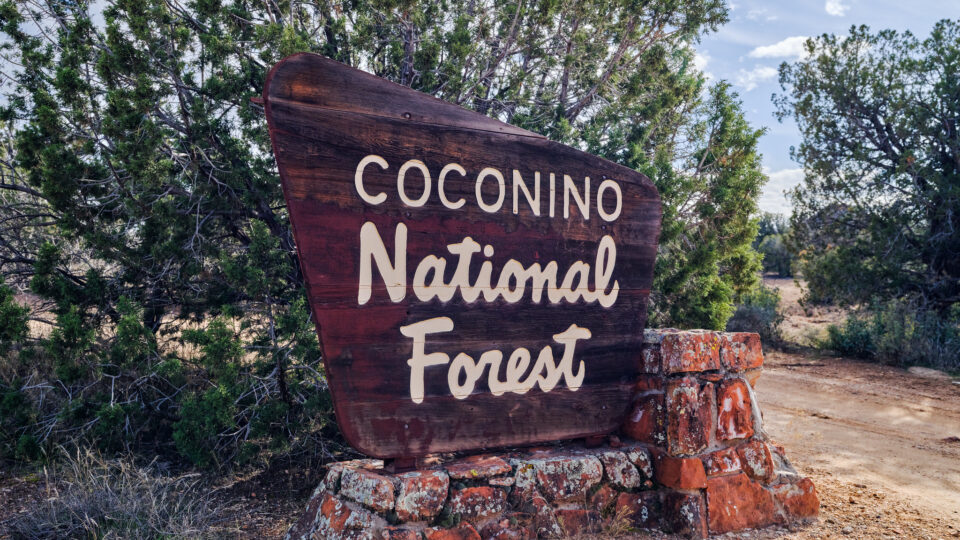
Danger For North American Biomes | Earth Wise

October 8, 2020 By EarthWise Leave a Comment

North American biomes are losing their resilience

Biomes are large, naturally occurring communities of flora and fauna that occupy a major habitat.  Examples include several different kinds of forests, grasslands, deserts, and tundra.  According to a new study published in the journal Global Change Biology, the resilience of North America’s plant biomes is declining, which means that they are in danger of succumbing to a major extinction event.

The research analyzed over 14,000 fossil pollen samples from 358 sites across North America for the purpose of reconstructing their “landscape resilience”, meaning the ability of the habitats to persist or quickly rebound in response to disturbances.

Some 13,000 years ago, North American ecosystems were destabilized by the one-two punch of the retreat of glaciers at the end of the last ice age along with the arrival of humans.  That combination resulted in the extinction of large terrestrial mammals on the continent. 

Today, there is a comparable one-two punch created by the rapidly changing climate combined with the dramatic expansion of the footprint of human civilization.   The result could again be the demise of some of North America’s biomes.  In past eras, forests persisted longer than grasslands, but also took longer to reestablish after disruptions.  Overall, only 64% of historic biomes regained their original ecosystem type.

The scientists said that strategic conservation effects could help counteract or slow down the impacts of climate change in the coming decades.  In particular, efforts focusing on improving landscape and ecosystem resilience by increasing local connectivity and concentrating on regions with high richness and diversity could have the greatest positive effect.

**********

Web Links

North American Biomes Are Losing Their Resilience, With Risks for Mass Extinctions

Photo, posted January 9, 2020, courtesy of Tony Webster via Flickr.

Earth Wise is a production of WAMC Northeast Public Radio.

Tracking Locust Swarms | Earth Wise

June 12, 2020 By EarthWise Leave a Comment

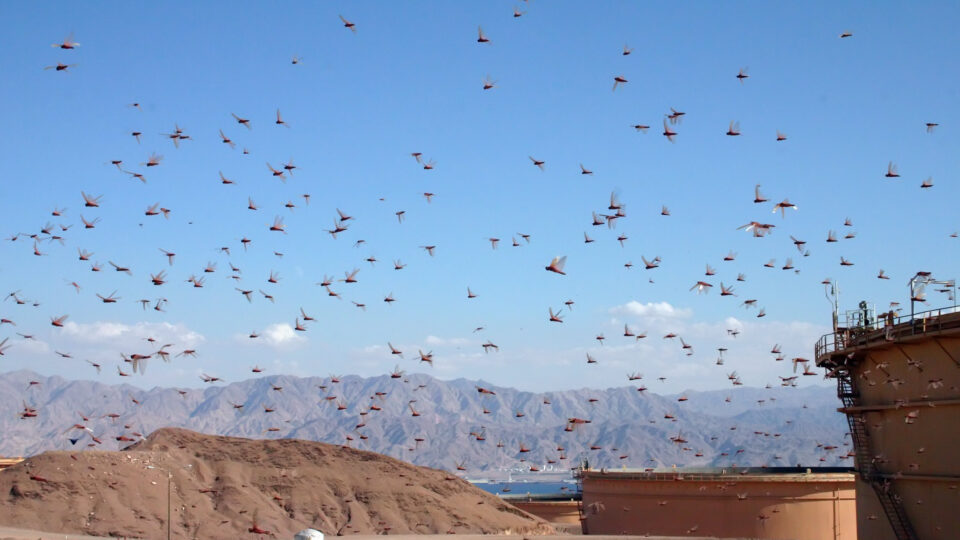
Plagues of locusts have been reported since the times of the Egyptian pharaohs.  In recent history, there have been desert locust plagues during multiple decades of the 20th century.  Since January, a very large population of locusts gathered in Kenya and has destroyed over 2,000 square miles of pasture and crop land.  Swarms have since reached portions of Ethiopia, Somalia, Uganda, and South Sudan.  Apart from East Africa, there are locust swarms in Yemen and other Middle East countries and in Pakistan as well.  The current situation continues to represent an unprecedented threat to food security and livelihoods in East Africa.  Locust swarms can range in size from less than half a square mile to hundreds of square miles, each containing 20 to 40 million locusts.

The National Oceanic and Atmospheric Administration uses a powerful air quality model to track the movement and deposition of pollution from wildfires, volcanoes and industrial accidents.  Called the HYSPLIT dispersion model, it has now been refined for the purpose of tracking swarms of locusts.

Because desert locusts are passive fliers that drift with the wind, the model’s high-quality data on wind speed and direction can lead to accurate predictions of where the locusts will go and when.

NOAA is working with the United Nations Food and Agriculture Organization – the FAO.  The new web application based on HYSPLIT is being used by the FAO to issue forecasts and warnings to affected countries about forthcoming waves of locust swarms.  Such forecasts enable local officials to conduct aerial spraying to reduce the impact of desert locusts which can destroy grains, grasses and other greens that are life-sustaining foods for entire regions.

**********

Web Links

NOAA teams with United Nations to create locust-tracking application

Photo, posted November 20, 2004, courtesy of Niv Singer via Flickr.

Earth Wise is a production of WAMC Northeast Public Radio.

One Million Extinctions

June 14, 2019 By EarthWise Leave a Comment

A group of 145 expert authors from 50 countries has produced a report based upon a review of 15,000 scientific and government sources that is the first comprehensive look at the state of the planet’s biodiversity in 15 years.  The conclusions are alarming.

Thanks to human pressures, one million species may be pushed to extinction in the next few years, something with serious consequences for human beings as well as the rest of life on earth.

Based upon scientific studies as well as indigenous and local knowledge, the evidence is overwhelming that human activities are the primary cause of nature’s decline.  The report ranked the major drivers of species decline as land conversion, including deforestation; overfishing; bush meat hunting and poaching; climate change; pollution; and invasive alien species.

The tremendous variety of living species on our plant which number at least 8.7 million and perhaps many more – biodiversity – constitutes a life-supporting safety net that provides our food, clean water, air, energy, and more.

In parts of the ocean, little life remains but green slime.  Some remote tropical forests are nearly silent because insects have vanished.  Many grasslands are becoming deserts.  Human activity has severely altered more than 75% of Earth’s land areas and has impacted 66% of the oceans.  The world’s oceans increasingly are characterized by plastics, dead zones, overfishing, and acidification.

The main message of the 1,500-page report is that transformative change is urgently needed.  In order to safeguard a healthy planet, society needs to shift from a sole focus on chasing economic growth.  This won’t be easy, but we must come to the understanding that nature is the foundation for development before it is too late.

**********

Web Links

One million species at risk of extinction, UN report warns

Photo, posted January 1, 2014, courtesy of Eric Kilby via Flickr.

Earth Wise is a production of WAMC Northeast Public Radio.

Collecting Clean Water From The Air

February 6, 2019 By EarthWise Leave a Comment

Clean water is an essential requirement for human life and there are many places where it is a scarce commodity.   In the world’s deserts, getting water to people requires feats of engineering and irrigation that can be cumbersome and expensive.

Researchers at Ohio State University have produced a couple of new studies that explore options for gathering water from fog and condensation that are based on principles of biomimicry:  copying strategies already in use by plants and animals.

The researchers looked at how cactus, beetles and desert grasses all collect water condensed from nighttime fog, gathering droplets from the air and filtering them to roots or reservoirs.

The cactus they studied collects water on its barbed tips before guiding droplets down conical spines to the base of the plant. They learned that conical shapes gather more water than do cylindrical shapes.  This is because of a physics phenomenon called the Laplace pressure gradient.

The beetles they studied collect drops of water on waxy, water-repellent bumps on their backs.  The water then slides towards the beetle’s mouth on the flat surface between the bumps.  Based on this, the researchers experimented with structures that include multiple hydrophilic cones with spaces in between where water droplets can coalesce.

From grasses, they learned that grooved surfaces move water more quickly than ungrooved surfaces – in fact, about twice as much.

The work so far has been on a laboratory-level, but the researchers envision scaling up to structures in the desert that can gather water from fog or condensation and supplement public systems or wells either on a house-by-house basis or on a community-wide basis.  Copying cacti, beetles and grasses could supply clean water to people in the desert.

**********

Web Links

Collecting clean water from air, inspired by desert life

Photo, posted February 7, 2010, courtesy of Remko van Dokkum via Flickr.

Earth Wise is a production of WAMC Northeast Public Radio.

The Sahara Desert Is Expanding

May 15, 2018 By EarthWise Leave a Comment

https://earthwiseradio.org/wp-content/uploads/2018/05/EW-05-15-18-The-Sahara-Desert-Is-Expanding.mp3

Deserts are barren areas of land where little precipitation occurs, resulting in living conditions that are hostile for plant and animal life. These regions are typically defined by low average annual rainfall—usually 100 millimeters (less than 4 inches) of rain per year or less. 

[Read more…] about The Sahara Desert Is Expanding

The Ecology Of Dust

January 19, 2018 By EarthWise Leave a Comment

https://earthwiseradio.org/wp-content/uploads/2017/12/EW-01-19-18-The-Ecology-of-Dust.mp3

It isn’t something we think about very often, but dust is a connector of ecosystems around the world.  Dust carries various minerals and nutrients to places where such things are in very scarce supply.  This includes the oceans of the world as well as many forests and other ecosystems.  For example, phosphorus-bearing dust carried from the Gobi Desert is essential to the growth of giant redwoods in California’s Sierra Mountains.

[Read more…] about The Ecology Of Dust

Storing Heat From The Sun

December 29, 2015 By WAMC WEB

https://earthwiseradio.org/wp-content/uploads/2015/12/EW-12-29-15-Storing-Heat-From-The-Sun.mp3

We are all familiar with the solar panels that cover an ever-growing number of rooftops as well as large arrays in so-called solar farms.  These photovoltaic systems turn sunlight directly into electricity.  But they are not the only way to make electricity using the sun.

[Read more…] about Storing Heat From The Sun

Primary Sidebar

Recent Episodes

  • An uninsurable future
  • Clean energy and jobs
  • Insect declines in remote regions
  • Fossil fuel producing nations ignoring climate goals
  • Trouble for clownfishes

WAMC Northeast Public Radio

WAMC/Northeast Public Radio is a regional public radio network serving parts of seven northeastern states (more...)

Copyright © 2026 ·