• Skip to primary navigation
  • Skip to main content
  • Skip to primary sidebar

Earth Wise

A look at our changing environment.

  • Home
  • About Earth Wise
  • Where to Listen
  • All Articles
  • Show Search
Hide Search
You are here: Home / Archives for credits

credits

The UN Carbon Market

January 13, 2025 By EarthWise Leave a Comment

The UN climate conference in November approved an official market for large-scale trading of carbon credits.  This will allow industrial countries to help meet their emission reduction targets set by the Paris Climate Agreement by paying other nations to protect and restore forests and carbon-rich peatlands.

The first major participant in this multi-billion-dollar enterprise is Indonesia.  That country is home to the world’s third largest expanse of tropical rainforests and more than a third of the world’s carbon-storing peatlands.  Indonesia’s government plans to raise up to $65 billion by 2028 by selling carbon credits accrued by restoring and protecting its forests and peatlands.

The problem with carbon trading is that it can be filled with loopholes ranging from inaccurate carbon accounting to outright fraud.  Carbon trading with both individual companies and other countries can result in double- and even triple-counting of the same carbon.

For example, carbon credits are assigned when forests earmarked for agricultural or other development are preserved instead of being felled.  But what if that forest destruction wasn’t going to happen even without selling carbon credits? 

There are organizations in the business of verifying carbon accounting, but independent analysis of their methodologies has revealed serious shortcomings, and in many cases, the verifications have been deemed to be worthless.

There are real problems with carbon accounting and setting correct baselines for the carbon emission reductions associated with carbon credits.  Nevertheless, the existence of a global carbon market can be an important tool in the world’s efforts to mitigate the effects of climate change.

**********

Web Links

Will UN Carbon Market Work? Indonesia Will Provide First Test

Photo, posted June 12, 2017, courtesy of Runa S. Lindebjerg via Flickr.

Earth Wise is a production of WAMC Northeast Public Radio
Community Solar On The Rise | Earth Wise

April 14, 2023 By EarthWise Leave a Comment

Community solar continues to grow

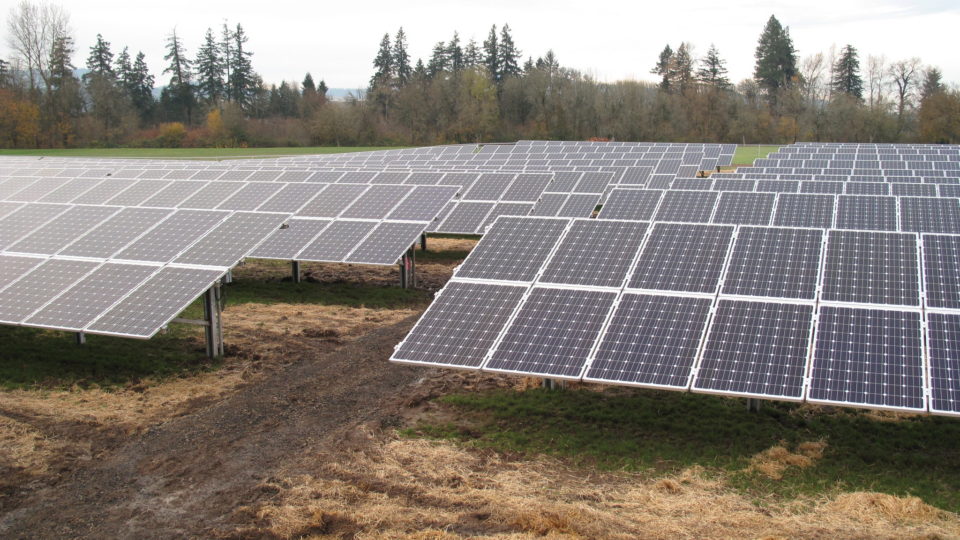
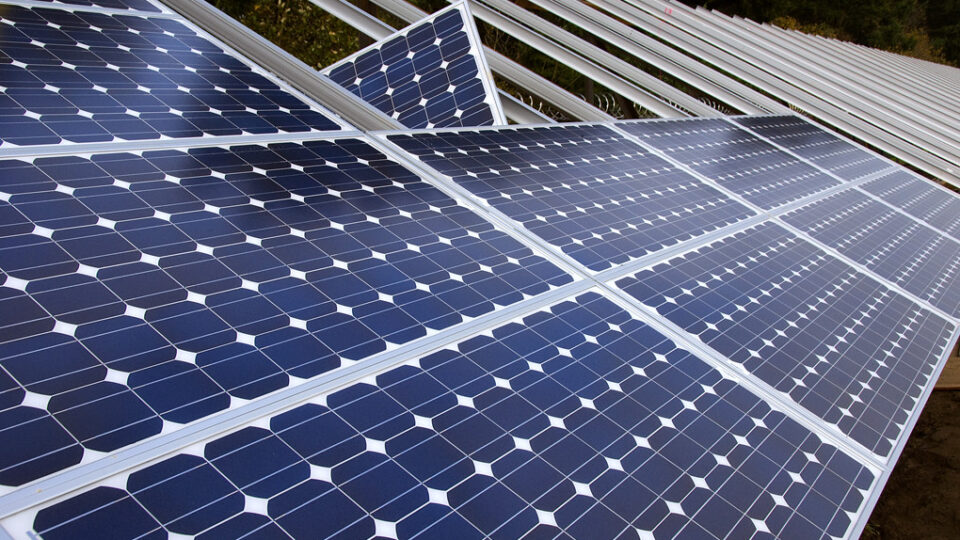
Community solar is a way for people who can’t put solar on their own roofs to still take advantage of its benefits.  Whether they can’t afford to install their own panels, have too much shade on their roof, or don’t even own a home, community solar is another way to participate in green energy.

Community solar – also called “shared solar” or “solar gardens” – is a kind of development in which consumers can subscribe to a large solar installation in their area and receive credits on their monthly utility bills for their share of the solar electricity produced.

The large majority of community solar installations are in six states:  Colorado, Illinois, Massachusetts, Minnesota, New Jersey, and New York.  After substantial growth in community solar in 2022, New York now is the national leader, thanks to initiatives by the state government and the nonprofit sector.  Some programs focus on giving low-income households access to solar.  As of last fall, New York had over 728 community solar projects online.

One should understand that electrons are indistinguishable.  The power generated by a community solar installation is not piped directly to subscribers’ homes.  It just goes into the grid.  Subscribers get credit for their share of the power, but that is essentially a matter of bookkeeping, not physics.

The federal government now has $7 billion that can be used for community solar as part of the Greenhouse Gas Reduction Fund within the Inflation Reduction Act enacted last August.  The EPA plans to award up to 60 grants to assist projects deploying residential and community solar.  Research firm Wood Mackenzie forecasts the community solar market will double by 2027.

**********

Web Links

Community Solar Is About to Get a Surge in Federal Funding. So What Is Community Solar?

Photo, posted November 18, 2008, courtesy of the Oregon Department of Transportation via Flickr.

Earth Wise is a production of WAMC Northeast Public Radio

Counting Trees | Earth Wise

April 11, 2023 By EarthWise Leave a Comment

Researchers have developed a new method for counting trees

Scientists estimate that there are about 3 trillion trees on the earth.  A huge number but probably half as many as there were before people entered the picture.  And we’re losing about 10 billion trees a year to toilet paper, timber, farmland expansion, and other human activity.  Trees play a crucial role in taking carbon dioxide out of the atmosphere and storing it away.  For this reason, trees have become an integral part of the effort to mitigate climate change.

There are major initiatives underway around the world to plant more trees.  Part of this is driven by the increasing use of carbon credits by companies trying to offset their carbon emissions.   These credits are earned by either planting new trees or paying farmers or other landowners not to cut down existing trees.  But how many trees are actually planted and how many survive over time?

Whether these efforts are really resulting in more trees and more carbon storage is not easy to determine.  Current international inventories of global tree-sequestered carbon are subject to great uncertainty.

Researchers from the University of Copenhagen and NASA have developed a method for mapping large numbers of trees and determining their carbon content.  Using artificial intelligence techniques to analyze ultra-high-resolution satellite images, they can count trees, determine their individual species, and measure their carbon content.

A study of images from Africa’s Sahel region found that it is home to nearly 10 billion trees that are currently storing 840 million tons of carbon.

Now that the groundwork for this new methodology is complete, it is ready to be deployed by public agencies, NGOs, and other interested in monitoring the numbers of trees and their carbon content.

**********

Web Links

The counting of nine billion trees could help manage climate credits and nature restoration

Photo, posted October 27, 2018, courtesy of Ian Dick via Flickr.

Earth Wise is a production of WAMC Northeast Public Radio

California Offshore Wind Auction | Earth Wise

January 10, 2023 By EarthWise Leave a Comment

In December, the Bureau of Ocean Energy Management held the first auction for offshore wind energy leases on the West Coast.  The BOEM lease sale offered five lease areas covering 373,268 acres off the central and northern California coast.  The leased areas have the potential to produce over 4.6 gigawatts of wind energy, which is enough to power 1.5 million homes.

The auction drew competitive bids from five companies totaling over $750 million.  The winning bidders were RWE Offshore Wind Holdings, California North Floating, Equinor Wind, Central California Offshore Wind, and Invenergy California Offshore. 

RWE is a German company with subsidiaries across the globe.  California North Floating is an affiliate of the Danish developer Copenhagen Infrastructure Partners.  Equinor Wind is a Norwegian company already heavily involved in offshore wind projects on the East Coast.  Central California Offshore Wind is managed by a joint venture between Spanish and French energy companies.   Invenergy is a privately held global developer and operator of renewable energy headquartered in Chicago.

The bidders will receive credits for participating in programs that support work force training programs for the floating offshore wind industry and/or the development of a US domestic supply chain for that industry. 

Offshore wind off the Pacific coast has enormous potential for enhancing the country’s energy future but represents a significant challenge because the deep ocean floors necessitate the use of floating wind technology as opposed to turbines that are affixed to the sea floor.

**********

Web Links

Biden-Harris Administration Announces Winners of California Offshore Wind Energy Auction

Photo, posted December 30, 2013, courtesy of Derek Finch via Flickr.

Earth Wise is a production of WAMC Northeast Public Radio.

Are Companies Really Reducing Emissions? | Earth Wise

December 21, 2022 By EarthWise Leave a Comment

Many companies around the world are declaring tremendous progress in reducing their greenhouse gas emissions.  Sometimes these claims are the result of actions that really do  reduce emissions but other times they are the result of something called “market-based accounting”. Businesses buy credits from clean energy providers that allows them to say they are running on green power when they actually are not.

The market analysis firm Bloomberg Green analyzed almost 6,000 climate reports filed by corporations last year and found that over 1,300 of them employed market-based accounting to erase over 120 million tons of emissions from their records.

Some clean energy contracts do have major climate benefits.  For example, companies like Amazon, Nestle, and Target have signed long-term power purchase agreements that ultimately help renewable developers finance new energy projects.

On the other hand, renewable energy credits are often short-term transactions with existing facilities and do little to stimulate investment or otherwise lead to greater use of green power.  They simply shift around ownership of existing renewable energy without doing anything new for the climate.

Some companies have made meaningful cuts to their pollution by putting solar panels on their roofs, upgrading their lighting and air conditioning equipment, and so on.  But many are reluctant to spend their capital in this way, even if it eventually saves money through lower electric bills.

Customers and shareholders want to see corporations do their part in reducing emissions.  But too many are making grandiose claims enabled by market-based accounting while doing far too little to help the environment.  Dubious claims of climate progress are not harmless; it is essential for the world’s companies to really do their share.

**********

Web Links

What Really Happens When Emissions Vanish

Photo, posted July 16, 2014, courtesy of Mike Mozart via Flickr.

Earth Wise is a production of WAMC Northeast Public Radio

Electrifying Delivery Vehicles | Earth Wise

October 12, 2022 By EarthWise Leave a Comment

Electrifying delivery vehicles is important for the climate

Most of the buzz about electric vehicles relates to passenger cars as the auto industry is making a major transition away from gasoline power.  Recently, pickup trucks have started to get some attention as well as Ford’s electric version of the F-150 truck has hit the streets and the long-awaited Tesla Cybertruck will be introduced next year.  There hasn’t been as much talk about delivery vehicles, but there should be.

There are about 15 million delivery vehicles in the U.S., and they are a significant contributor to greenhouse gas emissions.   The post office alone has a quarter million of them.  Such vehicles are especially attractive candidates for electrification.  Most travel relatively consistent and short routes, which makes it easier for companies to be able to charge them and keep them charged.

Electrifying delivery vehicles in cities is especially important because the vehicles travel into and through residential neighborhoods, spreading pollution and particulates as they go.

Some provisions of the Inflation Reduction Act provide credits for the purchase of commercial vehicles.  Light-duty vans and trucks qualify for a credit of as much as $7,500.  Medium- and heavy-duty trucks qualify for credits as high as $40,000.  In addition, substantial tax credits are available for the installation of charging equipment.

According to a study by the Rocky Mountain Institute, sixty percent of new truck sales could be electric by 2030.  By 2035, the trucking industry could cut its emissions in half.

American companies are already stepping up to the plate.  Amazon plans to deploy 100,000 electric delivery vehicles from new automaker Rivian.  Walmart, UPS, FedEx, and others have also committed to electrified trucks.

**********

Web Links

The Climate Bill Will Electrify More Delivery Vans and Trucks

Photo, posted August 1, 2021, courtesy of Ivan Radic via Flickr.

Earth Wise is a production of WAMC Northeast Public Radio
Solar Equity for Low-Income Communities

May 30, 2019 By EarthWise Leave a Comment

A couple of years ago, the number of American roofs covered with solar panels passed the one million mark and the numbers keep growing.  But nearly half of U.S. households – accounting for more than 154 million people – aren’t able to host their own solar arrays because they lack suitable rooftop space, or they rent their homes.  But millions more simply can’t afford to spend tens of thousands of dollars to buy or lease solar panels.

In recent years, community solar has become popular.  These are projects where multiple participants own or lease shares in a mid-sized solar facility and receive credits that lower their monthly utility bills.  Community solar in the U.S. has more than quadrupled just since 2016.

However, the majority of community solar subscribers to date have been businesses, universities, government agencies, and higher-earning households.  These users can generally pay steep project enrollment fees or meet various financial requirements.  Meanwhile, those who could benefit most from access to renewable energy and lower utility bills – low-income residents – have largely been left out.

Low-income households on average spend over 8% of their income on utility bills, about three times more than moderate- to high-income households.  So, reducing electricity bills with community solar power is a big deal for them.

Given this situation, there are now a growing number of programs that make use of community solar to reduce living expenses for low-income households.  In a dozen states, new programs include a variety of mandates, financial incentives, and pilot programs targeting benefits for people with low incomes.  These programs will allow them to participate in both the environmental and economic benefits of renewable energy.

**********

Web Links

Energy Equity: Bringing Solar Power to Low-Income Communities

Photo, posted November 27, 2012, courtesy of Oregon State University via Flickr.

Earth Wise is a production of WAMC Northeast Public Radio.

Mandatory Solar In California

May 30, 2018 By EarthWise Leave a Comment

https://earthwiseradio.org/wp-content/uploads/2018/05/EW-05-30-18-Mandatory-Solar-in-California.mp3

In May, California became the first state in the U.S. to require solar panels on almost all new homes.  Under new standards adopted by the California Energy Commission, most new homes, condos and apartment buildings built after January 1, 2020 will be required to include solar systems.

[Read more…] about Mandatory Solar In California

Surging Wind Power In The U.S.

June 16, 2017 By EarthWise

https://earthwiseradio.org/wp-content/uploads/2017/06/EW-06-16-17-Surging-Wind-Power-in-the-U.S.-.mp3

So far, it has been a big year for the U.S. wind industry, which experienced its fastest first-quarter growth since 2009.  In total, about 2,000 megawatts of new capacity was installed, enough to power about 500,000 homes.   With this addition, wind now produces 5 1/2% of the country’s electricity.

[Read more…] about Surging Wind Power In The U.S.

The Struggle For Fuel Economy

May 31, 2016 By WAMC WEB

https://earthwiseradio.org/wp-content/uploads/2016/05/EW-05-31-16-Struggle-For-Fuel-Economy.mp3

Five years ago, the Obama Administration announced that the Corporate Average Fuel Economy or CAFE standard for the year 2025 would be 54.5 miles-per-gallon.   They estimated that improving the average fuel economy of cars and light-duty trucks to this level would save car owners $1.7 trillion at the pump and eliminate more than 6 billion metric tons of greenhouse gas emissions.

[Read more…] about The Struggle For Fuel Economy

Primary Sidebar

Recent Episodes

  • An uninsurable future
  • Clean energy and jobs
  • Insect declines in remote regions
  • Fossil fuel producing nations ignoring climate goals
  • Trouble for clownfishes

WAMC Northeast Public Radio

WAMC/Northeast Public Radio is a regional public radio network serving parts of seven northeastern states (more...)

Copyright © 2026 ·