• Skip to primary navigation
  • Skip to main content
  • Skip to primary sidebar

Earth Wise

A look at our changing environment.

  • Home
  • About Earth Wise
  • Where to Listen
  • All Articles
  • Show Search
Hide Search
You are here: Home / Archives for cows

cows

Extreme heat and dairy production

May 6, 2025 By EarthWise Leave a Comment

Climate change is causing more frequent and intense heat waves in the United States. Studies show that not only are heat waves now occurring more often, but that the average heat wave season is nearly 50 days longer now than it was in the 1960s.  The overall rise in temperatures, linked to climate change, has led to increased health risks and fatalities from extreme heat. 

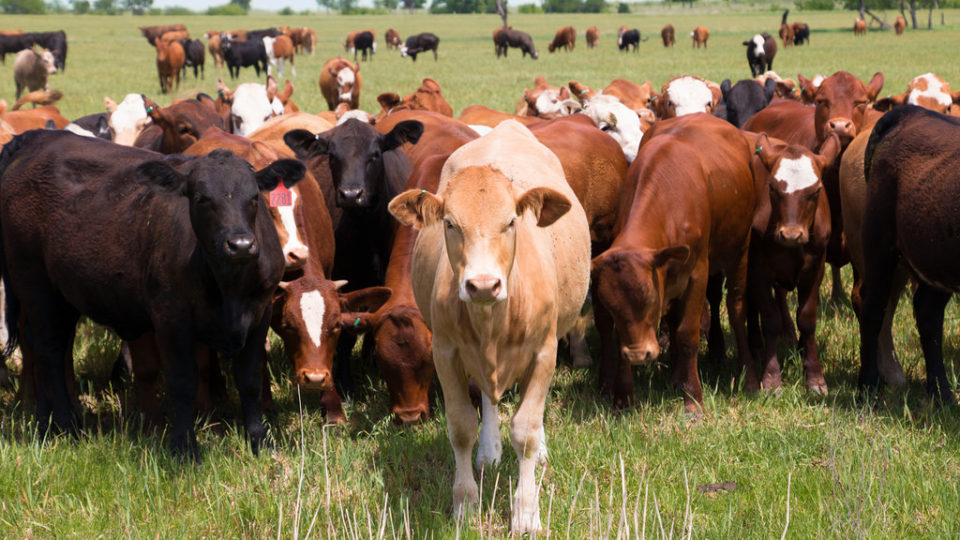
As humans face increasing health risks from this extreme heat, livestock are also suffering from the effects of rising temperatures.  Extreme heat negatively impacts dairy production by causing heat stress in cows, which can reduce milk yield, quality, and the cows’ overall health.

A new study by researchers from the University of Illinois Urbana-Champaign analyzed milk production data from 18,000 dairy farms across nine Midwest states between 2012 and 2016.  The researchers found that high heat and humidity have led to a 1% decline in annual milk yield. While this might not sound like a lot, it amounts to about 1.4 billion pounds of milk over five years from the 18,000 herds included in the study – equivalent to about $245 million in lost revenue.

The study, which was recently published in the journal Food Policy, found that small farms are hit harder than large farms.  Larger farms may be able to mitigate some of the effects through management strategies, such as open barn sides, fans, and sprinklers.

Using projections from 22 different climate models, the research team estimates that more frequent extreme heat will increase milk yield losses by about 30% by 2050. 

**********

Web Links

Illinois study: Extreme heat impacts dairy production, small farms most vulnerable

Photo, posted March 13, 2018, courtesy of Gosdin via Flickr.

Earth Wise is a production of WAMC Northeast Public Radio
Industrial agriculture and the risk of pandemics

August 16, 2024 By EarthWise Leave a Comment

The domestication of pigs, cows, chickens, and other animals as livestock for their meat, milk, and eggs was historically revolutionary.  It boosted food security by giving people a readily-available means of feeding themselves as opposed to more traditional methods such as hunting and fishing.

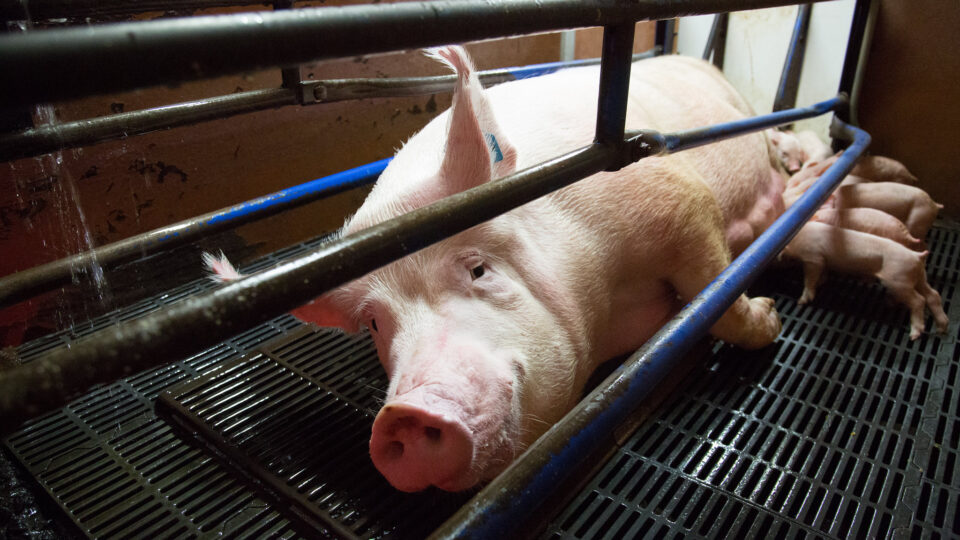
But the industrialization of agriculture has led to horrendous conditions for animals.  Many are kept in huge quantities and packed together with little regard for their health and welfare.  This approach is designed to maximize production while minimizing costs.

With its chemical inputs and toxic outputs, intensive animal agriculture is also a major threat to the environment.  In fact, it’s a major driver of habitat degradation and biodiversity loss all around the globe.  

According to a new study led by researchers from the University of Exeter in the U.K., intensive livestock farming can also increase the risk of new pandemics.  These findings go against the widely held belief that industrialized farming reduces the risk of disease transmission between animals and humans. 

Zoonotic diseases are those that are spread from animals to humans.  According to the CDC, zoonotic infections account for three in every four new or emerging infectious diseases in humans.  The current bird flu outbreak in the U.S. is an example of this. 

In the paper, which was recently published in the journal Royal Society Open Science, the researchers conclude that the effects of intensifying animal agriculture “are at best uncertain and at worst may contribute to emerging infectious disease risk.”

Industrial animal agriculture is a threat to both human health and the health of our planet.

**********

Web Links

Intensive farming could raise risk of new pandemics

Photo, posted January 29, 2016, courtesy of Farm Watch via Flickr.

Earth Wise is a production of WAMC Northeast Public Radio
Balloon release laws

May 27, 2024 By EarthWise Leave a Comment

Banning the release of balloons

The Florida state legislature has recently passed a law that bans the intentional release of helium balloons outdoors.  It is a rare example of a bipartisan piece of legislation.  Florida is joining six other states that have already enacted balloon restricting laws.

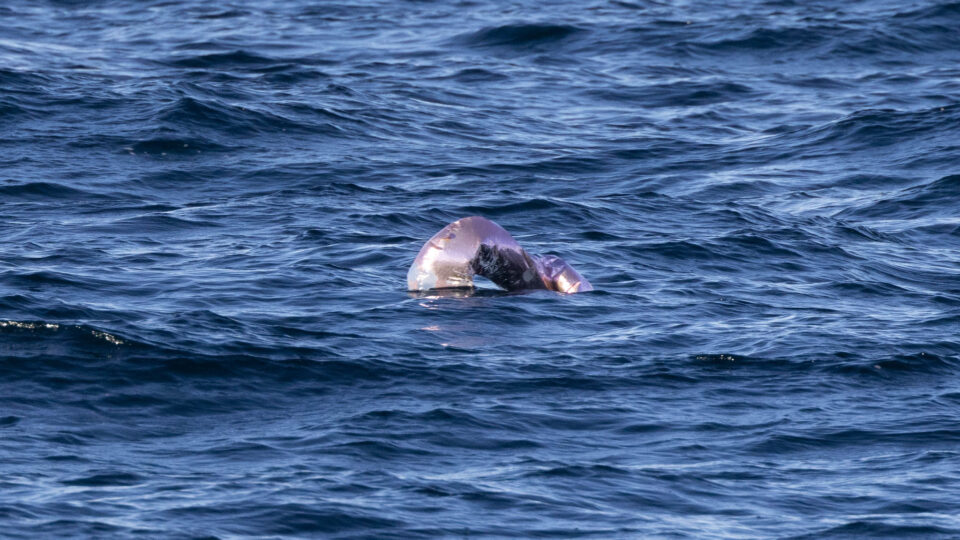
Balloons released into the sky don’t just disappear into the ether.  They often end up in oceans and waterways and the thin material that remains is 32 times more likely to kill seabirds than other types of plastic debris.  Aquatic animals often mistake balloons for jellyfish and fill up on them.   Balloons tied up with ribbons entangle turtles and manatees.  Even grazing cows have died from ingesting balloons.  Balloons contribute to microplastic pollution, which is a growing problem for all living things, including humans.

Other states with balloon release laws are Connecticut, Tennessee, New York, Texas, California, and Virginia.  Details of the laws vary.  They carve out exceptions for specific applications.  They exempt small children.  Some limit the quantity of balloon release.  Others require balloons to be weighted down to prevent them from rising too high.  California’s legislation is aimed at the metallized mylar balloons that have shorted out high-tension electrical wires and triggered wildfires.

The Florida law equates intentionally releasing a lighter-than-air balloon with littering.  It’s a non-criminal offense that carries a fine of $150.

People enjoy releasing helium balloons, particularly en masse.  The spectacle has become part of weddings, gender reveal parties, and even funerals.  But the practice has serious environmental repercussions, and its restriction is being pursued by more and more states and municipalities.

**********

Web Links

Up, Up and Not OK: Letting Go of Balloons Could Soon Be Illegal in Florida

Photo, posted August 16, 2022, courtesy of Ryan Mandelbaum via Flickr.

Earth Wise is a production of WAMC Northeast Public Radio
Energy efficient cows

April 5, 2024 By EarthWise Leave a Comment

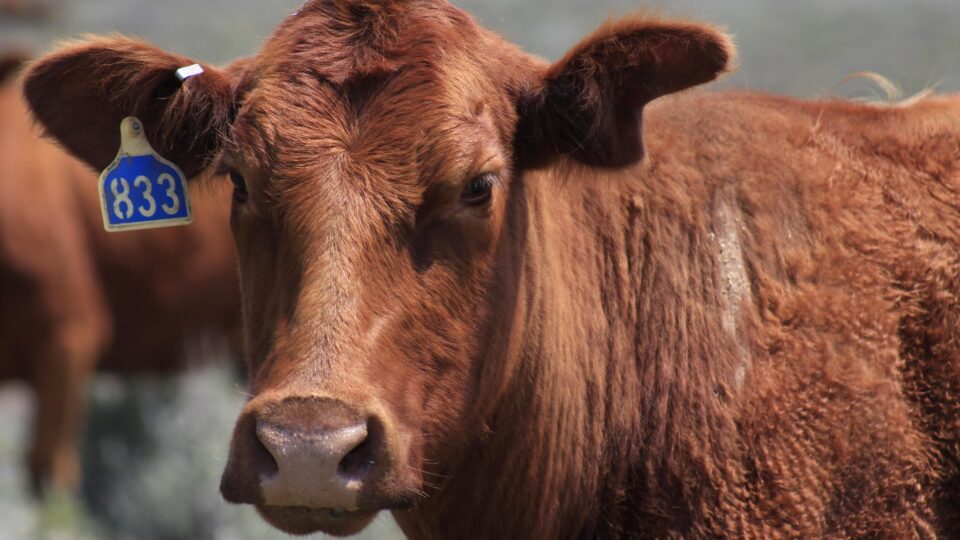
Livestock production – primarily cows – produce nearly 15% of global greenhouse gas emissions, mostly in the form of methane emitted by burping caused by the way they process food.  A single cow produces roughly 200 pounds of methane gas per year and there are 1.5 billion heads of cattle in the world.

Researchers at Penn State University have found that supplementing the feed of high-producing dairy cows with the botanical extract capsicum oleoresin – a substance obtained from chili peppers – or a combination of that extract and clove oil resulted in the animals using feed energy more efficiently. 

Adding these substances – which are commonly called essential oils – to the cattle’s feed results in improved efficiency of energy utilization.  It is known that botanicals have the potential to modify fermentation in the cow’s largest stomach – called the rumen.

There have been previous studies for many years adding substances to dairy cow feed – such as seaweed, garlic, and oregano – in an effort to improve milk production and reduce environmental emissions from dairy farms.

The Penn State study was actually not specifically aimed at methane reduction but rather to better use the available energy from the feed to gain body weight.  However, the researchers found that the yield and intensity of methane from the cows in the study were decreased by 11% by the combination of capsicum oleoresin and clove oil.

Botanicals have shown a wide range of anti-microbial properties against bacteria, protozoa, and fungi, as well as being potential rumen modifiers in cattle.  The new study represents an interesting approach to improve the metabolism of dairy cows.

**********

Web Links

Dairy cows fed botanicals-supplemented diets use energy more efficiently

Photo, posted April 9, 2012, courtesy of Aimee Brown / OSU via Flickr.

Earth Wise is a production of WAMC Northeast Public Radio
Reducing Cattle-Driven Deforestation | Earth Wise

June 14, 2023 By EarthWise Leave a Comment

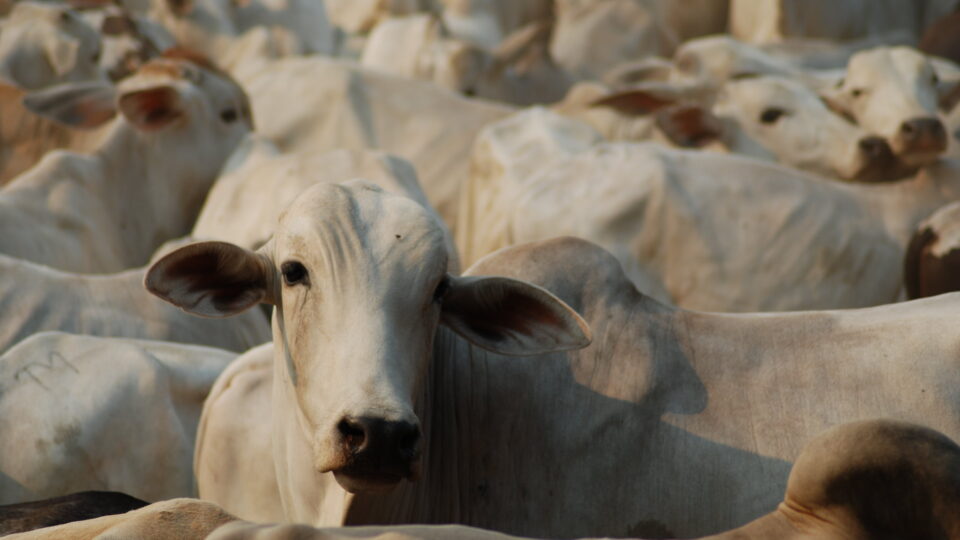
The Amazon rainforest is the biggest rainforest in the world, larger than the next two biggest combined.  It covers more than three million square miles, roughly the size of the lower 48 states.  The Amazon functions as a critical sink for carbon in the atmosphere.

However, human activity has removed more than 10% of the vegetation from the Amazon rainforest since the 1960s.  Cattle ranching accounts for roughly 70% of Amazon deforestation – much of which is illegal.   

According to a study recently published in the journal Global Environmental Change, companies’ ‘zero-deforestation’ commitments could reduce cattle-driven deforestation in the Brazilian Amazon by 50%.   Better adoption and implementation of company supply chain policies for Brazilian beef and leather could significantly reduce carbon emissions. 

Between 2010 and 2018, some of the world’s largest slaughterhouses reduced cattle-driven deforestation by 15% through their commitment to zero-deforestation policies.  If these policies were fully implemented and adopted across all cattle companies operating in the Amazon, more than 9,200 square miles of forest could have been spared over the same time period, effectively halving the cattle-driven deforestation in Brazil.  

Zero-deforestation commitments currently cover 82% of beef exported from the Brazilian Amazon for trade internationally.  However, a large amount of beef production destined for Brazil’s domestic markets is not covered.

The researchers say a mix of interventions by both the private and public sector is needed to improve cattle-rearing practices and help reduce deforestation in countries like Brazil.

**********

Web Links

Companies’ zero-deforestation commitments have potential to halve cattle-driven deforestation in Brazilian Amazon

Photo, posted January 17, 2011, courtesy of Kelly Sato via Flickr.

Earth Wise is a production of WAMC Northeast Public Radio
Humanity Weighs On The World | Earth Wise

April 6, 2023 By EarthWise Leave a Comment

There are countless ways in which humankind has had disproportionate effects on our planet and most of those effects have been negative.  A recent study led by the Weizmann Institute of Science in Israel looked at the total combined weight of various groups of mammals on Earth.  The results are that human beings and our domesticated mammals are the overwhelming majority of the total mass of mammals.

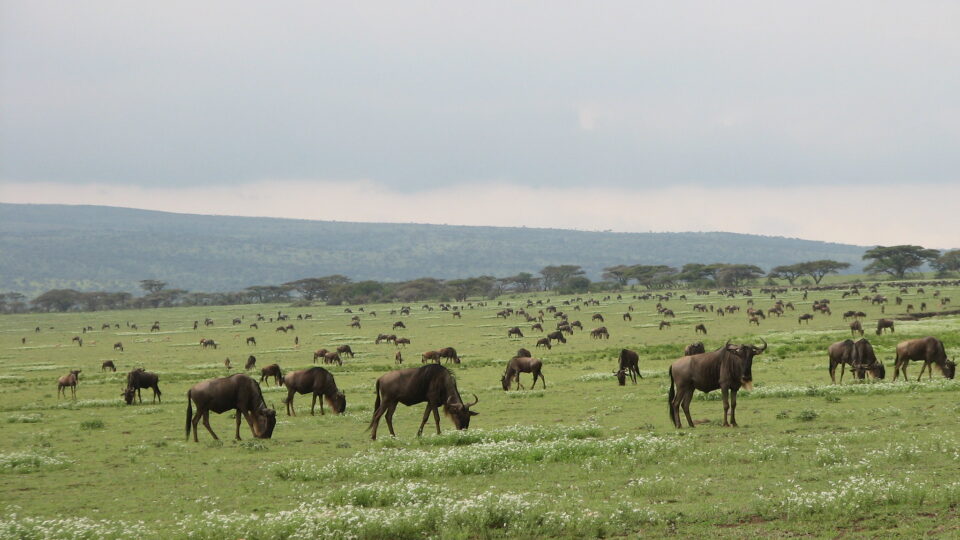
We think of large land mammals – elephants, bears, bison, wildebeests, and so on – as adding up to a massive amount of animal matter.  The study determined that all wild land mammals put together add up to about 22 million metric tons. Wild marine mammals – such as dolphins and whales – add up to about 40 million tons in total.  These sound like pretty big numbers until we look at the human and human-created side of the equation.

The study found that humans weigh about 390 million metric tons, while domesticated mammals – like sheep, cows, and pigs as well as dogs and cats – weigh about 630 million metric tons combined.

All told, wild mammals account for only 6% of all mammals by weight.   People and their domesticated animals make up the other 94%.  This enormous imbalance is an indication of how profoundly humans have reshaped life on Earth.  House cats total twice the weight of African elephants and pigs add up to twice the weight of all wild land animals combined.

The conclusion to draw from the big picture here is that wild animals on Earth are not doing very well.  We already knew this from many other perspectives, but this census by weight presents a stark picture of the extent to which we have taken over the planet and its ecosystems.

**********

Web Links

Total Weight of Wild Land Mammals Less Than One-Tenth Weight of All Humans

Photo, posted December 27, 2006, courtesy of Nigel Hoult via Flickr.

Earth Wise is a production of WAMC Northeast Public Radio
Plant-Based Foods And CO2 Emissions | Earth Wise

September 9, 2022 By EarthWise Leave a Comment

We often hear how eating locally-sourced food is a way to minimize the carbon footprint of our diet.  But from a climate impact perspective, this only has a significant impact if transportation is responsible for a large portion of a food’s final carbon footprint.  In many cases, the greenhouse gas emissions related to transportation make up only a small portion of the total emissions from food, and what we eat is far more important.

In general, beef and lamb have the biggest climate footprint per gram of protein.  Plant-based foods tend to have the smallest impact. Pork and chicken are somewhere in the middle. 

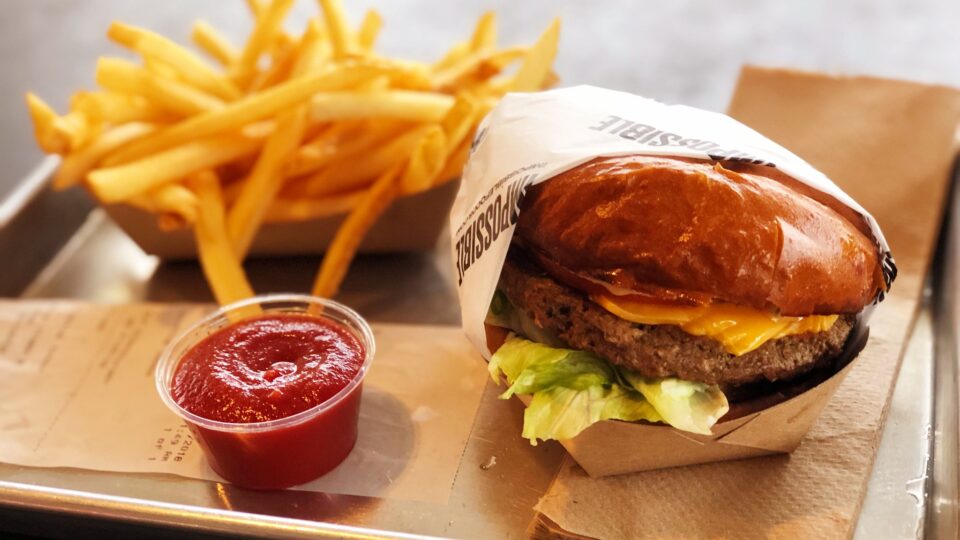
According to new research, U.S. food production could reduce its agricultural carbon footprint between 2.5% and 13.5% by embracing plant-based alternatives to beef.  The study, from researchers at Cornell University, Johns Hopkins University, and international partners, found that most of the reduction would be achieved by decreasing the number of cows needed for beef production by two to twelve million animals.  The research was recently published in the journal Lancet Planetary Health.

However, the researchers also found that acting to reduce climate change in this manner could have unintended consequences.  For example, economic models from the research team show that the growth in popularity of plant-based beef could disrupt the agricultural workforce, threatening more than 1.5 million jobs. 

But in the big picture, doing nothing will cost much more than doing something to slow climate change.  Shifting diets away from meat and other animal products and towards more plant-based foods will help shrink carbon footprints and mitigate climate change.  It’s a win-win for the planet and for human health. 

**********

Web Links

Plant-based ‘beef’ reduces CO2 but threatens ag jobs

Photo, posted November 27, 2018, courtesy of Sarah Stierch via Flickr.

Earth Wise is a production of WAMC Northeast Public Radio.

Feeding Cows Seaweed | Earth Wise

July 15, 2022 By EarthWise Leave a Comment

When cows digest their food, they burp, and when they burp, they release methane.  This is called enteric methane and it’s a real problem.  A single cow belches out 220 pounds of methane each year, which is the greenhouse gas equivalent of burning over 900 gallons of gasoline.  That’s more than the average car uses in a year.

Several studies have shown that feeding cows seaweed has the potential to substantially reduce the amount of methane in cow burps.  The latest comes from a trial that took place at the Straus Family Creamery, an organic dairy producer in Marin County, California.

The trial used a new seaweed-derived feed additive called Brominata.  Brominata is made of a red seaweed called Asparagopsis taxiformis.  The addition of the seaweed to the cows’ diets on the Straus farm resulted in an 52% average reduction in enteric methane emissions.  One cow in the study showed a reduction of 92%.

Cutting enteric methane emissions in half would be a huge improvement that would be quite difficult to achieve by convincing enough people to reduce meat and dairy consumption.

The California Air Resources Board has identified feed additives as an emissions-reduction strategy for the dairy industry.  There are now some synthetic feed additives that have been developed that reduce enteric methane, but they haven’tyet  received FDA approval for use in the U.S.  Brominata has been approved as Generally Regarded as Safe by the California Food and Drug Administration.  Whether it and similar seaweed-based feeds can be produced in sufficient quantity and without adverse environmental effects remains to be seen.  But it is an intriguing approach to solving a complicated problem.

**********

Web Links

Feeding Cows Seaweed Reduces Their Methane Emissions, but California Farms Are a Long Way From Scaling Up the Practice

Photo, posted November 10, 2015, courtesy of Lance Cheung/USDA via Flickr.

Earth Wise is a production of WAMC Northeast Public Radio.

Reducing Agriculture’s Carbon Footprint | Earth Wise

September 29, 2021 By EarthWise Leave a Comment

Sustainable solutions for animal grazing agriculture

Agriculture is responsible for about 10% of greenhouse gas emissions.  Those emissions come from livestock such as cows, the disturbance of agricultural soils, and activities like rice production.

Recent research from Texas A&M University presents sustainable solutions for grazing agriculture.  According to the research, published in the Journal of Soil and Water Conservation, ruminant animals like cattle contribute to the maintenance of healthy soils and grasslands, and proper grazing management can reduce the industry’s carbon emissions and overall footprint.

Grassland ecosystems co-evolved with herbivores over thousands of years.  These complex, dynamic ecosystems include grasses, soil biota, grazing animals, and predators.  The ecosystems degrade in the absence of periodic grazing.

The research contends that ruminant livestock are an important tool for achieving sustainable agriculture with appropriate grazing management.  With such management, grazing cattle on permanent perennial grasslands helps develop soil biology to improve soil carbon, rainfall infiltration, and soil fertility.

Permanent cover of forage plants is highly effective in reducing soil erosion and increasing soil infiltration.  Ruminants consuming grazed forages under appropriate management results in considerably more carbon sequestration than carbon emissions.

This overall approach is known as regenerative agriculture and is built around the ideas of practices that restore soil health and ecosystem function to support healthy agroecosystems. 

These ideas constitute alternatives to ones that call for the reduction or elimination of cattle and livestock agricultural production.  The future of agriculture needs to consider the full impacts of the entire food production chain and its environmental impacts.

**********

Web Links

Grazing Cattle Can Reduce Agriculture’s Carbon Footprint

Photo, posted April 27, 2010, courtesy of Beverly Moseley/USDA NRCS Texas via Flickr.

Earth Wise is a production of WAMC Northeast Public Radio.

A Sensor For Spoiled Milk

June 20, 2019 By EarthWise Leave a Comment

A new sensor technology developed at Washington State University may eventually make expiration dates on milk a thing of the past.  The sensor essentially can ‘smell’ whether milk is still good or has gone bad.

The sensor consists of chemically coated nanoparticles that react to the gas produced when bacterial growth on milk has taken place.  When such bacteria grow, they produce a volatile compound that doesn’t smell good.  So, when we open a carton of milk that has begun to spoil, our noses tell us so immediately.

The new sensor does not have to be in contact with the milk.  It detects the volatile gases produced by the bacteria and it changes color. So far, it has only been demonstrated in a controlled lab environment.

To really be useful, the sensor would ideally be able to show how long the milk has before it spoils.  Currently, it only shows whether it is ok or already spoiled. The researchers are working on the enhanced version of the sensor.

The researchers envision working with the dairy industry to integrate the sensor technology into a milk bottle’s plastic cap so that consumers can easily see how much longer the milk will stay fresh.  Current expiration dates on milk are based on best-case scenarios. They are only accurate if the milk has been stored at the correct temperature the entire time.  Unfortunately, milk can inadvertently spend time above refrigerator temperature during shipment or transportation home from the store.  If the new sensor technology can be successfully developed, it will be possible to know for sure whether that bottle of milk is good.

**********

Web Links

Sensor can detect spoiled milk before opening

Photo, posted March 8, 2011, courtesy of Roxanne Ready via Flickr.

Earth Wise is a production of WAMC Northeast Public Radio.

Whopping Change

April 10, 2019 By EarthWise Leave a Comment

Burger King, the global hamburger fast food giant, recently made a huge announcement:  Customers will soon have the option to select either a beef patty or a plant-based patty when ordering the iconic Whopper sandwich. 

Burger King’s plant-based patty will be made by Impossible Foods, a California startup founded in 2011 with the explicit goal of decreasing the world’s reliance on animal agriculture.  Impossible Foods signature product, the Impossible burger, has already debuted as a slider in White Castle’s 380 or so stores.  It’s also being added to the menu at all 570 Red Robin locations.  Other plant-based innovators, such as Beyond Meat, have also found some mainstream success.  But the Impossible Whopper and the planned national roll-out at Burger King’s 7,200 locations is the biggest deal to date.

Impossible Foods’ major innovation comes from its use of heme, which is an iron-rich protein that in essence is what makes meat taste like meat.  Impossible Foods cultivates heme directly from plants – soybean plant roots to be exact – and then mass produces it using yeast.  This is then mixed with other plant-based ingredients to achieve the nutty texture of ground beef.

Meat production is one of the biggest single contributors to climate change.  The Impossible burger represents a better choice for the environment.  It requires 87% less water, 96% less land, and produces 89% fewer greenhouse gas emissions when compared with beef burgers.  At Burger King, the Impossible Whopper will have the same amount of protein as the regular Whopper, but 15% less fat and 90% less cholesterol. 

Meatless continues to push into the mainstream.

**********

Web Links

Behold the Beefless ‘Impossible Whopper’

Photo, posted November 27, 2018, courtesy of Sarah Stierch via Flickr.

Earth Wise is a production of WAMC Northeast Public Radio.

Feeding Seaweed To Cows

August 16, 2018 By EarthWise Leave a Comment

https://earthwiseradio.org/wp-content/uploads/2018/08/EW-08-16-18-Feeding-Seaweed-to-Cows.mp3

Methane emissions are a real problem.  As a greenhouse gas, methane has at least 25 times the heat-trapping power of carbon dioxide.  More than a third of all the methane that humans are responsible for putting into the atmosphere comes from domestic livestock:  cattle, sheep, goats and buffalo.  In California alone, dairy cows along with a smaller number of beef cattle emit the heat trapping equivalent of the emissions from 2.5 million cars.

[Read more…] about Feeding Seaweed To Cows

Cows And The Environment

May 18, 2017 By EarthWise

https://earthwiseradio.org/wp-content/uploads/2017/04/EW-05-18-17-Cows-and-the-Environment.mp3

There are many environmental problems associated with ruminant livestock and these problems continue to grow as the demand for meat-rich diets increases around the world.  One of the biggest problems is that cows emit methane through eructation (or belching) as they chew their cud.   Methane is a powerful greenhouse gas, some 25 times more potent at trapping heat than carbon dioxide.  More than a quarter of all human-originated methane going into the atmosphere comes from raising livestock.

[Read more…] about Cows And The Environment

Plugging Methane Leaks

November 23, 2015 By WAMC WEB

https://earthwiseradio.org/wp-content/uploads/2015/11/EW-11-23-15-Trees-and-Methane.mp3

Natural gas, also known as methane, is one of several “greenhouse gases” that trap heat radiation trying to leave the Earth. Molecule-for-molecule, methane warms our planet’s atmosphere about 25X more than carbon dioxide.

[Read more…] about Plugging Methane Leaks

Primary Sidebar

Recent Episodes

  • An uninsurable future
  • Clean energy and jobs
  • Insect declines in remote regions
  • Fossil fuel producing nations ignoring climate goals
  • Trouble for clownfishes

WAMC Northeast Public Radio
WAMC/Northeast Public Radio is a regional public radio network serving parts of seven northeastern states (more...)

Copyright © 2025 ·