• Skip to primary navigation
  • Skip to main content
  • Skip to primary sidebar

Earth Wise

A look at our changing environment.

  • Home
  • About Earth Wise
  • Where to Listen
  • All Articles
  • Show Search
Hide Search
You are here: Home / Archives for climate

climate

Sea turtles and climate change

March 24, 2025 By EarthWise Leave a Comment

Sea turtles face threats from climate change

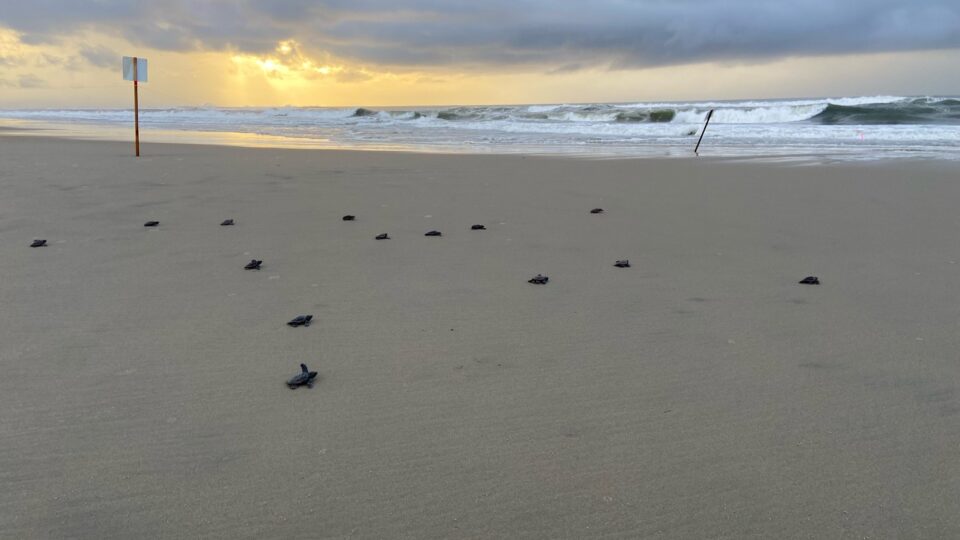
Life is a struggle for survival from the moment a sea turtle hatches.  In fact, only one sea turtle out of every 1,000 typically reaches adulthood as a result of natural predators and other challenges.  Those fortunate enough to make it to adulthood face serious threats from humans. For example, sea turtles are hunted for their meat, eggs, and shells in some regions. Their beach habitats get developed. Harmful marine debris and oil spills pollute their waters and beaches.

Now, climate change is exposing sea turtles to even greater threats.  Rising sea levels and stronger storms threaten to erode and destroy their nesting beaches. Warming oceans disrupt currents, potentially exposing sea turtles to new predators, and damaging the coral reefs that some depend on to survive.

As these environmental challenges intensify, sea turtles are beginning to adapt in surprising ways.  According to a new study by researchers from the University of Exeter in England and the Society for the Protection of Turtles in Cyprus, sea turtles are responding to climate change by nesting earlier.  Researchers monitoring nesting green and loggerhead turtles in Cyprus have discovered they are returning to their regular nesting spots earlier each year to compensate for rising temperatures.

Temperature plays a crucial role in determining the biological sex of sea turtles.  Warmer nest temperatures produce more female hatchlings than males.

But at least for now, sea turtles seem to be doing enough to ensure their eggs continue to hatch by nesting earlier in more ideal temperatures.  While this is good news, there’s no guarantee that it will continue. 

**********

Web Links

Turtles change nesting patterns in response to climate change

Photo, posted December 20, 2021, courtesy of Cape Hatteras National Seashore via Flickr.

Earth Wise is a production of WAMC Northeast Public Radio
Sand mining and the environment

March 18, 2025 By EarthWise Leave a Comment

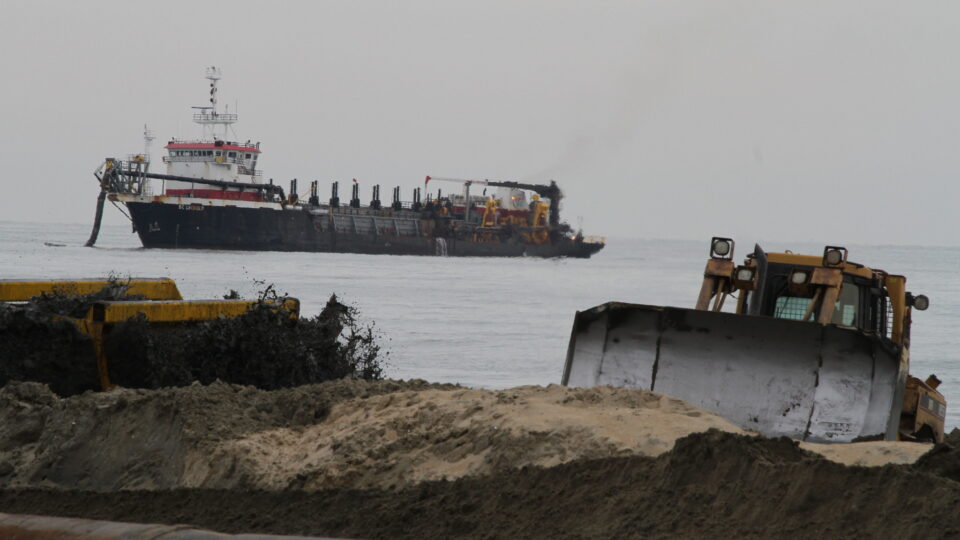
Sand mining is the world’s largest mining endeavor.  It is responsible for 85% of all mineral extraction.  It is also the least regulated, possibly the most corrupt, and likely the most environmentally destructive.  Sand is the second-most exploited natural resource in the world after water.  Its global use has tripled in the past two decades.  More than 50 billion tons of sand is extracted from the environment each year.

Sand plays a critical role in much of human development around the world.  It is a key ingredient of concrete, asphalt, glass, and electronics.  It is relatively cheap and relatively easy to extract.  But we use enormous amounts of it.

Sand mining is a major threat to rivers and marine ecosystems.  It is linked to coastal erosion, habitat destruction, the spread of invasive species, and damage to fisheries. 

The harm from sand mining is only beginning to attract widespread attention.  A recent study by an international group of scientists published in the journal One Earth identifies        threats posed by sand mining.  Sand extraction in marine environments remains largely overlooked, despite sand and sediment dredging being the second most widespread human activity in coastal areas after fishing.

Sand is generally seen as an inert, abundant material, but it is an essential resource that shapes coastal and marine ecosystems, protects shorelines, and sustains both ecosystems and coastal communities.  Sand extraction near populated coastlines is particularly problematic as climate change makes coastlines increasingly fragile.

Like all other resources on our planet, even sand cannot be taken for granted.  It must be responsibly managed.

**********

Web Links

The rising tide of sand mining: a growing threat to marine life

Photo, posted February 7, 2013, courtesy of Pamela Spaugy / U.S. Army Corps of Engineers via Flickr.

Earth Wise is a production of WAMC Northeast Public Radio
Polar bear population decline

March 13, 2025 By EarthWise Leave a Comment

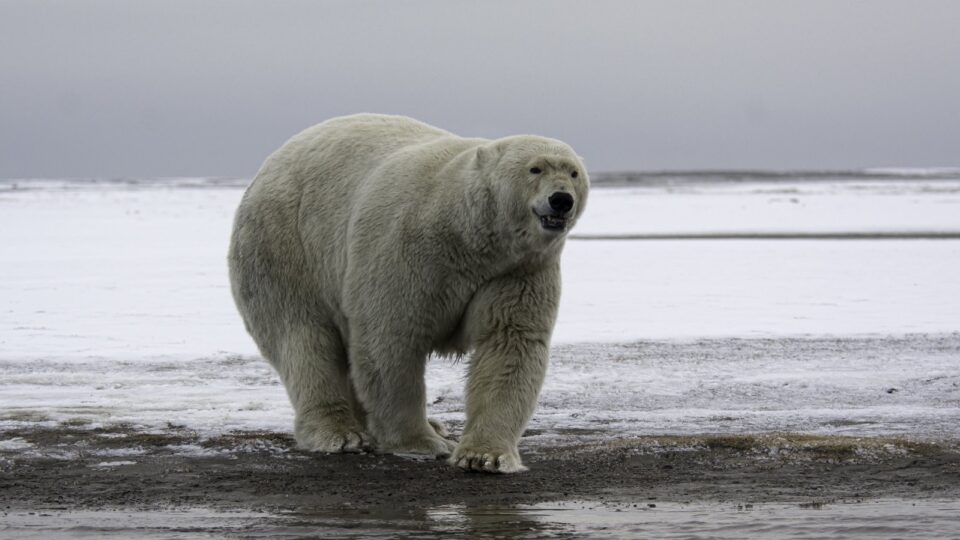
Researchers from the University of Toronto have directly linked the population decline in polar bears living in Canada’s Western Hudson Bay to climate change.  Between 1979 and 2021, the polar bear population in this region has declined by nearly 50%.

The monitoring data over this period shows that the average size of polar bears has declined, the size of cub litters has dropped, and cub survival rates are reduced.

The primary factor is the declining amount and duration of sea ice.  When there is less ice, bears have less feeding time and less energy overall.  The loss of sea ice means that bears spend less time hunting seals and more time fasting on land.  The lack of food leads to reduced reproduction, cub survival, and, ultimately, population decline. 

The average body mass of adult females has dropped by 86 pounds and of cubs by 47 pounds.  With shorter hunting periods and less food, mothers produce less milk.  Not only have cub litter sizes dropped over the monitoring period, but mothers are keeping their cubs longer because they are not strong enough to live on their own.  The bottom line is that the survival of cubs directly impacts the survival of the population.

Western Hudson Bay is considered to be a bellwether for polar bear populations globally.  It is one of the southernmost populations of polar bears and it has been monitored for a long time.  With the Arctic warming at a rate four times faster than the global average, polar bear populations in other Arctic regions are likely to be experiencing similar declines. 

**********

Web Links

Polar bear population decline the direct result of extended ‘energy deficit’ due to lack of food

Photo, posted October 23, 2015, courtesy of Anita Ritenour via Flickr.

Earth Wise is a production of WAMC Northeast Public Radio
Rats and climate change

March 10, 2025 By EarthWise Leave a Comment

Rat populations are exploding as temperatures warm

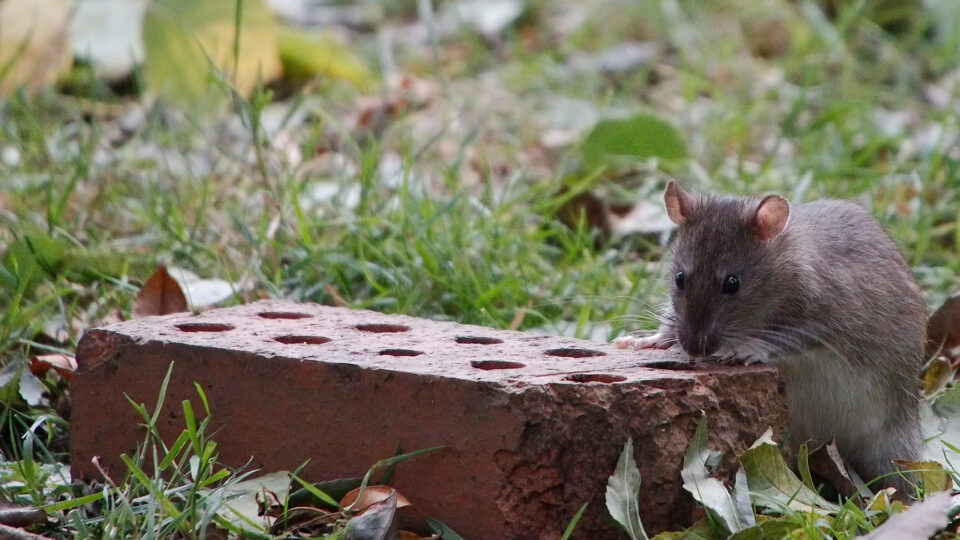
Human activity has made rats one of the most prolific mammals on the planet. Our waste, buildings, and ships provide food, shelter, and transport.  In the United States alone, rats cost the country approximately $27 billion each year in damage to infrastructure, crops, and contaminated food supplies. Additionally, rats carry and spread over 50 zoonotic pathogens and parasites, impacting public health around the world.

Now, climate change is adding to the problem. According to a new study recently published in the journal Science Advances, urban rat populations are exploding as global temperatures rise.  The researchers found that Washington DC, San Francisco, Toronto, New York City, and Amsterdam had the greatest population increases.  In fact, over the past decade, rats increased by a whopping 390% in Washington DC, 300% in San Francisco, 186% in Toronto, and 162% in New York City.  The study, which examined data from 16 cities globally, found that 11 of them showed significant increases in rat numbers.

Only Tokyo, Louisville, and New Orleans bucked the trend with declining rat numbers.

According to the researchers, the best pest management strategies involve making the urban environment less rat-friendly as opposed to removing rodents that are already there.  An example would be putting trash in containers instead of bags on the street. 

There aren’t many perks to the changing climate – unless, of course, you’re a rat. 

**********

Web Links

Increasing rat numbers in cities are linked to climate warming, urbanization, and human population

‘Perfect rat storm’: urban rodent numbers soar as the climate heats, study finds

Photo, posted September 25, 2018, courtesy of Tim Felce via Flickr.

Earth Wise is a production of WAMC Northeast Public Radio

La Niña has arrived

February 26, 2025 By EarthWise Leave a Comment

After seven months of waiting following the end of the recent El Niño condition, La Niña finally showed up in the eastern Pacific Ocean in early December.

El Niño and La Niña are climate patterns in the Pacific Ocean that can affect weather worldwide.  Normally, trade winds in the Pacific blow west along the equator, taking warm water from South America towards Asia.  To replace the warm water, cold water rises from the depths.  During El Niño, trade winds weaken and warm water is pushed back east, toward the west coast of the Americas.  As a result, areas in the northern U.S. and Canada are dryer and warmer than usual.

During La Niña, trade winds are stronger than usual, pushing more warm water toward Asia.  This results in more upwelling of cooler water from the depths.  This tends to lead to drought in the southern U.S. and heavy rains and flooding in the Pacific Northwest and Canada.  During a La Niña year, winter temperatures are warmer than normal in the South and cooler than normal in the North.

According to the report published in January by NOAA, the La Niña that has arrived is not a particularly strong one.  Sea surface temperatures are only about 1.3 degrees Fahrenheit below average in the tropical Pacific.  The report also suggests that the La Niña condition may not stick around very long.

The El Niño-Southern Oscillation phenomenon adds a natural source of year-to-year variability in global temperatures.  The presence of La Niña for at least part of this year may temporarily keep the lid on rapidly climbing global temperatures.

**********

Web Links

La Niña Is Here

Photo, posted November 23, 2011, courtesy of NASA Goddard Space Flight Center via Flickr.

Earth Wise is a production of WAMC Northeast Public Radio

Megadroughts

February 24, 2025 By EarthWise Leave a Comment

A new study by Swiss and Austrian scientists has found that persistent multi-year droughts have become increasingly common since 1980 and will continue to proliferate as the climate warms.

There are multiple examples in recent years in places ranging from California to Mongolia to Australia.  Fifteen years of persistent megadrought in Chile have nearly dried out the country’s water reserves and even affected Chile’s vital mining output.  These multi-year droughts have triggered acute water crises in vulnerable regions around the world.

Droughts tend to only be noticed when they damage agriculture or visibly affect forests.  An issue explored by the new study is whether megadroughts can be consistently identified and their impact on ecosystems understood.

The researchers analyzed global meteorological data and modeled droughts over a forty-year period beginning in 1980.  They found that multi-year droughts have become longer, more frequent, and more extreme, covering more land.  Every year since 1980, drought-stricken areas have spread by an additional fifty thousand square kilometers on average, an area the size of Vermont and New Hampshire combined. 

The trend of intensifying megadroughts is clearly leading to drier and browner ecosystems.  Tropical forests can offset the effects of drought as long as they have enough water reserves.  However, the long-term effects on the planet and its ecosystems remain largely unknown.  Ultimately, long-term extreme water shortages will result in trees in tropical and boreal regions dying, causing long-term and possibly irreversible damage to these ecosystems.

**********

Web Links

The Megadroughts Are upon Us

Photo, posted January 7, 2018, courtesy of Kathleen via Flickr.

Earth Wise is a production of WAMC Northeast Public Radio
Soaring coffee prices

February 20, 2025 By EarthWise Leave a Comment

Coffee prices are soaring again

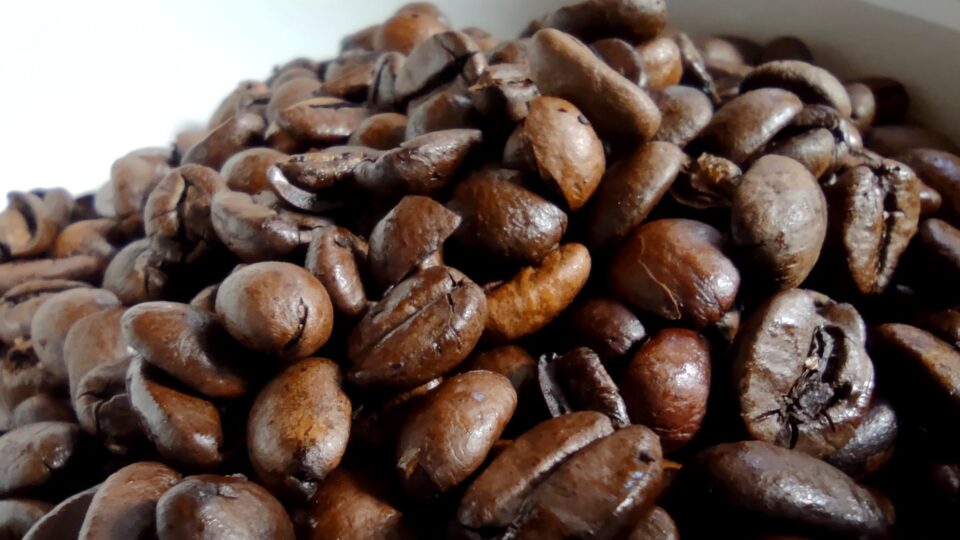
Wholesale coffee prices hit record highs in the midst of the Trump administration’s deportation and tariff dispute with Colombia.  But coffee prices have already been trading near 50-year highs for a while as a result of shortages related to extreme weather and increased global demand.

In recent years, repeated droughts and flooding have put pressure on the global supply of coffee.  These climate swings have caused prices to soar, much as they have for other staples like cocoa, olive oil, and orange juice.  All the while, the global demand for coffee has kept rising.

Coffee is one of the world’s most consumed beverages, but it can be grown only under very specific conditions, namely in misty, humid, and tropical climates, and in rich soil free of disease.   The United States imports nearly all of its coffee – there is only a small amount grown in Hawaii.  Otherwise, the US is the world’s largest coffee importer.  With a limited number of sources for the beans, global coffee prices are very susceptible to the effects of extreme weather.

More than half of the world’s coffee production comes from arabica beans, and Brazil is the largest exporter.  A severe drought there this summer devastated the harvest that typically runs from May to September.   In Vietnam, a severe drought followed by heavy rains harmed the world’s largest source of robusta, the second most popular coffee variety.

People tend to think of coffee as a commodity and not so much as an agricultural product, subject to the vagaries of weather and having prices that fluctuate accordingly.  The bottom line is that drinking coffee is likely to become a bigger strain on one’s own bottom line.

**********

Web Links

Why Coffee Prices Are Soaring (Again)

Photo, posted October 13, 2023, courtesy of Pete via Flickr.

Earth Wise is a production of WAMC Northeast Public Radio

Electricity demand from data centers

February 17, 2025 By EarthWise Leave a Comment

Data centers are dedicated facilities containing computers and their related hardware equipment such as servers, data storage drives, and network equipment; they are the physical facilities that store digital data.  Data centers are one of the most energy-intensive building types, consuming 10 to 50 times more energy per floor space than a typical commercial office building.  With the explosive growth of artificial intelligence technology, data center energy use is expanding rapidly.

A new report by the Department of Energy’s Lawrence Berkeley National Laboratory outlines the energy use of data centers from 2014 to 2028.  The report estimates that data center load growth has tripled over the past decade and is likely to double or triple again by 2028.

Data centers consumed about 4.4% of total U.S. electricity in 2023 and are projected to consume between 6.7% and 12% of total U.S. electricity by 2028. Most of the increased power demand of data centers is due to the growth in AI servers.  Artificial intelligence requires increasingly powerful chips and intense, power-hungry cooling systems.

There have been revolutionary changes in artificial intelligence technology in just the past couple of years and its role in society has dramatically expanded.  With that expansion has come a dramatic change in the energy usage by the data industry and innovative solutions are needed to allow data centers to meet their growing demand for energy.

**********

Web Links

Berkeley Lab Report Evaluates Increase in Electricity Demand from Data Centers

Photo, posted August 31, 2024, courtesy of Aileen Devlin / Jefferson Lab via Flickr.

Earth Wise is a production of WAMC Northeast Public Radio
The warmest year on record

February 14, 2025 By EarthWise Leave a Comment

2024 was the warmest year on record

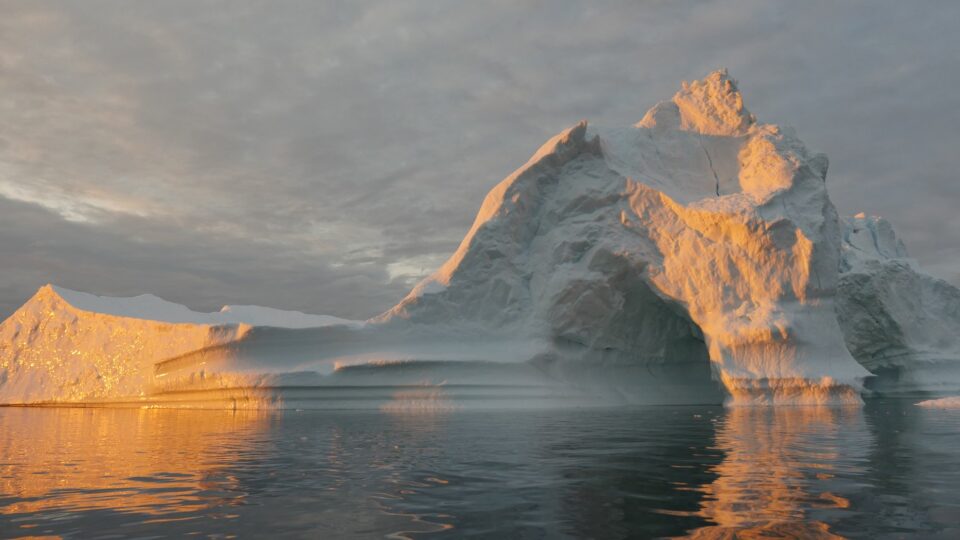
It came as no surprise that 2024 ended up as the warmest year on records. It was the hottest year since record keeping began in 1880.  The global average temperature was 1.28 degrees Celsius (or 2.3 degrees Fahrenheit) above the 20th-century baseline period of 1951-1980.  It was actually 1.47 degrees above the 1850-1900 average.

The Paris Climate Agreement has a goal to keep the global average temperature increase below 1.5 degrees Celsius over the long term.  Long term is specified because for more than half of 2024, average temperatures were more than 1.5 degrees above the baseline.

The temperature of an individual year can be influenced by various natural climate fluctuations, such as the presence of an El Niño or a La Niña condition in the Pacific, or volcanic eruptions.  A strong El Niño began in 2023 and continued throughout much of 2024.  That El Niño has abated, so it is no longer a factor in the global climate condition.

The global temperature is determined using surface air temperature data collected from thousands of meteorological stations as well as sea surface temperature data collected by ships and buoy-based instruments. 

When the climate changes, it is observed first in the global mean temperature.  Then there are changes seen on a continental scale and then at the regional scale.  Finally, changes are observable at the local level.  These changes are becoming more and more common as people’s everyday weather experiences become different from any they had encountered before.

**********

Web Links

2024 Was the Warmest Year on Record

Photo, posted August 26, 2015, courtesy of Saskia Madlener / NASA via Flickr.

Earth Wise is a production of WAMC Northeast Public Radio

Cold spells and global warming

February 10, 2025 By EarthWise Leave a Comment

Global warming and cold spells

January saw some major bouts of subfreezing temperatures across much of North America and significant snowfall in places like Pensacola, Florida and New Orleans.  This spate of frigid weather undoubtedly prompted many people to question whether global warming is really happening.  But such cold spells quite likely are not happening in spite of global warming, but actually as a result of it.

The polar jet stream is a slim band of westerly winds that circles the Arctic.  It is formed where cold air from the north meets warmer air to the south.  As the planet warms, the Arctic has been heating up nearly four times faster than the rest of the planet, which narrows the difference in temperature between the northern air and southern air.  The result is that the jet stream is weaker and more meandering, which allows frigid air to reach further south.

The polar vortex is a whirling mass of cold air that extends across the Arctic.  It is stronger in the winter when the Northern Hemisphere leans away from the sun.  The polar jet stream normally holds on to the vortex and keeps it far to the north.  But when the jet stream gets wobbly, this mass of cold air can break out and travel south, even to places like Florida, Louisiana, and Texas.

The planet as a whole is warming, and the Arctic is warming even faster.  But there will still be plenty of ice, snow, and frigid air in the Arctic winter for decades to come.  As the behavior of the polar jet stream gets increasingly erratic, there may well be more frequent episodes of plunging temperatures in areas unaccustomed to them.

**********

Web Links

Severe Cold Spells May Persist Because of Warming, Not in Spite of It

Photo, posted January 5, 2025, courtesy of Dermot O’Halloran via Flickr.

Earth Wise is a production of WAMC Northeast Public Radio

The year in energy

February 5, 2025 By EarthWise Leave a Comment

Last year saw some major trends in the global energy sector. Perhaps the most dramatic was the shift to renewable power, which continued to outpace the projections of both financial analysts and industry experts.  2024 saw new highs in renewable installation, largely due to China, which accounted for more than half of all the solar power installed globally.  Huge solar installations also came online in California and Nevada during the year.  On the other hand, the amount of coal burning for the year also exceeded expert predictions, also largely due to China.

A second trend was increasing sales of electric vehicles, which reached a new high, although short of expectations.  A major driving force in EV sales is the dropping price of lithium-ion batteries, which fell by 20% in 2024.  Again, China was a major factor with roughly half of all its domestic vehicle sales being electric.

Coal’s decline is being slowed by the rising demand for electricity.  The increased use of electric heating and cooling along with the increasing use of EVs are major factors.  But the proliferation of energy-hungry data centers incorporating artificial intelligence capabilities is driving up the demand for power even more. 

Perhaps the clearest indication of the future for global energy comes from investors, who put about $2 trillion into clean energy last year.  That is twice as much as invested in oil, coal, and natural gas.

The history of energy has seen the Age of Coal and the Age of Oil.  By all indications, we are now heading into the Age of Electricity.

**********

Web Links

The Year in Energy in Four Charts

Photo, posted November 23, 2024, courtesy of Mussi Katz via Flickr.

Earth Wise is a production of WAMC Northeast Public Radio

Climate risks for apple-growing areas

January 31, 2025 By EarthWise 2 Comments

The changing climate is creating challenges for some of the most productive apple growing regions in America.  A study by Washington State University analyzed over 40 years of climate conditions that impact the growth cycle of apple trees.

Many growing areas face increased climate risk, but the top three apple-producing counties are among the most impacted.  Yakima County in Washington is the country’s largest apple producer with more than 48,000 acres of apple orchards.  Kent County in Michigan and Wayne County in New York (located east of Rochester) are the next two largest.

The study looked at six metrics that affect apple production.  Two of these metrics relate to extremes:  extreme heat days (with temperatures above 93 degrees) that can cause multiple problems and warm nights (with minimum temperatures above 59 degrees) that adversely affect coloration.

Other metrics included the number of cold days, the last day of spring frost, and the number of growing degree days, which are the number of days above a certain temperature that are conducive for apples to grow.

Changes to these metrics can impact apple production, change the time when apple flowers bloom, increase risk of sunburn on apples, and affect apple appearance and quality.  In many places, nearly all of these metrics are changing in an undesirable direction.

Apples are the most consumed fruit in the United States.  27,000 American producers supply an industry with a downstream value of $23 billion.  Apples are a big deal.

**********

Web Links

Prime apple-growing areas in US face increasing climate risks

Photo, posted August 8, 2020, courtesy of Sue Thompson via Flickr.

Earth Wise is a production of WAMC Northeast Public Radio

Hydroclimate whiplash

January 30, 2025 By EarthWise Leave a Comment

Hydroclimate whiplash has increased as much as 66% since the mid-20th century

Hydroclimate whiplash is a term that describes rapid swings between intensely wet and dangerously dry weather.  Global weather records show that the occurrence of hydroclimate whiplash has increased by 31% or as much as 66% since the mid-20th century. 

California’s experience is a prime example of this phenomenon.  After years of severe drought, dozens of atmospheric rivers subjected the state to record-breaking amounts of precipitation in the winter of 2022-23.  A second extremely wet winter in the southern parts of the state the following year resulted in the growth of abundant amounts of grass and brush. 2024 saw a record-hot summer which was then followed by a record-dry start to the 2025 rainy season.  The result was the catastrophic wildfires in the Los Angeles area in January.

Research by UCLA climate scientists explains that the primary driver for the increasing occurrence of hydroclimate whiplash is the expansion of the atmospheric sponge – that is, the growing ability of the atmosphere to evaporate, absorb and release water.  Every degree Celsius that the planet warms increases this ability by 7%. 

The global consequences of hydroclimate whiplash include not only floods and droughts but also the increased danger of whipsawing between the two, leading to the bloom and burn cycle that California recently faced. The risk of wildfire is twofold:  first by increasing the growth of flammable grass and brush in the months before the fire season, and then by drying it out to dangerous levels with extremely warm and dry weather.

**********

Web Links

Floods, droughts, then fires: Hydroclimate whiplash is speeding up globally

Photo, posted January 13, 2025, courtesy of Victor Guillen / USDA Forest Service via Flickr.

Earth Wise is a production of WAMC Northeast Public Radio

Saving the Great Salt Lake

January 27, 2025 By EarthWise Leave a Comment

For many years, scientists have warned that the Great Salt Lake in Utah is headed toward a catastrophic decline.  While the size of the Great Salt Lake fluctuates naturally with seasonal and long-term weather patterns, the lake has been experiencing significant and steady declines for decades.  In fact, the Great Salt Lake has lost more than 15 billion cubic yards of water over the past three decades, and it’s getting shallower at the rate of four inches a year. 

This reduction is primarily due to excessive water diversions from rivers and streams that feed into the lake for agricultural, industrial, and municipal use. These diversions, combined with prolonged drought and rising temperatures due to climate change, have significantly reduced the lake’s water level. 

According to a new study led by researchers from Oregon State University, 62% of the river water bound for the Great Salt Lake is diverted for human use, with agricultural activities responsible for nearly three-quarters of that percentage.  The analysis, which was recently published in the journal Environmental Challenges, found that reducing irrigation is necessary to save the lake. 

In order to stabilize and begin refilling the lake, the research team proposes cutting human water consumption in the Great Salt Lake’s watershed by 35%.  The researchers emphasize that farmers and ranchers facing income losses from using less water would require taxpayer-funded compensation.

The Great Salt Lake is a biodiversity hotspot, sustaining more than 10 million migratory birds.  The lake also directly supports 9,000 jobs and fuels $2.5 billion in economic activity annually. 

**********

Web Links

Reducing irrigation for livestock feed crops is needed to save Great Salt Lake, study argues

Photo, posted January 14, 2024, courtesy of Olaf Zerbock via Flickr.

Earth Wise is a production of WAMC Northeast Public Radio

Engineering plants to consume more carbon dioxide

January 23, 2025 By EarthWise Leave a Comment

The most abundant protein on the planet is an enzyme called ribulose-1,5-bisphosphate carboxylase/oxygenase, better known as RuBisCO.  Its critical role in photosynthesis makes life as we know it on earth possible.  What it does is convert carbon dioxide from the atmosphere into the organic matter contained in plants.

Getting plants to take up more carbon dioxide from the atmosphere is a key strategy for mitigating climate change.  Planting lots of trees is one way to do it.  Another is to get individual plants to capture more carbon dioxide.

Scientists at the University of Illinois have focused on getting plants to produce more RuBisCO which allows them to grow faster, consuming more carbon dioxide in the process.

Some plants are better than others at taking advantage of the earth’s rising carbon dioxide levels.  Among these are food crops like corn, sugarcane, and sorghum.  Such plants’ growth is not primarily limited by how much carbon dioxide is in the atmosphere but rather by how much RuBisCO is in their leaves.  The Illinois scientists tweaked genes in corn and sorghum to produce plants containing more RuBisCO.  Laboratory experiments on corn demonstrated faster corn growth.  Recent outdoor field experiments on sorghum demonstrated a 16% boost in its growth rate. 

Improving photosynthesis in this way is not only a potential strategy for increasing plants’ ability to combat climate change.  It is also a way to cope with the world’s increasing demand for food by producing crops that can grow larger and more quickly.

**********

Web Links

Scientists Engineer Crops to Consume More Carbon Dioxide

Photo, posted April 12, 2016, courtesy of K-State Research and Extension via Flickr.

Earth Wise is a production of WAMC Northeast Public Radio

Investing in carbon capture

January 22, 2025 By EarthWise Leave a Comment

The interests of billionaires seldom seem to coincide with our own.  In fact, they often seem to be quite the opposite.  But there are a number of billionaires who are trying to help the world combat climate change.  Yes, they want to make money doing it, but doing it is nevertheless in everyone’s interest.

A group headed by Bill Gates that included some of the wealthiest people from around the world met last summer in London to evaluate companies working to mitigate the effects of climate change.  These included companies developing carbon dioxide removal technologies.  Stripping carbon dioxide out of the atmosphere is an obvious way to deal with the fact that we continue to dump too much of it into the atmosphere –   obvious, but extremely difficult to do at any scale that makes a difference.

Companies working on carbon capture have raised more than $5 billion since 2018.  There are hundreds of companies working on it and investors include billionaires, venture capitalists, private equity firms, and major corporations.  Companies like Microsoft, Google, and United Airlines have committed billions of dollars to purchase removal credits:  payments to companies for removing carbon dioxide.

There are only a few dozen carbon removal facilities operational today and together they only capture a tiny fraction of the carbon dioxide humans release into the atmosphere.  The hope is that such facilities will scale up in size and number so that they will make a real dent in the problem.  But it will take many years at best, and the planet doesn’t have that much time.  To make a difference, carbon emissions must be reduced as quickly as possible.

**********

Web Links

The New Climate Gold Rush: Scrubbing Carbon From the Sky

Photo, posted April 19, 2020, courtesy of Greg Rubenstein via Flickr.

Earth Wise is a production of WAMC Northeast Public Radio
Approaching critical global temperature thresholds

January 21, 2025 By EarthWise Leave a Comment

The globe is approaching critical temperature thresholds

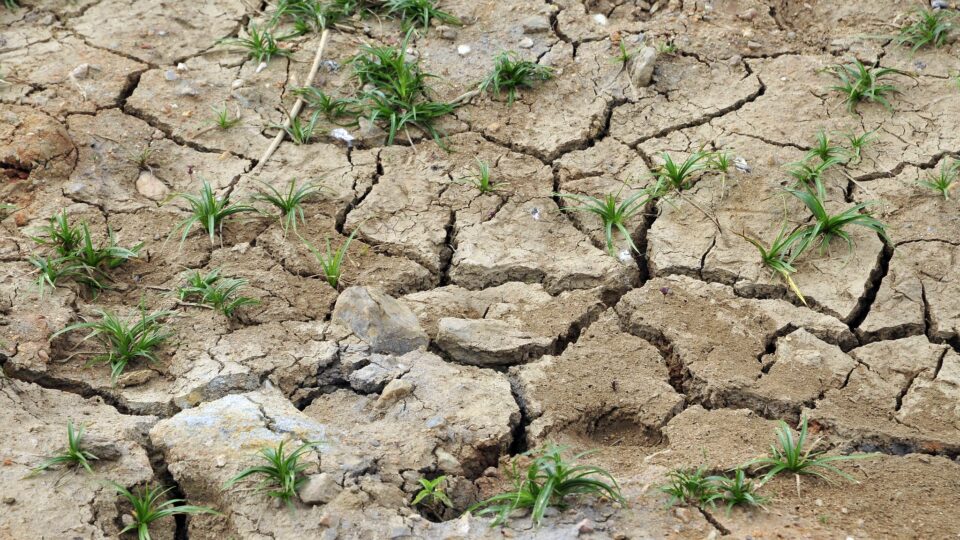
The Paris Climate Agreement is a global treaty adopted in 2015 to combat climate change by limiting global warming to well below 2°C above pre-industrial levels, while striving to keep it below 1.5°C.  But according to recent research, the planet is quickly approaching these critical thresholds. 

An international research team led by scientists from Colorado State University, Stanford University, and ETH-Zurich in Switzerland combined insights from 10 global climate models, and – with the help of artificial intelligence – found that regional warming thresholds are likely to be reached faster than previously thought.

In fact, the researchers found that most land regions will likely surpass the critical 1.5°C threshold by 2040 or even earlier.  Additionally, several regions are on track to exceed the 3.0°C threshold by 2060.  Regions including Central Europe, the Mediterranean, South Asia, and parts of sub-Saharan Africa are expected to reach these thresholds faster. 

The research team relied on transfer learning, a cutting-edge machine learning technique that leverages pre-trained models to tackle new, related tasks.

The research, which was recently published in the journal Environmental Research Letters, found that 34 regions are likely to exceed 1.5°C of warming by 2040.  Of those 34 regions, 31 of them are expected to reach 2°C of warming by 2040, and 26 of these 34 regions are projected to surpass 3°C of warming by 2060.

**********

Web Links

AI predicts that most of the world will see temperatures rise to 3C much faster than previously expected

Photo, posted February 23, 2011, courtesy of 2011 CIAT / Neil Palmer via Flickr.

Earth Wise is a production of WAMC Northeast Public Radio

Restoring English hedgerows

January 14, 2025 By EarthWise Leave a Comment

Restoring hedgerows in England a major undertaking

Hedgerows are lines of different types of bushes and small trees growing very close together typically placed between fields or along the sides of roads in the countryside.  The network of hedges throughout rural England dates back to the Bronze Age, or even possibly Neolithic times.  As the first farmers began clearing areas of land for cultivation, they left strips of trees as boundaries.  Hedgerows act as field boundaries but also protect livestock, support biodiversity, and help mitigate climate change.

There are currently about 250,000 miles of hedgerows in England. However, about half of these important habitats were lost in the post-WWII years due to agricultural intensification.  Furthermore, a 2007 survey found that fewer than half of remaining hedgerows were judged to be in good structural condition.

The UK Centre for Ecology and Hydrology has set a target to create or restore 45,000 miles of hedgerow by 2050.  While the overall length of managed hedgerows in England has not changed much since 2007, the proportion in good structural condition has improved significantly and hedgerow height has increased.

England’s Department for Environment, Food & Rural Affairs aims to create or restore 30,000 miles of hedgerow by 2037.  However, the Climate Change Committee recommends that the national hedgerow network be increased by 40% by 2050 and the organization Natural England’s long-term aspiration is a 60% increase in hedgerow extent to support thriving plants and wildlife. 

For more information on this topic and other environmental news visit us at: earthwiseradio.org or Find us on Facebook.

**********

Web Links

​​​​​​​Urgent need to enable more farmers and contractors to revive England’s network of hedgerows

Photo, posted May 27, 2016, courtesy of Dave S. via Flickr.

Earth Wise is a production of WAMC Northeast Public Radio

Planting trees in Europe

January 7, 2025 By EarthWise Leave a Comment

Planting lots of trees is one of many strategies being pursued to combat climate change.  Trees are storehouses of carbon from the atmosphere and planting more of them helps remove carbon dioxide.  But trees do more than that.  Trees are natural air conditioners in cities.

Trees significantly cool urban environments by providing shade and via a process called evapotranspiration by which they release water vapor into the air, which provides cooling.  This helps mitigate the urban heat island effect. Areas under trees in cities can be as much as 25 degrees cooler than in unshaded areas covered in asphalt.

The city of Paris has laid out a plan to help the city prepare for increasing amounts of extreme heat.  The goal is to replace 60,000 parking spaces across the city with trees by the end of this decade.  The plan to rip up parking spaces is part of a greater aim to create more than 700 acres of green space by 2030.  The Paris plan also includes creating more car-free zones and installing reflective roofs on 1,000 public buildings.  Nearly 80% of the buildings in Paris have zinc roofs – an affordable, corrosion-resistant and pretty much inflammable innovation of the 19th century.  However, these roofs can heat up to 194 degrees on a summer day, transferring heat into largely uninsulated top-floor garrets below.

Elsewhere in Europe, Danish lawmakers have agreed on a plan to rewild 10% of the country’s farmland and plant one billion trees.   According to the Danish government, this plan would bring about the biggest change to the Danish landscape in over 100 years.

**********

Web Links

To Cope with Extreme Heat, Paris Will Swap Parking Spaces for Trees

Photo, posted April 11, 2014, courtesy of Val H. via Flickr.

Earth Wise is a production of WAMC Northeast Public Radio
Thermal batteries for heavy industry

January 3, 2025 By EarthWise Leave a Comment

Researchers are developing thermal batteries for heavy industry

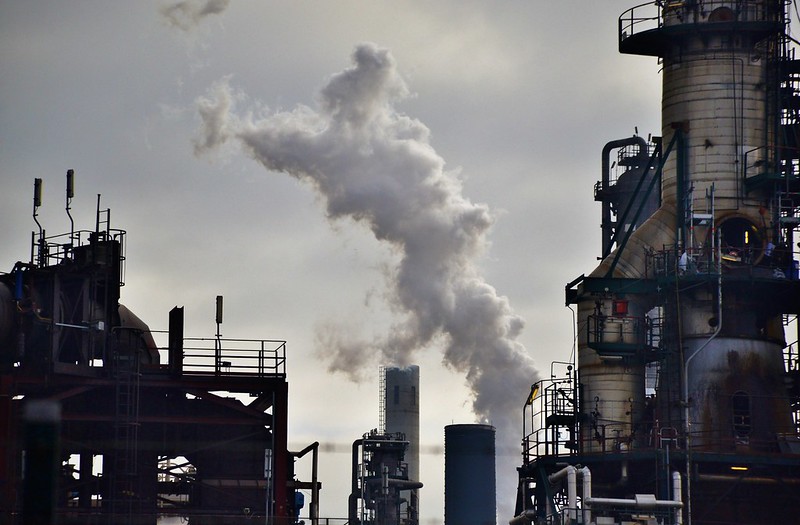
Heavy industries like cement, steel, chemicals, and paper require large amounts of heat and, for the most part, that heat comes from burning fossil fuels.  Other sectors of the economy have been making progress in reducing carbon emissions, but heavy industry has not found easy answers for supplying the heat it needs for manufacturing.

Researchers at MIT have developed a way to supply heat that only uses electricity, which in principle can come from carbon-free sources.  The idea is to use thermal batteries.  These are basically an electrically conductive equivalent of ceramic firebricks, which have been used to store heat for centuries in fireplaces and ovens.

A spinout company called Electrified Thermal Solutions has demonstrated that its firebricks can store heat efficiently for hours and release it by heating air or gas up to 3,272 degrees Fahrenheit. 

The firebrick arrays are contained in insulated, off-the-shelf metal boxes.  The standard system can collect and release about 5 megawatts of energy and store about 25 megawatt-hours.  The thermal battery can run hotter and last longer than any other electric heating solution on the market.

Using this technology can be a way to take advantage of the low cost of electricity in off-peak hours.  In the so-called wind belt in the middle of the U.S., electricity prices can even be negative at times.  Using the firebrick technology – called the Joule Hive Thermal Battery – it can be possible to provide industrial heating capability at very competitive prices, and that doesn’t even factor in the positive climate impact.

**********

Web Links

Decarbonizing heavy industry with thermal batteries

Photo, posted April 19, 2019, courtesy of Hans M. via Flickr.

Earth Wise is a production of WAMC Northeast Public Radio

  • « Go to Previous Page
  • Page 1
  • Page 2
  • Page 3
  • Page 4
  • Page 5
  • Interim pages omitted …
  • Page 21
  • Go to Next Page »

Primary Sidebar

Recent Episodes

  • An uninsurable future
  • Clean energy and jobs
  • Insect declines in remote regions
  • Fossil fuel producing nations ignoring climate goals
  • Trouble for clownfishes

WAMC Northeast Public Radio

WAMC/Northeast Public Radio is a regional public radio network serving parts of seven northeastern states (more...)

Copyright © 2026 ·