• Skip to primary navigation
  • Skip to main content
  • Skip to primary sidebar

Earth Wise

A look at our changing environment.

  • Home
  • About Earth Wise
  • Where to Listen
  • All Articles
  • Show Search
Hide Search
You are here: Home / Archives for climate

climate

It’s only getting warmer

July 2, 2025 By EarthWise Leave a Comment

Global warming continues and the planet cannot withdraw from its consequences

Climate science is not popular with the current administration.  Phrases like “climate crisis”, “clean energy”, and “climate science” itself are prohibited from websites, reports, regulations, and other communications by government employees and federal funding recipients.  Once again, the United States is turning away from climate mitigation efforts and will have a drastically reduced ability to forecast disasters and head off their worst consequences.

Meanwhile, global warming continues, and the planet can’t withdraw from its consequences.

The hottest year in nearly two centuries was recorded in 2024.  According to a new report by the World Meteorological Organization, there is an 80% chance that at least one year over the next four will surpass 2024 as the warmest year on record. 

The consequences of warming will probably vary widely across the world.  But likely occurrences include rapid thawing of Arctic Sea ice, drier seasons in the Amazon, excess rain in places like Alaska, northern Europe, and the Sahel in north-central Africa.  Hotter temperatures lead to more evaporation of water from plants and soil, leading to droughts and failed crop seasons.  The warmer atmosphere holds more moisture, which increases the chance of flooding from downpours and stronger hurricanes.

Ignoring what is going on with the climate or thinking that it will only impact other people in other places is nothing short of foolhardy.  The planet does not care about politics.  What is happening to the climate will be in just about everyone’s backyard soon enough.

**********

Web Links

‘It’s pretty bleak’: A warming planet is poised to get even hotter, forecasters warn

Photo, posted December 1, 2015, courtesy of Adam Matsumoto via Flickr.

Earth Wise is a production of WAMC Northeast Public Radio

Our cities are sinking

June 24, 2025 By EarthWise Leave a Comment

A new study by the Columbia University Climate School has found that all of the 28 most populous cities in the United States are sinking to some extent.  This phenomenon of subsidence is not just taking place in cities on the coast, where relative sea level is an issue, but also in cities in the interior.

The primary cause of subsidence is large-scale groundwater extraction for human use.  When water is withdrawn from aquifers made up of fine-grained sediments, the pore spaces formerly occupied by water can eventually collapse, leading to compaction below and sinkage at the surface.

The fastest sinking city in the US is Houston, with more than 40% of its area subsiding more than 5 millimeters a year and 12% sinking at twice that rate.  Some local spots are going down as much as 5 centimeters a year.   These seem like very small numbers but the fact that the subsidence is often not uniform across an urban area means that there are stresses to building foundations and other infrastructure.  Parts of Las Vegas, Washington D.C., and San Francisco have particularly fast sinking zones.

There are other causes of subsidence.  In Texas, pumping of oil and gas adds to the phenomenon.  A 2023 study found that New York City’s more than one million buildings are pressing down on the Earth so hard that they may be contributing to the city’s ongoing subsidence.  About 1% of the total area of the country’s 28 largest cities faces some danger from uneven subsidence.

Overall, some 34 million Americans live in cities affected by subsidence.  Global cities facing especially rapid subsidence include Jakarta, Venice, and here in the U.S., New Orleans.

**********

Web Links

All of the Biggest U.S. Cities Are Sinking

Photo, posted December 27, 2012, courtesy of Katie Haugland Bowen via Flickr.

Earth Wise is a production of WAMC Northeast Public Radio

Nature: An important climate ally

June 10, 2025 By EarthWise Leave a Comment

Nature is often seen as a victim of climate change, but it’s also one of the most powerful tools we have to fight it. Natural ecosystems, such as forests, wetlands, grasslands, oceans, and soils, absorb and store massive amounts of carbon dioxide. These ecosystems not only help reduce the concentration of greenhouse gases in the atmosphere, but they also regulate temperatures and provide buffers against extreme weather.

One of the most effective strategies for mitigating climate change is simply protecting and restoring these natural areas. For example, mangrove forests – those coastal wetlands filled with tangled, salt-tolerant trees – sequester carbon at high rates and help protect coastal communities from storm surges and rising seas.  Peatlands – another type of wetland – store more carbon than all the world’s forests combined – despite only covering 3% of Earth’s land surface.  Global restoration efforts are underway, from replanting mangroves in Southeast Asia to rewetting degraded peatlands in Europe.

Creating urban green spaces like parks and community gardens, restoring forests through native tree plantings, and adopting sustainable agricultural practices like cover cropping and agroforestry are all proven to be low-cost, high-impact climate solutions. 

While nature-based solutions are gaining recognition, they remain critically underfunded, according to a recent United Nations report.  Closing this gap is essential to unlocking nature’s  full climate potential.

Investing in nature isn’t just about preserving Earth’s natural beauty.  It’s a practical strategy for building a more resilient and sustainable future.

**********

Web Links

Mangrove forests and rising seas

Financing Nature-based Solutions for a better future

Finding peatlands

The Importance Of Urban Green Spaces

Photo, posted October 23, 2011, courtesy of the Everglades National Park / NPS via Flickr.

Earth Wise is a production of WAMC Northeast Public Radio

Feeding the future

June 9, 2025 By EarthWise Leave a Comment

Climate change is already affecting the yields of major staple crops around the world, and researchers warn that the impacts will become more severe over time. Rising temperatures, shifting rainfall patterns, and more frequent extreme weather events are disrupting growing seasons and reducing agricultural productivity.

Addressing these growing threats requires rethinking how we grow, distribute, and consume food.  To kick off Climate Solutions Week, we wanted to examine some solutions that could make food systems more resilient, sustainable, and adaptable to our rapidly changing environment.

One solution is Climate-Smart Agriculture, which blends traditional practices with modern techniques to boost productivity while reducing greenhouse gas emissions. Methods like zero tillage, intercropping, and crop diversification could improve soil health, conserve water, and help farms withstand climate extremes.

Expanding the production of highly nutritious and climate resilient food crops – like millet, sorghum, teff, quinoa, chickpeas, and tepary beans – will also have an important role to play.  At the same time, reducing food waste through better storage, labeling, and surplus food re-use could help meet demand without increasing production pressure.

Agriculture is the largest user of freshwater globally, and climate change is intensifying water shortages.  Farmers will need to transition to water-efficient farming practices, including drip irrigation, rainwater harvesting, and the reuse of treated wastewater. 

Together, these solutions could help revolutionize the global food system to both feed a growing population and help protect the planet. 

*********

Web Links

Climate-smart agriculture

Water for Prosperity and Peace

A Food For The Future

Photo, posted October 16, 2011, courtesy of Alliance of Bioversity International and CIAT via Flickr.

Earth Wise is a production of WAMC Northeast Public Radio

Americans breathe unhealthy air

June 2, 2025 By EarthWise Leave a Comment

According to the American Lung Association’s annual State of the Air report, at least 156 million Americans – 46% of the population – live with unsafe levels of ozone, particulate pollution, or both.

The report analyzed ozone and particulate pollution levels between 2021 and 2023, during which the worst wildfire season on record took place in Canada.  The report ranked pollution levels in counties and cities across the country on a grading scale from A to F.  At least 156 million people live with air that got the poorest grade of F for at least one of three pollutants.   At least 42 million people live in counties that failed all three pollutant standards measured.

While the report attempts to provide a complete picture of air quality around the country, about two-thirds of counties lack air quality monitoring for ozone or particulate pollution. 

The wildfires in Canada are responsible for much of the increase in air pollution in the past several years.  However, climate projections suggest that the conditions that fueled those fires are likely to become increasingly common.

Air quality standards in the United States have generally been improving since the Clean Air Act was enacted by Congress in 1970.  Since that time, levels of key pollutants have dropped by nearly 80%.  But millions of Americans are still breathing polluted air, leading to both acute and chronic health conditions.

Plans by the Trump administration to loosen environmental regulations and cut funding for air quality research are likely to only make matters worse.

**********

Web Links

Almost Half of Americans Breathe Unhealthy Air, Report Finds

Photo, posted June 8, 2023, courtesy of Anthony Quintano via Flickr.

Earth Wise is a production of WAMC Northeast Public Radio

Saharan dust and solar power

May 29, 2025 By EarthWise Leave a Comment

The world is a big place but even things that are far away can have serious local consequences.  The effects of distant Canadian wildfires on air quality in Florida is a good example.

Europe is increasingly becoming reliant on solar energy to meet its targets for climate change mitigation and energy security.   According to new research by four Hungarian universities, mineral dust carried on the wind from the Sahara Desert is not only reducing electricity generation from solar power across Europe but it is also making it harder to predict what gets generated.

The Sahara releases billions of tons of fine dust into the atmosphere each year.  Tens of millions of tons reach European skies where the tiny particles scatter and absorb sunlight, reduce the amount of light reaching the surface, and even promote cloud formation.   All of these things reduce the output of photovoltaic systems.

In addition, conventional weather forecasting tools don’t consider the effects of Saharan dust events, so that scheduling of solar power for the energy system becomes less reliable.  Incorporating these events into new forecast models will be essential.

Apart from the atmospheric effects of the dust, there are also long-term impacts due to dust contaminating and eroding the physical infrastructure of solar panels thereby further reducing their efficiency and increasing maintenance costs.

Over time, south-to-north transport of Saharan dust is likely to become more pronounced due to a steeper thermal gradient.  Currently, the quantities of atmospheric dust, the dynamics of its transport, and the physical properties of the dust itself are not very well understood.  Understanding these things will be crucial for Europe’s energy future.

**********

Web Links

The shadow of the wind: photovoltaic power generation under Europe’s dusty skies

Photo, posted March 11, 2023, courtesy of Mark Wordy via Flickr.

Earth Wise is a production of WAMC Northeast Public Radio

Airplanes and climate change

May 26, 2025 By EarthWise Leave a Comment

Climate change poses all sorts of issues for the aviation industry

The aviation industry is a powerful force in the global economy.  In fact, according to some estimates, the industry transports the equivalent of nearly half the world’s population every year.  But the world’s airports were largely designed for an older era – a cooler one.

As air warms, it becomes less dense, which makes it harder for airplanes to generate lift, which is the force that enables them to fly.

According to a new study by scientists from the University of Reading in the U.K., rising temperatures due to climate change may force aircraft at some airports to reduce passenger numbers in the coming decades.

The research team examined how warmer air affects aircraft performance during takeoff at 30 sites across Europe.  The study, which was recently published in the journal Aerospace, focused on the Airbus A320, which is a common aircraft used for short and medium-distance flights across Europe.

By the 2060s, the research team found that some airports with shorter runways may need to reduce their maximum take-off weight by the equivalent of approximately 10 passengers per flight during summer months.

Of the sites included in the study, Chios in Greece, Pantelleria and Rome Ciampino in Italy, and San Sebastian in Spain will be the four most affected popular tourist destinations.

Climate change is also making air travel increasingly turbulent, and the aviation industry itself remains a growing contributor to global greenhouse gas emissions. 

Taking meaningful action to curb greenhouse gas emissions, including those from the aviation industry, is one of the most crucial ways to mitigate global climate change.

**********

Web Links

Holiday flights could carry fewer passengers as world warms

Photo, posted September 29, 2017, courtesy of Hugh Llewelyn via Flickr.

Earth Wise is a production of WAMC Northeast Public Radio

Vegetation and climate change

May 20, 2025 By EarthWise Leave a Comment

More urban vegetation could prevent many heat-related deaths around the world

Temperatures have been steadily rising around the world as a result of the increased greenhouse gas emissions from human activities.  This warming trend has led to more frequent and intense heat waves, droughts, and other extreme weather events.  Rising temperatures are also impacting human health, leading to increased risks of heat-related illnesses and a higher number of fatalities during extreme heat events.

One simple but effective way to reduce the health risks from extreme heat is to increase urban vegetation.  According to new research led by scientists from Monash University in Australia, increasing urban vegetation by 30% could save more than one-third of all heat-related deaths.  The study, which was recently published in The Lancet Planetary Health, examined more than 11,000 urban areas and found that increasing greenery could have saved up to 1.16 million lives worldwide between 2000 and 2019.

The impact of increasing urban vegetation on heat-related deaths varies by climate, greenness, socioeconomic, and demographic factors, with the greatest benefits seen in Southern Asia, Eastern Europe, and Eastern Asia. 

Vegetation has a cooling effect on temperature.  Vegetation helps regulate the Earth’s climate by absorbing carbon dioxide during photosynthesis, which helps to reduce greenhouse gases in the atmosphere. Vegetation also cools the environment through shading, moisture release, and evapotranspiration, which reduces temperatures and mitigates heat-related health risks.

Incorporating more vegetation into urban areas is a powerful solution to mitigate the impacts of climate change and protect human health.

**********

Web Links

Increasing urban vegetation could have saved over 1.1m lives in two decades

Photo, posted July 1, 2023, courtesy of Lauri via Flickr.

Earth Wise is a production of WAMC Northeast Public Radio

Modeling geoengineering

May 19, 2025 By EarthWise Leave a Comment

Modeling the impacts of geoengineering

As the impacts of climate change continue to mount up, there is increasing interest in radical intervention measures designed to keep a lid on rising global temperatures.  Such measures are fraught with potential dangers and unintended consequences but there is no guarantee that one or another of them might still be attempted in the future.  Increasing international interest in geoengineering as a potential strategy for mitigating climate change has created a pressing need to consider its impact before any potentially irreversible actions are taken.

The Natural Environment Research Council in the UK is funding four research projects aimed at understanding the potential consequences of solar radiation modification (SRM) being deployed in the real world.

SRM consists of methods to reflect some of the Sun’s radiation back into space instead of allowing it to reach and warm the earth. 

One approach is stratospheric aerosol intervention in which particles such as sulfates are introduced into the upper atmosphere to reflect sunlight thereby producing a dimming effect.   The idea is to mimic the effects of large volcanic eruptions, which naturally send sulfates into the atmosphere.

A second approach is marine cloud brightening, which increases the reflectivity of clouds over the ocean by spraying very small droplets of sea water into the air.  The fine particles of sea salt enhance cloud condensation nuclei, producing more cloud droplets and making clouds more reflective.

The research aims to deliver independent risk analyses to inform policymakers about the potential environmental impacts of SRM.

**********

Web Links

Scientists to model the impact of controlling Earth’s temperature by reflecting solar radiation

Photo, posted May 6, 2009, courtesy of Denys Zadorozhnyi via Flickr.

Earth Wise is a production of WAMC Northeast Public Radio

Finding peatlands

May 15, 2025 By EarthWise Leave a Comment

Peatlands are a special kind of wetland that have enormous potential for helping to mitigate climate change.  They are great at capturing carbon because their constantly soggy soils deprive decomposer organisms of the oxygen they need to break down dead plants.  Living plants absorb carbon dioxide from the atmosphere and incorporate the carbon into their tissues.  When plants die, decomposers like bacteria digest the plant matter and release the carbon dioxide back into the atmosphere.

Researchers from the University of California Santa Cruz found that the average per-area carbon densities in peatlands in Colombia are four to ten times higher than those in the Amazon rainforest.  This agrees with other studies around the world.  On a global scale, peatlands cover only 3% of land areas but store more carbon than all the world’s trees.  Peatlands are unsung heroes helping to reduce the impact of fossil fuel emissions.

Peatlands can only store carbon if they remain constantly wet.  When they are drained for agriculture or other development, decomposer organisms get back to work digesting organic matter and releasing carbon dioxide back into the atmosphere.

A major challenge in protecting peatland is finding them.  They are often hard to distinguish from other types of wetlands. 

The Santa Cruz researchers have been identifying and locating peatlands in Colombia, where decades of civil war had made many parts of the country inaccessible for research.  Finding and protecting peatlands there and in many other places around the world is an important task in the battle against climate change.

**********

Web Links

Colombia’s peatlands could be a crucial tool to fight climate change. But first we have to find them.

Photo, posted January 2, 2018, courtesy of Roni Ziade / U.S. Forest Service via Flickr.

Earth Wise is a production of WAMC Northeast Public Radio

Extreme heat and dairy production

May 6, 2025 By EarthWise Leave a Comment

Climate change is causing more frequent and intense heat waves in the United States. Studies show that not only are heat waves now occurring more often, but that the average heat wave season is nearly 50 days longer now than it was in the 1960s.  The overall rise in temperatures, linked to climate change, has led to increased health risks and fatalities from extreme heat. 

As humans face increasing health risks from this extreme heat, livestock are also suffering from the effects of rising temperatures.  Extreme heat negatively impacts dairy production by causing heat stress in cows, which can reduce milk yield, quality, and the cows’ overall health.

A new study by researchers from the University of Illinois Urbana-Champaign analyzed milk production data from 18,000 dairy farms across nine Midwest states between 2012 and 2016.  The researchers found that high heat and humidity have led to a 1% decline in annual milk yield. While this might not sound like a lot, it amounts to about 1.4 billion pounds of milk over five years from the 18,000 herds included in the study – equivalent to about $245 million in lost revenue.

The study, which was recently published in the journal Food Policy, found that small farms are hit harder than large farms.  Larger farms may be able to mitigate some of the effects through management strategies, such as open barn sides, fans, and sprinklers.

Using projections from 22 different climate models, the research team estimates that more frequent extreme heat will increase milk yield losses by about 30% by 2050. 

**********

Web Links

Illinois study: Extreme heat impacts dairy production, small farms most vulnerable

Photo, posted March 13, 2018, courtesy of Gosdin via Flickr.

Earth Wise is a production of WAMC Northeast Public Radio

Relocating native plants

May 2, 2025 By EarthWise Leave a Comment

Relocating endangered native plants

Climate change is endangering many native plant species.  As the climate warms, many species will need to establish themselves in new places that are more hospitable than their historic ranges.  But many native plants in the U.S. cannot move themselves by natural forces quickly enough to avoid climate-change driven extinction.  For such plants to survive into the future, they will need human help to move into adjacent areas, a process called “managed relocation.”

Such a process has its problems.  There is no guarantee that a plant will thrive in a new area.  On the other hand, relocating plant species historically has often had disastrous consequences.  Consider, for example, the story of kudzu in the American south.

Researchers at the University of Massachusetts Amherst have studied this problem in detail and reported the results in the journal Global Change Biology.

The issue is how to help plants move successfully without their causing harm in their new locations.  The study found that some plant traits can lead to success and some to ecological disaster.  In some cases, the same traits that help plants to establish themselves in a new location make them powerful invasive species.  Traits like having a large size predispose a plant to not only establish itself but spread wildly. 

The study recommends that people managing relocation need to focus on plants whose traits they have determined to be conducive to successful relocation but more unlikely to cause harm in their new environment. 

**********

Web Links

If Native Plants Are Going to Survive Climate Change, They Need Our Help to Move—Here’s How to Do It Safely

Photo, posted August 17, 2012, courtesy of Joshua Mayer via Flickr.

Earth Wise is a production of WAMC Northeast Public Radio

The human impact on biodiversity

April 28, 2025 By EarthWise Leave a Comment

Humans have a devastating impact on biodiversity

Biodiversity is under threat.  More and more plant and animal species are disappearing and humans are to blame.  Humans cause biodiversity loss through habitat destruction, invasive species, pollution, direct exploitation, and climate change, all of which are significantly influenced by human activities.

But until now, drawing broad conclusions about human impacts on biodiversity has been difficult because a clear, global overview of how human activity affects nature across all species did not exist. Most studies have focused on specific places, impacts, or time periods.

To fill these research gaps, a research team from the University of Zurich in Switzerland and the Swiss Federal Institute of Aquatic Science and Technology conducted an unprecedented synthesis study.  The researchers compiled data from around 2,100 studies that compared biodiversity at almost 50,000 sites affected by humans with similar places that hadn’t been affected by humans. 

The synthesis study, which was recently published in the journal Nature, found humans are having a highly detrimental impact on biodiversity worldwide.  In fact, not only is the number of species declining, but the composition of species communities is also changing.  On average, the number of species at impacted sites was almost 20% lower than at unaffected sites.

The study, which is one of the largest ever conducted on this topic, highlights the widespread negative impact of human activities on nature, and emphasizes the need to consider all forms of life when assessing biodiversity loss. 

**********

Web Links

The Devastating Human Impact on Biodiversity

Photo, posted November 19, 2014, courtesy of Green Mountain Girls Farm via Flickr.

Earth Wise is a production of WAMC Northeast Public Radio

Renewables dominate new global power

April 24, 2025 By EarthWise Leave a Comment

Renewable power continues to dominate domestically and globally

The current administration in the United States is adversarial towards renewable energy and highly supportive of the use of fossil fuels.  Unquestionably, this will create rough waters for the clean energy industry and, unfortunately, will throw a monkey wrench into the world’s efforts to mitigate climate change.  But it cannot stop what has become a powerful global trend.

In the words of U.N. Secretary-General António Guterres: “Renewable energy is powering down the fossil fuel age.”

According to a new report from the International Renewable Energy Agency, renewables accounted for 92% of new power capacity worldwide last year.  Solar is by far the fastest-growing form of renewable power, accounting for 77% of new capacity.

In the U.S., renewables accounted for about 90% of new installed capacity in 2024.  The country added nearly 40 GW of solar power capacity as well as 5 GW of wind power.  Renewables now make up about 30% of the country’s large-scale power generating capacity.  Adding in all carbon-free electricity sources (which include nuclear power), nearly 44% of the country’s electricity was carbon-free.

Headwinds against the growth of renewable energy are getting stronger in the US, but the global trend driven by both economics and environmental concerns is powerful and will continue.  For one thing, in much of the world, solar power is simply the cheapest way to produce electricity and that is pretty difficult to ignore. Global trade wars and economic turmoil will impact renewable energy much as they will other industries, but the long-term trend is clear.

**********

Web Links

Renewables Made Up More Than 90 Percent of New Power Installed Globally Last Year

Photo, posted November 23, 2022, courtesy of John Morton via Flickr.

Earth Wise is a production of WAMC Northeast Public Radio

Bananas and climate change

April 17, 2025 By EarthWise Leave a Comment

Bananas are one of the most widely produced fruits globally, with more than 100 million tons grown every year.  They are a key export crop worth approximately $11 billion annually. Bananas are also a staple food in many tropical countries, playing a vital role in both the economies of these nations and in global food security.

The Cavendish variety of banana dominates commercial exports, accounting for nearly 47% of global production. However, the Cavendish banana is highly susceptible to diseases like Panama disease, prompting ongoing efforts to develop disease-resistant alternatives. The spread of these diseases is exacerbated by climate change, which alters growing conditions and weakens banana plants. Additionally, climate change poses further threats to the banana industry by impacting crop yields and distribution patterns.

In fact, a new study led by researchers from the University of Exeter in the U.K. has found that by 2080, rising temperatures will make growing bananas for export economically unsustainable in many regions of Latin America and the Caribbean.  Colombia and Costa Rica will be among the countries most negatively impacted as they are expected to become too hot for optimal banana cultivation. 

The study, which was recently published in the journal Nature Food, found that 60% of the regions currently producing bananas around the world will struggle to grow the fruit unless there are urgent interventions to tackle climate change.  The researchers propose several adaptation strategies, including expanding irrigation systems, developing heat- and drought-resistant banana varieties, and helping banana producers manage climate-related risks.

**********

Web Links

Climate change threatens future of banana export industry

Photo, posted June 26, 2024, courtesy of JJ Musgrove via Flickr.

Earth Wise is a production of WAMC Northeast Public Radio
The American butterfly census

April 15, 2025 By EarthWise Leave a Comment

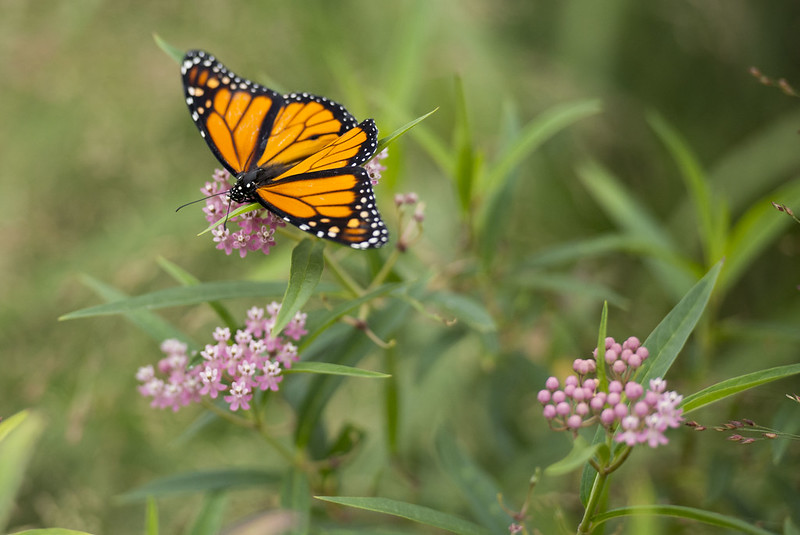
New butterfly census in the United States reveals butterfly populations are crashing

There has been a great deal of interest in the plight of monarch butterflies in this country.  Monarchs’ population and migratory habits are closely watched, and many people have been planting milkweed in their gardens to help their caterpillars.  But other butterfly species have received much less attention despite the fact that many butterfly populations are in decline.

A groundbreaking new study has provided comprehensive answers about the status of butterflies in America.  Over the past 20 years, the contiguous US has lost 22 percent of its butterflies.

The study is based on over 12 million individual butteries counted in 77,000 surveys across 35 monitoring programs from 2000 to 2020.  Three hundred forty-two butterfly species in total were analyzed.  Thirty three percent showed statistically significant declines while less than 3% displayed statistically significant increases.  Overall, 13 times as many species decreased as increased.

Why are butterfly populations crashing?  Experts point to a combination of factors:  habitat loss as land in converted for agriculture or development, climate change, and pesticide use.  It is not clear which factor is most important and may well vary by location.  Pesticide use – especially neonicotinoids – has been shown to play a particularly lethal role in studies. 

Insects including butterflies play a huge role in supporting life on earth.  They pollinate plants, feed birds and many other creatures in the food web.  Nature collapses without them.  And butterflies are clearly in trouble.

**********

Web Links

See How Butterflies Are Surviving, or Not, Near You

Photo, posted August 9, 2016, courtesy of Rachel Larue/Arlington National Cemetery via Flickr.

Earth Wise is a production of WAMC Northeast Public Radio

The largest iceberg runs aground

April 10, 2025 By EarthWise Leave a Comment

The largest iceberg in the world, which has been slowly drifting for nearly 5 years, has finally come to a halt.  The iceberg – called the unexciting name A-23A – came into existence in 1986 when it broke off from another iceberg A-23 that had calved or torn off from Antarctica earlier that year.  For decades, A-23A sat in the Weddell Sea, east of the Antarctic Peninsula.  Then, in 2020, it came loose from the seafloor and began to move.  By 2023, it finally left Antarctic Waters.

Late last year, it began spinning in place caught in an ocean current called a Taylor column.  Finally, it headed for South Georgia, a British-owned island that is home to a couple dozen people and lots of seals and penguins.  A-23A is now stuck on the continental shelf, about 50 miles from the island.

A-23A is around 1,300 square miles in area.  By comparison, New York City is 300 square miles.

Four years ago, a large iceberg called A-68A also came to ground in the vicinity of South Georgia.  It quickly broke apart and ultimately added 150 billion metric tons of fresh water to the ocean as well as various nutrients.  A-23A is also likely to succumb to the warmer waters, winds, and currents it now encounters and will affect the flora and fauna in the area.

The climate is changing and is impacting how ice shelves melt.  Calving and the creation of mammoth icebergs are a normal part of the lifecycle of polar ice sheets, but we are likely to see even more events like this in the future.

**********

Web Links

World’s Largest Iceberg Runs Aground

Photo, posted January 29, 2011, courtesy of Drew Avery via Flickr.

Earth Wise is a production of WAMC Northeast Public Radio

Rising seas are destroying buildings

April 8, 2025 By EarthWise Leave a Comment

Alexandria is the second largest city in Egypt and is the largest city on the Mediterranean coast.  Its history goes back over 2,300 years and it was once home to a lighthouse that was among the Seven Wonders of the Ancient World and a Great Library that was the largest in the ancient world.  The modern city has more than 6 million residents but still has many historic buildings and ancient monuments.  But perhaps not for long.

Rising seas and intensifying storms are taking a toll on the ancient port city.  For centuries, Alexandria’s historic structures have endured earthquakes, storm surges, tsunamis, and more.  They are truly marvels of resilient engineering.  But now, climate change is undoing in decades what took millennia for humans to create.

Over the past two decades, the number of buildings collapsing in Alexandria has risen tenfold.   Buildings are collapsing from the bottom up as a rising water table weakens soil and erodes foundations.  Since 2001, Alexandria has seen 290 buildings collapse.  Comparing present-day satellite imagery with decades-old maps, the authors of a study by the Technical University of Munich have tracked the retreat of Alexandria’s shorelines to determine where seas have intruded into groundwater. The authors say that more than 7,000 buildings in Alexandria are at risk.  They call for building sand dunes and planting trees along the coast to block encroaching seawater.

The true cost of this gradual destruction goes far beyond bricks and mortar.  This is the gradual disappearance of historic coastal cities.  Alexandria is a warning for such cities around the world.

**********

Web Links

In This Storied Egyptian City, Rising Seas are Causing Buildings to Crumble

Photo, posted September 11, 2012, courtesy of Sowr via Flickr.

Earth Wise is a production of WAMC Northeast Public Radio

Amphibians and climate change

April 7, 2025 By EarthWise Leave a Comment

Amphibians are a group of vertebrate animals that include frogs, toads, and salamanders. They are unique for their ability to live both in water and on land during different stages of life. Amphibians play a crucial role in ecosystems, often serving as both predators and prey in food webs.

Amphibians are the world’s most at-risk vertebrates, with more than 40% of species listed as threatened.  They are cold-blooded creatures and rely on external sources to regulate their body temperature.  But needing to regulate their body heat this way makes amphibians particularly vulnerable to temperature change in their habitats. 

Researchers from the University of New South Wales in Australia can now predict the heat tolerance of 60% of the world’s amphibian species.  This new tool will allow scientists to better identify which amphibian species and habitats will be most impacted by climate change.  

The study’s landmark findings, which were recently published in the journal Nature, found that 2% of amphibian species are already exposed to overheating in shaded terrestrial conditions.  According to the research team, a 4°C global temperature increase could push 7.5% of amphibian species beyond their physiological limits. 

Local amphibian extinctions can trigger ecological repercussions, including reshuffling community compositions, eroding genetic diversity, and impacting the food chain and overall ecosystem health.

The researchers highlight the importance of vegetation and water bodies in protecting amphibians during heat waves, and emphasize the need to provide adequate water and shade during future conservation efforts. 

**********

Web Links

The pot is already boiling for 2% of the world’s amphibians: new study

Photo, posted October 8, 2011, courtesy of Dave Huth via Flickr.

Earth Wise is a production of WAMC Northeast Public Radio
Hurricanes and wildfires

April 3, 2025 By EarthWise Leave a Comment

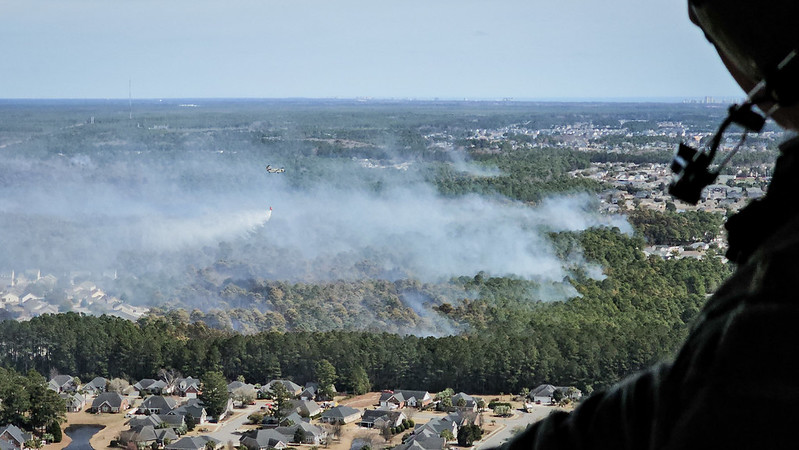
Early March saw more than 200 wildfires break out in the southeastern U.S. – a busy start to the region’s annual fire season.  One fire in the Carolina Forest near Myrtle Beach scorched over 2,000 acres over a two-week period and firefighters were busy containing it and many other blazes.

Strong winds and an unusually long dry period have made fires more likely to ignite and be spread.  Lightning strikes, power line sparking, backyard fire pits and leaf burning all can lead to wildfires under these conditions.

A weather disaster last year may be helping to make this fire season worse than usual.  Hurricane Helene ravaged the Southeast last September, dumping more than a foot of rain in some locations and knocking over hundreds of thousands of acres of trees across the region.

Lots of dead trees lying on the ground allow sunlight to reach the ground and dry out all the biomass, including the trees.  All of this desiccated plant material acts as kindling, providing fuel for wildfires.  Fallen trees can be a fire nuisance for years after a hurricane, especially in the Southeast, where dried out pine needles are highly combustible.  All it takes is an ignition.

In addition, all the fallen trees represent an access issue for firefighters as the logs block roads needed to reach the fires.

Research has shown that climate change is fueling more intense fires in the West.  Whether the changing climate is having a major effect in the Southeast isn’t clear.  But droughts are expected to become more intense and more frequent in the Southeast because of climate change and that isn’t good news for the likelihood of wildfires.

**********

Web Links

How Hurricanes Can Fuel Wildfires in the Southeast

Photo, posted March 5, 2025, courtesy of the U.S. Army National Guard / Roberto Di Giovine via Flickr.

Earth Wise is a production of WAMC Northeast Public Radio

  • « Go to Previous Page
  • Page 1
  • Page 2
  • Page 3
  • Page 4
  • Interim pages omitted …
  • Page 21
  • Go to Next Page »

Primary Sidebar

Recent Episodes

  • An uninsurable future
  • Clean energy and jobs
  • Insect declines in remote regions
  • Fossil fuel producing nations ignoring climate goals
  • Trouble for clownfishes

WAMC Northeast Public Radio

WAMC/Northeast Public Radio is a regional public radio network serving parts of seven northeastern states (more...)

Copyright © 2026 ·