• Skip to primary navigation
  • Skip to main content
  • Skip to primary sidebar

Earth Wise

A look at our changing environment.

  • Home
  • About Earth Wise
  • Where to Listen
  • All Articles
  • Show Search
Hide Search
You are here: Home / Archives for businesses

businesses

Deconstructing buildings

July 24, 2025 By EarthWise Leave a Comment

Deconstructing buildings to reduce waste

An estimated 30 million tons of wood waste from construction and demolition in the U.S. ends up in landfills each year.  A growing number of cities have launched initiatives to reuse the wood instead.  It is a strategy to reduce carbon emissions, cut waste, and shift towards a circular economy.

For a long time, salvaged wood was a niche pursuit by people who valued the fine grain and enduring quality of older wood.  Reclaimed old-growth lumber offers character and strength.  These people pursued construction that uses wood with a story – timber recovered from historic structures, collapsing barns, and other demolished buildings.

Now, there are multiple companies in the business of salvaging wood from buildings.  Cities and businesses are embracing the use of reclaimed materials.   Ordinances in cities like Portland, Oregon, Boulder, Colorado, and San Antonio, Texas require older buildings to be taken apart for repurposing their materials.  Palo Alto, California has banned demolition completely. 

Portland was the first U.S. city to require old residential homes to be deconstructed.  After a decade, contractors have deconstructed more than 650 homes in the city, salvaging 2,000 tons of reusable wood.

Using reclaimed wood in local buildings stores carbon and reduces emissions by avoiding the need to cut new trees, process materials, and ship them long distances.

Deconstructing buildings is not a widely available skill.  Contractors have to be trained on how to dismantle buildings piece by piece.  But there is now a national registry of deconstruction trainers and a network of practitioners.

**********

Web Links

Deconstructing Buildings: The Quest for New Life for Old Wood

Photo, posted May 16, 2018, courtesy of Alexandre Prevot via Flickr.

Earth Wise is a production of WAMC Northeast Public Radio

Five amazing renewable energy projects

June 11, 2025 By EarthWise Leave a Comment

Worldwide investment in renewable energy topped $2 trillion in 2024.  For Climate Solutions Week, we wanted to highlight some amazing projects around the world that showcase innovative technology, ambitious scale, and the commitment to a cleaner and sustainable future.

In Morocco, the Noor Solar Power Station is a huge concentrated solar power facility that generates power for more than a million Moroccans.  The facility stores some of the heat generated by the sun in molten salt so it can continue to produce power after sunset.

The Three Gorges Dam in China is the world’s largest power plant by installed capacity.  The 32 turbines generate enough electricity to power millions of homes. 

The Alta Wind Energy Center in California is one of the largest onshore wind farms in the world.  The 600 turbines at the facility provide clean electricity for up to 450,000 homes.

The Yamakura Dam Floating Solar Project in Japan has more than 50,000 solar panels that provide electricity for about 5,000 households.  The plant is located atop the surface of the Yamakura Dam reservoir and is one of the largest floating solar installations in the world.

The Hellisheiði Power Station in Iceland is one of the world’s most technologically advanced geothermal energy plants.  It taps into Iceland’s volcanic geology and draws both high-pressure steam and hot water to provide both electricity and heat to thousands of local homes and businesses.  

These five projects are just a sampling of the renewable energy development going on all over the world.

**********

Web Links

Powering the Future: Innovative Renewable Energy Projects Around the World

Photo, posted December 1, 2019, courtesy of Richard Allaway via Flickr.

Earth Wise is a production of WAMC Northeast Public Radio

A giant plane for giant wind turbines

May 22, 2025 By EarthWise Leave a Comment

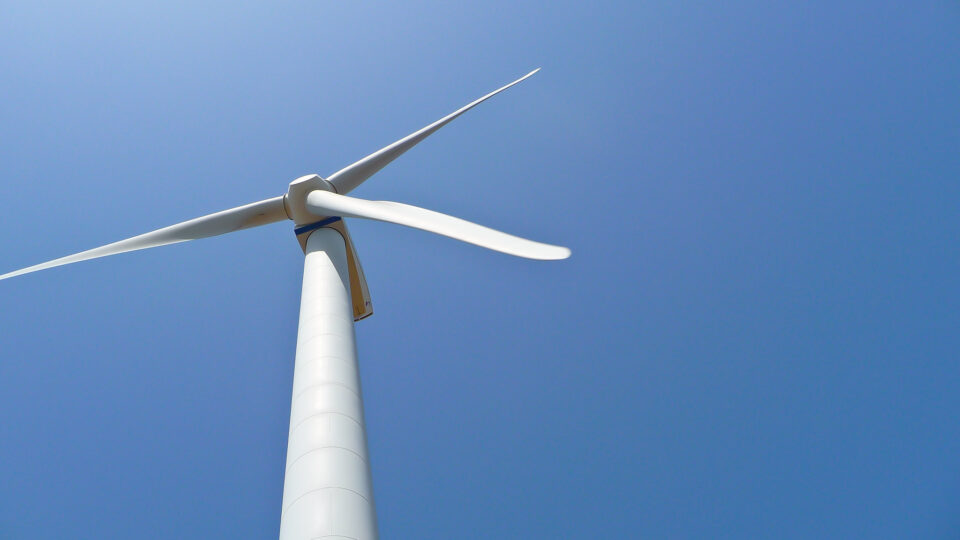
Wind turbines have been getting bigger all the time.  Larger turbines have real advantages.  They can operate at lower speeds so they can be deployed in more places.  They capture more wind, so they make more power.  Large wind turbines can have blades more than 200 feet long and even larger ones are on the way.  An offshore wind farm in China has turbines with 400-foot blades.

Giant wind turbines face a thorny problem:  getting the blades to where they are to be installed.  The enormous blades can’t be easily shipped across aging roads and bridges.   Tunnels are too narrow, bridges are too low, and roads can be too tight to allow turns when transporting these massive turbine parts.  Some developers have actually had to build special roads for wind projects.

For nearly a decade, a Boulder Colorado company called Radia has been working on what would be the world’s largest plane.  The WindRunner aircraft would have a dozen times the cargo volume of a Boeing 747.  The WindRunner will be 356 feet long and 79 feet tall.  While its primary purpose would be transporting wind turbine blades, the plane could also be used to aid the military or businesses that are thinking really big.  Product developers often don’t even try to invent really big things because there is no way to transport them.  Radia expects the WindRunner to be rolled out before the end of the decade.

The wind industry is currently facing strong opposition from the Trump administration, but wind energy is not going away and bigger and better wind turbines will ultimately be built and will have to be transported.

**********

Web Links

Building the World’s Biggest Plane to Help Catch the Wind

Photo, October 10, 2013, courtesy of Allan Der via Flickr.

Earth Wise is a production of WAMC Northeast Public Radio
Offshore wind in the U.S. at last

January 4, 2024 By EarthWise Leave a Comment

There have been large offshore wind farms in Europe for over 30 years.  Five Asian countries have had offshore wind installations for 7 years, with China now leading the world in total installed capacity.   The United States has been talking about offshore wind power for a long time and has been moving toward actually installing it in fits and starts.

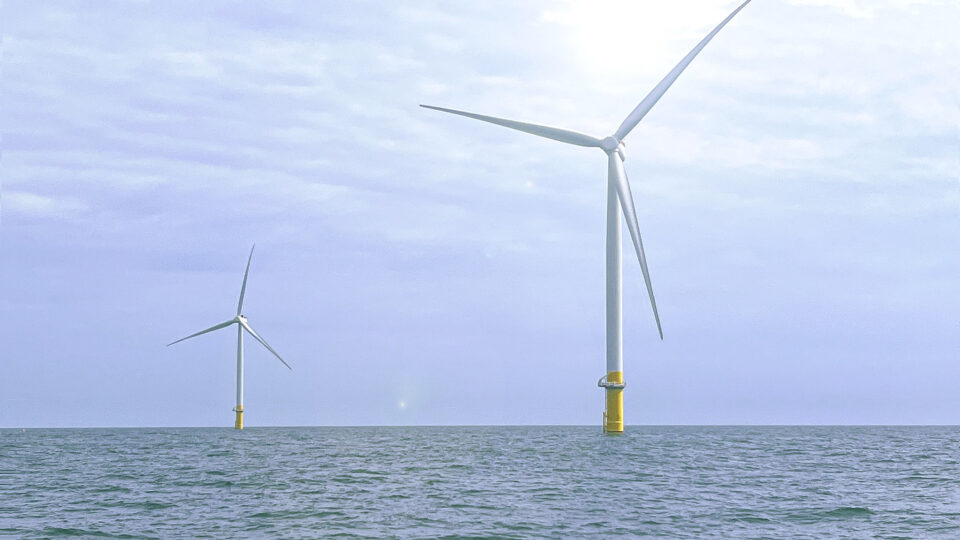
As of early December, there is finally a wind turbine off the coast of eastern Long Island that has begun sending electricity onto the U.S. grid.  The South Fork Wind Farm will soon have 12 turbines generating 132 megawatts of offshore wind energy to power more than 70,000 homes.

Meanwhile, the first five turbines for the Vineyard Wind I project off the coast of Massachusetts have been installed and will be sending 65 megawatts of power to the electric grid in Massachusetts just weeks after the New York installation turned on.

Vineyard Wind I is planned to expand into a 62-turbine, 806-megawatt project when fully operational.  That is enough electricity to power an estimated 400,000 homes and businesses.

There are multiple offshore wind projects in various stages of development along the eastern seaboard.  There are also various projects in the planning stages on the west coast, where the deep seabeds require the use of much more challenging floating turbine installations.

While it is encouraging to see that offshore wind is finally happening here in the United States, it is sobering to realize that there is more than 63 thousand megawatts of offshore wind power capacity installed globally comprising more than 11,000 turbines.  We have a lot of catching up to do.

**********

Web Links

Decades after Europe, South Fork Wind sends first commercial wind power onto US grid

First five turbines installed at Vineyard Wind 1

Photo, posted June 14, 2022, courtesy of Stephen Boutwell/BOEM via Flickr.

Earth Wise is a production of WAMC Northeast Public Radio
Buildings and birds

November 29, 2023 By EarthWise Leave a Comment

Birds face a wide range of dangers.  Billions of them each year face violent deaths.  Concerned individuals point at such things as wind turbines, which in fact do kill hundreds of thousands of birds.  But the great majority of bird deaths are caused by cats.  And that’s a danger that isn’t going to go away.

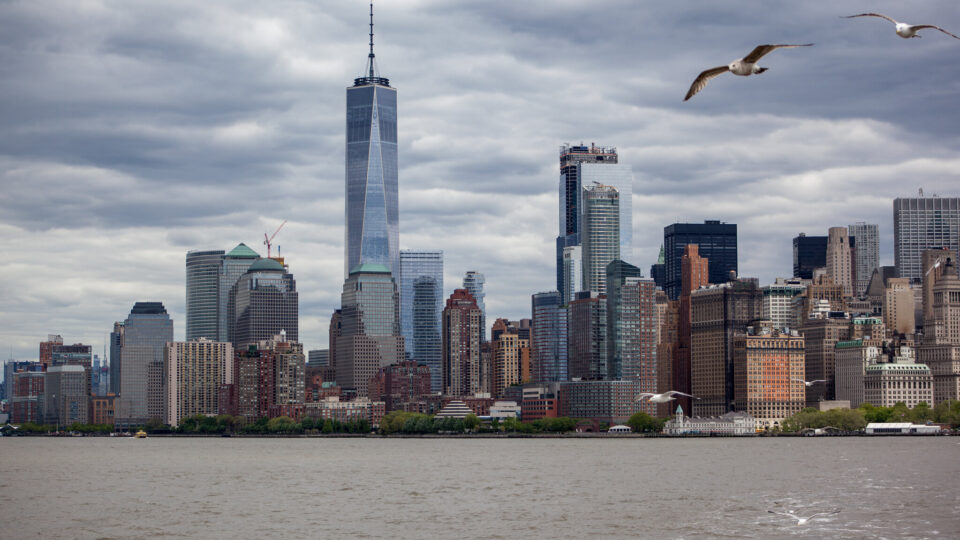
The second largest cause of bird deaths is collisions with building windows.   Building collisions kill hundreds of millions of birds each year in the U.S. alone.  As other places have seen glass skyscrapers proliferate, such as in Chinese cites, these collisions have become a major global factor in bird mortality.

There are growing efforts across the U.S. and Canada to reduce bird collisions.  Many businesses are taking part in “lights out” programs in which their buildings dim lights during spring and fall migrations.  Some buildings now use special glass that birds can see and avoid.  Some communities even have adopted ordinances that require bird-friendly glass in new construction.  Keeping bird attractants away from windows is another important way to reduce bird strikes.  All these measures have been proven to be effective in reducing the number of bird collisions.

 Companies sell vinyl film with tiny dots that can be affixed to windows.  Both businesses and homeowners have seen substantial reduction in bird collisions with such films installed.

Bird collisions are not a new problem but is one that wasn’t really taken seriously until at least the 1970s.  There isn’t much to be done about the greatest threat to birds – namely cats – but how buildings are constructed and operated is something we can control.

**********

Web Links

As Bird Kills from Buildings Mount, Cities Look for Solutions

Photo, posted December 24, 2017, courtesy of Nicolas Vollmer via Flickr.

Earth Wise is a production of WAMC Northeast Public Radio

Are Companies Really Reducing Emissions? | Earth Wise

December 21, 2022 By EarthWise Leave a Comment

Many companies around the world are declaring tremendous progress in reducing their greenhouse gas emissions.  Sometimes these claims are the result of actions that really do  reduce emissions but other times they are the result of something called “market-based accounting”. Businesses buy credits from clean energy providers that allows them to say they are running on green power when they actually are not.

The market analysis firm Bloomberg Green analyzed almost 6,000 climate reports filed by corporations last year and found that over 1,300 of them employed market-based accounting to erase over 120 million tons of emissions from their records.

Some clean energy contracts do have major climate benefits.  For example, companies like Amazon, Nestle, and Target have signed long-term power purchase agreements that ultimately help renewable developers finance new energy projects.

On the other hand, renewable energy credits are often short-term transactions with existing facilities and do little to stimulate investment or otherwise lead to greater use of green power.  They simply shift around ownership of existing renewable energy without doing anything new for the climate.

Some companies have made meaningful cuts to their pollution by putting solar panels on their roofs, upgrading their lighting and air conditioning equipment, and so on.  But many are reluctant to spend their capital in this way, even if it eventually saves money through lower electric bills.

Customers and shareholders want to see corporations do their part in reducing emissions.  But too many are making grandiose claims enabled by market-based accounting while doing far too little to help the environment.  Dubious claims of climate progress are not harmless; it is essential for the world’s companies to really do their share.

**********

Web Links

What Really Happens When Emissions Vanish

Photo, posted July 16, 2014, courtesy of Mike Mozart via Flickr.

Earth Wise is a production of WAMC Northeast Public Radio
Air Pollution: The Greatest Danger | Earth Wise            

June 27, 2022 By EarthWise Leave a Comment

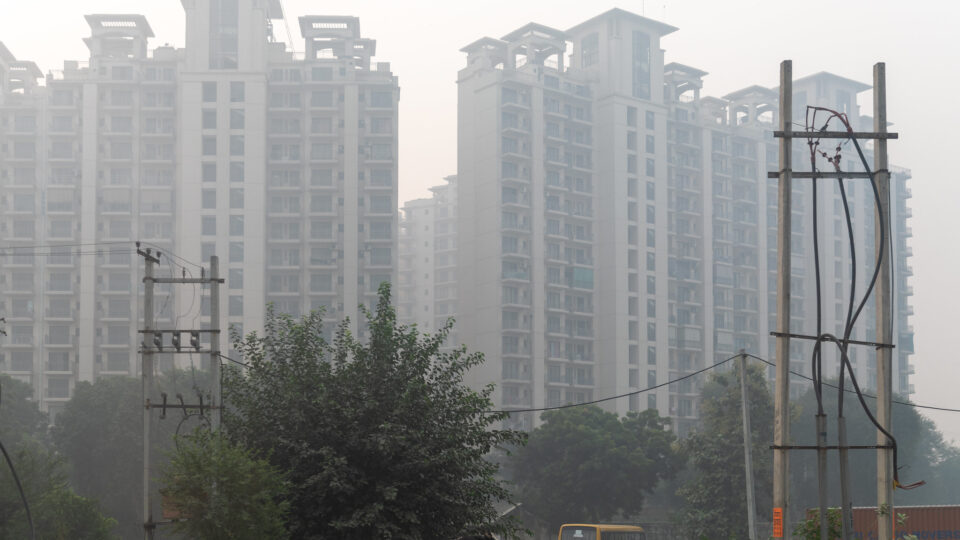
Air pollution is one of the greatest dangers

The effort to reduce and ultimately eliminate the use of fossil fuels has largely been driven by the potentially catastrophic consequences of global climate change.  The need to stop dumping greenhouse gases into the atmosphere has become increasingly urgent.  But there is an equally compelling reason to stop burning fossil fuels.  According to a study published in the journal Lancet Planetary Health, outdoor air pollution is “the largest existential threat to human and planetary health.”

Pollution of various types was responsible for an estimated 9 million deaths around the world in 2019.  Half of those fatalities – 4.5 million deaths – were the result of outdoor air pollution coming from vehicles and industrial sources like power plants and factories.

The number of deaths attributed to air pollution has increased by 55% just since the year 2000.

The growth in air pollution deaths has offset a decline in deaths from other pollution sources that especially affect people living in extreme poverty, such as indoor air pollution and water pollution.  Overall, countries with lower collective incomes tend to bear a disproportionate share of pollution deaths.  Roughly 16% of deaths around the world are attributable to pollution, also resulting in more than $4 trillion in economic losses.

The peer-reviewed study was produced by the 2017 Lancet Commission on Pollution and Health.  The study notes that despite the enormous health, social, and economic impacts of pollution, preventing it is largely overlooked in the international development agenda.  The study calls upon governments, businesses, and other entities to abandon fossil fuels and adopt clean energy sources.

**********

Web Links

Study Identifies Outdoor Air Pollution as the ‘Largest Existential Threat to Human and Planetary Health’

Photo, posted November 4, 2019, courtesy of Ninara via Flickr.

Earth Wise is a production of WAMC Northeast Public Radio.

Clean Energy In Rochester | Earth Wise

October 26, 2021 By EarthWise Leave a Comment

New York’s largest community choice clean energy program has been activated in the City of Rochester.   The program, offered by Rochester Community Power, offers 57,000 residences and small businesses access to clean energy from hydropower and wind sources.  It requires customers to opt out rather than enroll in order to provide clean energy to the greatest number of people.

Rochester Community Power is the city’s local community choice aggregation (CCA) program that leverages the collective buying power of participating residents to purchase renewable electricity and negotiate better terms for energy supply contracts.

The program will supply customers with more than 300 million kWh of renewable energy each year, which will avoid the emission of about 250,000 tons of carbon dioxide.  Rochester plans to add a community solar program next year which will provide additional clean energy opportunities, including offering guaranteed savings to thousands of participants in its Home Energy Assistance Program.

The project will be managed by Joule Assets, which is a provider of energy reduction market analysis, tools, and financing. Joule Assets, as program administrator for the Rochester program, managed the competitive bidding process that secured a fixed rate for electricity for the next two years, shielding participating residences and businesses from volatile market prices.

Community choice aggregation programs are local, not-for-profit public agencies that are an alternative to investor-owned utilities.  They give municipalities the ability to make decisions about the procurement, sourcing, and rates for energy for its residents.

**********

Web Links

New York activates its largest opt-out 100% renewable energy program

Photo, posted June 25, 2011, courtesy of Paulo Valdivieso via Flickr.

Earth Wise is a production of WAMC Northeast Public Radio.

Keeping Charleston Dry | Earth Wise

June 11, 2020 By EarthWise Leave a Comment

Rising seas from climate change

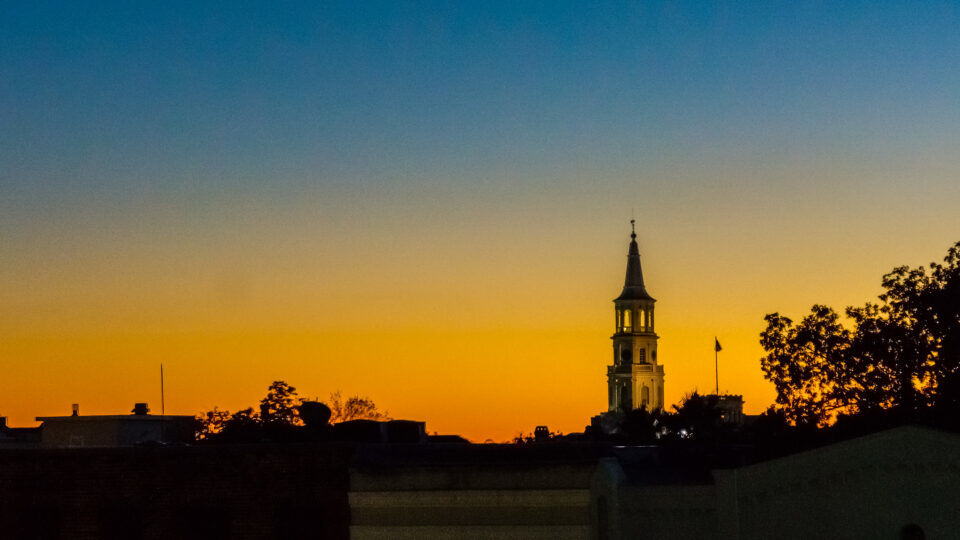
Charleston, South Carolina is visited by millions of tourists each year.  The town is a glimpse into the past, showcasing antebellum mansions, row houses, historic African American churches and scenic harbor views from a Civil War-era promenade.

Charleston is also visited more and more by water from rising seas and increasingly powerful storms.  The city is essentially drowning in slow motion and may soon face an existential threat to its survival.

Charleston has a harbor and three rivers and water from all these sources leaks in at every bend and curve, fills streets, disrupts businesses, and rushes into homes during storms.  Million-dollar antebellum mansions, built on spongy marsh and old tidal creeks, flood repeatedly.

City officials have endorsed a plan by the U.S. Army Corps of Engineers to wall off the historic downtown with an 8-mile-long seawall that would cost nearly $2 billion.  The proposed barricade is just one of many proposed projects to build seawalls, surge gates, levees, and other barriers to defend U.S. coastal cities in an era of rising seas and climate-fueled floods and storms.  A proposed flood wall in Miami would cost federal taxpayers $8 billion.

Researchers generally agree that sea levels are likely to rise by at least 3 feet by the end of the century.  Some experts believe the rise will be much greater.  So, a key question is whether these barriers will actually keep out the water.  Critics of many of the proposed solutions contend that they are doomed to fail.

Flooding has caused nearly $1 trillion worth of damage along the East and Gulf coasts over the past 40 years.  And things are almost certain to get worse in Charleston and other coastal cities.

**********

Web Links

Fortress Charleston: Will Walling Off the City Hold Back the Waters?

Photo, posted October 7, 2015, courtesy of Jeff Turner via Flickr.

Earth Wise is a production of WAMC Northeast Public Radio.

Should New York Build A Storm Surge Barrier?

December 6, 2019 By EarthWise Leave a Comment

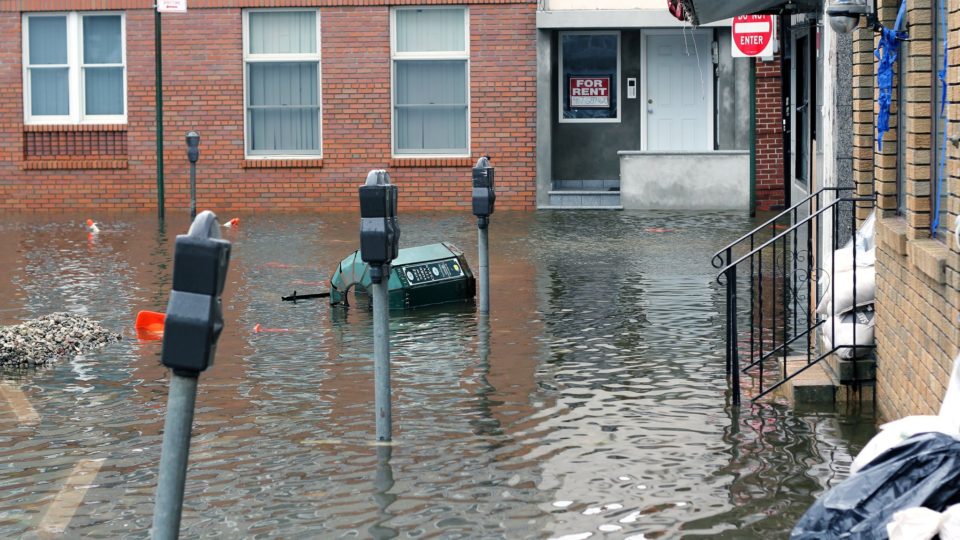
In 2012, Superstorm Sandy’s storm surge combined with a high tide and buried lower Manhattan under 13 feet of water.  Across all five boroughs, subways, highways, and parking garages flooded and homes and businesses were destroyed.  Sandy caused nearly $20 billion in damages in New York City alone and more than 50 people died.

Ever since that disaster took place, there have been discussions about building storm surge barriers to protect the city from future storms.  Columbia University’s Sabin Center recently hosted an event to discuss the feasibility of building such barriers.

A study by the U.S. Army Corps of Engineers called the NY and NJ Harbor and Tributaries Focus Area Feasibility Study (HATS, for short) evaluates five options for coastal protection, which range in scope and price.

The most extensive option would involve constructing six miles of storm surge gates along with 26 miles of floodwalls, levees, and buried seawalls.  This option would cost $62 billion but could theoretically save $131 billion in damages and protect 95% of the study area.

The study also considers the side effects of building storm surge barriers.  These include environmental impacts such as effects on fish and wildlife, water quality, noise and vibrations, and changes in water flow.  While these effects can be quite serious and there is opposition from many quarters related to environmental impacts, others point out that there is really no other credible defense against storm surge.  The debate over whether or not to build storm surge barriers could easily last for many more years.

In the bigger picture, storm surge barriers do nothing to protect against rain-driven flooding, sea level rise, and tidal floods which continue to increase.

**********

Web Links

Should New York Build a Storm Surge Barrier?

Photo, posted October 30, 2012, courtesy of Pamela Andrade via Flickr.

Earth Wise is a production of WAMC Northeast Public Radio.

Building For Climate Change

May 13, 2019 By EarthWise Leave a Comment

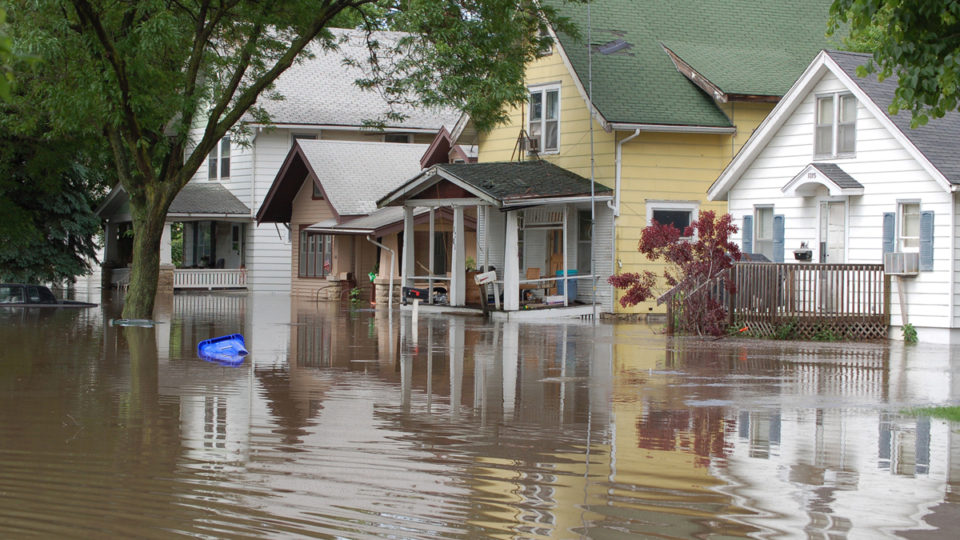
The manifestations of climate change are creating increasingly familiar images:  floodwaters rising up house windows, charred buildings in the wake of wildfires, and homes and businesses demolished by storm winds. As these sorts of calamities become ever more common, changes to how houses are built are going to be necessary.

How can homes become more resilient against severe and unpredictable weather?

Research at Carlton University’s Sprott School of Business looks at this issue.

As an example, houses can be framed and finished in certain ways that help protect them from wind and flooding.  But such methods are currently only happening in the custom-build fringes of the housing sector.  Widespread adoption will require, at the minimum, significant changes to building codes.

Revising building codes is not an easy matter.  The codes themselves are highly technical and complex, and beyond that, the process Is often politicized.

Even simple things like hurricane ties, which are small pieces of hardware that prevent a roof from lifting during a severe wind are not now included in building codes.  Insurance companies support their use as inexpensive protection for houses.  But even though the overall cost is relatively minor, the building industry pushes back at the additional expense.

The need to reduce carbon emissions has created a push for sustainable housing.  But the increasingly erratic weather means that houses also need resilience and adaptation.  These features will inevitably add costs and incorporating them into building codes requires producing convincing business cases.

The U.S. experienced 394 natural catastrophe events last year costing $225 billion in damage.  Finding ways to make homes and businesses more resilient is not just a good idea; it is essential.

**********

Web Links

How to Start Weather-Proofing Homes for Unpredictable Weather

Photo, posted June 12, 2008, courtesy of U.S. Geological Survey via Flickr.

Earth Wise is a production of WAMC Northeast Public Radio.

New Zealand Bans Plastic Bags

September 3, 2018 By EarthWise Leave a Comment

https://earthwiseradio.org/wp-content/uploads/2018/09/EW-09-03-18-New-Zealand-Bans-Plastic-Bags.mp3

In an effort to tackle plastic pollution, New Zealand is joining a growing list of countries banning single-use plastic bags for good.  Prime Minister Jacinda Ardern says in a press statement that the ban was necessary to safeguard New Zealand’s clean and green reputation.

[Read more…] about New Zealand Bans Plastic Bags

Transparent Solar Panels

December 6, 2017 By EarthWise Leave a Comment

https://earthwiseradio.org/wp-content/uploads/2017/11/EW-12-06-17-Transparent-Solar-Panels.mp3

 It is now commonplace to see solar panels on the rooftops of homes and businesses.  There are more than a million solar homes in the US alone.  But a new generation of see-through solar technology has the potential to also turn the windows of buildings and cars, as well as other glass-coated objects, into electricity generators.

[Read more…] about Transparent Solar Panels

Waste In The Big Apple

August 4, 2016 By WAMC WEB

https://earthwiseradio.org/wp-content/uploads/2016/08/EW-08-04-16-Waste-In-NYC.mp3

New York City, the financial and cultural center as well as the largest city in the country, is known for a lot of things:  skyscrapers, shopping, and pizza immediately come to mind.  But we should add another thing to that list.  Trash.

[Read more…] about Waste In The Big Apple

Consumers And The Environment

March 17, 2016 By WAMC WEB

https://earthwiseradio.org/wp-content/uploads/2016/03/EW-03-17-16-Consumers-and-the-Environment.mp3

China passed the U.S. as the largest emitter of greenhouse gases on Earth back in 2007, mostly due to manufacturing.  However, the great majority of all the products China produces are exported to the rest of the world.  China’s per capita consumption-based environmental footprint is actually small.  If you put the responsibility for environmental impacts on the consumer instead of the producer, we are all the culprits.

[Read more…] about Consumers And The Environment

Community Solar On The Rise

January 22, 2016 By WAMC WEB

https://earthwiseradio.org/wp-content/uploads/2016/01/EW-01-22-16-Community-Solar-on-the-Rise.mp3

Most Americans are bullish on solar power.  However, the majority of Americans are unable to install their own rooftop solar system because either they don’t own the place where they live or because their home is unsuitable for installing solar panels for one reason or another.

[Read more…] about Community Solar On The Rise

Primary Sidebar

Recent Episodes

  • An uninsurable future
  • Clean energy and jobs
  • Insect declines in remote regions
  • Fossil fuel producing nations ignoring climate goals
  • Trouble for clownfishes

WAMC Northeast Public Radio

WAMC/Northeast Public Radio is a regional public radio network serving parts of seven northeastern states (more...)

Copyright © 2025 ·