• Skip to primary navigation
  • Skip to main content
  • Skip to primary sidebar

Earth Wise

A look at our changing environment.

  • Home
  • About Earth Wise
  • Where to Listen
  • All Articles
  • Show Search
Hide Search
You are here: Home / Archives for british columbia

british columbia

Winegrowing regions and climate change

April 29, 2024 By EarthWise Leave a Comment

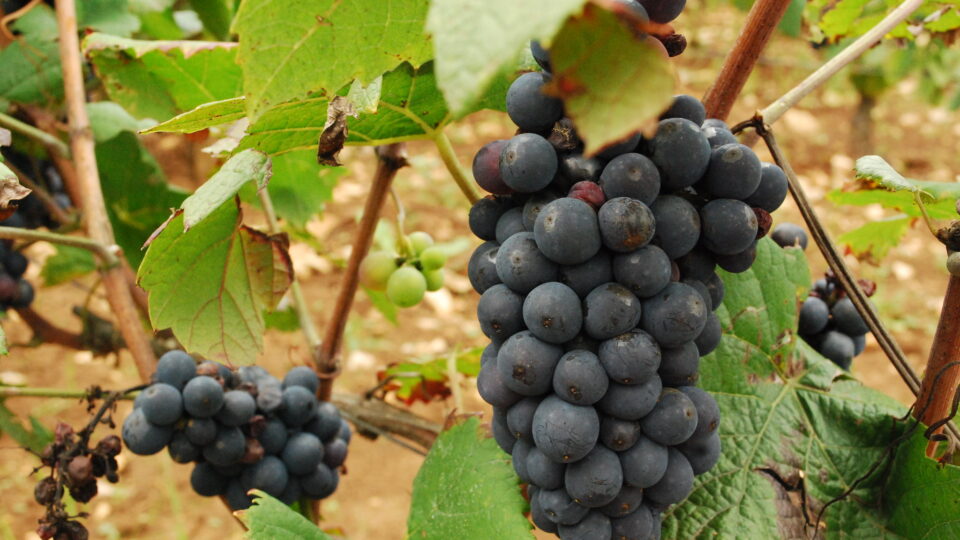
Climate change will impact winegrowing regions around the world

Grapes grown to make wine are sensitive to climate conditions including temperatures and amount of rainfall.  The warming climate is already having visible effects on yields, grape composition, and the quality of wine.  This has significant consequences on the geography of wine production and is of major concern for the $350 billion global industry.

Winegrowing regions are mostly at the mid-latitudes where temperatures are warm enough to allow grapes to ripen but not excessively hot.  The climates are relatively dry so that fungal diseases are not rampant.

Because of the warming climate, harvesting in most vineyards now begins two or three weeks earlier than it did 40 years ago and this affects the grapes and the resultant wines.  Temperature changes affect acidity, wine alcohol, and aromatic signatures.

If global temperature rise crosses the 2-degree level, 90% of all traditional winegrowing areas throughout Spain, Italy, Greece, and southern California may become unable to produce high-quality wines.  Conversely, areas of northern France, the states of Washington and Oregon, British Columbia, and Tasmania will see improved conditions for producing quality wines. 

As the climate warms, winegrowers face new challenges such as the emergence of new diseases and pests as well as an increasing number of extreme weather events.  Wine producers are using more drought-resistant grape varieties and are adopting management methods that better preserve soil water.

The changing climate poses many threats to the quality of wines produced in traditional vineyards.  In the future, the wine industry may look very different in terms of where and how the best wines are produced. 

**********

Web Links

A global map of how climate change is changing winegrowing regions

Photo, posted November 14, 2008, courtesy of Curtis Foreman via Flickr.

Earth Wise is a production of WAMC Northeast Public Radio
Canadian zombie fires

April 8, 2024 By EarthWise Leave a Comment

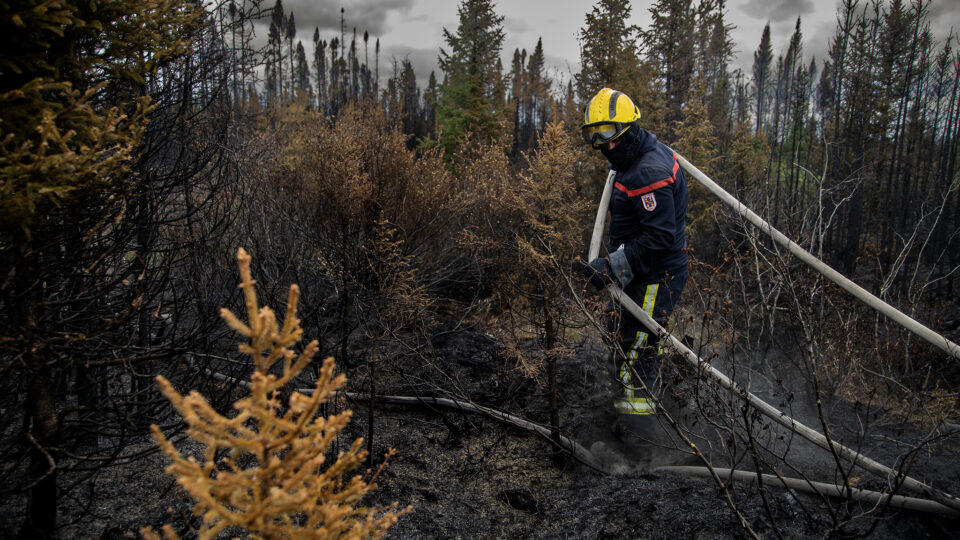
Canada’s 2023 wildfire season was the most destructive ever recorded.  Over 6,000 fires burned nearly 71,000 square miles of land from the West Coast to the Atlantic provinces.  The burned areas are roughly the size of the entire country of Finland and represent almost triple the amount burned in the previous year, which itself was a lot. Smoke from Canadian fires, particularly those in Quebec, blanketed many cities in the United States and made its way as far south as Florida.

An alarming aspect of the Canadian fire season is that it didn’t ever really end.  Late in the winter, 149 active wildfires are still burning across Canada.  92 are in British Columbia, 56 in Alberta, and one in New Brunswick.  In these places, the wildfire season is yearlong.

These overwintering fires have come to be known as zombie fires.  They burn slowly below the surface during the winter.  Many areas in the north contain porous peat and moss ground cover and these act as underground fuel for smoldering fires.

Wildfires have become more prevalent in Canada because the changing climate has brought about increases in the hot, dry, and gusty conditions that lead to drought.

Many of the zombie fires don’t pose an increased threat of triggering wildfires in the spring because they are in places that are already so charred that there is nothing left to burn.  But others are in drought areas that are basically tinder boxes ready to burst into flame once spring arrives.

Overall, Canadian government officials are warning that this year’s wildfire season is likely to be even worse than last year’s, particularly in the Western provinces of British Columbia and Alberta.

**********

Web Links

As ‘Zombie Fires’ Smolder, Canada Braces for Another Season of Flames

Photo, posted June 30, 2023, courtesy of P. McCabe / EU via Flickr.

Earth Wise is a production of WAMC Northeast Public Radio
The Pacific Northwest Heatwave | Earth Wise

August 18, 2021 By EarthWise Leave a Comment

Analyzing the Pacific Northwest Heatwave

The late-June heatwave in the Pacific Northwest shattered temperature records in dozens of locations.  Cities like Portland and Seattle saw historic high temperatures and one town in British Columbia saw temperatures hotter than ever recorded in Las Vegas.

An international team of weather and climate experts analyzed this extreme weather event and came to a preliminary conclusion that it was a 1-in-1000-year event in today’s climate.  “Today’s climate” means the already warmer conditions that the world is experiencing as a result of the changing climate.

If that analysis is accurate, then such an extreme temperature event would have been at least 150 times rarer in the era before global warming.  In other words, they concluded that it would have been a 1-in-150,000-year event, which means that it would have been virtually impossible in pre-industrial times.

Given that they estimated that the extreme temperatures were a 1-in-1000-year event at this point, it would follow that such events are not about to become commonplace any time soon.  On the face of it, that is somewhat comforting to hear.

However, all of this assumes that global warming will not radically change the statistical distribution of global temperatures.  If that assumption fails to hold, then all bets are off.  Perhaps temperatures like those experienced in the Pacific Northwest might be a 1-in-50-year event, for example, but we just don’t realize it yet.  Follow-up studies will be looking for evidence of significant changes in the distribution of weather events.  For now, a 1-in-1000-year event means there is only a 0.1% chance of occurring in a given year.  That’s good news for the residents of that region.

**********

Web Links

Preliminary analysis concludes Pacific Northwest heat wave was a 1,000-year event…hopefully

Photo, posted June 4, 2016, courtesy of Jody Claborn via Flickr.

Earth Wise is a production of WAMC Northeast Public Radio.

The Hottest June | Earth Wise

July 29, 2021 By EarthWise Leave a Comment

Climate change continues to fuel the heat records

A series of heatwaves from coast to coast caused June 2021 to be the hottest June on record in the U.S. The average June temperature across the contiguous U.S. was 72.6 degrees Fahrenheit, making it the hottest June in 127 years of record keeping and breaking the previous record set in 2016 by nearly a full degree. Eight states had their hottest June on record and six others marked their second hottest June.

One of the most extreme heatwaves in modern history impacted the Pacific Northwest of the U.S. and western Canada late in the month.  Temperature records were not merely broken in the region; they were smashed over an incredibly hot four-day period from June 26th through June 29th when all-time records over 100 degrees were set at dozens of locations.

Portland, Oregon’s average high temperature over this period was 112 degrees, breaking the previous 3-day record by an amazing 6 degrees.  The high on June 28th was 116 degrees, an all-time record for the city.  Seattle set back-to-back all-time heat records of 104 on June 27th and then 108 on June 28th.  In the previous 126 years, Seattle had only hit 100 degrees three times.  It reached that mark 3 days in a row in June.

Crossing the border, the town of Lytton, British Columbia reached a temperature of 121 degrees on June 29th, the third day in a row in which the town registered a new all-time high temperature ever measured in Canada.  To put this in perspective, this temperature is hotter than has ever been recorded in Las Vegas.

June was a hot month indeed.

**********

Web Links

June 2021 was the hottest June on record for U.S.

Astounding heat obliterates all-time records across the Pacific Northwest and Western Canada in June 2021

Photo, posted July 7, 2021, courtesy of Poyson / GPA Photo Archive via Flickr.

Earth Wise is a production of WAMC Northeast Public Radio.

Spreading Like Wildfire

October 18, 2017 By EarthWise Leave a Comment

https://earthwiseradio.org/wp-content/uploads/2017/10/EW-10-18-17-Spreading-Like-Wildfire.mp3

Last July 7th, 140 wildfires started up in British Columbia, triggering a state of emergency.  By the end of the summer, more than 1,000 fires had been triggered across the Canadian province, burning nearly 3 million acres of forest, about 10 times more than the average over the past decade.

[Read more…] about Spreading Like Wildfire

Solar Power From An Old Mine

May 8, 2017 By EarthWise

https://earthwiseradio.org/wp-content/uploads/2017/05/EW-05-08-17-Solar-Power-from-an-Old-Mine.mp3

For more than a century, a wide stretch of land north of Kimberley, British Columbia, was used for intensive industrial hard-rock mining.   The site of Teck’s Sullivan Mine hosted a steel mill, a fertilizer plant and tailings ponds and was rendered treeless.

[Read more…] about Solar Power From An Old Mine

Canadian Carbon Tax

November 11, 2016 By WAMC WEB

https://earthwiseradio.org/wp-content/uploads/2016/11/EW-11-11-16-Canadian-Carbon-Tax.mp3

The Canadian government has chosen a carbon tax as its national policy to reduce greenhouse gas emissions.  This aggressive move could have major repercussions around the world.

[Read more…] about Canadian Carbon Tax

British Columbia’s Carbon Tax

February 12, 2016 By WAMC WEB

https://earthwiseradio.org/wp-content/uploads/2016/02/EW-02-12-16-British-Columbia-Carbon-Tax.mp3

The recent Paris summit on climate change produced a global treaty to reduce greenhouse gas emissions.   There are multiple strategies to reduce emissions including both technological and economic ones.

[Read more…] about British Columbia’s Carbon Tax

Primary Sidebar

Recent Episodes

  • An uninsurable future
  • Clean energy and jobs
  • Insect declines in remote regions
  • Fossil fuel producing nations ignoring climate goals
  • Trouble for clownfishes

WAMC Northeast Public Radio

WAMC/Northeast Public Radio is a regional public radio network serving parts of seven northeastern states (more...)

Copyright © 2026 ·