• Skip to primary navigation
  • Skip to main content
  • Skip to primary sidebar

Earth Wise

A look at our changing environment.

  • Home
  • About Earth Wise
  • Where to Listen
  • All Articles
  • Show Search
Hide Search
You are here: Home / Archives for bill

bill

Eliminating plastic shipping pillows

July 17, 2024 By EarthWise Leave a Comment

Amazon is phasing out plastic shipping pillows

Anyone who gets packages from Amazon is familiar with the plastic air pillows used to keep products safe in transit.  Amazon uses almost 15 billion of them a year in North America.

Environmentalists have been urging Amazon and other vendors to cut down on the use of plastic packaging. The air-filled plastic pillows are made from plastic film, which is the most common form of plastic litter found in the sea and in seabeds along the shore.  Plastic film can be deadly to wildlife such as sea turtles and sea birds.  Plastic film generally can’t be composted or recycled either.

Recently, Amazon announced that it will replace its plastic pillows with recycled paper filler in all its North American markets – the United States, Canada, and Mexico – which together account for more than 70% of the retailer’s global sales.  It is already making the switch in a big way and is working towards fully removing the plastic materials by the end of the year.

Replacing plastic packaging with paper is a definite improvement.  Paper is recyclable and biodegradable.  It isn’t perfect:  if it ends up in landfills, it can contribute to methane pollution as it biodegrades.  But, on the other hand, paper packaging is more likely to be recycled.

Stemming the tide of plastic waste is an ongoing effort by environmental and consumer groups.  There is pending legislation in New York that aims to reduce the use of plastic packaging by 50% over 12 years by requiring manufacturers to either replace it or pay fees.  The bill cleared the State Senate but has not come up to a vote in the Assembly.  Similar legislation has already been passed in California, Oregon, Maine, and Colorado.

**********

Web Links

Amazon Says It Will Stop Using Puffy Plastic Shipping Pillows

Photo, posted November 20, 2018, courtesy of Todd Van Hoosear via Flickr.

Earth Wise is a production of WAMC Northeast Public Radio
Biochar and carbon

April 25, 2024 By EarthWise Leave a Comment

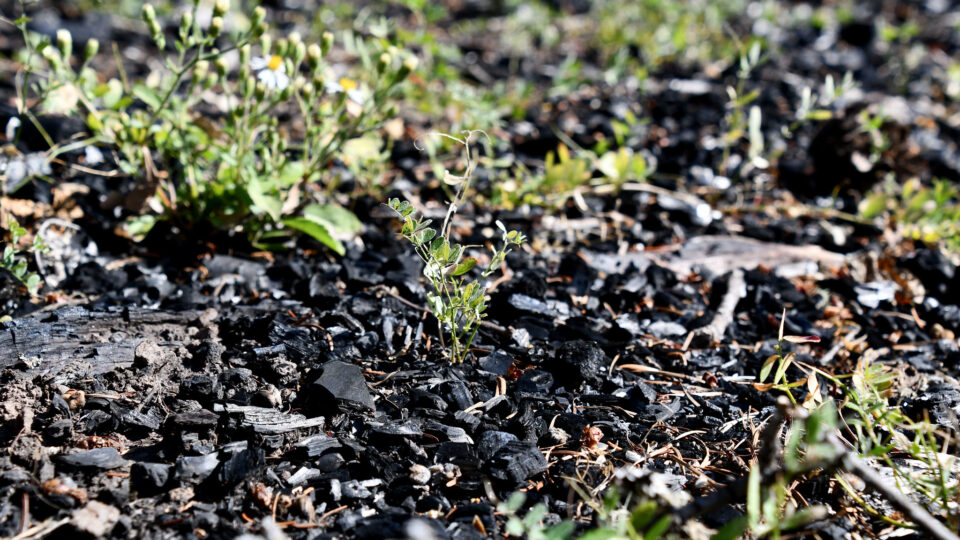
Biochar is a charcoal-like substance that is made by burning organic materials like crop and forestry wastes in a controlled process called pyrolysis, which is burning in an oxygen-deprived environment.  Pyrolysis produces little or no contaminating fumes and results in a stable form of carbon that can’t easily escape into the atmosphere.  Biochar is a very efficient way to convert carbon into a stable form.

Adding charred biomass to improve soil quality has been done for thousands of years.  Indigenous people in the Amazon added charcoal, food residue, and other waste to their soil.  When mixed with soil, biochar creates favorable conditions for root growth and microbial activities, which reduces greenhouse gas emissions. 

Last year, 125,000 tons of carbon dioxide were removed worldwide in the durable carbon market, which is a carbon credit marketplace for carbon removal.  About 93% of that was in the form of biochar. 

Biochar represents a value-added way to deal with agricultural waste and also to make use of dead trees in forests that should be removed to lower the risk of wildfires caused by the presence of all that dry tinder material. 

A bill to fund biochar research is pending before the Senate Agricultural Committee.  It is a rare example of bipartisan legislation.

Biochar is currently expensive to make in the US because large amounts of biomass must be shipped to one of the fewer than 50 small-scale production facilities in the country.   But with appropriate infrastructure, biochar could play an important role in efforts to sequester carbon and combat climate change.

**********

Web Links

Biochar Is ‘Low-Hanging Fruit’ for Sequestering Carbon and Combating Climate Change

Photo, posted September 3, 2019, courtesy of Tracy Robillard / NRCS via Flickr.

Earth Wise is a production of WAMC Northeast Public Radio
More renewable energy for New York

November 24, 2023 By EarthWise Leave a Comment

More renewable energy coming for New York

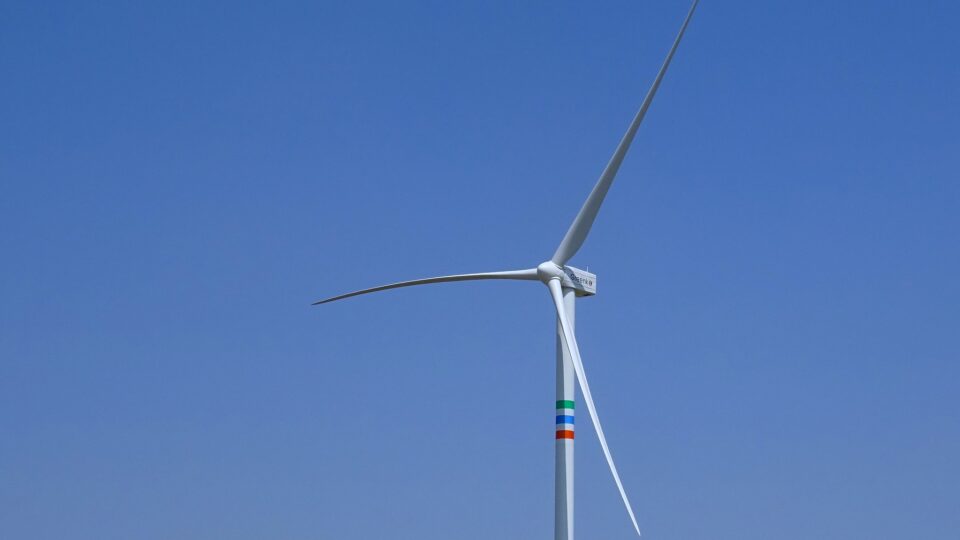
In late October, New York announced its largest state investment in renewable energy to date that includes three offshore wind projects, and 22 land-based clean energy projects totaling more than 6 GW of power generation.

The portfolio of projects is expected to create approximately 8,300 jobs and spur $20 billion in economic investments statewide.

The projects support the state’s goal to have 70% of its electricity come from renewable sources by 2030 and to have 9 GW of offshore wind operating by 2035.  The announcement represents the first set of actions taken by the State as part of New York’s 10-Point Action Plan.

The three offshore wind projects include Attentive Energy One, a 1.4 GW project that seeks to retire fossil fuel power generation in New York City.  Community Offshore Wind, a 1.3 GW project will make use of a new grid interconnection in downtown Brooklyn.  Excelsior Wind, another 1.3 GW project, will provide robust energy deliverability to Long Island. 

Apart from the offshore wind projects, there will be 14 new solar projects, six wind upgrading projects, one new wind project, and one return-to-service hydroelectric project.

The average bill impact for customers over the life of the land-based projects is estimated to be approximately 0.31%, or about 32 cents a month for the average customer.  The bill impact for customers utilizing the offshore wind projects is estimated to be about 2.7%, or $2.93 per month.

*********

Web Links

NY to invest in 3 offshore wind farms, 22 land-based renewable projects

Photo, posted October 21, 2016, courtesy of B Sarangi via Flickr.

XXXXXXXXXXXXXXX

New York Bans Some Crypto Mining | Earth Wise

December 13, 2022 By EarthWise Leave a Comment

New York bans some cryptocurrency mining

Crypto mining, the arcane process by which cryptocurrencies are generated, is incredibly energy-intensive.  As of this past summer, global electricity usage for the activity is as much as 240 billion kilowatt-hours per year, which is more than many entire countries use (for example Australia and Argentina.)  Crypto mining consumes as much electricity as all the conventional computer data centers in the world.

All that energy usage is problematic for the environment, but a growing practice has made it far worse.  Crypto miners have been re-powering decommissioned fossil fuel power plants to produce electricity strictly for mining operations.  Doing so eliminates the climate benefits achieved by shutting down those plants.

The New York State Legislature passed a bill in June that would place a two-year moratorium on permits to re-power fossil fuel plants.  It does not prevent crypto mining from existing generation sources.  The bill had sat on the governor’s desk until after the recent election.   But in late November, Governor Hochul signed the bill despite considerable lobbying against it.

The temporary ban was heavily opposed by cryptocurrency industry groups, to no surprise.  While some states actually offer tax incentives to lure crypto mining operations, supporters of the legislation hope that New York’s action may cause others to follow its lead and stop the reactivation of old fossil fuel plants.

The two-year moratorium will allow time to properly evaluate the impact of the crypto mining industry on the state’s climate goals.  It is pretty obvious that reactivating old, retired fossil fuel power plants as an energy source is a move in the wrong direction.

**********

Web Links

New York Enacts 2-Year Ban on Some Crypto-Mining Operations

Photo, posted February 27, 2021, courtesy of Ivan Radic via Flickr.

Earth Wise is a production of WAMC Northeast Public Radio

California Climate Legislation | Earth Wise

October 6, 2022 By EarthWise Leave a Comment

California passes massive climate change legislation

At the end of its summer session, California’s state legislature passed five climate-related bills including ones that it had been unable to pass in previous sessions.  Taking all of these actions puts California in the position of blazing a trail for the country and the rest of world in taking aggressive action on climate issues.

One bill confirmed California’s goal of reaching net-zero emissions by 2045.  Another bill added interim-term targets to go along with the state’s goal of 100% renewable electricity by 2045.  It sets a target of 90% by 2030 and 95% by 2040.  That bill mandates that California state agencies use 100% clean energy by 2035, which is a decade earlier than the previous requirement.

A third bill requires the California Air Resources Board to determine steps and regulations for carbon-capture and storage projects at pollution hotspots like oil refineries.

A fourth bill requires the state to set goals for removing carbon dioxide from the atmosphere through natural means such as tree planting.

The California state budget includes a record-breaking $54 billion to be spent on climate programs over the next five years, including $6.1 billion toward electric vehicles, $14.8 billion towards public transit projects, more than $8 billion for electric grid stabilization, $2.7 billion towards preventing wildfires, and $2.8 billion towards managing drought.

California has been dealing with ongoing drought and numerous wildfires and is highly motivated to take decisive action in dealing with the climate crisis.  California’s environmental initiatives often result in comparable actions taken by other states.

**********

Web Links

California Passes Massive Climate Legislation Package

Photo, posted March 16, 2019, courtesy of Raymond Shobe via Flickr.

Earth Wise is a production of WAMC Northeast Public Radio
Community Solar In New York | Earth Wise

April 18, 2022 By EarthWise Leave a Comment

Community solar booming in New York State

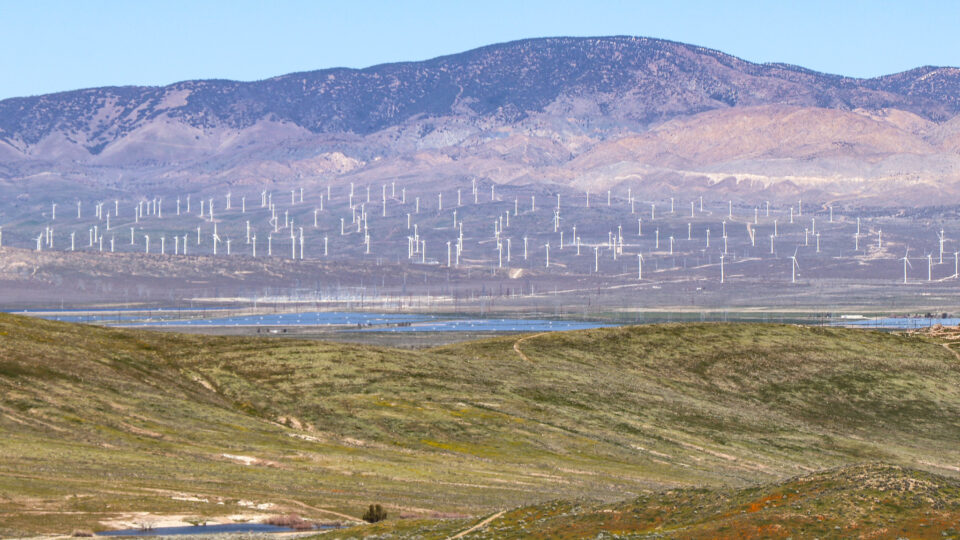
New York has now installed 1 GW of community solar capacity, which is more than any other state.

Community solar is a solar energy project within a geographic area for which the benefits flow to multiple customers such as individuals, businesses, nonprofits, or other groups.  For the most part, the customers benefit from energy being generated by solar panels located at an off-site array.  Customers typically buy or lease a portion of the solar panels in the array and then receive an electric bill credit for the electricity generated by their share of the community solar system.  It is a great option for people who can’t install their own solar panels because they don’t own their home, don’t have a suitable location for various reasons, or have financial constraints.

Community solar in New York now generates enough electricity to power 209,000 homes.  Community solar installations accounted for 70% of New York’s solar additions in 2021 and the state has a pipeline of 708 more projects totaling 2.3 gigawatts.

The NY-Sun program run by NYSERDA since 2011 has directed over $200 million to low-to-moderate income households as part of its Solar Energy Equity Framework. 

Growing community solar depends strongly on policy expansion.  At this point, 19 states and D.C. have established policies and programs to support community solar adoption.  The federal government set a goal of powering 5 million American homes with community solar over the next five years.  With 30% of the country’s current community solar capacity, New York is leading the way.

**********

Web Links

New York reaches 1 GW community solar milestone

Photo, posted May 24, 2011, courtesy of Michael Mees via Flickr.

Earth Wise is a production of WAMC Northeast Public Radio.

Upgrading The U.S. Power Grid | Earth Wise

February 15, 2022 By EarthWise Leave a Comment

Upgrading the power grid in the United States

The Department of Energy has launched the Building a Better Grid Initiative to accelerate the development of new power transmission lines.  The initiative aims to upgrade the nation’s grid, connect more Americans to clean electricity, and reliably move clean electricity to where it is needed most. The initiative is a part of the Bipartisan Infrastructure bill that was signed into law in November.

Under the initiative, DOE will identify critical national transmission needs and support the buildout of long-distance, high-voltage transmission facilities as well as support transmission planning, financing mechanisms, transmission-related research and development, and efforts on energy justice.

DOE will deploy more than $20 billion in federal financing that includes more than $10 billion in grants to states, Tribes, and utilities to enhance grid resilience and prevent power outages.  It will also coordinate with other agencies to streamline permitting for transmission infrastructure. 

Seventy percent of the US grid’s transmission lines and power transformers are over 25 years old.  There is also insufficient transmission capacity, especially for transmission that facilitates transfer of power across regions.  The current grid is vulnerable to harsh weather and needs improved reliability.

Providing more transmission capacity in areas where it doesn’t exist today is essential for the integration of more large-scale renewable generation sources into the grid.  The national goal of 100% clean electricity by 2035 is not just about decarbonizing the generation sources.  A substantial upgrade to the transmission infrastructure is necessary and the Building a Better Grid Initiative is a major step in the right direction.

**********

Web Links

The big upgrade to the US power grid is kicking off

Photo, posted February 2, 2020, courtesy of Tony Webster via Flickr.

Earth Wise is a production of WAMC Northeast Public Radio.

Carbon Capture And The Infrastructure Bill | Earth Wise

September 17, 2021 By EarthWise Leave a Comment

carbon capture in the infrastructure bill

The trillion-dollar infrastructure bill contains a variety of provisions related to energy and the environment.  Among them is authorization for more than $12 billion for carbon capture technologies, including direct air capture and demonstration projects on coal, natural gas, and industrial plants and supporting carbon dioxide infrastructure.

Inclusion of this provision has largely been driven by energy companies, electrical utilities, and other industrial sectors.  The strongest proponents have been fossil fuel companies.  The reasons are fairly clear.

Support for carbon capture and storage (or CCS) technologies would yield billions of dollars for corporate polluters while allowing them to continue to burn fossil fuels.  To date, CCS technology has not progressed very far.  It is very expensive and has done little to reduce emissions. 

The strongest argument against directing significant resources into CCS for the power sector is that the plummeting costs of wind and solar energy have made renewable energy sources competitive with or cheaper than burning fossil fuels to generate electricity.  Adding expensive carbon capture equipment to a power plant only makes the economics of using fossil fuels worse.

The infrastructure bill does promote direct air capture technology, which is literally pulling carbon dioxide out of the air independent of any industrial activities generating it.  Given the world’s progress on reducing emissions, direct air capture technology may be an essential part of the global strategy to combat climate change.  If infrastructure funds largely go in that direction rather than for propping up fossil fuel companies, they may prove to be of great value.

**********

Web Links

Fossil Fuel Companies Are Quietly Scoring Big Money for Their Preferred Climate Solution: Carbon Capture and Storage

Photo, posted March 15, 2021, courtesy of Michael Swan via Flickr.

Earth Wise is a production of WAMC Northeast Public Radio.

California vs. Fossil Fuels

September 19, 2018 By EarthWise Leave a Comment

https://earthwiseradio.org/wp-content/uploads/2018/09/EW-09-19-18-California-vs-Fossil-Fuels.mp3

California has led the way in deploying and committing to clean energy for a long time.  In August its legislature strengthened that commitment by passing a bill to stop using fossil fuels entirely by 2045.   It is the second state to do so, following Hawaii.  The bill still needs to be passed by the Senate and signed by the governor.  Both actions are expected to occur.

[Read more…] about California vs. Fossil Fuels

Primary Sidebar

Recent Episodes

  • An uninsurable future
  • Clean energy and jobs
  • Insect declines in remote regions
  • Fossil fuel producing nations ignoring climate goals
  • Trouble for clownfishes

WAMC Northeast Public Radio

WAMC/Northeast Public Radio is a regional public radio network serving parts of seven northeastern states (more...)

Copyright © 2026 ·