• Skip to primary navigation
  • Skip to main content
  • Skip to primary sidebar

Earth Wise

A look at our changing environment.

  • Home
  • About Earth Wise
  • Where to Listen
  • All Articles
  • Show Search
Hide Search
You are here: Home / Archives for zero emissions

zero emissions

Much more energy storage for New York

August 2, 2024 By EarthWise Leave a Comment

As solar and wind power play an ever-growing role in the electricity grid, the need for energy storage also grows.  Even if sun and wind can provide more energy than is needed at a particular time, they can’t provide it at all times.  The ability to store excess energy waiting in reserve for when the sun and wind are not providing it is essential to avoid the need for burning fossil fuels to take up the slack.

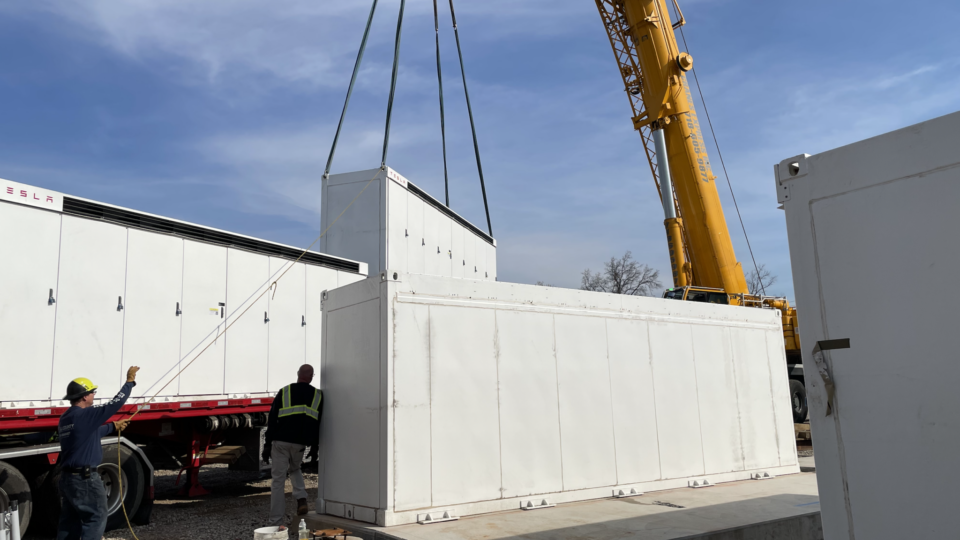
The New York State Public Service Commission has announced that it has approved a new framework for the state to have in place a nation-leading six gigawatts of energy storage by 2030.  This represents at least 20% of the peak electricity load of New York State.

An extensive set of recommendations to expand New York’s energy storage programs describe cost-effective ways to unlock the rapid growth of renewable energy across the state as well as to bolster the reliability of the grid.  The buildout of storage deployment is estimated to reduce projected future statewide electric system costs by nearly $2 billion.  New York has previously established goals to generate 70% of its electricity from renewable sources by 2030 and 100% zero-emission electricity by 2040.

The new roadmap includes programs to procure an additional 4.7 gigawatts of new energy storage projects across large-scale, retail, and residential energy storage sectors across the state.  These future procurements, when combined with the 1.3 gigawatts already being procured or under contract, will allow the State to achieve the 6-gigawatt goal by 2030.

Energy storage plays a critical role in decarbonizing the grid, reducing electricity system costs, and improving the reliability of the electricity system.

**********

Web Links

New York approves plan to add six gigawatts of energy storage by 2030

Photo courtesy of NineDot Energy.

Earth Wise is a production of WAMC Northeast Public Radio
Floating Solar And Hydropower | Earth Wise

August 16, 2023 By EarthWise Leave a Comment

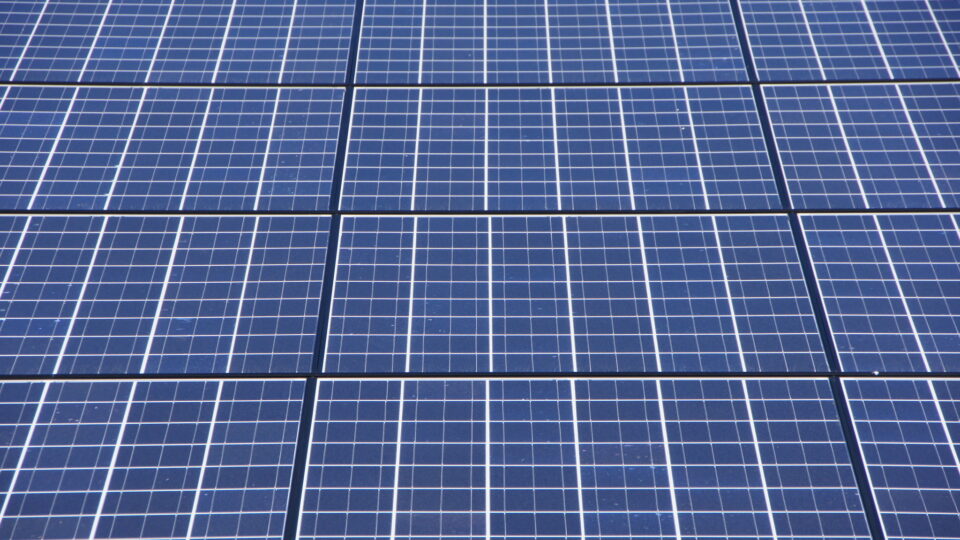
Installing solar panels on the surface of reservoirs is an up-and-coming trend.  The arrays of solar panels produce renewable energy while at the same time shielding significant expanses of water from the sun’s heat, thereby reducing evaporation.  The panels also help to inhibit the growth of algae.

Two recent floating solar installations are demonstrating the synergy between solar power and hydroelectric power.

The Lazer floating solar plant in France comprises over 50,000 solar panels and is capable of producing 30 MW of power.  The reservoir serves a 16.5 MW hydropower plant.  During the summer, the water from Lazer Reservoir is used primarily for crop irrigation and the solar plant supplements power generation as the reservoir water level experiences variations.  This is the first facility of its kind to be installed in France.  The company that built it – the EDF Group – had already built four floating solar power plants in Israel and the US. 

In Colombia, the Aquasol solar project is installed at the 340 MW Urrá hydropower plant.  Its 2,800 solar panels produce enough power to offset the amount of energy it takes to operate the dam.  The floating solar system is designed to withstand water-level fluctuations of up to 120 feet.

Floating solar systems can help keep power flowing when low water levels or other adverse conditions reduce hydroelectric output.  About 60% of the world’s renewable energy comes from hydropower.  Given this fact, there are countless opportunities to deploy floating solar that maximizes zero-emission energy generation as well as diversifying clean energy sources.

**********

Web Links

Floating solar and hydropower: A match made in renewable energy heaven

Photo, posted October 25, 2010, courtesy of Martin Abegglen via Flickr.

Earth Wise is a production of WAMC Northeast Public Radio

Banning Gas-Powered Cars | Earth Wise

May 12, 2023 By EarthWise Leave a Comment

The European Union has banned the sale of new gas-powered cars starting in 2035.  The vote came after weeks of negotiations related to possible exemptions to the rule.

Germany lobbied for an exemption to be made for cars powered by e-fuels.  These are made by combining hydrogen with carbon dioxide that has been removed from the atmosphere using processes powered by renewable energy.  Because of this source of the carbon dioxide, such fuels are considered to be carbon neutral.  The EU agreed to grant this exemption, so there can be cars that run only on e-fuels after 2035.

About a quarter of carbon emissions in the EU come from transportation.  The new law requires a 55% drop in carbon emissions from new cars by 2030.  Poland voted against the new law, while Bulgaria, Romania, and Italy abstained.  (Italy wanted an exemption for biofuels, but it was not granted).

Here in the US, seven states have adopted rules banning the sale of new gas-powered cars in 2035.  These are California, Maryland, Massachusetts, New Jersey, New York, Oregon, and Washington. 

California has committed to having 35% of new car sales being zero-emission vehicles by 2026, and the number rising to 68% by 2030.

As these policies proliferate around the world, the auto industry is moving ahead to keep up with them.  Most automakers are planning to have substantial parts of their product line be electric by 2030.  Given the financial and physical inertia involved in shifting to electric vehicle production, regardless of what happens with policies around the world, there is little possibility of turning back from the electric vehicle transition.

**********

Web Links

EU Approves 2035 Ban on Sales of Gas-Powered Cars

Photo, posted May 31, 2012, courtesy of Mike Norton via Flickr.

Earth Wise is a production of WAMC Northeast Public Radio

Carbon Capture Booming | Earth Wise

November 24, 2022 By EarthWise Leave a Comment

Carbon capture is booming

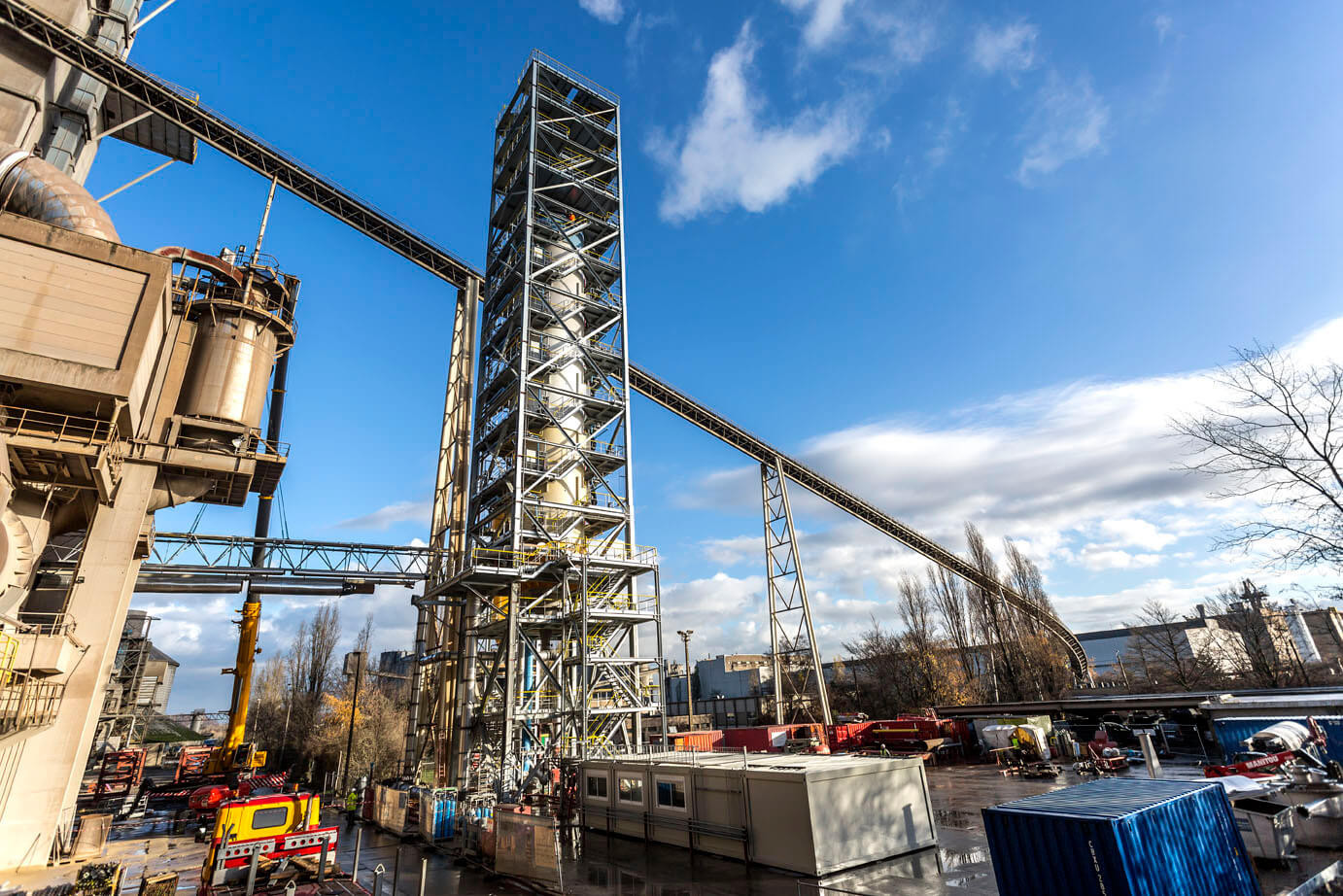
For the world to reach a state of net-zero emissions, it is going to require more than the ongoing transition to renewable energy sources.  There will also need to be efforts to capture the emissions from sources that can’t easily eliminate their pollution.  These include steel mills, cement plants, and other industrial sites.  At least for the foreseeable future,  a number of essential industries have no other viable path to deep decarbonization, and carbon capture and storage projects are the only promising strategy on hand.

Companies use CCS to filter emissions from fossil fuel power plants and industrial facilities and then bury the captured carbon underground, often in deep caverns.

Over the past 12 months, the pipeline for carbon capture and storage projects has grown by 44%.  This year, firms have announced 61 new CCS projects, bringing the total number of commercial projects in the global pipeline to 196, which includes about 30 that are already in operation.  Another 11 are under construction, and 153 are in development.

When all of these projects are completed, they will have the capacity to capture a total of about 270 million tons of carbon dioxide per year.  Estimates are that there need to be 1,400 million tons locked away each year to reach zero-emissions.  So, the existing project pipeline constitutes about 20% of what is ultimately needed.

The recently passed Inflation Reduction Act boosts tax incentives for carbon capture.  Analysts believe this could multiply U.S. deployment of the technology more than 10-fold.  Globally, it is expected that CCS will continue its rapid growth as countries ramp up investments in the technology.

**********

Web Links

Carbon Capture Projects See Meteoric Growth in 2022

Photo, posted August 22, 2022, courtesy of Nenad Stojkovic via Flickr.

Earth Wise is a production of WAMC Northeast Public Radio

Electrifying The Federal Fleet | Earth Wise

October 7, 2021 By EarthWise Leave a Comment

Accelerating the electrification of the federal fleet could save billions of dollars

The federal government owns and operates about 645,000 vehicles.  Among them are about 200,000 passenger vehicles, 78,000 heavy-duty trucks, 47,000 vans, 847 ambulances, and three limousines.   About 225,000 vehicles are operated by the Postal Service.  

Each year, these vehicles are driven about 4.5 billion miles and use about 400 million gallons of gasoline, producing 3.5 million tons of greenhouse gases.

President Biden signed an executive order in January directing federal officials to devise a plan for converting the entire fleet to clean and zero-emission vehicles.  So far, the work has been slow. 

According to a new report from Atlas Public Policy, accelerating the push for electric vehicles in the federal fleet could save taxpayers billions of dollars.

Electric vehicles have lower fueling and maintenance costs as well as a smaller environmental impact.  According to the report, the government could replace 40% of its light-duty vehicles and buses not owned by the Postal Service with cheaper plug-in alternatives by 2025.  By 2030, it could replace 97% of such vehicles with EVs for a lifetime savings of more than $1 billion.  Furthermore, by 2025, it would be possible to replace nearly all mail trucks with EVs for a savings of $2.9 billion.

The federal fleet represents an opportunity to encourage transportation electrification to happen much more quickly.  Apart from the economic and environmental benefits, having an electrified federal fleet would increase public awareness of the practicality and benefits of electric vehicles.

**********

Web Links

Push to Electrify Federal Fleet Could Yield Billions in Savings by 2030

Photo, posted May 14, 2015, courtesy of Tony Webster via Flickr.

Earth Wise is a production of WAMC Northeast Public Radio.

Benefits Of A Zero-Emissions Boston | Earth Wise

May 25, 2020 By EarthWise Leave a Comment

climate goals

Many countries, states, and cities around the world have set goals to become carbon neutral, typically by the year 2050.  These goals are based on the desire to mitigate the effects of climate change that are steadily increasing as a result of the buildup of carbon dioxide in the atmosphere.  But reducing emissions is not just a way to combat climate change, it can also be a major contributor to improved public health.

The City of Boston has set a goal to become carbon neutral by 2050.  A new study by the School of Public Health at Boston University published in the journal Environmental Research Letters looked at the consequences of eliminating fossil fuel emissions in the greater Boston area.

According to their modeling, eliminating emissions would save 288 lives a year by reducing fatal and non-fatal cardiovascular and respiratory illnesses.   The resulting decrease in medical costs and lost and reduced work could save $1.7 billion a year in Suffolk County and $2.4 billion a year for the entire 75-square-mile zone modeled in the study.

The study looked at the amounts of two air pollutants known to harm human health:  PM2.5 (particulates with a diameter of less than 2.5 microns) and ozone.  They compared the current levels of these pollutants to what would be present when contributions from motor vehicles, generators, rail, industry, oil- and gas-burning, shipping and boating, and residential wood fires were eliminated.

The study focused on the City of Boston’s climate action plan, but actions taken by Boston will not take place in a vacuum.  Many cities across the region are taking similar actions.  The overall results will come from the collective actions across New England.

**********

Web Links

A Zero-Emissions Boston Could Save 288 Lives and $2.4 Billion Annually

Photo, posted August 31, 2019, courtesy of Eric Kilby via Flickr.

Earth Wise is a production of WAMC Northeast Public Radio.

GM And Fuel Cells

November 30, 2017 By EarthWise 1 Comment

https://earthwiseradio.org/wp-content/uploads/2017/11/EW-11-30-17-GM-and-Fuel-Cells.mp3

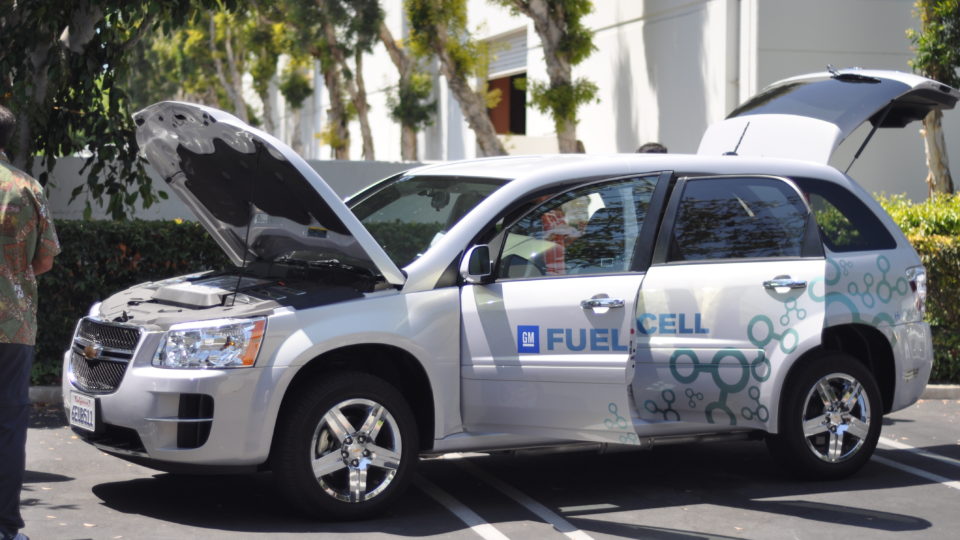
There has been a spate of announcements from major car manufacturers in recent times detailing their plans to electrify their future vehicles.  General Motors recently announced its “path to zero emissions” plan which includes the introduction of at least 20 electric vehicles by 2023.  They are joining Volvo, Volkswagen, Toyota and others in making such an announcement.

[Read more…] about GM And Fuel Cells

Primary Sidebar

Recent Episodes

  • An uninsurable future
  • Clean energy and jobs
  • Insect declines in remote regions
  • Fossil fuel producing nations ignoring climate goals
  • Trouble for clownfishes

WAMC Northeast Public Radio

WAMC/Northeast Public Radio is a regional public radio network serving parts of seven northeastern states (more...)

Copyright © 2025 ·