• Skip to primary navigation
  • Skip to main content
  • Skip to primary sidebar

Earth Wise

A look at our changing environment.

  • Home
  • About Earth Wise
  • Where to Listen
  • All Articles
  • Show Search
Hide Search
You are here: Home / Archives for winters

winters

Climate change and an iconic Florida bird

December 31, 2024 By EarthWise Leave a Comment

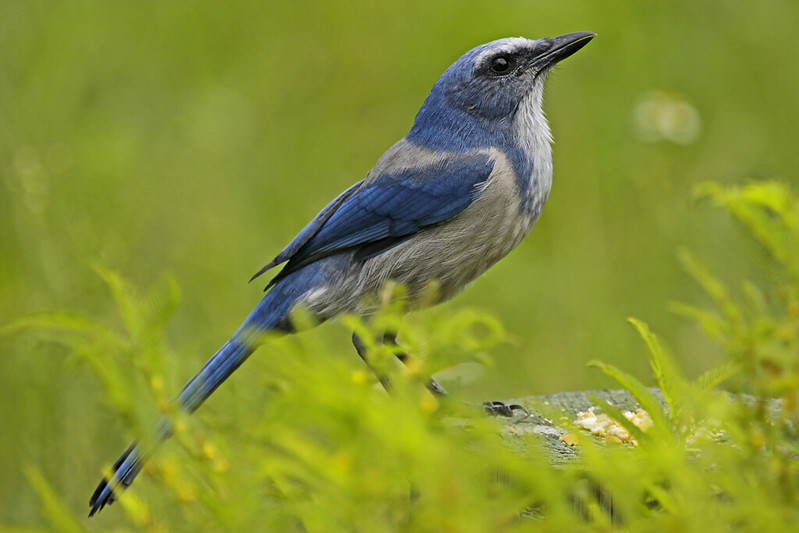
The Florida scrub-jay is a medium-sized bird native to Florida, known for its striking blue plumage and distinctive call. It is the only bird species that is entirely endemic to Florida, found mainly in the scrubby, sandy habitats of the central and southern part of the Sunshine State.

But extensive development, habitat fragmentation, and habitat degradation have caused the scrub-jay population to decline significantly over the past century. 

Another threat facing the Florida scrub-jay is climate change.  According to a new study by researchers from the Archbold Biological Station and the Cornell Lab of Ornithology, warmer winters driven by climate change are causing Florida scrub-jays to nest one week earlier than they did in 1981.  This seemingly innocuous change has reduced the number of offspring raised annually by 25% since 1981. 

The research team examined 37 years of data to assess the impacts of warming on reproductive efforts.  From 1981 to 2018, the average winter temperature at Archbold Biological Station in Florida increased by 2.5 degrees Fahrenheit.  Despite increases in the number of nests built and eggs laid over the longer breeding season, Florida scrub-jays are not producing more young. 

The researchers hypothesize that warmer temperatures make the nests susceptible to predation by snakes for a longer period of the Florida spring than in the past.  The findings, which were recently published in the journal Ornithology, suggest that climate change could dampen the success of conservation efforts for this threatened species.

**********

Web Links

Long-term study reveals warming climates threaten Florida scrub-jay

Florida Scrub-Jay

Photo, posted October 15, 2018, courtesy of Judy Gallagher via Flickr.

Earth Wise is a production of WAMC Northeast Public Radio
Armadillos Heading North | Earth Wise

December 27, 2021 By EarthWise Leave a Comment

Armadillos are heading north

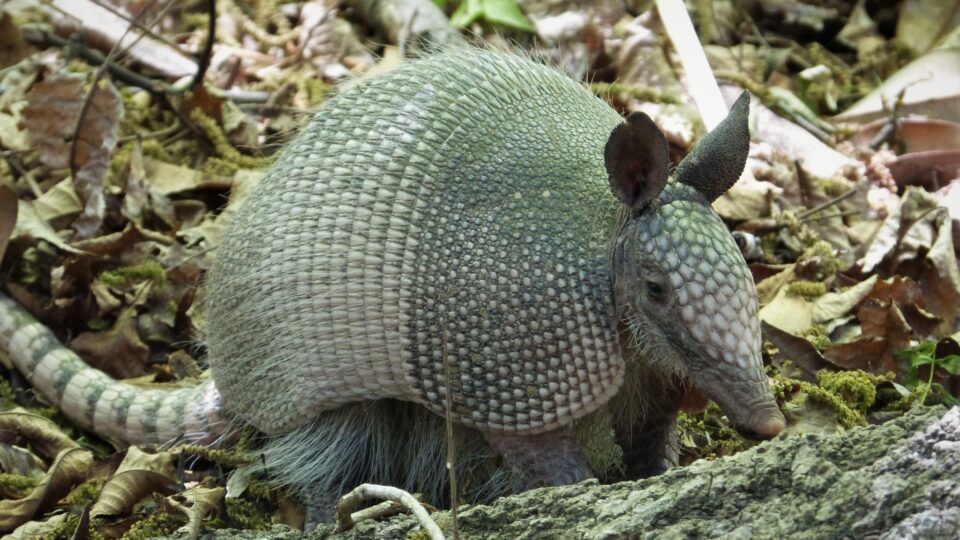
Armadillos are small mammals known for their unique armor-like shell and their digging habits.  There are 21 species, primarily native to South America.  Some species have expanded northward due to their rapid breeding cycle, adaptability, and reduced number of predators.  Only one species – the nine-banded armadillo – is found in the United States.  In fact, it is the official small mammal of the state of Texas.

Over time, armadillos have expanded their range to states in the Deep South.  More recently, the animals have been pushing further north.  Milder winters in the changing climate have allowed them to inhabit new areas, including parts of the Blue Ridge Mountains. They were first sighted in North Carolina in 2007 and their numbers have recently been growing in the western half of the state.

There are now armadillos as far north as Missouri, Nebraska, and Iowa, and there is little to halt their further advance.  They are able to hold their breath for six minutes at a time, so they can cross rivers by walking along the bottom or by inflating their intestines and floating across the top.  Their hard shell provides protection from predators.  They reproduce prolifically.  Females give birth to quadruplets multiple times over the course of their 12-15-year lifespan.

Armadillos are fun to look at, but they are a nuisance where people live.  They are prone to digging holes in lawns.  In parts of North Carolina, some people have placed bounties on the animals.  They are difficult to trap and there aren’t common repellents for them.  As the climate continues to warm, it is only a matter of time before the range of armadillos expands into other states.

**********

Web Links

Armadillos Advance Northward As Temperatures Rise

Photo, posted May 2, 2017, courtesy of Gail Hampshire via Flickr.

Earth Wise is a production of WAMC Northeast Public Radio.

American Robins And Climate Change | Earth Wise

April 30, 2020 By EarthWise Leave a Comment

changing climate is making birds migrate earlier

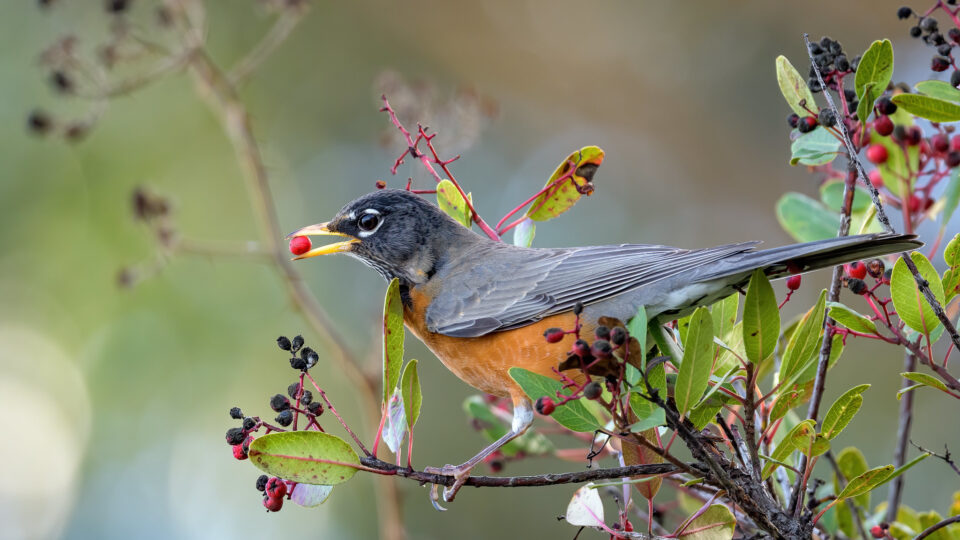
American robins are migratory songbirds that can be found throughout much of North America.  Named after European robins because of their reddish-orange breast, American robins are often found hopping across lawns and nesting on porches.  Their rich caroling is among the first pre-dawn bird songs heard in spring and summer.  

While some overwinter in northern parts of the United States and southern Canada, most American robins migrate south to overwinter in places like Florida and the Gulf Coast, as well as central Mexico and the Pacific Coast.  They typically head south by the end of August and return north sometime between February and March to their breeding grounds in Canada and Alaska.  They spend their short time there trying to find a mate, build a nest, raise a family, and consume enough food to sustain themselves on their long return journey south.

But climate change is making these seasonal rhythms less predictable.  According to a new study recently published in the journal Environmental Research Letters, American robin migration is kicking off earlier by about five days each decade.  The birds now migrate 12 days earlier than they did in 1994.  

For 25 years, researchers at Canada’s Slave Lake have been recording the timing of American robin spring migration.  They attached GPS devices to 55 robins, tracking their movements from April through June. The researchers linked the birds’ movement with weather data, including air temperature, snow depth, wind speed, and precipitation.  The results showed that robins start migrating north earlier when winters are warm and dry. 

Understanding the influence over the timing of migratory events is important because the timing of migration can influence reproductive success.

**********

Web Links

A Migration Mystery

American robins now migrate 12 days earlier than in 1994

Photo, posted January 1, 2020, courtesy of Becky Matsubara via Flickr.

Earth Wise is a production of WAMC Northeast Public Radio.

Complications For New York Solar Farms

July 12, 2019 By EarthWise Leave a Comment

A study by engineers at Cornell University looked at the implications of adding utility-scale solar farms throughout New York State.  Adding such farms could reduce demand for electricity from conventional sources by nearly 10% in some places.  But the engineers caution that winters in upstate New York could create some novel problems for the state’s power system.

Electrical energy demand tends to be low around midday when many people are not home.  Electrical production from solar farms is high at that time when the sun is at its highest position in the sky.  This can lead to what power system operators call “ramping”, which is the term for rapid increases or decreases in demand.

This sort of ramping was first discussed in California years ago.  When people wake up and prepare for the day, there is a morning peak in electrical load, which occurs before solar production ramps up.   When people get home from work in the evening, energy demands create a second peak.  A graph of this lack of synchronicity of load and supply looks a little like the shape of a duck and is popularly known as the duck curve.

The Cornell engineers figured out that maximum ramping in New York – where electrical demand and electricity supply from solar farms are out of synch- will take place in the winter.  In fact, when there are several days of sunshine in a row during winter, the largest ramping in the New York power system will take place.

The general issue of having solar energy available when it is most needed is one that is the driver for energy storage technology. If the energy can be provided when demand calls for it, there would be no more ramping.

**********

Web Links

Winter could pose solar farm ‘ramping’ snag for power grid

Photo, posted September 8, 2015, courtesy of New York National Guard via Flickr.

Earth Wise is a production of WAMC Northeast Public Radio.

California Fires And Precipitation

April 11, 2019 By EarthWise Leave a Comment

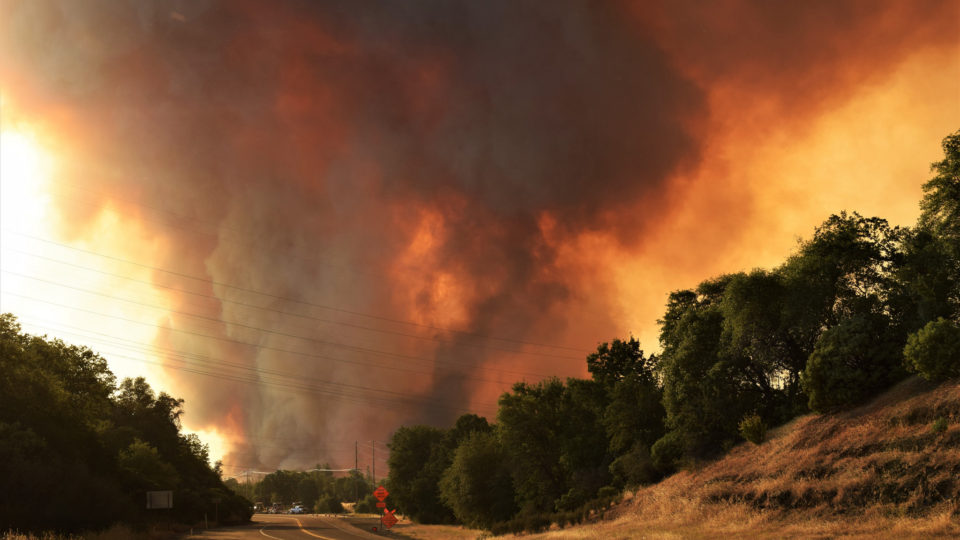
Two things we have heard a lot about in recent years have been the persistent drought in California and the terrible wildfires the state has experienced.  Along the way, the state has had some pretty wet and snowy winters.  This past winter, the California snow pack has seen incredible levels building up, which is great news for the state’s farmers.  But does that also mean that the next year should see some relief from severe wildfires?

The answer appears to be no.  A new study from an international team that includes the University of Arizona has comprehensively looked at the amount of winter precipitation in California and the severity of the subsequent wildfire season. 

The position of the North Pacific jetstream over California is strongly linked to the amount of winter precipitation.  This has been true for hundreds of years and continues to be the case.

From 1600 to 1903, the linkage between winter precipitation and wildfire severity was also very strong.  But after 1904, that connection weakened.  As a result, fire suppression policies were instituted.  When fires arose, they were put out as quickly as possible.  The result over time is fuel buildup, making larger fires far more likely.

According to the new study, after 1977, the connection between winter precipitation and wildfire severity disappeared entirely.  There no longer appears to be any relationship between jet stream dynamics and fire.  The warming climate and the results of fire suppression dominate the potential for wildfire.  California’s wet winter of 2016-2017 provides a good example.  That winter was followed by many large fires in 2017.

So, this very wet winter in California does not imply that this should be a year without severe wildfires.

**********

Web Links

Wildfire Risk in California No Longer Coupled to Winter Precipitation

Photo, posted July 26, 2018, courtesy of Bureau of Land Management California via Flickr.

Earth Wise is a production of WAMC Northeast Public Radio.

Primary Sidebar

Recent Episodes

  • An uninsurable future
  • Clean energy and jobs
  • Insect declines in remote regions
  • Fossil fuel producing nations ignoring climate goals
  • Trouble for clownfishes

WAMC Northeast Public Radio

WAMC/Northeast Public Radio is a regional public radio network serving parts of seven northeastern states (more...)

Copyright © 2026 ·