• Skip to primary navigation
  • Skip to main content
  • Skip to primary sidebar

Earth Wise

A look at our changing environment.

  • Home
  • About Earth Wise
  • Where to Listen
  • All Articles
  • Show Search
Hide Search
You are here: Home / Archives for west coast

west coast

More trouble from sea urchins

July 7, 2025 By EarthWise Leave a Comment

Sea Urchins are real troublemakers.  On the West Coast, the sea urchin population exploded when the sunflower sea stars that eat them were decimated by a wasting disease.  Urchins devour kelp and they ate up 96% of the region’s kelp forests.  Kelp forests serve as shelter and food for a vast array of marine life and kelp sequesters as much as 20 times more carbon than terrestrial forests.

A new study by researchers at North Carolina State University looked at the health of the coral reef in Honaunau Bay on Hawaii’s Big Island and found that ballooning sea urchin populations are endangering the survival of the reef.

Fishing in these areas has greatly reduced the numbers of fish that feed on sea urchins and urchin populations have grown significantly.   There are areas of the reef where there are 51 sea urchins in every square meter.

The reef is already not growing at a healthy rate as a result of water pollution and overheating created by climate change.  These result in a poor environment for coral to reproduce and grow, which leaves the reef unable to keep up with the pace of erosion caused by urchins.

Reef growth is measured in terms of net carbonate production – namely the amount of calcium carbonate produced over time.  In the 1980s, healthy reefs in Hawaii produced about 15 kilograms of carbonate a year per square meter.  The Honaunau Reef today shows an average net carbonate production of only 0.5 kilograms per square meter.  The reef is growing very slowly and can’t keep up with urchin erosion.

**********

Web Links

Huge sea-urchin populations are overwhelming Hawaii’s coral reefs

Photo, posted October 29, 2017, courtesy of Rickard Zerpe via Flickr.

Earth Wise is a production of WAMC Northeast Public Radio

Toxic algae and West Coast marine life

June 5, 2025 By EarthWise Leave a Comment

Over the first several months of this year, hundreds of sea lions, dolphins, and seabirds have fallen ill or died after eating sardines or anchovies that had been feeding on an algal bloom along the California coast since winter.  The biotoxin in the algae accumulates in the feeder fish.

Two cases of whales dying from the biotoxin have been confirmed by two nonprofit organizations tasked with testing dead mammals.  These were a humpback that washed ashore in Huntington Beach in January and a minke whale found dead in Long Beach in April.

This is the fourth year a row that California has experienced major algal blooms.  Warmer waters are causing blooms to be bigger and more damaging than they have been before.  They enter into new areas and contaminate the food web for longer.  The warmer waters accelerate algae growth that is further fueled by nutrients that rise to the surface from deeper colder waters driven by winds that blow parallel to the coast.  This year’s algae event started earlier than usual and is lasting longer than normal.

More than a dozen animal rescue and rehabilitation groups that form NOAA’s West Coast Marine Mammal Stranding Network are providing resources to try to respond to the situation.  At the Marine Mammal Care Center in Los Angeles, more than 80 sea lions and seals were being treated for domoic acid poisoning, the result of ingesting algae neurotoxin.  Since February, it has cared for more than 300 poisoned animals.

Marine mammals are sentinel species for humans who also consume seafood.  The West Coast ocean ecosystem is currently filled with toxins.

**********

Web Links

California Toxic Algal Bloom Blamed for Months-long Marine Life Poisoning

Photo, posted March 26, 2025, courtesy of Marnee Jill via Flickr.

Earth Wise is a production of WAMC Northeast Public Radio
Declining pollinator populations

June 28, 2024 By EarthWise Leave a Comment

Declining pollinator populations in North America

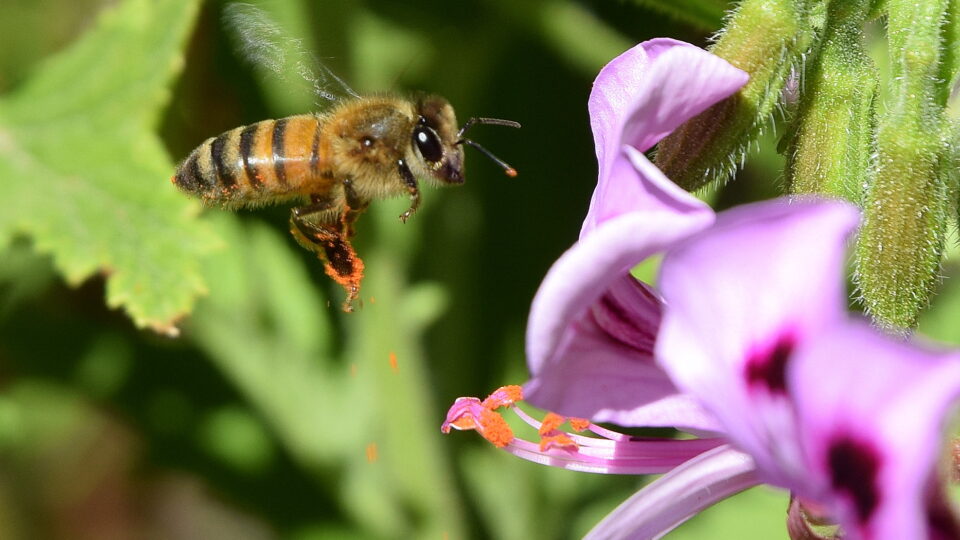
Scientists have been sounding the alarm on the global struggle of pollinators for decades.  Many recent studies have highlighted alarming declines in pollinator populations, sparking concern about the potential negative impacts on ecosystems and agriculture.  Habitat loss, invasive species, and climate change are some of the factors linked to the population declines. But most pollinator research has focused on well-studied species in easily-accessible regions.

In a new study recently published in the journal PLOS One, a research team led by Northern Arizona University compiled data on four major families of bees and butterflies to create species distribution models, allowing them to assess changes over time and space across North America.

The researchers confirmed that bee and butterfly populations are declining in major regions of North America due to ongoing environmental changes, and found that significant gaps in pollinator research limit the ability to protect these species. 

The highest species richness was found along North America’s West Coast –  especially in California. But the models showed a decline in species richness over the past century in western North America.  In contrast, the research team found disproportionate increases in eastern North America.

Comparisons with climate data indicate that the pollinator population changes are at least partly due to the impacts of climate change, including prolonged drought and habitat degradation. 

The study identifies regions of declining populations where officials can prioritize conservation efforts, and highlights how improved monitoring methods could address the knowledge gaps on pollinator populations.

**********

Web Links

Bee and butterfly records indicate diversity losses in western and southern North America, but extensive knowledge gaps remain

Bees and butterflies on the decline in western and southern North America

Photo, posted April 3, 2017, courtesy of Tracie Hall via Flickr.

Earth Wise is a production of WAMC Northeast Public Radio
Car tires in your salad

June 26, 2024 By EarthWise Leave a Comment

Leafy green vegetables may contain tire particles

There seems to be no end to the types of pollution we have introduced into the environment.  One that has only recently started to gain attention is pollution caused by vehicle tires. 

Through normal wear and tear, as vehicles drive along roadways, their tires cast off countless bits of rubber.  These particles can linger in the atmosphere or can be washed down sewage drains and into waterways.  In the water, these particles leach compounds that are toxic to wildlife.

Tires contain various chemical additives that prevent them from cracking and degrading along with various metals and other materials added to rubber and artificial rubber.  Some of these additives are acutely toxic or even carcinogenic.

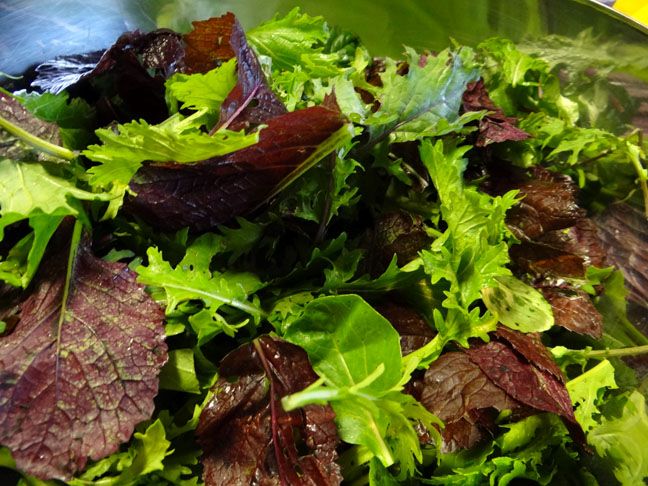
A recent study by researchers at the University of Vienna tested leafy vegetables that were grown in Switzerland, Spain, and Italy, and were sold in Swiss supermarkets.  The study also tested vegetables harvested directly from Israeli farmlands.

Tire ingredients were found in 11 out of 15 samples gathered from Swiss supermarkets and 9 out of 13 samples collected from Israeli fields.  Among these are 6PPD, a tire additive that has been identified as the cause of the extensive deaths of coho salmon on the US West Coast.

The researchers say that farmers may be introducing tire additives by irrigating crops with treated wastewater or by using sewage sludge as fertilizer.  Airborne tire particles may also be settling on farm soil.

The concentration of tire particles found in the leafy vegetables are relatively low, but it is troubling that we are eating dangerous chemicals used to improve the quality of tires.

**********

Web Links

Leafy Vegetables Found to Contain Tire Additives

Photo, posted October 14, 2014, courtesy of Green Mountain Girls Farm via Flickr.

Earth Wise is a production of WAMC Northeast Public Radio

Beware of the blob

June 20, 2024 By EarthWise Leave a Comment

For the past 10 years, there have been several occurrences of a vast expanse of ocean stretching from Alaska to California in which water temperatures are as much as 7 degrees Fahrenheit warmer than normal.  Known jocularly as “the Blob,” the phenomenon can last for several years and decimates fish stocks, starves seabirds, creates blooms of toxic algae, prevents salmon from returning to rivers, and displaces sea lions and whales.

Until recently, there was no accepted explanation for this abrupt ocean heating.  Climate change, even combined with natural cycles like El Niños, is not enough to account for it.

In depth analysis by an international team of researchers has found that the extraordinary heating is the result of a dramatic cleanup of Chinese air pollution.  The decline of smog particles, which to some extent shield the planet from the sun’s rays, has accelerated warming and set off a chain of atmospheric events across the Pacific, essentially cooking the ocean.

This is an example of what can be called the pollution paradox in which global warming is actually increased when air pollution is reduced.  Reduced air pollution on the US West Coast has even been identified as a factor contributing to increased wildfires.  However, air pollution causes more than 4 million premature deaths from cancers and respiratory and cardiovascular diseases each year. 

Nobody thinks that we should stop cleaning up the air to slow down global warming.  The only viable solution is to reduce greenhouse gas emissions as rapidly as possible.

**********

Web Links

Pollution Paradox: How Cleaning Up Smog Drives Ocean Warming

Photo, posted December 18, 2017, courtesy of SGUP via Flickr.

Earth Wise is a production of WAMC Northeast Public Radio
Canadian zombie fires

April 8, 2024 By EarthWise Leave a Comment

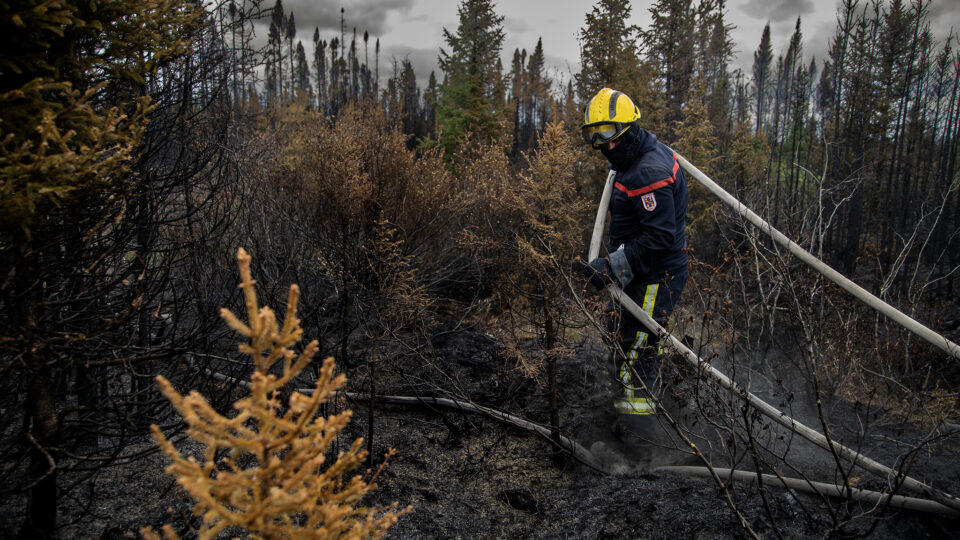
Canada’s 2023 wildfire season was the most destructive ever recorded.  Over 6,000 fires burned nearly 71,000 square miles of land from the West Coast to the Atlantic provinces.  The burned areas are roughly the size of the entire country of Finland and represent almost triple the amount burned in the previous year, which itself was a lot. Smoke from Canadian fires, particularly those in Quebec, blanketed many cities in the United States and made its way as far south as Florida.

An alarming aspect of the Canadian fire season is that it didn’t ever really end.  Late in the winter, 149 active wildfires are still burning across Canada.  92 are in British Columbia, 56 in Alberta, and one in New Brunswick.  In these places, the wildfire season is yearlong.

These overwintering fires have come to be known as zombie fires.  They burn slowly below the surface during the winter.  Many areas in the north contain porous peat and moss ground cover and these act as underground fuel for smoldering fires.

Wildfires have become more prevalent in Canada because the changing climate has brought about increases in the hot, dry, and gusty conditions that lead to drought.

Many of the zombie fires don’t pose an increased threat of triggering wildfires in the spring because they are in places that are already so charred that there is nothing left to burn.  But others are in drought areas that are basically tinder boxes ready to burst into flame once spring arrives.

Overall, Canadian government officials are warning that this year’s wildfire season is likely to be even worse than last year’s, particularly in the Western provinces of British Columbia and Alberta.

**********

Web Links

As ‘Zombie Fires’ Smolder, Canada Braces for Another Season of Flames

Photo, posted June 30, 2023, courtesy of P. McCabe / EU via Flickr.

Earth Wise is a production of WAMC Northeast Public Radio

Who’s driving electric?

April 3, 2024 By EarthWise Leave a Comment

Who's adopting electric vehicles?

Electric cars are growing in popularity around the world and are expected to represent 20% of new car sales this year.  In some places, they have a much bigger share:  38% in China and a whopping 82% in Norway.  Here in the U.S., things are more complicated.

Last year, EVs represented 8.5% of U.S. new car sales while hybrids accounted for an additional 10%.  But enthusiasm for plug-in vehicles was by no means universal or consistent across the country or across various segments of the population.

Overall, the West Coast, and especially California, dominated the electric vehicle market.  Electric vehicles accounted for more than 30% of new car sales in the San Francisco Bay Area.  In Los Angeles, the number was close to 25%.

A number of metro areas elsewhere also had strong EV sales, including Denver, Las Vegas, Washington DC, Austin, and Phoenix.  New York City had almost 10% EV registrations. 

Americans buying electric cars so far tend to be richer, younger, and more likely to live in urban areas than the average person and are often motivated by environmental concerns.  Meanwhile, about half of American adults say they are not likely to consider purchasing an EV as their next car and that figure rises to 70% for Republicans.

Lack of interest in EVs is often based on concerns about the availability of sufficient charging options or high EV prices, although those are dropping.  There is also concern about EV efficiency in colder climates, although the Norwegians clearly don’t find it to be a problem.

**********

Web Links

Electric Vehicles

Photo, posted October 18, 2021, courtesy of Chris Yarzab via Flickr.

Earth Wise is a production of WAMC Northeast Public Radio
A Dangerous Fire Season | Earth Wise

June 9, 2021 By EarthWise Leave a Comment

Drought conditions expected to cause worse fire season

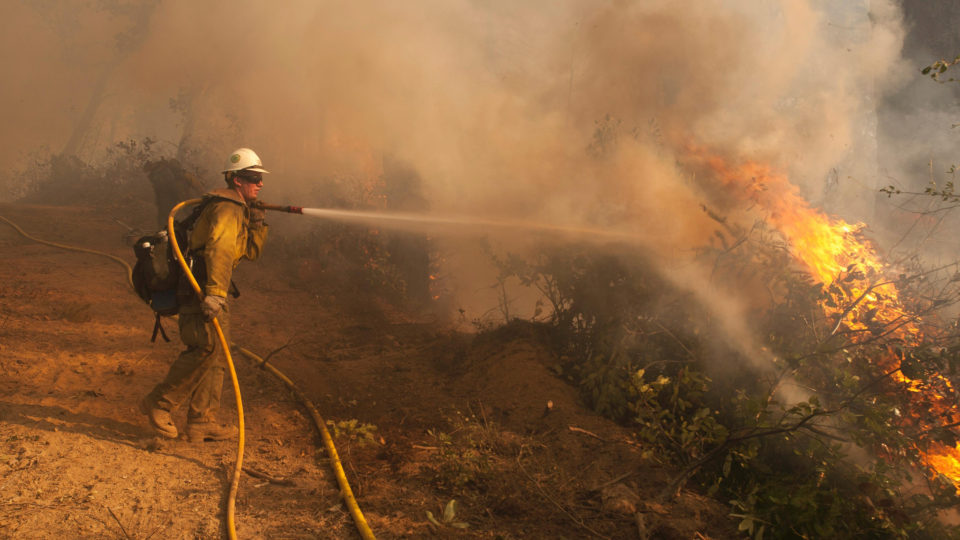
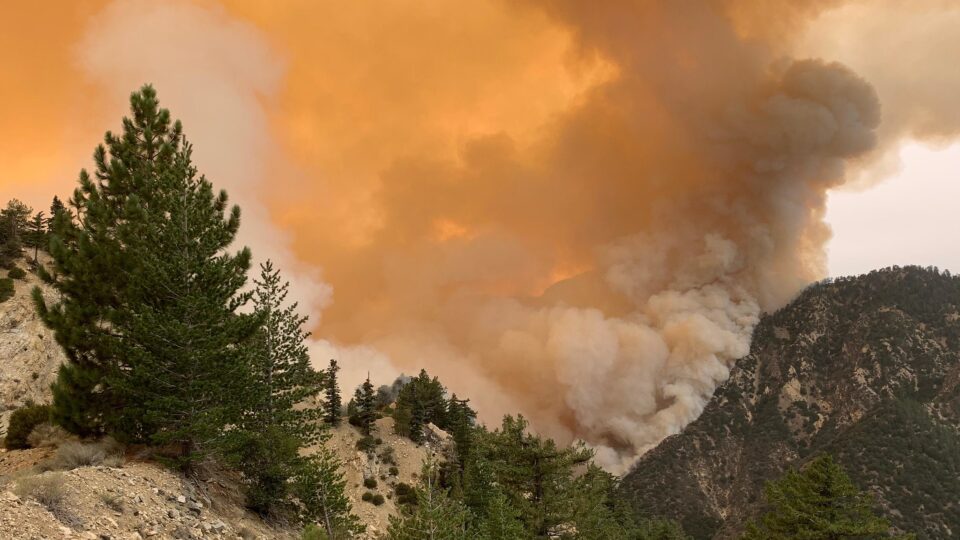
The western United States is entering the fire season under much worse drought conditions than last year.  Last year, 15,800 square miles burned in the U.S., mostly in the West.

The western U.S. is in the midst of a 20-year mega-drought.  Rainfall in the Rocky Mountains and farther west was the second lowest on record this April.  The soil in the western half of the country is the driest it has been since 1895.

The situation is particularly bad in California and the Southwest.  In March, less than a third of California was experiencing extreme or exceptional drought.  Now, 73% of the state is.  A year ago, a record-breaking fire season burned 4% of the state and, at that time, only 3% of California was in a state of extreme drought.

A year ago, no parts of Arizona, Nevada, or Utah were in extreme or exceptional drought.  Now, more than 90% of Utah, 86% of Arizona, and 75% of Nevada face severe drought conditions.  At this time last year, only 4% of New Mexico faced extreme drought but 77% does now.

These extreme drought conditions, which are believed to be linked to climate change, are causing increased tree mortality among many species, ranging from junipers in the Southwest even to drought-tolerant blue oaks in the San Francisco Bay Area.

Conditions are extremely ripe for a lot of forest fire this year.  Last year was a terrible year for wildfires in the West and we are heading into a fire season with much drier fuels than there were last year.  The risks of great damage from wildfires are higher than ever.

**********

Web Links

US West Enters Fire Season Facing Extremely Dry Conditions

Photo, posted September 18, 2020, courtesy of USFS/National Interagency Fire Center via Flickr.

Earth Wise is a production of WAMC Northeast Public Radio.

What’s Been Killing Salmon? | Earth Wise

January 5, 2021 By EarthWise Leave a Comment

the mysterious deaths of Coho salmon

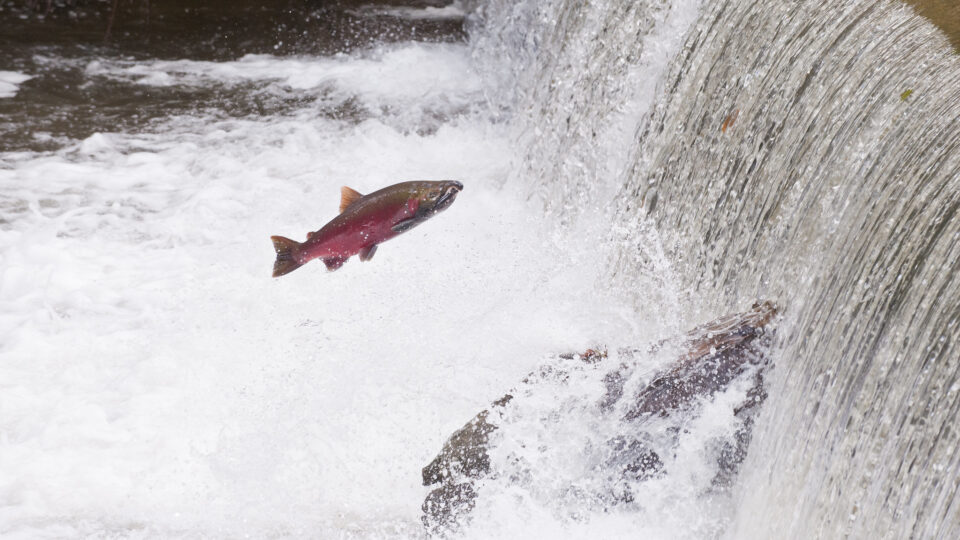
For decades, there have been mysterious deaths of Coho salmon.  The salmon return from the Pacific Ocean each year to spawn along the West Coast.   They can be found from Alaska all the way down into California.  After heavy rain events each fall, fish have been turning up dead in huge numbers before they spawn.  Normally, less than 1% of adult Coho die before spawning. In these mass death events, anywhere from 40% to 90% of fish can perish in affected streams.  The mysterious phenomenon has been the subject of intense research for years.

Recently, scientists announced that they may have solved the mystery.  There is a chemical antioxidant known as 6PPD that is used in the manufacture of tires around the world to make them last longer.  As tire treads break down over time, they leave behind bits of microplastics on roads.  The 6PPD in the plastic bits reacts with ozone to become another chemical:  a previously unreported substance called 6PPD-quinone.

That chemical turns out to be toxic to Coho salmon.  Researchers have found the presence of 6PPD-quinone in roadway water runoff samples taken from across the West Coast.  Based on these observations, they believe it is likely that exposure to this chemical is the main cause of the Coho salmon population decline.

Coho salmon are a favorite of sport fishermen and have great cultural significance to many Native American tribes on the West Coast.  The central California Coho population is classified as endangered and three other Coho populations are listed as threatened.

Tire industry representatives call the study results “preliminary” but say the industry is deeply committed to protecting the environment.  A safe chemical substitute for 6PPD is clearly needed.

**********

Web Links

Salmon have been dying mysteriously on the West Coast for years. Scientists think a chemical in tires may be responsible

Photo, posted November 17, 2011, courtesy of Lynn Ketchum/Oregon State University via Flickr.

Earth Wise is a production of WAMC Northeast Public Radio.

Spreading Like Wildfire

October 18, 2017 By EarthWise Leave a Comment

https://earthwiseradio.org/wp-content/uploads/2017/10/EW-10-18-17-Spreading-Like-Wildfire.mp3

Last July 7th, 140 wildfires started up in British Columbia, triggering a state of emergency.  By the end of the summer, more than 1,000 fires had been triggered across the Canadian province, burning nearly 3 million acres of forest, about 10 times more than the average over the past decade.

[Read more…] about Spreading Like Wildfire

Invasion Of The Sea Pickles

August 22, 2017 By EarthWise

https://earthwiseradio.org/wp-content/uploads/2017/08/EW-08-22-17-Invasion-of-the-Sea-Pickles.mp3

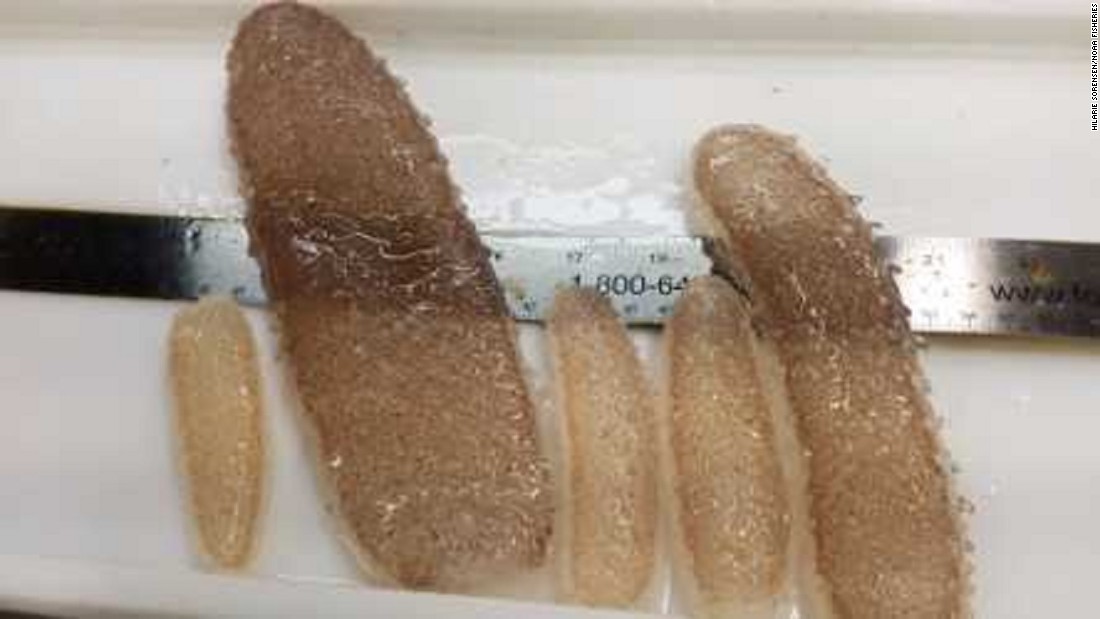
Sea pickles are translucent, tubular creatures that are usually found in tropical ocean waters.   Also known as pyrosomes, they are actually made up of many small multicellular organisms that are linked together in a tunic to form a tubelike colony that is closed on one end.

[Read more…] about Invasion Of The Sea Pickles

Floating Wind

December 6, 2016 By EarthWise

https://earthwiseradio.org/wp-content/uploads/2016/11/EW-12-06-16-Floating-Wind.mp3

Offshore wind power can supply a significant amount of energy to our hungry grid.  In many places in Europe, it is doing just that.   Here in US, it is just starting to be used in some places in the Northeast, with the first small offshore wind farm coming on line off the coast of Rhode Island.

[Read more…] about Floating Wind

Beware The Blob

February 1, 2016 By WAMC WEB

https://earthwiseradio.org/wp-content/uploads/2016/01/EW-02-01-16-Beware-the-Blob.mp3

There has been plenty of discussion of El Niño, the periodic weather phenomenon in which prevailing easterly winds in the Pacific Ocean weaken, allowing warm water to move eastward and wreak havoc with the weather in North and South America.  The current El Niño is a particularly strong one; some say it may be one of the strongest ever and are calling it the “Godzilla El Niño.”

[Read more…] about Beware The Blob

Primary Sidebar

Recent Episodes

  • An uninsurable future
  • Clean energy and jobs
  • Insect declines in remote regions
  • Fossil fuel producing nations ignoring climate goals
  • Trouble for clownfishes

WAMC Northeast Public Radio

WAMC/Northeast Public Radio is a regional public radio network serving parts of seven northeastern states (more...)

Copyright © 2026 ·