• Skip to primary navigation
  • Skip to main content
  • Skip to primary sidebar

Earth Wise

A look at our changing environment.

  • Home
  • About Earth Wise
  • Where to Listen
  • All Articles
  • Show Search
Hide Search
You are here: Home / Archives for watersheds

watersheds

Palm oil and water quality

June 3, 2024 By EarthWise Leave a Comment

Palm oil is the world’s cheapest and most widely used vegetable oil.  In fact, more than 86 million tons of palm oil was consumed last year alone.  Even though few of us cook with it, palm oil can be found in approximately half of all packaged grocery items – everything from ice creams and pizzas to detergents and cosmetics. 

This massive global demand for palm oil is driving tropical deforestation around the world.  While many studies have shown how converting rainforests to oil palm plantations causes biodiversity loss, researchers from UMass Amherst are the first to demonstrate how these plantations also cause wide-ranging disturbances to nearby watersheds.

In the study, which was recently published in the journal Science of the Total Environment, the research team focused on the Kais River watershed of West Papua, a province in the far east of Indonesia.  Approximately 25% of the watershed has been turned into oil palm plantations. The watershed is also one of the oldest continually inhabited homes for different groups of Indigenous Papuans.

The researchers found that the conversion of tropical rainforest to oil palm plantation has increased precipitation, runoff, and soil moisture. Water quality in the watershed has also gotten dramatically worse: sedimentation has increased by 16.9%, nitrogen by 78.1%, and phosphorus by 144%.

The research team hopes regulators will work to limit the use of pesticides, conduct continuous water quality monitoring, and ensure that downstream communities have access to water quality information. 

**********

Web Links

Oil Palm Plantations Are Driving Massive Downstream Impact to Watershed

Photo, posted December 13, 2008, courtesy of Fitri Agung via Flickr.

Earth Wise is a production of WAMC Northeast Public Radio
Flower power in agriculture

January 5, 2024 By EarthWise Leave a Comment

Agriculture is the world’s largest industry.  When managed sustainably, agricultural operations can provide many environmental benefits, such as protecting watersheds and habitats, and improving soil health and water quality.  Sustainable agriculture also embraces biodiversity by minimizing its impact on wild ecosystems and incorporating numerous plant and animal varieties into farm ecosystems.

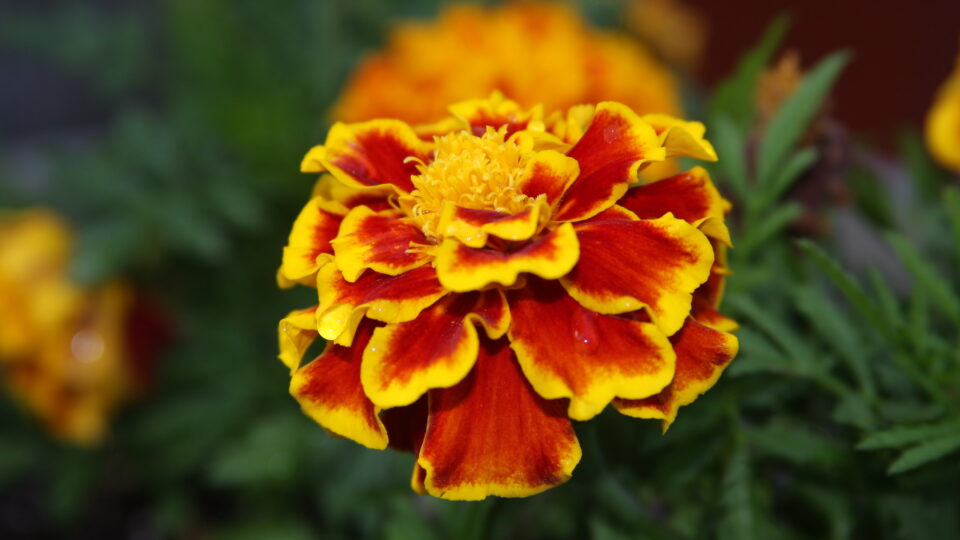
A new study of farms in India has demonstrated the power of incorporating flowers into farming practices.  According to the research by ecologists from the University of Reading in the U.K. and the M.S. Swaminathan Research Foundation in India, planting flowers beside food crops attracts bees, boosts pollination, and improves both the yield and quality of crops.

 The study, which was recently published in the Journal of Applied Ecology, is the first of its kind in India.  The researchers focused on moringa – which is a nutrient-packed superfood native to South India, and bees – the plants’ essential pollinators. 

Working alongside farmers, the researchers planted marigold and red gram crops alongside moringa trees across 12 moringa orchards.  They found that flower-visiting insect numbers and diversity were 50% and 33% higher, respectively, in orchards with floral interventions compared to those without them.  Floral interventions also led to larger moringa pods and a 30% increase in harvestable fruits.

India has many crops of high economic and nutritional value.  The study highlights how farmers can significantly improve crop pollination services and boost yields, while also managing their lands in a more sustainable manner.

**********

Web Links

Flower power on Indian farms helps bees, boosts livelihoods

Floral interventions on farms boost pollinators and crop yields

Photo, posted June 24, 2008, courtesy of Jim via Flickr.

Earth Wise is a production of WAMC Northeast Public Radio
Beavers As Climate Change Fighters | Earth Wise

October 25, 2022 By EarthWise Leave a Comment

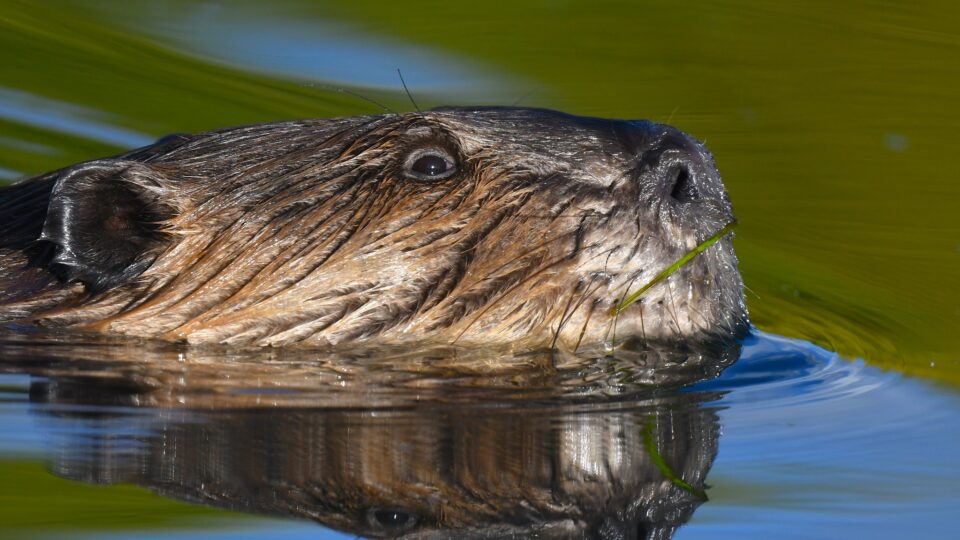
California is fighting the effects of climate change on multiple fronts.  The state has been grappling with relentless drought, record heat waves, and persistent wildfires.  The California Department of Fish and Wildlife is enlisting the help of beavers in its battle against climate change.

The state has created a beaver restoration unit charged with developing methods for nature-based restoration solutions involving beavers as well as artificial beaver dams. The agency plans to spend at least $3 million over the next two years to oversee a restoration program for the North American beaver.

A 2020 study showed that beaver-dammed corridors were relatively unharmed by wildfires compared with other areas that lacked beaver damming.  The study highlighted the differences between two adjacent corridors – one without a beaver population with a landscape scarred by a recent wildfire and another with beavers that remained a lush wetland after a fire.   The differences in burn severity, air temperature, humidity, and soil moisture between the beaver complex and the adjacent landscape were huge. 

From the 1920s through the 1950s, California actively exported beavers to other parts of the state and country so they could build dams in eroded areas where beaver dams could help evenly distribute water.  Now, the state wants to reintroduce beavers into watersheds where they once flourished.

The Department of Fish and Wildlife’s proposal to the California Legislature called beavers an important keystone species that can be used to combat climate change.   The state has spent enormous amounts of money on wildfire measures with minimal results.  Now they are going to see if beavers can make a difference.

**********

Web Links

California says the beaver can be superhero in fighting climate change

Photo, posted September 19, 2021, courtesy of Larry Lamsa via Flickr.

Earth Wise is a production of WAMC Northeast Public Radio
Wildfires And The Water Supply

November 12, 2018 By EarthWise Leave a Comment

https://earthwiseradio.org/wp-content/uploads/2018/10/EW-11-12-18-Wildfires-and-the-Water-Supply.mp3

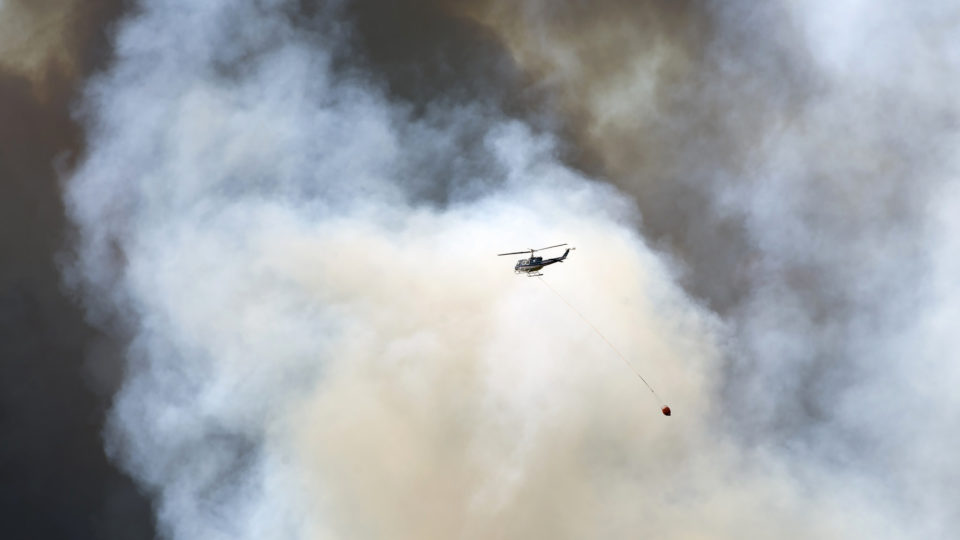
Hotter and dryer conditions are leading to an increasing number of wildfires in North America and elsewhere around the world.  The damage they cause is well-known.  But one aspect of that damage that tends to be overlooked is the impact on aquatic environments and drinking water supplies.

[Read more…] about Wildfires And The Water Supply

Global Warming And The Nitrogen Problem

September 13, 2017 By EarthWise

https://earthwiseradio.org/wp-content/uploads/2017/09/EW-09-13-17-Global-Warming-and-the-Nitrogen-Problem.mp3

Excess nitrogen in the environment is a big problem.  The most visible aspect of the problem is the spread of toxic algae blooms in oceans, lakes and other bodies of water.  But there are other effects as well such as unwanted alterations to ecosystems.

[Read more…] about Global Warming And The Nitrogen Problem

Terrestrial Plants and Lake Ecosystems

May 4, 2017 By EarthWise

https://earthwiseradio.org/wp-content/uploads/2017/05/EW-05-04-17-Terrestial-Plants-and-Lake-Ecosystems.mp3

Most of the planet’s freshwater stores are found in the northern hemisphere, a region that is changing rapidly in response to human activity and shifting climate trends. A recent study analyzed 147 northern lakes and found that many rely on nutrients from tree leaves, pine needles, and other land-grown plants to feed aquatic life.

[Read more…] about Terrestrial Plants and Lake Ecosystems

Lessons From The Forest

July 29, 2016 By WAMC WEB

https://earthwiseradio.org/wp-content/uploads/2016/07/EW-07-29-16-Lessons-From-The-Forest.mp3

For more than half a century, scientists have converged on Hubbard Brook Experimental Forest in New Hampshire’s White Mountains to explore how forest ecosystems work.  The site was established by the U.S. Forest Service to study the relationship between forests and New England’s water supply. In the 1960s, inquiry was expanded to include ecology, biogeochemistry, and studies of birds and other animals.

[Read more…] about Lessons From The Forest

Primary Sidebar

Recent Episodes

  • An uninsurable future
  • Clean energy and jobs
  • Insect declines in remote regions
  • Fossil fuel producing nations ignoring climate goals
  • Trouble for clownfishes

WAMC Northeast Public Radio

WAMC/Northeast Public Radio is a regional public radio network serving parts of seven northeastern states (more...)

Copyright © 2026 ·