• Skip to primary navigation
  • Skip to main content
  • Skip to primary sidebar

Earth Wise

A look at our changing environment.

  • Home
  • About Earth Wise
  • Where to Listen
  • All Articles
  • Show Search
Hide Search
You are here: Home / Archives for water

water

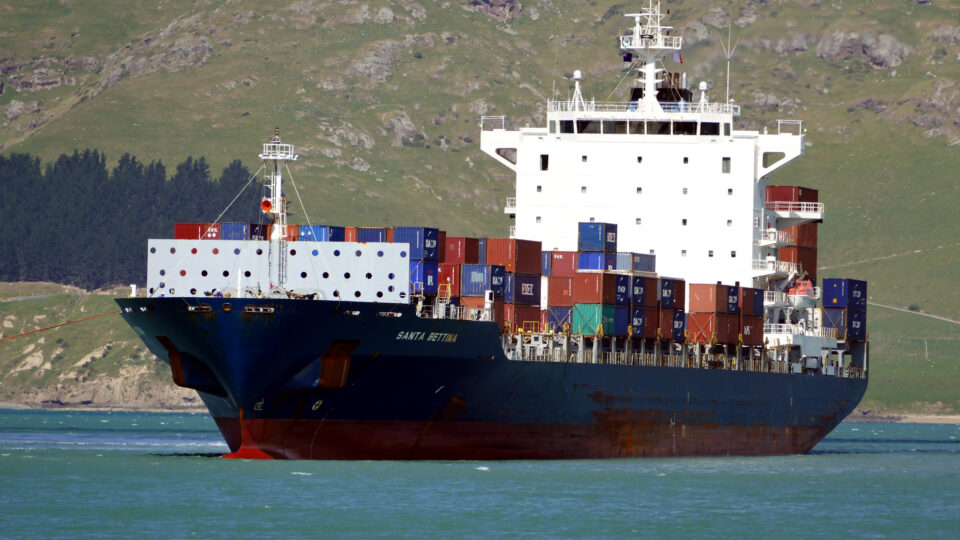
Powering Future Ships By Wind | Earth Wise

April 25, 2023 By EarthWise Leave a Comment

An innovative project out of the UK seeks to reduce carbon emissions at sea by retrofitting large ocean vessels with ultramodern wing-sails to reduce the amount of fuel required to travel the oceans.

Powering ships by wind is certainly nothing new.  However, almost every large ship today is powered entirely by fossil fuels.  A company called Smart Green Shipping has developed retrofit wing-sails called FastRigs that can be installed on existing vessels to reduce fuel consumption. They are also working on additional wind-based technology that can supply all the power required for ships.

FastRig technology is designed to be retrofitted to existing commercial vessels with available deck space – typically bulkers and tankers.  There are about 40,000 such ships that are suitable for conversion to this hybrid power system.  Installing FastRigs is estimated to reduce greenhouse gas emissions by at least 20%.

The company and the UK’s University of Southampton have been funded to investigate the potential of the technology to reduce emissions from existing ships.  The research project will develop software tools to investigate the complex interactions between the wing-sails and ship hydrodynamics to accurately assess the impact on vessel performance.  The software tools will be able to predict the fuel savings delivered by wing-sails.

Smart Green Technologies is developing technology for 100% renewable-powered, new-build ships.  The goal is to create quieter, emission-free ships in the future that do no harm to ocean environments and improve air quality in ports, towns, and cities.  Wind power harnessed using sophisticated digital software and advanced engineering represents a promising way to reduce fuel consumption and related emissions from large ocean vessels.

**********

Web Links

Future ships could be powered by wind to fight climate change

Photo, posted October 27, 2017, courtesy of Bernard Spragg via Flickr.

Earth Wise is a production of WAMC Northeast Public Radio
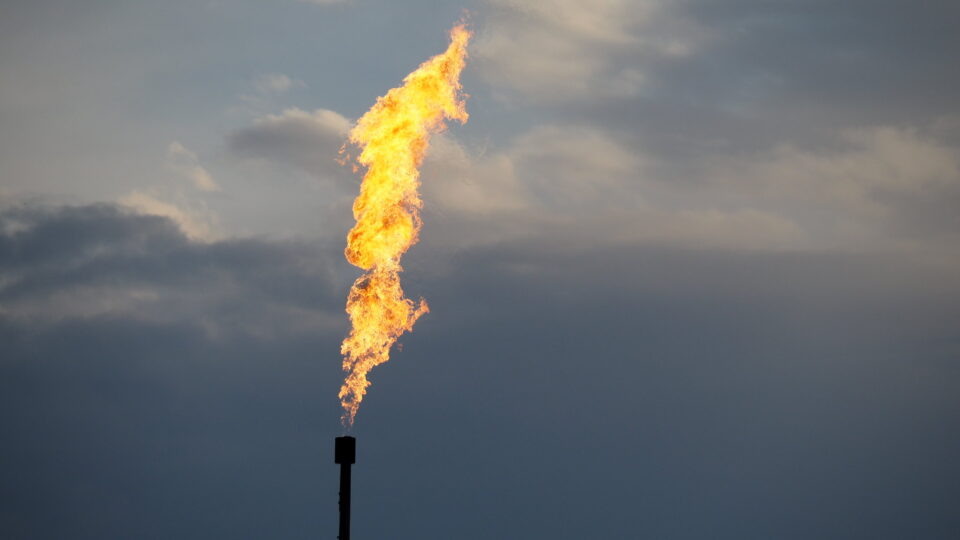
Hydrogen And The Methane Problem | Earth Wise

April 24, 2023 By EarthWise Leave a Comment

Theoretically, hydrogen could be the fuel of the future.  It is the most common element in the universe and its combustion produces no harmful emissions.  Most industrial hydrogen comes from a process called steam reforming that extracts it from natural gas – basically methane.  Carbon dioxide is a byproduct of the process.   But it is also possible to get hydrogen by breaking down water resulting only in oxygen as a byproduct.   There is a great deal of ongoing development of so-called green hydrogen.

New research from Princeton University and the National Oceanic and Atmospheric Administration has uncovered a potential problem associated with the use of hydrogen as a clean fuel. 

There is a molecule in the atmosphere called the hydroxyl radical.  It is known as “the detergent of the troposphere”.  It plays a critical role in eliminating greenhouse gases such as methane and ozone from the atmosphere.  It turns out that the hydroxyl radical also reacts with any hydrogen gas in the atmosphere and there is only so much hydroxyl to go around.  If large amounts of hydrogen were to enter the atmosphere, much of the hydroxyl radical would be used up reacting with it and there would be much less available to break down methane.  As a result, there would end up being more methane in the atmosphere, and methane is a powerful greenhouse gas.

The bottom line is that there would need to be proactive efforts to limit the amount of hydrogen getting into the atmosphere whether from producing it, transporting it, or anyplace else in the value chain.  Otherwise, the hydrogen economy would cancel out many of the climate benefits of eliminating fossil fuels.

**********

Web Links

Switching to hydrogen fuel could prolong the methane problem

Photo, posted June 12, 2021, courtesy of Clean Air Task Force via Flickr.

Earth Wise is a production of WAMC Northeast Public Radio

Protecting New York City From Flooding | Earth Wise

April 21, 2023 By EarthWise Leave a Comment

Hurricane Sandy flooded Lower Manhattan in October 2012, closing Wall Street, blacking out power for 250,000 people, and killing 44 New Yorkers.  Within a year, plans were in motion to build berms, floodwalls, and water gates along the city’s Lower East Side in a $770 million first phase of an overall plan to defend New York City from future floodwaters.

Plans got more and more complicated, and the price tag reached $1.45 billion before the existing plan was scrapped by former Mayor Bill de Blasio’s administration in 2018 without involving the community groups that were instrumental in creating the original plan.  After years of lawsuits and court actions, the revised East Side Coastal Resiliency Project is finally proceeding, now at a price tag approaching $3 billion. The project will include 18 moveable floodgates and will protect 110,000 New Yorkers, including 28,000 low-income public-housing residents and is expected to be completed in 2026.

The original larger overall plan was halted in 2020 after former President Trump mocked it and claimed that it would cost $200 billion.  The current plan, created by the U.S. Army Corps of Engineers and known as the 3B alternative, calls for a combination of deployable flood barriers, floodwalls, seawalls, and elevated promenades wrapping around the lower part of Manhattan.  The cost of the project is estimated to be $61 billion. 

In the meantime, over 10 years after Sandy, a similar storm would have almost the same effect today as Sandy had back then.

**********

Web Links

New York City Begins Its Climate Change Reckoning on the Lower East Side, the Hard Way

Photo, posted January 19, 2013 courtesy of Andres Alvarado via Flickr.

Earth Wise is a production of WAMC Northeast Public Radio

Pulling Carbon Dioxide Out Of Seawater | Earth Wise

April 17, 2023 By EarthWise Leave a Comment

Researchers are developing method to pull CO2 out of seawater

The world’s largest sink for carbon dioxide from the atmosphere is the ocean.  The world’s oceans soak up 30-40% of all the gas produced by human activities.  Dissolving carbon dioxide in water produces carbonic acid.   This is the reason that oceans are becoming increasingly acidic, which is causing serious damage to ocean ecosystems.

There are many efforts underway aimed at directly removing carbon dioxide from the air as a way to mitigate the effects of ongoing emissions.  But another possibility is to remove CO2 directly from ocean water.  Existing methods for doing it involve the use of expensive membranes and complex chemicals. The economics of such methods are quite unfavorable.

Recently, a team of researchers at MIT has identified what they claim is a truly efficient and inexpensive removal mechanism. It involves a reversible process based on membrane-free electrochemical cells.  Electrodes in the cells release protons that are introduced to seawater which drive the release of carbon dioxide dissolved in the water. The carbon dioxide can be collected and the processed water ends up being alkaline.

Running this process at a site that is already collecting seawater – such as at a desalination plant – would be an effective way to collect carbon dioxide as well as help mitigate ocean acidification.

Once the carbon dioxide is removed from the water, it still needs to be disposed of, just as is the case for other carbon removal processes.  It could be turned into useful chemicals or it could be stored in underground caverns.  But this approach is fairly unique in that the carbon dioxide has already been captured by the ocean.  The issue remains what to do with it.

**********

Web Links

How to pull carbon dioxide out of seawater

Photo, posted January 19, 2016, courtesy of Judy Dean via Flickr.

Earth Wise is a production of WAMC Northeast Public Radio
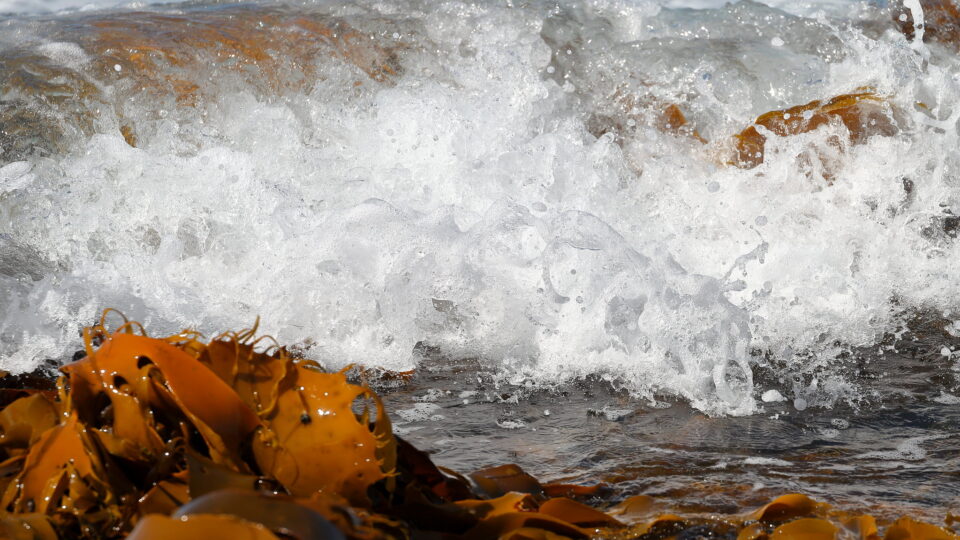
Help For Kelp | Earth Wise

April 10, 2023 By EarthWise Leave a Comment

Sea urchins and climate change is devastating ocean kelp

The warming of the oceans has been causing the decimation of kelp forests.  The thick canopies covering coastal ocean regions have been wilting in warmer and nutrient-poor water.  Making matters much worse has been the explosion in population of sea urchins that thrive in warmer water.  The urchins gobble up the kelp, often resulting in so-called urchin barrens, largely devoid of life.

Kelp are considered a foundation species that occupy nearly half of the world’s marine ecoregions.  They thrive in cold water, where they form large underwater forests that provide essential habitat, food, and refuge for many species.  Kelp are often harvested for use in products ranging from toothpaste and shampoo to puddings and cakes.  Including the other services kelp provide, they are associated with billions of dollars in value annually.

On the North American Pacific Coast, a species of sea star consumes sea urchins.  However, these creatures are critically endangered. A marine wildlife epidemic known as sea star wasting syndrome, which began 10 years ago, has killed off more than 90% of the sunflower sea star population.   A new study by researchers at Oregon State University looked at the ability of sea stars to control sea urchin populations.

Lab experiments showed that sea stars consume urchins at a rate sufficient to maintain and possibly even restore the health of kelp forests.  The study shows that there is a clear link between the population crash of sea stars, the explosion in sea urchin populations, and the decline in kelp.

The study’s authors are calling for active management and a coordinated sea star recovery program to try to deal with the effects of a disease whose cause has not been determined.

**********

Web Links

Sea stars able to consume kelp-eating urchins fast enough to protect kelp forests, research shows

Photo, posted December 14, 2015, courtesy of Ed Dunens via Flickr.

Earth Wise is a production of WAMC Northeast Public Radio

Spiders And Pest Control | Earth Wise

April 5, 2023 By EarthWise Leave a Comment

Using spiders as pest control in agriculture

Climate change facilitates the spread of invasive pest species by expanding their habitable environment ranges.  In conventional agriculture, farmers depend on chemical pesticides to control agricultural pests.  But 99% of all synthetic chemicals, including pesticides, are made from fossil fuels, and turning petrochemicals into pesticides requires massive amounts of energy.  These chemical pesticides also pollute the air and water, and destroy biodiversity by killing many non-target species as well.  

According to new research led by scientists from the University of Portsmouth in the U.K., groups of spiders could be used as an environmentally-friendly way to protect crops against agricultural pests.  The study, which was recently published in the journal Insects, suggests that web-building groups of spiders can be used to control populations of the tomato leafminer moth, a devastating pest of commercially important crops like tomatoes and potatoes.

The research team explored the use of tropical tent spiders for this pest control.  They are found in colonies around the world, and their range overlaps with regions of moth infestations, including Mediterranean Europe, Africa, Asia, and the Middle East.

In lab settings, different types of prey were introduced to colonies of spiders of varying body sizes.  The research team found that the larger spiders built larger webs and caught more prey, including tomato leafminer moths and fruit flies.   

Tropical tent spiders could be an effective and climate-friendly way to control flying insect pests.  However, more research is needed to ensure that these spiders don’t negatively impact crop pollination by also catching pollinators.

**********

Web Links

Using spiders as environmentally-friendly pest control

Photo, posted June 10, 2018, courtesy of Lies Van Rompaey via Flickr.

Earth Wise is a production of WAMC Northeast Public Radio
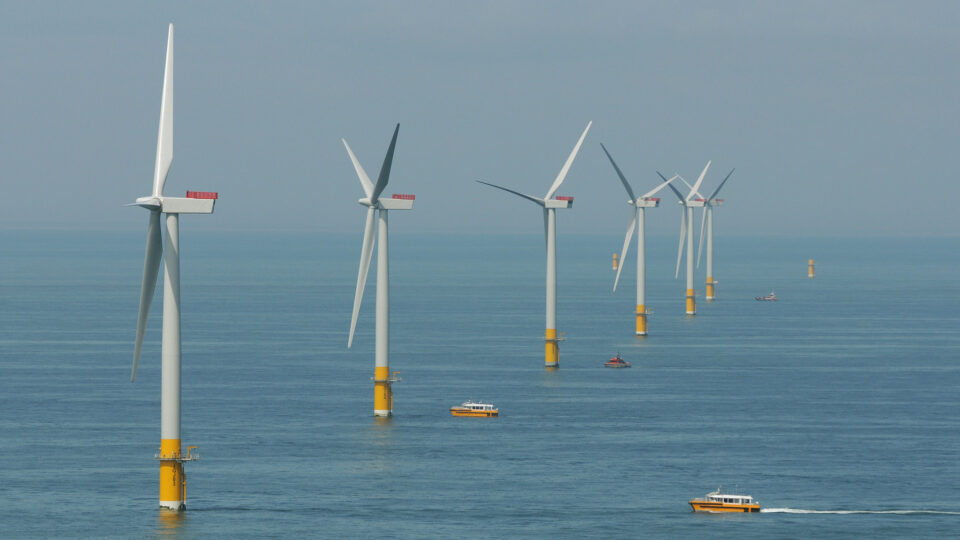
Offshore Wind In The Gulf Of Mexico | Earth Wise

April 4, 2023 By EarthWise Leave a Comment

The U.S. pursuing offshore wind development in the Gulf of Mexico

The US has a goal of deploying 30 GW of offshore wind energy capacity by 2030.  This is an ambitious goal given that the current installed offshore wind capacity in the US is a total of seven turbines capable of generating just 42 megawatts of power.  So, there is a long way to go in a relatively short amount of time.

Since 2021, the Bureau of Ocean Energy Management, a division of the Department of the Interior, has held three offshore wind lease auctions, which grant rights to developers to install offshore wind in specific marine areas.  The first two auctions involve sites in the northeast, including areas in New York.  The third auction, held last December, offered sites off the California Coast – the first US sites in the Pacific.

In February, the Department of the Interior proposed a new offshore wind lease sale in the Gulf of Mexico.  It identified a 102,480-acre area off the coast of Louisiana, and two similar-sized areas offshore from Galveston, Texas.

The proposal is now in a 60-day period of seeking public comments before deciding whether to move ahead with the sale.  As was the case for the other lease auctions, there would stipulations associated with accepted bids including efforts to build up domestic industry for the supply chain and labor force.  There would also be requirements to establish and contribute to a fisheries compensatory mitigation fund to address any potential negative impacts to the fishing industry.

About two-thirds of offshore wind resources in the US are located in deep-water areas that will require floating platforms.  A federal program called Floating Offshore Wind Shot has the goal of developing cost-effective technology for this purpose.

**********

Web Links

Gulf of Mexico may be next up for offshore wind leases

Photo, posted May 13, 2011, courtesy of the Department of Energy and Climate Change via Flickr.

Earth Wise is a production of WAMC Northeast Public Radio
Coastal Land Reclamation | Earth Wise

April 3, 2023 By EarthWise Leave a Comment

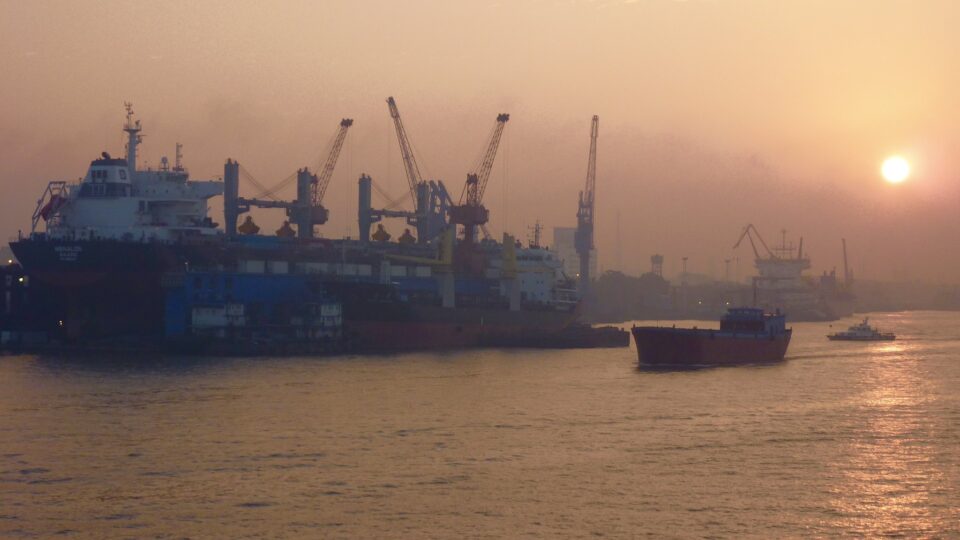
People are artificially expanding the coastlines of cities by extending industrial ports and creating luxury residential waterfronts.  Major cities have added 900 square miles to their coastlines just since 2000. 

A recent study published in the journal Earth’s Future made use of satellite imagery to analyze land changes in 135 cities with populations of at least 1 million.  But population growth is not the only driver of coastal land reclamation.  It is popular in places that are eager to enhance their reputation and promote revenue growth.

At present, coastal land reclamation is most common in the Global South, where many economies are growing. In the past, the Global North dominated the use of coastal land construction.

The largest additions to land area occurred in China, Indonesia, and the United Arab Emirates.  Port extension is the most common reason for development.  Shanghai alone has added 135 square miles of land.

New land is typically created by piling sediments in the ocean, building cement sea walls and structures to contain sediments or cement, or sometimes filling in wetlands and other shallow areas of water near the coast.  The ecological impacts of reclamation are immense and, unfortunately, are not always considered.  Projects affect both the local ecosystems as well as those of the places where fill materials are obtained.

Industrialization and the need for urban space have driven much coastal reclamation.  Some projects, such as the palm-tree-shaped artificial islands of Dubai, are essentially for prestige.  Some cities, including Shanghai, are building new land in consideration of future sea level rise.

**********

Web Links

New Land Creation on Waterfronts Increasing, Study Finds

Photo, posted October 15, 2010, courtesy of Werner Bayer via Flickr.

Earth Wise is a production of WAMC Northeast Public Radio
Dangers Of Melting Glaciers | Earth Wise

March 31, 2023 By EarthWise Leave a Comment

The dangers posed by melting glaciers

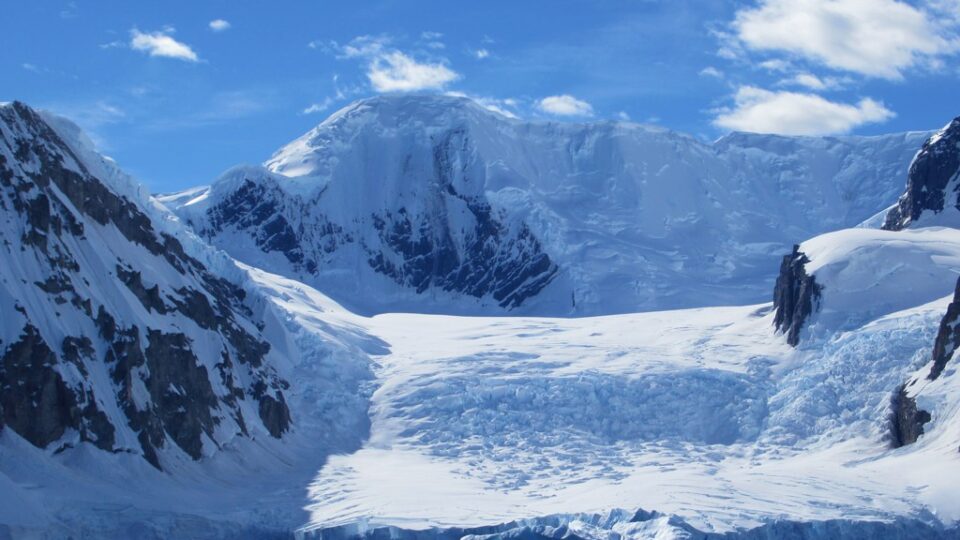
Some of most dramatic evidence that the Earth’s climate is warming is the retreat and even disappearance of mountain glaciers around the world.  2022 was the 35th year in a row that glaciers tracked by the World Glacier Monitoring Service lost rather than gained ice.  Glaciers gain mass through snowfall and lose mass through melting and sublimation (water evaporating directly from solid ice.)  Some glaciers that terminate in lakes or the ocean lose mass through iceberg calving.

In the warming climate, glaciers retreat and meltwater collects at the front of the glacier forming a lake.  Such lakes can suddenly burst and create a fast-flowing Glacier Lake Outburst Flood that can spread over a large distance from the original site – in some cases over 70 miles.  These floods can damage property, infrastructure, and agricultural land and can also be deadly.

The number of glacial lakes has grown rapidly since 1990 as a result of climate change.  According to research by an international team of scientists led by Newcastle University in the UK, the number of people living in glacial lake catchments has increased significantly.

According to the study, 15 million people live within 30 miles of a glacial lake.  The highest danger is in High Mountain Asia – which encompasses the Tibetan Plateau.  That area, which spans from Kyrgyzstan to parts of China, has 9.3 million people potentially at risk.  India and Pakistan have around 5 million exposed people.

Detailed analysis shows that it is not the areas with the largest number or most rapidly growing lakes that are most dangerous.  It is the number of people in proximity to the lakes and their ability to cope with potential floods.

**********

Web Links

Glacial flooding threatens millions globally

Photo, posted February 12, 2022, courtesy of David Stanley via Flickr.

Earth Wise is a production of WAMC Northeast Public Radio

Protecting Wetlands | Earth Wise

March 28, 2023 By EarthWise Leave a Comment

Wetlands are distinct ecosystems that are flooded or saturated by water, either permanently or seasonally.  They include mangroves, marshes, swamps, forested wetlands, bogs, wet prairies, and vernal pools.   The feature that most wetlands share is soil or substrate that is at least periodically saturated with or covered by water.

Wetlands are some of the most threatened ecosystems in the world.  While wetlands can be affected by a variety of natural stressors, including erosion, droughts, and storms, human activities have been the major driver of wetland decline. 

But according to a new study by researchers from McGill University in Canada, the global loss of wetland areas since 1700 has likely been overestimated.  The research team calculated that the area of wetland ecosystems around the world has declined 21-35% since 1700 as a result of human activities – far less than the 50-87% decline estimated in other studies.  The study’s focus beyond regions with historically high wetland losses and its avoidance of possibly misleading extrapolations likely resulted in the lower estimate.      

According to the study, which was published in the journal Nature, more than 2.1 million square miles of wetlands have been lost during the past 300 years – an area roughly the size of India.  The five countries with the highest wetland losses are the United States, China, India, Russia and Indonesia. 

But discovering that fewer wetlands have been historically lost than previously thought gives researchers a second chance to protect wetlands.  The findings of the study will help researchers prioritize global conservation and restoration actions.

**********

Web Links

A second chance to protect wetlands

Photo, posted February 2, 2005, courtesy of Jan Tik via Flickr.

Earth Wise is a production of WAMC Northeast Public Radio
Self-Deicing Roads | Earth Wise

March 23, 2023 By EarthWise Leave a Comment

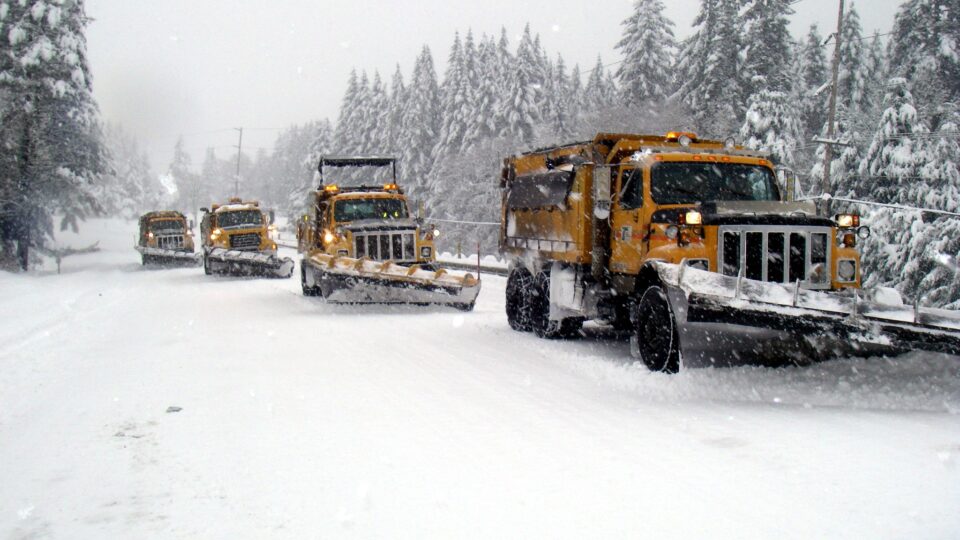
Driving on snowy or icy roads can be pretty dangerous.  That is why roads are salted or coated with sand to provide traction in icy weather.  But excessive use of these substances is bad for the environment and sometimes a storm will blow in before the roads can be coated.

In a paper published in the American Chemical Society Journal ACS Omega, researchers in China describe a method of adding microcapsules filled with a chloride-free salt mixture to the asphalt with which roads are paved.  The idea is to provide the road itself with long-term snow melting capabilities.

The researchers prepared a sodium-acetate salt and combined it with a surfactant, silicon dioxide, sodium bicarbonate, and blast furnace slag, which is a waste product from power plants.  The substances were reduced to a fine powder and then coated with a polymer solution to form tiny microcapsules.  The microcapsules were then used to replace some of the standard mineral filler in asphalt.

Lab experiments showed that the special additive lowered the freezing point of water on the asphalt to -6 degrees Fahrenheit.   The researchers estimated that a 2-inch-thick layer of the anti-icing asphalt would be effective at melting snow for seven or eight years.  A real-world pilot test of the coating on a highway offramp showed that it melted snow that fell on the road whereas an uncoated road required snow removal operations.

According to the researchers, given the cost of materials used for the coating and its potential useful lifetime, it could be a practical and economic enhancement for wintertime snow and ice removal.  Maybe we’ll someday have roads that can fairly often deice themselves. 

**********

Web Links

Keeping drivers safe with a road that can melt snow, ice on its own

Photo, posted April 8, 2007, courtesy of the Oregon Department of Transportation via Flickr.

Earth Wise is a production of WAMC Northeast Public Radio

Sea Level Rise And Global Security | Earth Wise

March 22, 2023 By EarthWise Leave a Comment

Recently, United Nations General Secretary Antonio Guterres addressed the U.N. Security Council on the issue of the security threats created by rising sea levels. In the past, some members of the Security Council – notably Brazil, China, Russia, and at times, India – have argued that the U.N.’s climate program should address such issues and that the Security Council doesn’t have a mandate or the expertise to consider the issue.   The underlying problem is that by addressing the security issues created by rising seas, other sensitive geopolitical issues might come to the forefront.

Guterres’ speech focused on the real possibility that rising seas could disrupt and destabilize global societies unless there is an organized international effort to get ahead of the problem.  Major cities facing serious impacts from rising seas include Cairo, Lagos, Bangkok, Jakarta, Mumbai, Shanghai, Copenhagen, London, Los Angeles, New York, and Buenos Aires, among others.

In all, Guterres said that the danger is most acute for about 900 million people living in low-lying coastal areas.  Some countries, particularly small island developing countries, could disappear entirely.

The world is already facing refugee crises related to politics, warfare, and extreme weather.  The flood of refugees created by rising seas could be biblical in magnitude.

The confluence of climate change and global security is growing steadily.  As the global body primarily responsible for maintaining international peace and security, the U.N. Security Council cannot duck this issue much longer.  It has a critical role to play in building the political will required to address the security challenges looming from rising seas.

**********

Web Links

Sea Level Rise Could Drive 1 in 10 People from Their Homes, with Dangerous Implications for International Peace, UN Secretary General Warns

Photo, posted July 19, 2021, courtesy of Face of the World via Flickr.

Earth Wise is a production of WAMC Northeast Public Radio
Great Salt Lake In Danger | Earth Wise

March 20, 2023 By EarthWise Leave a Comment

Great Salt Lake is threatened by the changing climate

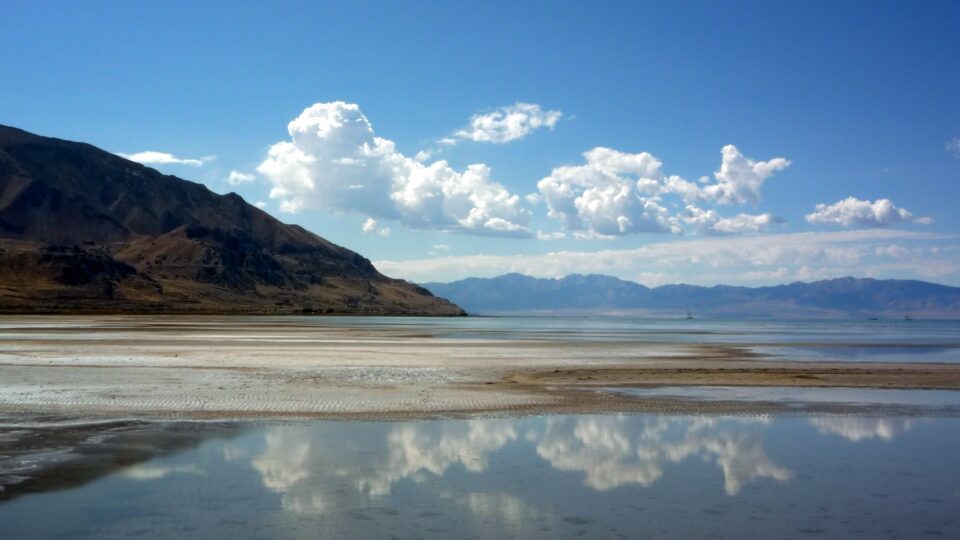
Utah’s Great Salt Lake has been plagued by excessive water use and extensive drought conditions.  As of January, the lake dropped to record-low water levels, losing 73% of its water and exposing 60% of its lakebed. According to scientists, the lake could disappear entirely within five years.

Great Salt Lake is what is known as a “terminal lake,” which means that it is fed only by rain, snow, and runoff and has no rivers that take water to the ocean.  As a result, salt and minerals build up over time.  With so much salt in the water, only brine flies and shrimp can survive in it.  The unique ecosystem supports 10 million migratory birds.  As the lake continues to dry up, the water is becoming too salty for even algae and microbes to survive.  With shallow mud replacing previous shallow water, the nests of the 80,000 white pelicans that annually come to the lake are endangered by predators that can simply walk over to the eggs.

The historic low water levels have exposed 800 square miles of lakebed.  This lakebed holds centuries of natural and manmade toxins like mercury, arsenic, and selenium.  The exposed mud ultimately turns to dust that is carried off into the air.  This is contributing to what is already some of the worst winter air pollution in the nation.  Scientists warn that the unfolding ecological disaster may become a human health disaster.

State officials and university researchers have formed a “Great Salt Lake Strike Team” looking for ways to get more water to the lake.  There are a number of so-called moonshot proposals to save the lake.  It remains to be seen what will be done, but the clock is ticking.

**********

Web Links

Great Salt Lake will disappear in 5 years without massive ‘emergency rescue,’ scientists say

Scientists fear a Great Toxic Dustbowl could soon emerge from the Great Salt Lake

Photo, posted September 19, 2009, courtesy of John Morgan via Flickr.

Earth Wise is a production of WAMC Northeast Public Radio

Mining Metals From Water | Earth Wise

March 14, 2023 By EarthWise Leave a Comment

Researchers at the Department of Energy’s Pacific Northwest National Laboratory in Richland, Washington are working with industry to develop a method of extracting valuable materials from various sources of water.  The technique is the 21st-century equivalent of panning for gold in rivers and streams.

The patent-pending technology makes use of magnetic nanoparticles that are surrounded by an absorbent shell that latches on to specific materials of interest that are found in certain water sources.  These sources could include water in geothermal power plants (known as geothermal brines), water pulled from the subsurface during oil or gas production, or possibly effluents from desalination plants.  Extracting valuable materials from geothermal brines could greatly enhance the economics of geothermal power plants.

The initial focus of the development is on lithium, which is an essential element in many high-technology applications, especially in the batteries that power cell phones, computers, and electric cars.  The global market for lithium is projected to reach over $8 billion a year by 2028 and very little of it is currently produced in the United States.

The tiny particles are added to the water and any lithium is drawn out of the water and is bound to them.  Using magnets, the nanoparticles can be readily collected.  Once the particles are no longer suspended in liquid, the lithium can easily be extracted, and the nanoparticles can be reused.

PNNL is developing the technology in partnership with a company called Moselle Technology as well as with other commercial partners.  This new technology offers the promise of extracting critical materials in a quick, cost-effective manner.

**********

Web Links

Tri-Cities Scientists “Magically” Mining Metals From Water

Photo, posted June 4, 2012, courtesy of Tom Shockey via Flickr.

Earth Wise is a production of WAMC Northeast Public Radio

Plastic From Sunlight | Earth Wise

March 13, 2023 By EarthWise Leave a Comment

Photosynthesis is the process that plants use to turn water, carbon dioxide, and energy from sunlight into plant biomass.  It provides humans and much of animal life with food.  Photosynthesis is also nature’s way of reducing the amount of carbon dioxide in the atmosphere.  The CO2 is not directly stored in plants but rather is combined into organic compounds.

Researchers across the globe are trying to find effective ways to mimic photosynthesis.  One version of artificial photosynthesis seeks to take carbon dioxide and combine it into organic compounds that can be used as raw materials for various kinds of manufacturing. 

A research team in Japan has found a way to synthesize fumaric acid from carbon dioxide using sunlight to power the process.  Fumaric acid is a chemical typically synthesized from petroleum and is used as a raw material for making biodegradable plastics such as polybutylene succinate. 

Much of artificial photosynthesis research is aimed at using solar energy to convert carbon dioxide directly into a fuel rather than a raw material.  Such solar fuels can be produced by a variety of means including thermochemical (using the sun’s heat to drive chemical reactions), photochemical (using the sun’s light to drive chemical reactions), and electrochemical (using solar-generated electricity to drive chemical reactions.)   These approaches generally involve the use of specialized catalysts to drive the desired chemical reactions. 

One way or another, what techniques for artificial photosynthesis have in common is trying to imitate what plant life on Earth has been doing for millions of years. 

**********

Web Links

Artificial photosynthesis uses sunlight to make biodegradable plastic

Photo, posted June 14, 2017, courtesy of Alex Holyake via Flickr.

Earth Wise is a production of WAMC Northeast Public Radio
Air Pollution In The Arctic | Earth Wise                     

March 8, 2023 By EarthWise Leave a Comment

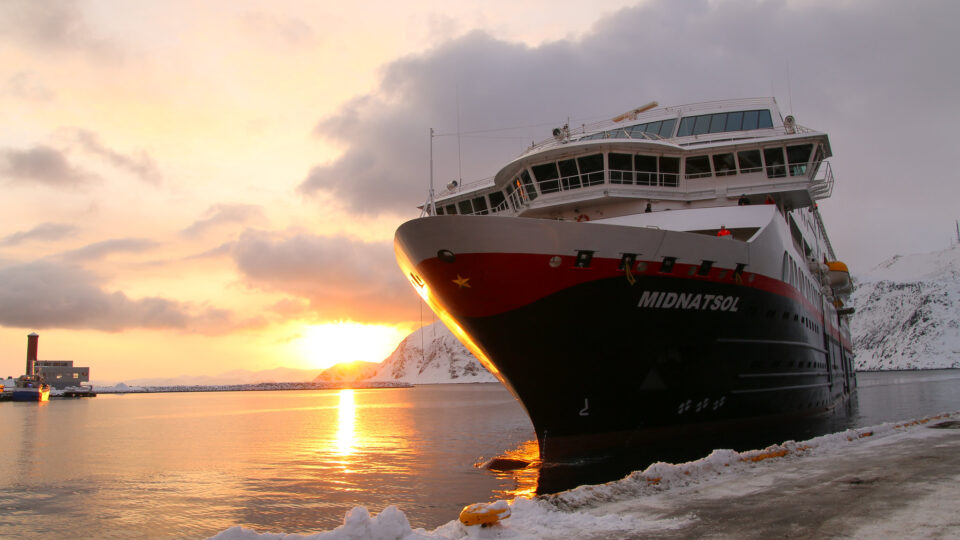
Climate change is shrinking the Arctic ice cover, which is making it easier for ships to travel along the northern coast of Russia, known as the Northern Sea Route or the Northeast Passage.  There is also the Northwest Passage, which connects the Atlantic and Pacific Oceans via waterways through the Canadian Arctic Archipelago.

More than 600 fishing vessels sail the waters of the Arctic Ocean, but these fishing vessels are not the worst offenders when it comes to the growing problem of air pollution.  Giant natural gas tankers are becoming a much bigger problem.

In 2021, only 26 natural gas tankers traveled through Arctic waters.  But these ships can be 1000 feet long or more and produce far more CO2 emissions than fishing boats.   In 2019, the tankers accounted for 28% of the emissions and the number of them cruising the Arctic has been growing.

As the ice cover in the Arctic continues to shrink, more and more ships of all varieties, including cruise ships, fishing vessels, as well as tankers, are coming north and spending more time in the Arctic.  Any increases in ship traffic will increase the pollutant load in the Arctic and the Arctic is one of the most vulnerable environments in the world.

Between 2013 and 2019, the aggregated nautical miles that vessels traveled in what is called the Polar Code area increased by 75%. It isn’t just that more ships like tankers are going there.  It is that their operational season is expanding.

Air pollution isn’t the only problem.  Shipping in the Arctic brings with it light pollution, noise, marine litter, and more.  Only zero activity has zero pollution.

**********

Web Links

The worst polluters in the Arctic are not what you think

Photo, posted February 26, 2015, courtesy of Chris Parker via Flickr.

Earth Wise is a production of WAMC Northeast Public Radio
Record Low Antarctic Sea Ice | Earth Wise

March 2, 2023 By EarthWise Leave a Comment

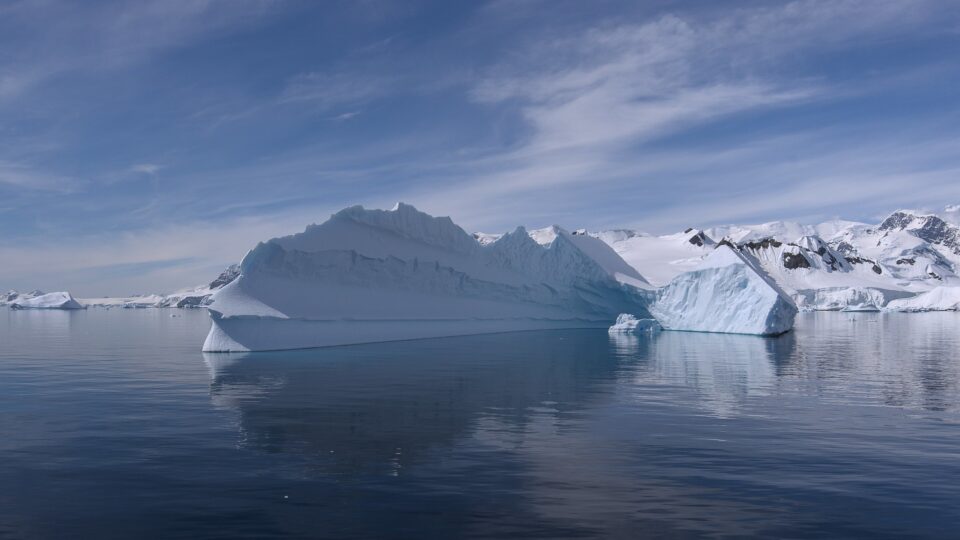
Recent satellite observations of the sea ice in the Antarctic found the lowest level of ice cover ever seen in the forty years that these observations have been made.  As of February 8th, there were only 849,000 square miles of the Southern Ocean covered with ice.  The previous record low was measured last February 24th when the total coverage was 876,000 square miles.  Ice melting was likely to continue as the month went on.

This past January had already set a new record for that month’s mean extent of ice coverage at 1.24 million square miles. This rapid decline in sea ice has been going on for the past six years and is very unusual.  Average Antarctic ice cover hardly changed at all during the previous thirty-five years.

Antarctic sea ice generally reaches its maximum extent in September or October and its minimum extent in February.  At its maximum, the sea ice cover in the Antarctic is generally between 6.9 and 7.7 million square miles.   On the other hand, there are some places where the sea ice melts completely during the Southern Hemisphere summer.  Sea ice varies much more in the Antarctic than in the Arctic where the ice is much thicker.

Climate warming at the poles is much higher than at lower latitudes.  Nonetheless, it is not yet clear whether what we are seeing is the beginning of the end of summer sea ice in the Antarctic, or whether this is just a new phase characterized by low but still stable sea ice cover in the summer.

**********

Web Links

Record low sea ice cover in the Antarctic

Photo, posted January 24, 2012, courtesy of Rob Oo via Flickr.

Earth Wise is a production of WAMC Northeast Public Radio

Keeping Trash Out Of The Ocean | Earth Wise

February 23, 2023 By EarthWise Leave a Comment

The Ocean Cleanup Project

The Ocean Cleanup is a non-profit organization, founded in 2013 by Dutch inventor Boyan Slat, to develop and scale technologies to rid the world’s oceans of plastic.  It is an organization that proudly declares that its primary aim is to put itself out of business by successfully cleaning up the oceans.

A major activity of The Ocean Cleanup is efforts to clean the ocean garbage patches that have accumulated in several places, best-known of which is the Great Pacific Garbage Patch.  The effort involves use of large U-shaped floating barriers that act as an artificial coastline to trap garbage which is then funneled into a barge for disposal.  Ten full-sized systems will be needed to clean up the Great Pacific Garbage Patch.

A second activity of The Ocean Cleanup is preventing garbage in rivers from making its way into the oceans.  Rivers are the main source of ocean plastic pollution.  The Ocean Cleanup has developed river machines called Interceptors that capture garbage for disposal.  Last fall, they installed a machine called Interceptor 007 in Ballona Creek, a waterway in the Los Angeles area.  In the first rainfall after installation, the Interceptor managed to stop 35,000 pounds of waste from entering the ocean in just a few days.

The original Interceptor models have been deployed in Indonesia, Malaysia, the Dominican Republic, and Vietnam. A different type called the Interceptor Trashfence is being tested in Guatemala.

The Ocean Cleanup states that if fleets of its barrier systems are installed in all the garbage patches and Interceptors in the 1000 most significant rivers, 90% of floating ocean plastic can be removed by 2040.

**********

Web Links

The Interceptor 007 Stops 35,000 Pounds Of Trash From Entering Ocean

The Ocean Cleanup

Photo, posted February 23, 2015, courtesy of Ministerie van Buitenlandse Zaken via Flickr.

Earth Wise is a production of WAMC Northeast Public Radio

California Storms And The Megadrought | Earth Wise

February 22, 2023 By EarthWise Leave a Comment

California experienced its wettest 10-day period in 25 years as a result of a series of storms driven by atmospheric rivers in January.  The Rocky Mountains got buried in snow from the same weather pattern.   For the drought-stricken West, the storms were good news.  But they are not the cure for what’s been ailing the region.

In California, the snowpack in the Sierra Nevada mountains has been greatly enhanced, containing twice as much snow as is considered average for this time of year.  Without a doubt, it will reduce the impact of the drought that has plagued the state for 23 years.  But one big storm or even a series of them is not enough to undo years of minimal precipitation and rising temperatures.  Many of the states’ largest reservoirs remain well below historical averages despite the record-breaking rain.  It would take several wet years to really allow the state to recover from the drought.

The snowfall in the Rockies is crucial because it is the source of more than two-thirds of the water in the Colorado River.  The Colorado River is the water lifeline for 40 million people from Wyoming to Mexico.

The ongoing shrinking of the Colorado River is a crisis that has created massive problems for the multibillion-dollar agriculture industry and for many large cities, including Denver, Phoenix, Salt Lake City, Las Vegas, and Los Angeles.  Two of the nation’s largest reservoirs – Lake Mead and Lake Powell – are filled by the Colorado River.  The historic low levels of these reservoirs have threatened the functioning of hydropower facilities that provide electricity to millions of people.

The January storms were good news for the West, but its problems are not over.

**********

Web Links

This Winter’s Rain and Snow Won’t be Enough to Pull the West Out of Drought

Photo, posted September 18, 2022, courtesy of Sarah Stierch via Flickr.

Earth Wise is a production of WAMC Northeast Public Radio
Fuel From Wind And Water | Earth Wise

February 21, 2023 By EarthWise 1 Comment

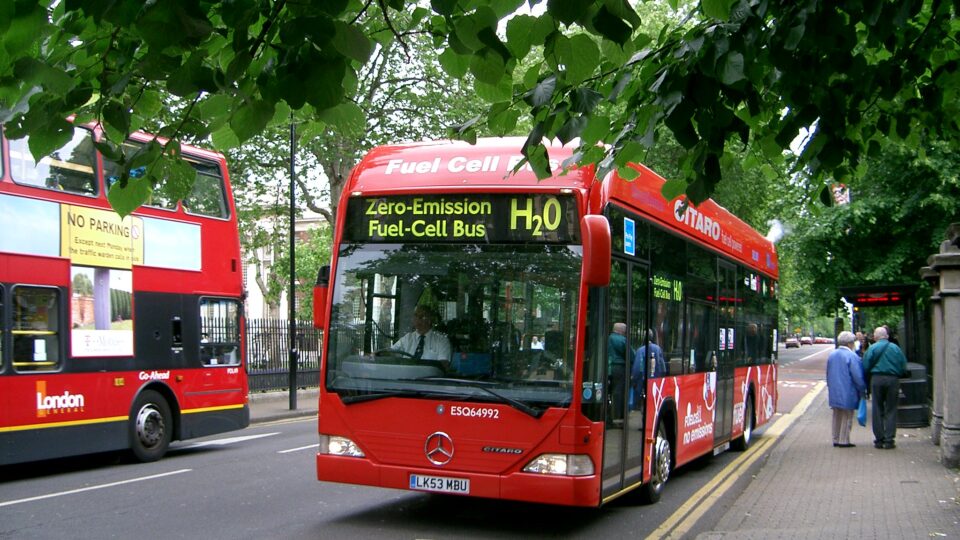
Hydrogen is the most common element in the universe and it can be used as a fuel to run cars, trains, and even airplanes.  Using it produces no harmful emissions.  However, to date, the way it is economically produced is not clean and green.  It is made from natural gas and leaves behind lots of carbon dioxide.

Around the world there are many projects working on so-called green hydrogen.  Producing hydrogen by splitting water into its component elements is called electrolysis and produces only oxygen as a waste product.  The problem with electrolysis is that it takes prodigious amounts of energy and therefore is very expensive.

A new project taking place in north Texas hopes to create the country’s first large-scale producer of green hydrogen.  The project is building a 900-megawatt wind farm along with a 500-megawatt solar farm.  The 1.4 gigawatts of total production capacity is more energy than the city of Austin consumes.  That energy will be used to produce 200,000 kilograms of hydrogen a day.

This project is among the largest proposed green hydrogen projects in the U.S.   There are green hydrogen proposals in Europe, Australia, Africa, and the Middle East that range from 10 GW to 67 GW. 

The Texas project, being developed in partnership by Air Products and AES, has been enabled by government support from the Inflation Reduction Act.    

There are a few thousand hydrogen-powered cars, boats, and trains but without substantial, cost-effective hydrogen infrastructure, the market is very limited.   Subsidizing the development of the necessary infrastructure is essential if there is any real chance to create the long-imagined hydrogen economy.

**********

Web Links

Texas Project Will Use Wind to Make Fuel Out of Water

Photo, posted June 5, 2005, courtesy of City Transport Info via Flickr.

Earth Wise is a production of WAMC Northeast Public Radio

  • « Go to Previous Page
  • Page 1
  • Interim pages omitted …
  • Page 12
  • Page 13
  • Page 14
  • Page 15
  • Page 16
  • Interim pages omitted …
  • Page 34
  • Go to Next Page »

Primary Sidebar

Recent Episodes

  • An uninsurable future
  • Clean energy and jobs
  • Insect declines in remote regions
  • Fossil fuel producing nations ignoring climate goals
  • Trouble for clownfishes

WAMC Northeast Public Radio

WAMC/Northeast Public Radio is a regional public radio network serving parts of seven northeastern states (more...)

Copyright © 2026 ·