• Skip to primary navigation
  • Skip to main content
  • Skip to primary sidebar

Earth Wise

A look at our changing environment.

  • Home
  • About Earth Wise
  • Where to Listen
  • All Articles
  • Show Search
Hide Search
You are here: Home / Archives for water systems

water systems

Hot water in Boise

May 9, 2025 By EarthWise Leave a Comment

Geothermal water systems in Boise form the foundation of what is the largest municipally-run geothermal system in the country

Boise is the capital of Idaho, and the Idaho Statehouse is the only one in the United States to use geothermal heat.  Geothermal heating is possible in Boise because of fault lines that expose its groundwater to hot rocks.  The underground water supply in Boise is heated to around 170 degrees Fahrenheit.  It is the basis of the largest municipally-run geothermal system in the country.

People in Boise began using this natural resource to supply heat to buildings in the 1890s by drilling wells into aquifers that yielded hundreds of thousands of gallons of piping hot water a day.  The water heated pools and public baths, a Victorian mansion, and, eventually, hundreds of homes in what was called the Boise Warm Springs Water District.

The number of buildings that the city of Boise heats with its geothermal resource has grown more than sixfold over the past 40 years.  The water is drawn from wells in the nearby foothills and pumped into a closed-loop network of pipes that reach into buildings.  In each building, the geothermal heat is transferred to water in separate adjoining pipes that distribute the heat throughout the building.  The well water goes back to the aquifer to be heated again.

Today, there are four separately run geothermal water systems in Boise.  One is run by the city, another by the Boise Warm Springs District, and two others that serve the Capitol and Veterans Affairs Buildings.

In 2024, city officials calculated that using geothermal heat reduced annual carbon dioxide emissions by 7,000 tons, the equivalent of removing 1,500 gas-powered cars from the road each year.

**********

Web Links

They’re in Hot Water in Idaho. Here’s Why That’s a Good Thing.

Photo, posted May 26, 2010, courtesy of Jason W via Flickr.

Earth Wise is a production of WAMC Northeast Public Radio

Forever chemicals in water

April 23, 2024 By EarthWise Leave a Comment

So-called forever chemicals are pervasive in a wide range of products.  These are man-made substances called per- and polyfluoroalkyls or PFAS.  They get their unfortunate nickname because the chemical bonds in them are so strong that the compounds don’t break down for hundreds or even thousands of years.

PFAS compounds are used in makeup, dental floss, nonstick pans, food wrappers, pesticides, stain-resistant fabrics and carpets, firefighting foams, and more.  High level exposure to some of these chemicals has been linked to a variety of health problems include high cholesterol, liver and immune system damage, pregnancy problems, and kidney and testicular cancer.

A recent study published in the journal Nature Geoscience has found that PFAS chemicals are showing up in water around the world.  The study looked at more than 45,000 water samples and found that about 31% of ground water tested that wasn’t even near any obvious source of PFAS contamination had levels of the chemicals that are considered harmful to human health by the EPA.  About 16% of surface water samples – streams, rivers, ponds, and lakes – also not near any known source, had similar hazardous PFAS levels.

The EPA has now imposed strict new drinking water limits for six types of PFAS.  Going forward, water systems are required to monitor for these chemicals and remove them if they are found above allowable levels.  The new rules make the United States one of the strictest countries in the world in terms of regulating PFAS in water.

**********

Web Links

EPA puts limits on ‘forever chemicals’ in drinking water

Photo, posted May 5, 2020, courtesy of Brandon Shaw via Flickr.

Earth Wise is a production of WAMC Northeast Public Radio
Saving Water At Power Plants | Earth Wise

September 21, 2021 By EarthWise Leave a Comment

Reducing the water needs of power plants

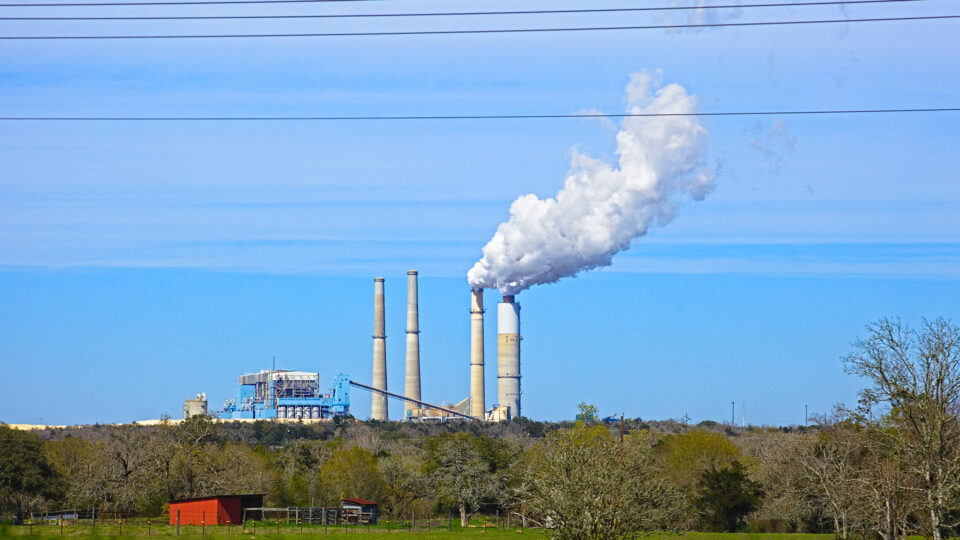
Nearly 40% of all the water taken from lakes, rivers, and wells in the U.S. isn’t used for agriculture, drinking, or sanitation.  It is used to cool power plants that produce electricity by burning fossil fuels or with nuclear reactors.   Two-thirds of these power plants use evaporative cooling, which produces huge white plumes billowing from cooling towers.

A new company using technology developed at MIT has the goal of reducing the water needs of power plants and helping to alleviate water shortages in areas where power plants strain the capacity of local water systems.

The technology is relatively simple in principle but developing it to the point where it can be applied at full scale at industrial power plants was a greater challenge. 

The basic idea is to capture water droplets from both natural fog and from the plumes from power plant cooling towers.  The MIT researchers had to improve the efficiency of fog-harvesting systems, which previously captured only 1-3% of the water droplets that pass through them.  They found that water vapor collection could be made much more efficient by zapping the tiny droplets of water with an ion beam, giving them a slight electric charge, thereby making it easy to capture them with the metal mesh of the harvesting system.

The system can essentially eliminate cooling tower plumes and produce large quantities of high-purity water in the process, which has uses at many power plants.  The new company, called Infinite Cooling, has arranged to install their equipment on two operating commercial power plants later this year.  They expect the system to reduce the overall need for water by 20%.

**********

Web Links

Vapor-collection technology saves water while clearing the air

Photo, posted March 5, 2019, courtesy of Sam LaRussa via Flickr.

Earth Wise is a production of WAMC Northeast Public Radio.

How Safe Is Drinking Water?

March 26, 2018 By EarthWise Leave a Comment

https://earthwiseradio.org/wp-content/uploads/2018/03/EW-03-26-18-How-Safe-Is-Drinking-Water.mp3

Water is life.  It’s a fundamental need for every human being on the planet.  Each person requires more than five gallons of clean and safe water a day for drinking, cooking, and keeping clean.  Dirty water, on the other hand, can be deadly.  An estimated 1.8 million people die every year as a result of diarrheal diseases like cholera.  And tens of millions of people are seriously sickened by water-related maladies. 

[Read more…] about How Safe Is Drinking Water?

Climate Change Threatens the U.S. Military

February 20, 2018 By EarthWise Leave a Comment

https://earthwiseradio.org/wp-content/uploads/2018/02/EW-02-20-18-Climate-Change-Threatens-the-Military.mp3

According to a new study from the Pentagon, nearly half of United States military sites are threatened by wild weather linked to climate change.  The U.S. Department of Defense states that drought, wind, and flooding that occur due to reasons other than storms topped the list of natural disasters that endanger 1,700 military sites around the world – everything from outposts to large bases.

[Read more…] about Climate Change Threatens the U.S. Military

Primary Sidebar

Recent Episodes

  • An uninsurable future
  • Clean energy and jobs
  • Insect declines in remote regions
  • Fossil fuel producing nations ignoring climate goals
  • Trouble for clownfishes

WAMC Northeast Public Radio

WAMC/Northeast Public Radio is a regional public radio network serving parts of seven northeastern states (more...)

Copyright © 2026 ·