• Skip to primary navigation
  • Skip to main content
  • Skip to primary sidebar

Earth Wise

A look at our changing environment.

  • Home
  • About Earth Wise
  • Where to Listen
  • All Articles
  • Show Search
Hide Search
You are here: Home / Archives for volcanic eruptions

volcanic eruptions

Modeling geoengineering

May 19, 2025 By EarthWise Leave a Comment

Modeling the impacts of geoengineering

As the impacts of climate change continue to mount up, there is increasing interest in radical intervention measures designed to keep a lid on rising global temperatures.  Such measures are fraught with potential dangers and unintended consequences but there is no guarantee that one or another of them might still be attempted in the future.  Increasing international interest in geoengineering as a potential strategy for mitigating climate change has created a pressing need to consider its impact before any potentially irreversible actions are taken.

The Natural Environment Research Council in the UK is funding four research projects aimed at understanding the potential consequences of solar radiation modification (SRM) being deployed in the real world.

SRM consists of methods to reflect some of the Sun’s radiation back into space instead of allowing it to reach and warm the earth. 

One approach is stratospheric aerosol intervention in which particles such as sulfates are introduced into the upper atmosphere to reflect sunlight thereby producing a dimming effect.   The idea is to mimic the effects of large volcanic eruptions, which naturally send sulfates into the atmosphere.

A second approach is marine cloud brightening, which increases the reflectivity of clouds over the ocean by spraying very small droplets of sea water into the air.  The fine particles of sea salt enhance cloud condensation nuclei, producing more cloud droplets and making clouds more reflective.

The research aims to deliver independent risk analyses to inform policymakers about the potential environmental impacts of SRM.

**********

Web Links

Scientists to model the impact of controlling Earth’s temperature by reflecting solar radiation

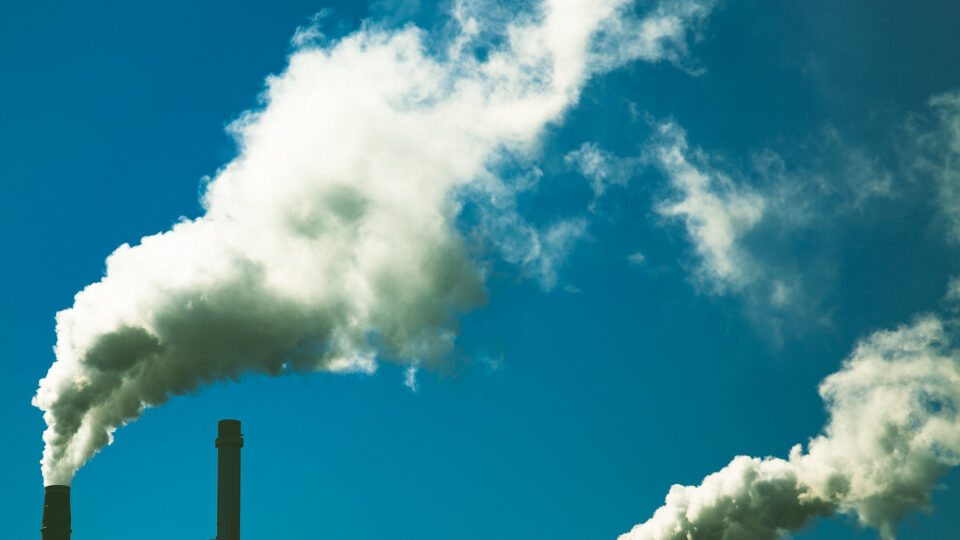
Photo, posted May 6, 2009, courtesy of Denys Zadorozhnyi via Flickr.

Earth Wise is a production of WAMC Northeast Public Radio
The Sixth Mass Extinction | Earth Wise

February 16, 2022 By EarthWise Leave a Comment

Human activities are driving the planet's sixth mass extinction

Extinction is a natural part of life.  Plants and animals disappear all the time.  When one species goes extinct, its place in the ecosystem is typically filled by another.  The so-called normal rate of extinction is thought to be somewhere between 0.1 and 1 species per 10,000 species per 100 years.

A mass extinction event is when species disappear at a much faster clip than they can be replaced.  By definition, mass extinction is when about three-quarters of the world’s species are lost in a short amount of time on a geologic scale, which is measured in millions of years.  

There have been five previous mass extinction events throughout the history of life on earth.  Today, many experts warn that a sixth mass extinction event is already underway – the first since dinosaurs were wiped out some 65 million years ago.  While previous mass extinctions were the result of extreme natural phenomena like volcanic eruptions and asteroid strikes, this one is a result of human activities. 

Researchers from the University of Hawai’i at Manoa and the National Museum of Natural History in France recently published a comprehensive assessment of evidence of this ongoing extinction event.  The researchers estimated that since the year 1500, Earth could already have lost between 7.5% and 13% of the two million known species on Earth.  This amounts to a staggering 150,000 to 260,000 species.

While mitigating the effects of climate change and reducing the rates of habitat loss would help, raising awareness of this crisis and its fallout for all life forms – including us – would be most effective in driving change. 

The time we have to avoid dramatic consequences is rapidly running out. 

**********

Web Links

Strong evidence shows Sixth Mass Extinction of global biodiversity in progress

Photo, posted September 18, 2015, courtesy of Tony Webster via Flickr.

Earth Wise is a production of WAMC Northeast Public Radio.

People And The Earth’s Increasing Heat | Earth Wise

September 23, 2021 By EarthWise Leave a Comment

Humans are driving climate change

A new study by Princeton University and the National Oceanic and Atmospheric Administration had found clear evidence that human activity is the primary cause of the significant increase in heat stored in our planet.  In fact, the study found that there is less than a 1% chance that natural variability is the sole cause of the increase.

The researchers looked at data from satellite observations to determine the amount of energy received by the earth and the amount reflected and emitted by the Earth.  In a balanced physical system, the amount of incoming energy should equal the amount of outgoing energy.  But the earth’s system is not balanced at this point.  More energy is coming in than going out, which is driving changes in the climate system.  There have been other studies looking at the human influence on the climate, but this new study is the first to examine a 20-year continuous satellite energy balance record to see if natural fluctuations in the climate system or human activities is the primary driver for the significant change in the planet’s energy balance.

The study examined 50 different climate models to look at this energy balance under scenarios where there was no human influence.  These include changes in the sun’s output, volcanic eruptions, variations in pollution aerosols, and more.

The results, to no great surprise, are that increasing greenhouse gases over the last twenty years is by far the most important driver for the energy imbalance.  This imbalance is what is driving rising temperatures, increasing sea levels, and causing other climate changes.

**********

Web Links

Human activities responsible for rapid increase in Earth’s heat

Photo, posted May 6, 2021, courtesy of Marlis Borger via Flickr.

Earth Wise is a production of WAMC Northeast Public Radio.

Forests And Climate Change | Earth Wise

June 17, 2021 By EarthWise Leave a Comment

Planting new trees is not enough to mitigate climate change

A carbon sink is anything that absorbs more carbon from the atmosphere than it releases.  Examples of carbon sinks include the ocean, soil, and plants.  In contrast, a carbon source is anything that releases more carbon into the atmosphere than it absorbs.  Volcanic eruptions and burning fossil fuels are two examples.

Forests are among the most important carbon sinks.  Trees remove carbon from the air and store it in their trunks, branches, and leaves, and transfer some of it into the soil.  But in many regions, deforestation, forest degradation, and the impacts of climate change are weakening these carbon sinks. As a result, some climate activists advocate for large-scale tree-planting campaigns as a way to remove heat-trapping CO2 from the atmosphere and help mitigate climate change. 

But according to a new study recently published in the journal Science, planting new trees as a substitute for the direct reduction of greenhouse gas emissions could be a pipe dream.  While planting trees is easy, inexpensive, and can help slow climate warming, the ongoing warming would be simultaneously causing the loss of other trees.  Instead, the research team says it makes more sense to focus on keeping existing forests healthy so they can continue to act as carbon sinks, and to reduce emissions as much as possible and as quickly as possible.        

But keeping forests healthy will require a paradigm shift in forest management.  Instead of trying to maintain forests as they were in the 20th century, the research team says forests need to be managed proactively for the changes that can be anticipated. 

One thing is clear: We cannot plant our way out of the climate crisis.

**********

Web Links

Forests and climate change: ‘We can’t plant our way out of the climate crisis’

Photo, posted August 9, 2015, courtesy of Nicholas A. Tonelli via Flickr.

Earth Wise is a production of WAMC Northeast Public Radio.

Air Pollution Reduction And Global Warming | Earth Wise

April 13, 2021 By EarthWise Leave a Comment

Reducing emissions can actually increase global warming

The world is dealing with two serious problems affecting the atmosphere:  the growing levels of carbon dioxide leading to a warming climate and the effects of air pollution on human health.  It turns out that these two things are connected in complicated ways.

Countries around the world are racing to mitigate global warming by limiting carbon dioxide emissions.   The combustion of fossil fuels as well as wood and other biomass produces sulfate aerosols, which are associated with acid rain as well as many human health problems.   Air pollution causes an estimated seven million premature deaths per year worldwide, so reducing it is imperative.

The complication is that sulfate aerosols in the upper atmosphere actually have a cooling effect on surface air temperatures.  Aerosols create bigger clouds and increase light scattering, both of which result in less sunlight reaching the surface.  Large natural sources of sulfate aerosols – such as volcanic eruptions – can temporarily cool the earth until they settle out of the atmosphere.

There are many kinds and sizes of atmospheric aerosols, making predicting their effects and behavior difficult.  For example, black carbon aerosols from forest fires tend to suppress cloud formation by warming the air and making tiny water droplets evaporate.  However, sulfate aerosols from burning fossil fuels make clouds grow larger.

Analysis has shown that air pollution has actually reduced the amount of warming that has taken place to date.  A new study by Kyushu University in Japan looked at the long-term climate effects of reductions in sulfate aerosols.  The loss of cooling effect from light-scattering aerosols as emissions are reduced is a factor that cannot be ignored. 

**********

Web Links

Air pollutant reductions could enhance global warming without greenhouse gas cuts

Photo, posted January 23, 2021, courtesy of Wutthichai Charoenburi via Flickr.

Earth Wise is a production of WAMC Northeast Public Radio.

Primary Sidebar

Recent Episodes

  • An uninsurable future
  • Clean energy and jobs
  • Insect declines in remote regions
  • Fossil fuel producing nations ignoring climate goals
  • Trouble for clownfishes

WAMC Northeast Public Radio

WAMC/Northeast Public Radio is a regional public radio network serving parts of seven northeastern states (more...)

Copyright © 2026 ·