• Skip to primary navigation
  • Skip to main content
  • Skip to primary sidebar

Earth Wise

A look at our changing environment.

  • Home
  • About Earth Wise
  • Where to Listen
  • All Articles
  • Show Search
Hide Search
You are here: Home / Archives for Technology

Technology

Progress towards electric school buses

November 8, 2024 By EarthWise Leave a Comment

Making progress on electrifying school buses

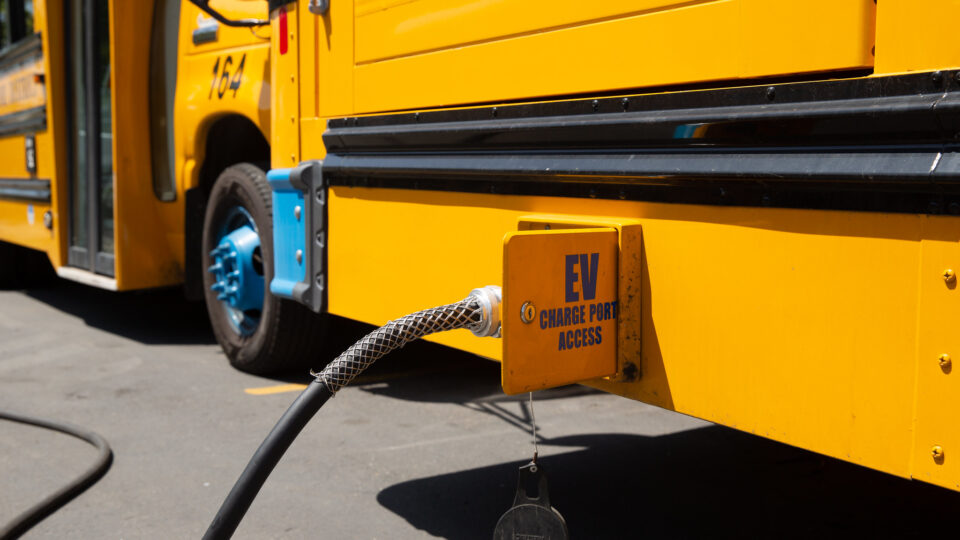
The U.S. has nearly half a million school buses providing daily transportation for about 20 million students.  Most of these buses are powered by diesel engines which not only dump greenhouse gases into the atmosphere but also fill kids’ lungs with harmful fumes.

Thanks to various federal and state incentive programs, this situation is starting to change.  School districts all over the country are beginning to swap out old diesel buses for emissions-free electric-powered school buses.

Electric school buses are finding their way into school districts of all sizes and demographics.  The first district in the country to go fully electric was in Martinsville, Texas, which last year converted its 4-bus fleet.  The first large urban district to go all-electric was the 74-bus fleet in Oakland, California this summer.

The EPA’s $5 billion Clean School Bus program and many state initiatives are providing incentives for the transition.  Five years ago, there were less than 1,000 electric school buses in the U.S.  Now there are about 5,000 and more than 7,000 additional buses are in the pipeline.

Apart from the climate implications, there is urgency to replacing diesel school buses from a health perspective.  Diesel exhaust is classified as a carcinogen by the World Health Organization, and it contains fine particles and nitrogen oxides, both of which are well-documented asthma triggers.

Electric buses are more expensive than diesel buses, but they are much cheaper to operate. School districts need to put in place charging infrastructure.  The transition is not so easy to accomplish, but it is an important step, and more and more school districts are taking it.

**********

Web Links

Slowly but Surely, U.S. School Buses Are Starting to Electrify

Photo, posted May 5, 2021, courtesy of California Energy Commission via Flickr.

Earth Wise is a production of WAMC Northeast Public Radio
Solar-powered desalination

November 7, 2024 By EarthWise Leave a Comment

People in remote, low-income regions far from the ocean often need to meet their water needs from groundwater and groundwater is becoming increasingly saline due to climate change.  Desalination of brackish groundwater is a huge and largely untapped source of drinking water, but there are challenges in making the process efficient and reliable.

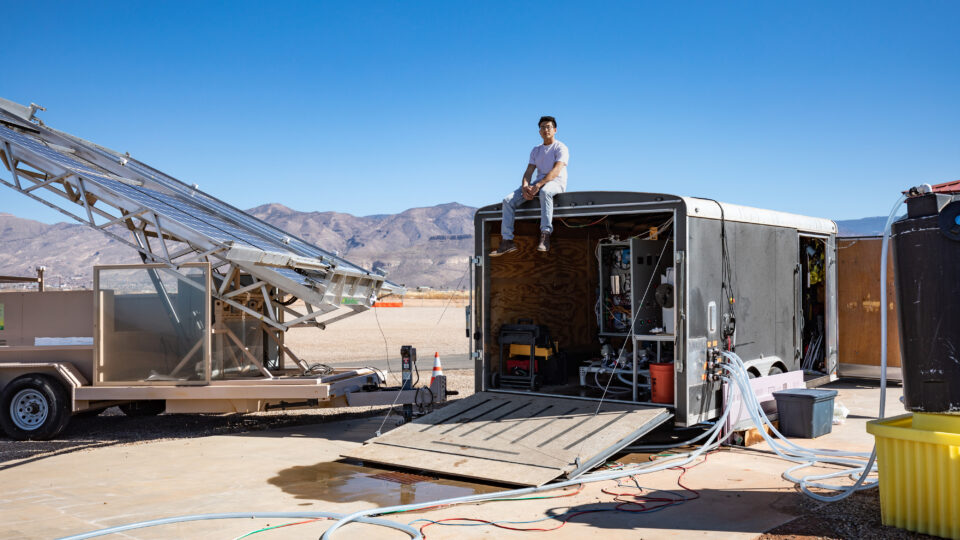
Engineers at MIT have developed a solar-powered desalination system that requires no batteries or external power sources and is capable of producing large quantities of clean water despite the variations of sunshine throughout the day.

The system is based on the process of electrodialysis and consists of water pumps, an ion-exchange membrane stack, and a solar panel array.  What is unique about it is that it makes use of sensors and a control system that predicts the optimal rate at which to pump water through the system based on the output of the solar panels.  As a result, it uses nearly all of the electricity generated to produce clean water and does not need stored or grid-based energy.

The MIT engineers tested a community-scale prototype on groundwater wells in New Mexico over a six-month period.  The system harnessed on average over 94% of the electricity generated by its solar panels and produced as much as 5,000 liters of water per day despite large variations in weather and sunlight.

The new renewable-powered, battery-free system could provide much-needed drinking water at low cost, especially for communities where access to seawater and to grid power are limited.  The team plans to further test and scale up the system so it can supply larger communities and even whole municipalities with low-cost drinking water.

**********

Web Links

Solar-powered desalination system requires no extra batteries

Photo courtesy of Shane Pratt.

Earth Wise is a production of WAMC Northeast Public Radio
Renewables progress

November 5, 2024 By EarthWise Leave a Comment

Making progress on renewable power

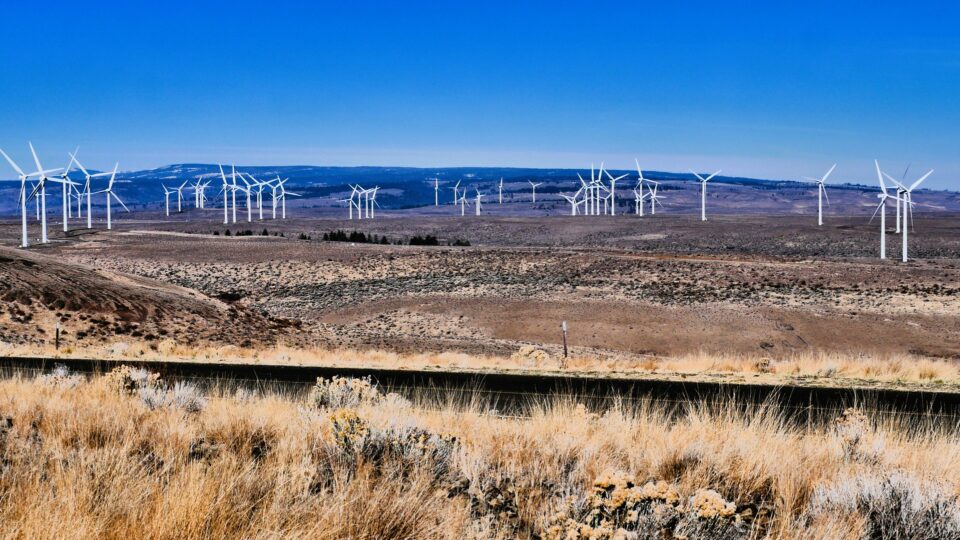
According to a new report by the International Energy Agency, the world is on track to produce nearly half of the electricity it uses from renewable sources by the end of this decade.  The report also finds that in nearly every country, large wind and solar plants are the cheapest forms of new power.

Between now and 2030, countries will add more than 5,500 gigawatts of new renewable capacity.   That is as much as China, India, the U.S., and the EU combined have at present.  Most of the new capacity will come from solar power.

China is aggressively pursuing renewable power installations with massive solar and wind projects.  By 2030, China will account for nearly half of the world’s renewable power capacity.

This year’s UN Climate Change Conference, held in the United Arab Emirates, established the goal of tripling renewable energy capacity worldwide by 2030. 

The growth in solar power continues to outperform industry expert projections as manufacturing ramps up.  India and the U.S. are both expected to triple their solar manufacturing capacity by the end of this decade.  Manufacturing, largely based in China, is already outstripping demand.

By 2030, solar and wind power are expected to account for about 30% of global electricity generation, hydropower about 13%, and other renewables such as geothermal power about 5%.

These estimates are based on existing policies and market conditions.  Governments could speed up the shift to clean energy by cutting red tape and by making it cheaper for poorer countries to finance solar and wind projects.

**********

Web Links

Renewables 2024

Photo, posted November 23, 2023, courtesy of Rick Obst via Flickr.

Earth Wise is a production of WAMC Northeast Public Radio

The last coal plant in Britain

October 31, 2024 By EarthWise Leave a Comment

The last coal plant in Britain has closed

The Industrial Revolution, which basically got underway in the mid-19th century, was largely enabled by coal, which fueled iron manufacturing, railroads, steam engines, and more.  Most of these things got their start in Britain, which inspired the rest of the world to follow suit.

The world’s first coal-burning power plant began producing electricity at the Holborn Viaduct in London in 1882.  This September, Britain – the birthplace of coal power – shut down its last coal-burning power station when the 2,000-megawatt Ratcliffe-on-Soar facility ceased operations.  Uniper, the company that operated the plant, will be converting the 750-acre site to a low-carbon energy hub.

Shutting down coal plants is not a simple matter, as they are the lifeblood of entire towns and regions where they are located.  Finding fair transitions for workers is an uphill battle that has to take place in many locations.

Coal is the dirtiest fossil fuel, producing more greenhouse gas than others, but historically was the cheapest and most abundant source of power in many countries.  In recent decades, it has been replaced by gas, nuclear power, and most recently, renewables like wind and solar.

The coal era has ended in much of the world. The United States still gets 16% of its electricity from coal, but that number keeps getting smaller.  Unfortunately, the great majority of coal use is in the world’s two most populous countries:  India and China.  Both are adding renewable energy sources, but both have rapidly climbing energy demand.  China’s coal consumption is expected to peak this year and flatten out.  But there is still work to be done to bring an end to coal power.

**********

Web Links

Britain Shuts Down Last Coal Plant, ‘Turning Its Back on Coal Forever’

Photo, posted March 13, 2016, courtesy of Arran Bee via Flickr.

Earth Wise is a production of WAMC Northeast Public Radio

Renegade geoengineering

October 30, 2024 By EarthWise Leave a Comment

Geoengineering inc

As the dangers of climate change continue to grow, so has interest in geoengineering – deliberate tinkering with the earth’s climate system.  In particular, stratospheric solar geoengineering – releasing aerosols into the stratosphere to reduce the amount of heat from the sun reaching the Earth – is attracting increasing interest.  Scientists at Harvard, Cornell, Colorado State, Princeton, and the University of Chicago are all researching the topic.

Actually doing it on a scale that matters is fraught with peril from unintended consequences of disrupting the delicate interactions between the Earth’s atmosphere, ocean, land, and sea ice. 

Meanwhile, a tiny start-up company in Silicon Valley has raised more than a million dollars in venture capital and is busy releasing balloons full of sulfur dioxide into the atmosphere in the name of combatting global warming.  Furthermore, they are selling so-called “cooling credits” to customers who want to offset their personal carbon emissions.

The aerosol being released is on such a small scale that it can’t possibly have a meaningful effect on temperatures.  There really isn’t scientific analysis guiding or accompanying the work. 

There are no laws prohibiting the dispersal of small amounts of sulfur dioxide in California.  Even if there were, these people could go offshore or elsewhere to do their work.  But this renegade geoengineering highlights a serious issue; namely, that there doesn’t have to be scientific, political, or any other kind of consensus for someone to undertake a potentially catastrophic attempt to alter the climate.  It’s a real worry.

**********

Web Links

Silicon Valley Renegades Pollute the Sky to Save the Planet

Photo, posted September 24, 2006, courtesy of Doc Searls via Flickr.

Earth Wise is a production of WAMC Northeast Public Radio

A structural battery

October 25, 2024 By EarthWise Leave a Comment

The size and especially the weight of batteries is a critical factor for most things that use them.  Battery weight is a key limitation for computers and cell phones. It is even more of a limitation for electric cars, ships, or planes.

If the battery of a device or vehicle can also function as a load-bearing structure, its weight and energy consumption can be dramatically reduced.  This concept of a structural battery is sometimes called massless energy storage.  It has the potential to halve the weight of a laptop computer, make cell phones as thin as a credit card, and increase the range of an electric car by as much as 70%.

Researchers at Chalmers University in Sweden have been working on structural battery technology for many years.  Their first published results in 2018 showed how stiff, strong carbon fibers could be used for chemical storage of electrical energy.

Since then, they have been creating batteries with increasing energy density.  Their latest versions still have only a quarter of the capacity of today’s lithium-ion batteries. But if batteries can be part of the structure of a vehicle, for example, and can be made of lightweight materials like carbon fiber, then the overall weight of the vehicle can be greatly reduced and not nearly as much energy will be needed to power it.

The goal of the Chalmers research is to achieve battery performance that makes it possible to commercialize the technology.  There is a lot of engineering work to be done before these structural batteries can go from laboratory proofs of concept to real world use.  But the potential is quite promising.

**********

Web Links

World’s strongest battery paves way for light, energy-efficient vehicles

Photo, posted August 8, 2024, courtesy of NOI Techpark via Flickr.

Earth Wise is a production of WAMC Northeast Public Radio

Ocean geoengineering

October 24, 2024 By EarthWise Leave a Comment

A start-up company is exploring ocean geoengineering

As greenhouse gas emissions continue to be dangerously large and the perils of climate change are increasingly apparent, the world is increasingly exploring ways to deliberately intervene in climate systems.  A number of these ideas involve introducing substances into the atmosphere, but there are also ways to tinker with the oceans.

The oceans naturally absorb about a third of the carbon dioxide that humans pump into the atmosphere, mostly by burning coal, gas, and oil.  People are exploring ways to get the ocean to take up even more of the carbon dioxide.  One approach that is gaining traction is known as alkalinity enhancement.  By adding limestone, magnesium oxide, or other alkaline substances to rivers and oceans, it changes their chemistry and makes them soak up more carbon dioxide.

This approach has been around for a while as a way to mitigate acid rain in rivers and has been very successful.  A start-up company in Canada called CarbonRun is building a machine that grinds up limestone and will release the powder it produces into a local river in Nova Scotia.  The limestone in the river will be naturally converted into a stable molecule that will eventually be washed into the seas, where it should remain for thousands of years.

Expanding this approach to oceans faces many challenges including the costs and complexities of obtaining, processing, and transporting vast amounts of limestone to where it is to be released.  There are also potential environmental issues to grapple with.  But CarbonRun and others are moving forward with testing the approach.

In any event, the biggest barrier to ocean alkalinity enhancement is proving that it works.  That effort is underway.

**********

Web Links

They’ve Got a Plan to Fight Global Warming. It Could Alter the Oceans.

Photo, posted May 27, 2007, courtesy of John Loo via Flickr.

Earth Wise is a production of WAMC Northeast Public Radio
Electric cars and power outages

October 21, 2024 By EarthWise Leave a Comment

Examining the resiliency of electric cars during power outages

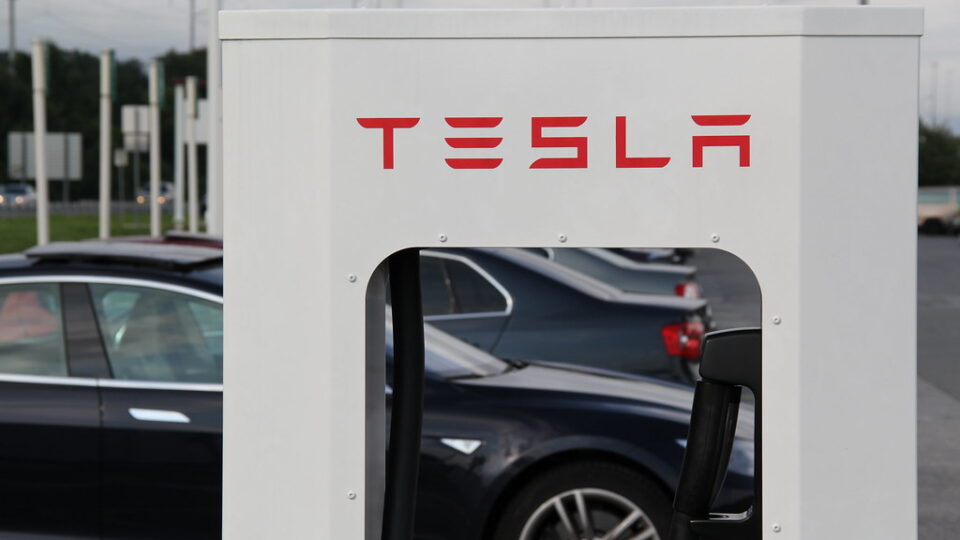
As more and more cars are powered by electricity instead of gasoline, people are beginning to worry about what happens during power outages caused by storms and other disruptive events.  It is easy to jump to the conclusion that this is a brand-new problem for drivers.  However, when electricity goes out over a sizeable area, most gas pumps stop working and it isn’t easy to keep gas cars running either.

Electric cars are often charged at home every day and such cars are more likely to be almost fully charged than nearly depleted at any time.  For those drivers, a power failure is unlikely to be much of a concern unless it persists for a very lengthy period.  On road trips, unless a power outage extends over a very wide area, one can probably get to a charger that is still operating.

Nonetheless, the federal government has commissioned researchers at Iowa State University to study potential solutions to possible difficulties in keeping electric cars running during power failures.  The goal of the study is to find ways to reduce the outage frequency of chargers by 75% and the power restoration time by 50%.

The study will evaluate the resiliency of charging stations in extreme weather events and identify ways to quickly restore power to charging stations in the event of outages.  Included are onsite solar power and battery storage at chargers as well as redundant power lines from different electrical substations.  There is even the possibility  of trucks delivering pre-charged batteries to charging stations after a storm.  Identifying and developing technologies to improve the resilience of charging stations is an important goal as the transition to electric vehicles continues.

***********

Web Links

Researchers working to keep electric vehicles charging, even when the lights go out

Photo, posted July 29, 2013, courtesy of Jeff Cooper via Flickr.

Earth Wise is a production of WAMC Northeast Public Radio

The impact of climate change on agriculture

October 18, 2024 By EarthWise Leave a Comment

Climate change is changing the landscape of global agriculture

Agriculture is a major part of the climate problem and remains one of the hardest human activities to decarbonize.  Agriculture is responsible for approximately 30% of global greenhouse gas emissions.

On farms around the world, excess fertilizer gets broken down by microbes in the soil, releasing nitrous oxide into the atmosphere.  Nitrous oxide is a greenhouse gas that is 300 times more potent than carbon dioxide.

According to a sweeping global research review recently published in the journal Science, greenhouse gas emissions from agriculture are now 18 times higher than they were in the 1960s. 

The research, which was co-written by professors at the University of Minnesota with more than 20 experts around the world, also reveals the likelihood of an emergent feedback loop between climate and agriculture.  As the changing climate puts more pressure on the global food supply, agriculture will, out of necessity, adopt practices that may exacerbate its environmental impact. Without changes in agriculture, this feedback loop could make it impossible to achieve the Paris Climate Agreement goal of limiting global warming to 1.5 degrees Celsius above pre-industrial levels. 

The research identifies several agricultural practices that could improve efficiency and stabilize our food supply in the decades to come, including precision farming, perennial crop integration, agrivoltaics, nitrogen fixation, and novel genome editing. 

Finding ways to reduce the warming impact of agriculture while maintaining high crop yields are essential to both mitigating climate change and protecting our food supply from its impacts.

**********

Web Links

Impact of Climate Change on Agriculture Suggests Even Greater Challenges to the Environment, Global Food Supply and Public Health

Photo, posted October 16, 2010, courtesy of Timlewisnm via Flickr.

Earth Wise is a production of WAMC Northeast Public Radio
Solar energy on federal land

October 15, 2024 By EarthWise Leave a Comment

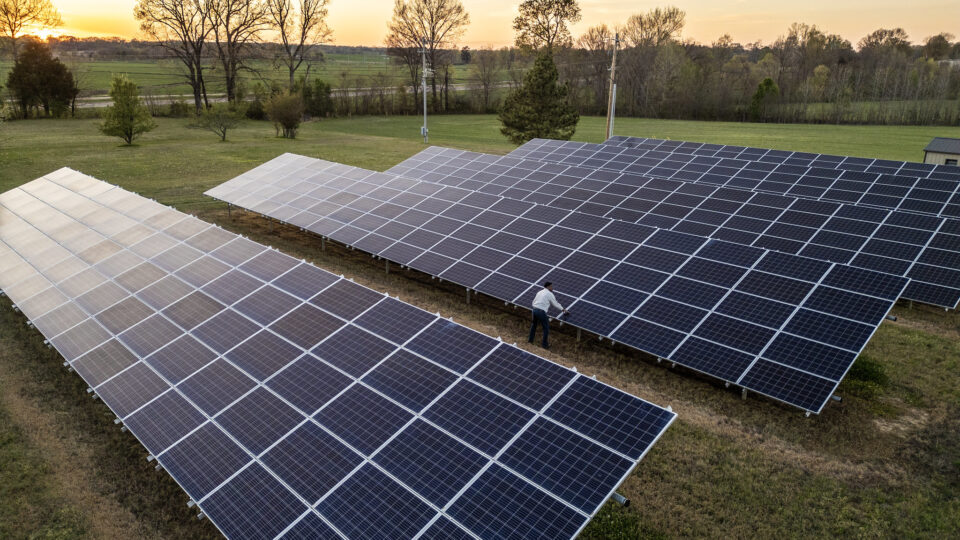
Officials at the federal Bureau of Land Management announced late in August that they had finalized a plan to add Oregon, Idaho, Montana, Washington, and Wyoming to the Western Solar Plan, which started during the Obama era.   The plan, created in 2012, provides permitting for solar projects on federal land.  The original plan included Arizona, California, Colorado, Nevada, New Mexico, and Utah.

The Western Solar Plan is a major expansion for clean energy production in the Bureau of Land Management’s land leasing portfolio.  For decades, the BLM has leased tens of millions of acres of federal land to fossil fuel companies for oil, coal, and natural gas exploration and production.

The new addition includes 1.1 million acres of land in Oregon, an area larger than the entire state of Rhode Island.  The land selected is deemed to be of low risk for any adverse environmental effects from solar installation, and the plots of land are all within 15 miles of existing or planned electrical transmission lines.  A little over 50% of Oregon’s land is owned by the federal government and is managed primarily by the Bureau of Land Management and the U.S. Forest Service.

The publication of the finalized plan at the end of August initiated a 30-day period for any participants in the initial planning to voice objections.  The governors of the 5 new states are reviewing the plan.  Final approval and adoption are expected later this year.

Western states need to expand solar and other clean energy production to meet their climate goals and federal lands will have to play an important role.

**********

Web Links

Plan would make 1 million acres of federal land in Oregon available for solar energy projects

Photo, posted May 20, 2024, courtesy of the U.S. Department of Agriculture via Flickr.

Earth Wise is a production of WAMC Northeast Public Radio

Predicting major earthquakes

October 10, 2024 By EarthWise Leave a Comment

Researchers are exploring how to predict major earthquakes

Natural disasters continue to be major threats for people, just as they always have been.  But modern technology has greatly improved our ability to prepare for and, in many cases, escape from the worst effects of these events.  A good example is hurricane forecasting.  Nowadays, there is plenty of warning when a major hurricane is headed toward a populous area.  It is still up to people to get away from the danger zone, but at least there is the opportunity to do so.

Major earthquakes are a different story.  There is generally little or no warning when one will strike.  But scientists at the University of Alaska Fairbanks and the Ludwig Maximilian University in Munich, Germany have developed a technique that may provide days or even months of warning about an impending major earthquake.

The detection method is based on machine learning and is described in a paper in the journal Nature Communications.  The researchers wrote a computer algorithm that looks for abnormal seismic activity.  Advanced statistical techniques found that approximately three months of abnormal low-magnitude regional seismicity occurred in the regions where two major earthquakes took place.  One was the magnitude 7.1 Anchorage earthquake in 2018 and the other was a similar-sized quake in Ridgecrest, California in 2019.

Considerably more testing – particularly in real-time rather than looking at historical data – is needed.  But accurate earthquake forecasting has the potential to save lives and reduce economic losses.  However, there are ethical and practical questions to answer.  False alarms could lead to unnecessary panic, economic disruption, and loss of public trust.  On the other hand, missed predictions can have catastrophic consequences.

**********

Web Links

UAF scientist’s method could give months’ warning of major earthquakes

Photo, posted January 22, 2012, courtesy of the Climate and Ecosystems Change Adaptation Research University Network via Flickr.

Earth Wise is a production of WAMC Northeast Public Radio
Trends in rooftop solar

October 8, 2024 By EarthWise Leave a Comment

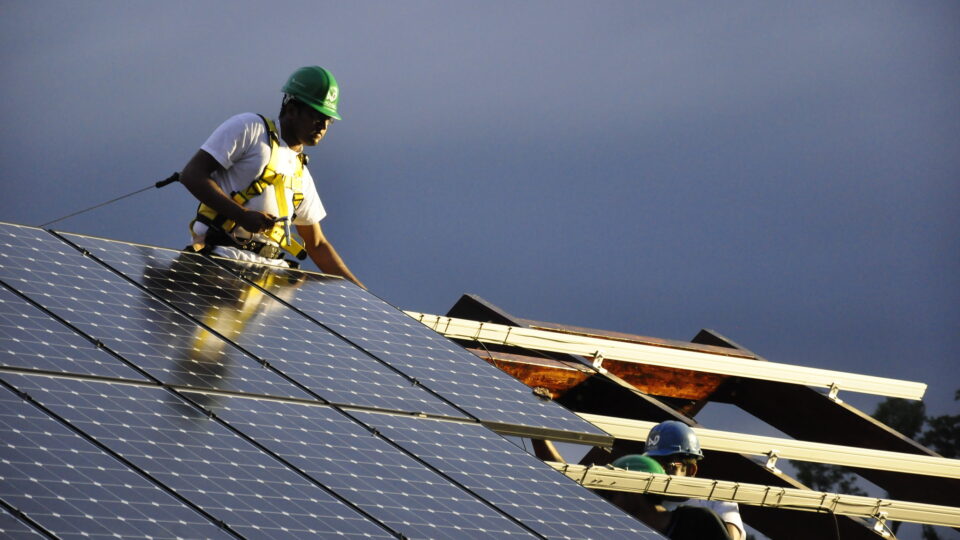
Rooftop solar power in the United States has increased by a factor of ten over the past decade and the majority of that growth has been in the past six or seven years.  At this point, about 7% of American homes have solar panels on their roofs – about 5 million in total. 

Rooftop solar really began experiencing widespread use about 20 years ago.  Over that time period, the amount of electricity that panels are able to produce has grown substantially and the cost of solar power systems has dropped dramatically.

Twenty years ago, the median sized residential solar system generated 2.4 kilowatts of power.  In 2023, the median size was 7.4 kilowatts.  Roofs haven’t gotten bigger; solar panels have gotten better.

More importantly, 20 years ago, the average cost of installing solar power was $12 a watt. In 2023, the cost was $4.20 a watt.

Americans in fact pay considerably more for solar power than citizens in many other countries.  The reason is not the price of the equipment; it is so-called soft costs.  These include labor, financing, and permitting. Driving down soft costs is complicated and difficult. For one thing, it is important for solar industry jobs to have high pay and good benefits.

The cost of solar also varies significantly by state.  California is the leading state for solar power and its median solar cost is the $4.20 a watt, the same as the national average.  Nevada has the lowest cost at $3.40 a watt and Utah has the highest at $5.20 a watt.

**********

Web Links

Bigger and Less Expensive: A Snapshot of U.S. Rooftop Solar Power and How It’s Changed

Photo, posted September 18, 2011, courtesy of Team Massachusetts 4D Home via Flickr.

Earth Wise is a production of WAMC Northeast Public Radio

Ecofriendly Glass

October 2, 2024 By EarthWise Leave a Comment

Designing and producing ecofriendly glass

Glass has been used for thousands of years to make everything from windows to bottles to microscope slides.  For all that time, most glass has been in the form of soda lime silicate glass, which is made by melting quartz sand with carbon-based ingredients – soda ash and limestone – at high melting temperatures of about 2600 degrees Fahrenheit.

The process results in substantial carbon emissions.  Worldwide, glass manufacturing produces over 86 million tons of carbon dioxide per year.  Most of that comes from burning fuel to reach the high temperatures needed to make the glass, but about a quarter of it comes from the decomposition of the carbon-based materials used.

Researchers at Penn State University have developed an entirely new type of glass that represents an alternative to soda lime glass.  The glass – that they call LionGlass – eliminates the use of carbonate batch materials and has a melting temperature 700 degrees lower than traditional glass.   The new material has the potential to cut the carbon footprint of glass manufacturing in half.  It is also 10 times more crack-resistant than ordinary glass, which would enable light weighting of glass products, lowering the emissions associated with transporting glass and glass products.

Recently, Penn state has entered into a partnership with the Italian company Bormioli, one of the world’s leading glass manufacturers that specializes in high-end packaging for fragrances, cosmetics, and tableware.  By focusing on a smaller, high-end market, the focus can be on fine-tuning the glass and determining the feasibility of scaling it up further for other uses.

**********

Web Links

Ecofriendly glass invented at Penn State secures partner for product development

Photo, posted December 26, 2005, courtesy of Lachlan Hardy via Flickr.

Earth Wise is a production of WAMC Northeast Public Radio
Solar farms and pollinators

September 30, 2024 By EarthWise Leave a Comment

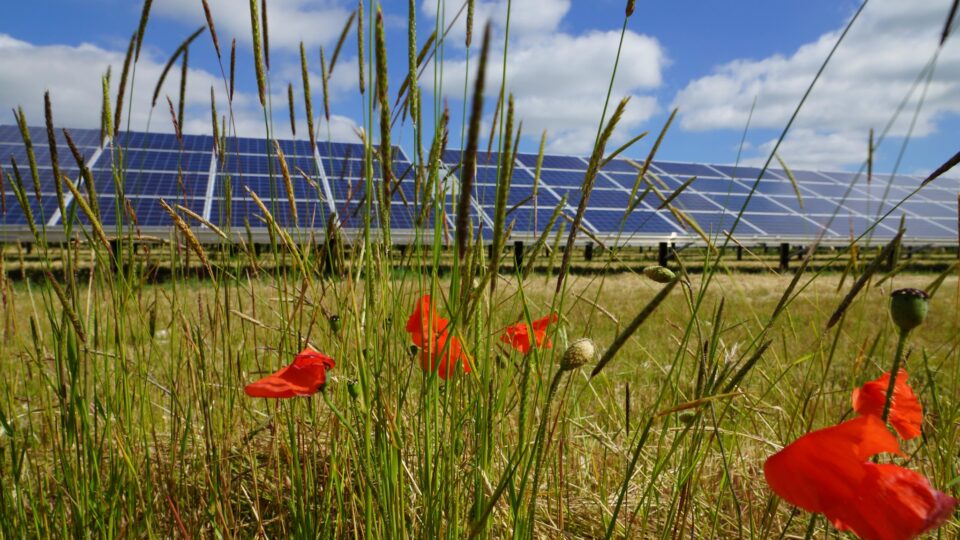
Two important environmental challenges are finding some literal common ground:  the need to reduce carbon emissions and the fight to stave off global biodiversity collapse.  Both issues can be addressed at solar farms.

Solar energy is an important weapon in the battle against climate change.  But utility-scale solar farms take up large amounts of land.  Large-scale solar farms already take up nearly a thousand square miles of land in the US and will take up much more in the coming decades.

In the meantime, the biodiversity collapse is being driven in large part by habitat loss.

Given all this, solar farm operators, biologists, and environmentalists are teaming up to grow pollinator-friendly plants in and around solar farms. The plantings attract insects, birds and even mammals. The more plant diversity in the solar farms, the more environmental benefits can be achieved. 

There are costs associated with creating pollinator-friendly solar farms. Ideally, solar panels need to be installed at greater height than otherwise in order to permit growing many of the plants that attract bees and butterflies.  But there are economic benefits associated with attracting and sustaining pollinators.  On a cautionary note, there have already been cases of greenwashing, where solar operators claim environmental benefits far in excess of the scope of the actual efforts they have made. 

There are both governmental and non-governmental agencies seeking to assess and certify pollinator-friendly solar farms.  There is considerable variability in the ecological value of existing farms.  Pollinator-friendly solar farms are in their early days, but they have a lot to offer as a win-win strategy for the environment.

**********

Web Links

Solar Farms Have a Superpower Beyond Clean Energy

Photo, posted December 4, 2014, courtesy of Juwi Renewable Energies Limited via Flickr.

Earth Wise is a production of WAMC Northeast Public Radio
Revolution Wind installs first turbine

September 27, 2024 By EarthWise Leave a Comment

Revolution Wind installs its first wind turbine

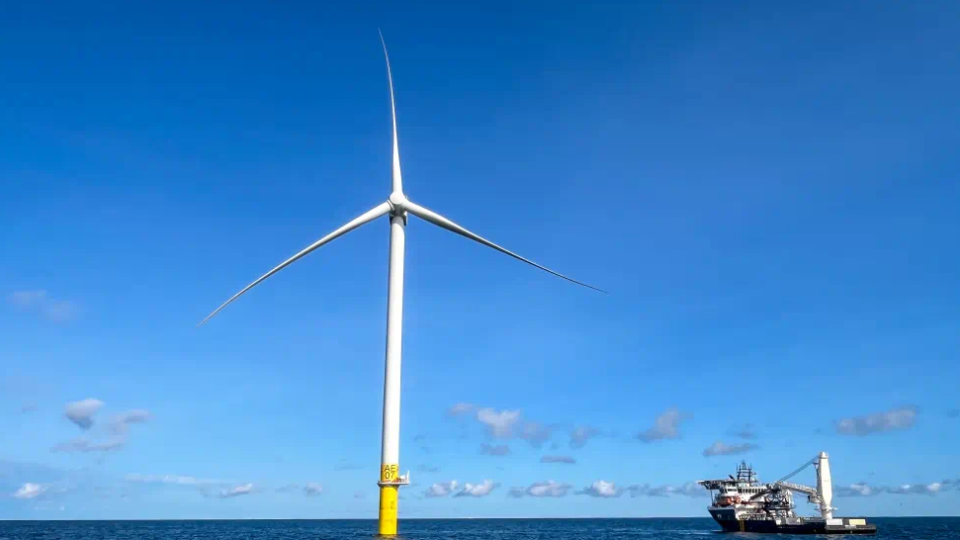
Revolution Wind is an offshore wind farm being built by Rhode Island and Connecticut and is the first multi-state offshore wind farm in the United States.  Once completed, it will deliver 400 MW of power to Rhode Island and 304 MW of power to Connecticut.

Revolution Wind is a 50/50 partnership between Ørsted, the Danish multinational energy company, and Eversource, a major New England utility company.  The wind farm is located about 15 miles south of the Rhode Island coast and 32 miles southeast of Connecticut.  It is fairly close to the recently completed South Fork Wind, the first completed utility-scale offshore windfarm in the U.S. and was built by the same partnership.

The first Revolution Wind turbine was installed at the end of August and construction continues with the installation of foundations for the 65 turbines that will comprise the project.  More than three-quarters of the units were in place by the beginning of September.  Ships have also arrived on scene for cable-laying operations for the wind farm.  Onshore construction continues in North Kingstown, Rhode Island, on the project’s transmission system.  The turbines for the project are being assembled by local union labor in New London, Connecticut. 

Commercial operations at Revolution Wind will not begin until 2026.  Construction of the electrical substation necessary to connect the project to the regional electric grid is taking place on the site of a decommissioned naval air station and it is a time-consuming project because of the presence of buried waste and soil contamination.  The construction of the offshore wind farm itself will be completed in 2025.

**********

Web Links

Revolution Wind installs first offshore turbine

Photo courtesy of Kate Ciembronowicz / Orsted via Revolution Wind.

Earth Wise is a production of WAMC Northeast Public Radio

Removing nanoplastics from water

September 26, 2024 By EarthWise Leave a Comment

Plastic pollution is a growing problem for people and for the environment in multiple ways.  When plastics break down over time, they can form small particles called microplastics – bits smaller than sesame seeds – and these, in turn, can break down into even smaller pieces called nanoplastics.  They are too small to be seen with the naked eye and can enter the body’s cells and tissues.

Recent studies have shown that nanoplastics are increasingly showing up in bottled water.  In fact, measurements on several popular brands of bottled water found an average of nearly a quarter million tiny pieces of plastic in a single liter of bottled water.

The health effects of ingesting all of this plastic are not really known, but they are unlikely to be anything good.  Finding a way of avoiding this contamination of the beverages we drink is a pressing need.

Researchers at the University of Missouri have created a new liquid-based solution that eliminates more than 98% of microscopic plastic particles from water.  The method makes use of water-repelling solvents made from safe, non-toxic natural ingredients. A small amount of this designer solvent absorbs plastic particles from a large volume of water.

The solvent sits on the water’s surface.  When mixed with the water, it absorbs the plastic and eventually comes back to the surface carrying the plastic leaving behind clean, plastic -free water.

Ultimately, the hope is to scale up the process so it can be applied to increasingly large amounts of water – even lakes and, eventually, oceans.  There is work to be done, but it is a potential way to address an increasingly worrisome and pervasive form of pollution.

**********

Web Links

Mizzou scientists achieve more than 98% efficiency removing nanoplastics from water

Photo, posted August 9, 2012, courtesy of Enid Martindale via Flickr.

Earth Wise is a production of WAMC Northeast Public Radio

Electric cars: Boom or bust?

September 25, 2024 By EarthWise Leave a Comment

Electric cars are booming

Media coverage of electric cars in this country is pretty confusing.  Are electric cars taking over or has the EV bubble burst?

EVs currently represent about 8% of the US new car market.  But they continue to face some relatively unique headwinds in this country.  A very powerful and influential oil industry makes sure that anti-EV stories occupy center stage in the media.  Traditional car dealers don’t want to sell EVs because they don’t make much money from parts and service.  And EVs often find themselves tangled up in American politics.

Meanwhile, the rest of the world tells a very different story.  Globally, EVs constitute 20% of new car sales, but in some places, they are doing much better than that.

So far this year, almost 87% of new car sales in Norway are electric and in August, the figure was 94%.  Norway has some incentives in place for EV owners, but the fact that nearly all new cars on the road are electric is far more than the result of incentives.

One might argue that Norway, a country with only 5 million people, faces a much easier task of transitioning to EVs.   But how about China with its 1.4 billion people?  In July, plug-in vehicles in China were 51% of new auto sales.  And the numbers continue to rise.

There are plenty of articles out there explaining why electric cars just can’t meet people’s needs, have insurmountable problems, and how having too many of them would collapse electric grids and otherwise wreak havoc with society.  Apparently, the Norwegians and Chinese, among a growing number of other countries, haven’t gotten the memo.

**********

Web Links

Elbil Thinks Electric Car Sales In Norway Could Hit 100% By Next Year

Photo, posted July 27, 2024, courtesy of Amaury Laporte via Flickr.

Earth Wise is a production of WAMC Northeast Public Radio

Cities and rainwater

September 24, 2024 By EarthWise Leave a Comment

Cities across the country are grappling with the problem that bigger, more frequent rainstorms occurring as a result of climate change are overtaxing the systems put in place to handle stormwater.  Cities use a combination of so-called green infrastructure – such as rain gardens and porous pavements – and traditional gray infrastructure, such as pipes, tunnels, and pump stations.

In 2011, Philadelphia drew national attention for its Green City, Clean Waters program that was designed to manage the increasing amount of storm water using mostly green infrastructure.  Thirteen years later, the city is experiencing billions of gallons of polluted stormwater overflowing its sewage outfall pipes each year.  Green infrastructure is cheaper and faster to build, but it is not coping with increasing rainfall.

About 700 U.S. municipalities, mostly in the Northeast and around the Great Lakes, rely on these combined sewer systems.  Based on updated climate projections, many are having to greatly increase gray infrastructure projects that include concrete holding tanks, tunnels, and pipes that can divert and hold onto flows until the rain stops, and water treatment plants can recover.  These projects can take decades to implement and cost billions of dollars.

All across the country, cities are going to need to bite the bullet and make large-scale investments in conventional sewage infrastructure and repairs to stop billions of gallons of raw sewage from running into rivers.  The increased storms present a daunting challenge for America’s cities.

**********

Web Links

Faced With Heavier Rains, Cities Scramble to Control Polluted Runoff

Photo, posted August 29, 2011, courtesy of Reggie via Flickr.

Earth Wise is a production of WAMC Northeast Public Radio

Big Tech and emissions

September 23, 2024 By EarthWise Leave a Comment

Most of the well-known largest technology companies have established ambitious clean energy goals.  They are on record for achieving net-zero emissions for all their operations and supply chains in many cases by 2030.  As a result, they have been investing heavily in renewable energy in various ways.  Despite these lofty goals and sincere efforts, many of them are struggling to reduce emissions.  The reason is simple:  big data.

A good example is Google, which started investing in renewable energy in 2010 and since 2017 has been purchasing renewable energy on an annual basis to match the electricity consumption of its global operations. However, Google’s greenhouse gas emissions have increased nearly 48% since 2019.  This is primarily a result of data center energy consumption.

The expanding use of artificial intelligence technology is consuming large amounts of electricity.  For example, a single ChatGPT query uses nearly 10 times as much electrical energy as a traditional Google search.

Google is by no means unique in having this problem.  Microsoft’s carbon emissions have risen by nearly 30% since 2020.  Amazon is struggling to reach net-zero across its operations by 2040.

All of these companies are entering into large power agreements with renewable energy companies all across the country.  The AI arms race for more and more computational power is driving a race to install more and more large-scale renewable energy.   Power purchase agreements for solar power, wind power, and even geothermal power are becoming a major activity for most of the largest tech companies.

**********

Web Links

Can Google gobble up enough renewables?

Photo, posted February 12, 2023, courtesy of Geoff Henson via Flickr.

Earth Wise is a production of WAMC Northeast Public Radio

Solid-state batteries for cars

September 19, 2024 By EarthWise Leave a Comment

Battery-powered electric vehicles have historically faced the challenges of limited driving range and long charging time.  In recent years, both of these limitations have been largely overcome for many if not most drivers.  Popular EVs on the market can go 300 miles and more on a charge and today’s fastest charging networks can add 200 miles of range in 20 minutes.  But many people want even more range and even faster charging.  Both of these things will happen in the not-too-distant future.

Multiple companies are working on solid-state batteries, which hold more energy in a given volume than current batteries.  The lithium-ion batteries that power today’s EVs (as well as our phones and computers) have a liquid or gel electrolyte.  Solid-state batteries use a solid ceramic or polymer electrolyte that provides higher energy density, faster charging times, and reduced fire risk as well.

Samsung announced that it will produce solid-state batteries for vehicles by 2027.  Toyota says it is on track to develop a solid-state battery by 2027 or 2028.  California-based QuantumScape has an agreement to supply solid-state batteries to Volkswagen for mass production.  Tesla has not said what it is doing with regard to solid-state batteries, but it is likely that it’s also pursuing the technology.

The upshot of all of this is that EV ranges are likely to increase dramatically over the next several years leading to the availability of vehicles that can go 600 miles or more on a charge.  Given that the cost of EVs is already rapidly becoming at least competitive with if not lower than that of gasoline-powered cars, the days of internal combustion are becoming numbered.

**********

Web Links

Want an EV With 600 Miles of Range? It’s Coming

Photo, posted August 17, 2024, courtesy of Bill Abbott via Flickr.

Earth Wise is a production of WAMC Northeast Public Radio

  • « Go to Previous Page
  • Page 1
  • Interim pages omitted …
  • Page 6
  • Page 7
  • Page 8
  • Page 9
  • Page 10
  • Interim pages omitted …
  • Page 40
  • Go to Next Page »

Primary Sidebar

Recent Episodes

  • An uninsurable future
  • Clean energy and jobs
  • Insect declines in remote regions
  • Fossil fuel producing nations ignoring climate goals
  • Trouble for clownfishes

WAMC Northeast Public Radio

WAMC/Northeast Public Radio is a regional public radio network serving parts of seven northeastern states (more...)

Copyright © 2026 ·