
• Skip to primary navigation
  • Skip to main content
  • Skip to primary sidebar

Earth Wise

A look at our changing environment.

  • Home
  • About Earth Wise
  • Where to Listen
  • All Articles
  • Show Search
Hide Search
You are here: Home / Archives for Technology

Technology

Sustainable Jet Fuel | Earth Wise

March 29, 2023 By EarthWise Leave a Comment

Experimenting with sustainable jet fuel

For several years, a few airlines, notably United here in the US, have been experimenting with the use of sustainable jet fuel.  Sustainable aviation fuel is made from such things as used cooking oil and agricultural waste.  It produces up to 80% fewer greenhouse gas emissions than conventional jet fuel. 

To date, when used it has been blended with fossil fuel jet fuel at a fairly low level.  United is the largest consumer of sustainable jet fuel in the US, but it accounts for less than one percent of the airline’s total fuel consumption.  Unfortunately, sustainable fuel can be as much as three times more expensive than conventional jet fuel.

Because of increasing governmental policy changes, technological breakthroughs, and climate commitments by airlines, efforts to increase the viability of sustainable jet fuel are ramping up.

Recently, United Airlines, Air Canada, Boeing, Honeywell, and JP Morgan Chase made initial contributions of $100 million to a new venture capital fund that will invest in sustainable fuel technology.  United expects the fund to grow to $500 million and make about two dozen investments over the next three years. 

Emissions from aviation contribute more than two percent of global greenhouse gas emissions each year.  Like many big companies, United Airlines has pledged to stop adding carbon emissions to the environment by 2050.  Unlike many, United has also pledged to eliminate emissions without using carbon offsets, which is effectively paying others to do their dirty work without cleaning up their own operations.

Multiple sustainable fuel companies in the US and abroad are working on a variety of ways to make aviation fuel from sustainable sources.

**********

Web Links

A Sudden Rush to Make Sustainable Aviation Fuel Mainstream

Photo, posted August 18, 2021, courtesy of Ronen Fefer via Flickr.

Earth Wise is a production of WAMC Northeast Public Radio

Offshore Wind Industry In New York | Earth Wise

March 27, 2023 By EarthWise Leave a Comment

Last July, New York Governor Kathy Hochul announced the release of the state’s third competitive offshore wind solicitation, seeking to add generating capacity to power at least 1.5 million homes.  In response to the solicitation, the New York State Energy Research and Development Authority – NYSERDA -received more than 100 proposals for 8 new projects from six offshore wind developers.  An evaluation period is in progress and NYSERDA expects to announce awards sometime this spring.

Apart from the development and installation of offshore wind turbines and their associated infrastructure, participating in the program also involves supply chain investments to support the development of a strong, local supply chain that creates jobs for New Yorkers as well as bolstering the state’s standing as a regional hub for offshore wind manufacturing.

Siemens Gamesa Renewable Energy, a multi-billion-dollar Spanish-German wind engineering company, is one of the companies bidding to have its wind turbines used for the forthcoming New York offshore wind projects.   If Siemens Gamesa is selected for the project, the company has revealed that it will build a major offshore nacelle manufacturing facility at the Port of Coeymans, New York, some 15 miles from Albany.

The planned facility would create approximately 420 direct jobs and represent an investment of around $500 million in the region.  Siemens Gamesa said it would also commit to localizing several new component supplier facilities, including steel component fabrication, bearings, and composite components. 

Offshore wind will bring more than just electricity to New York; it will bring a whole new industry.

**********

Web Links

Siemens Gamesa reveals plans for New York offshore wind hub

Photo, posted March 24, 2016, courtesy of TEIA via Flickr.

Earth Wise is a production of WAMC Northeast Public Radio

Self-Deicing Roads | Earth Wise

March 23, 2023 By EarthWise Leave a Comment

Driving on snowy or icy roads can be pretty dangerous.  That is why roads are salted or coated with sand to provide traction in icy weather.  But excessive use of these substances is bad for the environment and sometimes a storm will blow in before the roads can be coated.

In a paper published in the American Chemical Society Journal ACS Omega, researchers in China describe a method of adding microcapsules filled with a chloride-free salt mixture to the asphalt with which roads are paved.  The idea is to provide the road itself with long-term snow melting capabilities.

The researchers prepared a sodium-acetate salt and combined it with a surfactant, silicon dioxide, sodium bicarbonate, and blast furnace slag, which is a waste product from power plants.  The substances were reduced to a fine powder and then coated with a polymer solution to form tiny microcapsules.  The microcapsules were then used to replace some of the standard mineral filler in asphalt.

Lab experiments showed that the special additive lowered the freezing point of water on the asphalt to -6 degrees Fahrenheit.   The researchers estimated that a 2-inch-thick layer of the anti-icing asphalt would be effective at melting snow for seven or eight years.  A real-world pilot test of the coating on a highway offramp showed that it melted snow that fell on the road whereas an uncoated road required snow removal operations.

According to the researchers, given the cost of materials used for the coating and its potential useful lifetime, it could be a practical and economic enhancement for wintertime snow and ice removal.  Maybe we’ll someday have roads that can fairly often deice themselves. 

**********

Web Links

Keeping drivers safe with a road that can melt snow, ice on its own

Photo, posted April 8, 2007, courtesy of the Oregon Department of Transportation via Flickr.

Earth Wise is a production of WAMC Northeast Public Radio

Distributed Wind Energy | Earth Wise

March 17, 2023 By EarthWise 1 Comment

When we think about wind power, we are usually talking about increasingly giant windfarms – either on land or offshore – that produce power on a utility scale.  But there is also distributed wind energy, which refers to wind technologies in locations that directly support individuals, communities, and businesses.  

Distributed wind can be so-called behind-the-meter applications that directly offset retail electricity usage much as rooftop solar installations do.  It can also be front-of-the-meter applications where the wind turbines are connected to the electricity distribution system and supplies energy on a community scale.  Distributed wind installations can range from a several-hundred-watt little turbine that powers telecommunications equipment to a 10-megawatt community-scale energy facility. As of 2020, there were nearly 90,000 distributed wind turbines in the U.S. with a total capacity of about 1 GW.

A study by the National Renewable Energy Laboratory has estimated the potential for distributed wind energy in the U.S.   According to the new analysis, the country has the ability to profitably provide nearly 1,400 GW of distributed wind energy capacity. 

Entire regions of the country have abundant potential. The regions with the best economic prospects have a combination of high-quality wind, relatively high electricity rates, and good siting availability.  Overall, the Midwest and Heartland regions had the highest potential especially within agricultural land.

Realizing this outcome for distributed wind will require improved financing and performance to lower costs, relaxation of siting requirement to open up more land for wind development, and continued investment tax credits and the use of net metering.

**********

Web Links

U.S. has potential for 1,400 GW distributed wind energy, NREL finds

Photo, posted January 3, 2009, courtesy of skyseeker via Flickr.

Earth Wise is a production of WAMC Northeast Public Radio
Solar Power At Night | Earth Wise

March 16, 2023 By EarthWise Leave a Comment

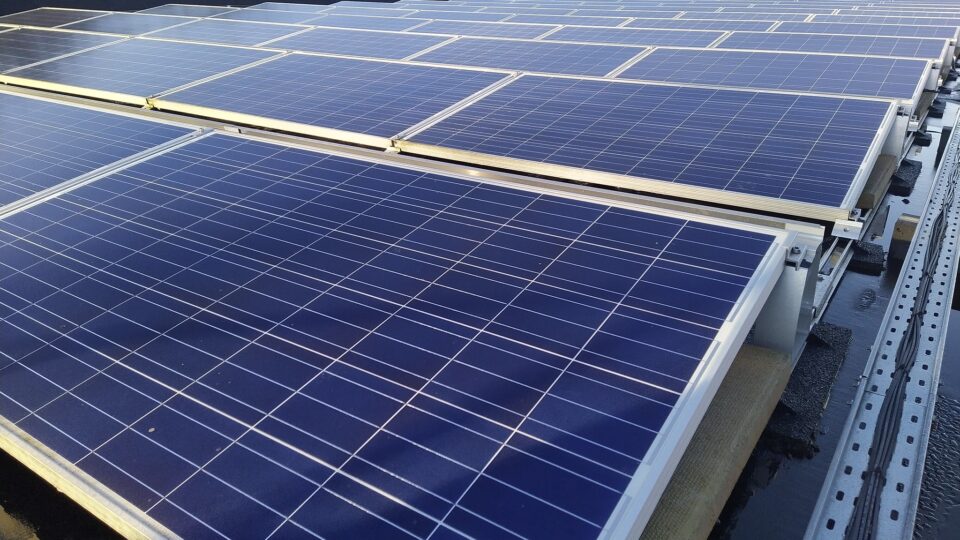
The use of solar power has grown tremendously in recent years as it has declined in price and become far more competitive with other forms of electricity generation.  Its fundamental drawback, of course, is that it only works when the sun is shining.  Solar panels don’t produce any power at night.  That is, until now, apparently.

A team of engineers at Stanford University have developed a new kind of solar cell that is capable of generating at least some electricity at night.  Published in the journal Applied Physics Letters, the research describes a device that can be a continuous renewable power source for both day and nighttime.

The device incorporates a thermoelectric generator that produces electricity from the small difference in temperature between the ambient air and the solar cell itself.  The amount of power produced is far less than the solar cell generates from sunlight, but the device can provide nighttime standby lighting and power in off-grid and mini-grid applications.

Mini-grid applications are independent electricity networks that are used for small populations that may be too isolated to be connected to the main power grid.  Nearly 600 million people in Africa currently live without access to electricity, primarily in rural areas.  A standalone solar system operating independently of any power grid can meet many electricity needs such as phone charging and lighting, but such systems may not be able to handle large electrical need such as powering machinery and agricultural equipment.  Mini-grids are larger installations that can provide power to a small rural community.

With innovations like the new Stanford device, a solar mini-grid may be able to keep running at some level even at night.

**********

Web Links

Solar panels that can generate electricity at night have been developed at Stanford

Photo, posted December 15, 2021, courtesy of Pete via Flickr.

Earth Wise is a production of WAMC Northeast Public Radio
Renewables’ Growing Share | Earth Wise

March 15, 2023 By EarthWise Leave a Comment

Not long ago, many states across the country were setting goals to obtain 20% of their electricity from renewable sources. For a few states, like New York and Washington, ample amounts of hydropower made 20% an easy target.  But for many others, 20% seemed like a very ambitious objective.

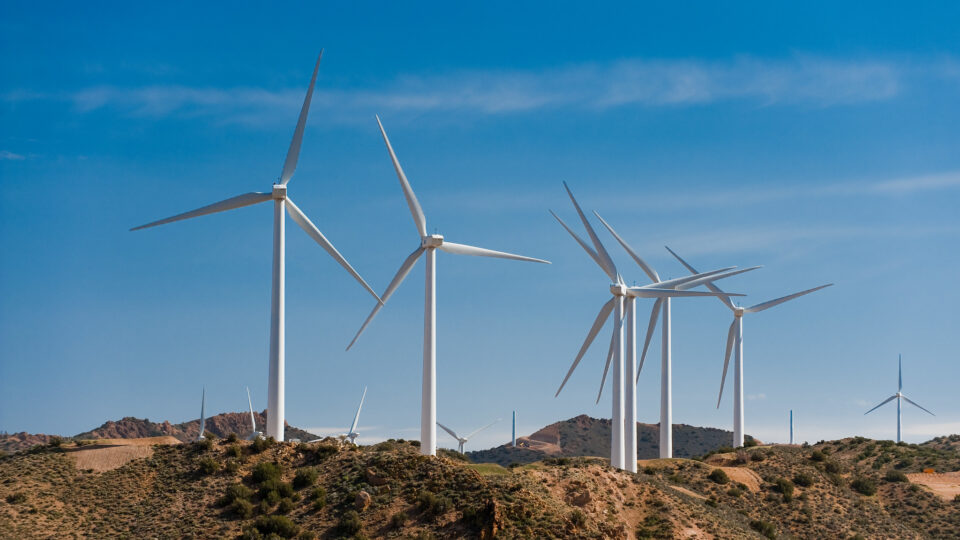
Things have certainly changed.  According to the latest monthly Short Term Energy Outlook, a report from the federal government, the combination of wind, solar, and other renewable sources will exceed one-quarter of the country’s generation by 2024.

Renewables are already at 24% of U.S. electricity generation and are expected to rise to 26% by next year.  Coal, which used to be the largest source of electricity, will continue to drop from its current 18% to 17% by next year.  Overall, renewables passed coal for the first full year in 2020.  Coal staged a bit of a comeback in 2021, but has once again resumed its decline.  Many coal-fired power plants continue to close, and there are not new ones being built because of diminishing economic benefits as well as concerns about emissions.

The largest source of electricity generation continues to be natural gas at 38%, but that number is also expected to slowly decrease over time. The growth in renewable energy is coming from wind and solar power.  Two-thirds of that growth is from solar and one-third is from wind. 

Together, wind and solar power will add up to 18% of the country’s electricity supply.  The government still tracks them lumped together as renewables, but both are so large and growing so quickly that the Energy Information Agency is likely to soon start tracking them as separate categories.

**********

Web Links

Renewables Projected to Soon Be One-Fourth of US Electricity Generation. Really Soon

Photo, posted April 18, 2011, courtesy of Allan Der via Flickr.

Earth Wise is a production of WAMC Northeast Public Radio

Mining Metals From Water | Earth Wise

March 14, 2023 By EarthWise Leave a Comment

Researchers at the Department of Energy’s Pacific Northwest National Laboratory in Richland, Washington are working with industry to develop a method of extracting valuable materials from various sources of water.  The technique is the 21st-century equivalent of panning for gold in rivers and streams.

The patent-pending technology makes use of magnetic nanoparticles that are surrounded by an absorbent shell that latches on to specific materials of interest that are found in certain water sources.  These sources could include water in geothermal power plants (known as geothermal brines), water pulled from the subsurface during oil or gas production, or possibly effluents from desalination plants.  Extracting valuable materials from geothermal brines could greatly enhance the economics of geothermal power plants.

The initial focus of the development is on lithium, which is an essential element in many high-technology applications, especially in the batteries that power cell phones, computers, and electric cars.  The global market for lithium is projected to reach over $8 billion a year by 2028 and very little of it is currently produced in the United States.

The tiny particles are added to the water and any lithium is drawn out of the water and is bound to them.  Using magnets, the nanoparticles can be readily collected.  Once the particles are no longer suspended in liquid, the lithium can easily be extracted, and the nanoparticles can be reused.

PNNL is developing the technology in partnership with a company called Moselle Technology as well as with other commercial partners.  This new technology offers the promise of extracting critical materials in a quick, cost-effective manner.

**********

Web Links

Tri-Cities Scientists “Magically” Mining Metals From Water

Photo, posted June 4, 2012, courtesy of Tom Shockey via Flickr.

Earth Wise is a production of WAMC Northeast Public Radio

Plastic From Sunlight | Earth Wise

March 13, 2023 By EarthWise Leave a Comment

Photosynthesis is the process that plants use to turn water, carbon dioxide, and energy from sunlight into plant biomass.  It provides humans and much of animal life with food.  Photosynthesis is also nature’s way of reducing the amount of carbon dioxide in the atmosphere.  The CO2 is not directly stored in plants but rather is combined into organic compounds.

Researchers across the globe are trying to find effective ways to mimic photosynthesis.  One version of artificial photosynthesis seeks to take carbon dioxide and combine it into organic compounds that can be used as raw materials for various kinds of manufacturing. 

A research team in Japan has found a way to synthesize fumaric acid from carbon dioxide using sunlight to power the process.  Fumaric acid is a chemical typically synthesized from petroleum and is used as a raw material for making biodegradable plastics such as polybutylene succinate. 

Much of artificial photosynthesis research is aimed at using solar energy to convert carbon dioxide directly into a fuel rather than a raw material.  Such solar fuels can be produced by a variety of means including thermochemical (using the sun’s heat to drive chemical reactions), photochemical (using the sun’s light to drive chemical reactions), and electrochemical (using solar-generated electricity to drive chemical reactions.)   These approaches generally involve the use of specialized catalysts to drive the desired chemical reactions. 

One way or another, what techniques for artificial photosynthesis have in common is trying to imitate what plant life on Earth has been doing for millions of years. 

**********

Web Links

Artificial photosynthesis uses sunlight to make biodegradable plastic

Photo, posted June 14, 2017, courtesy of Alex Holyake via Flickr.

Earth Wise is a production of WAMC Northeast Public Radio

Fake Meat And Climate | Earth Wise

March 10, 2023 By EarthWise 1 Comment

Investors have poured billions of dollars into efforts to replace animal proteins with plant-based substitutes or even laboratory-grown animal cells.  Replacing meats with these products is certainly a favorable development for the climate, but it is not likely to offset livestock agriculture’s climate and land use impacts anytime soon.

According to research at Stanford University, even optimistic estimates are that only something like 5% of dietary protein will come from these technologies by 2030.  That just isn’t fast enough to put a real dent in the food-related emissions problem.

Stanford environmental scientist David Lobell suggests that there should be much more focus on reducing emissions of animal-based systems.  There really hasn’t been much effort in this area because it is only recently that the climate impact of animal agriculture has been a topic of public concern.  One problem is that it is difficult for investors to monetize investments in approaches for lowering animal agriculture emissions.  These might include alternative feeds or supplements or vaccinations that inhibit methane-producing microorganisms in animals’ digestive systems.

Another approach to the problem is changing the mix of animal proteins in people’s diets.  Chicken and pork are half as bad as dairy per pound of protein, and about one-tenth as bad as beef, in terms of emissions.

Dairy is a major issue. There has been quite a lot of progress in increasing the use of dairy-free milk, but over the past 40 years, Americans have cut their consumption of milk in half but doubled their consumption of cheese.  Progress in dairy-free cheese has not been anywhere near as successful as that of dairy-free milk.  But new products are entering the marketplace all the time.

**********

Web Links

Is fake meat a real solution? Stanford expert explains

Photo, posted June 17, 2019, courtesy of Christolph Scholz via Flickr.

Earth Wise is a production of WAMC Northeast Public Radio
Cheaper Carbon Capture | Earth Wise

March 7, 2023 By EarthWise Leave a Comment

Scientists developing a new system to capture carbon more cheaply

As the years roll by without sufficient progress in reducing carbon dioxide emissions, the need for technologies that can capture CO2 from its sources or remove it from the air becomes stronger and stronger.  People have developed various ways to capture carbon dioxide, but to date, they generally suffer from some combination of being too costly or not being able to scale up to the necessary magnitude.

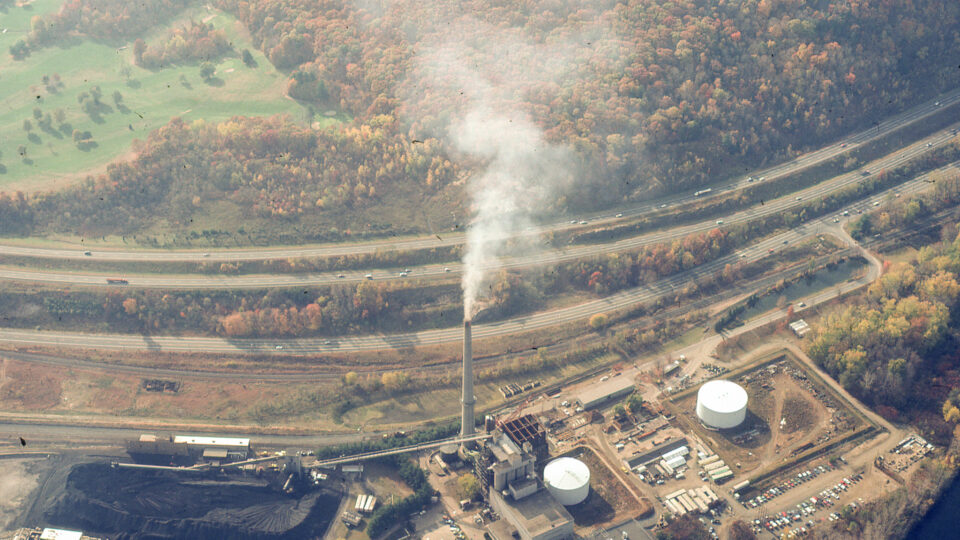
Scientists at the Pacific Northwest National Laboratory in Richland, Washington recently announced the creation of a new system that they claim is the least costly to date that captures carbon dioxide and turns it into a widely-used chemical: methanol.

Technologies that simply capture carbon dioxide that then needs to be stored in some secure location are difficult to implement from a cost perspective.  The PNNL researchers believe that turning CO2 into methanol can provide the financial incentive for widespread implementation.   Methanol can be used as a fuel, a solvent, or an important ingredient in plastics, paint, construction materials, and car parts.

The system is designed to be installed in fossil fuel-fired power plants as well as cement and steel plants.  Using a capture solvent developed by PNNL, the system grabs carbon dioxide molecules before they are emitted and converts them into methanol. Creating methanol from CO2 is nothing new, but capturing the carbon dioxide and converting into methanol in one continuously flowing system is new.

More work is needed to optimize and scale the process and it may be several years before it is ready for commercial deployment.

**********

Web Links

Scientists Unveil Least Costly Carbon Capture System to Date

Photo, posted November 25, 2022, courtesy of Massachusetts Department of Environmental Conservation via Flickr.

Earth Wise is a production of WAMC Northeast Public Radio
Peak Fossil Fuels | Earth Wise

March 3, 2023 By EarthWise Leave a Comment

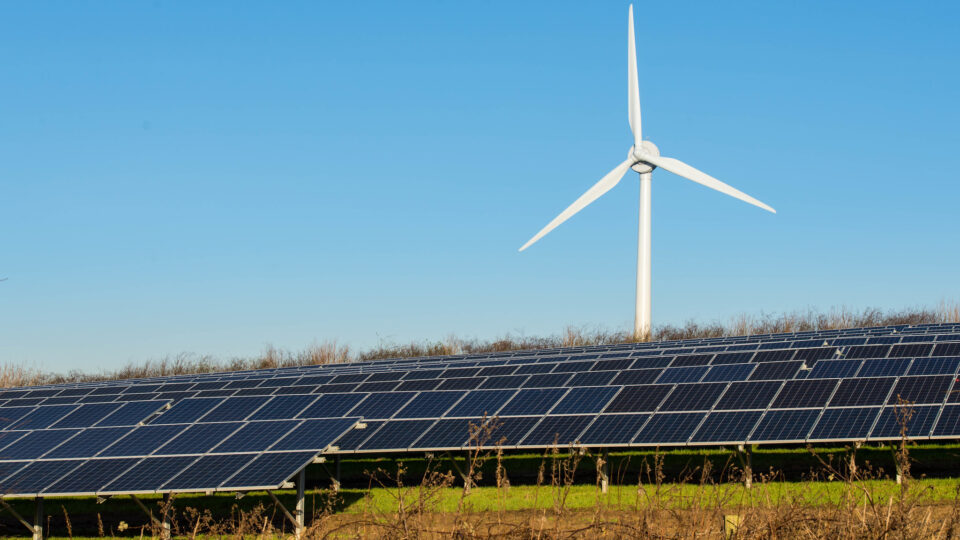
According to a new report from the Rocky Mountain Institute, a nonprofit that studies the energy transition, we have reached a pivot point in which fossil fuels have peaked in their use for producing electricity and are about to enter a period of decline.

The report makes the case that wind and solar power are going through a growth process that looks very much like the trend lines for the early stages of other transformative products and industries – things like automobiles and smartphones.  Such growth begins slowly for technology and products that are very expensive, but then shifts into high gear as costs shrink and efficiency rises.

The argument is that fossil fuel demand has peaked in the electricity market because the annual growth in global electricity demand is now less that the amount of electricity being generated by newly-built renewable energy plants (mostly solar and wind.)  This dynamic will squeeze out the most expensive and dirtiest energy sources over time.

Overall use of fossil fuels for electricity shifted in 2018 from a long-standing period of growth to a holding pattern in which the total amount of electricity produced has no clear trend.  According to the RMI report, this plateau in fossil fuel use is likely to continue until about 2025, and then will be followed by a long-term decline.

While the trends in fossil fuel use are quite evident, the end results are not inevitable.  There continues to be a battle between the forces trying to protect the fossil fuel status quo and those trying to change it. But strong economic forces are difficult to overcome.  Renewable energy is the lowest cost source of electricity in a growing number of locations and situations.

**********

Web Links

When Will We Hit Peak Fossil Fuels? Maybe We Already Have

Photo, posted December 27, 2015, courtesy of Gerry Machen via Flickr.

Earth Wise is a production of WAMC Northeast Public Radio

The Enormous Cost Of Steel Corrosion | Earth Wise

February 28, 2023 By EarthWise Leave a Comment

Global steel production has been rising for decades.  Because steel corrodes over time, part of the demand for more steel comes from the need to replace the steel used in construction materials – in everything from bridges to cars – that has become corroded over time.  Studies have estimated that the economic cost of corrosion is an astonishing 3 to 4% of a nation’s gross domestic product.  Globally, this means that steel corrosion costs the world trillions – yes, trillions with a T – of dollars each year.

On top of the staggering economic impact of corrosion, there is the fact that steel production is one of the largest greenhouse gas emitters of any industry, accounting for more than 25% of all manufacturing sector carbon emissions.  In fact, steel manufacturing causes over 10% of total global carbon emissions.  

As a result of regulations placed on the steel industry, technological advances in the steelmaking process have resulted in a 61% reduction in the industry’s energy consumption over the last 50 years.   There are continuing efforts to reduce the energy consumption of steel making and to move away from the use of fossil fuels to produce the needed energy.  But without significant improvements, just the emissions associated with replacing corroded steel could make the goals set by the Paris Climate Agreement unfeasible.

It’s hard to believe that something costing the world trillions of dollars and has a major negative impact on the climate is largely invisible.  Steel corrosion is an enormous societal challenge that has gone under the  radar for decades and therefore has not received anything like the attention it deserves.

**********

Web Links

Reducing steel corrosion vital to combating climate change

Photo, posted July 24, 2008, courtesy of Phil Whitehouse via Flickr.

Earth Wise is a production of WAMC Northeast Public Radio

Driving Electric Is Cheaper For Almost Everyone | Earth Wise

February 24, 2023 By EarthWise Leave a Comment

A study by University of Michigan researchers found that about 90% of U.S. households would save money on fuel costs by owning an electric car rather than a gas-powered car.  So apart from the environmental benefits of electric cars, there are real economic benefits as well.

Both the price of gasoline and the price of electricity vary considerably across the country, so there are differences by location.  The study found that 71% of U.S. drivers would see their fuel expenses cut at least in half by driving an electric car.


Drivers in California, Washington, and New York would see the largest fuel savings as well as the biggest emissions reductions from a new electric car.  Those states have cleaner electric grids and a bigger gap between the cost of electricity and the cost of gas.

The study, published in the journal Environmental Research Letters, only looked at fuel costs and did not take into account the purchase cost of new cars.  Generally speaking, plug-in cars have higher sticker prices than gas-powered cars but multiple studies have shown that over their lifetimes, electric vehicles end up being cheaper to own than comparable gas-powered vehicles because of lower maintenance costs on top of the fuel savings.  The price gap between equivalent gas and electric cars continues to narrow in any case as the cost of batteries continues to decline.  On top of that, the recent expansion of federal tax credits on electric cars is making the vehicles cost-competitive right at the point of purchase.

Gasoline prices have come down considerably from their peak a year ago, but for almost everyone, it is still much cheaper to drive on electricity.

**********

Web Links

Seven in 10 U.S. Drivers Could Halve Their Fuel Costs by Going Electric, Study Finds

Photo, posted April 23, 2022, courtesy of Pedrik via Flickr.

Earth Wise is a production of WAMC Northeast Public Radio

Keeping Trash Out Of The Ocean | Earth Wise

February 23, 2023 By EarthWise Leave a Comment

The Ocean Cleanup Project

The Ocean Cleanup is a non-profit organization, founded in 2013 by Dutch inventor Boyan Slat, to develop and scale technologies to rid the world’s oceans of plastic.  It is an organization that proudly declares that its primary aim is to put itself out of business by successfully cleaning up the oceans.

A major activity of The Ocean Cleanup is efforts to clean the ocean garbage patches that have accumulated in several places, best-known of which is the Great Pacific Garbage Patch.  The effort involves use of large U-shaped floating barriers that act as an artificial coastline to trap garbage which is then funneled into a barge for disposal.  Ten full-sized systems will be needed to clean up the Great Pacific Garbage Patch.

A second activity of The Ocean Cleanup is preventing garbage in rivers from making its way into the oceans.  Rivers are the main source of ocean plastic pollution.  The Ocean Cleanup has developed river machines called Interceptors that capture garbage for disposal.  Last fall, they installed a machine called Interceptor 007 in Ballona Creek, a waterway in the Los Angeles area.  In the first rainfall after installation, the Interceptor managed to stop 35,000 pounds of waste from entering the ocean in just a few days.

The original Interceptor models have been deployed in Indonesia, Malaysia, the Dominican Republic, and Vietnam. A different type called the Interceptor Trashfence is being tested in Guatemala.

The Ocean Cleanup states that if fleets of its barrier systems are installed in all the garbage patches and Interceptors in the 1000 most significant rivers, 90% of floating ocean plastic can be removed by 2040.

**********

Web Links

The Interceptor 007 Stops 35,000 Pounds Of Trash From Entering Ocean

The Ocean Cleanup

Photo, posted February 23, 2015, courtesy of Ministerie van Buitenlandse Zaken via Flickr.

Earth Wise is a production of WAMC Northeast Public Radio
Fuel From Wind And Water | Earth Wise

February 21, 2023 By EarthWise 1 Comment

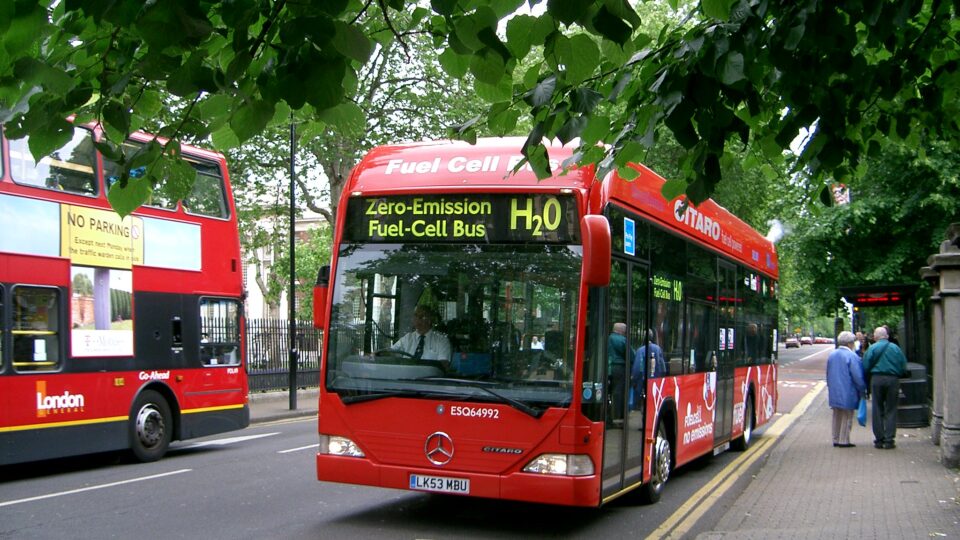
Hydrogen is the most common element in the universe and it can be used as a fuel to run cars, trains, and even airplanes.  Using it produces no harmful emissions.  However, to date, the way it is economically produced is not clean and green.  It is made from natural gas and leaves behind lots of carbon dioxide.

Around the world there are many projects working on so-called green hydrogen.  Producing hydrogen by splitting water into its component elements is called electrolysis and produces only oxygen as a waste product.  The problem with electrolysis is that it takes prodigious amounts of energy and therefore is very expensive.

A new project taking place in north Texas hopes to create the country’s first large-scale producer of green hydrogen.  The project is building a 900-megawatt wind farm along with a 500-megawatt solar farm.  The 1.4 gigawatts of total production capacity is more energy than the city of Austin consumes.  That energy will be used to produce 200,000 kilograms of hydrogen a day.

This project is among the largest proposed green hydrogen projects in the U.S.   There are green hydrogen proposals in Europe, Australia, Africa, and the Middle East that range from 10 GW to 67 GW. 

The Texas project, being developed in partnership by Air Products and AES, has been enabled by government support from the Inflation Reduction Act.    

There are a few thousand hydrogen-powered cars, boats, and trains but without substantial, cost-effective hydrogen infrastructure, the market is very limited.   Subsidizing the development of the necessary infrastructure is essential if there is any real chance to create the long-imagined hydrogen economy.

**********

Web Links

Texas Project Will Use Wind to Make Fuel Out of Water

Photo, posted June 5, 2005, courtesy of City Transport Info via Flickr.

Earth Wise is a production of WAMC Northeast Public Radio

Electric Vehicle Tax Credits | Earth Wise

February 17, 2023 By EarthWise Leave a Comment

As of January 1, many Americans can qualify for a tax credit of up to $7,500 for buying an electric vehicle.  The credit is one of the changes enacted under last year’s Inflation Reduction Act.  The purpose is to encourage EV sales and thereby reduce greenhouse gas emissions and air pollution.

There has been a tax credit for EVs for more than a decade, but its provisions made cars from any manufacturer ineligible as soon as that manufacturer had sold more than 200,000 cars.  Notably, this eliminated the credit for purchasing cars from Tesla and General Motors.  Given that electric cars are now selling in the millions, the 200,000-unit cap on the tax credit essentially made it useless as a real force to grow the industry.

The new tax credit has a somewhat complex set of requirements for determining the applicability and amount of the credit.  There are price limits on eligible vehicles depending on vehicle type and there are requirements on where vehicles are manufactured, where batteries are manufactured, and where other components are made. The intent is to encourage American manufacturing of the cars and trucks to the greatest extent.  There are also income limitations on buyers who want to take advantage of the credit, but those are quite large.  The Department of the Treasury has online detailed information about the requirements for the credit and, of course, EV manufacturers can provide the specifics for their own vehicles.

For their part, automakers are adjusting prices, building domestic manufacturing plants and battery factories, and otherwise trying to position themselves for their customers to take advantage of the credit.

The new law also provides a smaller tax credit for the purchase of used electric vehicles.

**********

Web Links

Electric vehicle tax credits explained: What’s new in 2023?

Treasury Releases Additional Information on Clean Vehicle Provisions of Inflation Reduction Act

Photo, posted December 9, 2022, courtesy of Choo Yut Shing via Flickr.

Earth Wise is a production of WAMC Northeast Public Radio

A New Method of Refrigeration | Earth Wise

February 10, 2023 By EarthWise Leave a Comment

A new method of refrigeration

Salting roads before winter storms is a familiar sight in the Northeast.  The purpose is to change the temperature at which ice can form on the road.  The underlying concept has formed the basis of a new method of refrigeration that has been dubbed “ionocaloric cooling.”

It is described in a paper published in the journal Science by researchers at the Lawrence Berkeley National Laboratory.  The method takes advantage of how energy in the form of heat is either stored or released when a material changes phase – such as water changing from ice to liquid and vice versa.  Melting absorbs heat from the surroundings while freezing releases heat.  An ionocaloric refrigerator makes use of this phase and temperature change using an electrical current to add or remove ions provided from a chemical salt.

The potential is to make use of this refrigeration cycle instead of the vapor compression systems in present-day refrigerators, which make use of refrigerant gases that are greenhouse gases, many of which very powerful ones.  The goal is to come up with a system that makes things cold, works efficiently, is safe, and doesn’t harm the environment. 

There are a number of alternative refrigeration systems under development that make use of a variety of mechanisms including magnetism, pressure, physical stretching, and electric fields.  Ionocaloric cooling uses ions to drive solid-to-liquid phase changes.

Apart from some very promising theoretical calculations of the system’s potential, the researchers have also demonstrated the technique experimentally.  They have received a provisional patent for the technology and are continuing to work on prototypes to demonstrate its capabilities and amenability to scaling up.

**********

Web Links

Berkeley Lab Scientists Develop a Cool New Method of Refrigeration

Photo, posted October 29, 2021, courtesy of Branden Frederick via Flickr.

Earth Wise is a production of WAMC Northeast Public Radio
An Iron-Air Battery Plant | Earth Wise

February 9, 2023 By EarthWise Leave a Comment

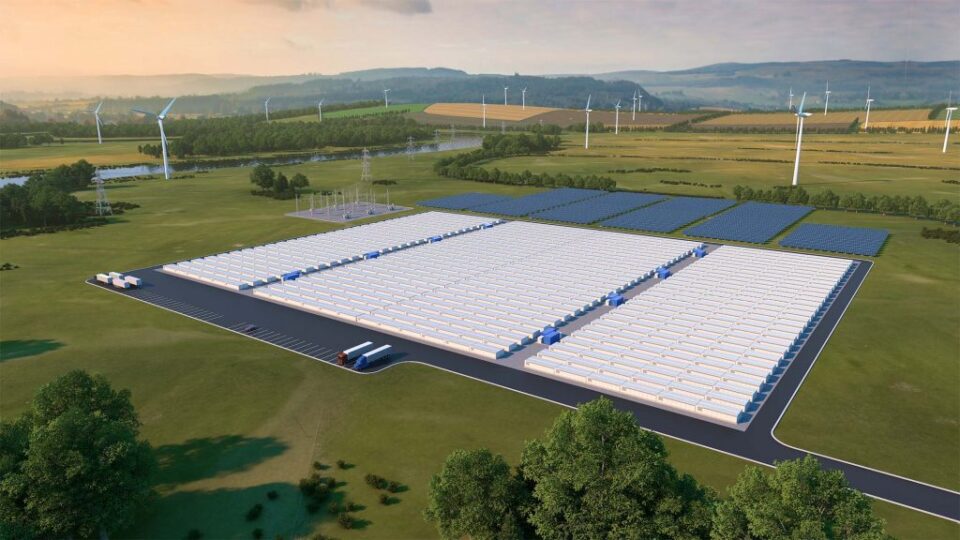
Form Energy is building a iron-air battery storage facility

Lithium-ion batteries are the standard energy source for electric vehicles, and they are also the dominant technology for storing energy in the electric grid.  However, they are not the only game in town.  There are other battery technologies that have various potential advantages over lithium-ion and some of them are getting the chance to show what they can do.

One is the iron-air battery.  Unlike lithium-ion batteries that require expensive and strategically challenging materials like lithium, cobalt, nickel, and graphite, iron-air batteries make use of one of the most common elements in the earth’s crust.

Iron-air batteries operate on a principle known as “reversible rusting”.  When discharging, the battery takes in oxygen from the air and converts iron into rust.  While charging, electrical current converts rust back into iron and the battery releases oxygen.  Batteries consist of a slab of iron, a water-based electrolyte, and a membrane that feeds a controlled stream of air into the battery. 

A Massachusetts-based company called Form Energy is building a $760 million iron-air battery storage facility in the city of Weirton in West Virginia.  Investment financing along with a $290 million government incentive package is paying for the facility. 

The facility is designed to address the need for long-duration energy storage and will be capable of storing electricity for 100 hours at competitive prices.  The battery modules will be about the size of a side-by-side washer/dryer and will contain a stack of 50 3-foot-tall cells.  Such batteries are too big and heavy for use in cars but will be cheaper and higher-capacity than equivalent lithium-ion battery systems.

**********

Web Links

Form Energy selects West Virginia for its first iron-air battery plant

Photo credit: Form Energy

Earth Wise is a production of WAMC Northeast Public Radio

Agriculture Turning Wild Plants Into Weeds | Earth Wise

February 7, 2023 By EarthWise Leave a Comment

Modern agriculture practices are turning wild plants into weeds

We often hear about the importance of native plants in the environment and how invasive species can wreak havoc with ecosystems.   But it turns out that human activities can change the characteristics of native species and create unexpected new problems.

Common waterhemp is plant native to North America that typically grows near lakes and streams.  It never used to be any kind of problem, but in recent times it has become nearly impossible to eradicate from farms as a result of genetic adaptations triggered by modern agriculture.

A study led by researchers at the University of British Columbia looked at waterhemp samples from modern farms and neighboring wetlands and compared them with historical samples dating back as far as 1820 stored in various museums.

In recent times, mutations in genes related to drought tolerance, rapid growth, and resistance to herbicides have resulted in waterhemp that has become a pervasive weed on farms.  These genetic shifts, scarcely ever seen in historical samples, have made the plant thrive among human agricultural activities and enable it to outcompete crops.

Genetic analysis of the plants showed that herbicide-resistant mutations that were mostly absent from historical samples stand out as factors that allow waterhemp to prosper in agricultural settings. There are some plants in natural habitats that have herbicide-resistant mutations, but in many cases, these mutations are actually harmful to the plants in the wild.

Understanding how plant adaptations occur on relatively short timescales is increasingly important as farming and climate  change continue to drive rapid plant evolution.

**********

Web Links

How intensive agriculture turned a wild plant into a pervasive weed

Photo, posted February 16, 2016, courtesy of Aqua Mechanical via Flickr.

Earth Wise is a production of WAMC Northeast Public Radio

Energy From Rice Straw | Earth Wise

February 3, 2023 By EarthWise Leave a Comment

Turning rice straw into energy

Rice straw is produced as a byproduct of rice production.  Globally, as much as a billion tons of rice straw is produced each year, three-quarters of it in Asia.  Straw incorporation in soil for fertilization is not practical in most places because with multiple crops per year, there is not enough time for the material to decompose and become good fertilizer.  As a result, open-field straw burning is increasingly the standard practice.

Scientists at Aston University in Birmingham in the UK are embarking on a project to convert rice straw in Indonesia into low-cost energy on a commercial scale.

Indonesia produces 100 million tons of rice waste each year, of which 60% is burned in open fields, causing air pollution. 

The Aston researchers are developing a biomass conversion process based on pyrolysis.  This involves heating the rice straw to high temperatures over 900 degrees Fahrenheit to break it down, producing vapor and solid products.  Both of these things can be used to generate electricity.

A new combustion engine designed by a company called Carnot Limited is capable of converting 70% of the thermal energy extracted from the rice straw into electricity.

Energy extracted in this way could help low and middle-income countries to create their own locally generated energy, thereby reducing emissions, creating jobs, and improving human health.   The biomass electricity is predicted to be cheaper than solar, geothermal, wind, coal, or even subsidized gas-generated power.

The Aston University project will help develop a business model that could support companies and communities to produce local, cheap energy in Indonesia and other countries with biomass capacity. 

**********

Web Links

Aston University to help power Indonesia with affordable energy made from rice straw

Photo, posted September 11, 2006, courtesy of Kristen McQuillin via Flickr.

Earth Wise is a production of WAMC Northeast Public Radio

  • « Go to Previous Page
  • Page 1
  • Interim pages omitted …
  • Page 17
  • Page 18
  • Page 19
  • Page 20
  • Page 21
  • Interim pages omitted …
  • Page 40
  • Go to Next Page »

Primary Sidebar

Recent Episodes

  • An uninsurable future
  • Clean energy and jobs
  • Insect declines in remote regions
  • Fossil fuel producing nations ignoring climate goals
  • Trouble for clownfishes

WAMC Northeast Public Radio

WAMC/Northeast Public Radio is a regional public radio network serving parts of seven northeastern states (more...)

Copyright © 2026 ·