
• Skip to primary navigation
  • Skip to main content
  • Skip to primary sidebar

Earth Wise

A look at our changing environment.

  • Home
  • About Earth Wise
  • Where to Listen
  • All Articles
  • Show Search
Hide Search
You are here: Home / Archives for Technology

Technology

Rain Gardens And Residential Pollution | Earth Wise

July 12, 2023 By EarthWise Leave a Comment

Rain gardens are a solution to residential pollution of waterways

Stormwater runoff has become the largest source of residential pollution for waterways.  As rainwater runs down roofs, over driveways and patios, and off other hard surfaces, it can pick up pollutants as it flows directly into streams, wetlands, lakes, and groundwater aquifers.  That water is typically routed directly through stormwater pipes and ditches with little filtering or treatment.  The main emphasis is on getting the water off of people‘s property as quickly and efficiently as possible to avoid flooding.

Many municipalities are dealing with the problem by installing rain gardens, which are a type of green infrastructure in commercial spaces that slow down and treat water before it enters streams, wetlands, and other bodies of waters.  When designed and installed properly with appropriate plants, rain gardens are like miniature water treatment facilities   Water gathers in the rain garden, soaks into the soil, and is taken up by plants.  The plants filter nutrients, sediments, and toxic materials from the runoff before excess water ever gets to waterways.

Homeowners are being encouraged to build their own rain gardens.  They need to familiarize themselves with how runoff from their roof, driveway, sidewalk, and roads is currently being routed and treated.  The idea is to try to incorporate that runoff into a rain garden design with sufficient area and infiltration rates.  The runoff would ultimately flow out from a safe, designated location into storm drains at a slower rate than from the previous impervious surfaces.  Homeowners would need to work with their local jurisdictions to find out the requirements for re-routing water in their area and make sure any modifications prevent erosion and protect nearby homes, roads, and other infrastructure.

**********

Web Links

Rain gardens help keep pollutants out of waterways

Photo, posted March 3, 2017, courtesy of Jeremy Jeziorski / Oregon Convention Center via Flickr.

Earth Wise is a production of WAMC Northeast Public Radio

Electric Cars And Apartments | Earth Wise

July 10, 2023 By EarthWise Leave a Comment

Lack of charging options for people who rent hinder wider electric vehicle adoption

The transition to electric cars is underway.  People are increasingly buying them, carmakers are switching over to making them, and governments are providing incentives as well as legislating the changeover.  More and more consumers want to lower their carbon footprints and stop burning fossil fuels.  But one very large group of consumers faces an uphill battle in switching to electric cars:  people who rent their dwellings.

About one third of our country lives in rented apartments or houses.  These nearly 110 million Americans are more likely to be in the bottom half of income and net worth and are more likely to be people of color.  These people are less likely to have the spare cash to make upgrades to their property such as car chargers and may not be able to get permission from their landlords to do it anyway.

Renters face what is known as the “split-incentive problem” or the “landlord-tenant problem.”  Three-quarters of tenants in the US pay their own utility bills, so they have a strong incentive to conserve electricity, water, and gas.  Their landlords, on the other hand, have little incentive to upgrade appliances and systems to be more environmentally responsible.  Studies have shown that on average renters use 3% more energy than homeowners for this reason.

There are some landlords who are being proactive and installing facilities for charging cars on their properties.   This will undoubtedly become an increasingly sought-after feature for renters.  But in the meantime, millions of them have a more difficult time driving electric cars.  They can charge at public chargers or perhaps at work.  But at the moment, homeowners are three times more likely than renters to own an electric car.

**********

Web Links

The coming battle between Americans who want to go electric and their landlords

Photo, posted July 22, 2022, courtesy of Chris Yarzab via Flickr.

Earth Wise is a production of WAMC Northeast Public Radio

Liquid Fuel From Sunshine | Earth Wise

July 6, 2023 By EarthWise Leave a Comment

Producing liquid fuel from sunshine

A key goal of artificial photosynthesis research is to be able to produce a useful liquid fuel using only carbon dioxide, water, and sunlight in a single step.  Such a so-called solar fuel would produce net zero carbon emissions and would be completely renewable.

Bioethanol has long been touted as a green alternative to fossil fuels, since it is made from plants rather than petroleum.  But producing it takes up agricultural land that could be used to grow food instead and there are emissions associated with many aspects of the process by which plant mass becomes fuel.

Researchers from the University of Cambridge in the UK have developed a so-called artificial leaf that produces ethanol or propanol – usable liquid fuels – in a single step.  They developed a copper and palladium-based catalyst that allows the artificial leaf to directly produce multicarbon complex chemicals.  Earlier versions of artificial leaves could make simple chemicals, such as syngas, which would then require additional processing to turn into high-density fuels.

The new device produces liquid fuel from carbon dioxide and water simply by shining sunlight on it.

At present, the artificial leaf is a proof-of-concept device that exhibits only modest efficiency.  The researchers are working to optimize the device’s light absorbers so that they can better make use of sunlight and to optimize the catalyst so that it can convert more of the sunlight into fuel.  In addition, the device needs to be scaled up so that it can produce large volumes of fuel.

All that being said, it is an important step towards people being able to do what plants have been doing for millions of years.

**********

Web Links

Driving on sunshine: clean, usable liquid fuels made from solar power

Photo, posted March 23, 2015, courtesy of Astro via Flickr.

Earth Wise is a production of WAMC Northeast Public Radio
Keeping The Colorado River Flowing | Earth Wise

July 5, 2023 By EarthWise Leave a Comment

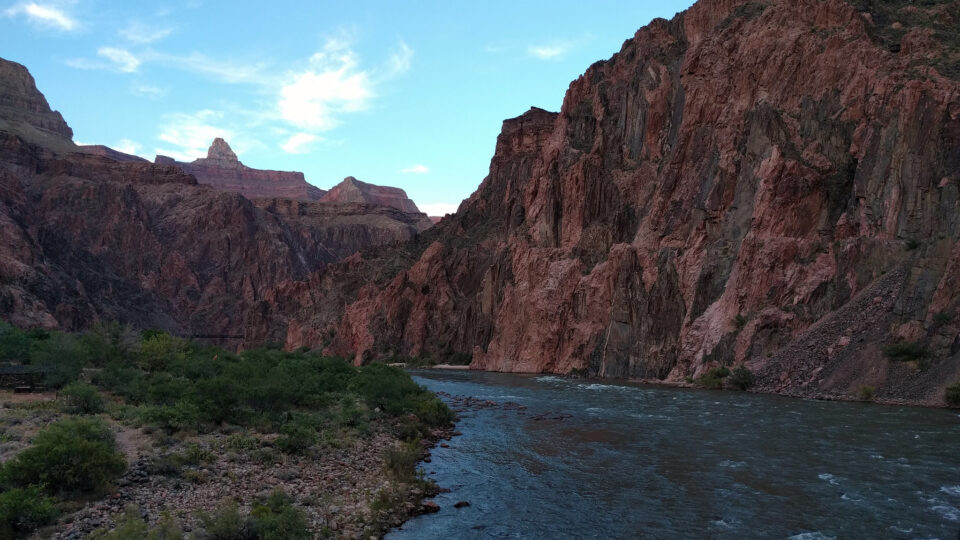
The Colorado River supplies drinking water to 40 million Americans in seven states as well as to many Mexicans and provides irrigation to 5.5 million acres of farmland.  Electricity generated by dams on the Colorado powers millions of homes and businesses in the West.

A combination of drought, population growth, and climate change has reduced the river’s flows by a third in recent years compared with historical averages.  Further reductions could trigger a water and power catastrophe across the Western states.

California, Arizona, and Nevada all get water from Lake Mead, the reservoir formed by the Colorado at Hoover Dam.  The Interior Department determines how much water each of these three states receives.  The other states that use Colorado River water get it directly from the river and its tributaries.  Last summer, water levels in Lake Mead and Lake Powell fell enough that officials feared that the hydroelectric turbines at the Colorado’s dams would soon cease functioning.

The three states have recently struck an agreement with the federal government to take less water from the Colorado.  The reductions amount to about 13% of the total water use in the lower Colorado.  The government will pay about $1.2 billion to irrigation districts, cities, and Native American tribes for temporarily using less water.  The states have also agreed to make additional cuts to generate the total reductions needed to prevent the collapse of the river.

The agreement runs only through the end of 2026.  At that point, all seven states that rely on the river – which includes Colorado, New Mexico, Utah, and Wyoming – may well be facing a deeper reckoning.  The forces driving the decline of the Colorado are not going away.

**********

Web Links

A Breakthrough Deal to Keep the Colorado River From Going Dry, for Now

Photo, posted June 16, 2017, courtesy Karen and Brad Emerson via Flickr.

Earth Wise is a production of WAMC Northeast Public Radio

An Unwanted Temperature Threshold Is Approaching | Earth Wise

July 3, 2023 By EarthWise Leave a Comment

An alarming temperature threshold is approaching

According to the World Meteorological Organization, there is a 66% chance over the next five years that the Earth’s global temperature will exceed 1.5 degrees Celsius above pre-industrial levels for at least one year.

A combination of the continued accumulation of greenhouse gases in the atmosphere along with a looming El Niño condition will contribute to surging temperatures.  The WMO also reports that there is a 98% likelihood that at least one of the next five years will be the warmest on record and that the five-year period as a whole will be the warmest on record.

Reaching or surpassing the 1.5-degree threshold may only be temporary but would be the strongest indication yet of how quickly climate change is accelerating.   The 1.5-degree point is considered by many scientists to be a key tipping point, beyond which the chances of extreme flooding, drought, wildfires, heatwaves, and food shortages could increase dramatically.

The world has already seen about 1.2 degrees of warming as we continue to burn fossil fuels and produce enormous quantities of greenhouse gas emissions.  As recently as 2015, the WMO put the chance of breaching the 1.5-degree threshold as close to zero.

It is important to understand that the 1.5-degree temperature increase is an average for the entire planet.  Many individual locations around the world have been experiencing tremendously greater amounts of warming with record-breaking temperatures.

The 1.5-degree threshold is important, but it is not itself a tipping point.  There is still time to reduce global warming by moving away from fossil fuels and towards clean energy.  But the clock is ticking and so far, the world is not showing any urgency.

**********

Web Links

‘Sounding the alarm’: World on track to breach a critical warming threshold in the next five years

Photo, posted May 20, 2015, courtesy of Kevin Gill via Flickr.

Earth Wise is a production of WAMC Northeast Public Radio

Nantucket Residents Still Fighting Offshore Wind | Earth Wise

June 28, 2023 By EarthWise Leave a Comment

Nantucket residents continue to resist offshore wind

Offshore wind in the US has had to fight to exist for a long time.  The Cape Wind project in Nantucket Sound off the coast of Cape Cod was envisioned over 20 years ago as a 1.5-gigawatt wind farm.  Years of legal battles and other controversies saw the project start and stop multiple times with only minimal actual construction.  Primary opposition came from residents who considered the turbines far off on the distant horizon to be an eyesore and threat to their property values.  Eventually, the project was terminated in 2017.

Since then, offshore wind has gained substantial support in the US and multiple projects are either ongoing or in the permitting process.  The 800 MW Vineyard Wind project is on track to be the first commercial-scale offshore wind farm in the US, with plans to eventually generate enough electricity to power 400,000 homes.

Once again, Nantucket residents are fighting against an offshore wind farm.  Once again, they are making arguments that are not really what concerns them, in this case, saying that the wind turbines are a threat to the survival of endangered North Atlantic right whales.

A federal judge has recently rejected a lawsuit brought by the group Nantucket Residents Against Turbines that sought to stop the project.  The judge found that the group failed to show that either the US Bureau of Ocean Energy Management or the National Marine Fisheries Service violated the Endangered Species Act or the National Environmental Policy Act in its 2021 rulings on the impact of the proposed wind farm on the whales.

Undoubtedly there will be additional challenges from the group, possibly based on entirely different complaints.  It’s tough to build offshore wind in Massachusetts.

**********

Web Links

Judge rejects lawsuit by Nantucket residents to block offshore wind farm

Photo, posted November 21, 2016, courtesy of Adrian Scottow via Flickr.

Earth Wise is a production of WAMC Northeast Public Radio

Large Lakes In Decline | Earth Wise

June 27, 2023 By EarthWise Leave a Comment

More than half of the world's largest lakes are shrinking

Globally, freshwater lakes and reservoirs hold 87% of the planet’s liquid freshwater, making them a valuable resource for both people and wildlife.  Despite their value, the long-term trends and changes to water levels of lakes have been largely unknown – until now.

According to a new assessment recently published in the journal Science, more than half of the largest lakes around the world are losing water.  Using satellite observations and climate data, the research team created a technique to measure changes in water levels in nearly 2,000 of the world’s biggest lakes and reservoirs, representing 95% of the total lake water storage on Earth.

The results are staggering.  According to the findings, 53% of Earth’s largest lakes and reservoirs now store significantly less water than they did in 1992.  The total amount of water lost is estimated to be 144.5 cubic miles, which is equivalent to the volume of 17 Lake Meads (the largest reservoir in the U.S.). 

Unsurprisingly, climate warming and human consumption were the main drivers of water loss from lakes, whereas sedimentation — the buildup of debris — was the biggest driver of water loss in reservoirs.  Roughly one-quarter of the world’s population – two billion people – live in the basin of a drying lake, indicating the urgent need for sustainable water resources management.

But the news is not entirely bleak.  According to the research team, the new method of tracking lake water storage trends can give water managers and communities insight into how to better protect this critical resource. 

**********

Web Links

Satellites reveal widespread decline in global lake water storage

Photo, posted February 10, 2010, courtesy of Ninara via Flickr.

Earth Wise is a production of WAMC Northeast Public Radio

Energy From Fruit Waste | Earth Wise

June 20, 2023 By EarthWise Leave a Comment

In the Back to the Future films, Doc Brown ran his DeLorean time machine on food scraps.  It was a fun bit of science fiction.  But researchers at the University of British Columbia Okanagan in Canada are investigating the potential for using food waste to generate power.

Food waste is not a candidate to replace solar or wind power, but it could be a source of energy for powering fuel cells.  As it is, food waste represents a sustainability challenge because of its detrimental impacts on the economy and the environment.  Organic waste represents a significant fraction of the material in landfills and contributes to methane production, air pollution, and other harmful pollutants.

The UBC researchers focused on fruit waste, which is abundantly available in agricultural regions.  They have devised microbial fuel cells that convert fruit waste into electrical energy using an anaerobic anode compartment.  That is a chamber in which anaerobic microbes – ones that don’t need oxygen – utilize the organic matter to convert it into energy.  The microbes consume the fruit waste and produce water while generating bioelectricity.

It is not like the Back to the Future time machine where you can just toss in scraps of whatever is on hand.  Different types of fruits provide different results when used in the microbial fuel cell. The process works best when the food waste is separated and ground into small particles.  There is a long way to go before the technology could produce bioenergy on a commercial scale, but there is considerable potential for doing something useful with something that is currently worthless.

**********

Web Links

UBCO researchers aim to energize fruit waste

Photo, posted July 24, 2011, courtesy of Andrew Girdwood via Flickr.

Earth Wise is a production of WAMC Northeast Public Radio

Chatbots Are Thirsty | Earth Wise

June 19, 2023 By EarthWise Leave a Comment

We hear a lot about artificial intelligence these days.  ChatGPT has found its way into education, technology, and many other aspects of life.  It and its brethren are a source of fascination, enthusiasm, and even fear.  Many of us have given queries to the bot to see what kind of results we can obtain.  But a recent study has found out something about AI systems that we probably didn’t know – they use up lots of fresh water.

According to researchers at the University of California, Riverside, running a few dozen queries on ChatGPT uses up about half a quart of fresh water from already overtaxed reservoirs.

Running artificial intelligence systems like ChatGPT relies on cloud computations done in racks of servers in warehouse-sized data processing centers.  Google’s data centers in the U.S. alone consumed nearly 3.5 billion gallons of fresh water in 2021 in order to keep their servers cool.

Data processing centers consume water in two ways.  They often draw much of their electricity from power plants that use large cooling towers that convert water into steam emitted into the atmosphere.  In addition, the servers themselves need to be cooled to keep running and are typically connected to cooling towers as well.

It isn’t going to be easy for AI systems to reduce their water use.  The study’s authors noted that people make use of AI at all hours of the day and night.  But a significant amount of AI activity is actually the training of the systems.  That could be scheduled for the cooler hours, when less water is lost to evaporation.

In an era of scarce fresh water and droughts, it is important to make AI less thirsty.

**********

Web Links

AI programs consume large volumes of scarce water

Photo, posted May 22, 2023, courtesy of Jernej Furman via Flickr.

Earth Wise is a production of WAMC Northeast Public Radio
Offshore Wind In Maine | Earth Wise

June 15, 2023 By EarthWise Leave a Comment

Offshore wind is coming to Maine

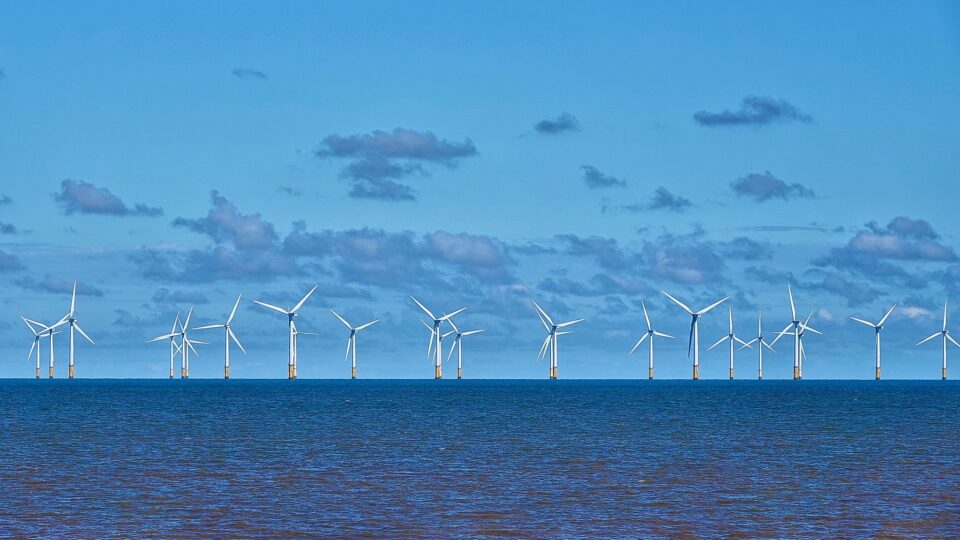
There are currently only two small offshore wind farms operating in the United States, but there are now several more under construction or in the permitting process.  Substantial wind farms are expected to come online over the next five years off the coasts of Virginia, New Jersey, Massachusetts. North Carolina, Delaware, Rhode Island, and New York.   There has been a recent auction for offshore wind sites off the California coast as well.

In April, the Bureau of Ocean Energy Management issued its Gulf of Maine Call for Information and Nominations, inviting public comment and assessing the interest in areas offshore of Maine, New Hampshire, and Massachusetts.  This is the first official step in the lengthy process that leads to offshore wind development in new areas.  Last year, the Department of the Interior defined an area of about 13.7 million acres in the Gulf of Maine that could end up providing energy leases for windfarm development.

The Biden administration has set a goal of deploying 30 gigawatts of offshore wind electricity generation by 2030, which is enough to power more than 10 million homes. It would also create thousands of jobs across manufacturing, shipbuilding, port operations, construction, and other industrial sectors.  Existing offshore wind projects have been structured to develop American-based supply chains for the offshore wind industry.

The European Union currently has over 15 gigawatts of installed offshore wind, has a target of 60 gigawatts by 2030, and 300 gigawatts by 2050.  The EU has five substantial sea basins which have tremendous potential for wind energy generation.  As a result, offshore wind is the centerpiece of the ambitious European Green Deal.

**********

Web Links

U.S. moves to develop offshore wind in the Gulf of Maine

Photo, posted August 31, 2022, courtesy of Nina Ali via Flickr.

Earth Wise is a production of WAMC Northeast Public Radio

Electric Cars In Norway | Earth Wise

June 12, 2023 By EarthWise Leave a Comment

We are at a relatively early stage of the electric car revolution.  EV sales are increasing rapidly, but they still comprise only a small fraction of the cars on American roads.  So, there is still lots of speculation and argument about how things will actually work when a large fraction of cars are electric.  But there is at least one place where one doesn’t have to speculate:  Norway.

Last year, 80% of new-car sales in Norway were EVs.  That country is essentially an observatory for figuring out what the electrification of vehicles will mean for the environment, workers, and life in general.  In fact, sales of internal combustion cars in Norway will end in 2025.

Based on Norway’s experience, electric vehicles bring benefits and none of the dire consequences that some critics predict.  The transition isn’t problem-free.  There have been unreliable chargers and long waits during periods of high demand.  Auto dealers and retailers have had to adapt to the changes in their businesses.  The pecking order of car brands has changed dramatically making Tesla the best-selling brand and marginalizing long-established carmakers like Renault and Fiat.

But in the bigger picture, the air in Oslo, the capital of Norway, is measurably cleaner.  The city is quieter as noisy gasoline and diesel vehicles gradually disappear.  Oslo’s greenhouse gas emissions have fallen 30% since 2009.  Meanwhile, there hasn’t been mass unemployment among gas station workers, and the electrical grid has not collapsed.

Norway is perhaps 10 years ahead of us with respect to electric cars.  There are still problems to solve, and difficulties to overcome, but so far, it looks like it will all turn out well.

**********

Web Links

In Norway, the Electric Vehicle Future Has Already Arrived

Photo, posted October 15, 2018, courtesy of Mario Duran-Ortiz via Flickr.

Earth Wise is a production of WAMC Northeast Public Radio

 Restoring Biocrusts | Earth Wise

June 8, 2023 By EarthWise Leave a Comment

Biocrusts are complex ecosystems that form a thin layer on the surface of soils in arid and semiarid environments.  They are composed of variety of microbes including cyanobacteria, green algae, fungi, lichens, and mosses.  Biocrusts play a crucial role in maintaining soil health and ecosystem sustainability.

Biocrusts are under assault from human activities including agriculture, urbanization, and off-road vehicle use. Climate change is also placing stress on biocrusts, which are struggling to adapt to increasing temperatures.

Researchers at Arizona State University have proposed a novel approach to restoring healthy biocrusts.  Their idea is to make use of solar energy farms as nurseries for generating fresh biocrust.  The arrays of solar panels serve as shields from excessive heat and allow biocrusts to flourish and develop.  The newly generated biocrusts can then be used to replenish arid lands where the existing biocrusts have been damaged or destroyed.

When such biocrusts are harvested, the natural recovery process is rather slow, taking around six or eight years to fully recuperate.  But the researchers found that when harvested areas are reinoculated with the microbes, the biocrust cover can reach near-original levels within a year.

The ASU researchers demonstrated the viability of the approach in a three-year study at a solar farm in Arizona’s lower Sonoran Desert.  Based on their results, they conclude that the use of large solar farms for this purpose could provide a low-cost, low-impact, and high-capacity method to regenerate biocrusts and enable soil restoration on a regional scale.  They have dubbed their new approach as “crustivoltaics.”

**********

Web Links

Using solar farms to generate fresh desert soil crust

Photo, posted March 12, 2023, courtesy of Eric Peterson via Flickr.

Earth Wise is a production of WAMC Northeast Public Radio

Abandoned Oil Wells In The Gulf Of Mexico | Earth Wise

June 7, 2023 By EarthWise Leave a Comment

Abandoned and unplugged oil wells pose a major risk to the environment

There have been offshore oil platforms in the Gulf of Mexico for 85 years.  After all those decades of drilling, there are now more than 14,000 old, unplugged wells out in the water, and they are at risk of springing dangerous leaks and spills.  There are now more unplugged, non-producing wells than active wells in the gulf.   According to a new study, plugging all those abandoned wells could cost more than $30 billion.

Most of these wells are in federal waters and nearly 90% of them were owned at some point by one of the so-called supermajor oil companies:  BP, Shell, Chevron, and Exxon.  Under federal law, those companies would still be responsible for cleanup costs, even if they might have sold the wells in the past.

Oil and gas companies are legally responsible for plugging wells that are no longer in service, but such companies often go bankrupt, leaving wells orphaned and unplugged and taxpayers end up footing the bill.  The 2021 trillion-dollar infrastructure bill sets aside $4.7 billion to plug orphaned wells, but that is nowhere near enough.  

It may be possible to go after the supermajors to get them to pay for plugging wells in federal waters, but it will undoubtedly be a battle.   In state waters, whose wells are generally in shallower locations, it is even more urgent to act because any pollution from the wells is more likely to reach shore and wreak environmental havoc.

As the world starts to transition away from fossil fuels, decades of mining and drilling in almost every corner of the world, including the oceans, has left behind the need for an immense plugging and cleanup effort.

**********

Web Links

Price to Plug Old Wells in Gulf of Mexico? $30 Billion, Study Says

Photo, posted July 8, 2010, courtesy of John Masson / Coast Guard via Flickr.

Earth Wise is a production of WAMC Northeast Public Radio
Carbon-Negative Concrete | Earth Wise

June 6, 2023 By EarthWise Leave a Comment

Researchers exploring a carbon-negative concrete

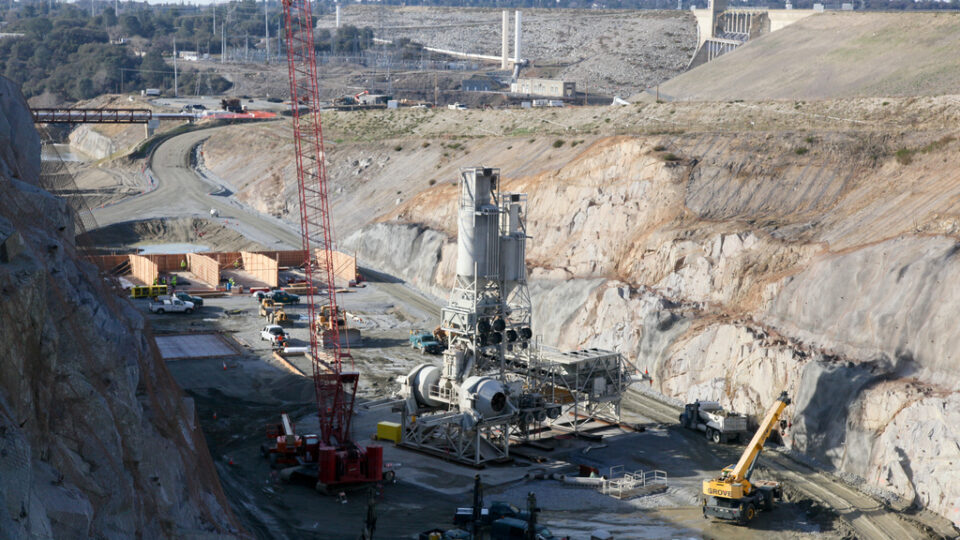
Concrete is a mainstay of modern civilization.  The world produces more than 4 billion tons of it each year and the process requires high temperatures, mostly obtained by burning fossil fuels.  The chemical reactions that produce concrete also produce large amounts of carbon dioxide.  In all, cement production is responsible for about 8% of total global carbon emissions by human activities.

This situation is the impetus for a wide range of research activities aimed at reducing the environmental impact of concrete production.  Researchers at Washington State University have recently developed a way of making carbon-negative concrete: a recipe for concrete that absorbs large amounts of carbon dioxide.

There have been attempts in the past to add biochar to concrete.  Biochar is a type of charcoal made from organic waste that sucks up carbon dioxide from the air.  In earlier attempts, even adding 3% of biochar would dramatically reduce the strength of the concrete.

The WSU researchers found that treating biochar with concrete washout wastewater makes it possible to add much more biochar to concrete without reducing its strength.  Mixing it with biochar adds calcium, which induces the formation of the mineral calcite, which in turn strengthens the concrete.

The researchers were able to add up to 30% biochar to their cement mixture.  Within a month, the resultant concrete was comparable in strength to ordinary concrete.  But at the same time, the biochar was able to absorb up to 23% of its weight in carbon dioxide from the air.  The new concrete is potentially the most environmentally friendly concrete ever developed.

**********

Web Links

Researchers develop carbon-negative concrete

Photo, posted January 31, 2012, courtesy of Michael J. Nevins / U.S. Army Corps of Engineers via Flickr.

Earth Wise is a production of WAMC Northeast Public Radio

Wildfire Smoke And Global Weather | Earth Wise

June 1, 2023 By EarthWise Leave a Comment

In 2019 and 2020, wildfires burned 72,000 square miles in Australia, roughly the same area as the entire country of Syria. During the nine months when the fires raged, persistent and widespread plumes of smoke filled the atmosphere.

These aerosols brightened a vast area of clouds above the subtropical Pacific Ocean.  Beneath these clouds, the surface of the ocean and the atmosphere cooled.  The effect of this was an unexpected and long-lasting cool phase of the Pacific’s La Niña-El Niño cycle.

A new modeling study by the National Center for Atmospheric Research in Boulder, Colorado quantified the extent to which aerosols from the Australian wildfires made clouds over the tropical Pacific reflect more sunlight back towards space.  The resultant cooling shifted the cloud and rain belt known as the Intertropical Convergence Zone northward.  These effects may have helped trigger the unusual three-year-long La Niña, which lasted from late 2019 through 2022.

The impacts of that La Niña included intensifying drought and famine in Eastern Africa and priming the Atlantic Ocean for hurricanes.  2020 was the most active tropical storm season on record, with 31 storm systems, including 11 that made landfall in the U.S.

The study highlights widespread multi-year climate impacts caused by an unprecedented wildfire season.  The wildfires set off a chain of events that influenced weather far from where the fires occurred.  In the future, climate experts will need to include the potential effects of wildfires in their forecasts.

**********

Web Links

How Wildfire Smoke from Australia Affected Climate Events Around the World

Photo, posted December 19, 2019, courtesy of Simon Rumi via Flickr.

Earth Wise is a production of WAMC Northeast Public Radio
Removing Carbon Dioxide Won’t Get the Job Done | Earth Wise

May 31, 2023 By EarthWise Leave a Comment

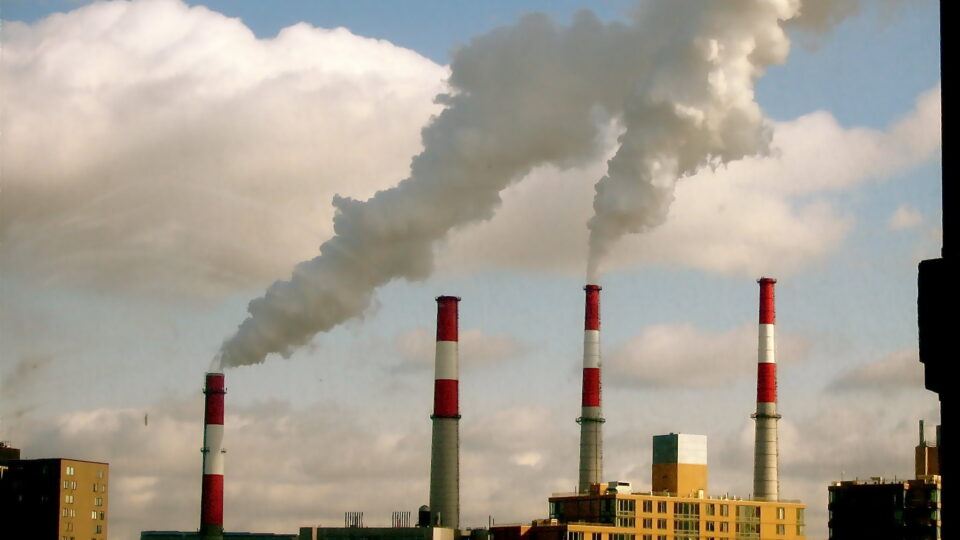
Limiting global warming to no more than 1.5-2 degrees Celsius above pre-industrial levels is a crucial goal for humankind.  Countries, companies, and other organizations around the world have committed to achieving ‘net zero’ emissions.  This is distinct from zero emissions in that it includes removing carbon dioxide from the atmosphere to offset the amounts we are putting into it.  Carbon dioxide removal is increasingly touted as the way to achieve emission goals.  But it is a realistic strategy?  According to a recent paper by a leading climate scientist in the journal Nature, the answer in the short term is decidedly no.

In 2022, the world emitted 45 billion tons of carbon dioxide into the atmosphere.  Last year’s bipartisan Infrastructure Law earmarked $3.5 billion for developing four direct air capture hubs in the US.  Each of these is expected to eventually be able to extract a little over a million tons of CO2 from the air each year. These hubs combined would therefore remove about 52 minutes’ worth of the year’s emissions over the course of the year. 

The bottom line is that unless we drastically reduce emissions, all the carbon dioxide removal strategies combined will scarcely make a dent in the problem.

We will never be able to eliminate all sources of emissions, particularly from certain industries, and carbon dioxide removal will be a very important technology to address those emissions, but in the big picture, it is essential that the world decarbonizes as much as possible and as soon as possible.

**********

Web Links

Carbon dioxide removal is not a current climate solution — we need to change the narrative

Photo, posted January 19, 2009, courtesy of Wladimir Labeikovsky via Flickr.

Earth Wise is a production of WAMC Northeast Public Radio
Record Polar Ice Melting | Earth Wise

May 30, 2023 By EarthWise Leave a Comment

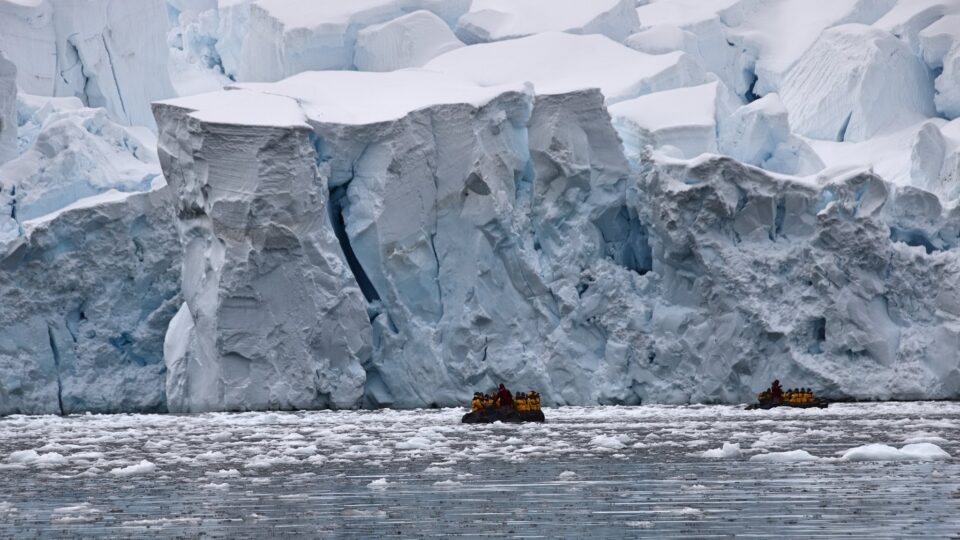
A record amount of polar ice has melted

Sea levels are rising and ocean warming is responsible for the bulk of that rise.  As water heats up, it expands, which drives up sea levels.  But on top of that, global warming is melting the polar ice sheets, and that is leading to about a quarter of the world’s sea level rise. So far, polar melting has fueled about an inch of sea level rise, two-thirds from Greenland and one third from Antarctica.   According to scientists, by the end of this century, melting polar ice caps could raise sea levels between 6 and 10 inches.

The seven worst years for polar ice sheet melting have occurred during the past decade.  The worst year on record was 2019.  The loss in 2019 was driven by an Arctic summer heatwave, which resulted in record melting from Greenland, amounting to nearly 500 billion tons melted that year.  Antarctica lost 180 billion tons of ice that year, mostly due to melting glaciers and record melting from the Antarctic Peninsula.

Ice losses from Greenland and Antarctica can now be reliably measured by satellites in space.  A team of researchers led by Northumbria University in the UK has combined 50 satellite surveys taken between 1992 and 2020.

They have found that the Earth’s polar ice sheets have lost over 8,000 billion tons of ice over that time period.  That much ice corresponds to an ice cube roughly 12 miles high.

The satellite technology is now at the stage where the ice sheet status can be continuously updated.  Such monitoring is critical to predict the future behavior of the ice sheets and provide risk warnings of the dangers that coastal communities around the world will face.

**********

Web Links

Polar ice sheet melting records have toppled during the past decade

Photo, posted December 19, 2017, courtesy of Jasmine Nears via Flickr.

Earth Wise is a production of WAMC Northeast Public Radio
Explosive Growth Of Electric Vehicles | Earth Wise

May 25, 2023 By EarthWise Leave a Comment

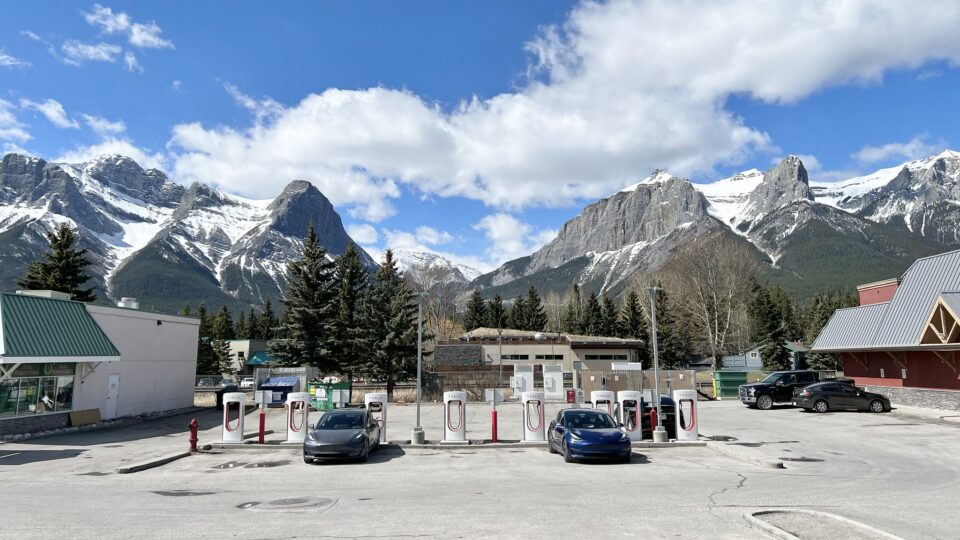
Not long ago, electric cars were a rarity.  Ten years ago, annual global sales of EVs were only a few hundred thousand.  As of today, globally, still less than one percent of all the cars on the road are electric.  But that is changing rapidly.

In fact, electric vehicles are expected to capture nearly 20% of the global market this year.  Global sales of EVs were 3 million in 2020 and 6.6 million in 2021.  Last year, sales of electric vehicles hit 10 million and are expected to reach 14 million this year according to the International Energy Agency.

Analysts at the IEA have had to repeatedly revise their projections for future EV sales as the numbers keep going up faster than predicted.  Last year, they projected that EVs would account for 21% of global sales by 2030.  Now, they expect that EVs will reach 35% of sales by that year.

In the US, the EU, and China, policy efforts are in place to boost EV sales.  In the US, the Inflation Reduction Act both supports the EV industry and subsidizes consumer purchases with tax credits. As a result of such policies, the IEA expects electric vehicles to account for 60% of sales across these three large markets by 2030.

Part of what is driving the boom in EV sales is that prices continue to come down for the vehicles.  When operating and maintenance costs are figured in, the EVs come out considerably cheaper to own.  In addition, there are starting to be price wars in the EV industry as competition heats up in the sector.

**********

Web Links

EVs to Capture One-Fifth of Global Market This Year Amid ‘Explosive Growth’

Photo, posted May 7, 2022, courtesy of Sharon Hahn Darlin via Flickr.

Earth Wise is a production of WAMC Northeast Public Radio
Greenhouse Gases Continue To Rise | Earth Wise

May 24, 2023 By EarthWise Leave a Comment

Greenhouse gases continue to rise

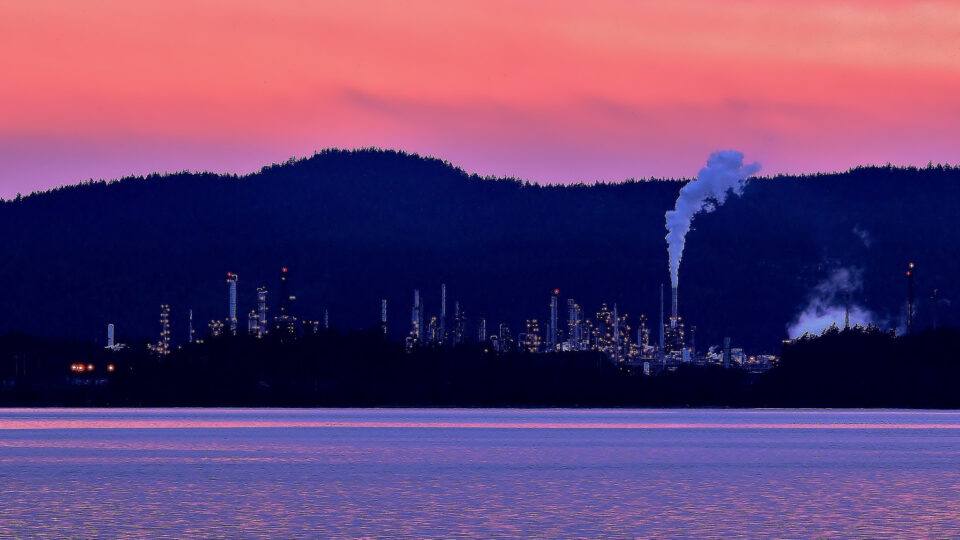
Despite all the focus on reducing emissions of greenhouse gases, there continues to be little progress toward actually accomplishing reductions.  A combination of growing populations, increasing industrialization in the developing world, and just plain reluctance on the part of many sectors of society to act, have all contributed to the continuing buildup of climate-altering gases in the atmosphere.

Levels of carbon dioxide, methane, and nitrous oxide – the three greenhouse gases produced by human activity that are the major contributors to climate change – all continued historically high rates of growth in 2022.

CO2 levels rose by 2.13 parts per million last year, roughly the same rate observed during the past decade.  The current level of 417 ppm is 50% higher than pre-industrial levels.  Increases of more than 2 ppm have occurred for 11 consecutive years.  Prior to 2013, there had never even been 3 years in row with increases of that size.

Methane levels increased by 14 parts per billion, the fourth largest increase over the past 40 years.  Methane levels in the atmosphere are now two-and-a-half times greater than their pre-industrial level. 

The third most significant greenhouse gas – nitrous oxide – also saw a large increase, reaching 24% above pre-industrial levels.

Carbon dioxide emissions are by far the most important contributor to climate change and the continuing widespread burning of fossil fuels is the primary source.  There are widespread intentions to reduce carbon dioxide emissions, but those intentions have not yet resulted in sufficient actions.

**********

Web Links

Greenhouse gases continued to increase rapidly in 2022

Photo, posted May 16, 2014, courtesy of Flickr.

Earth Wise is a production of WAMC Northeast Public Radio

Geothermal Energy Storage | Earth Wise

May 22, 2023 By EarthWise Leave a Comment

Aquifer thermal energy storage a solution to heat and cool buildings

About 12% of the energy consumed by humanity is used to heat and cool homes and businesses.  A study by researchers at Lawrence Berkeley National Laboratory and Princeton University looked at a novel approach to making use of underground water to maintain comfortable temperatures and reduce consumption of natural gas and electricity.

The idea is to use aquifer thermal energy storage (known as ATES) to provide both heat in the winter and cooling in the summer.  The concept leverages the heat-absorbing property of water and natural geological features.  The idea is to pump up water from existing underground reservoirs and heat it at the surface using environmental heat or even excess energy from solar or wind generation.  Then the warm water is pumped back down. It stays warm for a long time – even months – because the earth is a good insulator.  When the water is pumped back up in the winter, it is much hotter than the ambient air and can be used to supply heat to buildings.

Alternately, water can be pumped up and cooled in the winter and then put back down underground and stored until cooling is needed in the summer months.

This technology has not been used much in the US, but it is gaining recognition internationally, particularly in the Netherlands.  It can perform very well in areas with large seasonal fluctuations.

The research study used modeling and various simulations to estimate how much energy ATES could save on the US grid.  The results showed that adding ATES to the grid could reduce consumption of petroleum products for heating and  cooling by up to 40%.  The system could also help prevent blackouts by reducing high power demand during extreme weather events.

**********

Web Links

Underground Water Could be the Solution to Green Heating and Cooling

Photo, posted February 19, 2012, courtesy of Sanjay via Flickr.

Earth Wise is a production of WAMC Northeast Public Radio

  • « Go to Previous Page
  • Page 1
  • Interim pages omitted …
  • Page 15
  • Page 16
  • Page 17
  • Page 18
  • Page 19
  • Interim pages omitted …
  • Page 40
  • Go to Next Page »

Primary Sidebar

Recent Episodes

  • An uninsurable future
  • Clean energy and jobs
  • Insect declines in remote regions
  • Fossil fuel producing nations ignoring climate goals
  • Trouble for clownfishes

WAMC Northeast Public Radio

WAMC/Northeast Public Radio is a regional public radio network serving parts of seven northeastern states (more...)

Copyright © 2026 ·