• Skip to primary navigation
  • Skip to main content
  • Skip to primary sidebar

Earth Wise

A look at our changing environment.

  • Home
  • About Earth Wise
  • Where to Listen
  • All Articles
  • Show Search
Hide Search
You are here: Home / Archives for sugar

sugar

A hidden cost of climate change

August 25, 2025 By EarthWise Leave a Comment

Climate change is dramatically impacting food production by altering rainfall patterns, increasing temperatures, and triggering more frequent extreme weather events.  These changes make crops more vulnerable to droughts, floods, heatwaves, pests, and diseases, leading to lower yields and greater uncertainty for farmers worldwide.

But climate change isn’t just reshaping our planet.  It’s also changing what’s on our plates.  According to a new study by researchers from Liverpool John Moores University in the UK, rising carbon dioxide levels and warmer temperatures may be making food less nutritious.

The research team focused on popular leafy vegetables, including kale, rocket, and spinach.  The researchers simulated future UK climate conditions in growth chambers to study how the crops responded to hotter, CO2-rich environments.

The research team found that elevated CO2 levels help crops grow faster and bigger, but not healthier.  Over time, the crops showed a reduction in key minerals like calcium and certain antioxidant compounds.  These changes were exacerbated by increases in temperature.  In fact, the combination had complex effects.  The crops did not grow as big or fast, and the decline in nutritional quality intensified.

This nutritional imbalance poses serious human health implications.  Rising CO2 levels can increase sugar in crops while reducing essential nutrients, leading to calorie-rich but nutrient-poor diets. This shift may raise the risk of obesity, diabetes, and nutrient deficiencies, especially in vulnerable populations.

The challenge ahead isn’t just to grow enough food to feed a growing population, but to preserve the quality of that food in a changing climate.

*********

Web Links

Bigger crops, fewer nutrients: The hidden cost of climate change

Photo, posted May 25, 2010, courtesy of Jason Bachman via Flickr.

Earth Wise is a production of WAMC Northeast Public Radio

Fuel from Corn Waste

June 27, 2025 By EarthWise Leave a Comment

Making fuel from corn waste

A substantial amount of corn is grown in this country for the purpose of producing ethanol.  The value of doing so is debatable for many reasons.  Nevertheless, the majority of the corn crop is grown for food.  But along with all that corn, there is corn stover.  Stover is the dried stalks, leaves, and other plant parts that remain in the field after the corn itself has been harvested.  Corn stover is the largest quantity of biomass residue in the United States.  Around 250 million tons of it is produced annually and the majority of it is left unused.  Some is used for animal feed and other purposes and has monetary value, but much of it goes to waste.

Scientists at Washington State University have developed a way to produce low-cost sugar from stover that can be used to make biofuels and other bioproducts.

Corn stover is an abundant and cheap source of biomass, which holds great potential as a source of energy and valuable chemicals.  The challenge is to overcome the high cost of processing stover whose complex structural molecules like cellulose and lignin need to be broken down.

The new process uses potassium hydroxide and ammonium sulfite to convert stover into a sugar.  It is a mild-temperature process that allows enzymes to break down the cellulosic polymers in stover into sugar, which can then be fermented into biofuels.  The resulting sugar from the process would be cost-competitive with low-cost imported sugars. The researchers estimate that their patent-pending process could produce sugar that could be sold for as low as 28 cents per pound.

**********

Web Links

Scientists discover a new way to convert corn waste into low-cost sugar for biofuel

Photo, posted August 30, 2012, courtesy of Idaho National Laboratory Bioenergy Program via Flickr.

Earth Wise is a production of WAMC Northeast Public Radio

Fighting honey fraud

May 12, 2025 By EarthWise Leave a Comment

Using artificial intelligence to fight honey fraud

Honey fraud is a significant issue for the food industry.  What is honey fraud?  Typically, it involves mislabeling where honey was produced or what types of flowers the bees collected nectar from.  Honey made from a single type of flower is often more expensive because of the unique flavor it provides or from potential health benefits.  Sometimes even cheap alternatives like sugar syrups are labelled as honey.  It turns out that honey is one of the most fraud-prone commodities in global trade, with fraud estimated to occur in up to 10% of the honey traded internationally.  Honey from some countries, such as China and India, has had 30% or more of samples found to be fraudulent.

Researchers at McGill University in Montreal have developed an AI-powered method to verify the origin of honey thereby ensuring that what is on the label corresponds to what is in the jar.

The McGill method can determine what kind of flowers the bees visited to produce a particular sample of honey.  Previous honey authentication involved pollen analysis, which is ineffective for honey that was processed or filtered.  The new method uses high-resolution mass spectrometry which captures a unique chemical “fingerprint” from the honey.  Machine learning algorithms read the fingerprint to identify the honey’s origin.

The researchers tested their methodology on a variety of honey samples which they then compared with honey from known botanical sources.  Using previous methods for honey authentication can take days.  The McGill method takes only minutes and works regardless of how the honey was processed.

According to the researchers, people deserve to know that the honey they buy is what it claims to be, and honest honey producers deserve protection from fraudulent competitors.

**********

Web Links

Fighting honey fraud with AI technology

Photo, posted May 6, 2012, courtesy of Emma Jane via Flickr.

Earth Wise is a production of WAMC Northeast Public Radio

The Spooky Reality | Earth Wise

October 23, 2023 By EarthWise Leave a Comment

According to the National Retail Federation, American consumers will spend a whopping $12.2 billion on Halloween this year, exceeding last year’s record of $10.6 billion.  A record number of people – 73% of Americans – will also participate in Halloween-related activities this year, up from 69% in 2022.  But it’s not just our wallets that take a beating. 

Halloween generates a frightening amount of waste.  Picture all those flimsy and often single-use costumes, polyester cobwebs, plastic-wrapped candy, mass-produced decorations, and so forth. Scary stuff!  Here are some simple tricks to make the holiday more sustainable this year. 

Invest in quality costumes.  Those mass-produced costumes leave the largest carbon footprint from Halloween.  They are often made from non-recyclable plastic and most end up in landfills by mid-November.   By renting, thrifting, swapping, or making your own costumes, many of the negative impacts of dressing up for the holiday can be avoided.

Find environmentally-friendly decorations and supplies.  For example, carve local pumpkins and either save the seeds and flesh to eat later, compost it, or feed it to animals.  Make your own spooky decorations.  If you do buy decorations, ensure that they are durable and reusable.  And use wicker baskets, old bags, or pillowcases when trick-or-treating.

Finally, purchase organic and fair trade candy if you’re able to do so.  Some of the largest candy manufacturers are major drivers of deforestation and species extinction around the globe due to their demand for sugar, palm oil, and cocoa beans.

Together, we can “green” Halloween.  

**********

Web Links

Halloween Data Center

Photo, posted November 13, 2019, courtesy of Christian Collins via Flickr.

Earth Wise is a production of WAMC Northeast Public Radio
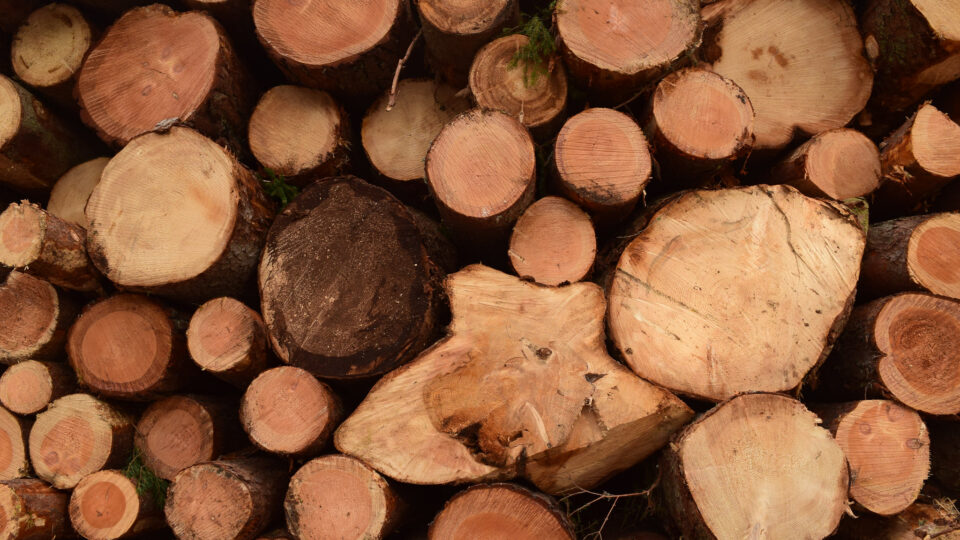
Trees Are Growing Bigger | Earth Wise

November 3, 2022 By EarthWise Leave a Comment

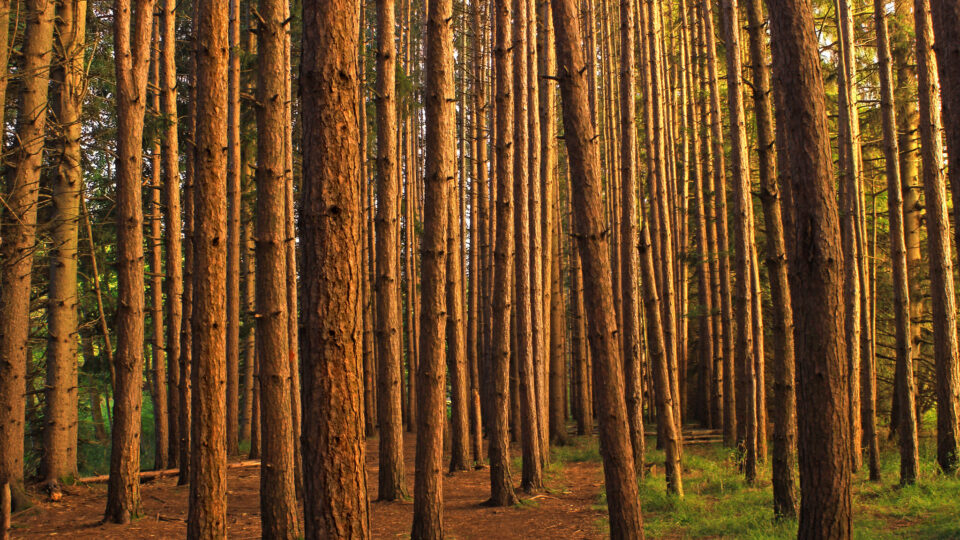
The alarming rate of carbon dioxide flowing into the atmosphere is having a real and actually positive effect on plant life. Higher concentrations of carbon dioxide make plants more productive because photosynthesis makes use of the sun’s energy to synthesize sugar out of carbon dioxide and water.  Plants make use of the sugar both as a source of energy and as the basic building block for growth.  When carbon dioxide levels go up, plants can take it up faster, supercharging the rate of photosynthesis.

In a new study published in the journal Nature Communications, scientists at Ohio State University found that trees are feasting on decades of carbon dioxide emissions and are growing bigger as a result. 

The researchers tracked wood volume in 10 different tree groups from 1997 to 2017 and found that all of them except aspens and birches grew larger.  Over that time period, carbon dioxide levels climbed from 363 parts per million to 405 parts per million.  According to the study, each 1% increase in lifetime CO2 exposure for trees has led to more than a 1% increase in wood volume.

In the big picture, the news isn’t so positive.  The global warming caused by increasing carbon dioxide levels increasingly threatens the forests of the world.  It has led to worsening droughts, insect infestations, and wildfires.  So overall, increasing levels of carbon dioxide are by no means a good thing for the world’s trees.  However, since trees are growing bigger more quickly, it means that planting them is an increasingly cost-effective method for fighting climate change because the same number of trees can sequester more carbon.

**********

Web Links

As Carbon Dioxide Grows More Abundant, Trees Are Growing Bigger, Study Finds

Photo, posted September 12, 2015, courtesy of Nicholas A. Tonelli via Flickr.

Earth Wise is a production of WAMC Northeast Public Radio

Greening Halloween | Earth Wise

October 26, 2022 By EarthWise Leave a Comment

According to the National Retail Federation, Halloween participation is expected to return to pre-pandemic levels this year.  Spending on Halloween festivities by the 69% of Americans who celebrate is expected to add up to $10.6 billion in 2022 – or more than $100 per person – reaching a new record high. 

Halloween generates a mind-boggling amount of waste.  Picture all the flimsy single-use costumes, plastic candy wrappers, mass-produced decorations, and so on.  Here are some tricks to treat you to a greener holiday.

Our first trick is to invest in quality costumes.  Mass-produced (and often single use) costumes leave the largest carbon footprint from Halloween.  They are often made from unsustainable materials, manufactured in countries with poor labor standards, and too many end up in landfills by mid-November. By renting, thrifting, swapping, or making your own costumes, many of the negative impacts of dressing up for the holiday can be avoided.

Our second trick is to invest in environmentally-friendly decorations and supplies.  For example, carve local pumpkins and save the seeds and flesh to eat later.  Make your own spooky decorations.  If you do buy decorations, ensure that they are durable and reusable.  And use a wicker basket, old bag, or pillowcase to trick-or-treat.

Our third trick is to pass out organic and fair trade candy.  Some of the largest candy manufacturers are major drivers of deforestation and species extinction around the globe due to their demand for sugar, palm oil, and cocoa beans.

If you’ve already spent your $100 this year, consider these changes for next year.  It’s never too late to become a superhero.

**********

Web Links

Retail Holiday and Seasonal Trends: Halloween

Photo, posted October 14, 2007, courtesy of Brian via Flickr.

Earth Wise is a production of WAMC Northeast Public Radio
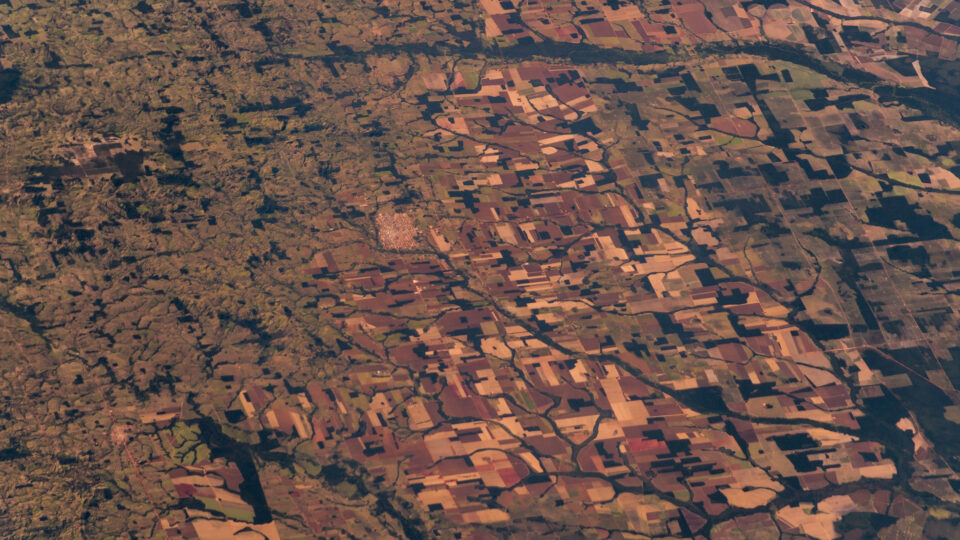
Record Levels Of Deforestation In The Amazon | Earth Wise

March 25, 2022 By EarthWise Leave a Comment

Record levels of deforestation in the Amazon Rainforest

The Amazon rainforest is the largest rainforest in the world, covering more than 2.5 million square miles.  It’s home to 10% of all known species in the world.  The Amazon rainforest’s biodiversity is so rich that scientists are still discovering new plant and animal species today.  

The Amazon rainforest absorbs huge amounts of carbon dioxide from Earth’s atmosphere, making it a key part of mitigating climate change.  The vast rainforest acts as what’s known as a carbon sink.  Simply put, a carbon sink is anything that absorbs more carbon from the atmosphere than it releases.  But as trees in the Amazon disappear, so does the ability of the rainforest to absorb carbon dioxide.

Deforestation of the Amazon rainforest remains a major problem.  According to satellite data from the Brazilian government, the number of trees cut down in the Brazilian Amazon in January far exceeded deforestation figures for the same month last year.  Approximately 166 square miles of land was deforested in January alone, which is five times greater than what was lost in January, 2021.

Cattle ranching – both for beef and for leather – remains the leading cause of deforestation in the Amazon rainforest.  Trees in the Amazon are also cut down for their wood, as well as to clear the land in order to grow food crops, such as soy, sugar, and oil palm. 

Many companies have pledged to achieve “net zero” deforestation in their supply chains over the years, but most have not lived up to the commitment. 

Deforestation is not only a major driver of climate change, but it’s also the leading cause of species extinction.  Preserving the Amazon rainforest is vital. 

**********

Web Links

Amazon deforestation: Record high destruction of trees in January

Greenpeace calls on fast food giants to take a stand against Bolsonaro’s Amazon destruction

Hundreds of Companies Promised to Help Save Forests. Did They?

Photo, posted July 14, 2018, courtesy of Alexander Gerst via Flickr.

Earth Wise is a production of WAMC Northeast Public Radio.

A Sustainable Polymer From Wood | Earth Wise

February 24, 2021 By EarthWise Leave a Comment

A step closer to making plastics more sustainable

Scientists from the University of Bath in the UK have developed a sustainable polymer using xylose, a sugar found in wood.

The new polymer is a member of the polyether family.  It could be used in a variety of applications, including being a building block for polyurethane, used for example in mattresses and shoe soles. It could also be a bio-derived alternative to polyethylene glycol, a chemical widely used in biomedicine, or in polyethylene oxide, which is sometimes used as an electrolyte in batteries.

Xylose, also known as wood sugar, is one of the most abundant carbohydrates on earth, second only to glucose. Apart from comprising 5-20% of hardwoods, xylose is a major component of straw, corncobs, and many other plant materials.

The new polymer could reduce reliance on crude oil products and its properties can be easily controlled to make the material flexible or crystalline.  Added functionality could be added to it by binding other chemical groups such as fluorescent probes or dyes to the sugar molecule for biological or chemical sensing applications.

Tweaking the physical and chemical properties of bio-derived polymers has previously been a very difficult thing to do.  The Bath researchers discovered that combining two mirror-image chemical forms of xylose results in a stronger and more adaptable material.  They have filed a patent for their technology and are seeking industrial collaborators for further development.

The reliance of plastics and polymers on fossil fuels is a major problem.  Bio-derived polymers, such as this new one, are an important part of the effort to make plastics sustainable.

**********

Web Links

Scientists make sustainable polymer from sugars in wood

Photo, posted January 25, 2017, courtesy of Keith Double via Flickr.

Earth Wise is a production of WAMC Northeast Public Radio.

Carnivores Eating Human Food | Earth Wise

December 1, 2020 By EarthWise Leave a Comment

Carnivores increasingly relying on humans for food

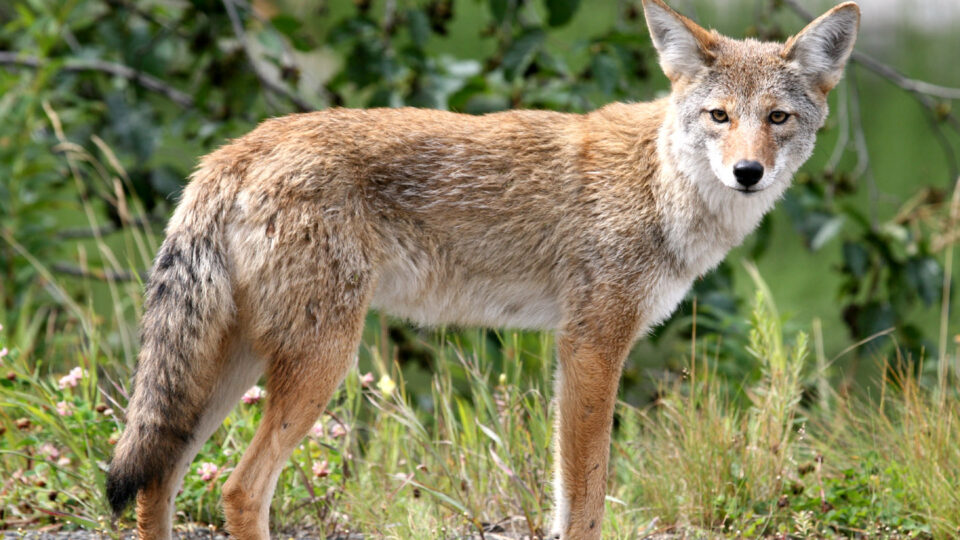
A recent study by ecologists at the University of Wisconsin-Madison has found that carnivores living near people often get more than half of their diets from human food sources rather than from their traditional prey.  This represents a major lifestyle disruption that puts North America’s carnivore-dominated ecosystems at risk.

The researchers studied the diets of seven predator species across the Great Lakes region using bone and fur samples taken from animals from areas as remote as national parks to metropolitan areas including Albany, New York.  What they found – unsurprisingly – is that the closer carnivores lived to cities and farms, the more human food they ate.  Dietary contributions of human food varied with species, but on average was more than 25% in most human-altered habitats.

The researchers studied the diets of carnivores like bobcats, coyotes, red and gray foxes, fishers, and American martens by chemical analysis of samples from Minnesota, Wisconsin, upstate New York, and the Upper Peninsula of Michigan.  The diets of the animals could be analyzed on the basis of the carbon content of bone and fur samples.  Human food, heavy in corn and sugar, lends these samples a distinctive carbon isotope signature.  In contrast, prey species confer their own carbon signatures.  The ratio of these isotope fingerprints provides information on the proportion of an animal’s diet that came from human sources.

Relying upon human food increases how much carnivores overlap one another in their competition for food.  Compared to when these predators vie for distinct prey, there can be more conflicts between animals.  Changing how a species gets their food can have far-ranging effects on ecosystems.

**********

Web Links

Carnivores living near people feast on human food, threatening ecosystems

Photo, posted August 18, 2007, courtesy of Jitze Couperus via Flickr.

Earth Wise is a production of WAMC Northeast Public Radio.

Chocolate Is Good For The Heart | Earth Wise

August 27, 2020 By EarthWise Leave a Comment

chocolate is healthy

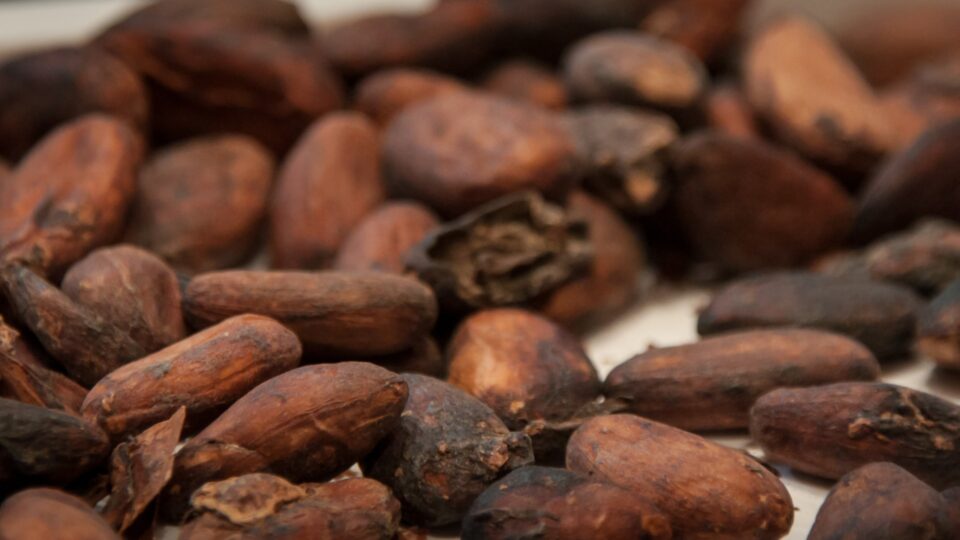
At last a good news story about what we eat, or more specifically, about what we like to eat.   According to research published recently in the European Journal of Preventive Cardiology, eating chocolate at least once a week is linked with a reduced risk of heart disease.

In the past, clinical studies have shown that chocolate is beneficial for both blood pressure and the lining of blood vessels.   The new study suggests that chocolate helps to keep the heart’s blood vessels healthy.

The researchers conducted a combined analysis of studies from the past five decades examining the association between chocolate consumption and coronary artery disease.  The analysis included data from over 300,000 participants who reported their chocolate consumption.  About 14,000 participants in the study ultimately developed coronary heart disease.  Compared with consuming chocolate less than once a week, eating chocolate more than once a week was associated with an 8% decreased risk of coronary heart disease.

Chocolate contains heart-healthy nutrients such as flavonoids, methylxanthines, polyphenols, and steric acid.  These substances may reduce inflammation and increase good (HDL) cholesterol.

The study did not examine whether any particular type of chocolate is more beneficial or whether there is an ideal portion size.  So, while chocolate appears to be promising for reducing the occurrence of coronary heart disease, it will require more research to determine how much and what kind of chocolate could be recommended.

Not to be spoilsports, but the doctors who conducted the study warned against overeating.  Eating large quantities of chocolate products laden with calories, sugar, milk and fat, is not a recommended path to improved health.

**********

Web Links

Chocolate is good for the heart

Photo, posted February 22, 2014, courtesy of Jan David Hanrath via Flickr.

Earth Wise is a production of WAMC Northeast Public Radio.

Maple Syrup And Climate Change

October 11, 2019 By EarthWise Leave a Comment

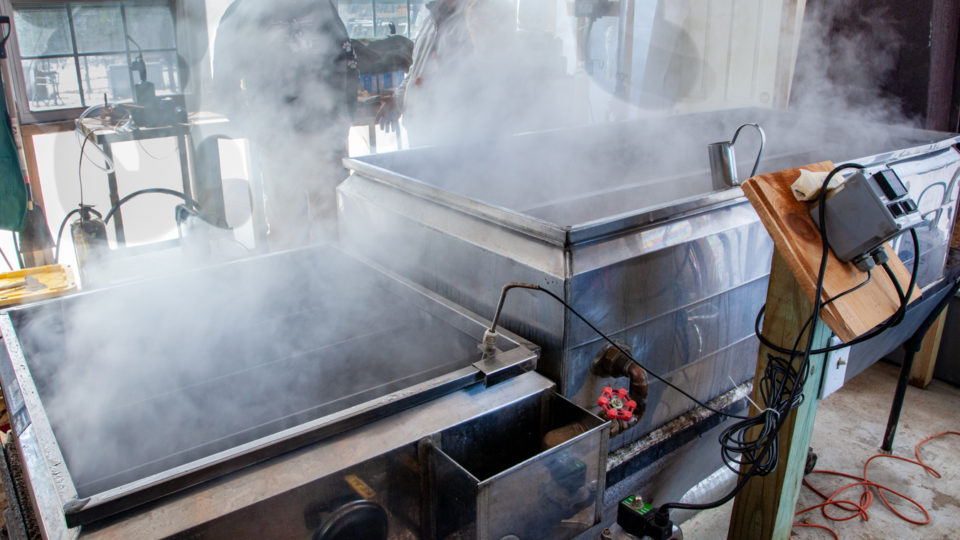
According to a study recently published in the journal Forest Ecology and Management, scientists are predicting another casualty of climate change: the U.S. maple industry.  By the year 2100, the maple syrup season in the United States may be less productive and arrive one month earlier than it has between 1950 and 2017.

Maple syrup production is impacted by two climate-sensitive factors: sugar content and sap flow.  Sugar content is determined by the previous year’s carbohydrate stores.  Sap flow depends on the freeze/thaw cycle.  Sap begins to flow in sugar maples when winter nights dip below freezing and the days warm above freezing.

The researchers studied six sugar maple stands from Virginia to Quebec, Canada over a six year period.  They created a model that predicted the timing of optimal sap flow based on historical temperature data on freeze/thaw days, actual sap collection from their field work, and monthly climate. 

According to modeling projections, the maple syrup season is expected to be, on average, one month earlier by the end of the century.  States like Indiana and Virginia will barely produce any sap.  New Hampshire and Vermont are likely to be least affected, but are still expected to experience a decrease in production.  In fact, most areas of maple production in the United States are projected to see decreases in production by the year 2100, while areas in northern Ontario and Quebec should see moderate to large increases in production. 

Currently, Canada is responsible for approximately 80% of global maple syrup production while the U.S. produces 20%.  The shifting climate for optimal maple production will leave many scrambling to find the sweet spot. 

**********

Web Links

Climate change study finds that maple syrup season may come earlier

Photo, posted March 24, 2019, courtesy of Paul VanDerWerf via Flickr.

Earth Wise is a production of WAMC Northeast Public Radio.

Hacking Photosynthesis

February 25, 2019 By EarthWise Leave a Comment

There is an enzyme known as RuBisCo that is involved in carbon fixation, the process plants use to convert carbon dioxide into sugar molecules.  The RuBisCo molecule is inside the leaves of most plants and is probably the most abundant protein in the world.

RuBisCo picks up carbon dioxide from the air and uses energy from the sun to turn the carbon into sugar molecules.  This process of photosynthesis is pretty much the foundation of life on Earth.

Wonderful as it is, the process is not perfect.  RuBisCo is not very selective in grabbing molecules from the air.  It picks up oxygen as well as CO2 and it produces a toxic compound when it does that.

Plants operate a whole other complicated chemical process to deal with this toxic byproduct and uses up a lot of energy along the way, leaving less energy for making leaves or food that we can eat.

A research program at the University of Illinois called Realizing Increased Photosynthetic Efficiency (or RIPE) has been trying to correct this problem; they have been trying to hack photosynthesis.  And they may well have succeeded.

Using genetic modification on tobacco plants, they have shut down the existing detoxification process and set up a much more efficient new one.  The result is super plants that grow faster and up to 40% bigger.

The next step is to get it to work on plants that people actually rely upon for food, like tomatoes, soybeans and black-eyed peas (which are a staple food crop in sub-Saharan Africa where food is scarce.)

It will be years before we know if the process can really produce more food and be safe, but it may end up leading to a major increase in crop productivity.

**********

Web Links

Scientists Have ‘Hacked Photosynthesis’ In Search Of More Productive Crops

Photo, posted June 10, 2013, courtesy of Boon Hong Seto via Flickr.

Earth Wise is a production of WAMC Northeast Public Radio.

Greening Halloween

October 30, 2017 By EarthWise Leave a Comment

https://earthwiseradio.org/wp-content/uploads/2017/10/EW-10-30-17-Greening-Halloween.mp3

According to the National Retail Federation, 179 million Americans are expected to spend $9.1 billion – or nearly $84 per person – on Halloween festivities this year, reaching a new record high.  But it’s not just our wallets that take a beating.  The planet also pays quite a price. 

[Read more…] about Greening Halloween

Chocolate Is Good For Your Brain

August 30, 2017 By EarthWise

https://earthwiseradio.org/wp-content/uploads/2017/08/EW-08-18-17-Chocolate-is-Good-for-Us.mp3

It is always good to learn about more reasons to eat chocolate and Italian researchers have provided us with some impressive facts to digest with our delicious treats.

[Read more…] about Chocolate Is Good For Your Brain

Carbon Dioxide And Bees

June 21, 2016 By WAMC WEB

https://earthwiseradio.org/wp-content/uploads/2016/06/EW-06-21-16-Carbon-Dioxide-and-Bees.mp3

The decline of bee populations worldwide is a serious problem that threatens much of agriculture.  From 2006 to 2011, losses in managed honeybee colonies in the U.S. averaged 33 percent a year.  In recent years, beekeepers have had to replace 50 percent of their colonies each year.

[Read more…] about Carbon Dioxide And Bees

Preservatives

February 8, 2016 By WAMC WEB

https://earthwiseradio.org/wp-content/uploads/2016/02/EW-02-08-16-Preservatives.mp3

Augmenting food with preservatives is not a recent practice.  For thousands of years, we have canned fruits with sugar, preserved meats with salt, and pickled vegetables so that they could keep in hot humid environments.

[Read more…] about Preservatives

Primary Sidebar

Recent Episodes

  • An uninsurable future
  • Clean energy and jobs
  • Insect declines in remote regions
  • Fossil fuel producing nations ignoring climate goals
  • Trouble for clownfishes

WAMC Northeast Public Radio

WAMC/Northeast Public Radio is a regional public radio network serving parts of seven northeastern states (more...)

Copyright © 2026 ·