• Skip to primary navigation
  • Skip to main content
  • Skip to primary sidebar

Earth Wise

A look at our changing environment.

  • Home
  • About Earth Wise
  • Where to Listen
  • All Articles
  • Show Search
Hide Search
You are here: Home / Archives for solar arrays

solar arrays

Solar on farmland

June 4, 2025 By EarthWise Leave a Comment

Solar panels on farmland would benefit energy system and farmers

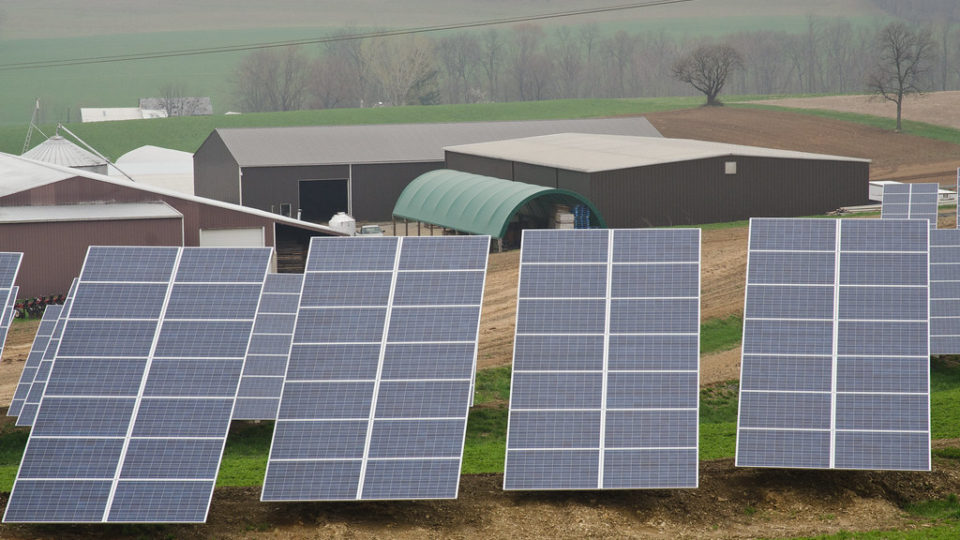
New studies have found that devoting a small percentage of U.S. farmland to producing solar power would benefit both the country’s energy system and its farmers.

Currently, about 46,000 square miles of farmland – about the area of Pennsylvania – is being used to grow corn to make ethanol.  One study looked at the impact of using some of this land for solar power instead of corn ethanol.

Not much of all this farmland is close enough to electrical transmission lines to be practical for utility solar power.  In fact, only about 1,500 square miles fits the bill.  But if even this small fraction of the corn growing land was used instead for solar power, it would generate as much energy each year than from all of the farms growing corn for fuel.

Solar installations on farms are helpful for farmers as well.  The land beneath the panels can be used to grow wildflowers that attracts the bees, wasps, and other insects needed to pollinate crops in the nearby fields.  In addition, the solar arrays provide a steady income stream for farmers.

In some places, farmers can earn substantially more from leasing their land for solar than from growing crops.  But a study of farms in California suggests that the best option is to do both.  Farmers who both grow crops and host solar arrays can have more financial security than those who do just one or the other.  The income from solar arrays is pretty predictable and is paid throughout the year.  Income from crops can drop off from, for example, a seasonal drought, or from extreme weather events.

**********

Web Links

To Help Growers and the Grid, Build Solar on Farmland, Research Says

Photo, posted June 9, 2016, courtesy of Matt Lavin via Flickr.

Earth Wise is a production of WAMC Northeast Public Radio

The human footprint on Earth

February 6, 2025 By EarthWise Leave a Comment

The Earth is a pretty big place, and it is easy to think that humans and their activities occupy very little of it.  But the impact of human activities on our planet continues to grow.  Recent satellite images from NASA’s Earth Observatory show the staggering extent of the human footprint on Earth.

Agriculture is a major part of it.  Farms and pastures take up almost half of the world’s habitable land – land not covered by ice or desert.  Greenhouses have recently proliferated tremendously and now cover 3.2 million acres, an area the size of Connecticut, and they even have effects on local climates.

More than half of the world’s population now lives in cities, which are expanding rapidly.  Enormous cities in Asia are changing the landscape in places like Thailand and Indonesia.  Apart from taking up lots of land, many of the world’s cities are immersed in clouds of air pollution that they generate.

Greenhouse gas emissions continue to grow, and temperatures continue to rise.  The effects of this on the planet are increasingly evident.  Seas are rising, ice is melting, glaciers shrink away, and wildfires continue to burn.  The massive wildfires in and around Los Angeles have made major changes in the local landscape.  Rising seas have flooded coastal wetlands and elsewhere, rivers and lakes have shrunk.

There are also human impacts visible from space that represent positive signs.  Large solar arrays supply the cheapest form of energy in most parts of the world and the number and size of solar installations are at a record high.   These solar installations provide some hope that global warming can be slowed.

**********

Web Links

The Growing Human Footprint on Earth, as Seen from Space

Photo, posted July 28, 2012, courtesy of Beth Scupham via Flickr.

Earth Wise is a production of WAMC Northeast Public Radio
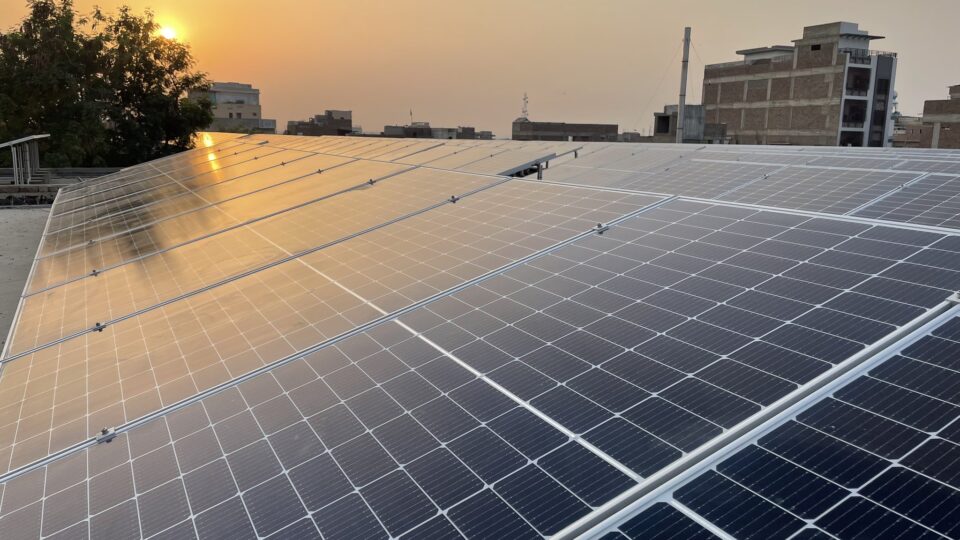
A Big Year For Rooftop Solar | Earth Wise

July 19, 2023 By EarthWise Leave a Comment

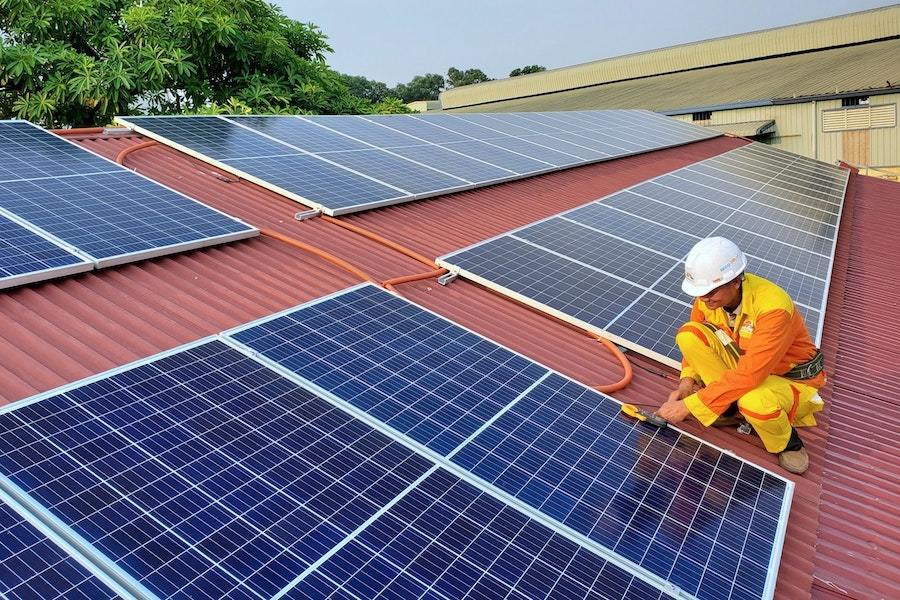
Rooftop solar growing around the globe

The global capacity of rooftop solar power grew by 49% in 2022.  Overall, the installed amount of rooftop solar grew from 79 gigawatts to 118 gigawatts last year and it is projected to reach 159 gigawatts by the end of this year.  By comparison, a typical nuclear power plant can produce 1 gigawatt; a gas-powered power plant is typically half a gigawatt.

Rooftop solar constitutes a relatively small fraction of the total global installed solar capacity, which is dominated by utility-scale solar arrays.  Total installed solar capacity rose from 950 gigawatts to 1,177 gigawatts last year and is projected to reach 1,518 gigawatts this year.  That is enough power to meet more than half the electricity demand of the European Union.

The rapid growth of solar power can only continue if there is more energy storage put in place to manage the peaks and troughs in solar output.  Countries will also need to upgrade their power grids to be able to transport excess solar power from where it is generated to where it is needed.   Bottlenecks in the grids of most of the leading solar-producing nations are already interfering with further solar development.

The overall potential for rooftop solar is based on the number of rooftops that would be suitable for solar power, which depends on the size, shading, orientation, and location of the roofs.  According to the National Renewable Energy Laboratory, rooftops in the United States have the potential for more than 1,000 gigawatts of solar capacity. Currently, only about 4% of US homes have rooftop solar. 

**********

Web Links

Rooftop Solar Grew Nearly 50 Percent Globally Last Year

Photo, posted November 16, 2022, courtesy of Oliver Knight via Flickr.

Earth Wise is a production of WAMC Northeast Public Radio
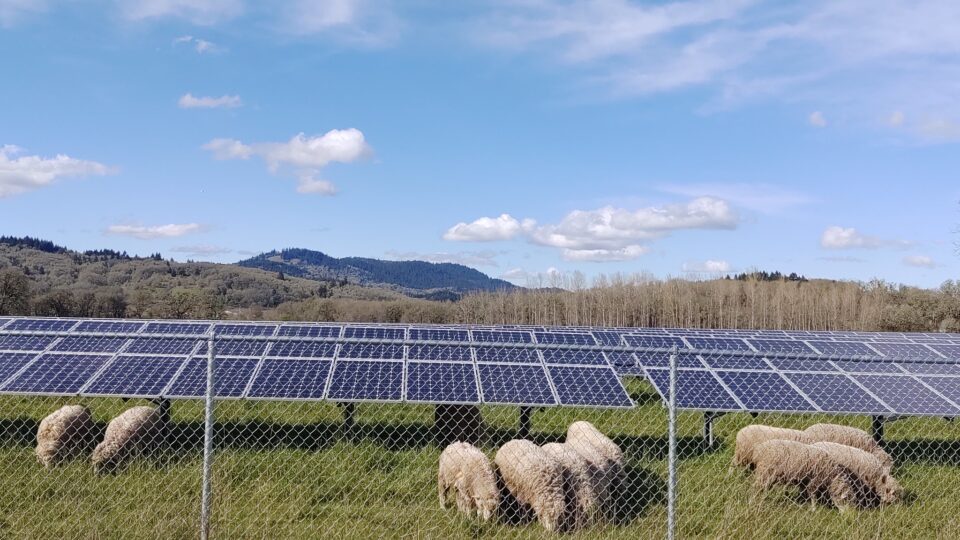
Agrivoltaics | Earth Wise

November 15, 2022 By EarthWise Leave a Comment

According to a study last year at Oregon State University, co-developing land for both solar photovoltaic power and agriculture could provide 20% of total electricity generation in the United States with an investment of less than 1% of the annual U.S. budget.  Widespread installation of agrivoltaic systems could reduce carbon emissions by 330,000 tons annually and create more than 100,000 jobs in rural communities.

Agrivoltaics could provide the synergistic combination of more food, more energy, lower water demand, lower carbon emissions, and improved local prosperity.  The problem with agrivoltaics to date is that the existing implementations have used solar arrays designed strictly for electricity generation rather than to be used in combination with agriculture.  They are not that well suited to co-exist with growing crops or grazing animals.

A new project is underway at Oregon State that will help researchers to optimize agrivoltaic systems.  The five-acre Solar Harvest Project is being built at the university’s North Willamette Research and Extension Center in Aurora, Oregon in partnership with the Oregon Clean Power Cooperative. 

The solar array for the project is designed specifically for agrivoltaics research and uses panels that are more spread out and able to rotate to a near vertical position to allow farm equipment to pass through.  The project will allow researchers to study the impact of solar panels on soil health, water use, and plant physiology and yields.

Electricity generated from the 326-kW solar system will be available for purchase by Oregon State and community members. 

**********

Web Links

Construction starts on Oregon State agrivoltaics farm that will merge agriculture and solar energy

Photo, posted April 5, 2020, courtesy of Sean Nealon / Oregon State University via Flickr.

Earth Wise is a production of WAMC Northeast Public Radio
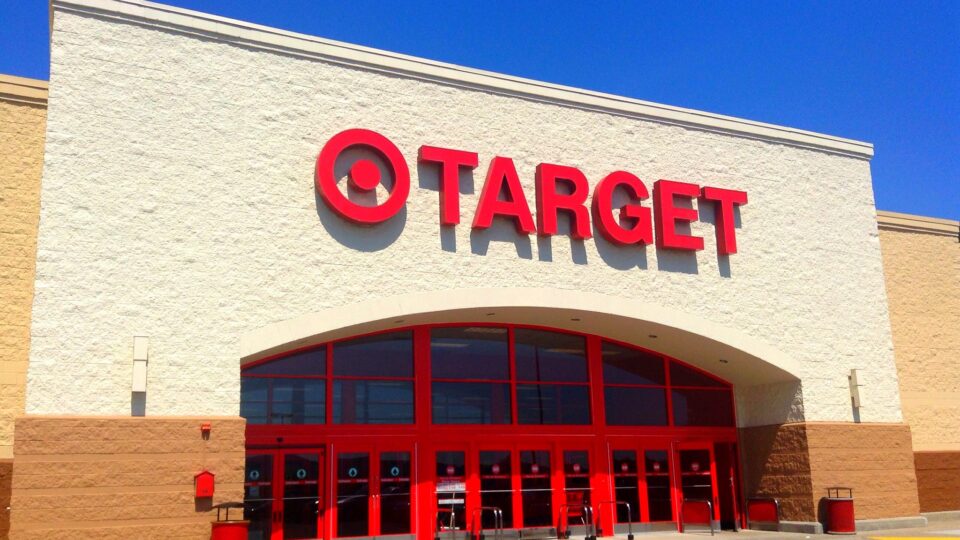
A Solar-Powered Target Store | Earth Wise

April 26, 2022 By EarthWise Leave a Comment

Target among many retailers adopting renewables

Many companies have made sustainability commitments of various types. Environmental organizations have urged big-box and grocery stores to install solar panels on their rooftops and parking lots thereby reducing their energy usage and expanding the country’s supply of renewable energy.  These places occupy large areas and therefore are capable of supporting large solar arrays.

According to a report by two environmental advocacy groups, rooftop solar panels on retail stores could generate enough electricity to power the equivalent of nearly 8 million U.S. homes.

Target Stores are one of the retailers that has been making an effort to be a greener company.  Target has installed solar panels on about 25% of its approximately 1,900 stores.  The Target store in Vista, California, about 40 miles north of San Diego, is the company’s most sustainable store.  It already had solar panels on its rooftop, powering a portion of the store.

But now it has installed massive carports topped with solar panels high above its parking lot.  With these panels, this Target can now produce enough renewable energy to power the entire store, from its refrigeration to its heating and air conditioning. Adding in some of the other energy-saving features of the store, Target expects to produce 10% more energy than the store needs, which it will return to the local power grid.  This is Target’s first net-zero energy store.

Target is not the only big retailer going solar.   Home Depot, Lowe’s, and Walmart all have been installing solar panels on some of their rooftops.  Even some restaurants are trying to reach sustainability goals with solar panels.  This is a trend that hopefully will continue to grow.

**********

Web Links

Target looks to massive solar panels in a California parking lot as a green model to power its stores

Photo, posted June 30, 2014, courtesy of Mike Mozart via Flickr.

Earth Wise is a production of WAMC Northeast Public Radio.

Agrivoltaics

September 24, 2019 By EarthWise Leave a Comment

A new study by Oregon State University has found that the most productive places on Earth for solar power are farmlands.   In fact, if less than 1% of agricultural land was converted to solar panels, it would be sufficient to fulfill global electricity demand.

The concept of co-developing the same area of land for both solar photovoltaic power and conventional agriculture is known as agrivoltaics.

The synergy between agriculture and solar power is not surprising.   People have been growing crops around the planet for at least 8,000 years and, long ago, farmers found the best places to grow them which turn out to also the best places to harvest solar energy.  The needs for solar panels are pretty similar to those of food crops.  The efficiency of the panels decreases if they get too hot.  Barren land is hotter than cropland, so the productivity of solar panels is less in such places.

The Oregon State Study analyzed power production data collected by Tesla, which had installed five large grid-tied, ground-mounted solar electric arrays owned by Oregon State.  The researchers monitored air temperature, relative humidity, wind speed, wind direction, soil moisture, and incoming solar energy.  With the data, they developed a model for the best conditions for solar panel productivity and they coincide with excellent conditions for agriculture.  Solar panels are kind of like people with regard to the weather:  they are happier when it is cool and breezy and dry.

Previously-published research shows that solar panels actually increase crop yields on pasture or agricultural fields.

These new results have implications for the current practice of constructing large solar arrays in deserts.  Agricultural lands may be a much better option for both solar production and crop production.

**********

Web Links

Installing solar panels on agricultural lands maximizes their efficiency, new study shows

Photo, posted April 20, 2011, courtesy of U.S. Department of Agriculture via Flickr.

Earth Wise is a production of WAMC Northeast Public Radio.

Renewable Energy Projects In The Northeast

June 2, 2017 By EarthWise

https://earthwiseradio.org/wp-content/uploads/2017/06/EW-06-02-17-Renewable-Energy-Projects-in-the-Northeast.mp3

The seven northeastern U.S. states that make up the Regional Greenhouse Gas Initiative have all set ambitious emissions reduction goals and renewable energy targets that will be difficult to meet.   For example, New York has the goal of getting 50% of its electricity from renewable sources by the year 2030.

[Read more…] about Renewable Energy Projects In The Northeast

Renewables On Campus

December 12, 2016 By EarthWise

https://earthwiseradio.org/wp-content/uploads/2016/11/EW-12-12-16-Renewables-on-Campus.mp3

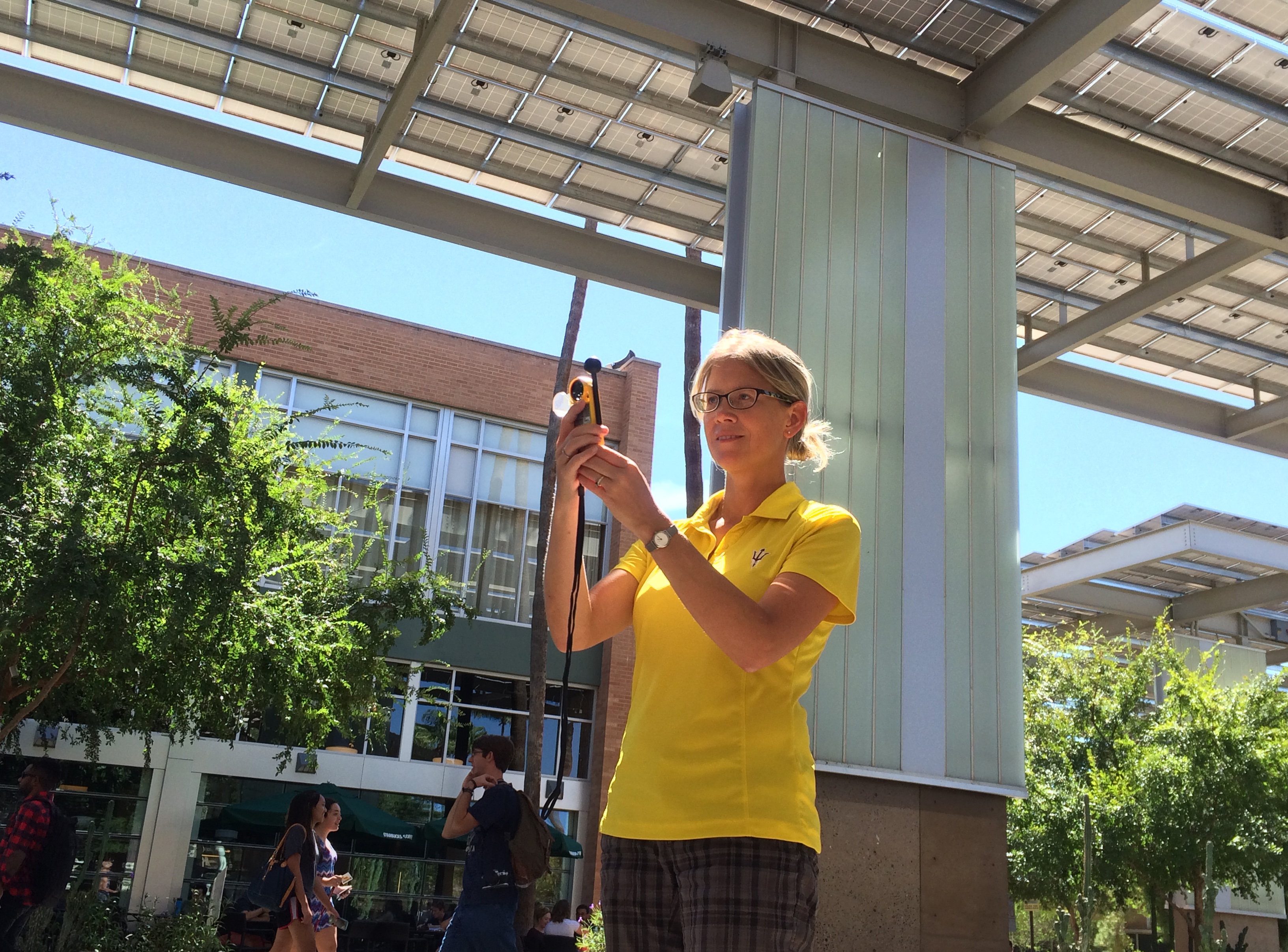
Colleges and universities across the country are increasingly deploying solar arrays and other types of renewable energy.   Many have set goals to become carbon neutral.

[Read more…] about Renewables On Campus

Primary Sidebar

Recent Episodes

  • An uninsurable future
  • Clean energy and jobs
  • Insect declines in remote regions
  • Fossil fuel producing nations ignoring climate goals
  • Trouble for clownfishes

WAMC Northeast Public Radio

WAMC/Northeast Public Radio is a regional public radio network serving parts of seven northeastern states (more...)

Copyright © 2026 ·