• Skip to primary navigation
  • Skip to main content
  • Skip to primary sidebar

Earth Wise

A look at our changing environment.

  • Home
  • About Earth Wise
  • Where to Listen
  • All Articles
  • Show Search
Hide Search
You are here: Home / Archives for simulations

simulations

Electric vehicles and health

November 29, 2024 By EarthWise Leave a Comment

Studying the impact of electric vehicles on human health

Much of the discussion about the benefits of electric vehicles centers about the climate impact of not burning fossil fuels as well as about reduced operating costs.  A new study by the University of Toronto looked at the health benefits of large-scale adoption of electric vehicles.

The Toronto researchers used computer simulations to show that widespread electrification of the U.S. vehicle fleet when coupled with significant use of renewable energy to power the fleet could result in health benefits worth between $84 and $188 billion dollars by 2050.  Expressing these benefits in dollar terms is a way to quantify those benefits, but clearly what is most important is people’s health.

Carbon dioxide coming out of tailpipes is what is most harmful to the climate, but there is much more than CO2 vehicle exhaust.  There are many air pollutants that have a significant, quantifiable impact on human health.  These include nitrogen oxides, sulfur oxides, and small particles known as PM2.5. 

The study simulated levels of air pollution across the United States under various scenarios of adoption of EVs and the use of renewable energy.  The simulations clearly showed that the combination of widespread use of electric vehicles and the greening of the power grid would result in huge cumulative public health benefits.  But these benefits will take time to accrue.  The internal combustion vehicles being sold today will still be on the roads for many years and will continue to spread pollution everywhere there are roads.

**********

Web Links

New research reveals how large-scale adoption of electric vehicles can improve air quality and human health

Photo, posted May 7, 2020, courtesy of Mark Vletter via Flickr.

Earth Wise is a production of WAMC Northeast Public Radio

Weather extremes for most people

October 7, 2024 By EarthWise Leave a Comment

Weather extremes are becoming common for many people

Scientists from the CICERO Center for International Climate Research in Norway along with researchers at the University of Reading in the UK have analyzed how global warming can combine with normal variations in the weather to produce decades-long periods of very rapid changes involving both extreme temperatures and extreme amounts of rainfall.

Many parts of the world have already been experiencing record temperatures and extreme rainfall events.  Previously, most analyses of the changing climate have focused on the global mean and not on the impact of extreme weather on specific countries.

The study made use of large climate model simulations to show that if global emissions continue on the path they have been on, large parts of the tropics and subtropics – which are home to 70% of the world’s population – are expected to experience strong rates of change in temperature and precipitation extremes over the next 20 years.  But even if there is strong emissions mitigation – meaning that emissions are reduced enough to reach the goals of the Paris Climate Agreement – the expectation is that 20% of the world’s population will face extreme weather risks. 

These extreme events currently account for a disproportionate share of the realized impacts of climate change.  Heatwaves cause heat stress and excess mortality of both people and livestock.  Extreme precipitation leads to flooding, damage to settlements, infrastructure, crops, and ecosystems, as well as to reduced water quality. 

Society will be increasingly vulnerable to these extreme events, especially when multiple hazards occur at the same time.

**********

Web Links

Extreme weather to strengthen rapidly over next two decades

Photo, posted May 20, 2024, courtesy of Dale Cruse via Flickr.

Earth Wise is a production of WAMC Northeast Public Radio
Assessing The Planet’s Most Unique Birds | Earth Wise

January 11, 2023 By EarthWise Leave a Comment

Birds come in a huge variety of shapes, sizes and plumages.  The physical attributes of birds are adaptations that have taken countless millennia to develop, and physical attributes are closely related to the roles birds play in their environment.   

According to a new study led by researchers from the University College London in the U.K., bird species with extreme or uncommon combinations of traits have the highest risk of extinction.  Losing these bird species and the unique roles they play in the environment, including seed dispersal, pollination and predation, could have severe consequences on the health of ecosystems.

In the study, which was recently published in the British Ecological Society journal Functional Ecology, the researchers analyzed the extinction risk and physical attributes of 99% of all living bird species.  The research team used a dataset of measurements collected from living birds and museum specimens.  The measurements included things like beak size and shape, and the length of wings, tails and legs.  The researchers combined this data with extinction risk, and then ran simulations to see what would happen if the most threatened birds were to go extinct.

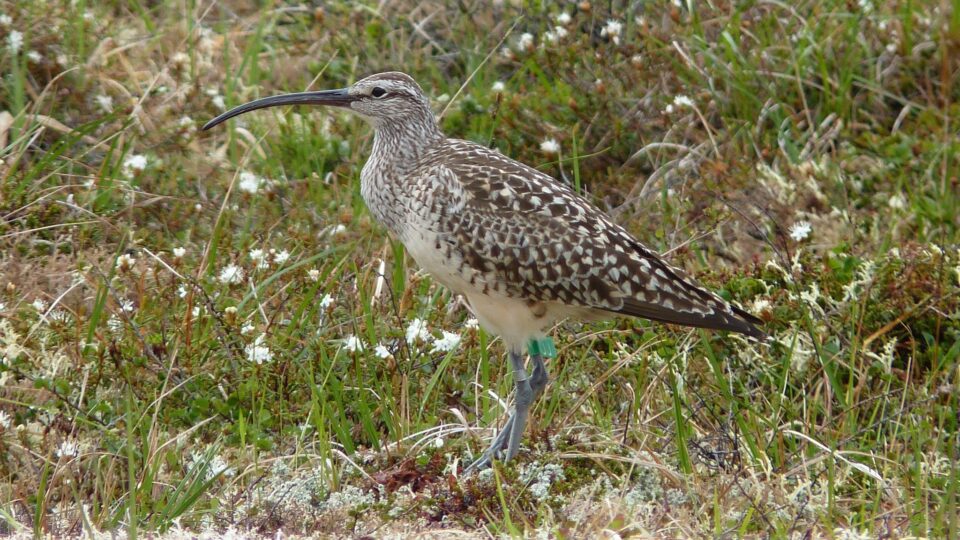
Some of the bird species that are both most unique and most threatened include the Christmas Frigatebird and the Bristle-thighed Curlew.  Kiwis were excluded from the study because the researchers viewed them as extreme morphological outliers.

While most unique birds were also classified as threatened on the Red List, the research was unable to show what links uniqueness in birds to extinction risk

The research team warns that if more isn’t done to protect these threatened species and avoid extinctions, the functioning of ecosystems will be dramatically disrupted.

*********

Web Links

Planet’s most unique birds at higher risk of extinction

Photo, posted June 25, 2012, courtesy of Kristine Sowl / USFWS via Flickr.

Earth Wise is a production of WAMC Northeast Public Radio.

The Hunt For Marine Plastic | Earth Wise

December 21, 2021 By EarthWise Leave a Comment

How to detect and track floating plastic in the oceans

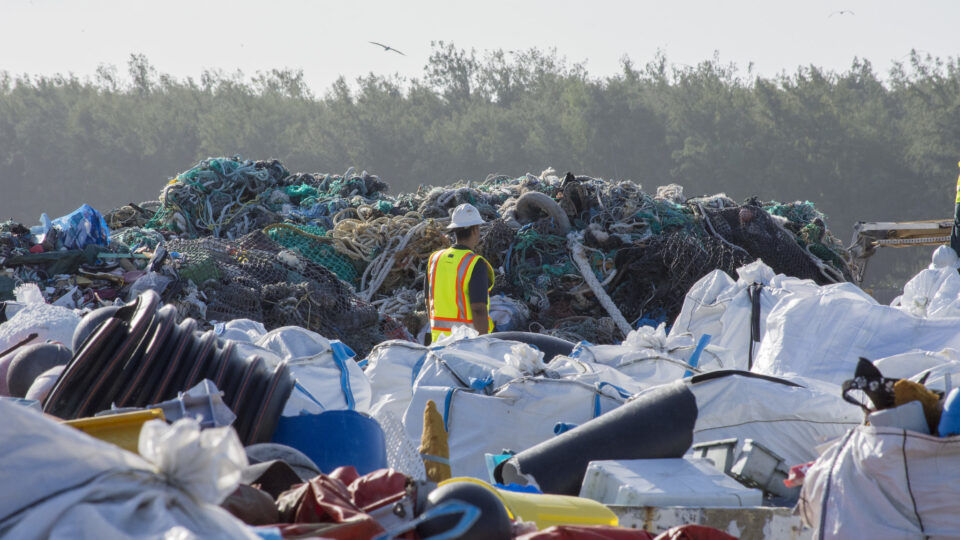
Estimates are that about 10 million tons of plastic enter the ocean every year.  This is equivalent to a truckload of plastic being dumped into the sea every minute and the stuff is not easy to keep track of.  Some of it ends up in the  infamous ocean garbage patches.  But overall, researchers only know what happens to about 1% of it.

The European Space Agency has decided to find out whether it might be possible to detect and track floating plastic in the oceans using satellite monitoring.  Researchers have a variety of ideas about how best to do this and now the agency is testing some of those ideas.

The ESA maintains something called the Atlantic Basin Facility which is a 7000 square-foot tank equipped to simulate various types of waves and tidal currents.  It is the largest facility of its kind in the world.

Researchers place plastic in the basin consisting of typical items found at sea, such as bags, bottles, marine nets and ropes, plastic cutlery, and Styrofoam balls.  The plastic used in the study included material previously recovered from the sea through ocean cleanup campaigns.  Multiple research groups from European universities used specialized instrumentation to monitor the basin from above.  Techniques included radar remote sensing, something called GNSS reflectometry, and specialized optical instrumentation.

Initial results look promising in that under some circumstances teams received useable signals.  It will take further analysis to determine the ultimate utility of space-based monitoring of plastic entering the ocean.  Marine litter is a large and growing problem.  Figuring out where it all is and where it is going is a necessary part of any solution.

**********

Web Links

Hunting for marine plastic

Photo, posted March 24, 2017, courtesy of Holly Richards/USFWS via Flickr.

Earth Wise is a production of WAMC Northeast Public Radio.

Weather-Responsive Traffic Signals

April 17, 2019 By EarthWise Leave a Comment

We all spend time sitting at red lights – sometimes it seems like a whole lot of time.  There is a fair amount of science applied in the design of traffic signals that at least has the aim of easing congestion and improving traffic safety.

Signals in modern cities are timed using optimization models that analyze multiple factors including traffic volume and speed with the goal of safely getting as many vehicles as possible through intersections.  It sure doesn’t seem that way in many places, but that is the intent in any case.

But a real problem with these models is that they assume normal conditions including weather conditions.  In places that experience real winter conditions, the assumptions of traffic models fail.  If the road surface is covered with snow and ice and visibility is poor, variables like speed and stopping distances become very different.

Researchers at the University of Waterloo in Canada collected data from real-world intersections and ran computer simulations to determine the effects of adjusting traffic signal behavior in bad weather (as well as in the presence of other conditions such as accidents or construction.)  They found that such adjustments could reduce traffic delays by as much as 20%.   

Cities with computerized signal systems are already equipped to remotely and inexpensively adjust the timing of traffic lights.  To gain the benefits of smarter signals, there would need to be video cameras and a certain amount of artificial intelligence software that would be able to automatically tweak the timing of lights in response to traffic changes caused by weather, accidents or construction. 

It sounds like a great idea.

**********

Web Links

Weather-responsive intersections could ease traffic congestion

Photo, posted September 22, 2009, courtesy of Tristan Bowersox via Flickr.

Earth Wise is a production of WAMC Northeast Public Radio.

Mammals Can’t Seem To Evolve Fast Enough

November 1, 2018 By EarthWise Leave a Comment

https://earthwiseradio.org/wp-content/uploads/2018/11/EW-11-01-18-Mammals-Just-Cannot-Keep-Up.mp3

Our planet has been through five upheavals over the past 450 million years.  During each one, the environment on earth changed so dramatically that most plant and animal species became extinct.  After each of these mass extinction events, evolution slowly filled the gaps in the environment with new species. 

[Read more…] about Mammals Can’t Seem To Evolve Fast Enough

Primary Sidebar

Recent Episodes

  • An uninsurable future
  • Clean energy and jobs
  • Insect declines in remote regions
  • Fossil fuel producing nations ignoring climate goals
  • Trouble for clownfishes

WAMC Northeast Public Radio

WAMC/Northeast Public Radio is a regional public radio network serving parts of seven northeastern states (more...)

Copyright © 2026 ·