• Skip to primary navigation
  • Skip to main content
  • Skip to primary sidebar

Earth Wise

A look at our changing environment.

  • Home
  • About Earth Wise
  • Where to Listen
  • All Articles
  • Show Search
Hide Search
You are here: Home / Archives for satellite monitoring

satellite monitoring

The Hunt For Marine Plastic | Earth Wise

December 21, 2021 By EarthWise Leave a Comment

How to detect and track floating plastic in the oceans

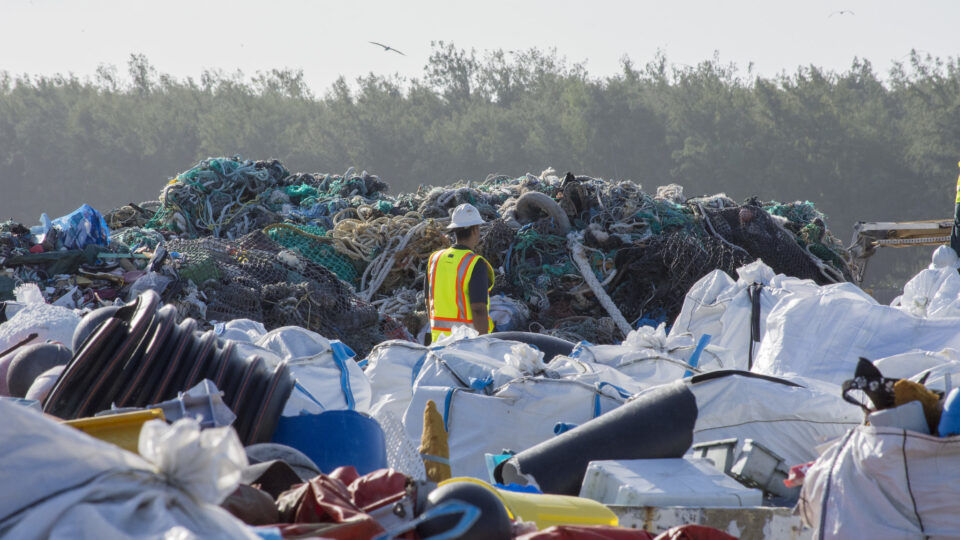
Estimates are that about 10 million tons of plastic enter the ocean every year.  This is equivalent to a truckload of plastic being dumped into the sea every minute and the stuff is not easy to keep track of.  Some of it ends up in the  infamous ocean garbage patches.  But overall, researchers only know what happens to about 1% of it.

The European Space Agency has decided to find out whether it might be possible to detect and track floating plastic in the oceans using satellite monitoring.  Researchers have a variety of ideas about how best to do this and now the agency is testing some of those ideas.

The ESA maintains something called the Atlantic Basin Facility which is a 7000 square-foot tank equipped to simulate various types of waves and tidal currents.  It is the largest facility of its kind in the world.

Researchers place plastic in the basin consisting of typical items found at sea, such as bags, bottles, marine nets and ropes, plastic cutlery, and Styrofoam balls.  The plastic used in the study included material previously recovered from the sea through ocean cleanup campaigns.  Multiple research groups from European universities used specialized instrumentation to monitor the basin from above.  Techniques included radar remote sensing, something called GNSS reflectometry, and specialized optical instrumentation.

Initial results look promising in that under some circumstances teams received useable signals.  It will take further analysis to determine the ultimate utility of space-based monitoring of plastic entering the ocean.  Marine litter is a large and growing problem.  Figuring out where it all is and where it is going is a necessary part of any solution.

**********

Web Links

Hunting for marine plastic

Photo, posted March 24, 2017, courtesy of Holly Richards/USFWS via Flickr.

Earth Wise is a production of WAMC Northeast Public Radio.
A High-Tech Fire Alarm | Earth Wise

July 23, 2020 By EarthWise Leave a Comment

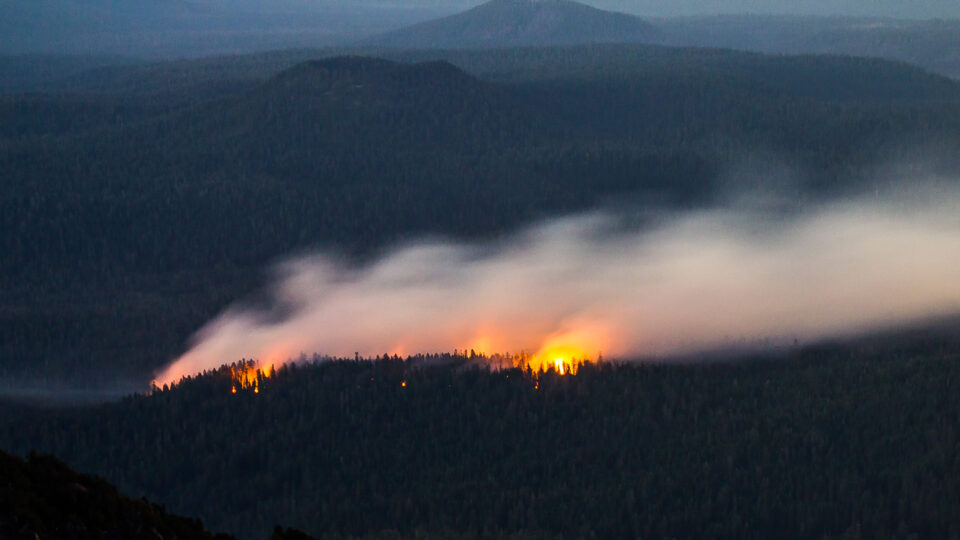
In recent years, wildfires have been a global problem, notably in California, Brazil, and Australia.  It has become increasingly important to be able to respond to new fires as soon and as quickly as possible.  Such response can make the task of extinguishing them easier, thereby reducing the amount of damage and the loss of property and life.

Traditional methods for detecting forest fires include satellite monitoring, ground patrols, and watch towers, all of which have high labor and financial costs but suffer from low efficiency.  Remote sensing technologies are becoming increasingly common but rely on batteries for power, requiring servicing in remote locations to replace depleted batteries.  Solar cells represent an alternative to batteries, but it is challenging to use them in forests because of shading and foliage coverage.

A team of researchers at Michigan State University has developed a remote forest fire detection and alarm system powered by nothing more than the movement of tree limbs in the wind.  The device is known as an MC-TENG, which is an acronym for multilayered cylindrical triboelectric nanogenerator.  The triboelectric effect is a phenomenon where certain materials become electrically charged when they separate from a second material with which they were previously in contact.  In the new device, two cylindrical sleeves fit within one another – one anchored and the other free to slide.  The device is tied to a tree branch and when the branch sporadically moves in the wind, electricity is generated and stored in a carbon-nanotube-based micro supercapacitor.  This powers a sensing system that can continuously monitor environmental conditions without requiring any maintenance.

A combination of carbon monoxide and temperature sensors provides a high-tech fire alarm that can operate continuously in the most remote forest.

**********

Web Links

Self-Powered Alarm Fights Forest Fires, Monitors Environment

Photo, posted August 3, 2012, courtesy of Lukas Schlagenhauf via Flickr.

Earth Wise is a production of WAMC Northeast Public Radio.
Deforestation in the Amazon Rainforest

May 30, 2017 By EarthWise

https://earthwiseradio.org/wp-content/uploads/2017/05/EW-05-30-17-Deforestation-in-the-Amazon.mp3

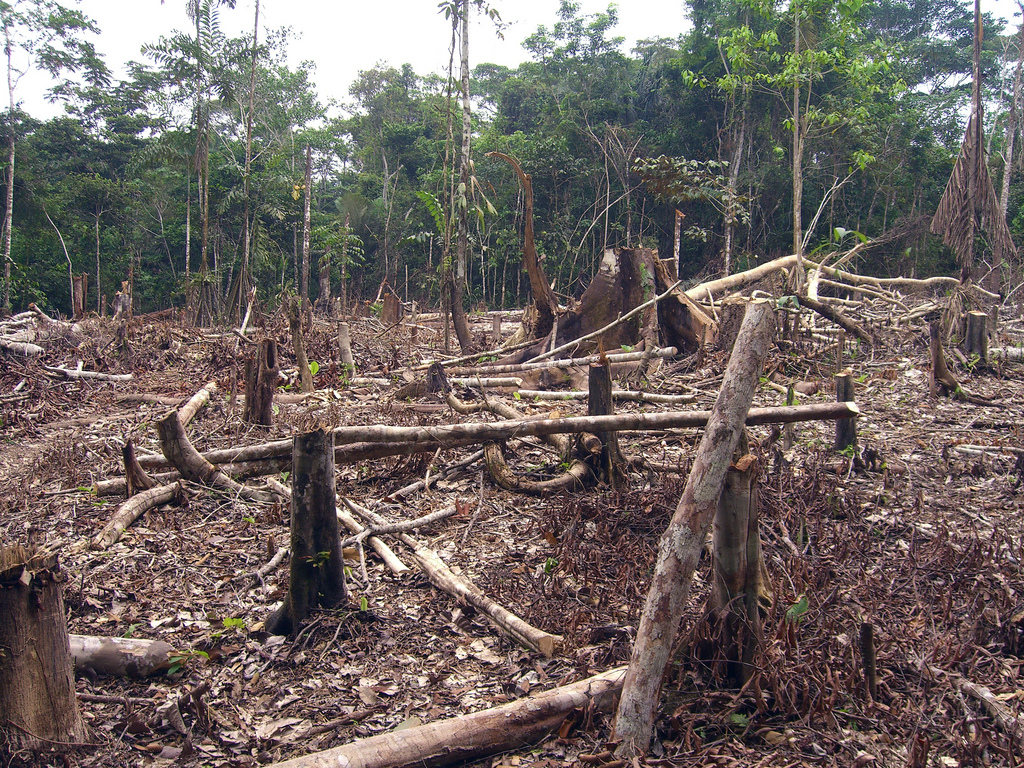
The Amazon rainforest is the biggest in the world, larger than the next two biggest combined.  It covers over 3 million square miles, roughly the size of the lower 48 states.  For this reason, it functions as a critical sink for carbon in the atmosphere.

[Read more…] about Deforestation in the Amazon Rainforest

Primary Sidebar

Recent Episodes

  • An uninsurable future
  • Clean energy and jobs
  • Insect declines in remote regions
  • Fossil fuel producing nations ignoring climate goals
  • Trouble for clownfishes

WAMC Northeast Public Radio

WAMC/Northeast Public Radio is a regional public radio network serving parts of seven northeastern states (more...)

Copyright © 2026 ·