• Skip to primary navigation
  • Skip to main content
  • Skip to primary sidebar

Earth Wise

A look at our changing environment.

  • Home
  • About Earth Wise
  • Where to Listen
  • All Articles
  • Show Search
Hide Search
You are here: Home / Archives for sahara

sahara

Saharan dust and solar power

May 29, 2025 By EarthWise Leave a Comment

The world is a big place but even things that are far away can have serious local consequences.  The effects of distant Canadian wildfires on air quality in Florida is a good example.

Europe is increasingly becoming reliant on solar energy to meet its targets for climate change mitigation and energy security.   According to new research by four Hungarian universities, mineral dust carried on the wind from the Sahara Desert is not only reducing electricity generation from solar power across Europe but it is also making it harder to predict what gets generated.

The Sahara releases billions of tons of fine dust into the atmosphere each year.  Tens of millions of tons reach European skies where the tiny particles scatter and absorb sunlight, reduce the amount of light reaching the surface, and even promote cloud formation.   All of these things reduce the output of photovoltaic systems.

In addition, conventional weather forecasting tools don’t consider the effects of Saharan dust events, so that scheduling of solar power for the energy system becomes less reliable.  Incorporating these events into new forecast models will be essential.

Apart from the atmospheric effects of the dust, there are also long-term impacts due to dust contaminating and eroding the physical infrastructure of solar panels thereby further reducing their efficiency and increasing maintenance costs.

Over time, south-to-north transport of Saharan dust is likely to become more pronounced due to a steeper thermal gradient.  Currently, the quantities of atmospheric dust, the dynamics of its transport, and the physical properties of the dust itself are not very well understood.  Understanding these things will be crucial for Europe’s energy future.

**********

Web Links

The shadow of the wind: photovoltaic power generation under Europe’s dusty skies

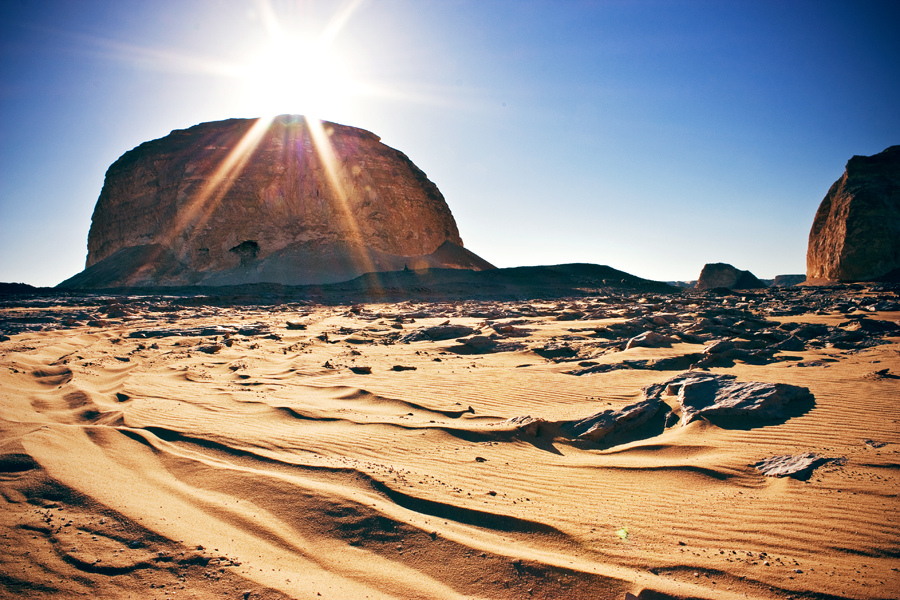
Photo, posted March 11, 2023, courtesy of Mark Wordy via Flickr.

Earth Wise is a production of WAMC Northeast Public Radio
Glacial Loss In The Swiss Alps | Earth Wise

December 14, 2022 By EarthWise Leave a Comment

Record glacial loss in the Swiss Alps

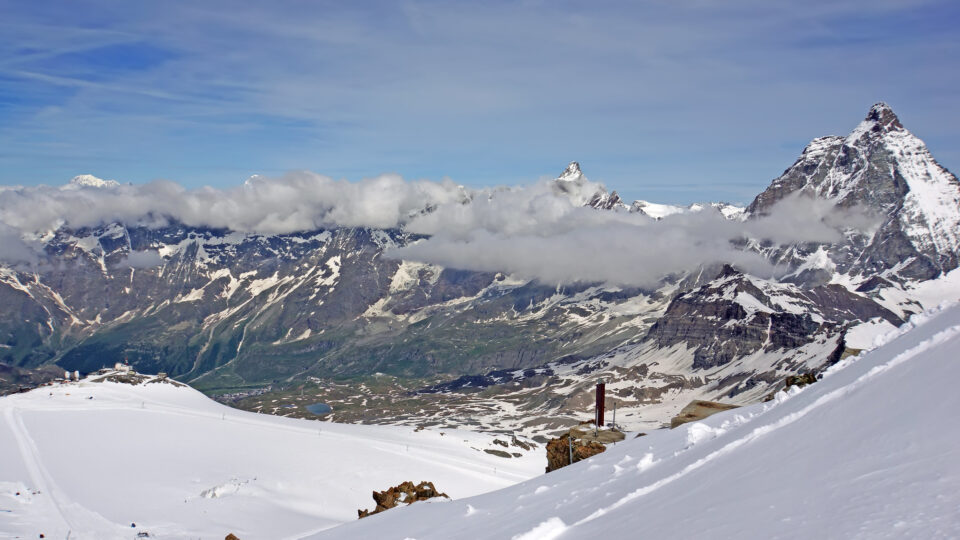
In 2022, glaciers in the Swiss Alps melted more than in any year on record.   This is the latest piece of bad news for the country’s glaciers, which have lost more than half of their volume of ice since the 1930s.

The melting season for Switzerland’s snow and ice typically starts in May and ends in early October.  This year’s melting season caused glaciers in the Diablerets mountain group to thin by an average of 13 feet, which is 3 times the amount of thinning observed over the past decade.   The Tsanfleuron pass between two of the glaciers is now exposed as bare rock for the first time in several thousand years. Across Switzerland, glaciers lost about 6% of their remaining volume just this year.  The previous worst year for glaciers was 2003, when losses were nearly 4%. 

There was significant melting this year in part because of the small amount of snowfall over the winter.  That snow melted quickly, being sped up by the warming effect of dust from the Sahara Desert falling on the snow.  By early summer, there was no longer a protective blanket of snow on the glaciers, exposing them to summer heat.

The loss of glaciers is far more serious than the disappearance of aesthetically pleasing landscape features.   Glaciers act as reservoirs of water that persist through the summer months.  Melt from glaciers provides water to ecosystems and creates habitats for plants and animals.  Cold runoff from glaciers affects downstream water temperatures which have a major impact on insects, fish, and other creatures.  Globally, melting glaciers contribute more than 20% of the observed ongoing sea-level rise.

**********

Web Links

Rocky Road for Swiss Glaciers

Photo, posted June 22, 2015, courtesy of Dennis Jarvis via Flickr.

Earth Wise is a production of WAMC Northeast Public Radio
Dust From The Sahara | Earth Wise

July 9, 2020 By EarthWise Leave a Comment

hazardous air quality

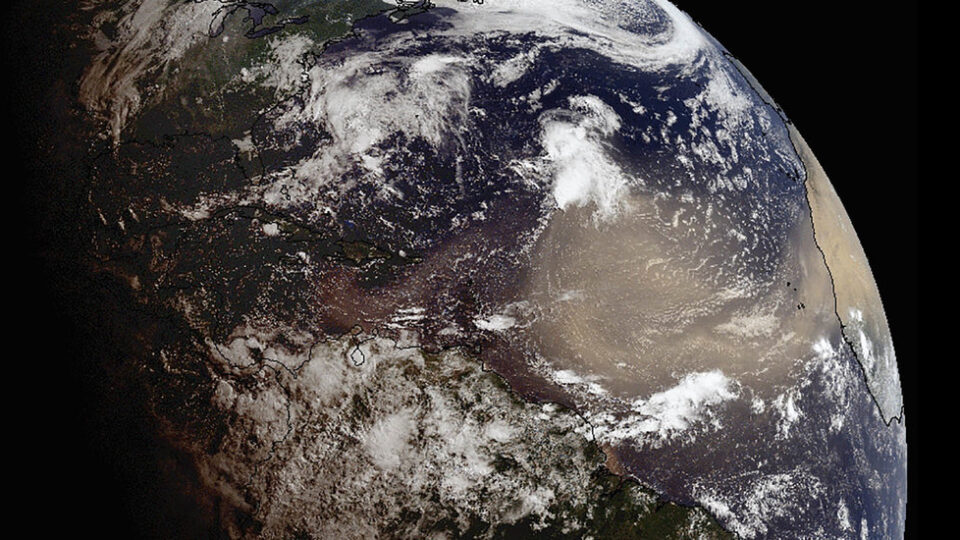
A vast cloud of dust from the Sahara Desert blanketed the Caribbean in late June before drifting across the southeastern U.S.  The phenomenon is nothing new; only the magnitude of the occurrence this time around was unusual.  According to experts, this is the most significant Sahara dust event in 50 years.

The Sahara Desert is the major source on Earth of mineral dust, with some 60-200 million tons of it per year being lifted into the atmosphere.  Convection currents over hot desert areas lift the dust to very high altitudes.  From there, it can be transported worldwide by winds.   The dust, combined with the extremely hot, dry air of the Sahara Desert often forms an atmospheric layer called the Saharan Air Layer, which can have significant effects on tropical weather by interfering with the development of hurricanes.  The Saharan Air Layer typically moves across the North Atlantic every three to five days from late spring to early fall, peaking in the middle of the summer.  It can occupy a layer as much as two miles thick in the atmosphere.

The dust plume this summer was highly visible from space, covering thousands of miles of the Atlantic Ocean and the Caribbean Sea.

A common effect of Sahara dust is that normally blue skies can acquire a milky haze, but beyond that can lead to spectacular sunsets.  But apart from the visual spectacle, the dust can aggravate the conditions of people with asthma, respiratory illnesses, and allergies. On the positive side, as long as the dust is around, it is much less likely that tropical storms and hurricanes will form.

**********

Web Links

Sahara dust blankets Caribbean, air quality hazardous

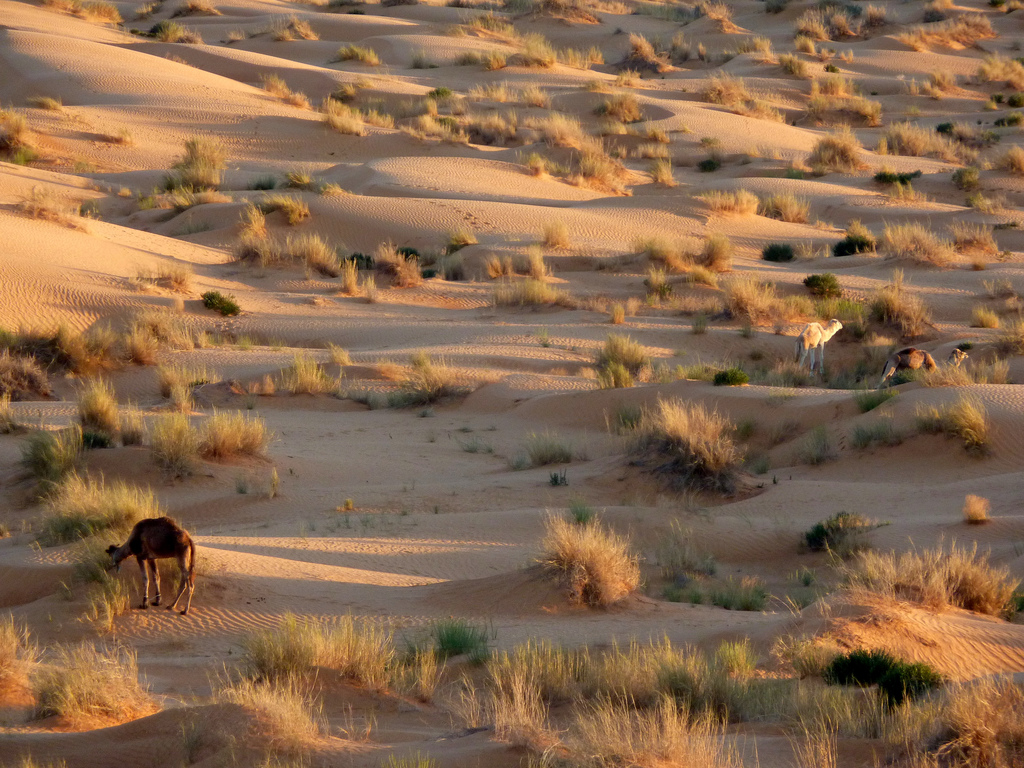
Photo, posted June 22, 2020, courtesy of Sagar Rana via Flickr.

Earth Wise is a production of WAMC Northeast Public Radio.

Sahara Greening And Tropical Cyclones

July 25, 2017 By EarthWise

https://earthwiseradio.org/wp-content/uploads/2017/07/EW-07-25-17-Sahara-Greening-.mp3

Global weather patterns are influenced by environmental conditions in places around the world.  One of the world’s major weather creators is the Sahara Desert.  The Sahara is the largest hot desert in the world.  The only larger deserts of any sort are in the polar extremes of the planet and are thus not hot deserts at all.

[Read more…] about Sahara Greening And Tropical Cyclones

Did People Create The Sahara Desert?

April 25, 2017 By EarthWise

https://earthwiseradio.org/wp-content/uploads/2017/04/EW-04-25-17-Did-People-Create-the-Sahara.mp3

One of the arguments some people make when discussing human causes of climate change is that people can’t cause such massive changes.  However, there is a long historical record of human-driven ecological and climatic change in Europe, North America and New Zealand, among other places.

[Read more…] about Did People Create The Sahara Desert?

Saving Saharan Oases

February 6, 2017 By EarthWise

https://earthwiseradio.org/wp-content/uploads/2017/02/EW-02-06-17-Saving-Saharan-Oases.mp3

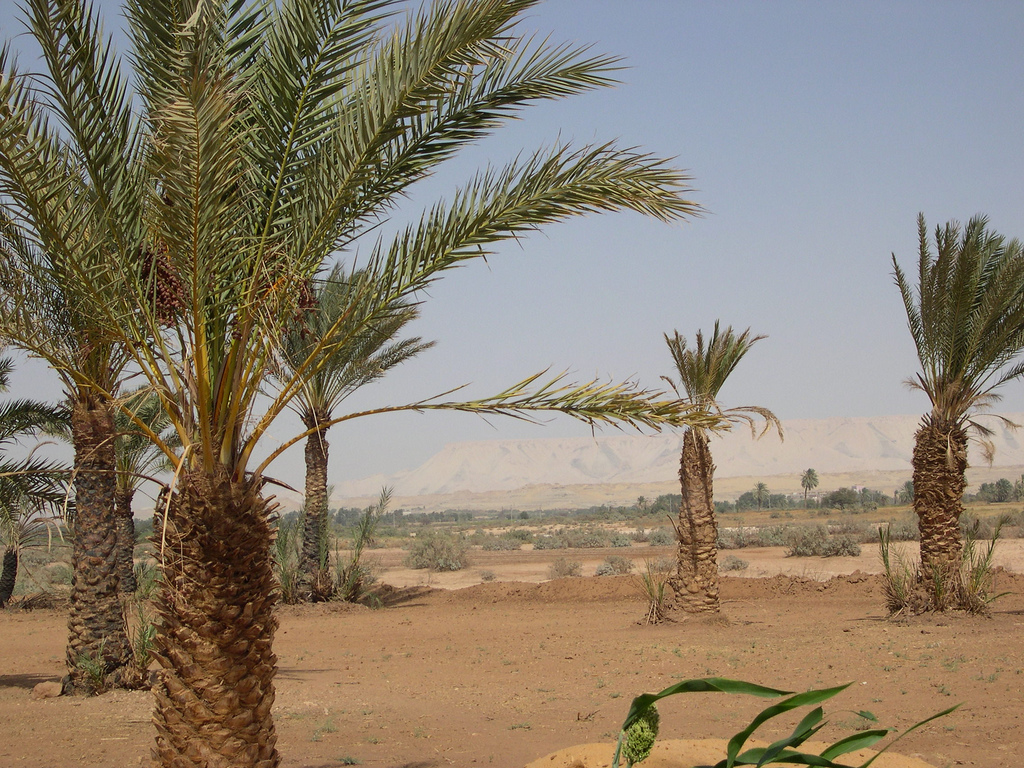
An oasis is an isolated area of vegetation in a desert, typically surrounding a spring or similar water source such as a pond or a small lake.  Oases can provide habitat for animals as well as people.   Oases have long been essential for trade and transportation routes in desert areas; caravans typically travel via oases so that supplies of water and food can be replenished.

[Read more…] about Saving Saharan Oases

Primary Sidebar

Recent Episodes

  • An uninsurable future
  • Clean energy and jobs
  • Insect declines in remote regions
  • Fossil fuel producing nations ignoring climate goals
  • Trouble for clownfishes

WAMC Northeast Public Radio

WAMC/Northeast Public Radio is a regional public radio network serving parts of seven northeastern states (more...)

Copyright © 2026 ·