• Skip to primary navigation
  • Skip to main content
  • Skip to primary sidebar

Earth Wise

A look at our changing environment.

  • Home
  • About Earth Wise
  • Where to Listen
  • All Articles
  • Show Search
Hide Search
You are here: Home / Archives for refuges

refuges

Natural solutions for disappearing islands

June 12, 2025 By EarthWise Leave a Comment

Natural solutions to preserve and protect disappearing atoll islands

Atoll islands are made from sediment produced by corals, clams, snails, and varieties of algae that secrete carbonate.  Under the right conditions, over time, fragments of coral skeletons, shells, and other sediments made by marine life are piled up by waves.  Eventually, islands are formed – some large and some small.  Atoll islands are home to a diversity of human cultures and are important refuges for a quarter of the world’s seabirds as well as numerous nesting sea turtles and tropical plants.

Rising sea levels – the rate of which has more than doubled over the past 30 years – are a mounting challenge for atoll islands.  And by the end of this century, sea level is projected to rise between 11 and 40 inches, depending on the world’s actions with regard to greenhouse gas emissions.

The ability of atoll islands to persist depends on the health of their ecosystems and the extent to which their natural processes have been disrupted by human activity.  To protect the most vulnerable islands, some researchers now propose using nature-based solutions – like restoring and protecting coral reefs and native forests.

Reclaiming seabird habitat can help reefs persist and restore the resilience of atoll islands.  Seabird guano washes off islands and into reefs, providing nutrients that boost coral growth and fish populations. 

Nature-based solutions cannot help the most urbanized atoll islands.  These islands have already irreversibly lost their natural adaptive capacity.  For those places, engineered approaches such as concrete seawalls are needed.

**********

Web Links

How Natural Solutions Can Help Islands Survive Sea Level Rise

Photo, posted July 3, 2014, courtesy of Roderick Eime / MG Media via Flickr.

Earth Wise is a production of WAMC Northeast Public Radio

Parks for bugs

May 27, 2025 By EarthWise Leave a Comment

Urban areas can have a variety of green spaces:  gardens, parks, and roadside and median plantings.  It turns out that these spaces can serve as pollinator refuges.

A study by researchers at the University of British Columbia found that reducing lawn mowing and creating pollinator meadows – essentially parks for bugs – significantly boosts pollinator diversity and creates healthier and more resilient ecosystems.

The 3-year study surveyed pollinators in 18 urban parks across the city of Vancouver.  It compared parks where meadows were planted and mowing was restricted with parks that were kept as standard turfgrass lawns.

Parks with meadows saw an immediate increase in pollinator species – from 21 to 47 more wild bee and hoverfly species – compared to parks without meadows.  These increases continued over the entire three-year study period.

The researchers identified more than 100 species of wild bees and hoverflies and 35 of them were only found in parks with meadows.

People think of urban landscapes as poor environments for biodiversity, but this study demonstrated that even relatively small changes can have significant impacts.  Even a patchwork of small habitats can allow species to move freely and settle into multiple areas quickly.

The researchers had advice for urban residents as well.  They suggest that people reduce mowing, plant native flowering shrubs and trees, create diverse habitats that incorporate a variety of plants that bloom at different times, avoid pesticide use, and leave natural nesting sites for pollinators.

Preserving pollinators is an important task and having a few parks for bugs can really help.

**********

Web Links

How ‘parks for bugs’ boost pollinators in Vancouver

Photo, posted September 19, 2011, courtesy of Eric Bridiers / U.S. Mission Geneva via Flickr.

Earth Wise is a production of WAMC Northeast Public Radio
Protected Areas Are Not Protecting Insects | Earth Wise

March 24, 2023 By EarthWise Leave a Comment

Insects are not being protected by protected areas

Insects can be found in every environment on Earth and play crucial roles in the planet’s ecosystems.  In fact, Biologist E. O. Wilson once said that “if all mankind were to disappear, the world would regenerate back to the rich state of equilibrium that existed ten thousand years ago.  If insects were to vanish, the environment would collapse into chaos.”

While his statement may sound extreme, it’s really not an exaggeration.  Insects are critical to most ecosystems.  They pollinate more than 80% of plants – both those we eat and those that provide food and habitat for other species.  Insects are also a food source themselves, eaten by other insects, birds, fish, and mammals. Without insects, we wouldn’t have the rich biodiversity that supports life on earth today. 

But insect populations are collapsing around the globe, and they continue to be overlooked by conservation efforts.  Protected areas, like national parks, refuges, and sanctuaries, can safeguard threatened species, but only if those threatened species actually live within the protected areas. 

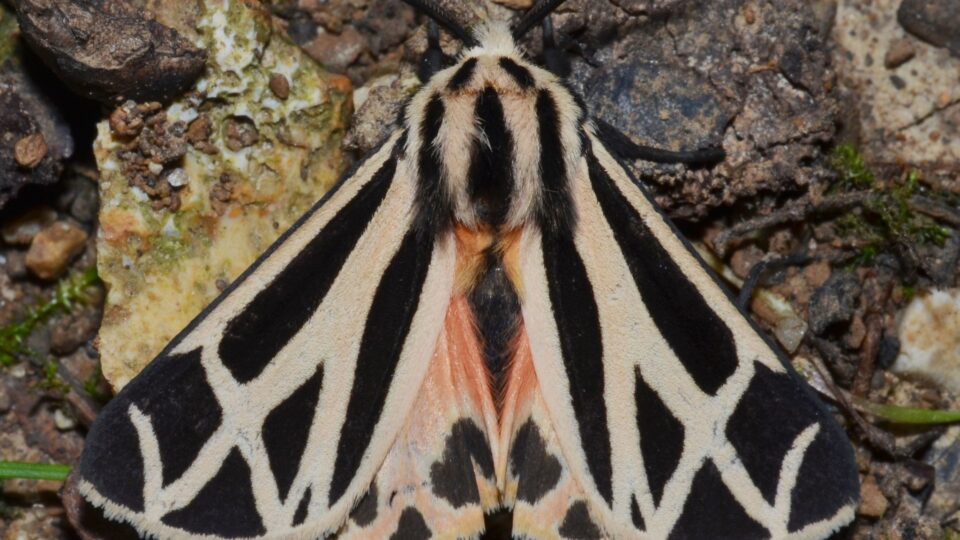
According to a new study recently published in the journal One Earth, 76% of insect species are not adequately covered by protected areas, including several critically endangered insects such as the dinosaur ant, crimson Hawaiian damselfly, and harnessed tiger moth. Alarmingly, the populations of 1,876 species do not overlap with protected areas at all.

Insects have been historically overlooked by conservation programs and need to be included in future conservation assessments. 

**********

Web Links

Protected areas fail to safeguard more than 75% of global insect species

Photo, posted August 21, 2014, courtesy of Andy Reago & Chrissy McClarren via Flickr.

Earth Wise is a production of WAMC Northeast Public Radio
Bees Threatening Bees | Earth Wise

October 16, 2020 By EarthWise Leave a Comment

bees threatening bees

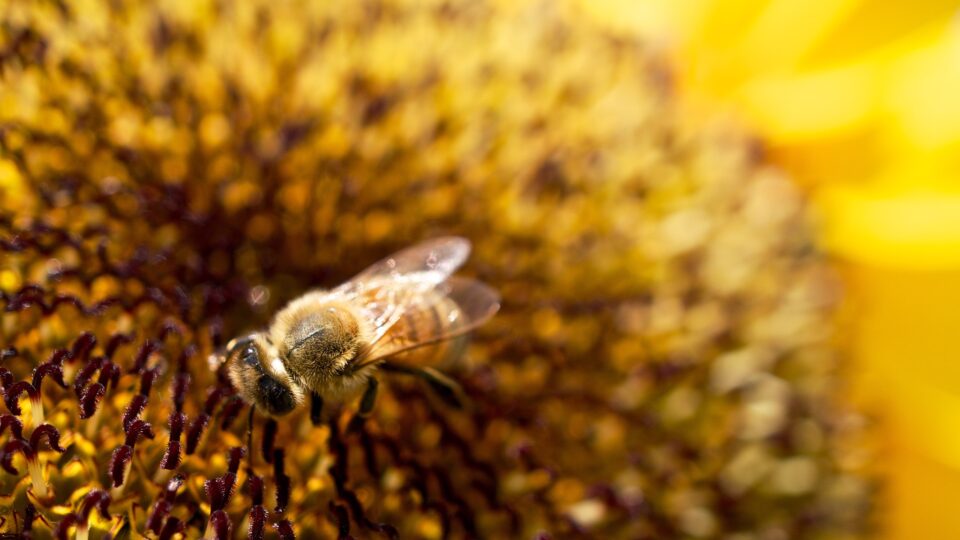
Domesticated honeybees are an essential part of our agricultural system, being responsible for one in every three bites of food Americans consume and contributing $15 billion a year to the value of the nation’s crop production.  Millions of bee colonies are trucked across the country every year to pollinate cranberries, melons, broccoli, blueberries, and cherries, and also to produce honey.

After the growing seasons, honeybees are trucked to various locations to rest and rebuild their population and to replenish bees lost to disease and pesticides.  Some of these locations are in national forests.  Thousands of hives belonging to 112 apiaries are currently permitted in national forests by the Department of Agriculture.  This presents a problem because these hives are being permitted on public lands with virtually no environmental review and with little consideration of the impact these colonies can have on local wild bee populations.

The 4,000 wild bee species in the U.S. consume up to 95% of local available pollen.  Nearly 40 federally listed threatened or endangered species of bees, butterflies, and flower flies depend on national forest land for their survival.  And now the pollinators in these places, which were once refuges for these species and others, increasingly face competition from millions of domesticated honeybees.

Honeybees are super-foraging machines and are literally taking the pollen out of the mouths of other bees and pollinators.  Honeybees themselves have been facing numerous problems from habitat loss, pesticides, and other stress factors.  So, what is happening is essentially a pollinator habitat crunch that carries long-term implications for the U.S. food supply.  We need to find some answers and the sooner the better.

**********

Web Links

Will Putting Honey Bees on Public Lands Threaten Native Bees?

Photo, posted August 9, 2015, courtesy of Tak H. via Flickr.

Earth Wise is a production of WAMC Northeast Public Radio.

Can Cheetahs Survive?

January 24, 2017 By EarthWise

https://earthwiseradio.org/wp-content/uploads/2017/01/EW-01-24-17-Cheetahs-Survival-Threatened.mp3

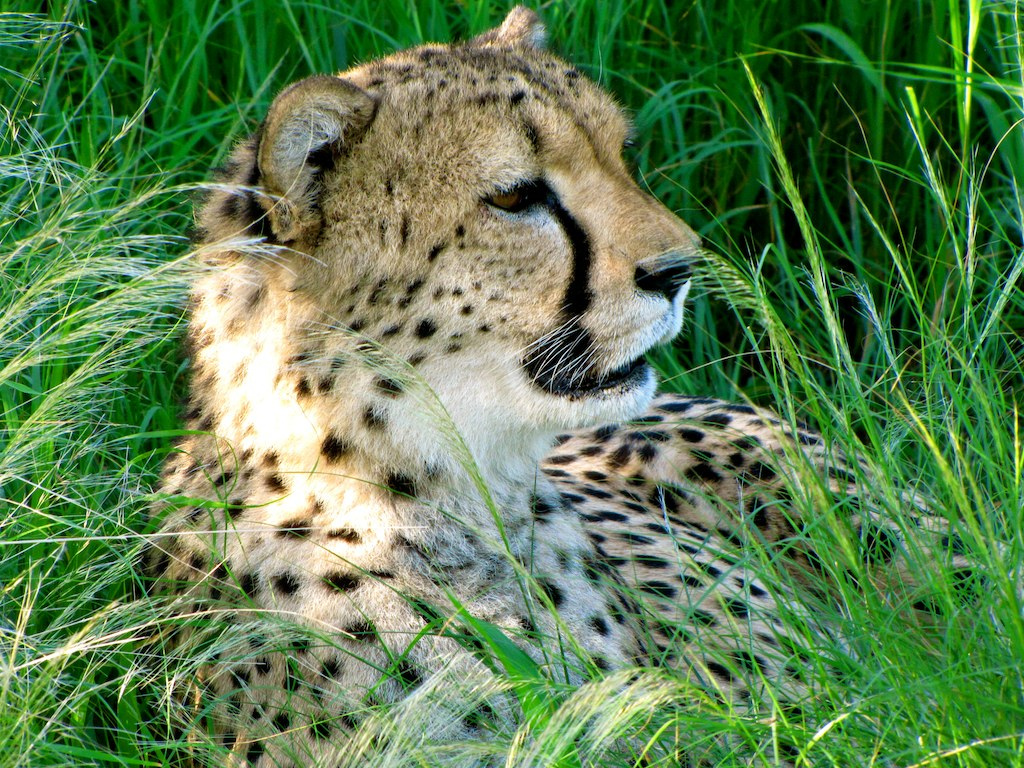
A new study has revealed that the global population of the world’s fastest land animal – the cheetah – is down to only 7,100, a drop of 50% over the past 40 years.  The dramatic decline in cheetah population could soon lead to the extinction of the species unless urgent conservation efforts are made.

[Read more…] about Can Cheetahs Survive?

Size Matters

August 10, 2016 By WAMC WEB

https://earthwiseradio.org/wp-content/uploads/2016/08/EW-08-10-16-Open-Space.mp3

One of the crowning achievements for wildlife protection in the US was the establishment of the National Wildlife Refuge system in the 1930s, when the populations of waterfowl were perilously low. Refuges provided breeding and migratory habitat that has allowed a remarkable recovery of many species of ducks and geese.

[Read more…] about Size Matters

Primary Sidebar

Recent Episodes

  • An uninsurable future
  • Clean energy and jobs
  • Insect declines in remote regions
  • Fossil fuel producing nations ignoring climate goals
  • Trouble for clownfishes

WAMC Northeast Public Radio

WAMC/Northeast Public Radio is a regional public radio network serving parts of seven northeastern states (more...)

Copyright © 2026 ·