• Skip to primary navigation
  • Skip to main content
  • Skip to primary sidebar

Earth Wise

A look at our changing environment.

  • Home
  • About Earth Wise
  • Where to Listen
  • All Articles
  • Show Search
Hide Search
You are here: Home / Archives for reforestation

reforestation

Rainforests and thunderstorms

August 6, 2025 By EarthWise Leave a Comment

Thunderstorms have a surprising impact on tree mortality

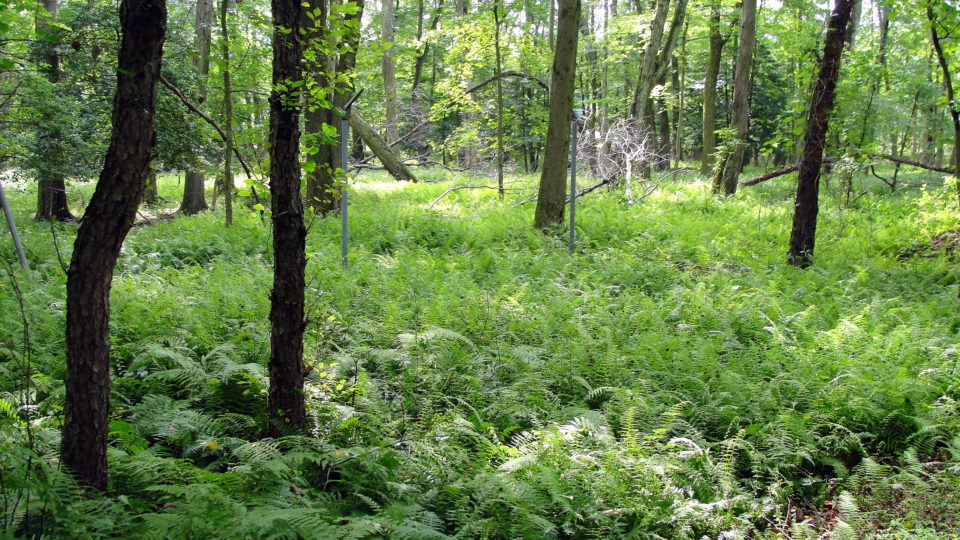
Tropical forests are dying at an alarming rate, and not just from deforestation. Even intact forests are losing trees, threatening biodiversity, carbon storage, and the global climate. While drought and rising temperatures are often blamed, new research points to a surprising culprit: thunderstorms.

These intense, short-lived convective storms, common in the tropics, are increasing due to climate change. With strong winds and lightning, they can snap trees, strip canopies, and kill even the most robust tree specimens.

In a perspective paper recently published in the journal Ecology Letters, a research team led by the Cary Institute of Ecosystem Studies argues that thunderstorms, often overlooked in carbon storage research, may be the leading cause of tree death in tropical forests. The research team estimates that storms have caused 30 to 60% of tree mortality in the past, a number that is likely rising as storm activity increases 5 to 25% each decade.

Including storm data in forest carbon studies changes the picture significantly. Earlier models showed that carbon levels dropped sharply when temperatures rose beyond a certain point. But when storm impacts were added, that pattern disappeared, suggesting that storms – not just heat – may be a key factor in carbon loss.

Understanding which species are most vulnerable is critical for reforestation and conservation efforts. Mature trees store the most carbon, so if they’re lost to storms, future forests may fall short of their carbon storage potential.

As storm activity increases each decade, the stakes grow higher.  Accounting for storms could reshape how we protect, restore, and plan for the future of our forests. 

**********

Web Links

Are the Amazon’s biggest trees dying? Forest coroners investigate

Photo, posted July 2, 2017, courtesy of Anna & Michal via Flickr.

Earth Wise is a production of WAMC Northeast Public Radio

Planting trees to cool the planet

July 16, 2025 By EarthWise Leave a Comment

Planting lots of trees is one of many strategies being pursued to combat climate change. Forests absorb carbon dioxide, provide shade, and help regulate temperatures. They also support biodiversity and improve air and water quality.

According to a new study by researchers from the University of California – Riverside, restoring forests to their pre-industrial extent could reduce global average temperatures by 0.34 degrees Celsius. That’s equivalent to about 25% of the warming the Earth has already experienced.

The study models restoring 4.6 million square miles of forest.  While previous studies have focused on the role trees play in removing carbon, this research adds that trees also alter atmospheric chemistry in ways that boost their cooling impact.

Trees release natural chemicals called BVOCs – biogenic volatile organic compounds – which interact in the atmosphere to form particles that reflect sunlight and promote cloud formation. These effects enhance the cooling impact of forests, especially in climate models that take these chemical reactions into account.

But not all reforestation is created equal. The benefits of reforestation vary by region, with tropical forests offering stronger cooling and fewer drawbacks.  Importantly, the researchers emphasize that meaningful climate benefits don’t require restoring every lost forest. Small, localized efforts can still shift regional climates.

While forest restoration can meaningfully aid climate efforts, the researchers stress that it must complement – not replace – fossil fuel reductions.

**********

Web Links

Does planting trees really help cool the planet?

Photo, posted May 20, 2005, courtesy of Ben Britten via Flickr.

Earth Wise is a production of WAMC Northeast Public Radio

The Dangers Of Negative Emissions Technologies | Earth Wise

September 28, 2020 By EarthWise Leave a Comment

The dangers of negative emissions technologies

Reducing carbon emissions is not easy and there are plenty of people who don’t even want to try for various reasons, generally related to their perceived economic interests and convenience.  As a result, there is a great deal of interest in so-called negative emissions technologies or NETs.   These are methods for removing carbon dioxide from the atmosphere.  Even the UN Intergovernmental Panel on Climate Change assumes that NETs will play a role in mitigating the effects of climate change and meeting international goals.

The most widely studied approaches to negative emissions technology are bioenergy with carbon capture and storage – which entails growing crops for fuel, and then capturing and burying the CO2 produced from burning the fuel; planting more forests; and direct air capture, which involves actually pulling CO2 out of the air and storing it – probably underground. 

A new study published in Nature Climate Change points out that none of these technologies has even been tried at the demonstration scale, much less at the massive levels required to make a dent in current CO2 emissions. 

Their analysis of the biofuel and reforestation strategies show that each would take up vast land and water resources already needed for agriculture and nature.  Air capture uses less water than the other two approaches, but still uses quite a bit and even more energy, which if supplied by fossil fuels, would offset the benefits of carbon capture.

Negative emissions technologies may well play an important role in combating climate change, but it is essential that we understand what the consequences will be from implementing them.  We need to know the pitfalls that could arise.  It would be a major mistake to simply count on NETs to be some kind of silver bullet.

**********

Web Links

Remove CO2 from the air? Don’t bet on it before examining costs, researchers say

Photo, posted January 11, 2008, courtesy of Al Pavangkanan via Flickr.

Earth Wise is a production of WAMC Northeast Public Radio.

Out-Migration And Reforestation

November 4, 2019 By EarthWise Leave a Comment

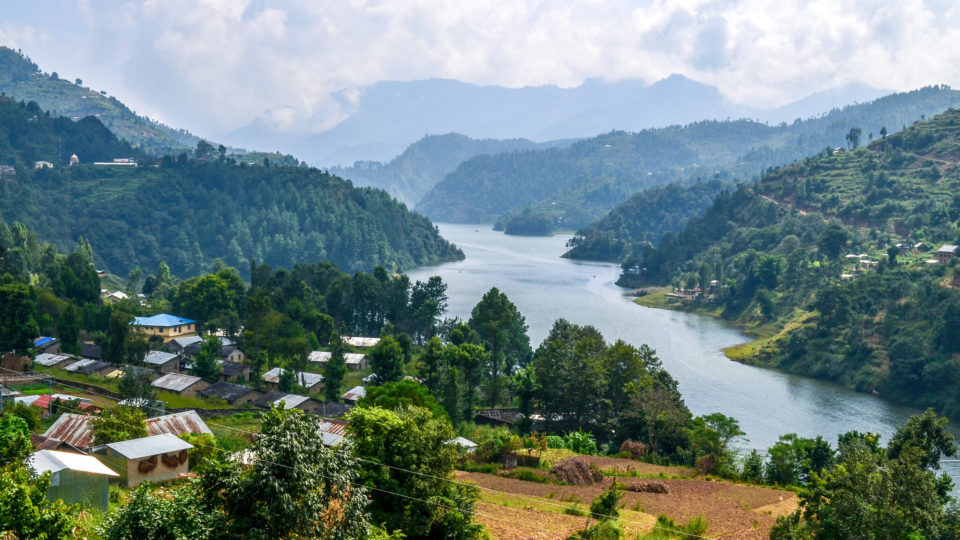
A challenging global trend is that of deforestation in developing countries.  But there are places where the opposite trend is happening.  Nepal is one such place.

According to satellite imaging, in 1992 forest covered 26% of Nepal.  As of 2016, that number was 45%. 

To some extent, the forest regrowth was a result of policy changes from about three decades ago, when the government began removing management authority from bureaucrats and shifting it to local communities across the country.  This local management helped to reduce illegal logging and many local villages undertook tree-planting campaigns.

But perhaps a bigger factor at play is human migration.  In recent decades, millions of Nepalis have left the country to work in the Persian Gulf, Southeast Asia, and elsewhere.  The out-migrants wire money home and meanwhile, families left behind rely less on forest products or abandon farmland, aiding reforestation.  A 2018 study showed that the areas with the highest out-migration experience, on average, had the most forest recovery.

Globally, migration has important impacts on forests, but not always positive ones.  In many countries, forests seem to recover as people leave rural areas to work elsewhere.  El Salvador, for example, has seen a rebound of its forests as many of its rural residents move to cities or even to the United States. But in Guatemala and Nicaragua, the return of migrants bringing money they have earned overseas has led to an expansion of cattle ranching that has harmed forests.

The global relationship between migration and forests is a complicated one that depends on whether the migration is one-way or “circular” (meaning that the migrants eventually return) and how returning migrants make use of their earnings from abroad.

**********

Web Links

In Nepal, Out-Migration Is Helping Fuel a Forest Resurgence

Photo, posted September 30, 2018, courtesy of Flickr.

Earth Wise is a production of WAMC Northeast Public Radio.

Amazon And Climate Change

October 30, 2019 By EarthWise Leave a Comment

Online shopping giant Amazon has unveiled a Climate Pledge, committing to meet the goals of the Paris climate agreement ten years ahead of schedule, and to be carbon neutral by 2040. This is the company’s most ambitious push yet to reduce its carbon footprint, which currently rivals that of a small country.  In fact, Amazon is responsible for 48.9 million tons of carbon dioxide last year, which is about 85% of what Switzerland typically emits in a year. 

Amazon, which ships more than 10 billion items a year on fossil fuel-intensive planes and trucks, has ordered a fleet of 100,000 electric vans that will start delivering packages to doorsteps in 2021.  The vans will be made by Rivian, a Michigan-based company that Amazon invested in earlier this year. 

Amazon plans to get 100% of its energy from solar and other renewable sources by 2030.  Currently, it gets about 40% of its energy from renewables. 

Amazon is also investing $100 million in nature-based climate solutions and reforestation projects around the world in order to remove carbon from the atmosphere. 

While announcing these initiatives recently at the National Press Club in Washington, D.C., Amazon CEO Jeff Bezos said the company needs to be a leader on the climate change issue:

We want to say look, if a company of Amazon’s complexity, scale, scope, physical infrastructure, delivering 10 billion items can do this, so can you.

After revealing Amazon’s Climate Pledge, Bezos said he would talk with CEOs of other large companies to try to get them to also sign it.  You can find a link to Amazon’s progress on its commitments by visiting this website.

**********

Web Links

‘Middle of the herd’ no more: Amazon tackles climate change

Amazon: Committed to a sustainable future (track progress here)

Photo courtesy of Amazon.

Earth Wise is a production of WAMC Northeast Public Radio.

Fighting Climate Change With Trees

August 20, 2019 By EarthWise Leave a Comment

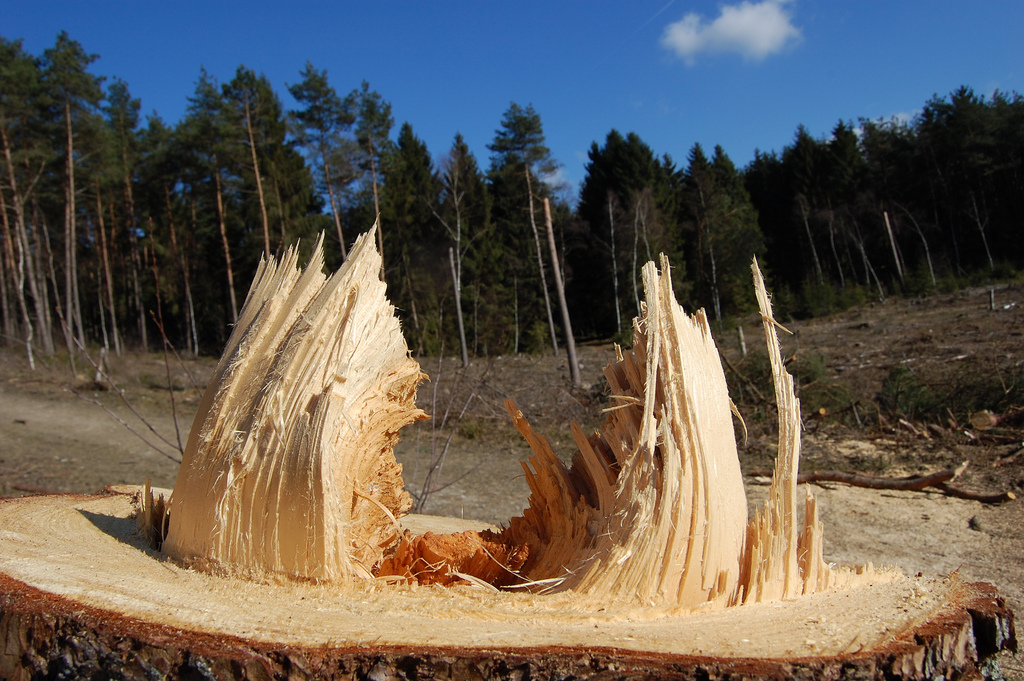
We cut down forests all around the world for a myriad of reasons, including livestock grazing, agricultural production, timber, and urban development.  But what if we stopped cutting down forests for these things and additionally grew new forests on vacant lots and any other available parcels of land on earth?  What impact could this have on our survival? 

For the first time, scientists have quantified what impact this plan could have.  According to a new study by researchers at ETH Zurich – a university that specializes in science, technology, and engineering – the planet could support nearly 2.5 billion additional acres of forest without shrinking current cities and farms.  When all those acres of forest mature, the trees could store an extra 200 gigatons of carbon.  This reforestation could stave off the most devastating impacts of global climate change. 

Russia could restore the most acres of forest – 373 million acres to be precise – followed by the United States with 255 million acres and Canada with 193 million acres.  Australia, Brazil, and China also have large areas well-suited for forest restoration. 

The average global temperature has risen by 1.8 degrees Fahrenheit since the start of the industrial age with its surge in greenhouse gas emissions.  Temperatures are projected to rise even more in the coming years as the planet continues to warm.   

Trees absorb CO2 from the atmosphere and store it in their roots and branches.  The absorbed carbon becomes part of the soil when trees die and decompose, and it can linger there for millennia depending on things like temperature and soil management.  Trees are critical in the fight against climate change. 

**********

Web Links

How trees could save the climate

Photo, posted June 18, 2011, courtesy of K.W. Barrett via Flickr.

Earth Wise is a production of WAMC Northeast Public Radio.

Saved By The Trees

February 1, 2019 By EarthWise Leave a Comment

The island of Kokota, part of the Zanzibar Archipelago off the coast of Tanzania, is tiny – only one square kilometer and home to just 500 people.  For centuries, its residents subsisted by harvesting the islet’s natural resources, including its trees.

By the early 21st century, the deforestation had become unsustainable and the islanders faced a crisis.  Fisheries were depleted, and rivers ran dry.  The changing climate brought rising sea levels, more erratic rainfall, and coral bleaching in the surrounding waters.  The situation looked hopeless.

But in recent years, the island has come back from the brink of ruin.  Reforestation efforts began in 2008 on the larger island of Pemba and on Kokota itself, led by a Pemba local and a Canadian tree planter who formed the non-profit Community Forests International.  Since then, nearly 2 million trees have been planted on the two islands.  Enthusiastic volunteers on Kokota usually help plant trees during the rainy season, when water is plentiful.

Community Forests International, along with spearheading the tree planting effort, also built Kokota’s first school, and installed rainwater storage tanks for the community.

The conservation group is now devising ways for Kokota to make more money by diversifying its agriculture with crops that grow well in its climate including spices like cloves, cinnamon, and nutmeg.  They are also helping locals to grow more and different vegetables in their gardens.

Small, poor communities are often the most vulnerable to the effects of climate change, such as drought, powerful storms, and depleted fisheries.  Tiny Kokota provides an example of an environmental comeback.  Fighting climate change requires economic solutions along with environmental solutions.  For this one tiny island, it  appears to have been saved by the trees.

**********

Web Links

This island was on the brink of disaster. Then, they planted thousands of trees.

Photo, posted July 18, 2015, courtesy of Marco Zanferrari via Flickr.

Earth Wise is a production of WAMC Northeast Public Radio.

Can We Remove Enough CO2 From The Air?

January 9, 2019 By EarthWise Leave a Comment

As atmospheric carbon dioxide levels continue to set new records and the effects of climate change grow stronger, humanity has continued to procrastinate on reducing emissions.  As a result, it is increasingly clear that any strategy to avoid runaway climate change will have to involve the use of “negative emissions”- techniques or technologies that actually remove CO2 from the air.

There are both low-tech and high-tech methods for removing carbon dioxide from the atmosphere and both are likely to be needed. 

On the low-tech side, afforestation (planting trees where there were none before), reforestation, changes in forest management, rebuilding the carbon backbone in agricultural soils, and the use of energy from waste biomass are all ways to take carbon out of the atmosphere.

On the high-tech side, direct air capture technologies that take CO2 out of the air and store it in the ground are making rapid progress.   Right now, they are still very expensive,but that is changing.  There is an analogy to wind and solar technology. Not very long ago, both of those technologies were quite expensive but now their costs have plummeted to the point where they are often the cheapest way to make electricity.  With sufficient development effort and deployment, direct air capture technology could become quite affordable.

Some people advocate geoengineering as a solution for climate change.  While removing carbon dioxide amounts to tackling the root cause of the warming climate,geoengineering would address the problem by changing the climate again in some other way.  It is at best an extremely dangerous approach.

Removing CO2 using a combination of natural and man-made techniques is an important part of mitigating the effects of climate change.

**********

Web Links

Climate Solutions: Is It Feasible to Remove Enough CO2 from the Air?

Photo courtesy of Climeworks. 

Earth Wise is a production of WAMC Northeast Public Radio.

Migrating Trees

July 11, 2017 By EarthWise

https://earthwiseradio.org/wp-content/uploads/2017/07/EW-07-11-17-Migrating-Trees.mp3

The changing climate is having a marked effect on forests in this country.  In particular, trees along the U.S. eastern seaboard are changing their range as they slowly seek to escape rising temperatures.

[Read more…] about Migrating Trees

World Deforestation

October 14, 2016 By WAMC WEB

https://earthwiseradio.org/wp-content/uploads/2016/10/EW-10-14-16-World-Deforestation-1.mp3

Forests are a vital part of biodiversity and are one of the planet’s most important natural repositories for carbon dioxide.   They are also continually under attack by multiple forces:  more mouths to feed, more wood needed to burn and build with, more paper to manufacture, and more land needed to graze cattle.

[Read more…] about World Deforestation

Primary Sidebar

Recent Episodes

  • An uninsurable future
  • Clean energy and jobs
  • Insect declines in remote regions
  • Fossil fuel producing nations ignoring climate goals
  • Trouble for clownfishes

WAMC Northeast Public Radio

WAMC/Northeast Public Radio is a regional public radio network serving parts of seven northeastern states (more...)

Copyright © 2026 ·