• Skip to primary navigation
  • Skip to main content
  • Skip to primary sidebar

Earth Wise

A look at our changing environment.

  • Home
  • About Earth Wise
  • Where to Listen
  • All Articles
  • Show Search
Hide Search
You are here: Home / Archives for reflectivity

reflectivity

Greenhouses and the environment

July 25, 2024 By EarthWise Leave a Comment

The use of greenhouses around the world has been growing dramatically.  A new satellite mapping exercise estimated the total land area covered with permanent greenhouses at 3.2 million acres, which is an area the size of Connecticut.  More than half of this is in China, where the growth of greenhouses has been driven by the rapid urbanization of the country and by a more prosperous population increasingly consuming produce like tomatoes, cucumbers, peppers, and eggplants.

The intensive agricultural methods employed within greenhouses can be harmful to local environments because of overtaxing water supplies and by polluting rivers and soils with nutrients, pesticides, and plastic waste.  But the effects of vast areas of plastic coverings on local temperatures can be even more dramatic, and often beneficial.

There are so many plastic and glass roofs in many areas that they are reflecting sufficient amounts of solar radiation to cool local temperatures.  Greenhouse roofs increase the albedo – the reflectivity – of the land surface typically by a tenth.

All these greenhouses are just the tip of the albedo iceberg.  Many farms now temporarily cover crops with reflective plastic sheets.  If these coverings are included in the satellite survey, the total reflective area would be about ten times greater – roughly the size of New York State.

A study in Almeria, on the Mediterranean coast of Spain, which grows about 3 million tons of fruit and vegetables annually, determined the cooling effects of greenhouses.  Weather stations amid the greenhouses showed an average cooling of 1.3 degrees Fahrenheit compared with the surrounding area.

Greenhouses are an accidental and benign form of climate engineering. The cooling provided by greenhouses is similar to the effect of white roofs in urban areas. 

**********

Web Links

Could the Global Boom in Greenhouses Help Cool the Planet?

Photo, posted September 6, 2017, courtesy of Lance Cheung / USDA via Flickr.

Earth Wise is a production of WAMC Northeast Public Radio
Greenland Becoming Darker | Earth Wise

July 5, 2021 By EarthWise Leave a Comment

Greenland is becoming darker and warmer

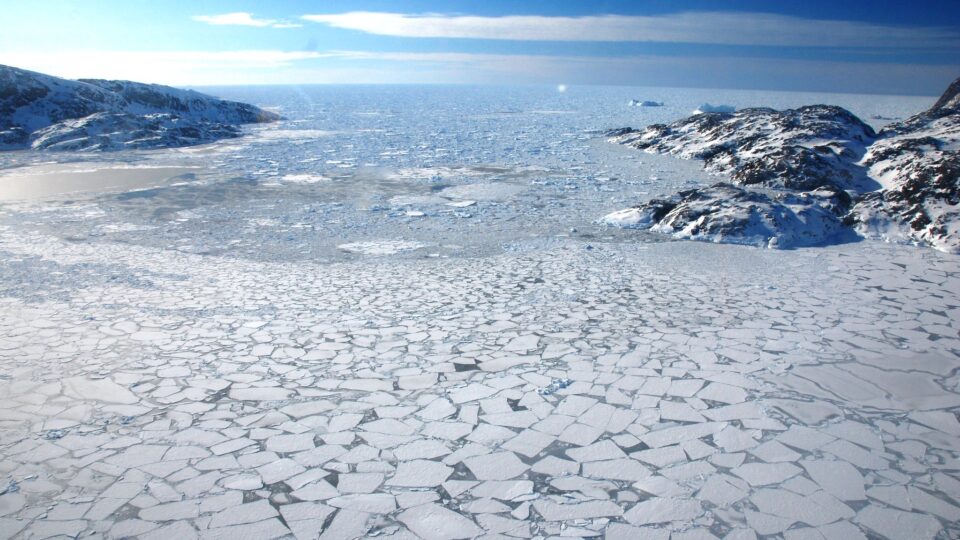
According to research published by Dartmouth University, a weather pattern that pushes snowfall away from parts of Greenland’s ice sheet is causing the continent to become darker and warmer.

Reducing the amount of fresh, lighter-colored snow exposes older, darker snow on the surface of Greenland’s ice sheets.  Fresh snow is the brightest and whitest. The reflectivity of snow decreases fairly quickly as it ages. This decrease in albedo – or reflectivity – allows the ice sheet to absorb more heat and therefore melt more quickly. 

The research attributes the decrease in snowfall in Greenland to a phenomenon called atmospheric blocking in which persistent high-pressure systems hover over the ice sheet for up to weeks at a time.  Such systems have increased over Greenland since the mid-1990s.  They push snowstorms to the north, hold warmer air over Western Greenland, and reduce light-blocking cloud cover.

All of this contributes to Greenland melting faster and faster.  According to research cited in the study, the Greenland ice sheet has warmed by nearly 5 degrees Fahrenheit since 1982.  Overall, Greenland is experiencing the greatest melt and runoff rates in the last 450 years, at the minimum, and quite likely the greatest rates in the last 7,000 years.

The Greenland ice sheet is the second largest ice body in the world, after the Antarctic ice sheet.  It is 1,800 miles long and about 700 miles wide at its greatest width.  Its thickness is between 1.2 and 1.9 miles.  If the entire sheet were to melt, it would lead to a global sea level rise of 24 feet.  So, the darkening of Greenland is a source of great concern.

**********

Web Links

Greenland Becoming Darker, Warmer as Snow Changes

Photo, posted April 3, 2012, courtesy of Francesco Paroni Sterbini via Flickr.

Earth Wise is a production of WAMC Northeast Public Radio.

Strategies To Cool Off Cities | Earth Wise

July 2, 2021 By EarthWise Leave a Comment

Effective strategies to naturally cool cities

Heatwaves in cities are becoming increasingly common and increasingly intense.  The warming climate is a big factor, but it is the nature of our cities that really drives up temperatures.  Solar radiation stored throughout the day on asphalt and buildings is released slowly during the night, which generates significant heat stress.

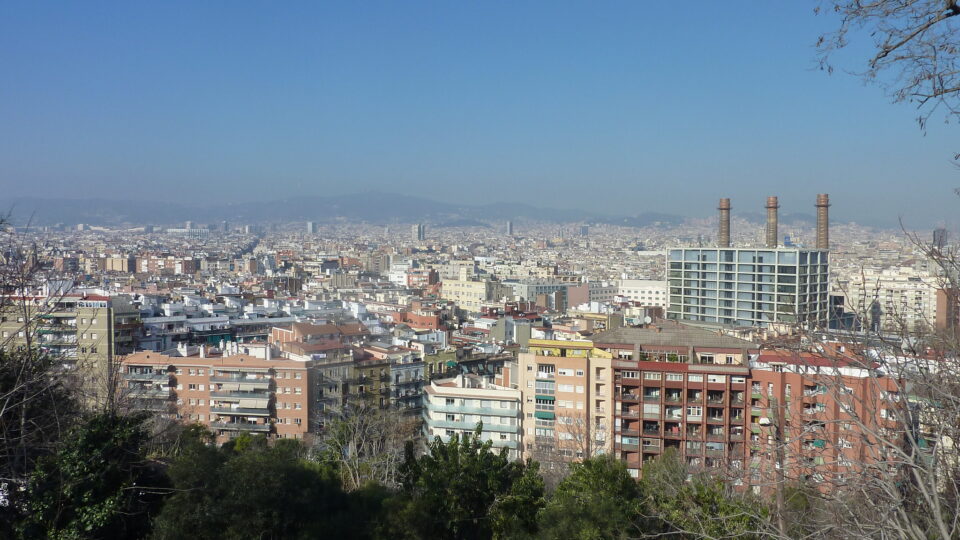
A study carried out by a major Barcelona university and published in the journal Urban Climate looked at the effectiveness of various ways to mitigate the heating effects in cities.  In particular, the study examined the effects of the use of white roofs on buildings and the expansion of urban green areas with daily irrigation in the Barcelona metropolitan area.  It simulated various scenarios incorporating combinations of these two mitigation strategies.

The strategy with the greatest impact was a combination of the use of both white roofs and the addition of six urban parks, which is a target set by the Barcelona Urban Master Plan.  This scenario resulted in an average temperature reduction of 2.25 degrees Fahrenheit.  The maximum reduction occurs during the mid-afternoon with a reduction of 7 degrees and the combination still provides more than 3 degrees of reduction at 9 pm.  Reducing temperatures this way also results in a reduction in energy consumption, with 26% less spending on air conditioning.

The 2-pronged strategy combines the benefits of reducing the temperature at night due to more urban green areas with the reduction of daytime heat due to both the increased reflectivity of white roofs as well as the irrigation of the green areas.

The study demonstrates how modeling efforts can help urban planners to counteract the impacts of heatwaves, which are likely to increase with climate change and intensification of urbanization.

**********

Web Links

White roofs and more green areas would mitigate the effects of heat waves in cities

Photo, posted January 16, 2011, courtesy of Sean MacEntee via Flickr.

Earth Wise is a production of WAMC Northeast Public Radio.

Better Paint For Cooler Buildings | Earth Wise

August 20, 2020 By EarthWise 2 Comments

white paints help keep buildings cool

A research team led by scientists at UCLA have developed a super-white paint that reflects as much as 98% of incoming heat from the sun.  Such paint, if used on rooftops and other parts of buildings, could have a major impact on reducing the costs of keeping buildings cool.

Passive daytime radiative cooling is a well-known method to keep buildings cooler.  By having building surfaces reflect sunlight and radiate heat into space, building temperatures can be significantly lowered.  This in turn cuts down on air conditioner use and associated carbon emissions.

A roof painted white will result in lower indoor temperatures than a darker roof.  But a white roof will do even more:  it can reject heat at infrared wavelengths that are invisible to our eyes.  This results in even more radiative cooling.

The best performing white paints currently available reflect about 85% of incoming solar radiation.  The rest is absorbed by materials in the paint.  The new research has identified simple modifications in paint ingredients that lead to a major increase in reflectivity.

Current reflective white paints use titanium dioxide, which absorbs UV radiation and therefore heats up under sunlight.  The researchers studied replacing it with other substances such as barite – an artist’s pigment – or with powdered Teflon, both of which allow the paint to reflect more of the sun’s radiation. 

Many cities are encouraging the use of cool-roof technologies on new buildings.  Using the most reflective coatings possible on rooftops, if applied on a sufficiently large scale, could have a real impact on climate change as well as saving significant amounts of energy used for running air conditioners in buildings.

**********

Web Links

UCLA-led Team Develops Ways to Keep Buildings Cool with Improved Super White Paints

Photo, posted August 15, 2012, courtesy of Flickr.

Earth Wise is a production of WAMC Northeast Public Radio.

Primary Sidebar

Recent Episodes

  • An uninsurable future
  • Clean energy and jobs
  • Insect declines in remote regions
  • Fossil fuel producing nations ignoring climate goals
  • Trouble for clownfishes

WAMC Northeast Public Radio

WAMC/Northeast Public Radio is a regional public radio network serving parts of seven northeastern states (more...)

Copyright © 2025 ·