• Skip to primary navigation
  • Skip to main content
  • Skip to primary sidebar

Earth Wise

A look at our changing environment.

  • Home
  • About Earth Wise
  • Where to Listen
  • All Articles
  • Show Search
Hide Search
You are here: Home / Archives for recyclable

recyclable

A new way to recycle plastic

April 18, 2025 By EarthWise Leave a Comment

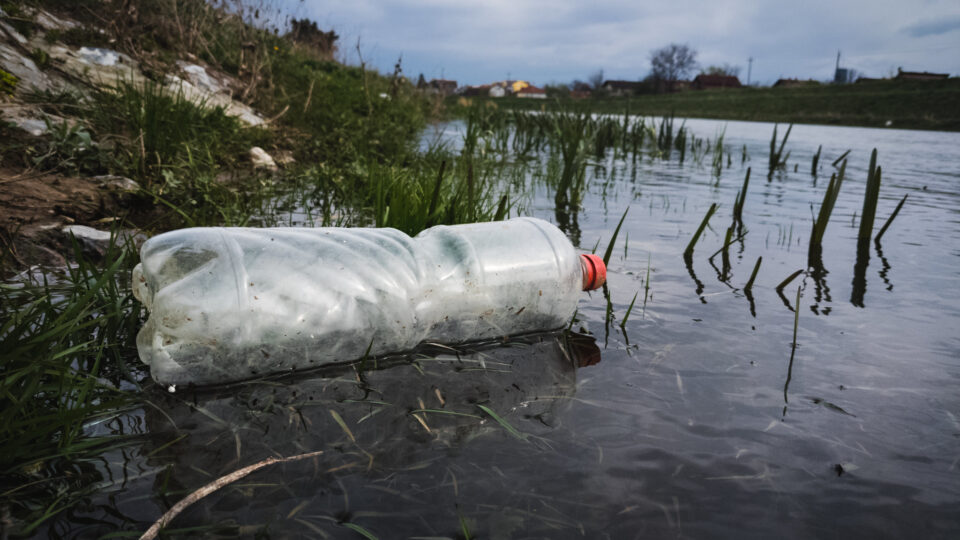
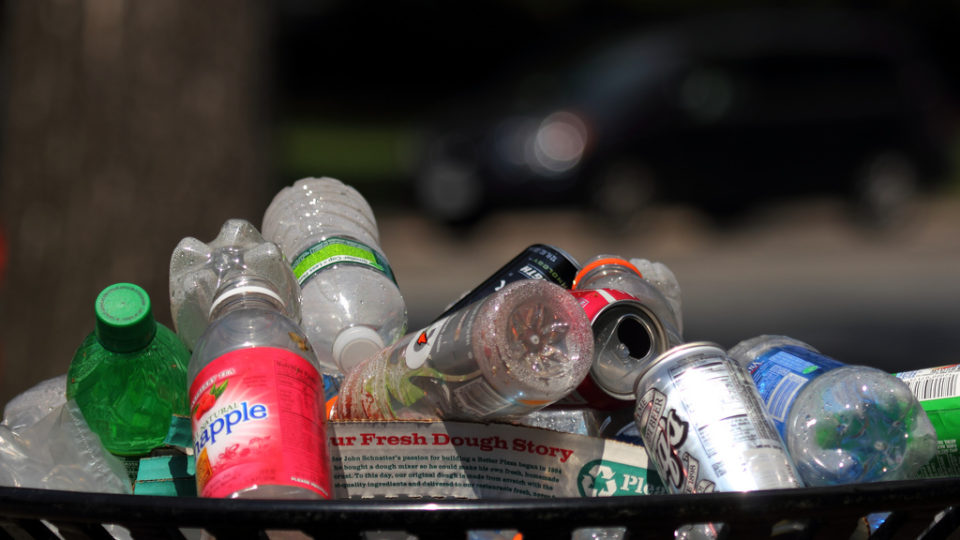
Researchers at Northwestern University have developed a new method for recycling plastic that is safer, cleaner, cheaper, and more sustainable than those currently in use.  The U.S. is the world’s largest plastic polluter per capita, and we only recycle 5% of our plastics.  There is a pressing need for better technologies for processing different types of plastic waste.

The Northwestern method is designed to break down polyethylene terephthalate or PET, which is the most common type of polyester plastic.  PET plastic is used in food packaging and beverage bottles and represents 12% of total plastics used globally.  It does not break down easily and is therefore a major contributor to plastic pollution.  It mostly either ends up in landfills or, over time, degrades into tiny microplastics or nanoplastics that end up almost everywhere. 

The non-toxic, environmentally friendly, solvent-free Northwestern process first uses an inexpensive molybdenum catalyst to break apart the bonds in PET.  Then the broken plastic is exposed to ambient air.  Just from the trace amounts of moisture in air, the broken-down PET is converted into monomers, which are the building blocks of plastic.  The monomers could then be recycled back into PET products or used to make other valuable materials.

The process is fast and effective and takes just a few hours.  The catalyst is durable and recyclable, meaning it can be used over and over again.  It only works on polyesters, which means it can be used for recycling mixed plastics without sorting them since it will select only the PET from its inputs.

**********

Web Links

Plastic recycling gets a breath of fresh air

Photo, posted August 10, 2013, courtesy of Lisa Risager via Flickr.

Earth Wise is a production of WAMC Northeast Public Radio

Reducing farm nutrient pollution

December 11, 2024 By EarthWise Leave a Comment

Researchers developing new method to reduce nutrient pollution from farms

When farmers add nutrients to their fields in excess of their crops’ ability to utilize them, these excess nutrients can enter the surrounding environments and create environmental problems.  The primary culprits are nitrogen and phosphorous.  These fertilizer components emerge from fields and enter local waterways in surface runoff.

Researchers at the University of Illinois Urbana-Champaign have developed a form of designer biochar that can provide phosphorous in a time-released fashion and reduce the amount that escapes into the environment.

The researchers used sawdust and lime sludge, which are byproducts from milling and water treatment plants, respectively.  They mixed the two ingredients and formed pellets which were then slow-burned in low-oxygen conditions to create phosphorous-laden designer biochar.  Once the pellets bind all the phosphorous they can hold, they can be spread onto fields where the nutrient is slowly released over time.

They tested the pellets in working field conditions.  The pellets are used to remove phosphorous from drainage water and then can be reused in the field to provide the nutrient to the plants.   

The results were very encouraging.  The biochar proved to be a very effective way to provide phosphorous to crops and then reduce how much phosphorous enters the environment.  The cost of producing the biochar pellets was less than half that of alternative substances for phosphorous removal. 

There is currently no regulation that requires farmers to remove phosphorous from drainage water but there are a growing number of conservation-minded farmers who want to reduce nitrogen and phosphorous losses from their fields.  The idea that the recyclable pellets can both provide and control phosphorous is an attractive one.

**********

Web Links

Scientists tackle farm nutrient pollution with sustainable, affordable designer biochar pellets

Photo, posted July 16, 2016, courtesy of Rick Obst via Flickr.

Earth Wise is a production of WAMC Northeast Public Radio

Eliminating plastic shipping pillows

July 17, 2024 By EarthWise Leave a Comment

Amazon is phasing out plastic shipping pillows

Anyone who gets packages from Amazon is familiar with the plastic air pillows used to keep products safe in transit.  Amazon uses almost 15 billion of them a year in North America.

Environmentalists have been urging Amazon and other vendors to cut down on the use of plastic packaging. The air-filled plastic pillows are made from plastic film, which is the most common form of plastic litter found in the sea and in seabeds along the shore.  Plastic film can be deadly to wildlife such as sea turtles and sea birds.  Plastic film generally can’t be composted or recycled either.

Recently, Amazon announced that it will replace its plastic pillows with recycled paper filler in all its North American markets – the United States, Canada, and Mexico – which together account for more than 70% of the retailer’s global sales.  It is already making the switch in a big way and is working towards fully removing the plastic materials by the end of the year.

Replacing plastic packaging with paper is a definite improvement.  Paper is recyclable and biodegradable.  It isn’t perfect:  if it ends up in landfills, it can contribute to methane pollution as it biodegrades.  But, on the other hand, paper packaging is more likely to be recycled.

Stemming the tide of plastic waste is an ongoing effort by environmental and consumer groups.  There is pending legislation in New York that aims to reduce the use of plastic packaging by 50% over 12 years by requiring manufacturers to either replace it or pay fees.  The bill cleared the State Senate but has not come up to a vote in the Assembly.  Similar legislation has already been passed in California, Oregon, Maine, and Colorado.

**********

Web Links

Amazon Says It Will Stop Using Puffy Plastic Shipping Pillows

Photo, posted November 20, 2018, courtesy of Todd Van Hoosear via Flickr.

Earth Wise is a production of WAMC Northeast Public Radio

The Spooky Reality | Earth Wise

October 23, 2023 By EarthWise Leave a Comment

According to the National Retail Federation, American consumers will spend a whopping $12.2 billion on Halloween this year, exceeding last year’s record of $10.6 billion.  A record number of people – 73% of Americans – will also participate in Halloween-related activities this year, up from 69% in 2022.  But it’s not just our wallets that take a beating. 

Halloween generates a frightening amount of waste.  Picture all those flimsy and often single-use costumes, polyester cobwebs, plastic-wrapped candy, mass-produced decorations, and so forth. Scary stuff!  Here are some simple tricks to make the holiday more sustainable this year. 

Invest in quality costumes.  Those mass-produced costumes leave the largest carbon footprint from Halloween.  They are often made from non-recyclable plastic and most end up in landfills by mid-November.   By renting, thrifting, swapping, or making your own costumes, many of the negative impacts of dressing up for the holiday can be avoided.

Find environmentally-friendly decorations and supplies.  For example, carve local pumpkins and either save the seeds and flesh to eat later, compost it, or feed it to animals.  Make your own spooky decorations.  If you do buy decorations, ensure that they are durable and reusable.  And use wicker baskets, old bags, or pillowcases when trick-or-treating.

Finally, purchase organic and fair trade candy if you’re able to do so.  Some of the largest candy manufacturers are major drivers of deforestation and species extinction around the globe due to their demand for sugar, palm oil, and cocoa beans.

Together, we can “green” Halloween.  

**********

Web Links

Halloween Data Center

Photo, posted November 13, 2019, courtesy of Christian Collins via Flickr.

Earth Wise is a production of WAMC Northeast Public Radio
Decontaminating Drinking Water | Earth Wise

July 24, 2023 By EarthWise Leave a Comment

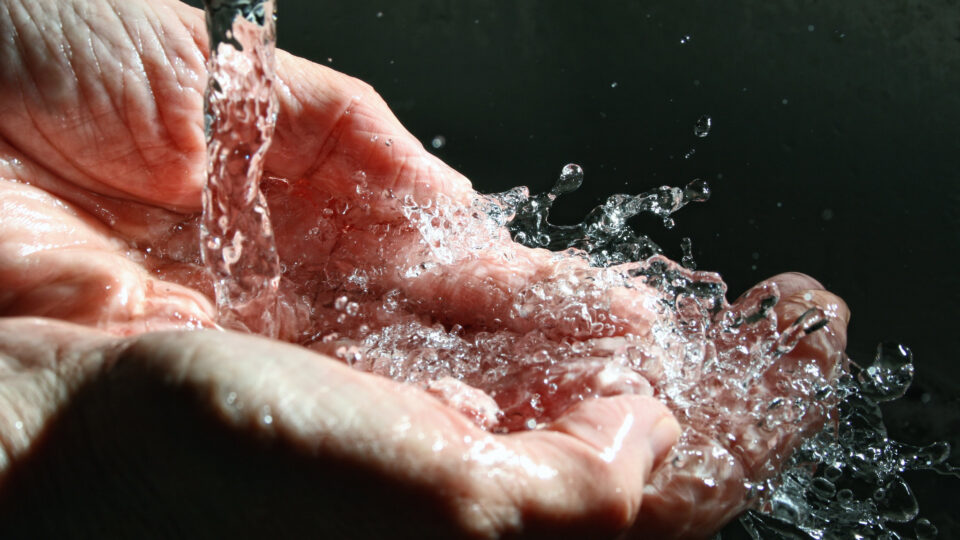
Researchers are developing a new method for decontaminating drinking water

At least two billion people around the world often drink water that is contaminated with disease-causing microbes.  Waterborne diseases are responsible for two million deaths each year, mostly among children under the age of five.

There are various ways to decontaminate water, including chemicals that can themselves produce toxic byproducts as well as using ultraviolet light, which takes fairly long to disinfect the water and requires a source of electricity. 

Scientists at Stanford University and the SLAC National Accelerator Laboratory have recently invented a low-cost, recyclable powder that kills thousands of waterborne bacteria every second when the water containing it is exposed to ordinary sunlight.  The discovery of this ultrafast disinfectant could be a tremendous benefit to the nearly 30% of the world’s population with no reliable access to safe drinking water.

The new disinfectant is a harmless metallic powder that works by absorbing both ultraviolet and high-energy visible light from the sun.  It consists of nano-sized flakes of aluminum oxide, molybdenum sulfide, copper, and iron oxide.  The key innovation is that when these four metallic ingredients are immersed in water, they all function together by reacting with the surrounding water and generating chemicals that quickly kill bacteria. The chemicals themselves don’t last long.  They quickly break down in the water leaving completely safe drinking water.

The nontoxic powder is recyclable.  It can be removed from water with a magnet.  It can also be reused at least 30 times.  Apart from its uses in less developed parts of the world, it could be valuable for hikers and backpackers who want to drink water from natural sources of unknown quality.

**********

Web Links

New nontoxic powder uses sunlight to quickly disinfect contaminated drinking water

Photo, posted February 27, 2013, courtesy of Petras Gagilas via Flickr.

Earth Wise is a production of WAMC Northeast Public Radio
A Solar-Powered Steel Mill | Earth Wise

November 17, 2021 By EarthWise Leave a Comment

Greening the steel industry

The steel industry is an essential part of modern society.  Economically, the U.S. steel industry produces goods valued at more than $100 billion a year and employs more than 80,000 people.  The steel industry is also a major contributor to greenhouse gas emissions.   On average, 1.85 tons of CO2 are emitted for every ton of steel produced.  Overall, the steel industry generates between 7 and 9% of the direct emissions that come from the global use of fossil fuel.

The industry is determined to reduce its environmental impact.  Steel is 100% recyclable and indeed much of it is recycled.  Over 2 billion tons of steel were produced in 2019. Meanwhile, more than 700 million tons of steel scrap are recycled each year.  Recycling greatly reduces the energy impact of the steel industry.

The industry has also significantly reduced its energy usage over the years using sophisticated energy management systems and energy recovery efforts.  Since 1960, the amount of energy needed to produce a ton of steel has dropped by 60%.  But making steel is still very energy intensive.

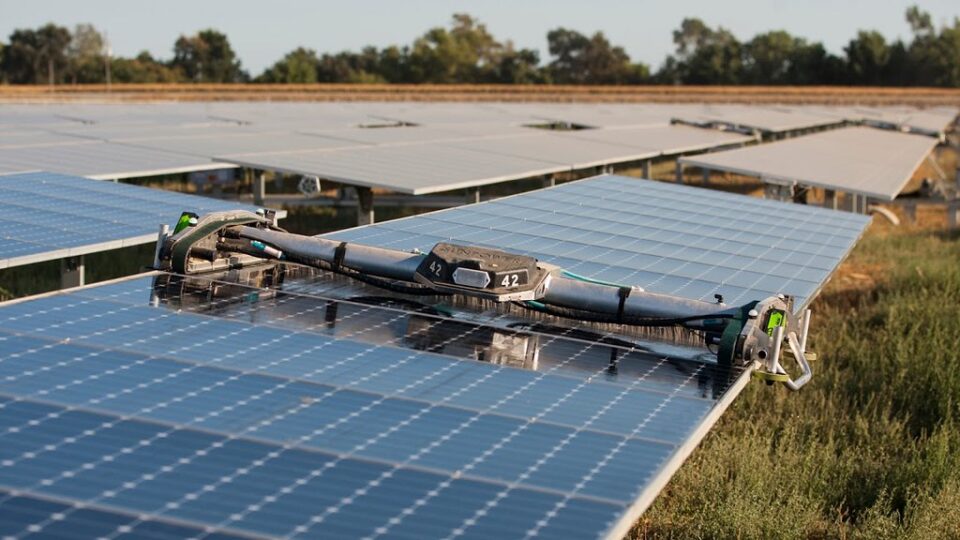
Recently, Lightsource bp announced that its 300 megawatt Bighorn Solar project in Colorado will be used to allow EVRAZ’s Pueblo steel mill to be the world’s first steel mill to run almost entirely on solar power.

The solar project, which will be fully online this month, is the largest on-site solar facility in the U.S. dedicated to a single customer.  (The Bighorn Solar project features 750,000 solar panels located on 1,800 acres).

The project demonstrates that even challenging industrial sectors can be decarbonized when companies work together on innovative solutions.

**********

Web Links

Colorado steel mill becomes ‘world’s first’ to be run almost entirely on solar

Photo, posted October 16, 2017, courtesy of UC Davis College of Engineering via Flickr.

Earth Wise is a production of WAMC Northeast Public Radio.

Infinitely Recyclable Plastic | Earth Wise

May 25, 2021 By EarthWise 1 Comment

Making an infinitely recyclable plastic

The glut of plastics is one of the world’s most challenging environmental problems.  The average American generates over 200 pounds of plastic waste each year and most of that ends up in landfills.  Researchers around the globe continue to work on potential solutions to the plastic waste problem.

Two years ago, scientists at Lawrence Berkeley National Laboratory announced the invention of a new plastic that could be an answer to the plastic waste problem.  The material is called polydiketoenamine or PDK and it differs from traditional plastics in a very important way:  it can be recycled indefinitely with no loss in quality because it can easily be broken down into its constituent component monomers and be used to make brand new plastic.

Only a small percentage of plastics are currently recycled.  When many plastics are melted down together, the polymers are mixed with a slew of incompatible additives, resulting in a new material with much lower quality than newly produced plastic.  As a result, less than 10% of plastic is recycled more than once.

Recently, the Berkeley Lab researchers released a study that shows what could be accomplished if manufacturers began using PDKs on a large scale.  They determined that PDK-based plastic could quickly become commercially competitive with conventional plastics and, furthermore, would get less expensive and more sustainable as time goes on.

PDK is starting to draw interest from companies needing to source plastic.  The best initial application for PDKs are markets where manufacturers have the most access to products at the end of their lifespans such as in the automobile industry and consumer electronics.  Making plastics part of a circular economy is a challenging task.

**********

Web Links

The Future Looks Bright for Infinitely Recyclable Plastic

Photo, posted April 19, 2021, courtesy of Ivan Radic via Flickr.

Earth Wise is a production of WAMC Northeast Public Radio.

Recyclable Wind Turbines | Earth Wise

January 1, 2021 By EarthWise Leave a Comment

Making wind turbine blades recyclable

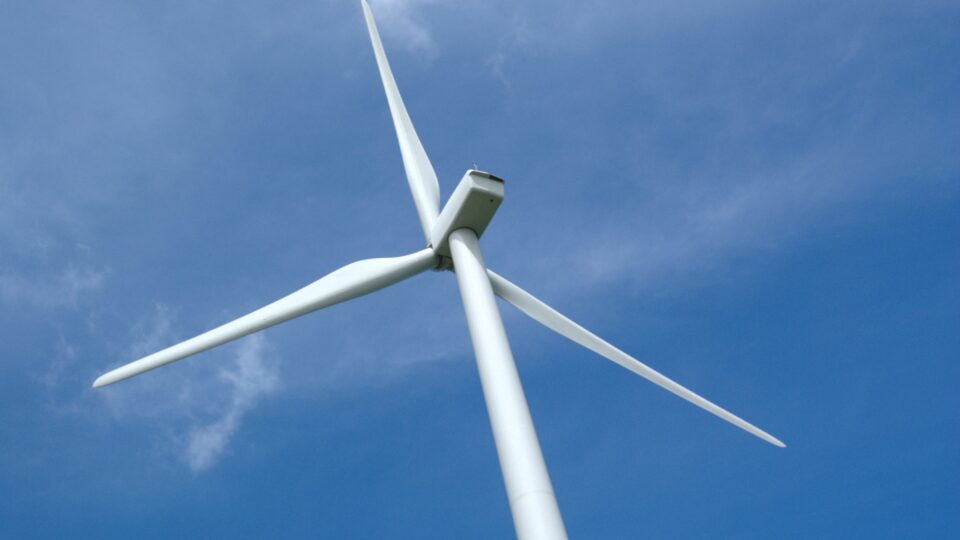
The blades of modern wind turbines can be longer than the wing of a Boeing 747. Their useful lifetime is perhaps 20 years and after that, they can’t just be hauled away.  They end up being cut up with special industrial saws to create pieces small enough to be strapped to a tractor-trailer.  Then, they end up in landfills.  There are thousands of blades being removed each year and those numbers are growing.

Wind turbine blades are currently manufactured using thermoset resin, which cannot be recycled.  It is also energy-intensive and manpower-intensive to produce.

Researchers at the National Renewable Energy Laboratory in partnership with Arkema Inc of Pennsylvania have demonstrated the feasibility of using thermoplastic resin instead to make wind turbine blades.  That material can be recycled and can also enable longer, lighter-weight, and lower-cost blades.  Using thermoplastic could also allow manufacturers to build blades on site, alleviating the problems of transporting ever larger turbine blades.

Current blades are made primarily of composite materials like fiberglass infused with thermoset resin.  The manufacturing process requires additional heat to cure the resin, which adds cost and time.  Thermoplastic resin cures at room temperature and requires less labor.  With regard to recycling, thermoplastic resin, when heated above a certain temperature, melts into its original liquid resin and can be reused. 

NREL has demonstrated the feasibility of the thermoplastic resin system by manufacturing nearly identical blades using both the standard materials and the thermoplastics.  NREL has also developed a technoeconomic model to evaluate the cost benefits of using thermoplastic resin.

**********

Web Links

News Release: NREL Advanced Manufacturing Research Moves Wind Turbine Blades Toward Recyclability

Photo, posted June 28, 2008, courtesy of Patrick Finnegan via Flickr.

Earth Wise is a production of WAMC Northeast Public Radio.

Car Parts From Agricultural Waste

January 11, 2019 By EarthWise Leave a Comment

A new bio-composite material made from date palm fiber biomass could be used to produce sustainable, lightweight and low-cost parts for the automobile and marine industries.

A team of researchers from the UK has developed a date palm fiber polycaprolactone composite that is completely biodegradable, renewable,sustainable and recyclable, in contrast to synthetic composite materials reinforced by glass and carbon fibers. The team tested the mechanical properties of the material and found that it achieved better low-velocity impact resistance than traditional man-made composites.

The idea would be to use the material in non-structural auto parts such as car bumpers and door linings.   The result would be to reduce the weight of vehicles, contributing to less fuel consumption and lower emissions.  The new material can be produced using less energy than glass and carbon fibers and is biodegradable and therefore easier to recycle.

Date palm fibers are one of the most available natural fibers in many parts of the world.  The trees produce a large quantity of agricultural waste, which is mostly burned or land-filled,causing serious environmental problems.

Convincing industry to use a new class of materials such as natural-fiber reinforced composites is challenging.  First it is necessary to obtain consistent,reliable properties from the material. Then the industries need to work closely with the developers to test the materials and convince themselves of the viability of using them.  The team, led by researchers at the University of Portsmouth, has been working with industry to test the viability of parts made from a variety of other sustainable materials as well including flax, hemp, and jute.  Someday, our cars may have bumpers made from agricultural waste.

**********

Web Links

Agricultural waste drives us closer to greener transport

Photo, posted October 27, 2017, courtesy of David Stanley via Flickr. 

Earth Wise is a production of WAMC Northeast Public Radio.

A Supermaterial From Plastic Waste

December 13, 2018 By EarthWise Leave a Comment

https://earthwiseradio.org/wp-content/uploads/2018/12/EW-12-13-18-A-Supermaterial-From-Plastic-Waste.mp3

Researchers at the National University of Singapore have created a way to convert plastic bottle waste into an ultralight aerogel material that has multiple potential applications.

[Read more…] about A Supermaterial From Plastic Waste

Legos And Plastics

October 23, 2018 By EarthWise Leave a Comment

https://earthwiseradio.org/wp-content/uploads/2018/10/EW-10-23-18-Legos-and-Plastics.mp3

Globally, consumers are voicing concerns about the impact of plastic waste on the planet. Conscious of these consumer concerns, many companies are trying to switch to recyclable or less-polluting packaging.  Some are even ditching plastics all together. 

[Read more…] about Legos And Plastics

New Zealand Bans Plastic Bags

September 3, 2018 By EarthWise Leave a Comment

https://earthwiseradio.org/wp-content/uploads/2018/09/EW-09-03-18-New-Zealand-Bans-Plastic-Bags.mp3

In an effort to tackle plastic pollution, New Zealand is joining a growing list of countries banning single-use plastic bags for good.  Prime Minister Jacinda Ardern says in a press statement that the ban was necessary to safeguard New Zealand’s clean and green reputation.

[Read more…] about New Zealand Bans Plastic Bags

Infinitely Recyclable Plastic

June 8, 2018 By EarthWise Leave a Comment

https://earthwiseradio.org/wp-content/uploads/2018/06/EW-06-08-18-Infinitely-Recyclable-Plastic.mp3

Less than 10% of discarded plastic is recycled.  This is one of the major reasons that plastic waste is such a threat to the environment.  There are many challenges to recycling plastics.  For one thing, there are many different types of plastic and if they are melted together, they tend to phase-separate like oil and water and the resultant substance is structurally weak.  Sorting plastics by type is not a simple task.   More generally, it is very difficult to produce plastic with its original properties from recycled feedstock.  So recycled plastics generally end up being useful in only more limited applications.

[Read more…] about Infinitely Recyclable Plastic

Banning Coffee Pods

March 15, 2016 By WAMC WEB

https://earthwiseradio.org/wp-content/uploads/2016/03/EW-03-15-16-Banning-Coffee-Pods.mp3

Over the past decade, single-serve coffee pods have quickly become a favorite method for delivering a hot cup o’ joe as fast and efficiently as possible.  The explosive growth of pod-based coffee machines is such that now nearly one in three American homes has one.

[Read more…] about Banning Coffee Pods

Primary Sidebar

Recent Episodes

  • An uninsurable future
  • Clean energy and jobs
  • Insect declines in remote regions
  • Fossil fuel producing nations ignoring climate goals
  • Trouble for clownfishes

WAMC Northeast Public Radio
WAMC/Northeast Public Radio is a regional public radio network serving parts of seven northeastern states (more...)

Copyright © 2025 ·