• Skip to primary navigation
  • Skip to main content
  • Skip to primary sidebar

Earth Wise

A look at our changing environment.

  • Home
  • About Earth Wise
  • Where to Listen
  • All Articles
  • Show Search
Hide Search
You are here: Home / Archives for recovering

recovering

Recycling Solar Panels | Earth Wise

September 29, 2023 By EarthWise Leave a Comment

Solar panels generally have a useful life of around 20 to 25 years.  The great majority of deployed panels have been installed fairly recently, so they have a long way to go.  But the growth in solar technology dates back to the 1990s, so there are growing number of panels that have already or are shortly coming to their end-of-life.

Today, roughly 90% of solar panels that have lost their efficiency due to age, or that are defective, end up in landfills because recycling them is too expensive.  Nevertheless, solar panels contain valuable materials, including silver, copper, and crystalline silicon, as well as lower-value aluminum and glass. 

The rapid growth of solar technology means that in the coming years, large numbers of retired solar panels will enter the waste stream.  The area covered by solar panels that are due to be retired by 2030 in the U.S. alone would cover about 3,000 football fields.  Clearly, more cost-effective recycling methods are sorely needed.

Engineers at the University of New South Wales in Sydney Australia have developed a new, more effective way of recycling solar panels that can recover silver at high efficiency.  The panel frames and glass are removed leaving just the solar cells themselves.  The cells are then crushed and sieved in a vibration container that effectively separates 99% of the materials contained in them.

Silver is the most valuable material contained in solar cells.  The Australian researchers estimate that between 5 and 10 thousand tons of silver could potentially be recycled from retired solar panels by the year 2050.  But even the other materials contained in solar panels are well worth recovering if it can be done cost-effectively.

**********

Web Links

New environmentally friendly solar panel recycling process helps recover valuable silver

Photo, posted November 22, 2008, courtesy of Oregon Department of Transportation via Flickr.

Earth Wise is a production of WAMC Northeast Public Radio

Recovering Condors | Earth Wise

August 12, 2020 By EarthWise Leave a Comment

The recovery of condors

The California condor is the largest North American land bird.  Its wingspan is nearly 10 feet and its weight of up to 26 pounds nearly equals that of the trumpet swan, the heaviest native North American bird.  California condors can live up to 60 years, making them among the world’s longest-living birds as well.  But California condors became extinct in the wild in 1987.

Lead poisoning is the primary threat to condors.  The birds are scavengers and feeding on the carcasses of dead animals that contain fragments of lead rifle ammunition is responsible for half of all condor deaths.

Condors historically occupied California’s Sierra Nevada mountains and were known to nest in the cavities of giant sequoia trees.  By 1982, the wild population was reduced to just 22 birds, and all of those were eventually trapped and brought into captivity to prevent extinction of the species.

A captive breeding program was undertaken at the Los Angeles Zoo and the San Diego Wild Animal Park.  With the success of that program, in 1992 the U.S. Fish and Wildlife Service began releasing condors back into the wild in the mountains of Los Padres National Forest in Southern California.  That flock has grown to about 100 birds through both wild reproduction and additional release of captive-bred birds.

The Southern California flock continues to expand its range with birds in 8 California counties and even in Arizona, Utah, and Baja California in Mexico.  The total wild population of condors is now estimated to be about 340 birds.  Recently, condors have been spotted in Sequoia National Park, a part of its historic range where the birds have been absent for nearly 50 years.

**********

Web Links

California Condors Spotted in Sequoia National Park, First Time in Nearly Half a Century

Photo, posted May 20, 2005, courtesy of Flickr.

Earth Wise is a production of WAMC Northeast Public Radio.

Concrete Production And Diminishing Coal Burning | Earth Wise

June 5, 2020 By EarthWise Leave a Comment

electricity generation and concrete production

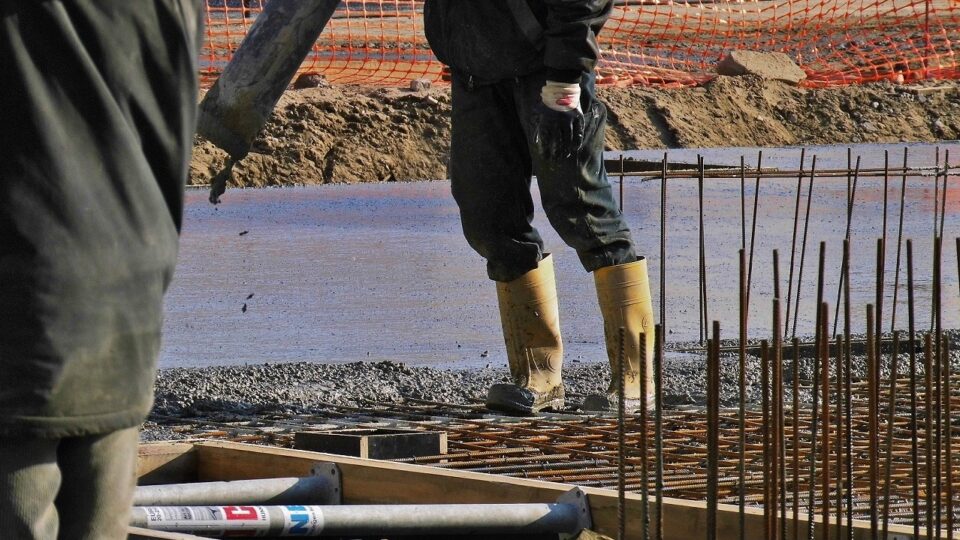
Coal burning is still one of the primary means of generating electricity in the United States, but its use is diminishing and doing so fairly rapidly.  The coal burning process produces residual, incombustible materials.  One of them is fly ash, which is composed of fine, glassy, rounded particles rich in silicon, aluminum, calcium, and iron oxides.  Fly ash is captured from coal plant flue gas by precipitators and bag filters. It turns out that two-thirds of this fly ash is not dumped into landfills or impoundments, but rather is put to use.

Because of its chemical and physical characteristics, fly ash can substitute for a portion of portland cement in concrete.  Using this byproduct material in making cement actually reduces its cost. Beyond cost, the addition of fly ash as a so-called supplementary cementitious material or SCM improves concrete’s long-term strength and reduces porosity and permeability.  It reduces the risk of thermal cracking and provides good long-term mechanical properties.

The amount of fly ash used in concrete products increased by 5% between 2011 and 2017 while the amount produced dropped by 36%.  Concrete production continues to increase steadily while fly ash production is steadily dropping.

Therefore, the concrete industry is looking for alternative sources of SCM.  The most obvious is the approximately 1/3 of fly ash that hasn’t been used to make concrete.  Much of that is landfilled or ponded onsite at power plants.  So, opportunities exist for excavating or dredging and recovering these materials.

As coal burning goes away, concrete manufacturing needs to make some changes.

**********

Web Links

What Does the Changing Face of Electricity Production Mean for Concrete?

Photo, posted February 16, 2017, courtesy of Flickr.

Earth Wise is a production of WAMC Northeast Public Radio.

Recovering Marine Life By 2050 | Earth Wise

May 27, 2020 By EarthWise Leave a Comment

Marine life conservation

Marine life has faced challenges for a long time.   There have been centuries of overfishing in many places and pollution of various types has been especially harmful in recent decades.   But despite all of this, a new scientific review published in the journal Nature contends that marine life in the world’s oceans could be fully restored in as little as 30 years provided that aggressive conservation policies are adopted.

The research spotlights the strong resiliency of ocean animals and cites the successful recovery of a number of marine species, including humpback whales.

The study indicates that nations around the world must agree to designate 20 to 30 percent of the oceans as marine protected areas, institute sustainable fishing guidelines, and regulate pollution.  These measures would not come cheaply.  The estimated cost would be around $20 billion a year. 

However, the report also estimates that the economic return on this investment would be tenfold and would create millions of new jobs.  Rebuilding fish stocks and maintaining sustainable fishing policies could increase global profits of the seafood industry by over $50 billion a year.  Conserving coastal wetlands could save the insurance industry more than $50 billion a year as well by reducing storm damage.

A major sticking point, however, is climate change.  Climate change is increasing ocean temperatures and driving acidification.  Unless these changes are brought under control, the restoration of marine life is not going to be successful.  We have reached the point where it is within our power to choose between a future with a resilient and vibrant ocean or an irreversibly disrupted ocean.  Whether we embrace that challenge remains to be seen.

**********

Web Links

Marine Life Could Recover By 2050 With the Right Policies, Study Finds

Photo, posted April 20, 2012, courtesy of Matthias Hiltner via Flickr.

Earth Wise is a production of WAMC Northeast Public Radio.

Primary Sidebar

Recent Episodes

  • An uninsurable future
  • Clean energy and jobs
  • Insect declines in remote regions
  • Fossil fuel producing nations ignoring climate goals
  • Trouble for clownfishes

WAMC Northeast Public Radio

WAMC/Northeast Public Radio is a regional public radio network serving parts of seven northeastern states (more...)

Copyright © 2026 ·