• Skip to primary navigation
  • Skip to main content
  • Skip to primary sidebar

Earth Wise

A look at our changing environment.

  • Home
  • About Earth Wise
  • Where to Listen
  • All Articles
  • Show Search
Hide Search
You are here: Home / Archives for protected

protected

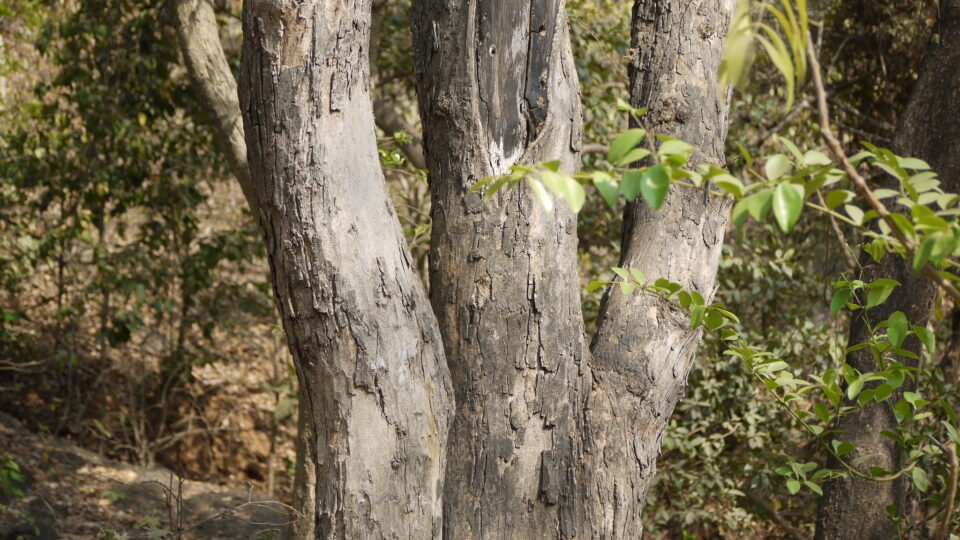
Forest crimes

November 20, 2024 By EarthWise Leave a Comment

Poaching trees and illegal logging represent a massive part of wildlife trafficking globally.

Wildlife trafficking is the world’s fourth largest form of organized crime, behind only drug trafficking, counterfeiting, and human trafficking.  When we hear about wildlife trafficking, we think of elephant ivory, rhino horns, tiger parts, and the like.  But so-called forest crimes, which includes poaching protected trees and illegal logging added up to somewhere between $30 billion and $100 billion during the period 2014-2018.  A 2020 report by the United Nations estimated that illegal trade just in rosewoods comprised more than 40% of the value of all trafficked species – animal and plant – during that time.

Even though rosewood comprises multiple tree species, world stocks of nearly all of them have been depleted through overexploitation. Rosewood is now protected worldwide, and some 300 species are under trade restrictions.

With a value of as much as $1.5 million per cubic meter, rosewood is at the center of a great deal of illegal activity, government corruption, and controversy.  A shipment of 30,000 illegally felled rosewood logs from Madagascar was seized at a port in Singapore in 2014. Those rosewood logs, worth at least $50 million, have been hung up in multiple legal proceedings and disputes ever since and remain in Singapore.

With huge financial stakes, it is perhaps not surprising that the U.N. estimates that as much as a third of the supposedly legal global timber trade involves illegally harvested wood.

**********

Web Links

How Traffickers Got Away with the Biggest Rosewood Heist in History

Photo, posted April 19, 2010, courtesy of Dinesh Valke via Flickr.

Earth Wise is a production of WAMC Northeast Public Radio
Chasing The Ivory-Billed Woodpecker | Earth Wise

June 13, 2023 By EarthWise Leave a Comment

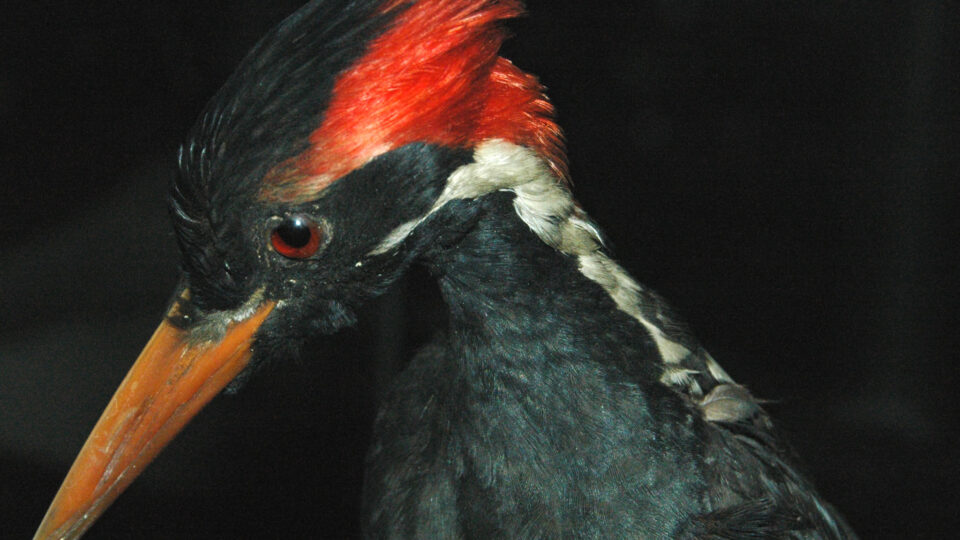
The ivory-billed woodpecker is or was the largest woodpecker in the United States. The last unassailable sighting of the bird was in 1944.  Since then, there have various reports of glimpses of the bird or of hearing its distinctive sounds.  But there has not been anything resembling proof that the bird still exists.

Despite this, the ivory-billed woodpecker has been legally protected under the Endangered Species Act.  There has been a proposal to end that protection and formally declare the species extinct.  Because of the controversy surrounding the bird, a final ruling on its status has been repeatedly delayed by the US Fish and Wildlife Service.

Very recently, a peer-reviewed study in the journal Ecology and Evolution makes the case that the ivory-billed woodpecker still exists and that it is premature to declare it extinct.  The study cites visual encounters by expert observers, audio recordings, tree-damage, and rather grainy video evidence.  The authors claim that there is intermittent but repeated presence of birds that at least look and behave like ivory-billed woodpeckers.

One might ask:  why does it matter whether this bird is declared extinct or not?  The answer is that there are limited federal funds for conservation efforts, and they should be spent on saving genuinely endangered species and habitats.  The authors of the new study say that removing federal protection would be bad for any remaining ivory bills, which may be living in some swampy old-growth forests in Louisiana.  Other scientists consider conservation resources expended on the ivory-billed woodpecker to be chasing a ghost.

As is the case for several other notorious objects, one really clear photograph of an ivory-billed woodpecker could solve a long-standing mystery.

**********

Web Links

A Vanished Bird Might Live On, or Not. The Video Is Grainy

Photo, posted October 19, 2014, courtesy of James St. John via Flickr.

Earth Wise is a production of WAMC Northeast Public Radio
How To Meet Protected Land Targets | Earth Wise

March 30, 2023 By EarthWise Leave a Comment

How to meet protected land targets

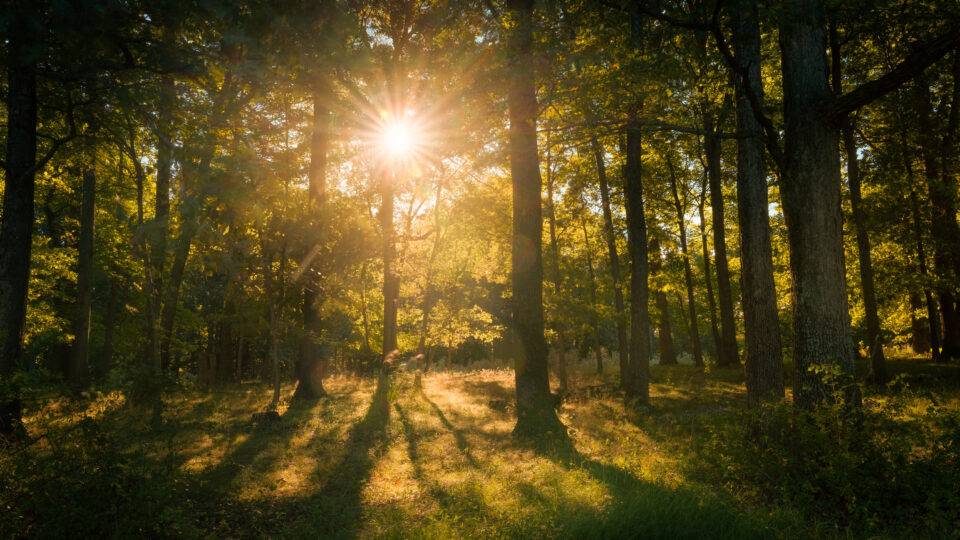
More than half of the world’s countries have set a target of setting aside 30% of land and sea areas across the globe for conservation by 2030, in order to preserve and protect nature and essential services to people.  This pledge creates some difficult questions to answer.

What sorts of land should be protected and where should it be located?  What effects of these new land protections will there be on carbon emissions and the climate and on land usage for food production and energy generation?  Policymakers have to grapple with such questions in order to move forward on these ambitious biodiversity protection goals.

A recent study by the Lawrence Berkeley National Laboratory attempts to answer many of these questions.  The study found that meeting the 30% goal could lead to substantial regional shifts in land use and, in some cases, still fail to protect some of the most important biodiversity hotspots.

Protecting land entails tradeoffs with other land uses and can have negative impacts on the agricultural sector as well as land use for bioenergy crops and forest land use for timber.

In particular, the study found that the amount of land used for crops for conversion into biofuels could be significantly impacted by doubling current protected areas while still preserving the amount of land used for food crops.  This is particularly true for land in Russia and Canada.

The study also found that while it may be possible to meet the 30% target by only protecting agriculturally unsuitable land, it may not end up protecting many of the world’s 36 identified biodiversity hotspots.  The uneven distribution of species has a significant bearing on how to manage the conservation of biodiversity.

**********

Web Links

Doubling Protected Lands for Biodiversity Could Require Tradeoffs With Other Land Uses, Study Finds

Photo, posted September 19, 2020, courtesy of John Brighenti via Flickr.

Earth Wise is a production of WAMC Northeast Public Radio
Manatees And Pollution | Earth Wise

November 11, 2021 By EarthWise Leave a Comment

Pollution wreaking havoc on Florida manatees

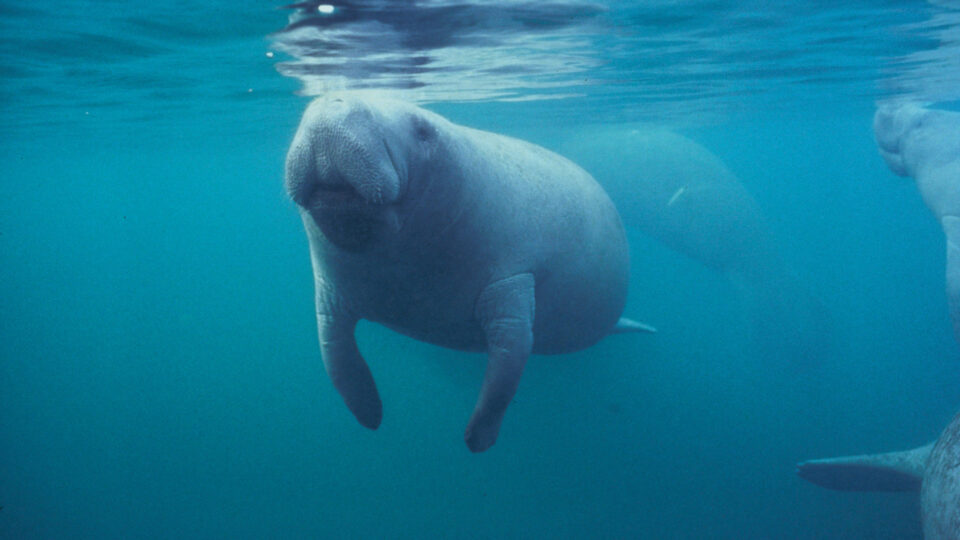
Manatees are large, gentle, and curious marine mammals measuring up to 13 feet long and weighing up to 3,300 lbs.  There are three living species of manatees:  The Amazonian Manatee, the West African Manatee, and the West Indian Manatee, which is commonly found in Florida and the Gulf Coast.  Manatees inhabit the shallow, marshy coastal areas and rivers of the Caribbean Sea, the Gulf of Mexico, the Atlantic coast, the Amazon basin, and West Africa. 

The West Indian Manatee, which includes the Florida Manatee, is protected under the Endangered Species Act.  Today, the range-wide population is estimated to be at least 13,000 manatees, with more than 6,500 in the southeastern United States and Puerto Rico.

In Florida, an uptick in nutrient loading from nonpoint sources is triggering algal blooms in Indian River Lagoon and neighboring areas.  These algal blooms have decimated seagrass, manatees’ primary food source. 

As a result , manatees have starved to death by the hundreds along Florida’s east coast.  The state has recorded 974 manatee deaths in 2021, shattering previous annual all-time highs with still approximately two months to go.  Manatees, which need to eat between 100-200 pounds of seagrass daily, are now eating the seagrass roots, which permanently kills the aquatic plants.

Efforts are being made to replant seagrass and to restore clam and oyster beds so that the mollusks can help clean the water.  But manatees face a myriad of additional threats, including collisions with boats and ships, temperature changes, disease, and crocodile predation.

********** 

Web Links

Florida lawmakers hear Fish & Wildlife agency response to manatee death ‘catastrophe’

West Indian manatee

Preliminary 2021 Manatee Mortality Table by County

Photo, posted May 7, 2010, courtesy of Jim Reid/USFWS via Flickr.

Earth Wise is a production of WAMC Northeast Public Radio.

The Cost of Cleaning Up Ocean Plastic | Earth Wise

October 7, 2020 By EarthWise Leave a Comment

Cleaning up ocean plastic carries a large price tag

Small island developing states increasingly find themselves with large amounts of plastic waste.  A recent study looked at the financial cost for removing it.

Aldabra Atoll is a UNESCO World Heritage Site in the Seychelles.  It is the world’s second-largest coral atoll and is the home of 307 species of animals and plants, including the largest population of giant tortoises in the world.  Aldabra has been called one of the wonders of the world and one of the crown jewels of the Indian Ocean.

Last year, a team from the University of Oxford and the Seychelles Island Foundation, spent five weeks removing litter that had washed up on Aldabra’s shores.  In total, they removed 25 tons of plastic litter which, to their surprise, was dominated by waste from the fishing industry.  The researchers now estimate that over 500 tons of litter remain on the island, 83% of which consists of buoys, ropes, nets, and, of all things, over 300,000 individual flipflops.  This is the largest accumulation of plastic waste reported for any single island in the world.

According to the study, the cost to clean up the entire island would be nearly $5 million, requiring 18,000 person-hours of labor.  A project of this magnitude is beyond the capacity of non-profit organizations like the Seychelles Islands Foundation.

The plastic pollution in Aldabra is related to the fishing industry in Seychelles, which provides tuna to high-income markets around the world.  The research highlights how even remote highly protected island ecosystems are impacted by global pollution and how difficult and costly it is to remedy.

**********

Web Links

Millions of dollars to clean up tuna nets and flip flops from island state

Photo, posted December 27, 2016, courtesy of David Stanley via Flickr.

Earth Wise is a production of WAMC Northeast Public Radio.

Road Salt Pollution

January 8, 2020 By EarthWise 1 Comment

Road salt pollution mirror lake

Mirror Lake is a popular recreational lake located in the Village of Lake Placid.  It is the most developed lake within the Adirondack Park, which is a publicly protected area that is actually larger than Yellowstone, Yosemite, Glacier, and Grand Canyon National Parks combined.

New research has revealed that road salt runoff into Mirror Lake is preventing natural water turnover which poses a risk to the balance of its ecology.  The study, which was published in Lake and Reservoir Management, found that road salt runoff is preventing spring mixing of the water column.    This creates more anoxic water conditions, meaning there is less oxygen in the water, and limits the ability of the habitat to support the native lake trout. 

Mirror Lake is the first lake in the Adirondack Park to show an interruption in lake turnover due to road salt.  Many lakes in northern climes experience so-called “dimictic turnover”, which is a natural process where wind and less stratified water conditions of spring and fall allow mixing of the water column that redistribute oxygen and nutrients throughout the lake.  High levels of surface-water chloride introduced into the lake from road salt runoff inhibit the mixing of the water column.

The lack of mixing and oxygenation is bad news for fish species such as lake trout, which require cold, oxygenated water to survive.  It may also put the lake at a greater risk of algal blooms.

Mirror Lake is small, surrounded by concentrated development, and receives the direct discharge of stormwater.  So, it is particularly vulnerable to road salt contamination.  Other lakes elsewhere in New York may experience similar conditions.  The researchers are confident that natural turnover conditions could be restored to the lake if road salt application in the watershed is reduced.

**********

Web Links

Road salt pollutes lake in one of the largest US protected areas, new study shows

Photo, posted January 5, 2018, courtesy of MTA of the State of NY via Flickr.

Earth Wise is a production of WAMC Northeast Public Radio.

The Price of Chocolate

April 18, 2019 By EarthWise Leave a Comment

The Ivory Coast has lost more than 80% of its forests in the last 50 years, mainly as a result of cocoa production.

The Ivory Coast is a West African country the size of New Mexico and it produces more than a third of the world’s cocoa.  But around 40% of the country’s cocoa crop – supplying more than a tenth of the world’s chocolate bars – is grown illegally in the country’s national parks and 230 supposedly protected government-owned forests. 

Over the decades, as many as one million landless people from drought-stricken places like Mali and Burkina Faso moved into national parks and protected forests and started farming cocoa.  The Marahoue National Park alone has 30,000 illegal inhabitants.

Most cocoa is grown in monocultures of what is known as the full-sun system, which requires the removal of all surrounding trees.  As a result, many allegedly protected areas have been completely converted into farms.  Most of the cocoa in the Ivory Coast is grown on small farms, typically plots of 7 to 10 acres.  The farmers are caught in an exploitative and corrupt system of cocoa trading and land appropriation, and most earn less than a dollar a day.  Meanwhile, government agencies charged with protecting the forests are more interested in collecting bribes than safeguarding woodlands.

The Ivory Coast government is unveiling a plan to actually remove protection from most of its remaining forests and hand them over to the world’s chocolate traders.    The claim is that this will protect other forests by improving cocoa productivity in already deforested areas.  Needless to say, conservation groups are dubious that the new plan will positively impact an already terrible situation.

**********

Web Links

The Real Price of a Chocolate Bar: West Africa’s Rainforests

Photo, posted April 17, 2015, courtesy of Tom Coady via Flickr.

Earth Wise is a production of WAMC Northeast Public Radio.

National Parks Are Too Popular

August 31, 2017 By EarthWise

https://earthwiseradio.org/wp-content/uploads/2017/08/EW-08-31-17-National-Parks-Are-Too-Popular.mp3

National Parks are often thought of as America’s natural cathedrals – serene places we visit to commune with nature and soak up its grandeur.   Millions of Americans and other people from around the world are drawn to these amazing places.  Unfortunately, it is now too many millions.

[Read more…] about National Parks Are Too Popular

Positive Environmental News

March 2, 2017 By EarthWise

https://earthwiseradio.org/wp-content/uploads/2017/03/EW-03-02-17-Positive-Environmental-News.mp3

From melting Arctic ice to dying coral reefs to rising sea levels, there was no shortage of grim environmental news in 2016.  But the news wasn’t all bad.  There were several bright spots for the environment last year as well.

[Read more…] about Positive Environmental News

Primary Sidebar

Recent Episodes

  • An uninsurable future
  • Clean energy and jobs
  • Insect declines in remote regions
  • Fossil fuel producing nations ignoring climate goals
  • Trouble for clownfishes

WAMC Northeast Public Radio

WAMC/Northeast Public Radio is a regional public radio network serving parts of seven northeastern states (more...)

Copyright © 2026 ·