• Skip to primary navigation
  • Skip to main content
  • Skip to primary sidebar

Earth Wise

A look at our changing environment.

  • Home
  • About Earth Wise
  • Where to Listen
  • All Articles
  • Show Search
Hide Search
You are here: Home / Archives for products

products

An eco-friendly detergent

May 8, 2025 By EarthWise Leave a Comment

Researchers developing an eco-friendly detergent

Household products such as laundry detergents and dishwasher tablets are an indispensable part of everyday life, but such products contain all sorts of chemicals that have undesirable properties.  Many are difficult to break down when they enter the environment, and some add nutrients that trigger environmentally harmful algal blooms.   The ingredient lists for even what are described as environmentally friendly cleansing products can be filled with lots of polysyllabic chemicals with unknown potential impacts.  Detergents made from harmless stuff are often difficult to make, hard to rinse off, and sometimes potentially damaging to fabrics.

Researchers at Tianjin University in China have developed an environmentally friendly detergent made of tiny wood fibers and corn protein that removes stains from clothes and dishes as well as commercial products.

The researchers combined cellulose nanofibers from wood with zein protein, which is taken from corn, to produce an emulsion.  The cellulose can attract and repel water and can form emulsions and attract various kinds of stains.  The zein protein helps to stabilize the emulsion and trap oils.

They tested the new detergent by cleaning cotton cloth and dishes stained with ink, chili oil, and tomato paste.  They compared the results against commercial laundry detergent and dish soap.  Their new detergent was somewhat less effective than the commercial products when used at 1% concentration but was more effective when used at a 5% concentration. 

The results suggest that this natural detergent could be an efficient, cost-effective, and sustainable alternative to the synthetic cleaning agents that currently dominate the market.

**********

Web Links

Researchers create eco-friendly detergent from wood fiber and corn protein

Photo, posted July 31, 2009, courtesy of Mei Anne Mendoza via Flickr.

Earth Wise is a production of WAMC Northeast Public Radio

Removing microplastics from water

April 23, 2025 By EarthWise Leave a Comment

A new way to remove microplastics from water

Microplastics come from the breakdown of larger plastics in the environment as well as from direct use in various products such as certain cosmetics.  They are found everywhere, from oceans and mountain peaks to the air and water, and alarmingly, in our bodies.  They are ingested by all sorts of organisms, from tiny plankton to fish and marine mammals.  Microplastics just don’t go away.  They don’t biodegrade so they simply accumulate in the environment.

Researchers at North Carolina State University have recently demonstrated proof of concept for a system that actively removes microplastics from water.  Such a system has the potential for helping to cleanse oceans and other bodies of water from the tiny plastic particles.

The system makes use of soft dendritic colloids, which are tiny particles that have the ability to stick to just about any surface.  These sticky particles can attract microplastics and grab them, even in wet and salty conditions.  The colloids are made from chitosan, a harmless and biodegradable polymer made from processed shellfish waste.

The researchers produced small pellets of the colloids that also contain small amounts of magnesium, which makes them bubble up and rise to the surface of water.  The pellets are coated with a gelatin layer, which blocks the magnesium.  As the gelatin gradually dissolves away, the pellets collect microplastics.  Eventually, the result is a microplastic-laden scum that rises to the surface where it can be skimmed away.

The scum itself can be bioprocessed into more chitosan that can create more of these microcleaner pellets to then capture more microplastics.  The researchers are investigating how the process can be scaled up to become a valuable tool in dealing with the microplastics problem.

**********

Web Links

New Water Microcleaners Self-Disperse, Capture Microplastics and Float Up for Removal

Photo, posted January 17, 2018, courtesy of Bo Eide via Flickr.

Earth Wise is a production of WAMC Northeast Public Radio

Microplastics in Antarctica

March 3, 2025 By EarthWise Leave a Comment

Microplastics are small plastic pieces less than five millimeters long and typically far smaller than that.  They come from a variety of sources, often from larger plastic debris that degrades into smaller and smaller pieces.  There are also microbeads, which are tiny pieces of manufactured polyethylene plastic that are added to various health and beauty products.  Tiny bits of plastic easily pass through filtration systems and end up in the ocean and other bodies of water.

Microplastics are a pervasive problem for which nowhere on Earth is truly untouched.  Despite stringent regulations on materials entering Antarctica, scientists have discovered microplastics in the snow near some of the deep field camps there.

A study by the British Antarctic Survey made use of a new and advanced technique that can detect microplastics as small as 11 microns – about the size of a red blood cell.

The research team found microplastics at concentrations ranging from 73 to 3,099 particles per liter of snow. 

Snow samples from three different sites identified polyamide (used in textiles), polyethylene terephthalate (found in bottles and packaging), polyethylene, and synthetic rubber.  The results suggest that at least the polyamide, which accounted for half the microplastics found, came from local sources.

Additional research is needed to fully understand the sources of microplastic pollution in Antarctica and to understand the broader implications of microplastics in that frozen wilderness. Microplastics have already been detected in several penguin, seal, and fish species.

**********

Web Links

Microplastics discovered in Antarctica

Photo, posted February 3, 2015, courtesy of Christian Stangl via Flickr.

Earth Wise is a production of WAMC Northeast Public Radio

Big Food and greenhouse gas emissions

October 29, 2024 By EarthWise Leave a Comment

Analyzing Big Food and its greenhouse gas emissions

The global food system is responsible for as much as 40% of human-generated greenhouse gas emissions. The investor advocacy group Ceres has tracked whether the 50 largest North American food and agriculture companies have set targets to lower their emissions and whether doing so has actually resulted in lower emissions.

The emissions from food and agriculture companies are grouped into three so-called scopes.  Scope 1 are emissions from a company’s direct operations.  Scope 2 are emissions from its energy use.  Scope 3 are emissions from a company’s supply chain:  from the farmers who grow crops, raise cattle, and otherwise provide necessary items for a company’s final products.  In the food industry, the scope 3 category is responsible for about 90% of overall emissions.

Of the 50 food companies studied, 23 reduced their scope 1 and scope 2 emissions over the past 2 years, but only 12 reduced their scope 3 emissions.  Companies have more control over their scope 1 and scope 2 emissions. 

Reducing scope 3 emissions is more difficult.  And most companies haven’t set scope 3 reduction targets. 

The findings of the study suggest that reducing scope 3 emissions is especially difficult for companies whose supply chains are linked to carbon-intensive commodities, like meat, or crops linked to deforestation or land-use change, both of which result in increased emissions.

In March, the Securities and Exchange Commission finalized rules requiring companies to disclose their climate risk to regulators, increasing the visibility of the food industry emissions issue.

**********

Web Links

North America’s Biggest Food Companies Are Struggling to Lower Their Greenhouse Gas Emissions

Photo, posted October 13, 2011, courtesy of the United Soybean Board via Flickr.

Earth Wise is a production of WAMC Northeast Public Radio

Where do states get their electricity?

September 3, 2024 By EarthWise Leave a Comment

Exploring how states produce their electricity

How the United States produces its electricity has changed dramatically over the past few decades.  Coal used to be the dominant source of power in this country, but natural gas surpassed it in 2016, and coal’s share has been shrinking ever since.  Fossil fuel still generates the majority of America’s electricity, but renewable power is increasing its contribution all the time.

On a state-by-state basis, there are very large variations in the mix of power sources.  Ten states still get their largest amount of power from coal, but this is down from 32 states in 2001.  Four states have hydroelectric power as their largest source, including Vermont which gets more than half of its power that way. 

Texas produces more electricity than any other state by a wide margin.  It’s not just because it has a large population. It is because it uses huge amounts of power to refine petroleum products.  Coal produces only 13% of Texas’ electricity and the state is by far the country’s largest producer of wind power.

New York gets nearly half of its power from natural gas, 21% from hydroelectric power, and 21% from nuclear power.  Wind and solar power are still small, but both are growing in the state.

When people try to assess the climate impact of driving electric cars, based on the origins of the electricity they use to power the car, the results can vary dramatically based on what state they live in.  Nationwide, electricity is getting cleaner and greener, but the process is by no means uniform across the country.

**********

Web Links

How Does Your State Make Electricity?

Photo, posted March 17, 2021, courtesy of Bureau of Reclamation via Flickr.

Earth Wise is a production of WAMC Northeast Public Radio

Wind farms and sea farms

August 5, 2024 By EarthWise Leave a Comment

There has been increasing use of agriculture coexisting with solar farms.  This dual use of land is a win-win situation.  Recently, Danish researchers have been investigating the potential for farming marine products at offshore wind farms.

Scandinavia’s largest wind farm, Kriegers Flak, is the site of a four-year-old project in which long lines are stretched between the wind farm’s pylons and are used to grow mussels and seaweed.  With the first harvest that has taken place after 18 months, it is showing signs of early success.

Seaweed and mussels are low trophic aquaculture crops.  That means that that they don’t need to be fed or fertilized.  They take up nutrients from the sea and produce healthy foods.

The 328-foot lines spread between the turbines can be used to grow substantial quantities of the underwater seafood.  According to modeling by Aarhus University – the institution conducting the study – using just a tenth of Denmark’s wind park area could produce tons of seafood annually while using only the naturally-available resources.  This form of aquaculture captures emissions instead of producing them.

Researchers say that it is time to develop guidelines to encourage companies to plan for multiple uses of the ocean because countries are ramping up production of clean energy from offshore wind farms.  Denmark was the first country in the world to install a commercial offshore wind park in 1991.  Over 30 years later, nearly half of the country’s electricity comes from wind turbines.

The benefits of such sea farms combined with offshore wind farms go beyond food production and clean energy production.  They also help improve water quality and capture carbon.  It is another win-win situation.

**********

Web Links

Beneath offshore wind turbines, researchers grow seafood and seaweed

Photo, posted August 5, 2007, courtesy of Andreas Klinke Johannsen via Flickr.

Earth Wise is a production of WAMC Northeast Public Radio

Barley plastic

July 24, 2024 By EarthWise Leave a Comment

Making biodegradable plastic from barley

The durability, malleability, and low cost of plastics have made them ubiquitous.  Plastics are everywhere:  in packaging, clothing, and an endless variety of products.  As a result, they are everywhere in the environment and they tend to stay there, contaminating land and sea.  They are tough to recycle, and their production emits more carbon dioxide than all air traffic combined.  The search for viable substitutes for plastic is global and intensive.

Most common bioplastics are not an ideal solution.  They don’t break down that easily when tossed into the natural environment.  The process can take years. 

Researchers at the University of Copenhagen have invented a new material made from modified starch that can completely decompose in nature and can do so in only two months.  The material is made using natural plant material from crops and could be used for food packaging as well as many other things.

The new material is a biocomposite composed of several substances that decompose naturally.  The main ingredients are amylose and cellulose, common in many plants.  Amylose is extracted from crops like corn, potatoes, wheat, and barley.

The Danish researchers have developed a barley variety that produces pure amylose in its kernels.  Pure amylose is ideal because it is less likely to turn into a paste when it interacts with water. 

Combining the amylose with cellulose forms long, strong molecular chains, resulting in a durable, flexible material that can replace plastic in many applications.  The research team has founded a spinoff company and have applied for a patent for the new material.  It is unclear when the biofriendly barley-based plastic might be commercialized, but its potential is quite good.

**********

Web Links

Researchers invent one hundred percent biodegradable “barley plastic”

Photo, posted May 20, 2010, courtesy of Frederick Lang Jr. via Flickr.

Earth Wise is a production of WAMC Northeast Public Radio

Eliminating plastic shipping pillows

July 17, 2024 By EarthWise Leave a Comment

Amazon is phasing out plastic shipping pillows

Anyone who gets packages from Amazon is familiar with the plastic air pillows used to keep products safe in transit.  Amazon uses almost 15 billion of them a year in North America.

Environmentalists have been urging Amazon and other vendors to cut down on the use of plastic packaging. The air-filled plastic pillows are made from plastic film, which is the most common form of plastic litter found in the sea and in seabeds along the shore.  Plastic film can be deadly to wildlife such as sea turtles and sea birds.  Plastic film generally can’t be composted or recycled either.

Recently, Amazon announced that it will replace its plastic pillows with recycled paper filler in all its North American markets – the United States, Canada, and Mexico – which together account for more than 70% of the retailer’s global sales.  It is already making the switch in a big way and is working towards fully removing the plastic materials by the end of the year.

Replacing plastic packaging with paper is a definite improvement.  Paper is recyclable and biodegradable.  It isn’t perfect:  if it ends up in landfills, it can contribute to methane pollution as it biodegrades.  But, on the other hand, paper packaging is more likely to be recycled.

Stemming the tide of plastic waste is an ongoing effort by environmental and consumer groups.  There is pending legislation in New York that aims to reduce the use of plastic packaging by 50% over 12 years by requiring manufacturers to either replace it or pay fees.  The bill cleared the State Senate but has not come up to a vote in the Assembly.  Similar legislation has already been passed in California, Oregon, Maine, and Colorado.

**********

Web Links

Amazon Says It Will Stop Using Puffy Plastic Shipping Pillows

Photo, posted November 20, 2018, courtesy of Todd Van Hoosear via Flickr.

Earth Wise is a production of WAMC Northeast Public Radio

Dark chocolate is not so dangerous

July 15, 2024 By EarthWise Leave a Comment

dark chocolate does not seem so dangerous after all

Last year, Consumer Reports published a story stating that a third of chocolate products contain potentially dangerous amounts of heavy metals, in particular lead and cadmium. Since it contains much more cacao, dark chocolate was singled out as the most worrisome product.  Needless to say, chocolate lovers found this report quite alarming.

A new study by Tulane University published in Food Research International employed a larger sample size, expanded the scope of testing to 16 metals, and included a risk assessment of toxic metals as well as accounted for the nutritional contribution of essential minerals.

The conclusions of the study were that dark chocolate poses no adverse risk for adults and contains nutritionally beneficial levels of essential minerals.  Some risks remain for very young children, but only from a very small number of chocolate products and only when large quantities are consumed.

The study sampled 155 dark and milk chocolates from various global brands sold in the United States.  It modeled the risk of eating one ounce of the chocolate per day or two large whole bars a week.

Only one brand exceeded the international limit for cadmium; four had cadmium levels that could pose a risk for a child weighing less than 33 pounds.  Only two bars contained lead levels above California interim standard, but neither posed adverse risks for anyone.

Lead in chocolate comes from post-harvest processing; cadmium comes from the soil.  South American chocolates generally have higher levels of metals than chocolates from Asia and West Africa.  Most dark chocolate in the U.S. is sourced from West Africa.

**********

Web Links

A dark side to dark chocolate? New study finds very minimal risk for kids from metals in chocolates

Photo, posted February 19, 2012, courtesy of Bodo via Flickr.

Earth Wise is a production of WAMC Northeast Public Radio

Forever chemicals in water

April 23, 2024 By EarthWise Leave a Comment

So-called forever chemicals are pervasive in a wide range of products.  These are man-made substances called per- and polyfluoroalkyls or PFAS.  They get their unfortunate nickname because the chemical bonds in them are so strong that the compounds don’t break down for hundreds or even thousands of years.

PFAS compounds are used in makeup, dental floss, nonstick pans, food wrappers, pesticides, stain-resistant fabrics and carpets, firefighting foams, and more.  High level exposure to some of these chemicals has been linked to a variety of health problems include high cholesterol, liver and immune system damage, pregnancy problems, and kidney and testicular cancer.

A recent study published in the journal Nature Geoscience has found that PFAS chemicals are showing up in water around the world.  The study looked at more than 45,000 water samples and found that about 31% of ground water tested that wasn’t even near any obvious source of PFAS contamination had levels of the chemicals that are considered harmful to human health by the EPA.  About 16% of surface water samples – streams, rivers, ponds, and lakes – also not near any known source, had similar hazardous PFAS levels.

The EPA has now imposed strict new drinking water limits for six types of PFAS.  Going forward, water systems are required to monitor for these chemicals and remove them if they are found above allowable levels.  The new rules make the United States one of the strictest countries in the world in terms of regulating PFAS in water.

**********

Web Links

EPA puts limits on ‘forever chemicals’ in drinking water

Photo, posted May 5, 2020, courtesy of Brandon Shaw via Flickr.

Earth Wise is a production of WAMC Northeast Public Radio
Biodegradable microplastics

April 10, 2024 By EarthWise Leave a Comment

Researchers are developing biodegradable microplastics

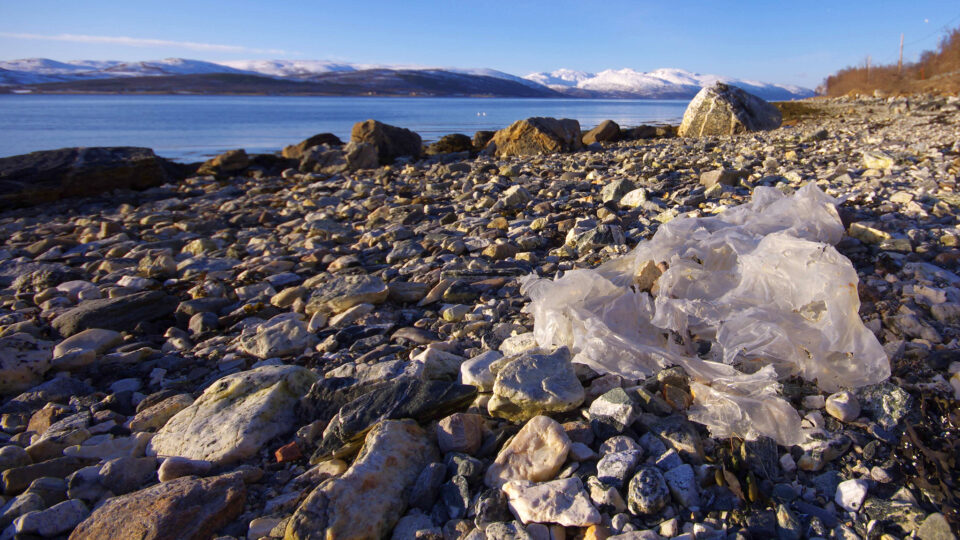
Ordinary plastics are not biodegradable, but they are also not indestructible.  Plastics in the environment can break down into tiny fragments – microplastics – and those, unfortunately, are nearly indestructible.  Microplastics have been documented in the oceans and in soil virtually everywhere on Earth including remote frozen wastelands and on top of high mountains.  More recently, they have been found in our own arteries, lungs, and even in placentas.  Microplastic pollution is a very serious problem.

There is considerable ongoing effort to develop biodegradable plastics from non-petroleum sources.  There has been progress but it has not necessarily been aimed at creating bioplastics that do not create microplastic when they break down.

Researchers at the University of California San Diego have developed algae-based polymers that they have shown to degrade when composted.  Recently, in work published in the journal Nature Scientific Reports, they have shown that even fine microparticles of their bioplastic are digested by microbes when placed in a compost.  What remains are the starting plant materials from which the plastic was made.  Products made from this sort of plastic would not only be sustainable beyond their useful lifetime but would also not represent a potential danger to human life.

Creating this eco-friendly alternative to petroleum-based plastic is only the first step toward creating a viable replacement for existing plastics.  It is necessary to be able to use the new material on existing manufacturing equipment and for it to have the same mechanical and thermal properties as the materials it is replacing.  But the researchers are optimistic that this could be a potential solution to an increasingly serious problem.

**********

Web Links

Say Hello to Biodegradable Microplastics

Photo, posted January 17, 2018, courtesy of Bo Eide via Flickr.

Earth Wise is a production of WAMC Northeast Public Radio

Bio-based products on the rise

January 30, 2024 By EarthWise Leave a Comment

There is a growing global movement working towards replacing conventional synthetic products – ones that are toxic to make or use, difficult to recycle, and have large carbon footprints – with products made from plants, trees, or fungi that can be safely returned to the earth at the end of their useful life.  This so-called bioeconomy is in its infant stages, but there is increasing interest in turning successful research into manufactured products.

One example is nylon.  Nylon was created in the 1930s by DuPont.  It has been used and continues to be used in a wide range of products.  The problem with it is that it is made from petroleum, it doesn’t biodegrade, and producing it generates nitrous oxide, which is a problematic greenhouse gas.

A San Diego-based company called Genomatica has developed a plant-based nylon using biosynthesis, a process in which a genetically engineered microorganism ferments plant sugars to create a chemical intermediate that can be turned into the nylon-6 polymer, and then into textiles. 

The impetus for developing bio-based products includes the growing public disgust at the mounting environmental toll of plastic, not the least of which is that people and animals are increasingly ingesting it.  Coupled with this, there is a rapidly-growing torrent of funding, especially in the US and Europe, aimed at accelerating the transition away from products that are non-biodegradable, toxic, and that produce carbon emissions.   Last September saw the launch of the National Biotechnology and Biomanufacturing Initiative which will support research and development on such topics as the use of sustainable biomass and waste resources to make non-toxic, bio-based fuels, chemicals, and fertilizers.

**********

Web Links

From Lab to Market: Bio-Based Products Are Gaining Momentum

Photo, posted May 27, 2010, courtesy of André C via Flickr.

Earth Wise is a production of WAMC Northeast Public Radio

Sustainable New Year’s resolutions

December 29, 2023 By EarthWise Leave a Comment

Sustainable resolutions for the new year

Every year, millions of people around the world make resolutions to spark positive change in the new year.  Popular resolutions include improving health and fitness, traveling more, spending less, and so on. With 2024 just around the corner, here are six resolution ideas to reduce our climate impact: 

Shop More Sustainably.  Choose eco-friendly brands and products with minimal environmental impact, including locally-produced goods and reusable items whenever possible. 

Switch To Clean Energy.  Purchase green power, install renewable energy systems to generate electricity, or switch to renewable resources for home and water heating and cooling needs. 

Reduce Food Waste.  Food waste is a significant global issue with environmental, economic, and social implications.  In the U.S., an estimated 30-40% of the total food supply is never eaten.  Meal plan and only shop for what you need.  And freeze any leftovers.   

Adopt A More Plant-Based Diet.  Transition to a more plant-based diet in order to shrink the ecological footprint of food production.  Resource-intensive animal-based foods like meat, dairy, and eggs are one of the chief contributors to climate change. 

Reduce the Carbon Footprint of Transportation.  Opt for eco-friendly transportation and energy-efficient practices in order to lower emissions.  Examples include driving a battery-electric car and utilizing public transportation. 

Get Involved In Conservation Advocacy.  Support and engage in environmental causes, and help promote conservation and sustainable practices. 

As we ring in the new year, let’s raise our glasses to a cleaner and greener 2024.

**********

Web Links

Photo, posted August 3, 2018, courtesy of Ella Olsson via Flickr.

Earth Wise is a production of WAMC Northeast Public Radio

Action on the toxic chemical from tires

December 13, 2023 By EarthWise Leave a Comment

Toxic chemicals from tire debris

Since the 1990s, populations of coho salmon in streams and urban creeks up and down the West Coast have been dying in large numbers.  Scientists at the University of Washington began studying the mysterious deaths and it took years to figure out what was going on.  They analyzed water samples from urban creeks and found that chemicals from vehicle tires were present.  By soaking tires in water, they found that more than 2,000 chemicals were present.  It took three years to narrow down the suspect list to one chemical:  a toxin called 6PPD-quinone, which is produced when the common tire preservative 6PPD mixes with oxygen.  It is that chemical that was responsible for the salmon die-off.

6PPD-quinone is toxic enough to quickly kill some fish.  Studies showed that concentrations of the chemical in stormwater were found to be lethal for coho salmon following exposures lasting only a few hours.

Despite the discovery, the tire industry has continued to use the chemical in its products.  The industry says 6PPD is an antioxidant and antiozonant that helps prevent degradation and cracking of tires in the environment and is essential for the performance and safety of vehicles.

Last year, California regulators directed the tire industry to seek out substitutes for 6PPD.  The U.S. Tire Manufacturers Association pledged to investigate possible safer alternatives to the chemical.

In November, spurred by a petition by West Coast tribes whose lifeways depend on coho salmon, the EPA said it will study the impact of 6PPD with an eye to potentially banning its use. 

**********

Web Links

After Salmon Deaths, EPA Takes Aim at Toxic Chemical Issuing from Car Tires

Photo, posted May 31, 2021, courtesy of Chris Yarzab via Flickr.

Earth Wise is a production of WAMC Northeast Public Radio

Tracking down PFAS toxins

December 5, 2023 By EarthWise Leave a Comment

PFAS – per- and polyfluoralkyl substances – are a group of organic compounds that have been extensively used to provide water-, oil-, and dirt-resistance to a wide range of products ranging from non-stick pans, clothing, and packaging to paint, car polish, and fire-suppressant foam.  Exposure to specific PFAS compounds is associated with multiple adverse health effects, including altered immune and thyroid function, liver disease, kidney disease, poor reproductive and developmental outcomes, and cancer.  PFAS compounds do not break down in the environment and therefore, over time, become concentrated in plants, animals, and people.

Government agencies such as the EPA in this country and the EU have set strict limits for allowable levels of PFAS in drinking water.  Testing water for the trace amounts of PFAS that constitute the limits is time-consuming and expensive and requires complex equipment and experienced personnel.

Researchers at MIT have now introduced a technique for making a portable, inexpensive test that can easily and selectively detect PFAS in water samples.  The test makes use of a special polymer containing fluorinated dye molecules that cause the polymer to fluoresce red.  If PFAS are present in the sample, they enter the polymer and displace the dye molecules and switches off the red fluorescence. 

The new technique is suitable for on-site detection in highly contaminated regions.  Detecting smaller concentrations can be achieved with sufficient precision after pre-concentrating the samples using the process of solid-phase extraction.

**********

Web Links

Tracking down Environmental Toxins

Photo, posted October 16, 2021, courtesy of Nenad Stojkovic via Flickr.

Earth Wise is a production of WAMC Northeast Public Radio
Moisture swing carbon capture

November 10, 2023 By EarthWise Leave a Comment

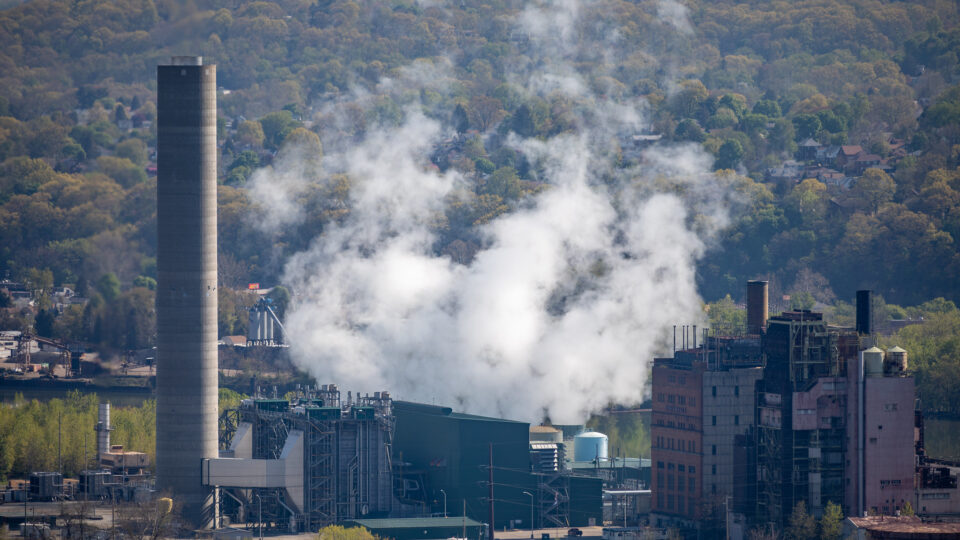
As the world grapples with limiting the amount of carbon dioxide in the atmosphere, there is a growing need to capture the carbon dioxide that is emitted as well as preventing it from being emitted in the first place.  Carbon capture can be accomplished at the source of emissions (such as power plants) or it can be done by taking it out of the atmosphere.  The latter is called “direct air capture”.

It is not at all clear whether direct air capture can be accomplished on a scale that would really make a difference and at an acceptable cost either in dollars or energy expended.  But if it can be done that way, it would be a major tool in combatting climate change.

Direct air capture technology generally makes use of sorbent materials whose capacity to capture carbon dioxide and later release it is a function of temperature.  The process requires significant amounts of energy to release the carbon dioxide that has been captured. 

New research from Northwestern University makes use of the “moisture-swing” technique which uses materials whose ability to capture and release carbon dioxide depends on humidity rather than temperature.  While it takes some amount of energy to humidify the volume of air containing the sorbent material, it is very small compared to temperature-driven systems. 

There are many groups working with moisture-swing technology, but the Northwestern Group has identified a number of new sorbent materials with superior properties.

The fundamental questions of scalability and cost remain, but moisture-swing is a promising approach to direct air capture.  If carbon dioxide can be pulled out of the atmosphere in large volumes, it can be concentrated and stored or converted into useful products.

*********

Web Links

Pulling carbon dioxide right out of the air

Photo, posted May 15, 2020, courtesy of James Watt via Flickr.

Earth Wise is a production of WAMC Northeast Public Radio

The right to not buy fossil fuels

November 6, 2023 By EarthWise Leave a Comment

Minnesota has been one of the most aggressive states in setting and realizing clean energy goals.  As of this year, Minnesota gets 55% of its energy from net zero carbon emission sources.  The state has goals of reaching 80% green energy by 2030, 90% by 2035, and 100% by 2040.  Recent legislation in Minnesota aims at further reducing carbon emissions and job creation in the clean energy sector.

All of this is very good news, but not for the neighboring state of North Dakota.  Minnesota getting all of its energy from clean energy sources means that it would no longer be a customer for the fossil fuel products of North Dakota.

North Dakota is known for its vast reserves of coal, oil, and natural gas and, apart from agriculture, the energy industry is the biggest moneymaker in the state.  Faced with the aggressive clean energy initiatives of its next-door neighbor, North Dakota has threatened to sue Minnesota. 

What would be the basis of such a lawsuit?  The argument would be that Minnesota’s clean energy goals would be in violation of interstate commerce laws and infringe upon North Dakota’s economic sovereignty.  The claim would be that the energy regulations in Minnesota unfairly discriminate against North Dakota’s energy products.

Minnesota, on the other hand, would defend its energy goals as a legitimate exercise of its own state sovereignty and a necessary response to the climate crisis.

The outcome of any legal battle that may take place will have far-reaching implications for Minnesota and North Dakota as well as for other states across the country that have clean energy initiatives.

**********

Web Links

North Dakota plans to sue Minnesota over its clean energy goals. What comes next?

Photo, posted June 8, 2019, courtesy of Tony Webster via Flickr.

Earth Wise is a production of WAMC Northeast Public Radio

Paper Cups Are Not So Great | Earth Wise

October 4, 2023 By EarthWise Leave a Comment

Paper cups are not as innocent as they seem

The environmental cost of plastic waste is a highly visible global issue.  The response has been a growing effort to replace plastic items with alternative materials.  One very visible change of this sort has been the replacement of plastic cups with paper cups at coffee shops.  But a new study at the University of Gothenburg in Sweden has found that this solution has problems of its own.

Researchers studied the effects of disposable cups in the environment on the larvae of the butterfly mosquito.  They placed disposable cups made from different materials in wet sediment and water for a few days and observed how the chemicals leached from the cups affected the growth of the larvae.  It turned out that all of the different kinds of cups had negative effects.  The concern is not specifically about mosquito larvae; it is the fact that more environmentally friendly drinking cups are still potentially harmful to living things.

Paper is neither fat nor water resistant, so paper cups need to be treated with a surface coating.  The most common coating is polylactide, which is a type of bioplastic.  It is generally considered to be biodegradable, but the study shows that it can still be toxic.  Bioplastics still contain many different chemicals and the potential toxicity of each of them is not well known.

The UN is trying to develop a binding agreement by the world’s countries to end the spread of plastics in society and nature.  For such an agreement to be effective, the plastics industry will need to clearly report what chemicals all products contain, including such mostly invisible products as the coating on paper drinking cups.

**********

Web Links

Paper cups are just as toxic as plastic cups

Photo, posted October 23, 2016, courtesy of Flickr.

Earth Wise is a production of WAMC Northeast Public Radio

A Cheap Material For Carbon Capture | Earth Wise

September 12, 2022 By EarthWise Leave a Comment

The recently passed Inflation Reduction Act includes significant support for carbon capture technologies. Eliminating fossil fuel burning is essential for halting climate change, but in the interim, methods for capturing emissions of carbon dioxide and either storing it or turning it into usable products are increasingly necessary.

There are a variety of techniques being developed for carbon capture but at this point, none of them are commercially viable.  The best technique in use today involves piping flue gases through chemicals called liquid amines, which bind CO2.  The process requires large amounts of energy to release the bound carbon dioxide so it can be concentrated and stored.  As a result, it is complicated and expensive.

Researchers at UC Berkeley, Stanford, and Texas A&M University have developed a carbon capture method using melamine, which is an inexpensive polymer used to make Formica, as well as low-cost dinnerware, industrial coatings, and other plastics.  Porous melamine itself adsorbs CO2 to a limited extent.  But the researchers discovered that adsorption could be much improved by adding the chemical DETA (diethylenetriamine) to bind the CO2.  In addition, adding cyanuric acid increased the melamine pore size and radically improved CO2 capture efficiency even more.

The result is a material that is more efficient even than exotic carbon capture materials like metalorganic frameworks and is much cheaper and easier to make. The researchers aim to design equipment that can used in industrial facilities, attached to buildings and other structures, or even to the tailpipes of gas-powered vehicles.

**********

Web Links

A simple, cheap material for carbon capture, perhaps from tailpipes

Photo, posted June 10, 2006, courtesy of Flickr.

Earth Wise is a production of WAMC Northeast Public Radio.

Turning Pollution Into Cash | Earth Wise     

April 22, 2022 By EarthWise Leave a Comment

Developing ways to turn pollution into cash

Power plants and other industrial facilities are a major source of carbon emissions.  There are a variety of techniques under development to prevent those emissions by capturing them rather than releasing them into the atmosphere.  All of them add costs to the functioning of the facility.  A good way to offset those costs is to convert the emissions into useful products, ideally making it profitable to capture emissions.

Engineers at the University of Cincinnati have developed an electrochemical system that converts carbon dioxide into ethylene, which is a chemical used in a wide range of manufacturing.  Ethylene has sometimes been called “the world’s most important chemical”.  It is used in many kinds of plastics, textiles, and the rubber found in tires and insulation. It is also used in heavy industry such as steel and cement plants as well as in the oil and gas industry.

The Cincinnati process is a two-stage cascade reaction that converts carbon dioxide to carbon monoxide and then into ethylene.  It is based on the underlying principle of the plug-flow reactor that is used for variety of production applications.  The study, published in the journal Nature Catalysis, demonstrates that the process has high ethylene selectivity – meaning that it effectively isolates the desired compound – as well as high productivity – meaning that it makes a lot of it.  The system will take more time to become truly economical, but the researchers are continuing to make progress on that front with improved catalysts.

The researchers believe that this technique can reduce carbon emissions and make a profit doing it.  Power plants and other facilities emit a lot of carbon dioxide.  With this process, it may be possible to capture it and produce a valuable chemical.

**********

Web Links

Conversion process turns pollution into cash

Photo, posted February 27, 2018, courtesy of Cyprien Hauser via Flickr.

Earth Wise is a production of WAMC Northeast Public Radio.

  • Page 1
  • Page 2
  • Page 3
  • Go to Next Page »

Primary Sidebar

Recent Episodes

  • An uninsurable future
  • Clean energy and jobs
  • Insect declines in remote regions
  • Fossil fuel producing nations ignoring climate goals
  • Trouble for clownfishes

WAMC Northeast Public Radio

WAMC/Northeast Public Radio is a regional public radio network serving parts of seven northeastern states (more...)

Copyright © 2026 ·