• Skip to primary navigation
  • Skip to main content
  • Skip to primary sidebar

Earth Wise

A look at our changing environment.

  • Home
  • About Earth Wise
  • Where to Listen
  • All Articles
  • Show Search
Hide Search
You are here: Home / Archives for plantations

plantations

Better wood for storing carbon

August 29, 2024 By EarthWise Leave a Comment

A better wood for storing carbon

Scientists have discovered a new type of wood that is highly efficient at storing carbon.  A comprehensive survey of the microscopic structure of the wood from many species of trees revealed that there is a type of wood that is neither softwood, such as pine and conifers, or hardwood, such as oak, ash, and birch.

The scientists from Cambridge University and Jagiellonian University in Poland analyzed some of the world’s most iconic trees using electron microscopy to survey their microscopic structure.

They found that tulip trees, which are related to magnolias and can grow over 100 feet tall, have a unique type of wood.  The trees, which diverged from magnolias far back to a time when atmospheric CO2 concentrations were low, grow very tall and very quickly.  These features were an adaptation to those conditions and result in the ability to store larger concentrations of carbon to compensate based on their microstructure.  The elementary units of wood are known as macrofibrils, and tulip trees have much larger macrofibrils than hardwoods but smaller than those of softwoods.  This unusual intermediate structure makes the trees highly effective at carbon storage.

Based on the research, it may be the case that tulip trees will end up being useful for carbon capture plantations – tree plantings specifically for the purpose of mitigating the effects of climate change.  Some east Asian countries are already using various tulip tree species in plantations for locking in carbon.  This was based on their large size and rapid growth, but it turns out that their novel wood structure may be the most compelling reason to use them.

**********

Web Links

Scientists discover entirely new wood type that could be highly efficient at carbon storage

Photo, posted March 3, 2021, courtesy of Thomas Quine via Flickr.

Earth Wise is a production of WAMC Northeast Public Radio
Cutting Deforestation | Earth Wise

August 10, 2023 By EarthWise Leave a Comment

Reducing deforestation

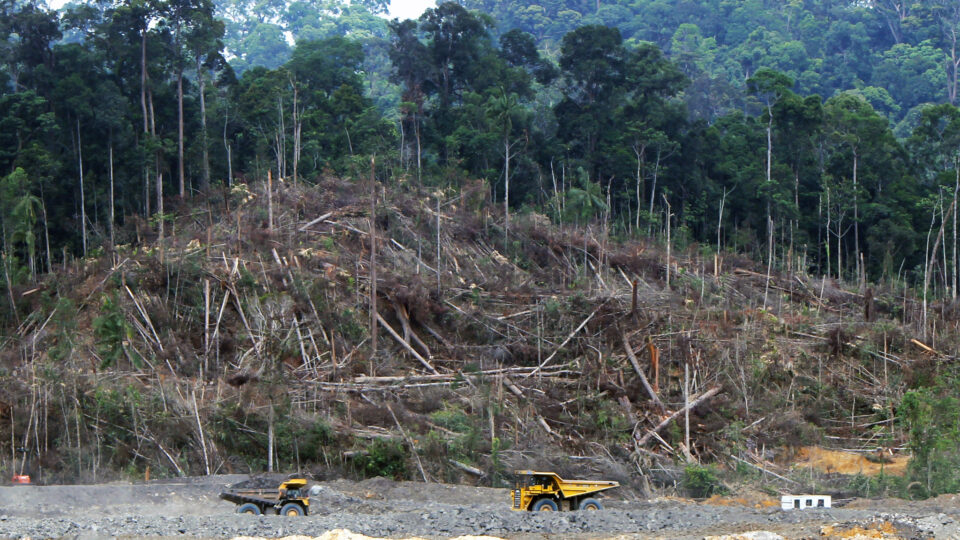
Deforestation is a major contributor to climate change because the destruction of tropical rainforests worldwide eliminates a crucial natural sink for carbon.  Between 2015 and 2020, roughly 39,000 square miles of forest were cut down, an area about 70% the size of the entire state of New York.  In many places, such as the Amazon and Congo Basins, deforestation continues to accelerate.  In Bolivia, deforestation rose 59% over the past five years; in Ghana, the rise was 71%.

A new report from the World Resources Institute revealed one bright spot in the deforestation story:  both Indonesia and Malaysia have cut deforestation by more than half in recent years.  The two countries have managed to keep rates of primary forest loss to near record-low levels.

Over the past five years, Indonesia saw a 64% decline and Malaysia a 57% decline in deforestation.  Indonesia is the second largest source of deforestation with only Brazil removing more trees.

Indonesia has a national goal of having its forests absorb more carbon than they release by 2030.  They have moved to curb logging and limit the clearing of land for palm oil plantations.  They have also ramped up efforts to suppress forest fires.

It is good that Indonesia and Malaysia and some other countries have shown progress in reducing forest loss.  However, too many other countries have seen continued activities and policies that are causing acceleration of deforestation in critical areas.  Protecting forests is an important part of the effort to mitigate the effects of climate change.  Preserving forests also is essential for protecting the people and the biodiversity that depend on them.

**********

Web Links

Indonesia, Malaysia Have Cut Deforestation in Half in Last Half-Decade

Photo, posted March 22, 2021, courtesy EPJT Tours via of Flickr.

Earth Wise is a production of WAMC Northeast Public Radio
Timber Cities | Earth Wise

October 3, 2022 By EarthWise 2 Comments

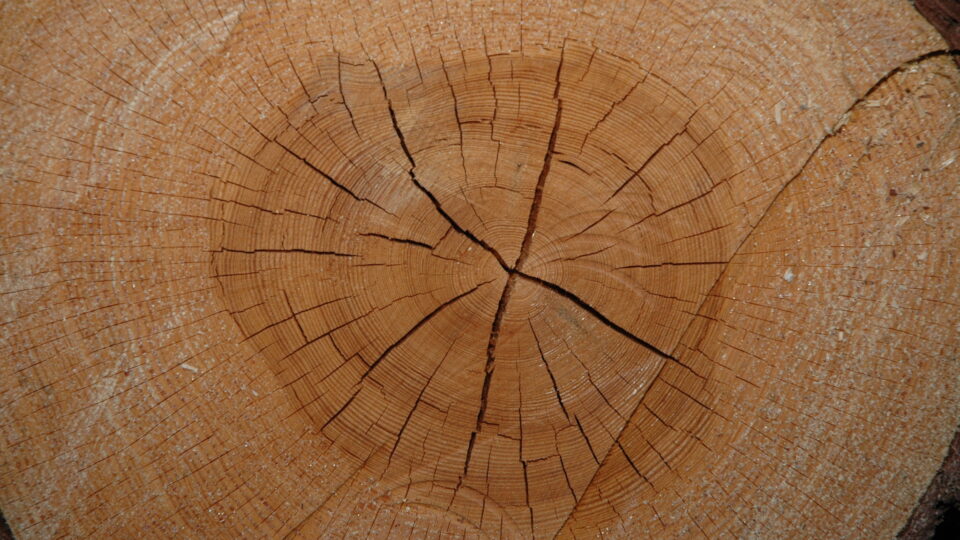
More than half of the world’s population lives in cities and by 2100, this percentage is predicted to be much higher.  This means that more homes will be built with steel and concrete, which both have very large carbon footprints.  According to a study by the Potsdam Institute in Germany, housing a growing population in homes made of wood instead could avoid more than 100 billion tons of carbon dioxide emissions over the remainder of the century.  This is about 10% of the remaining global carbon budget for staying below the 2-degree Celsius climate target.

The study presents the alternative of housing new urban populations in mid-rise buildings – no more than 4-12 stories high – that are substantially made of wood.  Wood is a renewable resource that carries the lowest carbon footprint of any comparable building material.  Trees take up CO2 from the atmosphere to grow.  Producing engineered wood releases far less CO2 than production of concrete and steel and the finished product continues to store carbon.

The study shows that sufficient wood for new mid-rise urban buildings can be produced without a major impact on food production.  The wood would come from timber plantations as well as natural forests.  The study also looked at biodiversity impacts and ways that ecosystems could be protected while still providing the necessary timber.

Overall, the Potsdam study demonstrates that urban homes made out of wood could play a vital role in climate change mitigation based on their long-term carbon storage potential coupled with the reduced utilization of the carbon-intensive concrete and steel industries.

**********

Web Links

Living in timber cities could avoid emissions – without using farmland for wood production

Photo, posted May 24, 2005, courtesy of Stig Anderson via Flickr.

Earth Wise is a production of WAMC Northeast Public Radio
A Palm Oil Replacement | Earth Wise

December 15, 2020 By EarthWise Leave a Comment

A possible replacement for palm oil

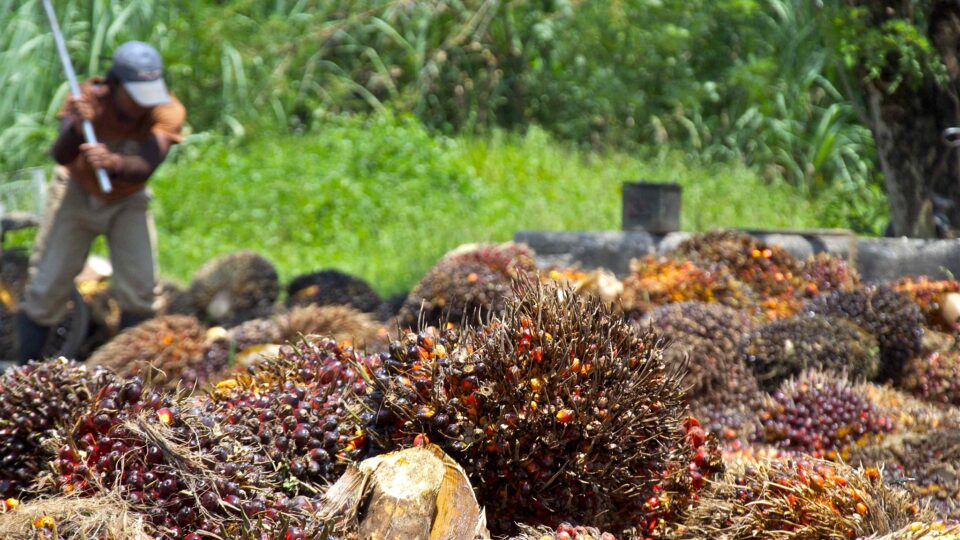
In the 1990s, cardiovascular health issues associated with partially hydrogenated oils containing harmful trans fats became a focus of great concern.  As a result, food companies looked for substitutes and the alternative they identified was palm oil.  Its ability to remain solid at room temperature made it well suited for many food applications.  Unfortunately, that property stems from its high saturated fat content, which means it also increases the risk of coronary heart disease.

The widespread use of palm oil has also caused significant environmental problems.  Palm oil plantations have replaced millions of acres of tropical forests, destroying the habitat for numerous species and threatening biodiversity.

Other potential replacements for partially hydrogenated oils such as coconut oil tend to be more costly, limited in supply, and also high in saturated fats.

Food scientists at the University of Guelph in Ontario, Canada, recently demonstrated the use of enzymatic glycerolysis (EG) to turn liquid vegetable oils into solid fats.  Their process is able to produce solid fats with the textural and structural properties desired by consumers.

The process is fairly simple, relatively easy to scale up, and is amenable to smaller food production or even local production.  Using it would enable food producers to use all sorts of readily available vegetable oils that can be produced in parts of the world that are not necessarily tropical regions.

Palm oil use is not going to go away, but this work may point a way to help slow down the destruction of ecosystems and animal habitats as well lead to more sustainable and healthy food sources.

*********

Web Links

U of G Food Scientists Find Palm Oil Alternative That’s Good for Human, Planet Health

Photo, posted February 21, 2010, courtesy of Craig Morey via Flickr.

Earth Wise is a production of WAMC Northeast Public Radio.

Land Use Change And Flooding | Earth Wise

September 30, 2020 By EarthWise Leave a Comment

Land use change leads to increased flooding

Land use change refers to the conversion of a piece of land’s use by humans from one purpose to another. Land use change is commonly associated with biodiversity loss and increased greenhouse gas emissions.  But how does land use change impact water cycles? 

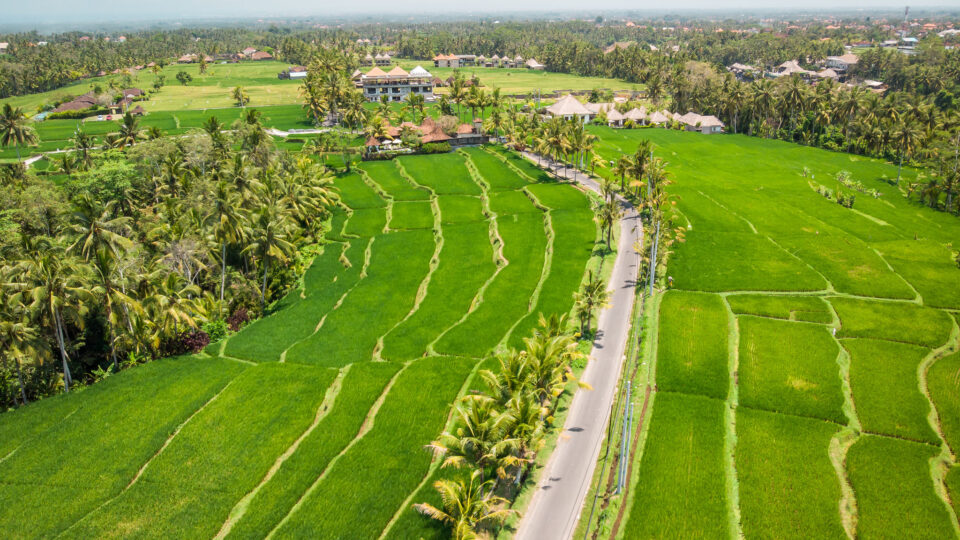
According to researchers from the University of Göttingen in Germany, IPB University, and BMKG (both in Indonesia), the expansion of monocultures, such as rubber and oil palm plantations, leads to more frequent and more severe flooding.  The researchers explain the increase in flooding “with a complex interplay of ecohydrological and social processes, including soil degradation in monocultures, the expansion of oil palm plantations into wetlands, and the construction of flood protection dams.” 

For the study, which was recently published in the journal Ecology & Society, the research team interviewed nearly 100 Indonesian farmers, villagers, and decision-makers in Sumatra.  The team supplemented its research with data on precipitation, river and groundwater levels, soil properties, and regional mapping. 

During large-scale land use change – like plantation expansions – newly-compacted soil causes rainwater to runoff as opposed to being absorbed.  As more plantations are established in floodplains, the owners try to control flooding on their land by building barriers.  But these dams often lead to increased flooding on neighboring lands.  This understandably triggers social tensions between other farmers and plantation owners.     

In order to reduce the negative impact of land use change on the water cycle, the research team suggests soil protection and improved planning – especially in floodplains – would be a good place to start.  

**********

Web Links

Land use change leads to increased flooding in Indonesia

Photo, posted October 8, 2018, courtesy of Artem Beliaikin via Flickr.

Earth Wise is a production of WAMC Northeast Public Radio.

Restoring Tropical Forests | Earth Wise

September 10, 2020 By EarthWise Leave a Comment

forest restoration

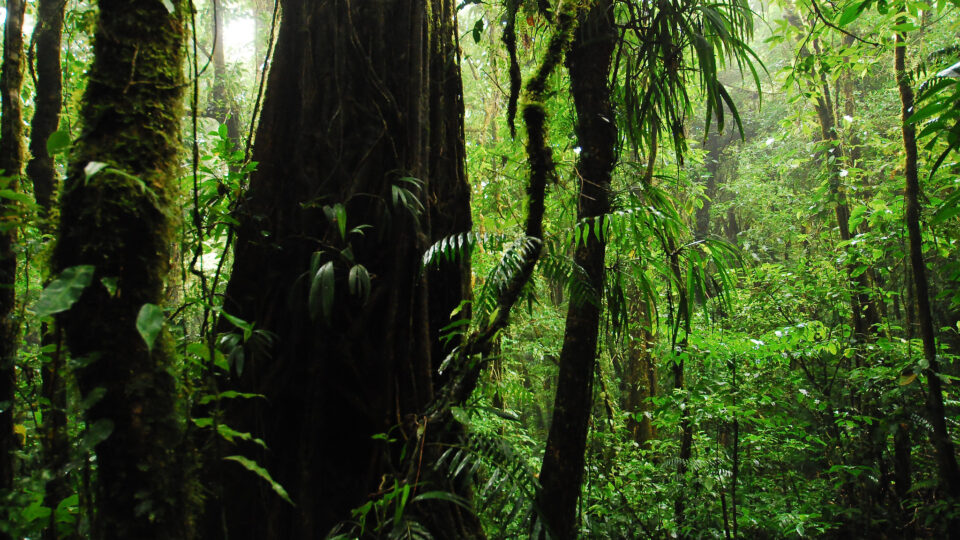
Tropical forests store more than half of the world’s above-ground carbon.  For this reason, deforestation is one of the greatest threats to global climate regulation.   Once forests are degraded through partial clearing and agricultural conversion, they are often perceived as no longer having much ecological value even though degraded forests still provide important ecosystem services despite no longer storing as much carbon.

As a result, once forests have been degraded, they tend to be seen as prime candidates for full conversion to agricultural plantations.   But this is not actually the case.

An international team of scientists, including researchers from Arizona State University’s Center for Global Discovery and Conservation Science, has provided the first long-term comparison of above-ground carbon recovery rates between naturally regenerating and actively restored forests in Southeast Asia.

First of all, the research shows that allowing forests to regenerate naturally results in significant amounts of restored above-ground carbon storage.  It is definitely worthwhile to allow forests to recover rather than giving up on them and putting the land to other uses.

But more importantly, the researchers found that forest areas that undergo active restoration recover their carbon-storing ability 50% faster than naturally recovering forests.

Restoration methods include planting native tree species and thinning vegetation around saplings to improve their chances of survival.   

These findings suggest that restoring tropical forests is a viable and highly scalable solution to regaining lost carbon stocks on land.  What is needed is sufficient incentive to engage in active forest restoration.  The current price of carbon is not sufficient to pay for restoration, but as the climate crisis intensifies, this is likely to change.

**********

Web Links

Tempe to Hawaii: ASU professors teach Hawaiian youth about coral reef conservation

Photo, posted May 22, 2008, courtesy of Eric Chan via Flickr.

Earth Wise is a production of WAMC Northeast Public Radio.

Tree-Planting Is Not Necessarily A Good Thing | Earth Wise

July 31, 2020 By EarthWise Leave a Comment

Tree planting is not always beneficial

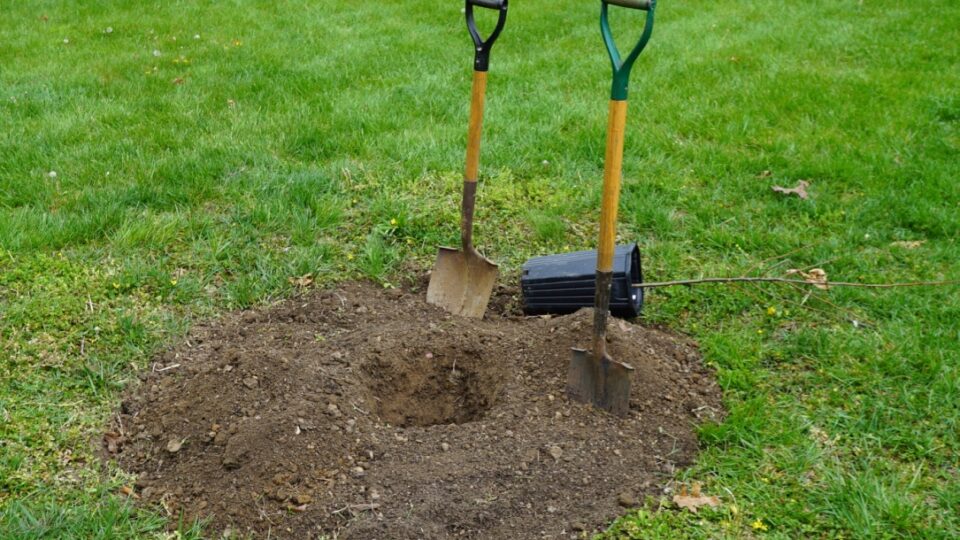
There is no question that forests have a major role in efforts to combat climate change as well as to slow biodiversity loss.   As a result, tree-planting on a massive scale has gained traction as a strategy and there have been major commitments made to plant billions of trees around the world.

A new study at Stanford University has rigorously analyzed the potential effects of these efforts and has found some significant problems.  For example, the Bonn Challenge, which seeks to restore an area of forest more than eight times the size of California over the next 10 years, has 80% of its commitments in the form of  planting monoculture tree plantations or a limited mix of trees that produce fruit and rubber, rather than restoring natural forests.   The problem is that plantations have significantly less potential for carbon sequestration, habitat creation, and erosion control than natural forests.  The potential benefits of the planting dwindle further if planted trees replace natural flora – forests, grasslands, or savannahs – which are ecosystems that have evolved to support local biodiversity.

The study looked at previous policies that created subsidies for planting trees.  Chile’s Decree Law, in effect from 1974 to 2012, has served as a model for similar policies in a number of countries.  Those subsidies further reduced native forest cover by encouraging the establishment of plantations in places where forests might have naturally regenerated.  The subsidies expanded the area covered by trees, but decreased the area of native forests.

The study recommends that nations should design and enforce their forest subsidy policies to avoid undesirable ecological impacts and actually promote the recovery of carbon- and biodiversity-rich ecosystems.

**********

Web Links

Poorly designed tree-planting campaigns could do more harm than good, according to Stanford researcher and others

Photo, posted April 28, 2016, courtesy of the U.S. Department of State via Flickr.

Earth Wise is a production of WAMC Northeast Public Radio.

Disappearing Rainforests | Earth Wise

July 2, 2020 By EarthWise Leave a Comment

rainforests continue to disappear

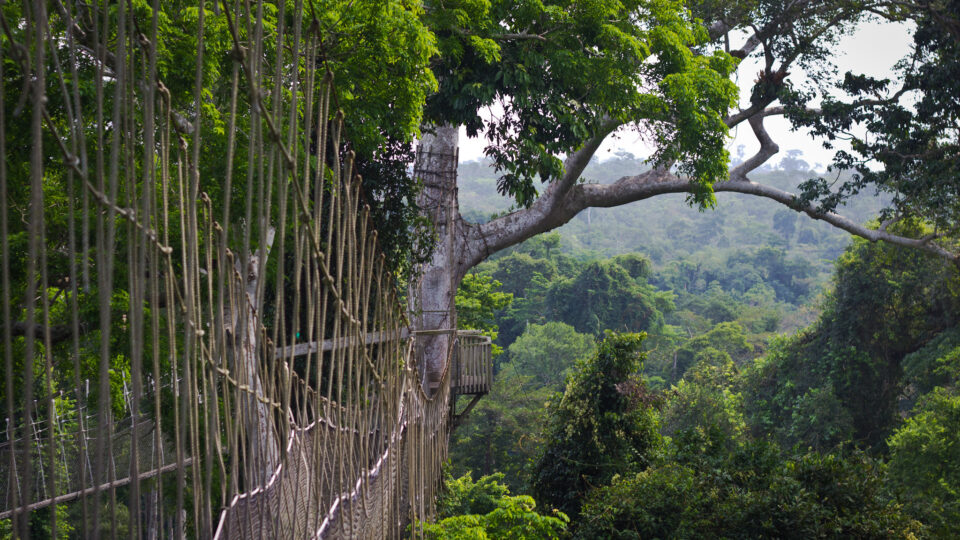
Forest loss is a major contributor to climate change, and it is continuing at a rapid pace.  The tropics lost about 30 million acres of tree cover in 2019, a third of which was within humid tropical primary forests, which are especially important for biodiversity and carbon storage.  To put that loss in a human-scale perspective, it is the equivalent of losing a football field of primary forest every six seconds for the entire year.

The losses last year were 2.8% higher than in the previous year, and these losses have continued over the past 20 years despite worldwide efforts to halt deforestation.  

Brazil single-handedly accounted for over a third of all global loss of humid tropical primary forests. Bolivia experienced record-breaking tree cover loss due to fires.  The losses in its forests were 80% greater than in any previous year.  The fires were often started by people who were trying to clear land for agriculture but had the fires go out of control. Several countries in Africa’s Congo Basin also experienced sustained or worsening forest loss. 

Indonesia, often the focus of the world’s attention for its deforestation activities, actually saw a 5% reduction in primary forest loss in 2019.  It was the third year in a row for lower losses.  The now-permanent moratorium on clearing forests for oil palm plantations and logging seems to be working.

Going forward, the coronavirus pandemic poses additional threats to the world’s forests in the near future.  There may be a tendency to sacrifice forests in pursuit of economic recovery, which will only lead to future complications for the health and livelihoods of millions of people around the world.

**********

Web Links

We Lost a Football Pitch of Primary Rainforest Every 6 Seconds in 2019

Photo, posted February 7, 2011, courtesy of Chad Skeers via Flickr.

Earth Wise is a production of WAMC Northeast Public Radio.

Unleash the power of Uniswap Exchange and elevate your crypto trading experience with its revolutionary decentralized exchange platform.

Deforestation-Free Palm Oil

July 10, 2018 By EarthWise Leave a Comment

https://earthwiseradio.org/wp-content/uploads/2018/07/EW-07-10-18-Deforestation-Free-Palm-Oil.mp3

Few of us cook with palm oil or have ever even seen the stuff.  Nevertheless, 50% of all packaged grocery items – everything from ice cream and pizza to detergents and cosmetics – include it as an ingredient.  The global market for palm oil was $65 billion in 2015, and that number was projected to grow by more than 7% each year through 2021.

[Read more…] about Deforestation-Free Palm Oil

Palm Oil Progress

July 21, 2017 By EarthWise

https://earthwiseradio.org/wp-content/uploads/2017/07/EW-07-21-17-Palm-Oil-Progress.mp3

According to the Roundtable on Sustainable Palm Oil or RSPO, almost 12 million tons, or 21% of the global supply of palm oil, is now certified as responsible and sustainable.  The massive expansion of palm oil plantations has been one of the primary causes of global deforestation.  This has been especially the case in Borneo, where 85% of global palm oil production takes place.

[Read more…] about Palm Oil Progress

Saving Borneo’s Forest

July 3, 2017 By EarthWise

https://earthwiseradio.org/wp-content/uploads/2017/07/EW-07-03-17-Saving-Borneos-Forest.mp3

Borneo is the third-largest island in the world, home to part of Indonesia, part of Malaysia, and the small sultanate of Brunei.   It is also home to the oldest forest on earth – 130 million years old – which is more than twice as old as the Amazon rain forest.

[Read more…] about Saving Borneo’s Forest

Primary Sidebar

Recent Episodes

  • An uninsurable future
  • Clean energy and jobs
  • Insect declines in remote regions
  • Fossil fuel producing nations ignoring climate goals
  • Trouble for clownfishes

WAMC Northeast Public Radio

WAMC/Northeast Public Radio is a regional public radio network serving parts of seven northeastern states (more...)

Copyright © 2026 ·