• Skip to primary navigation
  • Skip to main content
  • Skip to primary sidebar

Earth Wise

A look at our changing environment.

  • Home
  • About Earth Wise
  • Where to Listen
  • All Articles
  • Show Search
Hide Search
You are here: Home / Archives for pacific northwest

pacific northwest

Wildfires and carbon storage

August 14, 2024 By EarthWise Leave a Comment

Wildfires impacting carbon storage potential

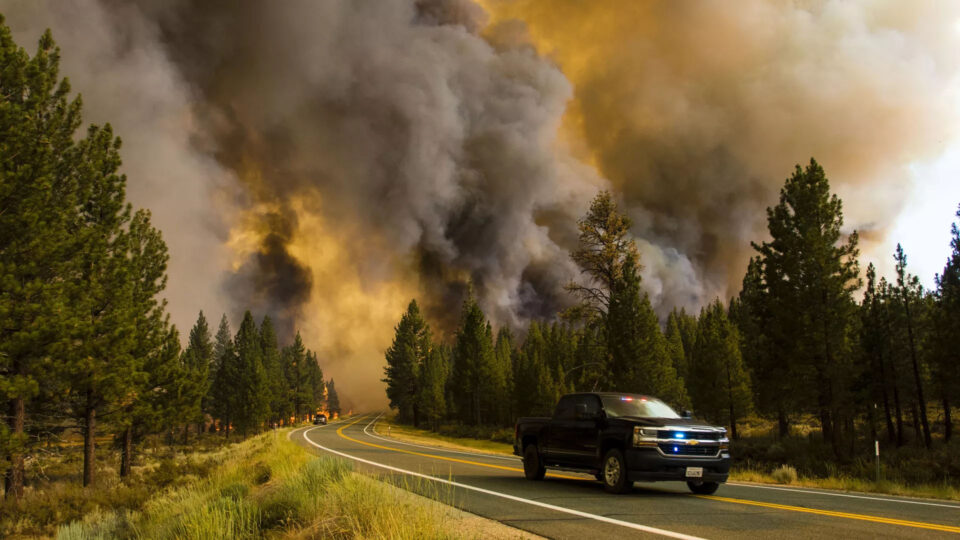
Forests are known to be a key natural solution to the increasing amounts of carbon dioxide in the atmosphere.  For this reason, there are widespread efforts to plant more trees around the world and to prevent increasing deforestation for development and agriculture.  But a new study has highlighted the fact that wildfires in the western US are degrading the potential for forests to help curb climate change.

The study has established a baseline for how much carbon is currently stored in Western forests, how that amount is changing, and how fires and droughts are affecting the ability of the forests to mitigate climate change.

The study made use of survey data collected by the US Forest Service to estimate how much carbon is stored in 19 ecoregions across the West.  These ecoregions range from hot and dry areas in the Southwest to the wet and cool regions of the Pacific Northwest.

The study reveals that the carbon stored in living trees declined across much of the Western US between 2005 and 2019.  Carbon stored in dead trees and woody debris increased.  These things do not provide long-term carbon storage.  Instead, they release it back into the atmosphere through decomposition or combustion in forest fires.

The increasing frequency and intensity of wildfires, especially since 2020, indicate that the decline in live carbon stored in the forests will become increasingly pronounced.  The result, according to the study’s authors, is that we cannot rely on increasing carbon storage in Western US forests.  It may be possible to increase the stability of carbon storage in the forests with mechanical thinning and prescribed burning, but the carbon carrying capacity of those forests is not likely to be what is needed.

**********

Web Links

Forest carbon storage has declined across much of the Western US, likely due to drought and fire

Photo, posted July 25, 2021, courtesy of Felton Davis via Flickr.

Earth Wise is a production of WAMC Northeast Public Radio
Good owls and bad owls

May 29, 2024 By EarthWise Leave a Comment

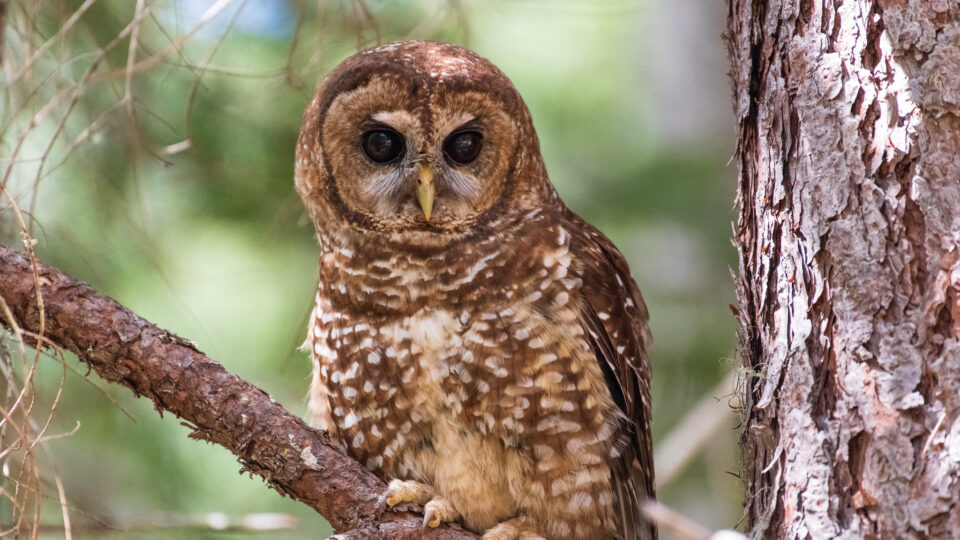
In the forests of the Pacific Northwest, spotted owls have been the subject of environmental concern for more than 30 years.  Over the past 20 years, northern spotted owl populations have declined by up to 80% as the birds have faced marginalized territories and increasing numbers of wildfires.  Only about 3,000 of them remain on federal lands.  Spotted owls are picky eaters and are not very adaptable.

The barred owl, a larger and more ornery species, has been moving in on spotted owl turf for 50 years, competing for food and space, and out-reproducing them and chasing them out of their nesting spots.

A last-ditch effort to rescue the northern spotted owl from possible extinction has been proposed by the U.S. Fish and Wildlife Service.  The plan would be to eradicate up to half a million barred owls over the next 30 years in Washington, Oregon, and Northern California.  The owls would be dispatched using cheap and efficient methods, such as shotguns.

The concept of killing off vast numbers of barred owls is awful, and nobody likes the idea.  However, other strategies have failed, and time is running out.  The only way to preserve the northern spotted owl is to protect and increase its habitat and have fewer barred owls.

To say that the proposed plan is controversial is a massive understatement.  A coalition of 75 wildlife and animal welfare organizations described it as a “colossally reckless action.”

A central issue in the debate is whether humans are responsible for this situation and should try to rectify it or, despite our desire to protect the spotted owl, we should just let nature take its course.

**********

Web Links

They Shoot Owls in California, Don’t They?

Photo, posted April 4, 2022, courtesy of Kyle Sullivan / BLM via Flickr.

Earth Wise is a production of WAMC Northeast Public Radio

A Hot July | Earth Wise

August 24, 2022 By EarthWise Leave a Comment

July was a hot month around the world

At the beginning of July, the National Oceanic and Atmospheric Administration’s monthly climate outlook predicted temperatures well above average across much of the United States.  The prediction was quite correct.  Beyond that, world-wide, there were multiple heat waves, especially in Europe and Asia, where there were thousands of heat-related deaths.  On July 19th, the United Kingdom had its hottest day ever reported with a temperature over 104 degrees.

In the U.S., a series of atmospheric high-pressure systems resulted in stagnant heat domes, which resulted in more than 150 million people living under heat warnings and advisories.  Nearly every part of the continental U.S. saw above-average temperatures.  There were record-breaking triple-digit highs in several states, sometimes persisting for days.

The south-central part of the country developed a ridge of high pressure that established a heat dome that acted like a lid, trapping hot air over that area.  The extreme heat persisted throughout the month, at times expanding to the Southwest, Upper Midwest, and Southeast.

In the second half of the month, the Great Plains experienced temperatures as high as 115 degrees.  Utah and Oklahoma both broke long-standing records for the most consecutive days on which temperatures exceeded 100 degrees.  Utah saw 16 straight days over 100.

In the Pacific Northwest temperatures reached 110 degrees in Dallasport, Washington, and 114 in Medford, Oregon.  In the Northeast, Newark, New Jersey saw a record-breaking five straight days over 100 degrees.

In Albany, New York, where the average daily high temperature is 82 degrees in July, there were 10 days in the 90s, with highs of 97 on three occasions.

July was a hot month indeed.

**********

Web Links

A July of Extremes

Photo, posted July 10, 2022, courtesy of Dominic Alves via Flickr.

Earth Wise is a production of WAMC Northeast Public Radio.

Alaskan Icemageddon | Earth Wise

January 25, 2022 By EarthWise 1 Comment

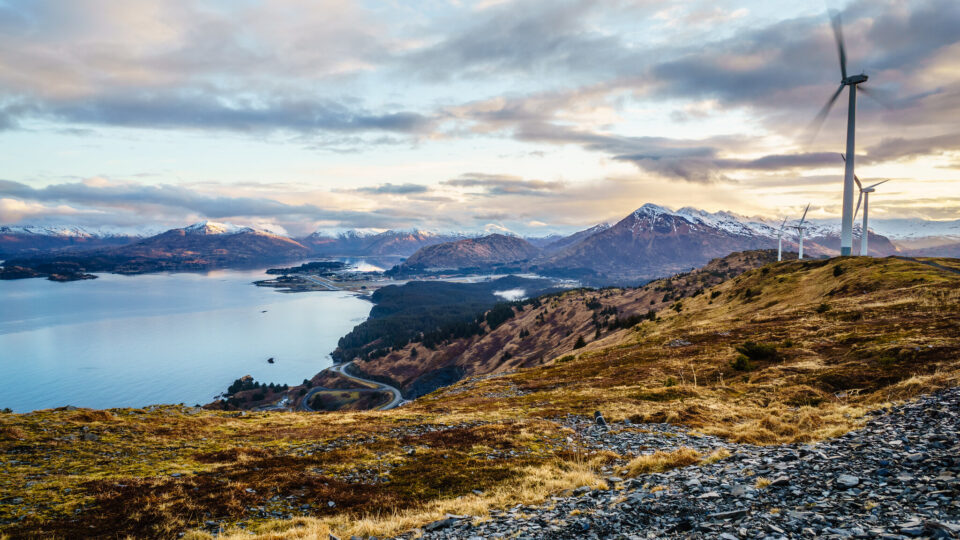
Wild weather in Alaska

December saw some wild weather in Alaska.  A combination of record high temperatures and torrential rainstorms resulted in the coining of the term “Icemageddon” to describe what was going on with the weather.

Kodiak Island in southern Alaska saw a high temperature of 67 degrees on December 26, which was warmer than it was in Southern California that same day.  This set an all-time record for the warmest December day in Alaska.  Such a high temperature is amazing considering how little sunlight Alaska gets at this time of year.  And with warmer air comes wetter air, as the atmosphere is capable of holding more water vapor as temperatures increase.

As a result, that same day saw the interior of the state get an inch of rain in just a few hours, something that hadn’t happened for decades.  But then, when temperatures plummeted again, all that rainwater froze.

Huge sheets of ice blocked roads and choked traffic in Fairbanks, Alaska’s second largest city.  Indeed, it was the state’s transportation department that came up with the term icemageddon to describe the situation.

The extreme warmth in December is related to the same weather pattern that brought cold, wintry weather to the Pacific Northwest and Northern California.  Those weather conditions resulted in hundreds of cancelled flights in Seattle, where temperatures dropped into the 20s, and in massive amounts of snowfall in the Sierra Nevada mountains in California.  A strong area of high pressure anchored in the Northern Pacific resulted in a clockwise flow around it drawing warmer, more tropical air from the Pacific up to Alaska.

Climate change continues to push the envelope on what sort of weather is possible all over the world.

**********

Web Links

Alaska faces ‘Icemageddon’ as temperatures swing wildly

Photo, posted April 30, 2015, courtesy of Naql via Flickr.

Earth Wise is a production of WAMC Northeast Public Radio.

Bomb Cyclones | Earth Wise

December 2, 2021 By EarthWise Leave a Comment

Extreme weather phenomena becoming increasingly common

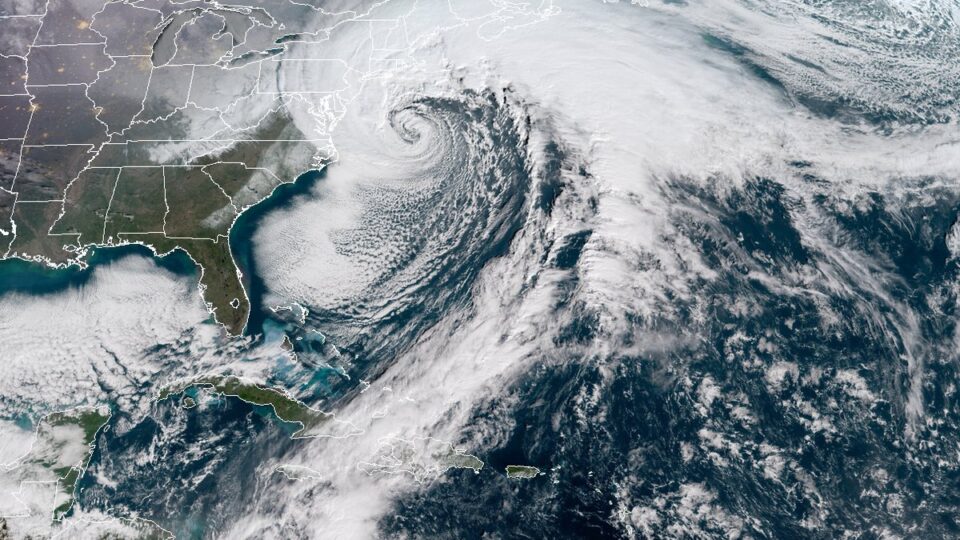
It seems like we are hearing about new weather phenomena pretty frequently these days.  One name that has popped up lately is “bomb cyclones.”  Bomb cyclones, it turns out, are storms that undergo “bombogenesis.”  What that means is a low-pressure area (in other words, a storm) that undergoes rapid strengthening and can be described as a weather bomb, or popularly, a bomb cyclone.

These things usually take place over remote tropical ocean areas but a really intense one struck the Pacific Northwest on October 24th.  The storm off the coast of Washington, with a barometric pressure reading equivalent to a category 4 hurricane, was the second extreme low-pressure storm in the North Pacific in a single week.  Both storms involved pressure drops of more than 24 millibars in 24 hours, making them bomb cyclones.

These storms brought high winds and extreme precipitation that doused wildfires and provided some relief to the extreme drought in Central and Northern California.  Along with these positive effects, however, the storms also caused power outages, flooding, landslides, and mud and debris that washed out roads.

The October 24-25 event brought 16.55 inches of rain to Mount Tamalpais in Marin County, California in a 48-hour period.  Sacramento got 5.44 inches of rain, breaking a 140-year-old record.  And the city had just broken another extreme weather record for the longest dry spell in history.

The storms directed streams of moisture from north of Hawaii toward the West Coast in long, narrow bands of moisture known as atmospheric rivers.  We are learning about all sorts of unfamiliar weather phenomena as extreme weather events become increasingly common.

**********

Web Links

Extratropical Cyclones Drench West Coast

Photo, posted January 4, 2018, courtesy of NOAA/CIRA via Flickr.

Earth Wise is a production of WAMC Northeast Public Radio.

The Pacific Northwest Heatwave | Earth Wise

August 18, 2021 By EarthWise Leave a Comment

Analyzing the Pacific Northwest Heatwave

The late-June heatwave in the Pacific Northwest shattered temperature records in dozens of locations.  Cities like Portland and Seattle saw historic high temperatures and one town in British Columbia saw temperatures hotter than ever recorded in Las Vegas.

An international team of weather and climate experts analyzed this extreme weather event and came to a preliminary conclusion that it was a 1-in-1000-year event in today’s climate.  “Today’s climate” means the already warmer conditions that the world is experiencing as a result of the changing climate.

If that analysis is accurate, then such an extreme temperature event would have been at least 150 times rarer in the era before global warming.  In other words, they concluded that it would have been a 1-in-150,000-year event, which means that it would have been virtually impossible in pre-industrial times.

Given that they estimated that the extreme temperatures were a 1-in-1000-year event at this point, it would follow that such events are not about to become commonplace any time soon.  On the face of it, that is somewhat comforting to hear.

However, all of this assumes that global warming will not radically change the statistical distribution of global temperatures.  If that assumption fails to hold, then all bets are off.  Perhaps temperatures like those experienced in the Pacific Northwest might be a 1-in-50-year event, for example, but we just don’t realize it yet.  Follow-up studies will be looking for evidence of significant changes in the distribution of weather events.  For now, a 1-in-1000-year event means there is only a 0.1% chance of occurring in a given year.  That’s good news for the residents of that region.

**********

Web Links

Preliminary analysis concludes Pacific Northwest heat wave was a 1,000-year event…hopefully

Photo, posted June 4, 2016, courtesy of Jody Claborn via Flickr.

Earth Wise is a production of WAMC Northeast Public Radio.

Record Heat Across the Globe | Earth Wise

August 4, 2021 By EarthWise Leave a Comment

Record high temperatures recorded across the globe

While the Pacific Northwest was setting new records for high temperatures in June, many other places across the globe also experienced unprecedented heat.  Places in Russia and Scandinavia, including locations above the Arctic Circle, set new records for temperature.

The heatwave in Europe was the result of a persistent northward bulge in the polar jet stream.  This blocking pattern in the jet stream has been prevalent over Scandinavia this year and has contributed to unusually warm conditions there.  Further east, similar conditions have created unusual warm temperatures in Siberia.

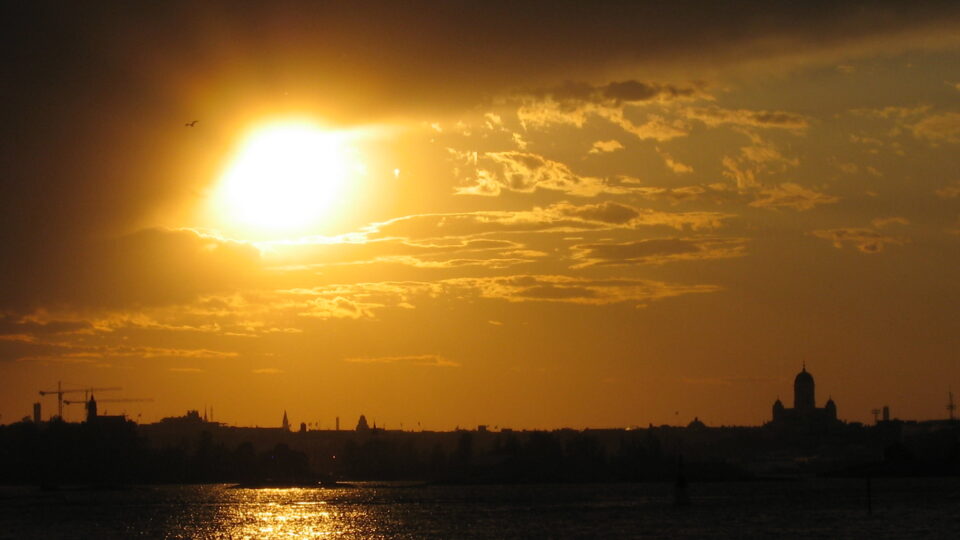
On June 23, Moscow reached a high of 94.6 degrees, the hottest June temperature on record.  Helsinki, Finland set a record at 89.1 degrees, and both Belarus at 96.3 degrees and Estonia at 94.3 degrees set new records.  The town of Saskylah, north of the Arctic Circle in Siberia, measured almost 90 degrees on June 20. 

High temperature records have been broken in many places.  The all-time record high for June for all of Mexico fell at Mexicali in Baja California on June 17 when the temperature reached 125 degrees.  Palm Springs, California, while known for its desert heat, nonetheless set a new all-time high temperature of 123 degrees and also set a new record for the warmest overnight low temperature for a June night anywhere in North America at an unbelievable 105 degrees.

Stories like this have become all-too common in recent years and are undoubtedly going to occur with greater frequency as the world’s climate continues to react to the growing buildup of greenhouse gases in the atmosphere.

**********

Web Links

A Scorcher in Siberia and Europe

Photo, posted June 8, 2007, courtesy of Niko Pettersen via Flickr.

Earth Wise is a production of WAMC Northeast Public Radio.

The Hottest June | Earth Wise

July 29, 2021 By EarthWise Leave a Comment

Climate change continues to fuel the heat records

A series of heatwaves from coast to coast caused June 2021 to be the hottest June on record in the U.S. The average June temperature across the contiguous U.S. was 72.6 degrees Fahrenheit, making it the hottest June in 127 years of record keeping and breaking the previous record set in 2016 by nearly a full degree. Eight states had their hottest June on record and six others marked their second hottest June.

One of the most extreme heatwaves in modern history impacted the Pacific Northwest of the U.S. and western Canada late in the month.  Temperature records were not merely broken in the region; they were smashed over an incredibly hot four-day period from June 26th through June 29th when all-time records over 100 degrees were set at dozens of locations.

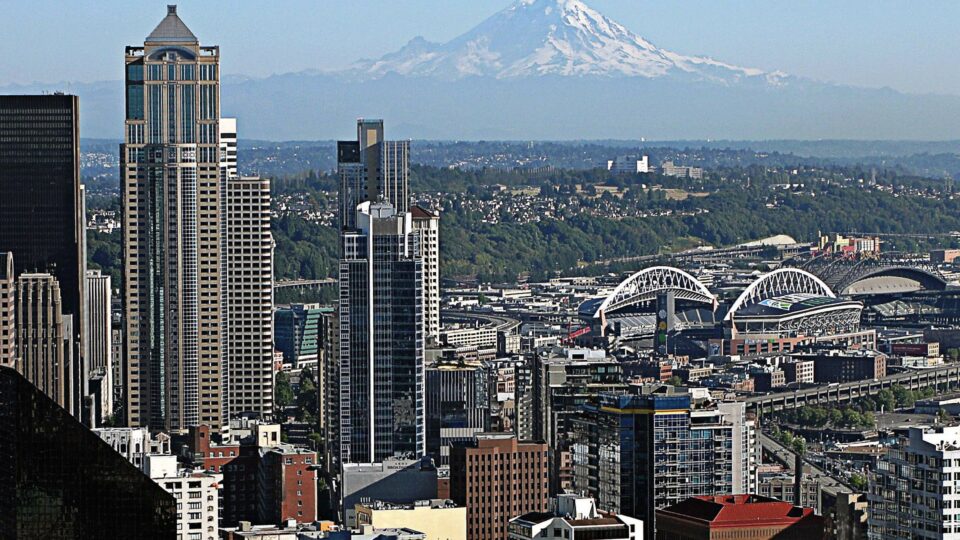
Portland, Oregon’s average high temperature over this period was 112 degrees, breaking the previous 3-day record by an amazing 6 degrees.  The high on June 28th was 116 degrees, an all-time record for the city.  Seattle set back-to-back all-time heat records of 104 on June 27th and then 108 on June 28th.  In the previous 126 years, Seattle had only hit 100 degrees three times.  It reached that mark 3 days in a row in June.

Crossing the border, the town of Lytton, British Columbia reached a temperature of 121 degrees on June 29th, the third day in a row in which the town registered a new all-time high temperature ever measured in Canada.  To put this in perspective, this temperature is hotter than has ever been recorded in Las Vegas.

June was a hot month indeed.

**********

Web Links

June 2021 was the hottest June on record for U.S.

Astounding heat obliterates all-time records across the Pacific Northwest and Western Canada in June 2021

Photo, posted July 7, 2021, courtesy of Poyson / GPA Photo Archive via Flickr.

Earth Wise is a production of WAMC Northeast Public Radio.

Climate Change And El Niño

December 2, 2019 By EarthWise Leave a Comment

The term El Niño refers to a large-scale ocean-atmosphere climate interaction linked to a periodic warming in sea surface temperature across the central and east-central equatorial Pacific Ocean.  Amazingly, the phenomenon was originally recognized by fishermen off the coast of South America in the 1600s, with the appearance of unusually warm water in the Pacific Ocean.

According to a new study published in the Proceedings of the National Academy of Sciences, climate change is increasing the frequency of extreme El Niño events, leading to intensifying droughts, worsening floods, and shifting hurricane patterns.

The study, led by scientists in China and the US, looked at data from 33 El Niños dating back to 1901.  Since the 1970s, El Niños have been forming farther to the west in the Pacific Ocean, where temperatures are warmer.  Strong El Niños can cause severe drought in dry climates such as Australia and India, intense flooding in wetter climates such as the US Pacific Northwest and Peru, and more hurricanes to form in the Pacific and fewer in the Atlantic.

Before 1978, 12 out of 14 El Niños formed east of the International Dateline.  Since 1978, all 11 have formed in the central or western Pacific Ocean a shift of hundreds of miles.  There have been three so-called super El Niños since the shift – in 1982, 1997, and 2015.  These have set new average temperature records and triggered catastrophic natural disasters.

With rising global temperatures, El Niños are likely to continue to intensify, with major impacts on human societies around the world.

**********

Web Links

Climate Change is Making El Niños More Intense, Study Finds

Photo, posted January 20, 2016, courtesy of Los Angeles District via Flickr.

Earth Wise is a production of WAMC Northeast Public Radio.

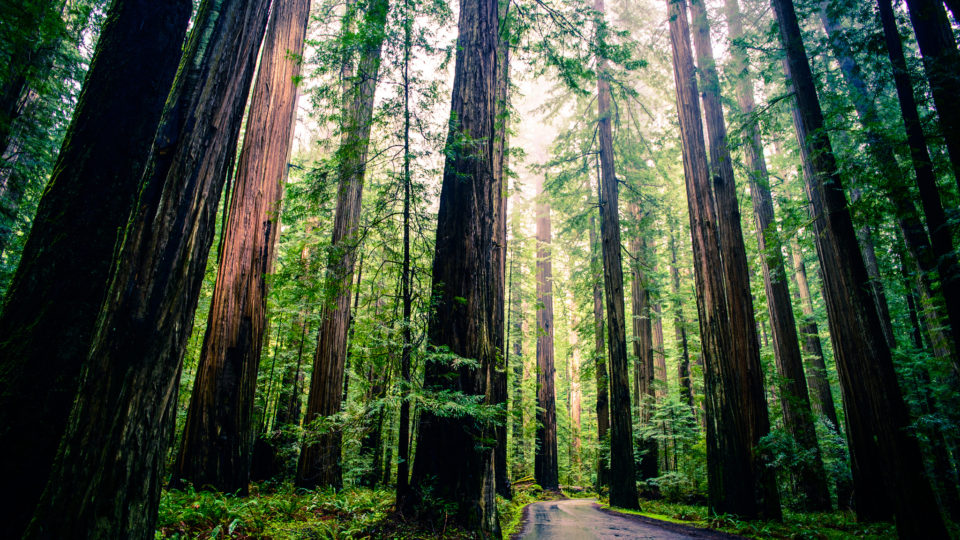
Cloning Ancient Redwoods

January 30, 2019 By EarthWise Leave a Comment

During the 19th and 20th centuries, many of the world’s largest and oldest tress were cut down for their lumber.   Some of these coast redwoods were 3,000 years old and measured 35 feet in diameter.

Today, giant stumps of these ancient redwoods dot the landscape from Oregon to northern California and are a remnant of the old-growth forest that once stretched across much of the Pacific Northwest.

An organization called the Archangel Ancient Tree Archive is dedicated to reestablishing ancient redwood forests to help combat climate change.  Coastal redwoods are not only huge but can grow an average of 10 feet a year.  One of these enormous trees can sequester 250 tons of carbon dioxide over its lifetime, more than 200 times the amount for an average tree.

While many experts thought that the giant stumps were lifeless, arborists at Archangel collected DNA from the stumps of five giant coast redwoods, all larger than the largest tree living today.  They then used this genetic material to grow dozens of saplings, which are clones of the ancient trees, in a process that takes about two-and-a-half years.

To date, the Archangel Ancient Tree Archive has planted nearly 100 of these saplings in the Eden Project garden in Cornwall, England, a couple of hundred in Oregon, and most recently, has planted 75 in the Presidio National Park in San Francisco.

According to arborists at the nonprofit organization, these saplings have extraordinary potential to purify our air, water, and soil for generations to come.  Their hopes are that the new San Francisco ‘super grove’ will be allowed to grow unmolested by manmade or natural disasters and thus propagate forever.

**********

Web Links

Arborists Have Cloned Ancient Redwoods From Their Massive Stumps

Photo, posted April 8, 2013, courtesy of Michael Balint via Flickr.

Earth Wise is a production of WAMC Northeast Public Radio.

Winter Outlook

November 8, 2017 By EarthWise Leave a Comment

https://earthwiseradio.org/wp-content/uploads/2017/10/EW-11-08-17-Winter-Outlook.mp3

Each year around this time, the National Oceanic and Atmospheric Administration, or NOAA, releases its U.S. Winter Outlook that predicts overall weather trends around the country for the upcoming winter.  They produce these seasonal outlooks to help communities prepare for the weather that is likely to be forthcoming.

[Read more…] about Winter Outlook

Primary Sidebar

Recent Episodes

  • An uninsurable future
  • Clean energy and jobs
  • Insect declines in remote regions
  • Fossil fuel producing nations ignoring climate goals
  • Trouble for clownfishes

WAMC Northeast Public Radio

WAMC/Northeast Public Radio is a regional public radio network serving parts of seven northeastern states (more...)

Copyright © 2026 ·