• Skip to primary navigation
  • Skip to main content
  • Skip to primary sidebar

Earth Wise

A look at our changing environment.

  • Home
  • About Earth Wise
  • Where to Listen
  • All Articles
  • Show Search
Hide Search
You are here: Home / Archives for organic carbon

organic carbon

Wildfires and water quality

August 11, 2025 By EarthWise Leave a Comment

Wildfires affect water quality long after the flames are out

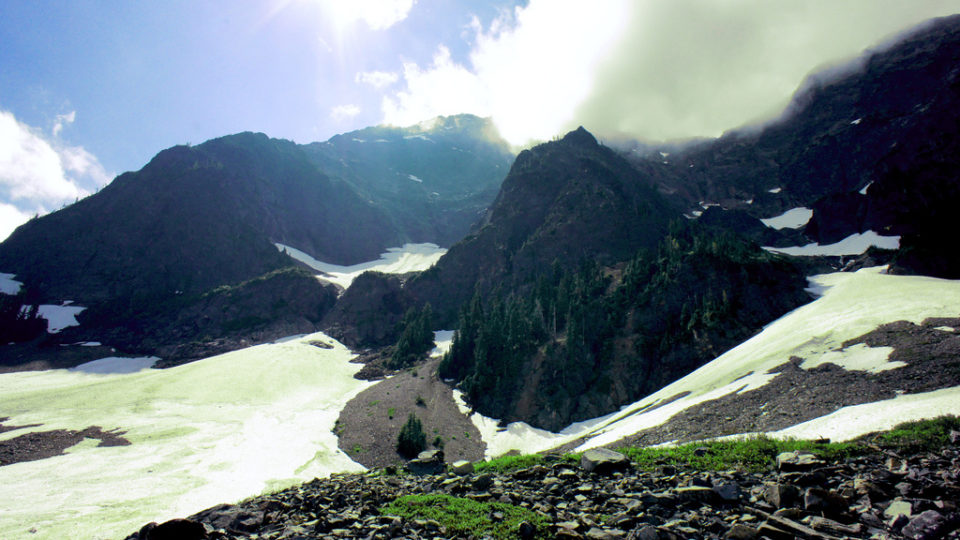
Hotter and drier conditions driven by climate change are leading to an increasing number of wildfires in North America and around the world. The damage wildfires cause – to forests, homes, and communities – is well-known. But long after the flames are gone, the effects can linger, especially in rivers and streams, where water quality may suffer for years.

A new study by scientists at the CIRES institute at the University of Colorado Boulder analyzed more than 100,000 water samples from more than 500 sites across the Western U.S. and found that wildfires can degrade water quality for up to eight years after a fire. The research, which was recently published in the journal Nature Communications Earth & Environment, found elevated levels of organic carbon, nitrogen, phosphorus, sediment, and turbidity – the cloudiness of water – in basins affected by fire.

This large-scale analysis reveals watersheds take longer to recover from wildfires than previously thought, with widespread, long-lasting impacts often going undetected for years.

Organic carbon, phosphorus, and turbidity remain elevated for one to five years after a fire. Nitrogen and sediment levels stay notably high for up to eight years. Fire-driven impacts are worse in more forested areas.

Each watershed in the study responded differently depending on local conditions.  In some places, sediment levels surged to as much as 2,000 times normal levels, while others remained relatively unchanged.

The research team hopes its findings can help guide future planning efforts to improve wildfire resilience.

**********

Web Links

Wildfires threaten water quality for years after they burn

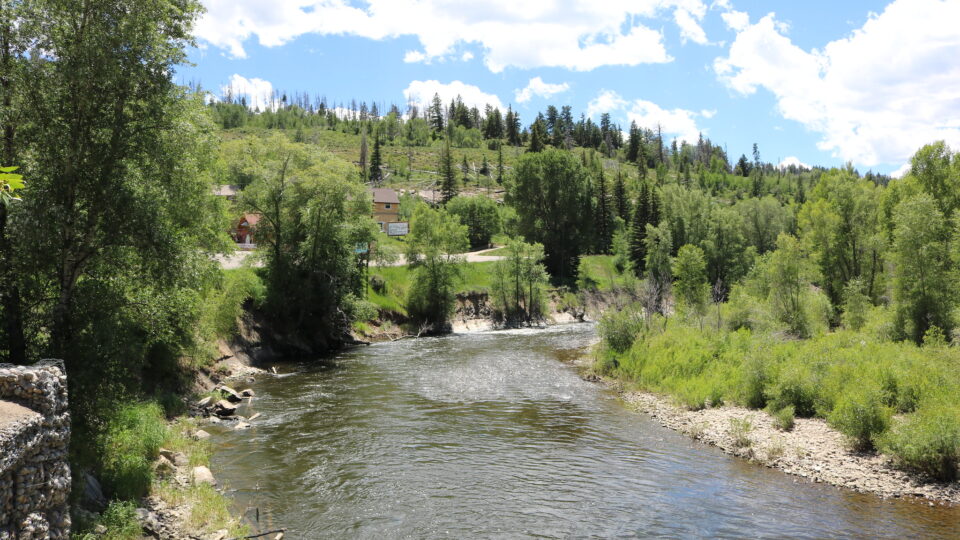
Photo, posted April 6, 2017, courtesy of Bonnie Moreland via Flickr.

Earth Wise is a production of WAMC Northeast Public Radio
Thawing permafrost:  Is it a ticking timebomb?

July 8, 2024 By EarthWise Leave a Comment

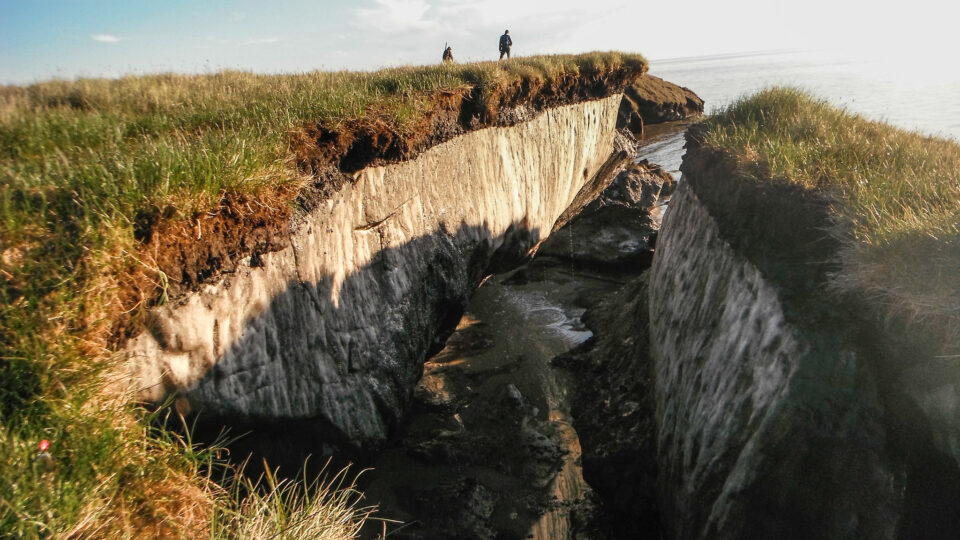
Permafrost covers about a quarter of the landmass in the Northern Hemisphere.  It stores vast quantities of organic carbon in the form of dead plant matter.  As long as it stays frozen, it is no threat to the climate.  But as it thaws, microorganisms start breaking down that plant matter and large amounts of carbon are released into the atmosphere in the form of carbon dioxide and methane.

This process has often been described as a ticking timebomb for the climate.  The theory is that once global warming reaches a certain level, the process will become self-amplifying setting off a catastrophic amount of warming.  If that level was reached, it would be a tipping point in the changing climate.

An international research team from the Alfred Wegener Institute in Germany has extensively researched this hypothesis.  Their conclusion is that within the permafrost, there are multiple geological, hydrological, and physical processes that are self-amplifying and, in some cases, irreversible.  However, these processes act only locally or regionally.  There is no evidence that some particular threshold in global warming could affect all permafrost and accelerate its thawing on a global level.

This research does not mean that Arctic permafrost is nothing to worry about.  In fact, there are ways in which it is more worrisome.  Because the permafrost is very heterogenous – meaning it is very different in different places – there will be numerous small, local tipping points that will be exceeded at different times and at different levels of warming.  All of this will proceed in step with global warming, contributing to the overall worsening situation.  There is no warming level below which permafrost thawing is not a problem.

**********

Web Links

Thawing permafrost: Not a climate tipping element, but nevertheless far-reaching impacts

Photo, posted January 24, 2014, courtesy of Brandt Meixell / USGS via Flickr.

Earth Wise is a production of WAMC Northeast Public Radio
Wildfires And Air Quality | Earth Wise

October 26, 2023 By EarthWise Leave a Comment

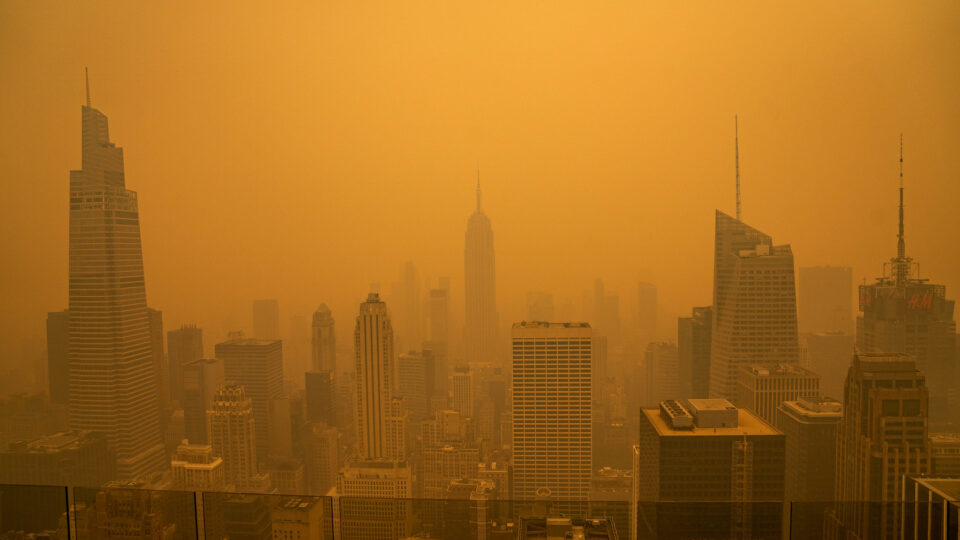
People in the Northeast have been dealing with unhealthy air quality in recent times because of smoke from hundreds of wildfires in Canada.  Canada has experienced a much higher than average incidence of blazes this year with nearly 500 fires burning uncontrolled at times.

It turns out that states far away from Canada aren’t necessarily free from the impact of the fires.  Early in October, smoke from a wildfire burning in Quebec made its way south all the way down to Florida and created unhealthy air quality and reduced visibility across much of the state.  Smoke from the same fire had created hazy air in Boston, New York City, and parts of Connecticut before heading south.

It took a rather unusual set of atmospheric conditions to make this happen.  The smoke drifted from Canada into the western Atlantic.  From there, it got trapped behind a cold front and was then pushed south along the east coast until it finally moved inland across Florida. 

Wildfires produce a variety of particles and gases from the burning of vegetation such as organic carbon, black carbon, nitrogen oxides, carbon monoxide and hazardous air pollutants.  The mixture of particles and gases in wildfire smoke is associated with respiratory symptoms like shortness of breath and reduced lung function, as well as dangerous cardiovascular effects.

Smoke from increasingly frequent and increasingly large fires has started to undo decades of gains in air quality brought about by air pollution policies.  According to researchers, wildfires in the United States in recent years have undone about 25% of past progress in cleaning up air pollution in states from coast to coast.

**********

Web Links

Wildfire Smoke From Canada Creates Unhealthy Air Quality in Florida

Photo, posted June 8, 2023, courtesy of Anthony Quintano via Flickr.

Earth Wise is a production of WAMC Northeast Public Radio
Rivers Changing Color | Earth Wise

February 10, 2021 By EarthWise Leave a Comment

Why do rivers change colors?

A recent study, published in Geophysical Research Letters, found that one-third of large American rivers have had significant changes of color over the past 30 years.  Rivers can appear to be shades of blue, green, and yellow and we tend to expect healthy rivers to have colors in shades of blue.  According to the new study, only 6% of American rivers are dominantly blue.

The study looked at 235,000 Landsat images taken from 1984 to 2018.  The results are that 56% of rivers studied were dominantly yellow, 38% dominantly green, and 6% blue.  Over the 34 years studied, 33% of the rivers had significant changes in color. About 21% became greener and 12% more yellow. 

The chief causes of color changes in rivers are farm fertilizer runoff, dams, efforts to fight soil erosion, and climate change.  Climate change increases water temperature and rain-related runoff.

Color changes are not necessarily a sign of poor river health, but dramatic changes could point to issues that need attention.  A river can change color based on the amount of sediment, algae, or dissolved organic carbon in the water.   If a river becomes greener, it can often mean large algae blooms are present that cause oxygen loss and can produce toxins.  On the other hand, rivers that are getting less yellow demonstrate the success of regulations to prevent soil erosion.

The study of river colors can pinpoint which rivers are undergoing rapid environmental change.  What the study does not provide is information on water quality.  Water quality measurements will be important to determine the health of many of the rapidly changing rivers.

**********

Web Links

One Third of U.S. Rivers Changed Their Color, Three Decades of Satellite Images Show

Photo, posted July 6, 2016, courtesy of Jeffrey Beall via Flickr.

Earth Wise is a production of WAMC Northeast Public Radio.

Defusing The Methane Time Bomb

March 26, 2019 By EarthWise Leave a Comment

Permafrost is defined as soil that remains frozen for two or more consecutive years.  It is generally composed of rock, soil, sediments, and varying amounts of ice that binds it all together.  The permafrost of the Arctic represents one of the largest reservoirs of organic carbon in the world.  It covers vast regions of Siberia, northern Canada, Alaska and Greenland.

When permafrost thaws, microbes in the previously-frozen soil go to work digesting organic materials and release carbon dioxide and methane, both of which are greenhouse gases.  Methane is 25 times more effective in trapping heat in the atmosphere than carbon dioxide, so it represents the greater threat.  The massive amounts of methane that could be released by thawing permafrost have been described as a ticking time bomb threatening the world’s climate.  Unfortunately, the permafrost in the Arctic is already starting to thaw as a result of climate change.

A new study by researchers at the International Institute for Applied Systems Analysis looked into the prospects for neutralizing the threat posed by the release of methane from thawing permafrost.  They analyzed the relative contributions of potential methane emissions from the permafrost and existing ones from human activities.  Human-caused methane emissions from fossil fuel activities, waste dumps, and livestock constitute a major source of the gas.  

Their conclusion is that if we can greatly reduce human-generated methane release, the effects of uncontrolled Arctic methane emissions could be mitigated.   It is unclear whether we can do much to stave off the Arctic methane release at this point, but the release of methane from human activities is something we can do something about.  But the clock is ticking.

**********

Web Links

Diffusing the methane bomb: We can still make a difference

Photo, posted August 14, 2011, courtesy of Flickr.

Earth Wise is a production of WAMC Northeast Public Radio.

Dams And The Environment

July 6, 2017 By EarthWise

https://earthwiseradio.org/wp-content/uploads/2017/07/EW-07-06-17-Dams-and-the-Environment.mp3

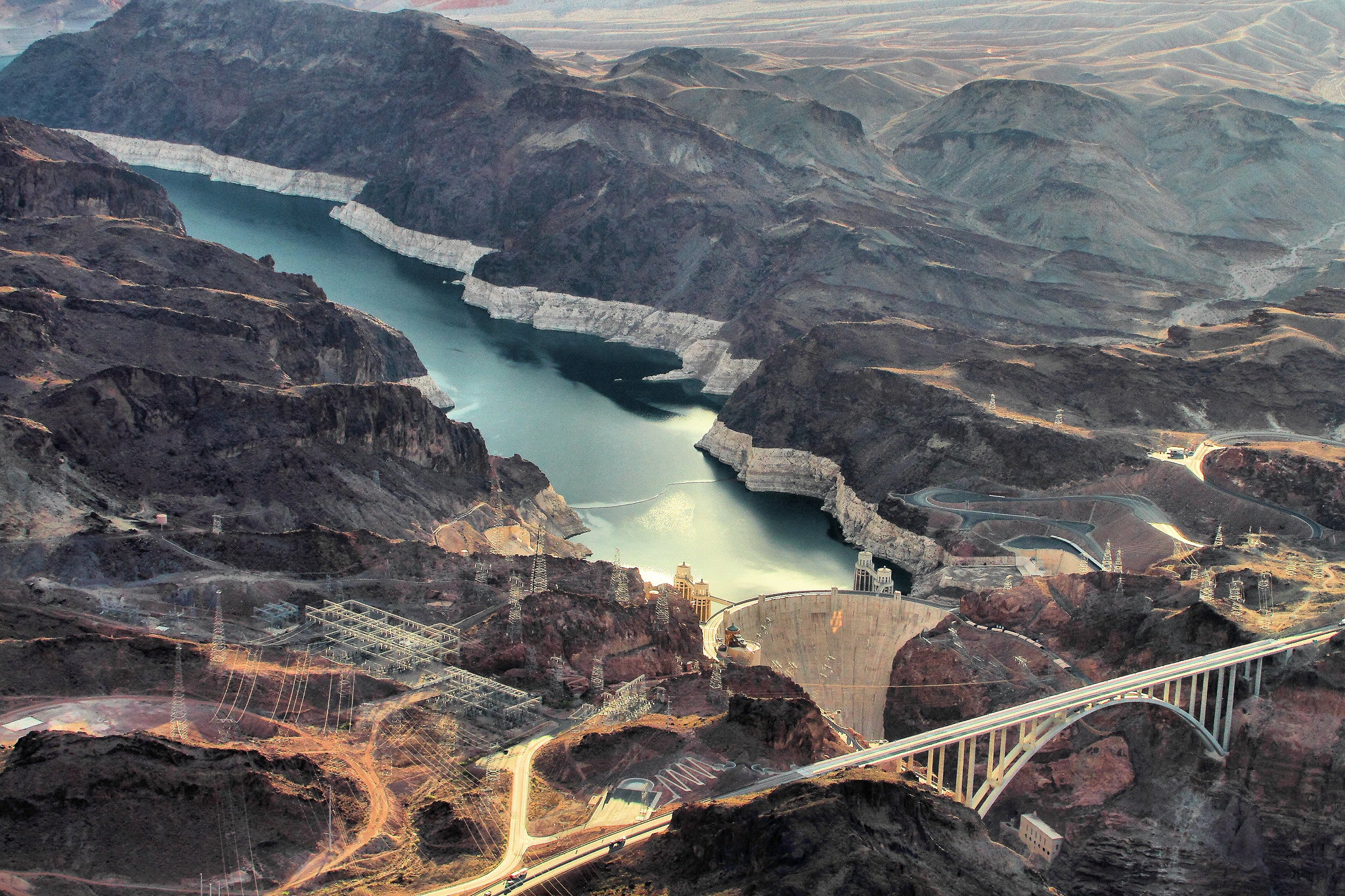
There are an estimated 84,000 dams in the United States which impound 600,000 miles of river, or about 17% of the rivers in the country.  Within the next 15 years, more than 90% of the world’s rivers will be fragmented by at least one dam.

[Read more…] about Dams And The Environment

Primary Sidebar

Recent Episodes

  • An uninsurable future
  • Clean energy and jobs
  • Insect declines in remote regions
  • Fossil fuel producing nations ignoring climate goals
  • Trouble for clownfishes

WAMC Northeast Public Radio

WAMC/Northeast Public Radio is a regional public radio network serving parts of seven northeastern states (more...)

Copyright © 2026 ·