• Skip to primary navigation
  • Skip to main content
  • Skip to primary sidebar

Earth Wise

A look at our changing environment.

  • Home
  • About Earth Wise
  • Where to Listen
  • All Articles
  • Show Search
Hide Search
You are here: Home / Archives for opportunities

opportunities

Sharks and rays in a warming world

March 5, 2025 By EarthWise Leave a Comment

Could sharks and rays thrive in a warming world?

Sharks and rays belong to a group of cartilaginous fish called elasmobranchs, which have been swimming in the world’s oceans for 450 million years. The resilient species have survived five mass extinction events, and are older than dinosaurs, trees, and Mount Everest. 

But despite their resilience, many species of sharks and rays today are threatened by human activities, including overfishing, habitat loss, and climate change.  In fact, according to a new study led by researchers from the University of Vienna in Austria, more than one third of the shark and ray species known today are severely under threat. 

The study, which was recently published in the journal Biology, found that higher carbon dioxide levels were having a negative effect on sharks and rays, ranging from impacts on the animals’ senses to changes in the skeleton during embryonic development.  An examination of fossil records found that higher CO2 levels had contributed to the extinction of individual shark and ray species in the past. 

But the study also found that global warming could be creating opportunities for sharks and rays.  Rising sea levels and higher temperatures have historically expanded shallow coastal habitats and warm waters, supporting species biodiversity.

But according to the research team, the rapid environmental changes, combined with the impacts from human activities, outpace the ability of sharks and rays to adapt, making it unlikely that they will benefit from global warming.

Protecting sharks and rays is crucial not only for their survival but also for maintaining entire ocean ecosystems. Without top predators, these ecosystems could collapse, impacting both marine life and the people and industries that depend on it.

**********

Web Links

Sharks and rays benefit from global warming – but not from CO2 in the Oceans

Myths About Sharks and Rays

Photo, posted November 27, 2007, courtesy of Laszlo Ilyes via Flickr.

Earth Wise is a production of WAMC Northeast Public Radio

Electric planes: Fantasy or reality?

December 1, 2023 By EarthWise Leave a Comment

Airplanes have been around for over a century, but the idea of powering them with electricity rather than with liquid fuels has been little more than a fantasy.  Over the years, billions of dollars have been invested trying to make electric planes practical.  In recent times, progress on battery technology has provided a much-needed boost for the field.

Electric planes are nowhere near becoming competitive with long distance commercial aircraft.  The weight and power requirements for such craft are far beyond what electric plane technology can do.  But electric planes could offer a very practical solution for transporting relatively small numbers of passengers over relatively short distances.

A plane built by the well-funded private company Beta Technologies has flown as far as 386 miles on a single battery charge.  The company envisions such planes to be mostly used for trips of 100 to 150 miles.  These planes could open new opportunities, like better connecting rural areas that have little or no direct air service.

Their latest model was tested on a trip between Burlington, Vermont and Florida, making multiple stops and flying through congested airspace over Boston, New York, and Washington.

Commercial versions of the planes will likely have lift rotors to take off and land like helicopters, making them deployable in a wide range of places.  Many companies are working on electric aviation, and they have backers like major automakers, major airlines, and large investment firms. 

Electric planes are not likely to replace conventional aircraft but are likely to have a meaningful impact how we move goods and services and reconnect rural parts of the country.

**********

Web Links

Electric Planes, Once a Fantasy, Start to Take to the Skies

Photo courtesy of Beta Technologies.

Earth Wise is a production of WAMC Northeast Public Radio
Peatlands And Greenhouse Gas Emissions | Earth Wise

July 21, 2021 By EarthWise Leave a Comment

Peatlands play a significant role in greenhouse gas emissions

As the world seeks to reduce the greenhouse gas emissions that have been warming the climate, most of the focus has been on the primary contributors to the problem, such as the burning of fossil fuels.  But there are many smaller contributors to greenhouse gas emissions that individually play only a minor role but collectively add up to significant amounts.  One of these is the emissions from peatlands.

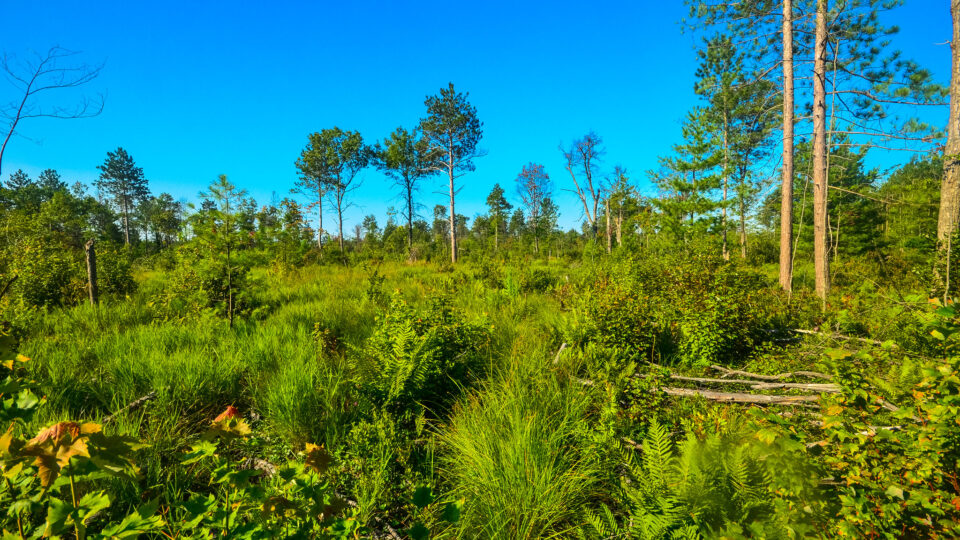
Peatlands are a type of wetland that occur in almost every country on Earth, covering 3% of the global land surface.  They are terrestrial ecosystems in which waterlogged conditions prevent plant material from fully decomposing.  As a result, the production of organic matter exceeds its decomposition, which results in a net accumulation of peat.  Peatlands are, in fact, the largest natural terrestrial carbon store, storing more over 700 billion tons of carbon, more than all other types of vegetation combined.

Human activity, such as creating drainage in peatlands for agriculture and forest plantation, results in the release of over 1.6 billion tons of CO2 into the atmosphere each year. This constitutes 3% of all global greenhouse gas emissions caused by human activities.

Large numbers of people rely on peatlands for their livelihoods, so it is not reasonable for these emission-generating activities to be greatly curtailed.  But researchers at the University of Leicester in the UK analyzed the potential effects of cutting the current drainage depths in croplands and grasslands on peat in half and showed that this could reduce CO2 emissions by more than 500 million tons a year. This equates to one percent of all greenhouse gas emissions caused by human activities.

There are numerous opportunities to reduce emissions a little bit at a time.

**********

Web Links

Better peatland management could cut half a billion tonnes of carbon

Photo, posted August 17, 2013, courtesy of Joshua Mayer via Flickr.

Earth Wise is a production of WAMC Northeast Public Radio.

The Value Of Abandoned Agricultural Lands | Earth Wise

February 18, 2020 By EarthWise Leave a Comment

Abandoned Agricultural Lands Could Help Save the Planet

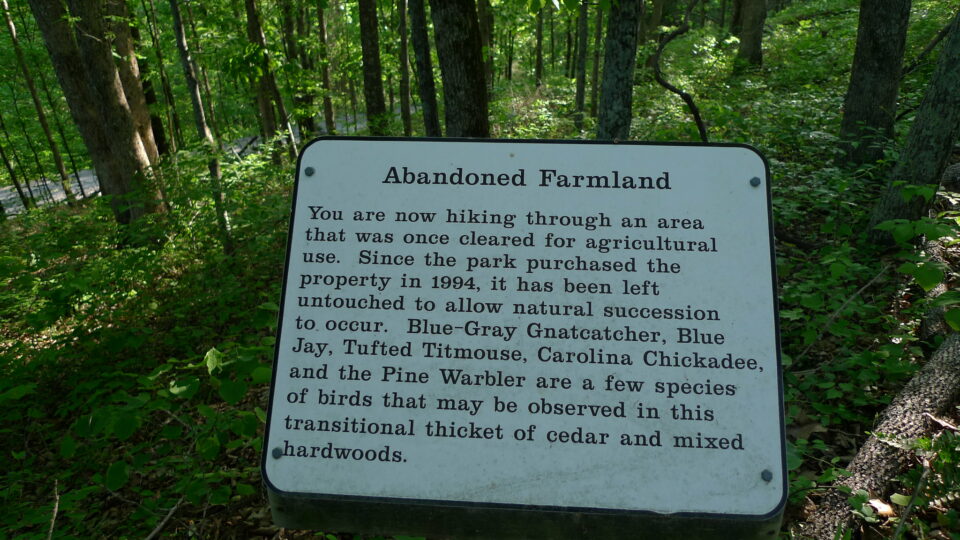
It is perhaps surprising to learn that more land is now being abandoned by farming than converted to it. In fact, abandonment of rural lands has become one of the most dramatic planet-wide changes of the modern era, affecting millions of square miles of land.

In part, it is due to rural flight driven by the economic, social, and educational appeal of cities.  It is also a result of climate change and the globalization of the food supply chain.  The global footprint of agriculture has been decreasing over the past twenty years but the global food supply isn’t shrinking.  The lost land has generally been marginal and farming elsewhere has become more productive.

Many researchers see abandoned agricultural lands as a huge opportunity for ecological restoration and strengthening of biodiversity.   Others see these lands as an opportunity for a massive program to plant trees to reduce carbon dioxide in the atmosphere.  A recent study published in Science estimated that planting trees on abandoned agricultural lands could remove 25% of the carbon dioxide humans have added to the atmosphere.

There are strong criticisms to all of these ideas.  In most cases, the studies don’t incorporate the social context of why these lands are in transition, the potential effects on local populations, whether the lands are publicly or privately owned, and whether lands now suitable for regeneration will remain so as climate change advances.

Current government initiatives on degraded lands typically lack even rudimentary planning.  There are real opportunities presented by the vast amounts of abandoned agricultural lands, but there are many caveats and many issues to confront.  As a society, we have barely begun to even think about what to do.

**********

Web Links

Could Abandoned Agricultural Lands Help Save the Planet?

Photo, posted May 9, 2010. courtesy of Flickr.

Earth Wise is a production of WAMC Northeast Public Radio.

Saving Beaches With Seagrass

February 22, 2019 By EarthWise Leave a Comment

Almost a quarter of the Gross Domestic Product of places around the Caribbean Sea is earned from tourism.  Preserving the beaches in the region is an economic imperative.  With increasing coastal development, the natural flow of water and sand is disrupted, natural ecosystems are damaged, and many tropical beaches simply disappear into the sea.

With such high stakes, expensive coastal engineering efforts such as repeated replenishing of sand and the construction of concrete protective walls are common strategies.  Rising sea levels and increasingly powerful storms only increase the threat to tropical beaches.

Researchers from The Netherlands and Mexico recently published a study in the journal BioScience on the effectiveness of seagrass in holding onto sand and sediment along shorelines.

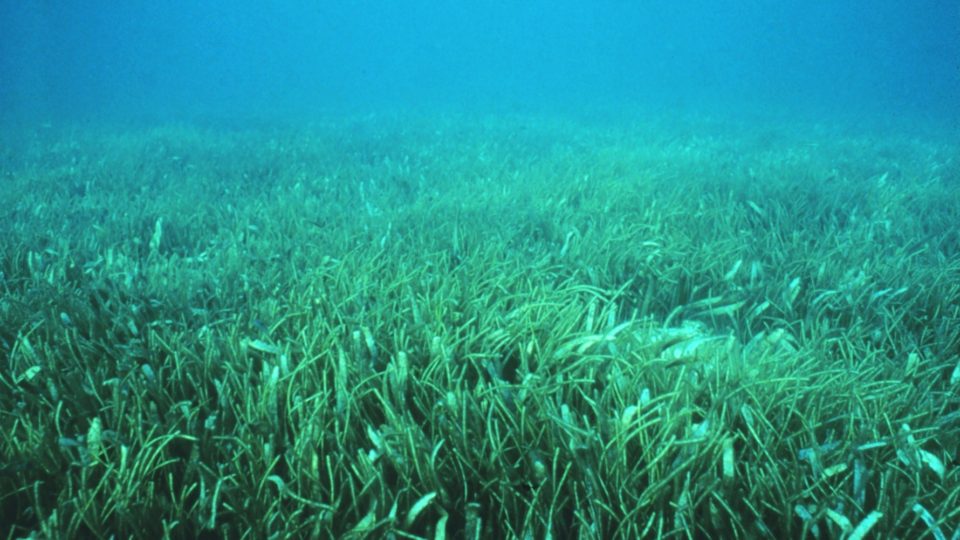
Seagrasses are so-named because most species have long green, grass-like leaves. They are often confused with seaweeds but are actually more closely related to flowering plants seen on land. Seagrasses have roots, stems and leaves, and produce flowers and seeds. Seagrasses can form dense underwater meadows and are one of the most productive ecosystems in the world. Seagrasses provide shelter and food to an incredibly diverse community of animals, from tiny invertebrates to large fish, crabs, turtles, marine mammals and birds.

The researchers performed measurements of the ability of seagrass along Mexico’s Yucatan Peninsula coastline to keep sand in place and prevent erosion.  They found that the amount of erosion was strongly linked to the amount of vegetation.  Quite often, seagrass beds have been regarded as a nuisance, rather than a valuable asset for preserving valuable coastlines.  The study opens opportunities for developing new tropical beach protection schemes in which ecology is integrated into engineering solutions.

**********

Web Links

Seagrass Saves Beaches and Money

Photo, posted October 13, 2010, courtesy of NOAA via Flickr.

Earth Wise is a production of WAMC Northeast Public Radio.

Primary Sidebar

Recent Episodes

  • An uninsurable future
  • Clean energy and jobs
  • Insect declines in remote regions
  • Fossil fuel producing nations ignoring climate goals
  • Trouble for clownfishes

WAMC Northeast Public Radio

WAMC/Northeast Public Radio is a regional public radio network serving parts of seven northeastern states (more...)

Copyright © 2026 ·