• Skip to primary navigation
  • Skip to main content
  • Skip to primary sidebar

Earth Wise

A look at our changing environment.

  • Home
  • About Earth Wise
  • Where to Listen
  • All Articles
  • Show Search
Hide Search
You are here: Home / Archives for north atlantic

north atlantic

How much nanoplastic is in the oceans?

August 1, 2025 By EarthWise Leave a Comment

There is a shocking amount of nanoplastics in the world's oceans

It is unfortunately well-known that microplastics are pretty much everywhere on Earth.  They are also increasingly found in living things like birds and dolphins as well as in human brains and placentas.  The oceans are polluted with plastic, and for the first time, there is now an estimate for the volume of nanoplastics – which are even smaller than microplastics and invisible to the human eye – found in the North Atlantic.

According to a study published in the journal Nature by the microplastics and nanoplastics research group at the Helmholtz Center for Environmental Research in Germany, there are at least 30 million tons of nanoplastics in the North Atlantic, which is more than the weight of all wild land mammals on Earth.

The same researchers have analyzed plastic in lakes, urban air, and even the air in very remote places, but the new study reveals a missing part of the plastics story.

Nanoplastics are microscopic fragments smaller than one micron, about the size of small bacteria.  There has been ongoing concern about nanoplastics in ocean water, but there wasn’t the technology available to really investigate it.  While nanoplastics were expected to be found in the ocean, the sheer amount of it was surprising.

The average concentration of nanoplastics near coastlines is about 25 milligrams per cubic meter of water, about the weight of a single large bird feather.   Nanoplastics are tiny enough that they can easily infiltrate the bodies of living creatures.  For fish and other ocean animals, that means constant exposure that builds up over time.

It is highly unlikely that plastic pollution is going to stop any time soon, but there is a United Nations meeting on the subject in August in Geneva.

**********

Web Links

Tons of Invisible Plastic Pieces Lurk in Ocean Water

Photo, posted June 24, 2020, courtesy of G.P. Schmal / NOAA via Flickr.

Earth Wise is a production of WAMC Northeast Public Radio
Saving Florida’s Corals | Earth Wise

September 6, 2023 By EarthWise Leave a Comment

Strategies to save Florida's corals

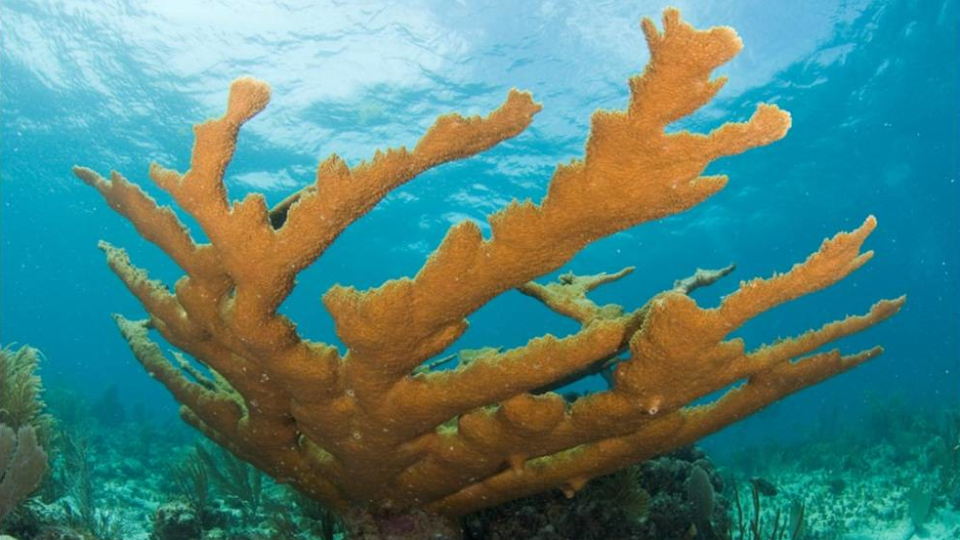
When corals are exposed to extended periods of excess heat, they are subject to bleaching, which occurs when they expel the algae that live within their structure.  Bleaching can lead to coral death.

This summer, temperatures in the Florida Keys crossed the bleaching threshold in mid-June and remained above it for extended periods of time.  This cumulative heat exposure leads to widespread bleaching and significant die-offs.  The last major mass bleaching event in the Florida Keys occurred in 2014 and 2015.

The Coral Restoration Foundation has been receiving reports ranging from partial bleaching to mass coral mortality throughout the keys.  Several coral restoration sites in the lower Keys have been totally lost already.

The National Oceanic and Atmospheric Administration and its state agency, university, and non-profit partners have initiated actions to try to save Florida’s corals.

They have halted all restoration-related planting and are evacuating some of their nursery-grown stock to climate-controlled labs.  They are considering interventions such as shading coral nurseries or even high-value reef sites.  They are also considering feeding nursery and wild corals until the waters cool off enough for algae to return.

Modeling indicates that there is a 70-100% chance that the extreme heat in the North Atlantic will persist through September-October.  NOAA and its partners will continue to do what they can to save Florida’s Coral Reef for the marine and human communities that depend on them.

**********

Web Links

NOAA and partners race to rescue remaining Florida corals from historic ocean heat wave

Photo, posted April 19, 2012, courtesy of U.S. Fish and Wildlife Service Southeast Region via Flickr.

Earth Wise is a production of WAMC Northeast Public Radio
Airplane Turbulence And Climate Change | Earth Wise

July 4, 2023 By EarthWise Leave a Comment

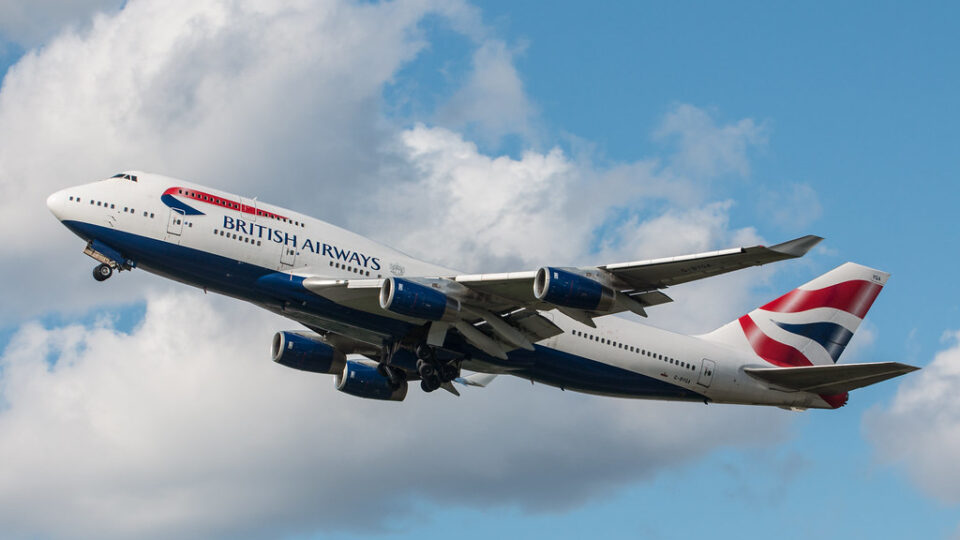
If you’ve ever been on an airplane, chances are pretty good that you’ve experienced turbulence.  As the busy summer travel season kicks off, travelers are being encouraged to brace themselves for a bumpier-than-usual ride. 

There has been a major increase in the number of severe turbulence cases on both domestic and international flights.  According to a new study by researchers from the University of Reading in the U.K., climate change is leading to this increase in turbulence, driving up costs (via wear and tear on aircrafts), and increasing the risks for passengers and flight attendants.  In the United States alone, turbulence costs the airline industry $150-$500 million annually. 

The study, which was recently published in the journal Geophysical Research Letters, found that warmer air, caused by carbon emissions, is creating bumpier flights around the world.  In fact, the study found that severe turbulence in the North Atlantic is up by 55% since 1979. 

The changing climate is affecting air travel in other ways as well.  A faster jet stream across the Atlantic is altering travel times.  Rising temperatures are reducing the weight that aircraft can carry.  Rising seas are threatening low-lying coastal airports around the world. 

But carbon emissions from aviation are also a significant driver of the climate crisis.  Air travel accounts for approximately 3% of global greenhouse gas emissions, and is one of the fastest growing sources of emissions. According to the International Civil Aviation Organization, emissions from international air travel are expected to triple by 2050.

The future is shaping up to be a bumpy ride.

**********

Web Links

Climate crisis leading to more turbulence during flights, says study

Evidence for Large Increases in Clear-Air Turbulence Over the Past Four Decades

Climate Scientist Explains Increase In Airplane Turbulence

Airports and Rising Seas

Photo, posted May 9, 2018, courtesy of Steve Lynes via Flickr.

Earth Wise is a production of WAMC Northeast Public Radio

Less Phytoplankton In The Gulf Of Maine | Earth Wise

July 20, 2022 By EarthWise Leave a Comment

The Gulf of Maine is changing

Phytoplankton, also known as microalgae, are the base of the marine food web and also play a key role in removing carbon dioxide from the air.  They are eaten by primary consumers like zooplankton, small fish, and crustaceans. 

Phytoplankton, like land plants, absorb carbon dioxide from the atmosphere and use photosynthesis to grow.  Then they become a food source for other organisms and ultimately for people who depend upon marine ecosystems.   If phytoplankton productivity is disrupted, there can be adverse effects on regional fisheries and the communities that depend on them.

The Gulf of Maine is becoming warmer and saltier, because of ocean currents pushing warm water into the gulf from the Northwest Atlantic.  These temperature and salinity changes have led to a significant decrease in the productivity of phytoplankton.   According to a new paper from scientists at Bigelow Laboratory of Ocean Sciences in Maine, phytoplankton are about 65% less productive in the gulf than they were 20 years ago.

The study’s results come from the analysis of the Gulf of Maine North Atlantic Time Series, a 23-year sampling program of the temperature, salinity, chemical, biological, and optical measurements of the gulf.  The scientists refer to what they describe as a giant windmill effect happening in the North Atlantic, which is changing the circulation of water coming into the Gulf of Maine.  In the past, inflows from the North Atlantic brought water from the Labrador Current, which made the gulf cooler and fresher.  The new circulation is making the water warmer and saltier.

These changes have significant implications for higher marine species, fisheries, the lobster industry, and other activities in the states that border the Gulf of Maine.

**********

Web Links

NASA-funded Study: Gulf of Maine’s Phytoplankton Productivity Down 65%

Photo, posted November 15, 2015, courtesy of Paul VanDerWerf via Flickr.

Earth Wise is a production of WAMC Northeast Public Radio.

Saharan Dust And The Amazon | Earth Wise

October 23, 2020 By EarthWise Leave a Comment

Saharan dust and the amazon

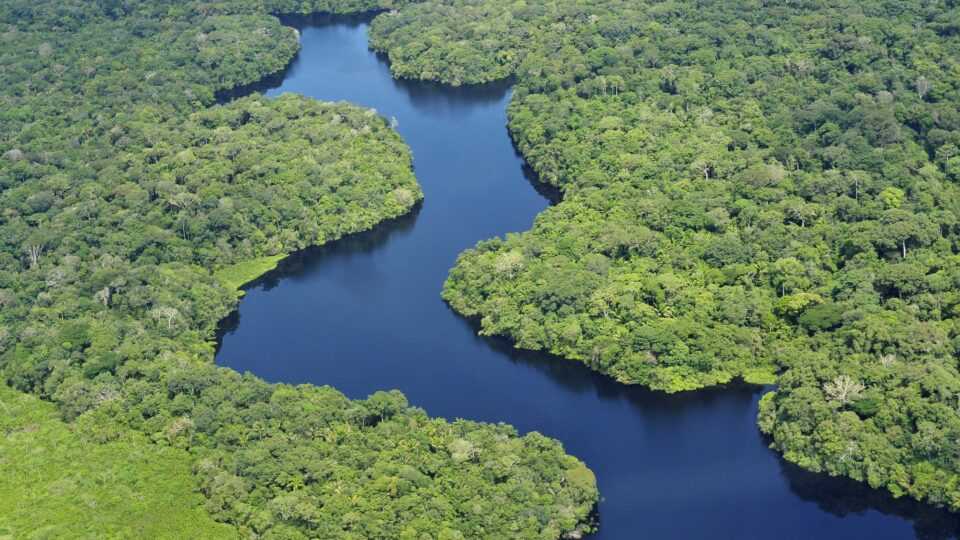
We talk about globalization primarily in the context of how human activities connect up distant parts of the world.  But there are natural processes that are global in scope as well.  One of these is the transportation of mineral-rich dust from the Sahara Desert in North Africa to the Amazon Basin in South America.

Every year, this dust is lifted into the atmosphere by winds and carried on a 5,000-mile journey across the North Atlantic.  It turns out that this dust plays a critical role in the Amazon basin ecosystem.  The Amazon Basin in turn plays a major role in global climate.  Its trees and plants remove huge quantities of carbon dioxide from the atmosphere and stores the carbon in vegetation.

The transcontinental journey of dust is important because of what is in the dust.  The dust picked up from ancient lake beds in Chad comes from rock minerals formed by dead microorganisms and is loaded with phosphorus.  Phosphorus is an essential nutrient for plant growth and is in short supply in Amazonian soils.  Local nutrients like phosphorus in the Amazon mostly come from fallen, decomposing leaves and organic matter but tend to be washed away by rainfall into streams and rivers. 

Studies have shown that the phosphorus that reaches Amazon soils from Saharan dust is essential to replace the amounts lost to rain and flooding.

Recent research has found that the quantities of dust transported to South America are inversely linked to rainfall in North Africa and is likely to be affected by climate change.  Changes in dust transport could affect plant growth in the Amazon and the amount of CO2 removed from the atmosphere.  The forces that affect the climate are truly global in nature.

**********

Web Links

Study quantifies Saharan dust reaching Amazon

Photo, posted April 19, 2011, courtesy of CIAT via Flickr. Photo credit: ©2011CIAT/NeilPalmer.

Earth Wise is a production of WAMC Northeast Public Radio.

North Atlantic Right Whales

January 12, 2018 By EarthWise Leave a Comment

https://earthwiseradio.org/wp-content/uploads/2017/12/EW-01-12-18-North-Atlantic-Right-Whales.mp3

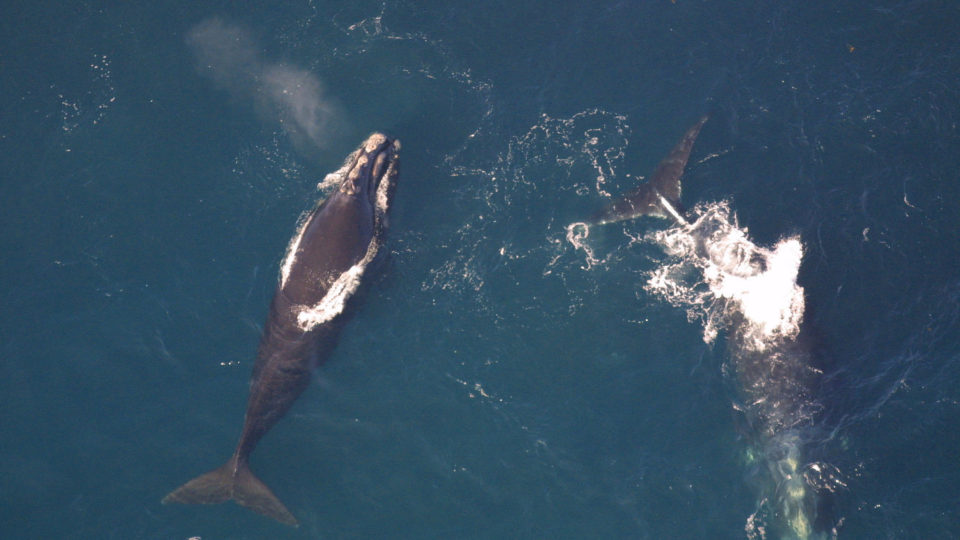
North Atlantic right whales are one of the rarest marine mammals in the world.  In fact, according to the National Oceanic and Atmospheric Administration, there are only about 450 of the whales left.  Measuring approximately 50 feet long and weighing close to 100,000 pounds, North Atlantic right whales are now more critically endangered than mountain gorillas, black rhinos, and giant pandas.

[Read more…] about North Atlantic Right Whales

Bermuda Roofs

September 22, 2017 By EarthWise Leave a Comment

https://earthwiseradio.org/wp-content/uploads/2017/09/EW-09-22-17-Bermuda-Roofs.mp3

The North Atlantic island of Bermuda is a popular tourist attraction with its pink sand beaches, turquoise water, and pastel-colored cottages with white limestone roofs.   The stepped white roofs are not just picturesque, they are highly functional.

[Read more…] about Bermuda Roofs

Primary Sidebar

Recent Episodes

  • An uninsurable future
  • Clean energy and jobs
  • Insect declines in remote regions
  • Fossil fuel producing nations ignoring climate goals
  • Trouble for clownfishes

WAMC Northeast Public Radio

WAMC/Northeast Public Radio is a regional public radio network serving parts of seven northeastern states (more...)

Copyright © 2026 ·