• Skip to primary navigation
  • Skip to main content
  • Skip to primary sidebar

Earth Wise

A look at our changing environment.

  • Home
  • About Earth Wise
  • Where to Listen
  • All Articles
  • Show Search
Hide Search
You are here: Home / Archives for nitrogen oxide

nitrogen oxide

Tracking emissions by satellite

June 20, 2025 By EarthWise Leave a Comment

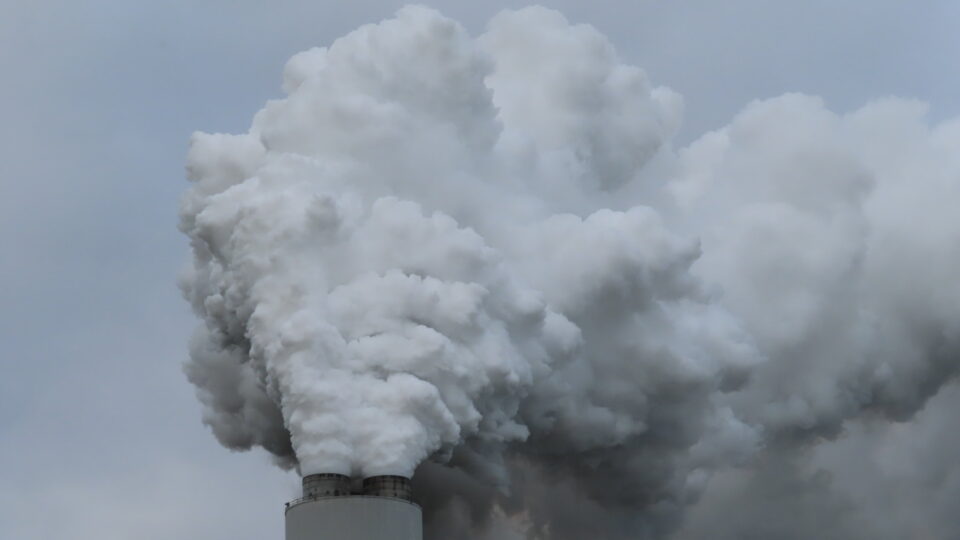
Carbon dioxide and nitrogen oxides are two of the most problematic human-generated air pollutants that negatively impact air quality, the climate, and human health.  Satellites are an important tool for monitoring emissions of these pollutants, but they have limitations.  For the most part, satellites have limited spatial resolution, meaning that they can’t reliably narrow down the source of emissions sufficiently to pin down a specific location such as a power plant. 

Until now, there have been no instruments that can detect both carbon dioxide and nitrogen oxide simultaneously with high spatial resolution.  Often just nitrogen oxide measurements are made, and carbon dioxide levels estimated based on the fact that both are emitted together with typical ratios.

A German research team from the Max Planck Institute and the Heidelberg Institute have developed a technology for the EnMAP environmental satellite to detect both gases with an unprecedented spatial resolution of 30 meters.  Data from the satellite makes it possible to track multiple sources of emission plumes over several tens of kilometers.

The EnMAP system was originally designed for remote sensing of land surfaces.  The new research demonstrates that reliable measurements of trace gases are possible even with an instrument not specifically designed for atmospheric observations.  When using it, it’s possible to determine the distribution of carbon dioxide and nitrogen oxide in emission plumes from individual power plants.  The ability to measure both gases individually means that conclusions can be drawn about the technology, efficiency, and operating mode of the systems being measured.

**********

Web Links

German satellite measures CO2 and NO2 simultaneously from power plant emissions for the first time

Photo, posted September 19, 2020, courtesy of Sandor Somkuti via Flickr.

Earth Wise is a production of WAMC Northeast Public Radio
Pollution in downwind states

August 26, 2024 By EarthWise Leave a Comment

Pollution in downwind states

Air pollution is a serious health threat.  It is associated with asthma and can lead to chronic disease, cancer, and premature death.  Globally, air pollution kills 7 to 9 million people, and 200,000 Americans die from it each year.

There are multiple sources of air pollution including automobiles, power plants, and other industrial activities.  Exposure to pollutants such as nitrogen oxide, sulfur dioxide, and particulate matter does not require living or working near their sources.  Winds can carry pollution great distances including across state lines.  

The Clean Air Act included the EPA’s “Good Neighbor Plan”, which requires “upwind” states to implement plans to reduce emissions from power plants and other industrial sources.  However, three states – Indiana, Ohio, and West Virginia – along with various industrial companies and trade organizations sued the EPA when it tried to enforce these plans.  A recent Supreme Court decision to block a federal rule curbing interstate air pollution further complicates efforts to reduce emissions.

As a result, there is a disproportionate burden on downwind states.  They face major challenges in demonstrating and attributing air pollution to sources across state lines and pursuing legal actions to get the EPA to address their problems.

A recent study by the University of Notre Dame looking at all the complex issues related to interstate pollution underscored how the regulatory system continues to be hamstrung when attempting to address a serious threat to human health and the environment.

**********

Web Links

Downwind states face disproportionate burden of air pollution

Photo, posted February 19, 2021, courtesy of David Wilson via Flickr.

Earth Wise is a production of WAMC Northeast Public Radio

How to reduce pollution from food production

January 17, 2024 By EarthWise Leave a Comment

Present in animal manure and synthetic fertilizers, nitrogen is an essential nutrient for plant growth and is a critical input to enhance agricultural productivity on farms around the world.  But excessive and inefficient use of this nutrient is widespread.  In fact, up to 80% of it leaks into the environment, mostly in various polluting forms of nitrogen: ammonia and nitrogen oxides (which are harmful air pollutants), nitrous oxide (a potent greenhouse gas), and nitrate (which affects water quality).

A new report prepared for the United Nations has put forth some solutions to greatly reduce nitrogen pollution from agriculture in Europe.  A group of researchers coordinated by the U.K. Centre for Ecology & Hydrology, the European Commission, the Copenhagen Business School, and the National Institute for Public Health and the Environment of The Netherlands produced the report.

In it, the research team puts forth its recipe to reduce nitrogen pollution in Europe.  The report’s ingredients include:

  • Reducing by 50% the average European meat and dairy consumption
  • More efficient fertilizer application and manure storage
  • Reducing food production demand by reducing food waste by retailers and consumers
  • Better wastewater treatment to capture nitrogen from sewage
  • Adopting policies addressing food production and consumption to transition them towards more sustainable systems

Taking action to reduce nitrogen pollution will require a holistic approach involving farmers, policymakers, retailers, water companies, and individuals. 

Do Europeans have an appetite for change?

**********

Web Links

Scientists provide recipe to halve pollution from food production

Photo, posted March 10, 2022, courtesy of USDA NRCS Montana via Flickr.

Earth Wise is a production of WAMC Northeast Public Radio

Emissions And The Pandemic | Earth Wise

January 3, 2022 By EarthWise Leave a Comment

Studying the effects of the pandemic on emissions

The early months of the COVID-19 pandemic saw drastic reductions in travel and other economic sectors across the globe that greatly decreased air pollution and greenhouse gas emissions. These dramatic changes occurred quite suddenly.  This abrupt set of changes gave scientists the unprecedented opportunity to observe the results of changes that would ordinarily have taken years if they came about through regulations and gradual behavior shifts.

A comprehensive study by Caltech on the effects of the pandemic on the atmosphere has revealed some surprising results.

The biggest surprise is that even though carbon dioxide emissions fell by 5.4% in 2020, the amount of CO2 in the atmosphere continued to grow at about the same rate as in previous years.  According to the researchers, the reasons are that the growth in atmospheric concentrations was within the normal range of year-to-year variations caused by natural processes and, in addition, the ocean did not absorb as much CO2 because of the reduced pressure of CO2 in the air at the ocean’s surface.

A second result involved the reduction in nitrogen oxides, which led to a reduction in a short-lived molecule called the hydroxyl radical, which is important in breaking down gases including methane in the atmosphere.  Reducing nitrogen oxides is advantageous with respect to air pollution, but they are important for the atmosphere’s ability to cleanse itself of methane.  In fact, the drop in nitrogen oxide emissions actually resulted in a small increase of methane in the atmosphere because it was staying there longer.

The main lesson learned is that reducing activity in industrial and residential sectors is not a practical solution for cutting emissions.  The transition to low-carbon-emitting technology will be necessary.

**********

Web Links

Emission Reductions From Pandemic Had Unexpected Effects on Atmosphere

Photo, posted March 22, 2020, courtesy of Greg via Flickr.

Earth Wise is a production of WAMC Northeast Public Radio.

Safer Places For Bus Riders

December 22, 2017 By EarthWise Leave a Comment

https://earthwiseradio.org/wp-content/uploads/2017/12/EW-12-22-17-Safer-Places-for-Bus-Riders.mp3

Taking the bus in crowded cities is a good way to reduce overall traffic, save money on gas, and do a good turn for the environment.   Unfortunately, bus riders often are exposed to large amounts of pollution in the process.

[Read more…] about Safer Places For Bus Riders

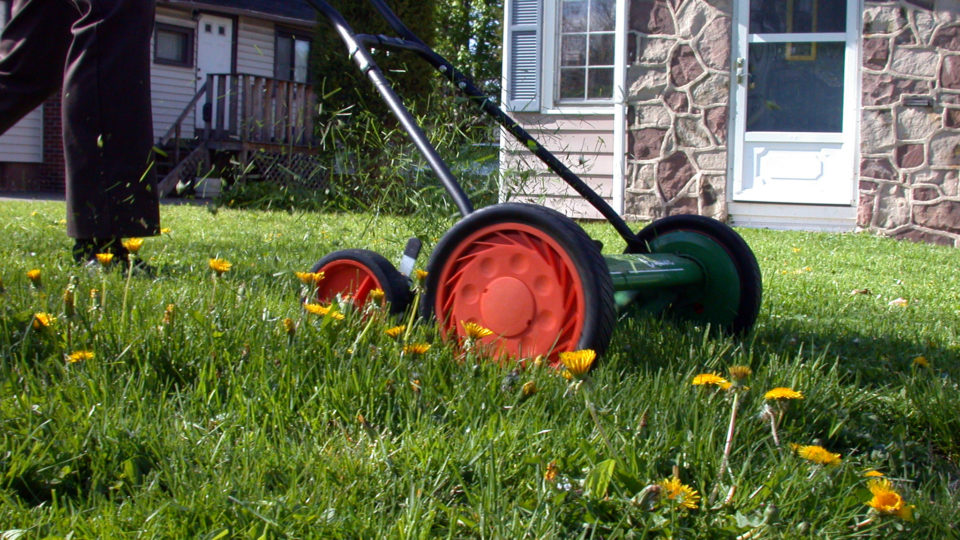
Lawnmower Pollution

October 25, 2017 By EarthWise Leave a Comment

https://earthwiseradio.org/wp-content/uploads/2017/10/EW-10-25-17-Lawnmower-Pollution.mp3

Over 50 million Americans mow their lawns each week, which uses 800 million gallons of gas per year and produces tons of air pollutants.  Garden equipment engines were completely unregulated with respect to emissions until the late 1990s and still emit high levels of carbon monoxide, volatile organic compounds, and nitrogen oxides.  In fact, gas mowers and their relatives like leaf blowers and edgers produce 5% of the air pollution in this country.

[Read more…] about Lawnmower Pollution

Primary Sidebar

Recent Episodes

  • An uninsurable future
  • Clean energy and jobs
  • Insect declines in remote regions
  • Fossil fuel producing nations ignoring climate goals
  • Trouble for clownfishes

WAMC Northeast Public Radio

WAMC/Northeast Public Radio is a regional public radio network serving parts of seven northeastern states (more...)

Copyright © 2026 ·