
• Skip to primary navigation
  • Skip to main content
  • Skip to primary sidebar

Earth Wise

A look at our changing environment.

  • Home
  • About Earth Wise
  • Where to Listen
  • All Articles
  • Show Search
Hide Search
You are here: Home / Archives for nanoscale

nanoscale

Computing With Honey | Earth Wise           

April 28, 2022 By EarthWise Leave a Comment

Using honey in computing devices

Researchers are always working to develop faster and more powerful computers.  Some of them believe that the future of computing lies with neuromorphic computers, which are systems designed to mimic the neurons and synapses found in the human brain.

The human brain has more than 100 billion neurons with more than 1 quadrillion synapses or connections among them.  These numbers far exceed anything people have built.  There have been some neuromorphic computer chips made that have the equivalent of more than 100 million neurons per chip, but this is still far less than the number in the brain.  Despite all its complexity, the brain uses vastly less power than a powerful computer.  Some supercomputers use tens of millions of watts to operate; the brain uses around 10 to 20 watts.

Many researchers are searching for biodegradable and renewable ways to make neuromorphic computing components.  Researchers at Washington State University have demonstrated a way to make them using, of all things, honey.  The honey is used to form a memristor, which is a component similar to a transistor that can both process and store data in memory.  The device uses honey processed into a solid form and sandwiched between two metal electrodes.  The organic device is very stable and reliable over a long time.

So far, these devices are on a micro scale – about the size of a human hair.  The researchers want to develop them on a nanoscale, which is about 1/1000 the width of a human hair, and then bundle many millions or even billions together to make a neuromorphic computing system.  Such a honey-based system would be renewable and biodegradable – which, pardon the pun, would be really sweet.

**********

Web Links

Honey holds potential for making brain-like computer chips

Photo, posted January 28, 2008, courtesy of Dino Giordano via Flickr.

Earth Wise is a production of WAMC Northeast Public Radio.
Understanding How To Enhance Desalination | Earth Wise

February 16, 2021 By EarthWise Leave a Comment

How to improve desalination

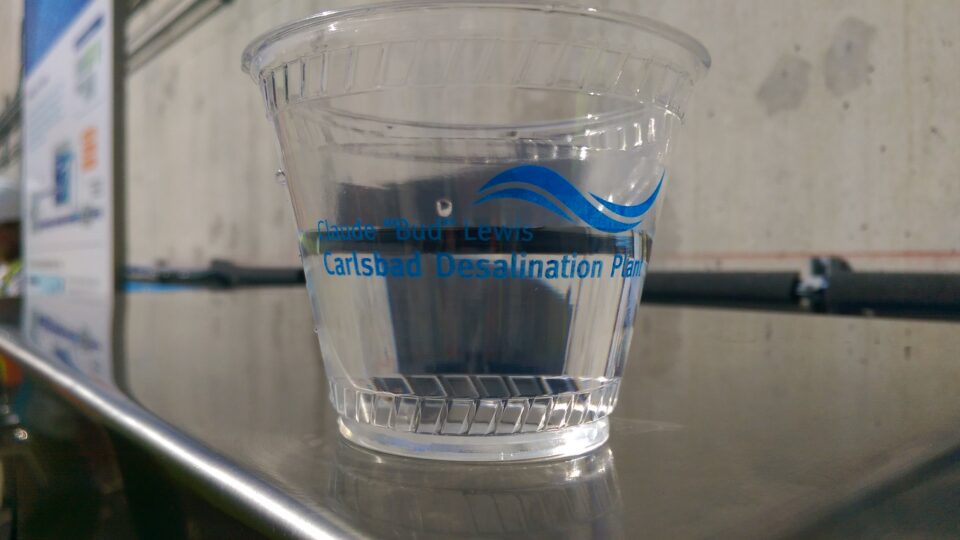
Desalination is the process of removing mineral components – notably salt – from saline water, generally seawater.  Over 16,000 desalination plants operate across 177 countries, generating 25 billion gallons of fresh water each year.  Currently, desalination accounts for about 1% of the world’s drinking water.

The leading process for desalination in terms of installed capacity as well as new installations is reverse osmosis that makes use of a thin-film composite membrane based on ultra-thin polyamide.

Despite the fact that these membranes are widely used for desalination, they are actually rather poorly understood.  It has not been known exactly how water moves through them.  As a result, much of the progress made on the technology over the decades has been essentially based on guesswork.

A team of researchers at the University of Texas, Austin has used advanced microscopy techniques to solve some of the mysteries of reverse osmosis membranes.  By mapping membranes at very high resolution – less than half the diameter of a DNA strand – they gained a much better understanding of what makes a membrane better at reverse osmosis.

They found that desalination membranes are inconsistent in mass distribution and density and that these inconsistencies can impair membrane performance.  It turns out that inconsistencies and dead zones in membranes play a bigger role than membrane thickness.  By making the membranes more uniform in density at the nanoscale, they were able to increase desalination efficiency 30 to 40 percent, therefore cleaning more water with less energy and at lower cost.

Producing fresh water is not just essential for public health, it is also crucial for use in agriculture and energy production.

**********

Web Links

Nanoscale control of internal inhomogeneity enhances water transport in desalination membranes

Photo, posted February 13, 2017, courtesy of Jacob Vanderheyden via Flickr.

Earth Wise is a production of WAMC Northeast Public Radio.

A Hydrogen Sponge

April 7, 2017 By EarthWise

https://earthwiseradio.org/wp-content/uploads/2017/04/EW-04-07-17-A-Hydrogen-Sponge.mp3

Hydrogen fuel cell electric vehicles are just starting to enter the market but they have a long way to go before they can even catch up with their battery-powered counterparts. Powering cars with hydrogen has the advantage that fueling the vehicle is much like what we are used to:  pull up to the pump, fill your tank for a few minutes, and drive off. 

[Read more…] about A Hydrogen Sponge

Primary Sidebar

Recent Episodes

  • An uninsurable future
  • Clean energy and jobs
  • Insect declines in remote regions
  • Fossil fuel producing nations ignoring climate goals
  • Trouble for clownfishes

WAMC Northeast Public Radio

WAMC/Northeast Public Radio is a regional public radio network serving parts of seven northeastern states (more...)

Copyright © 2026 ·